
Architect & Associates

Giorgio Palù
Architect & Associates
Queen Silvia Concert Hall
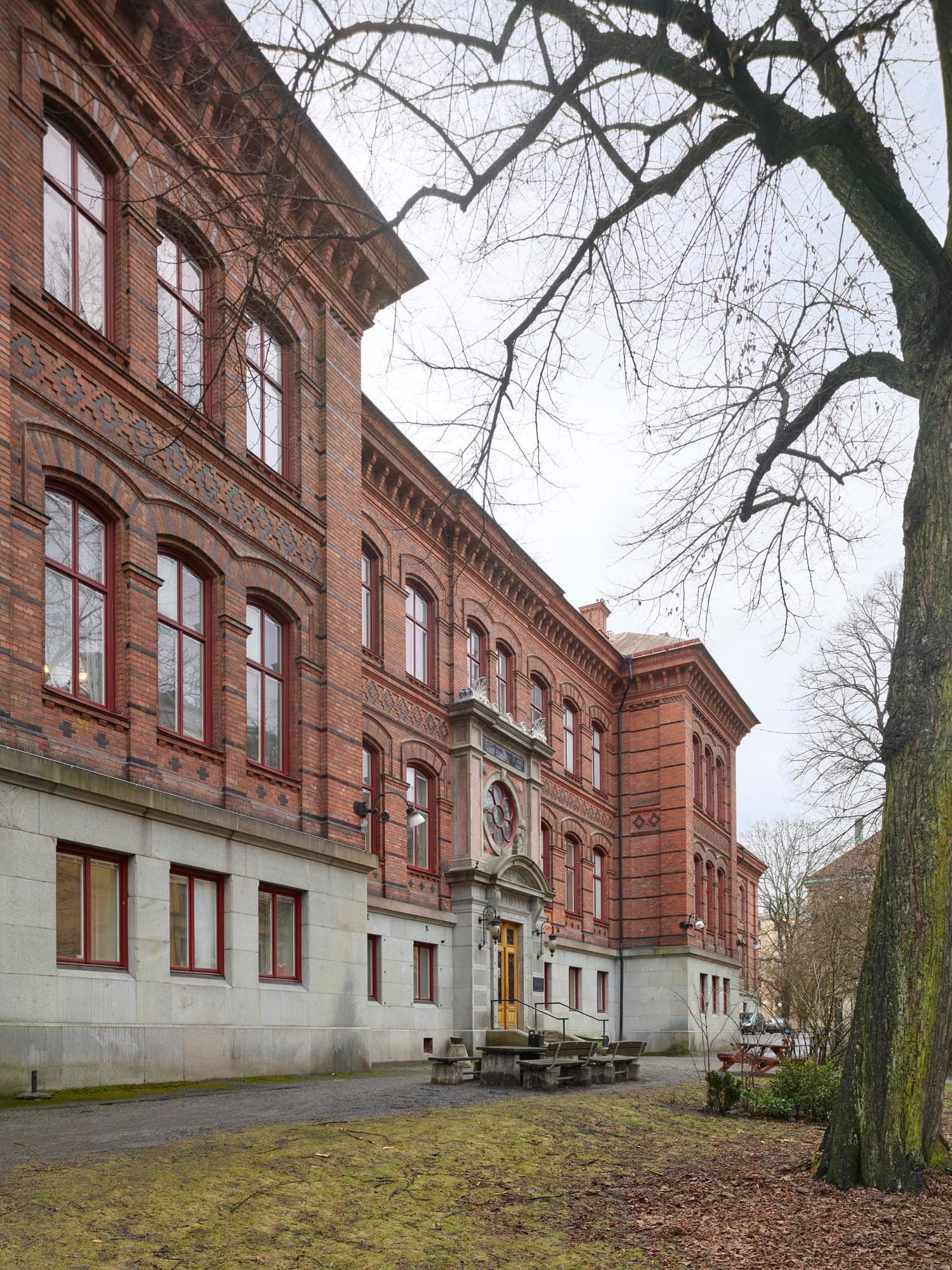
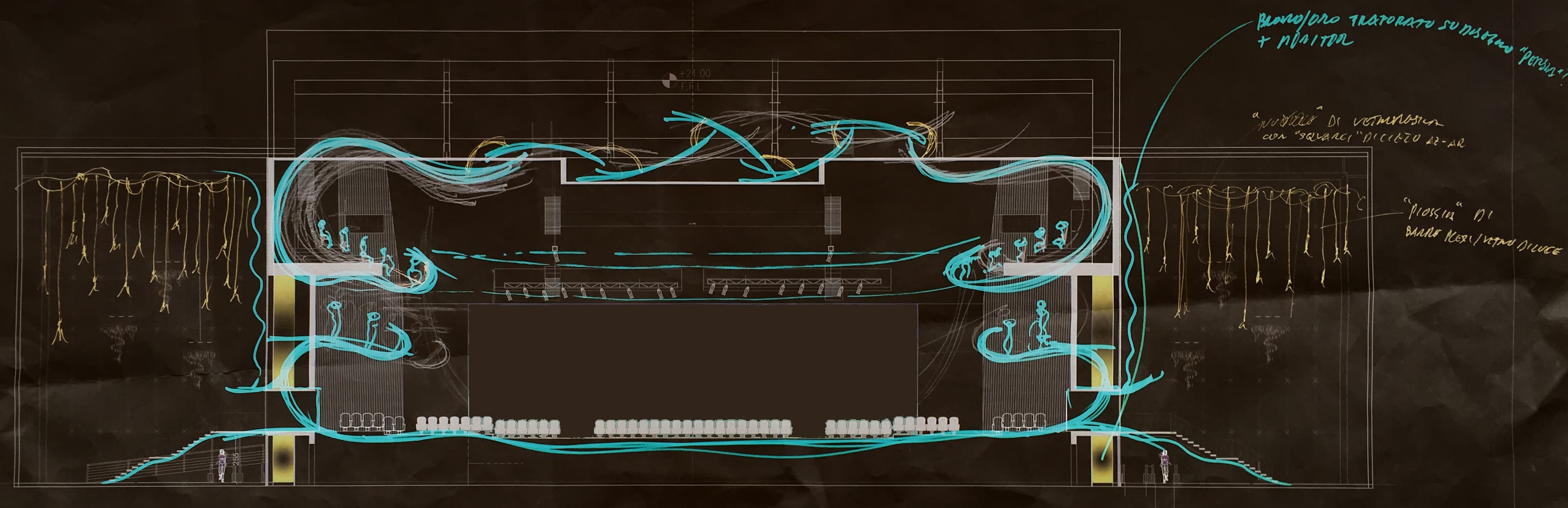
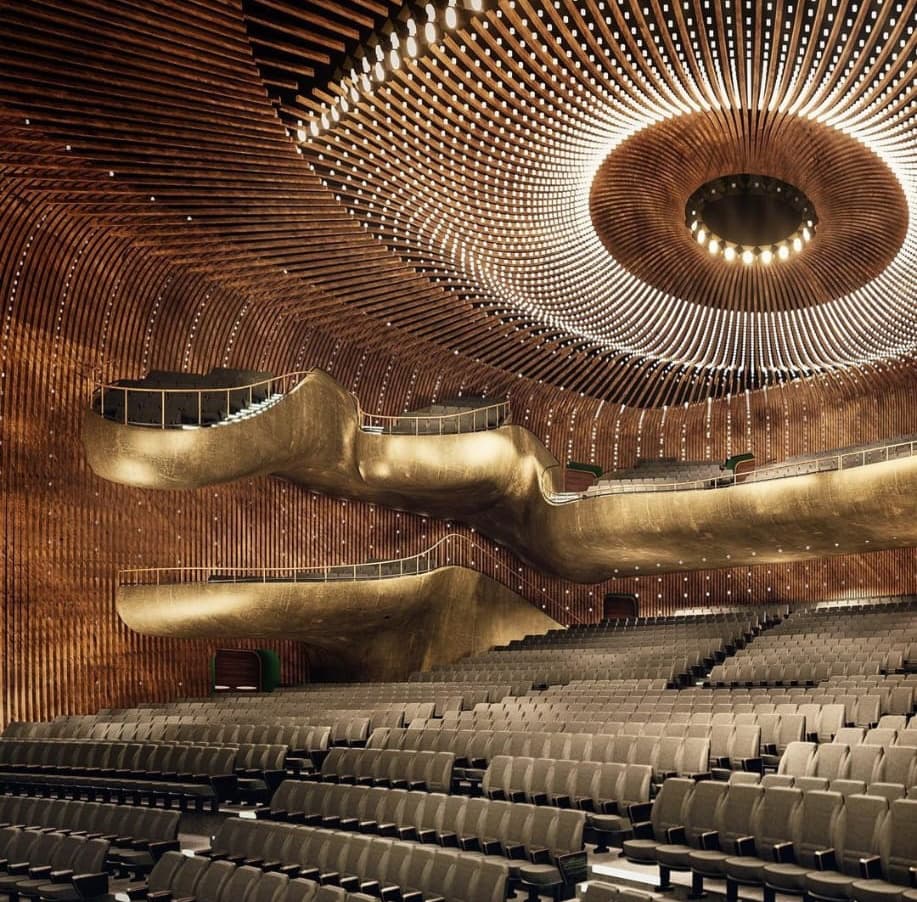
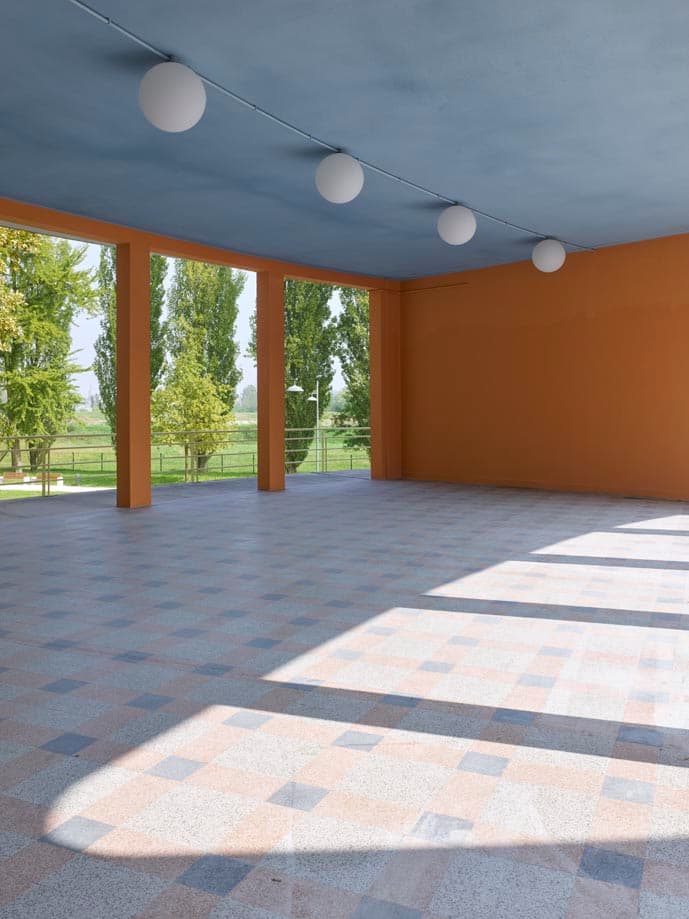
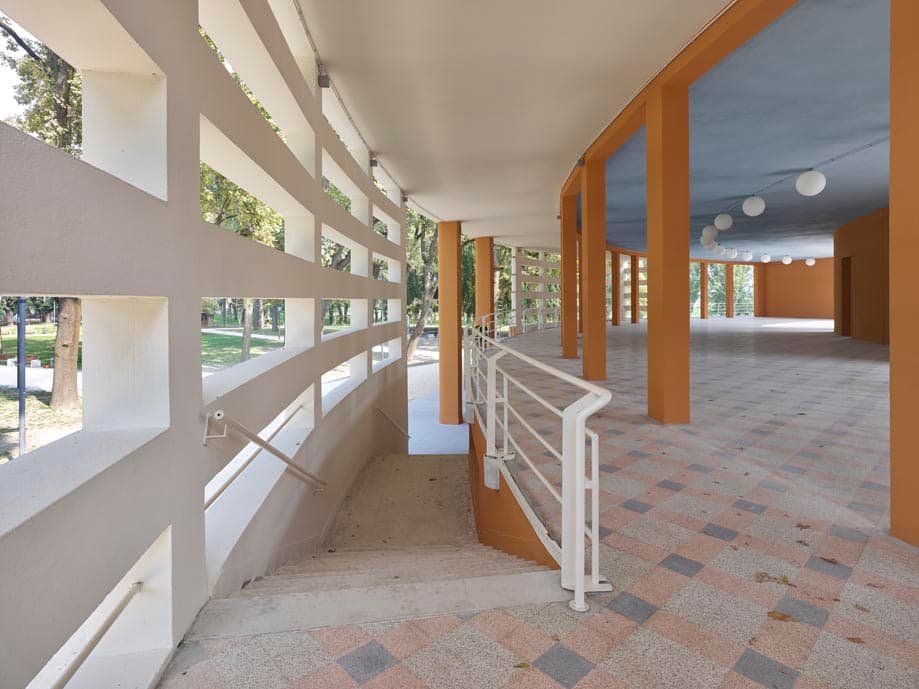
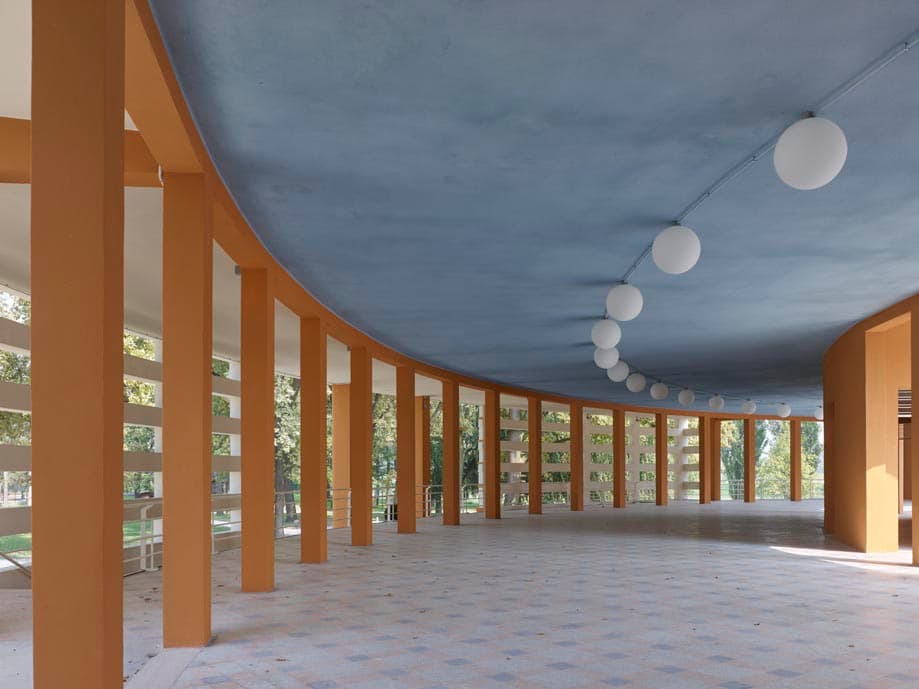
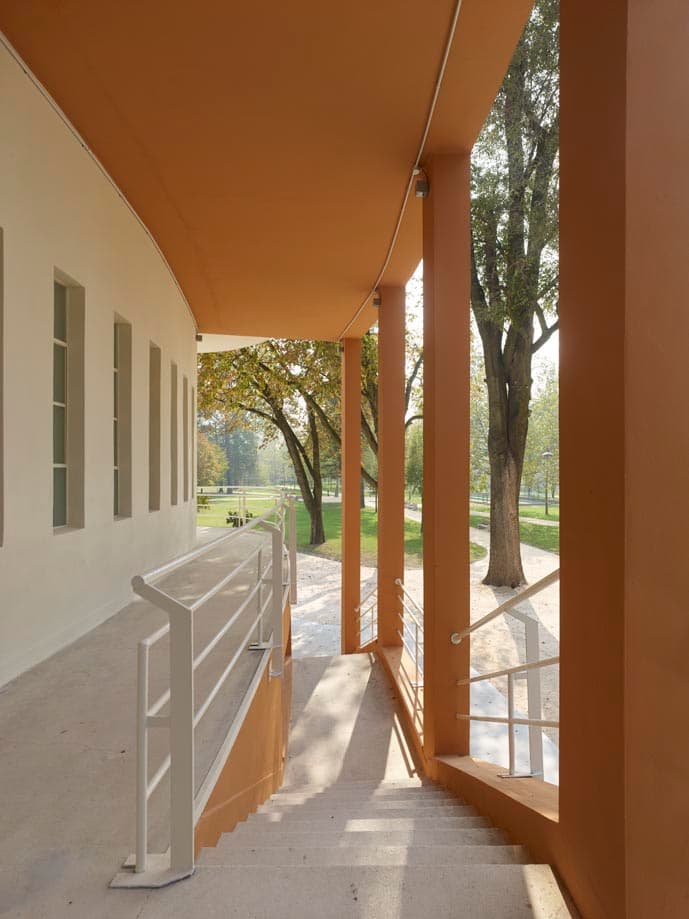
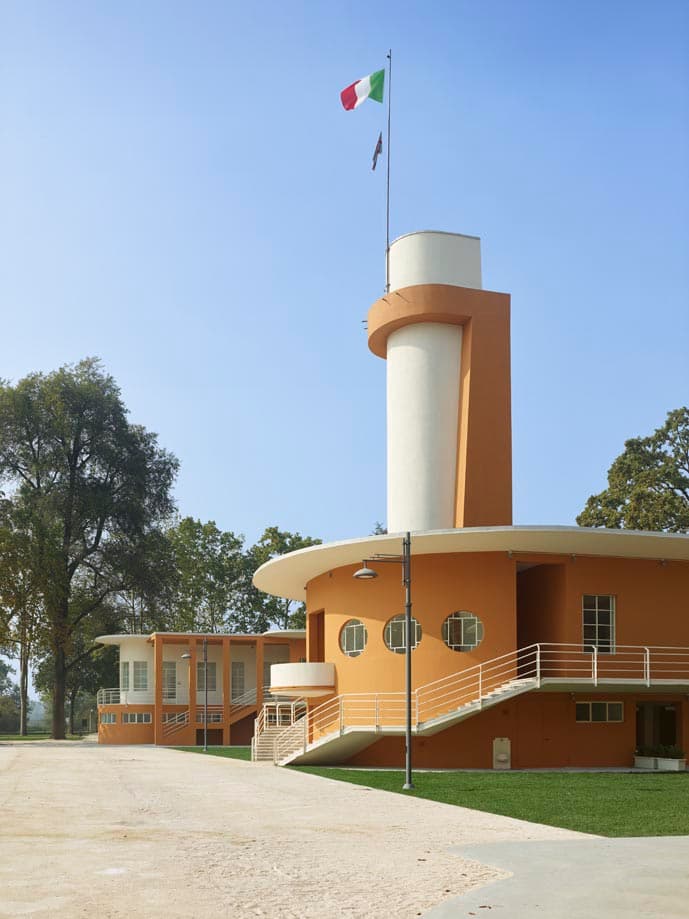
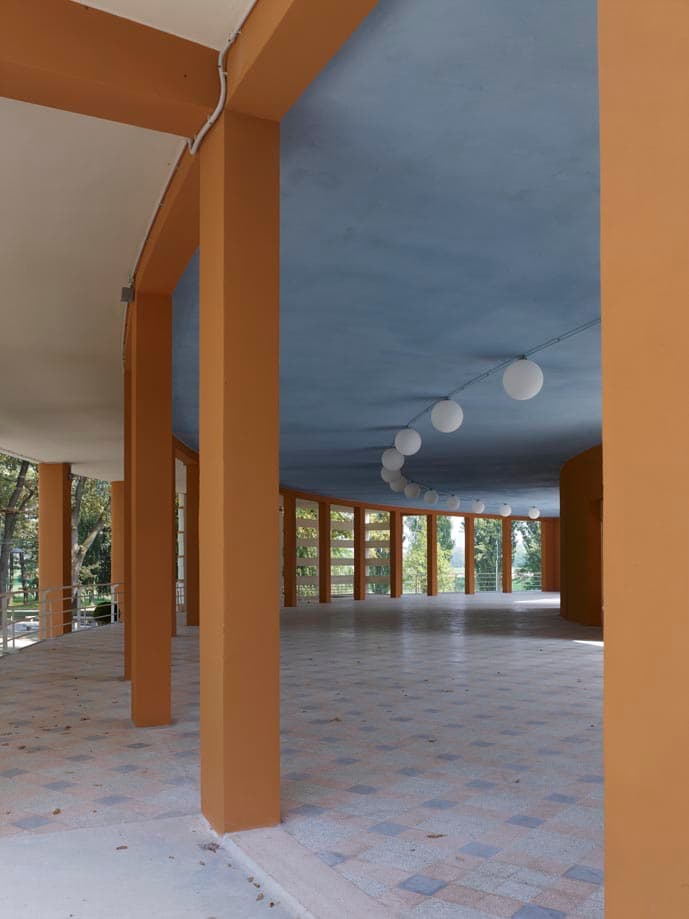
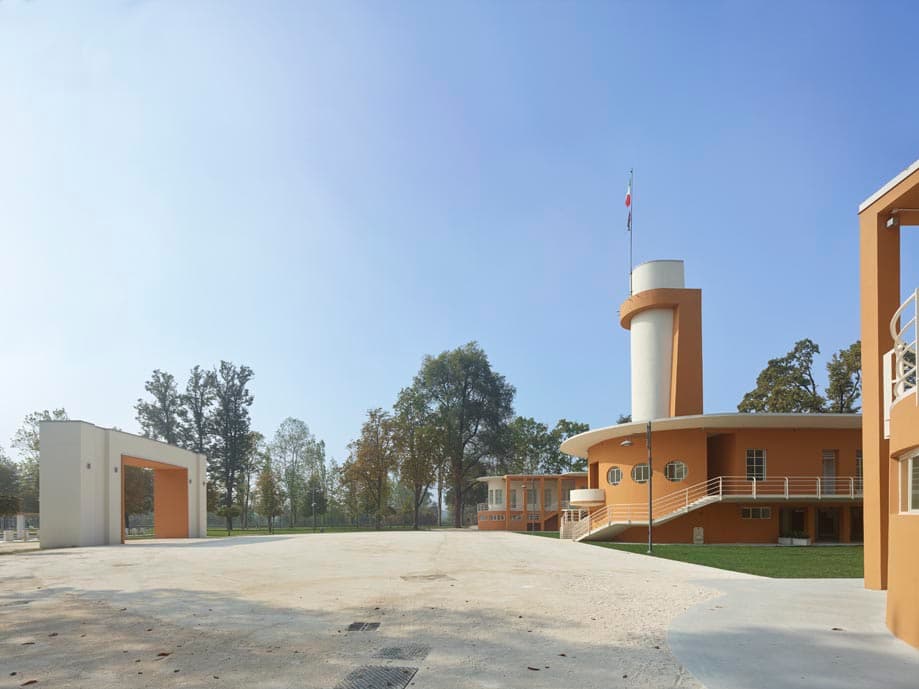
Queen Silvia Concert Hall is the concert hall named after Queen Silvia of Sweden, wife of King Carl XVI Gustaf.
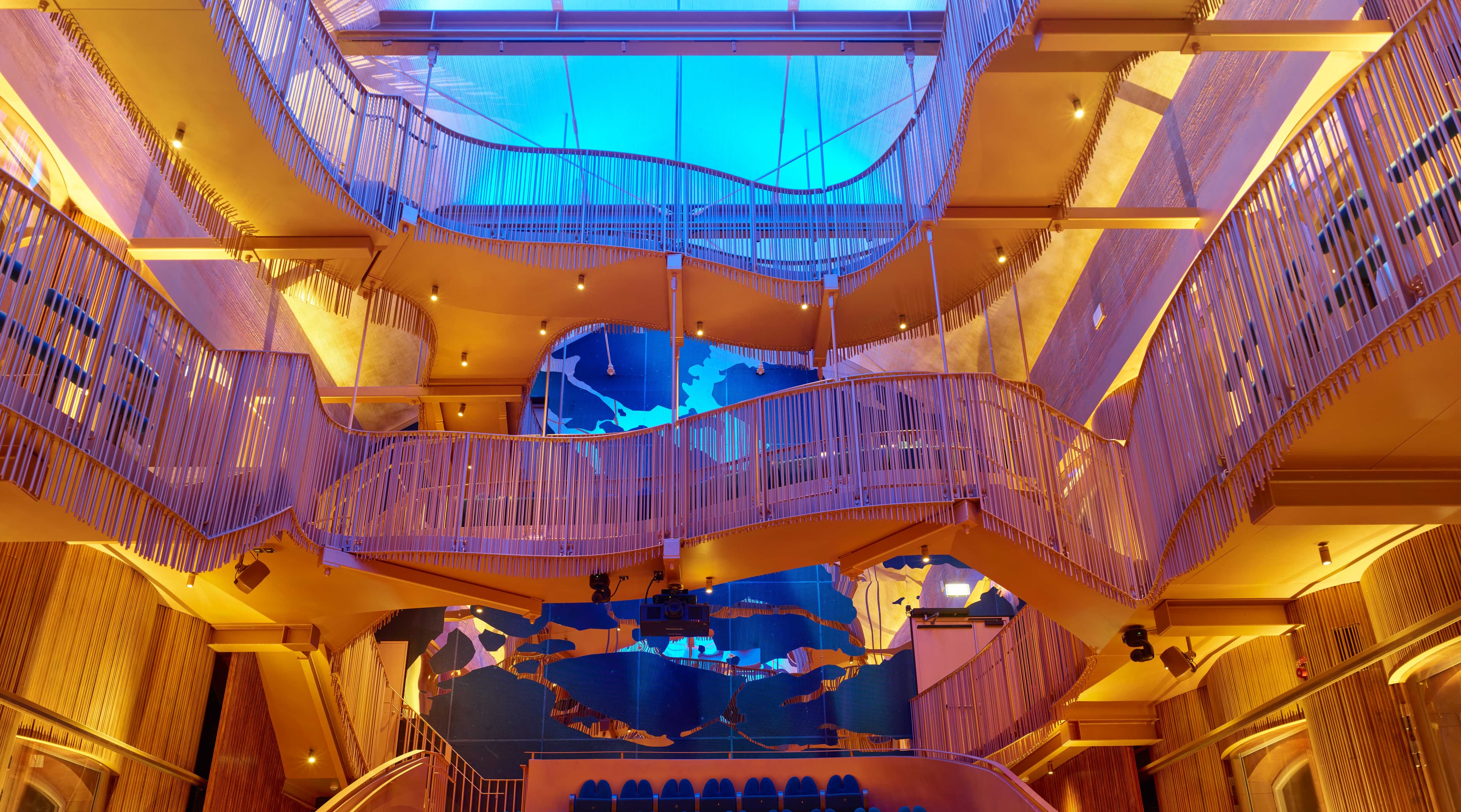
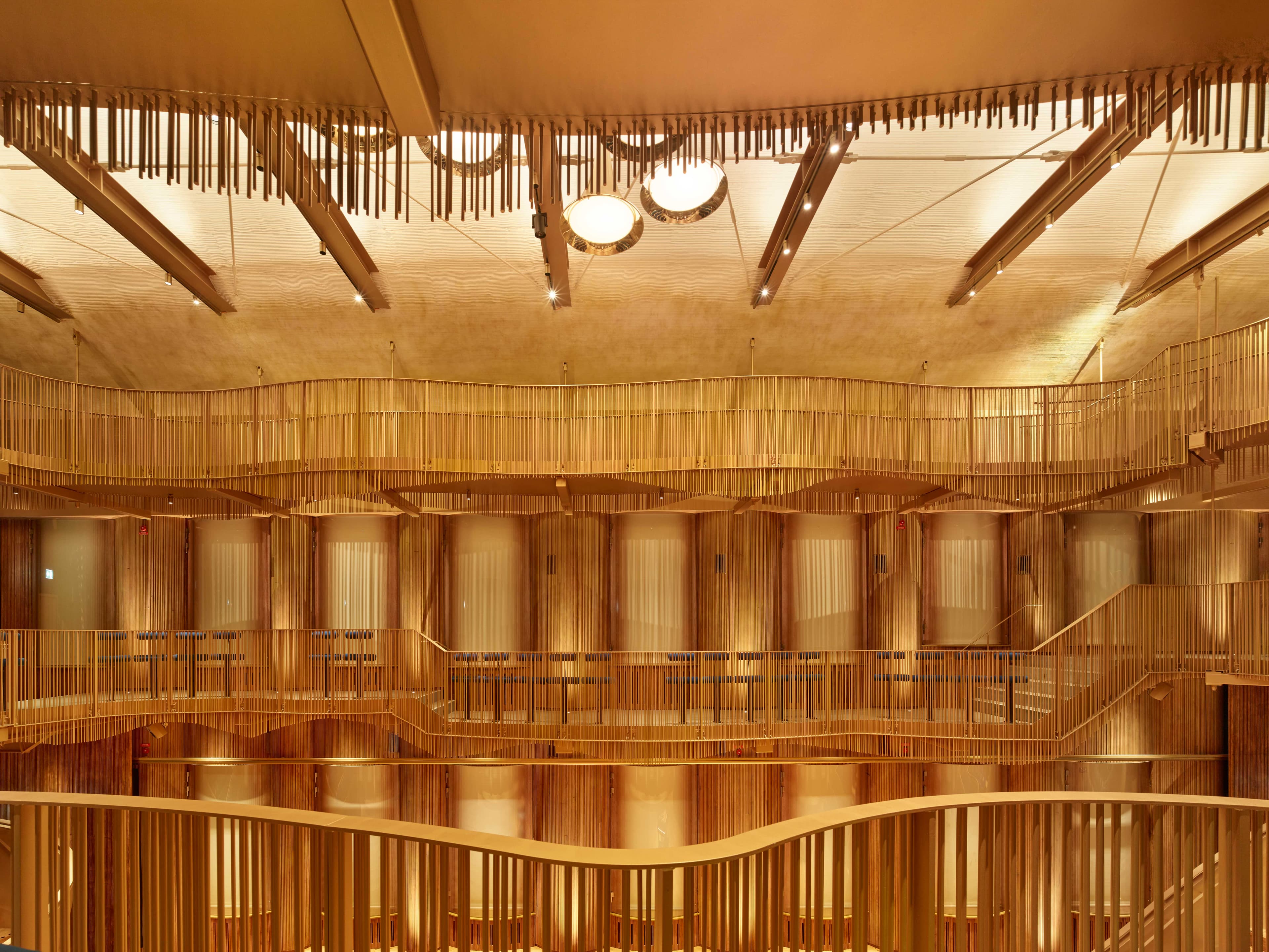
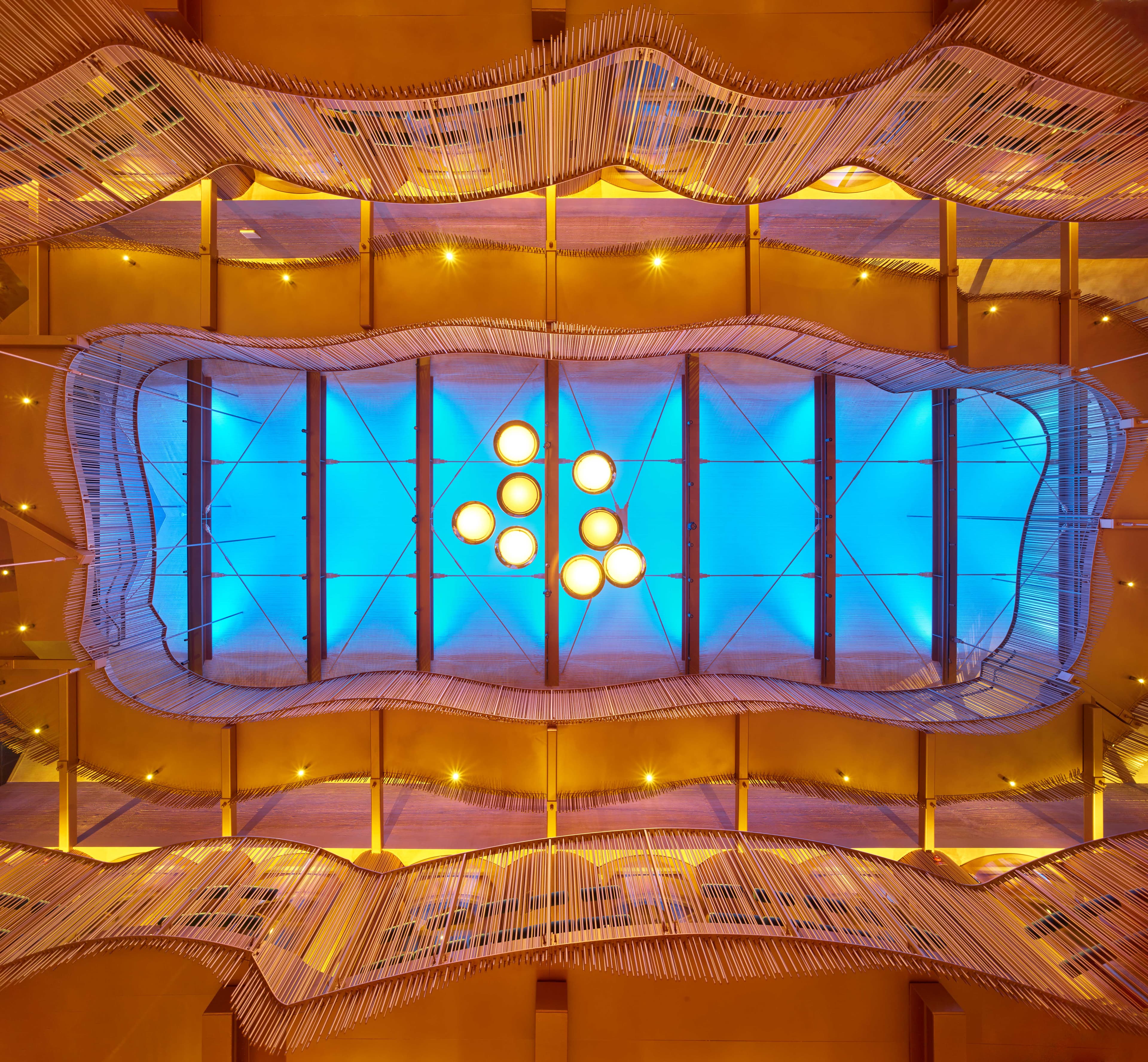
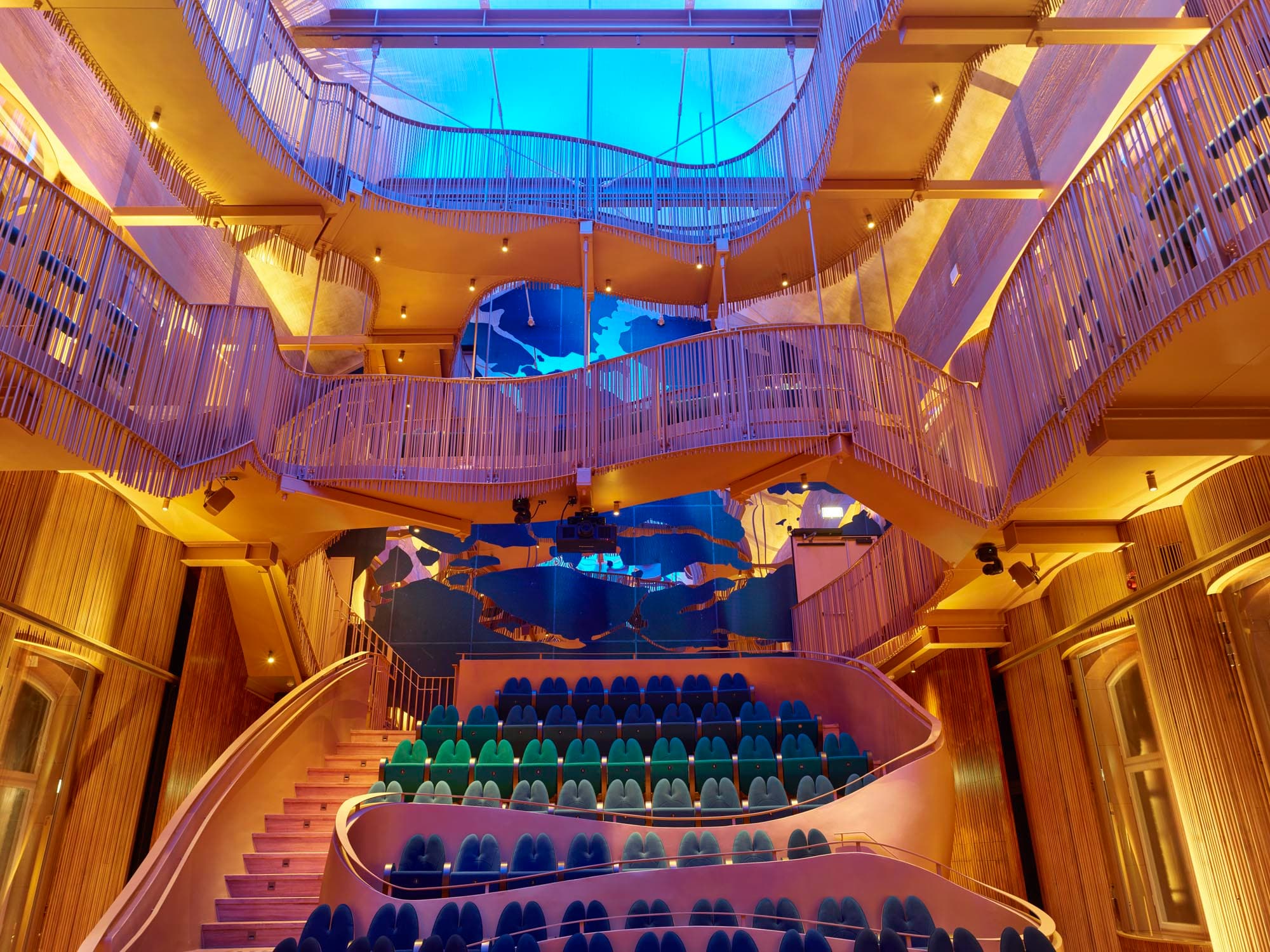
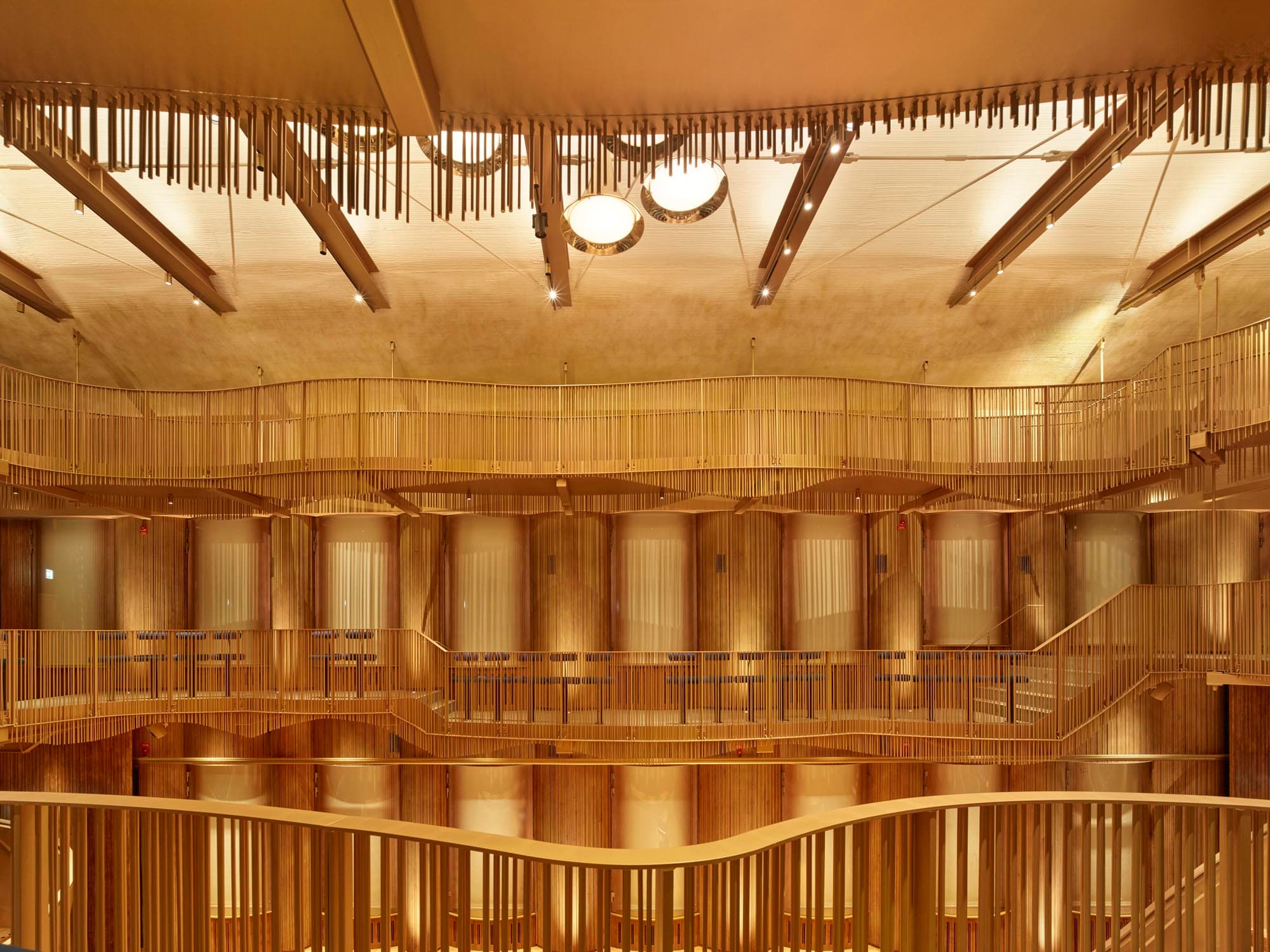
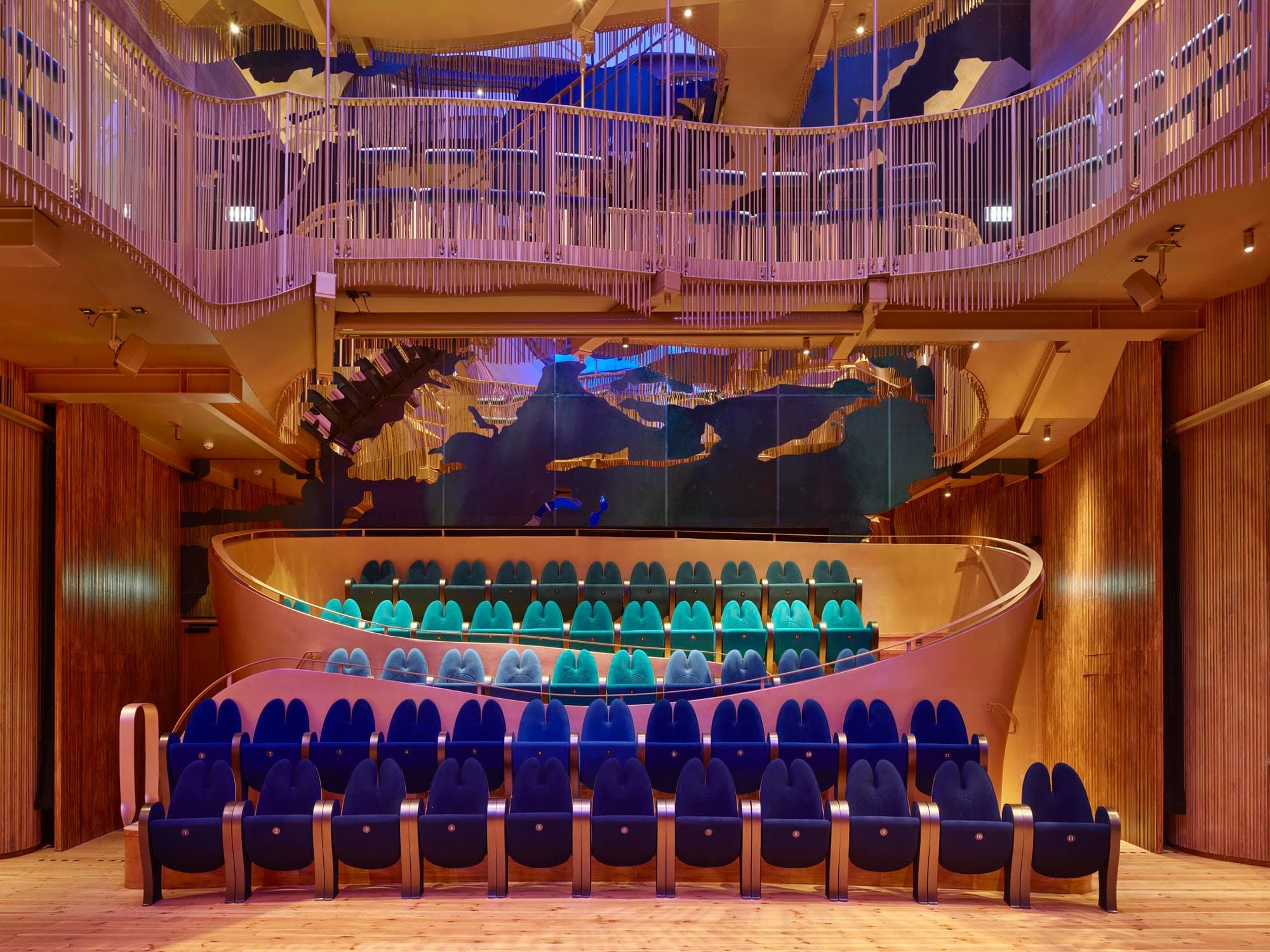
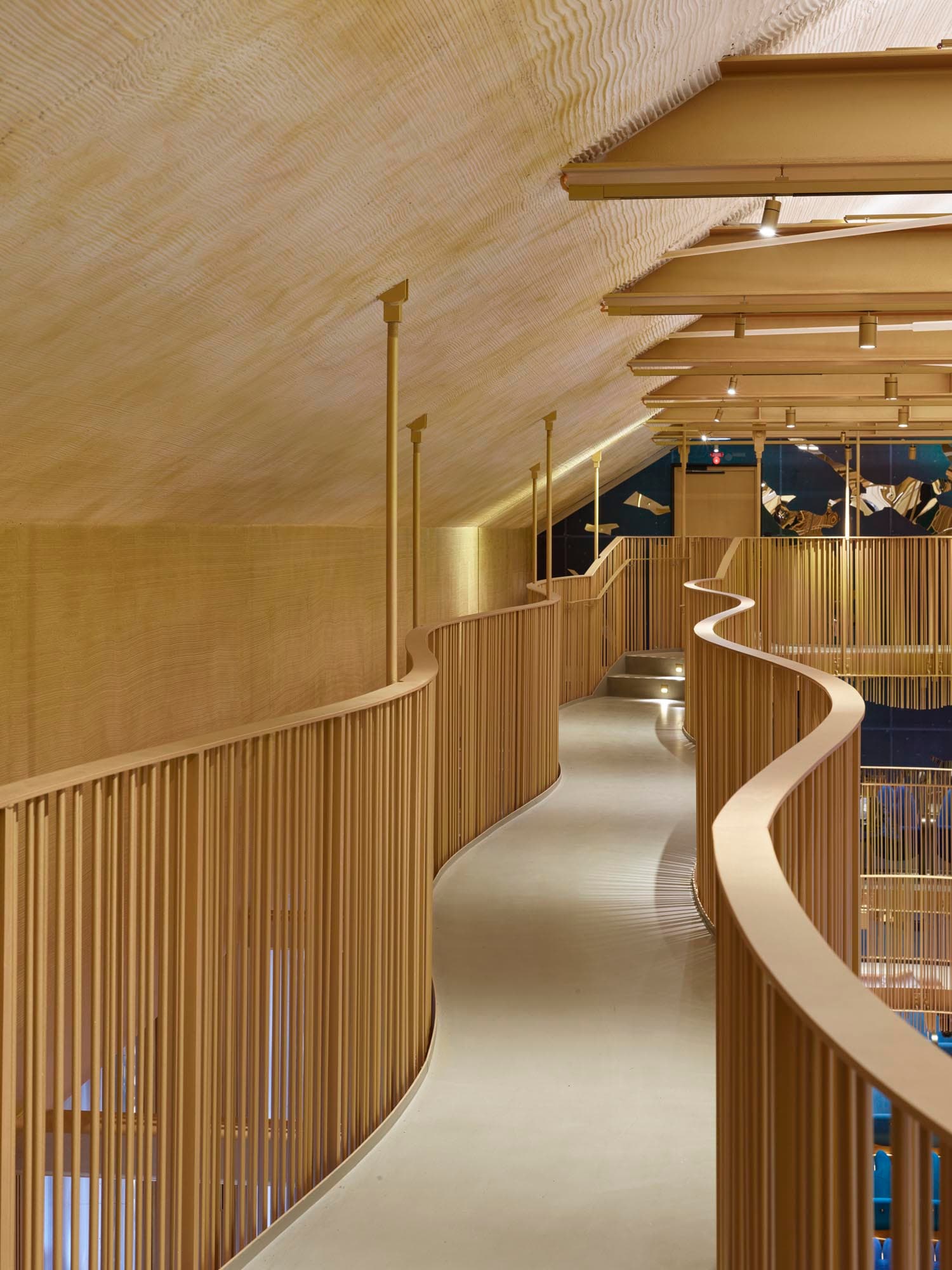
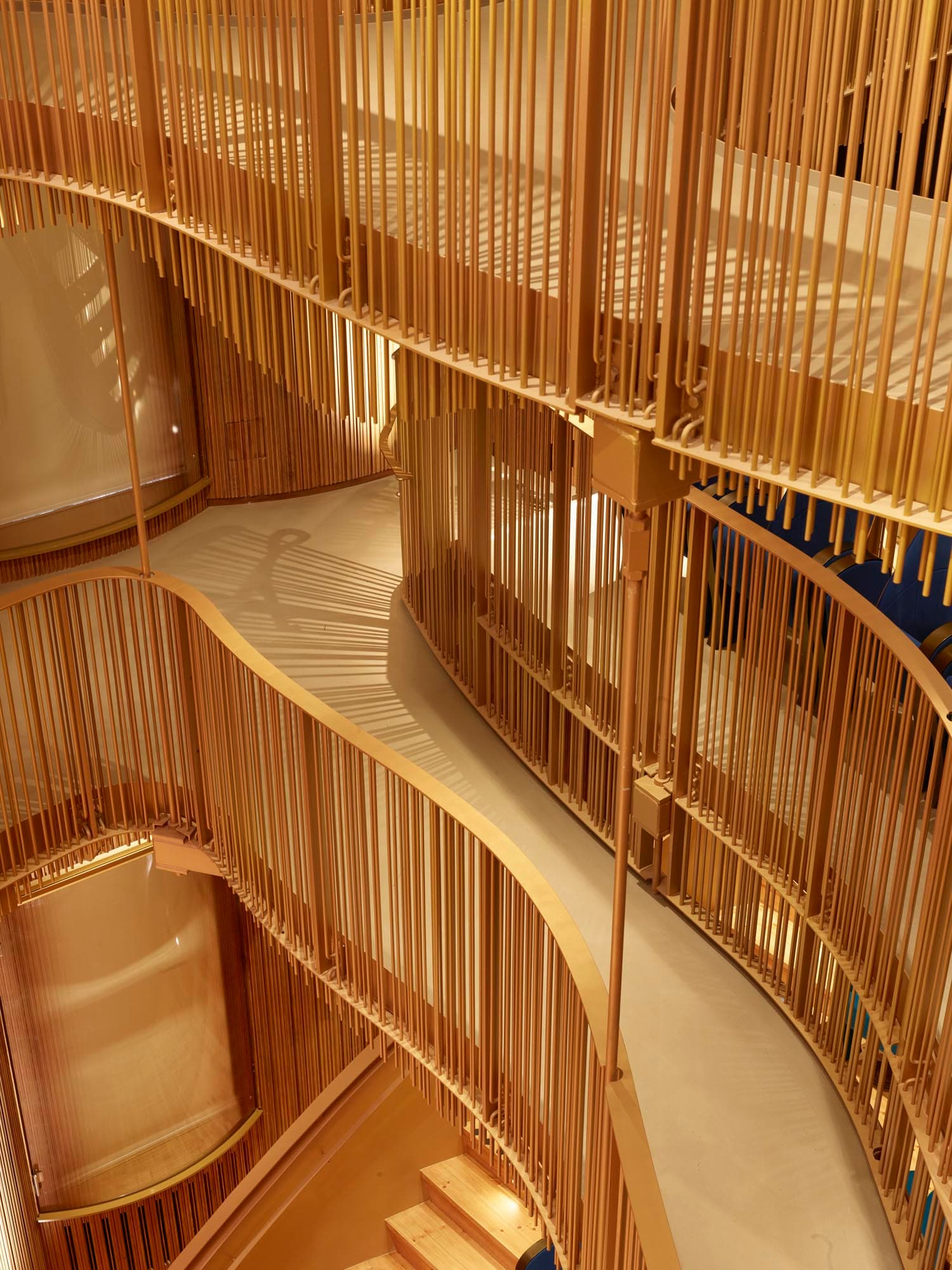
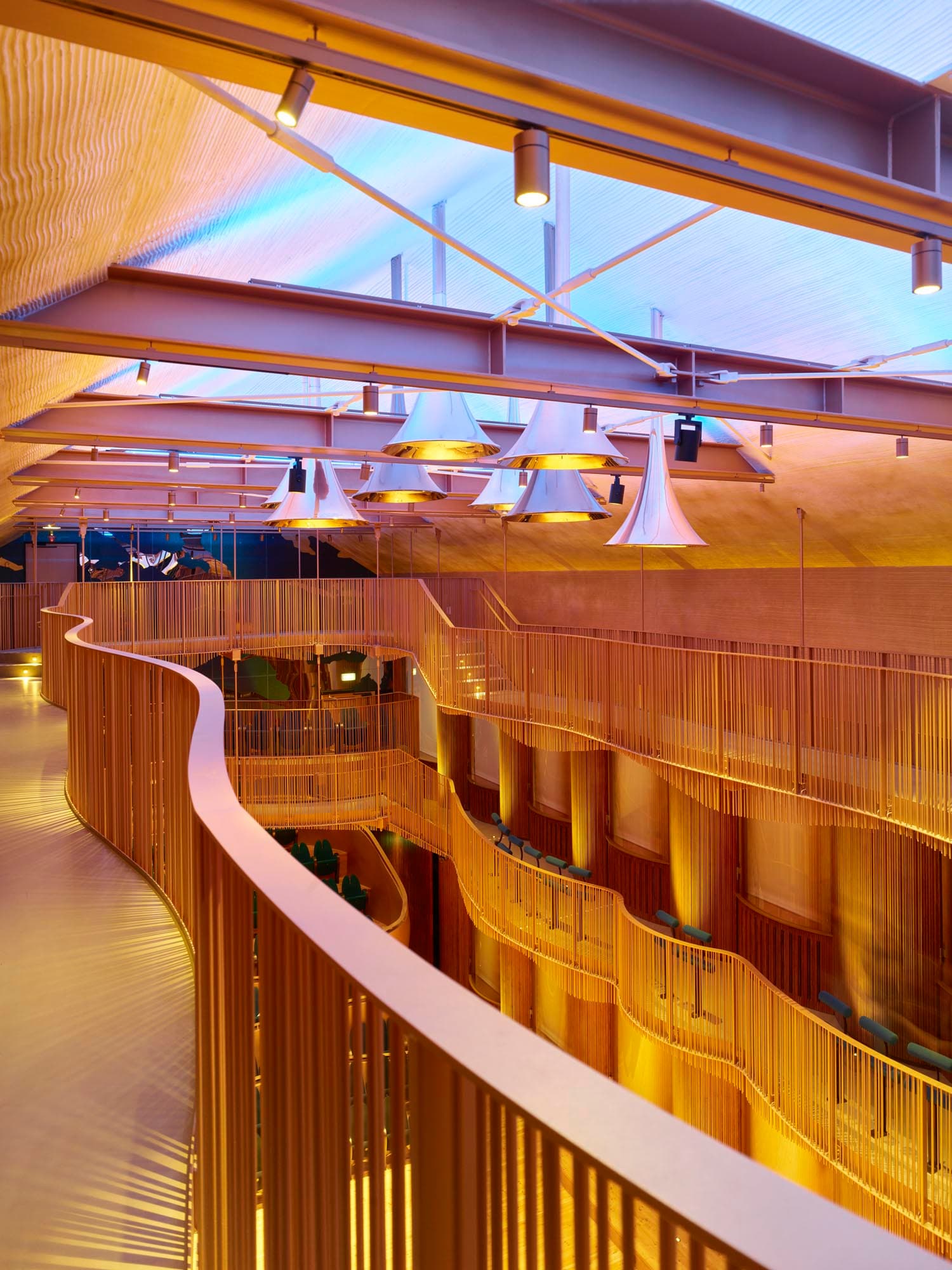
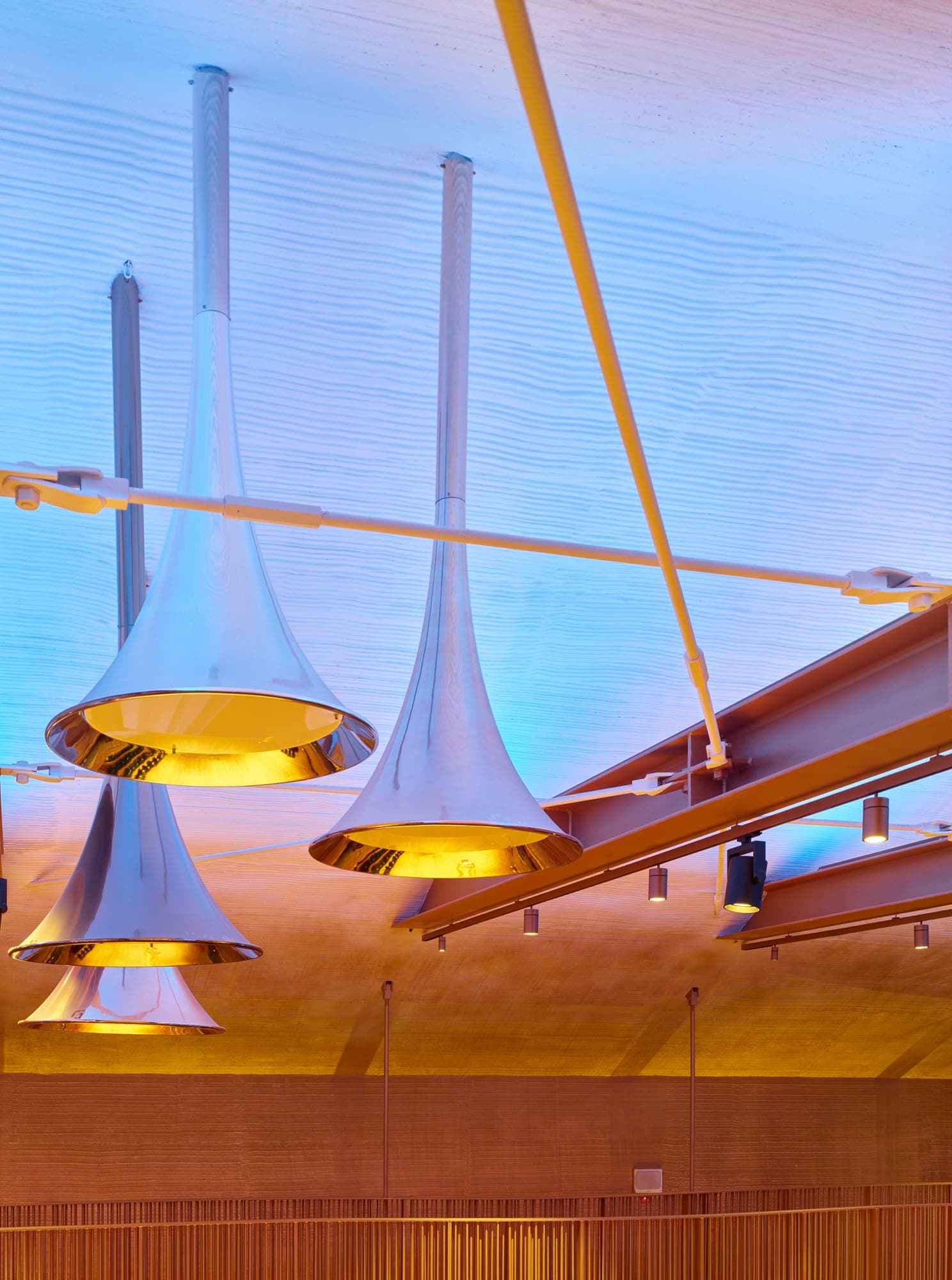
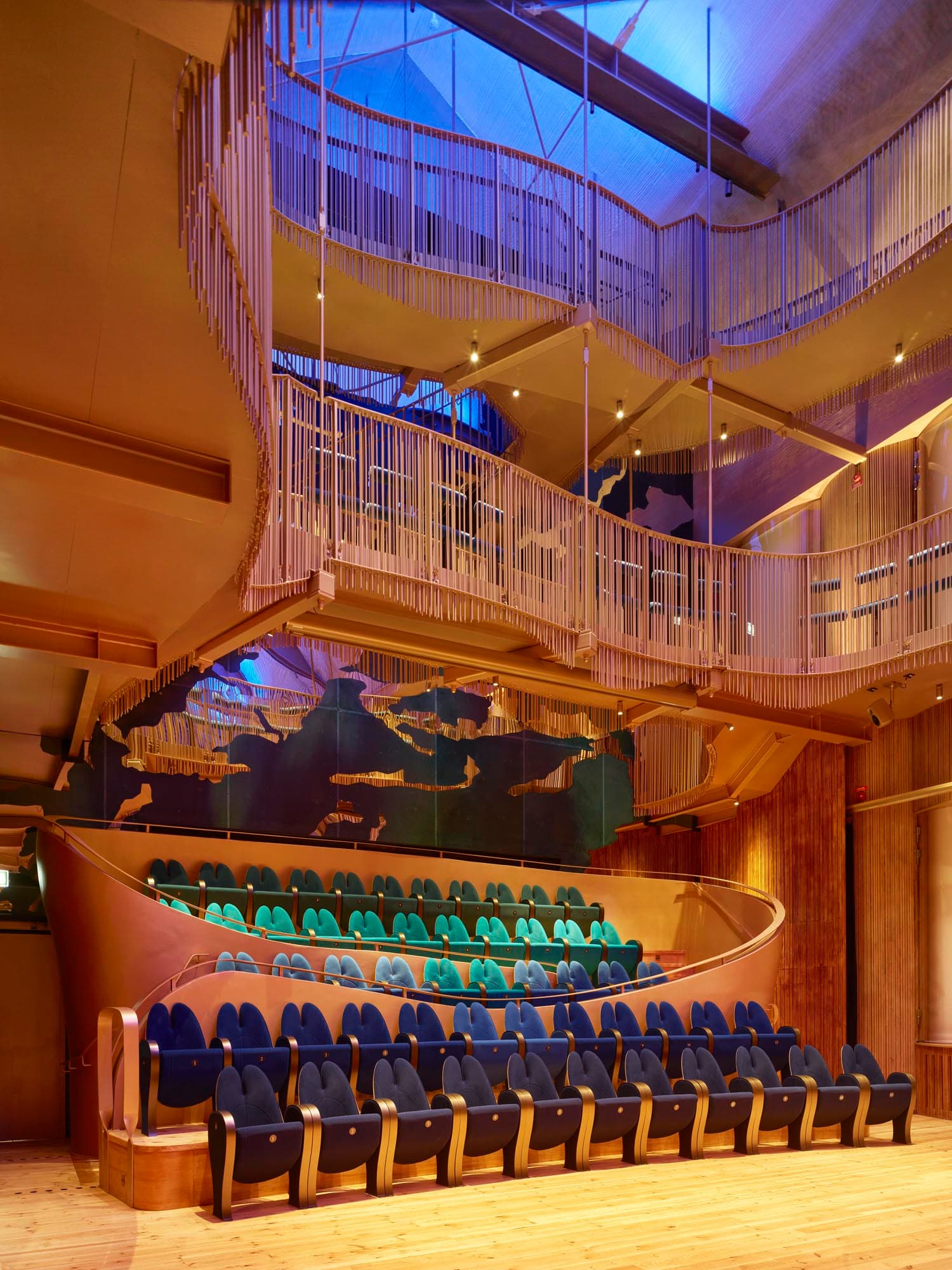
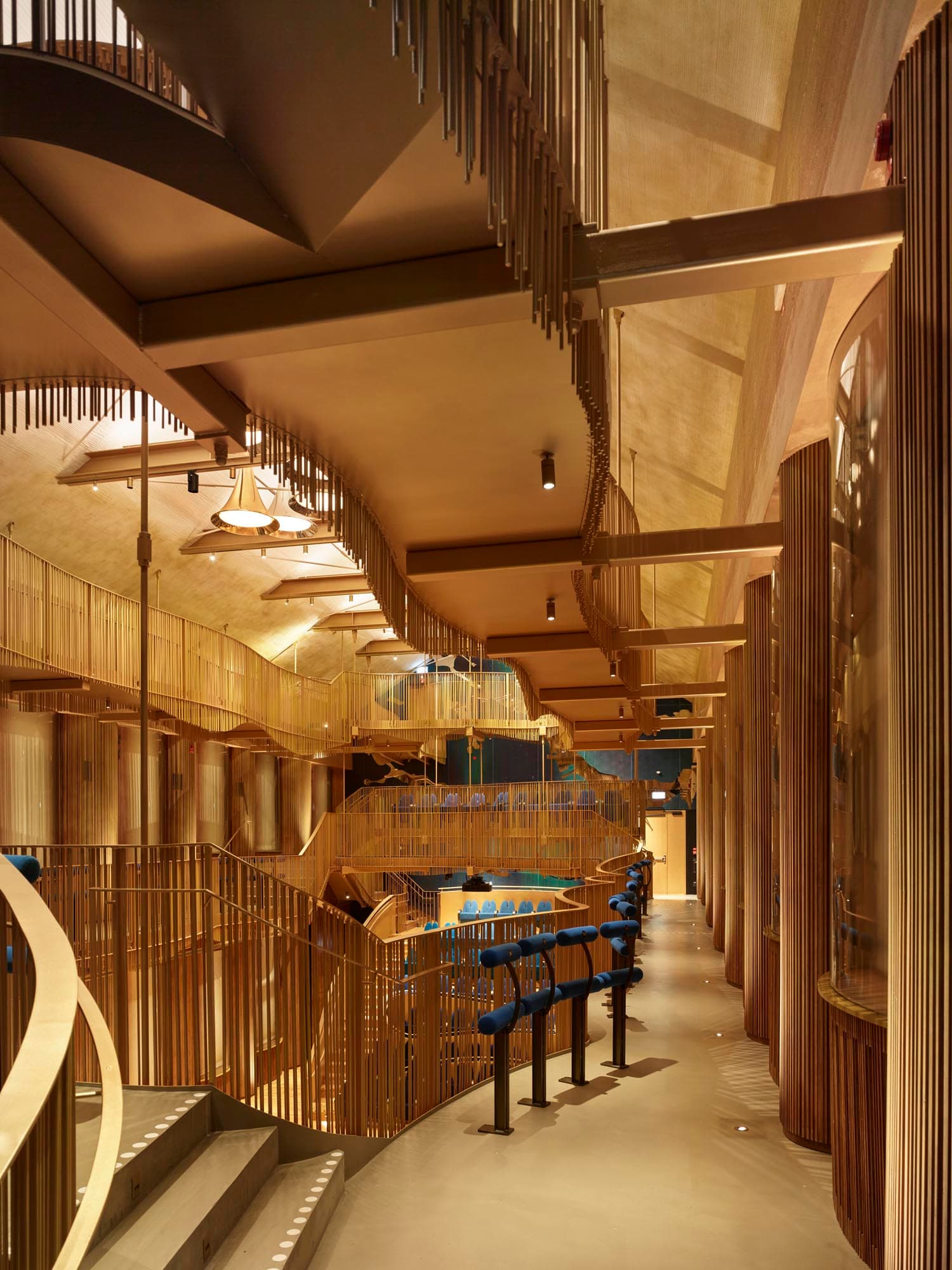
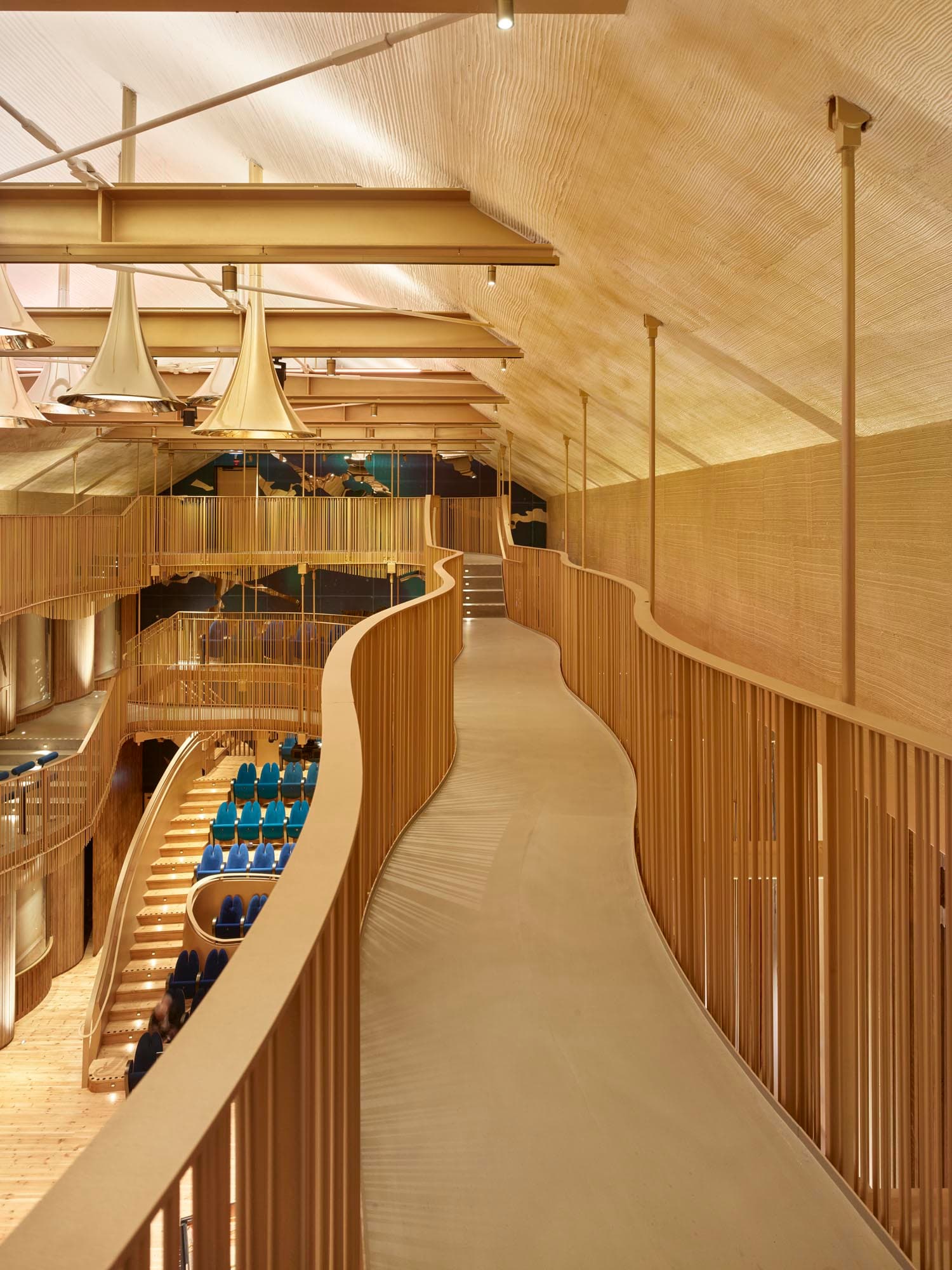
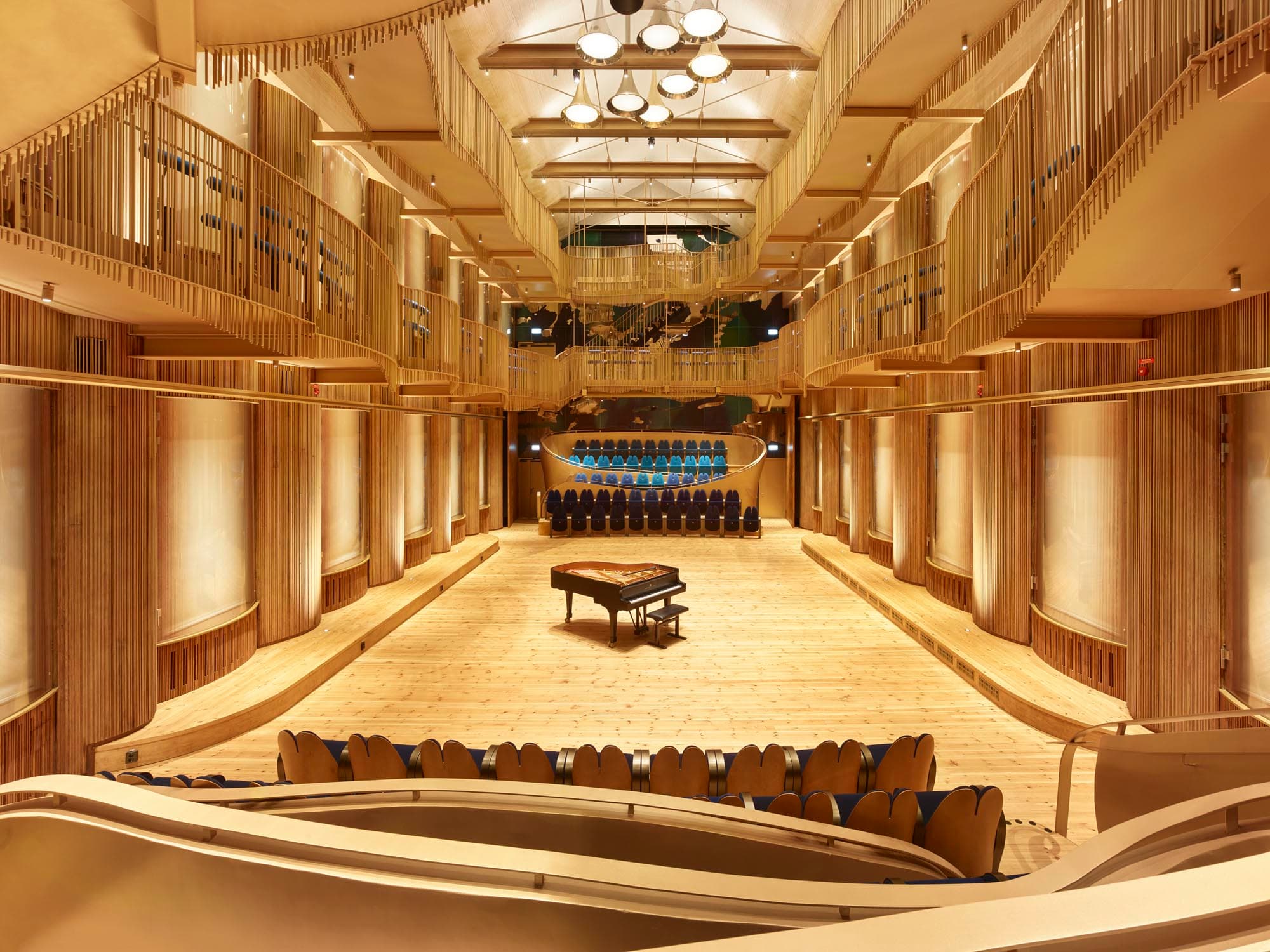
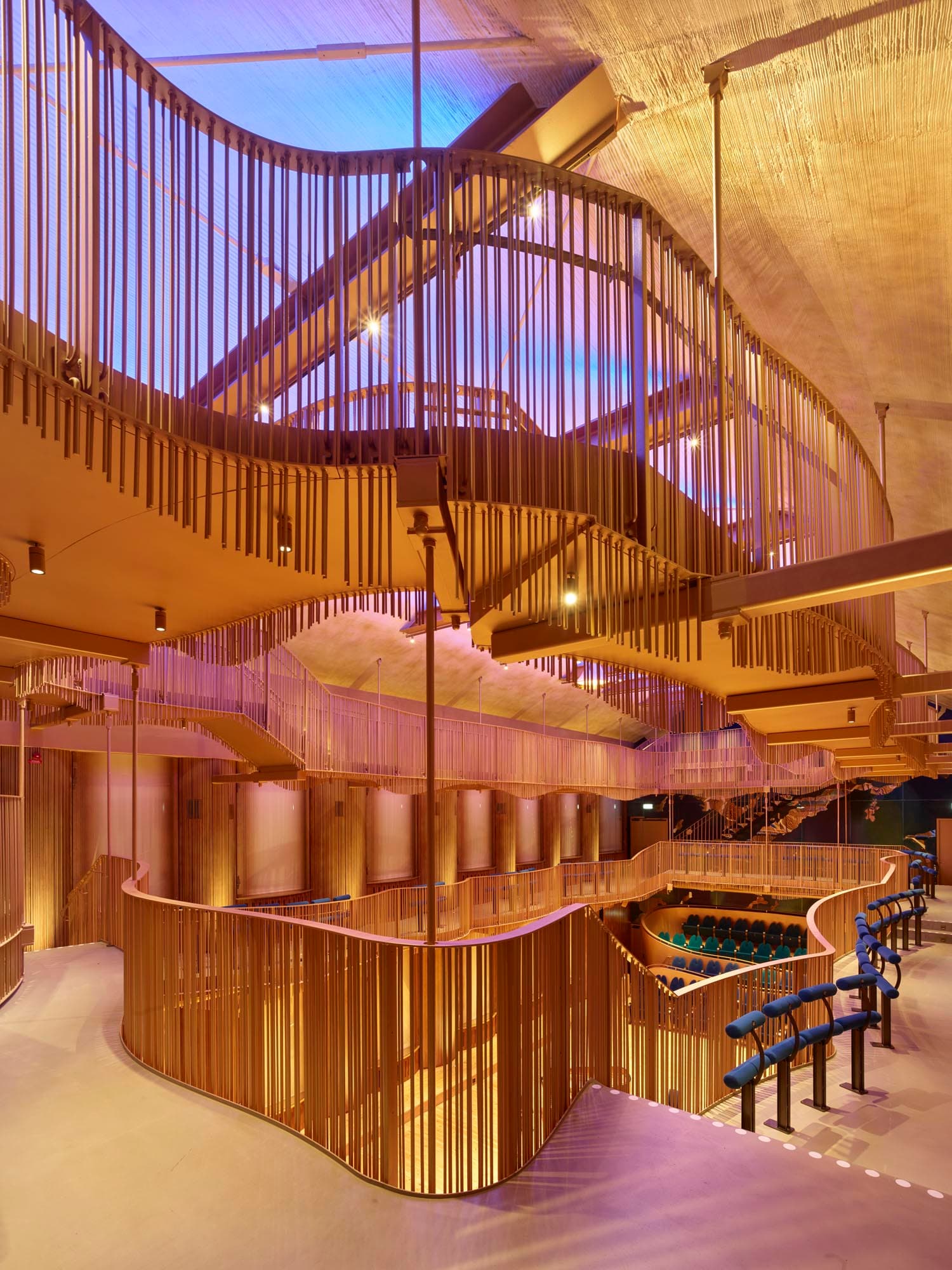
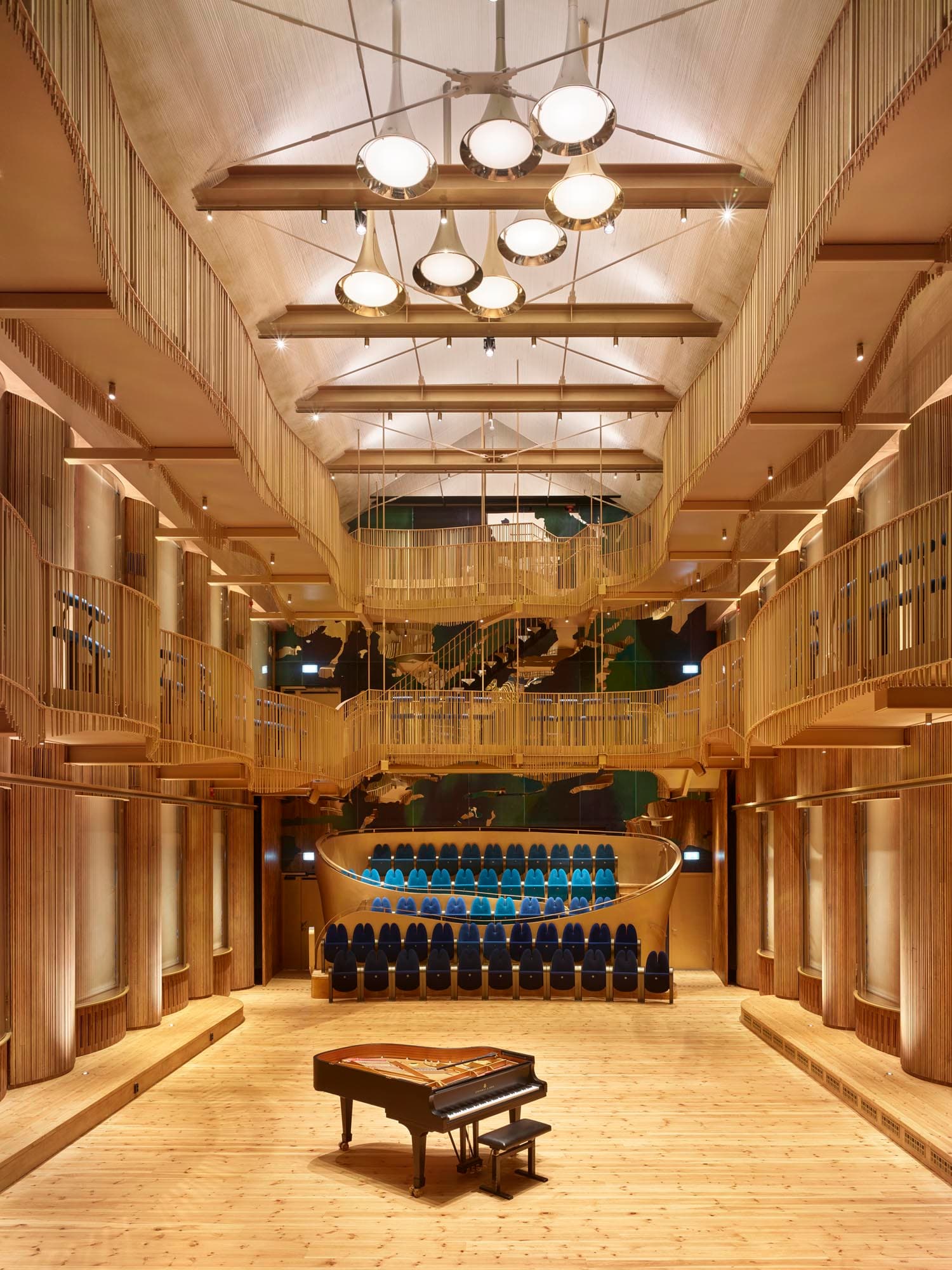
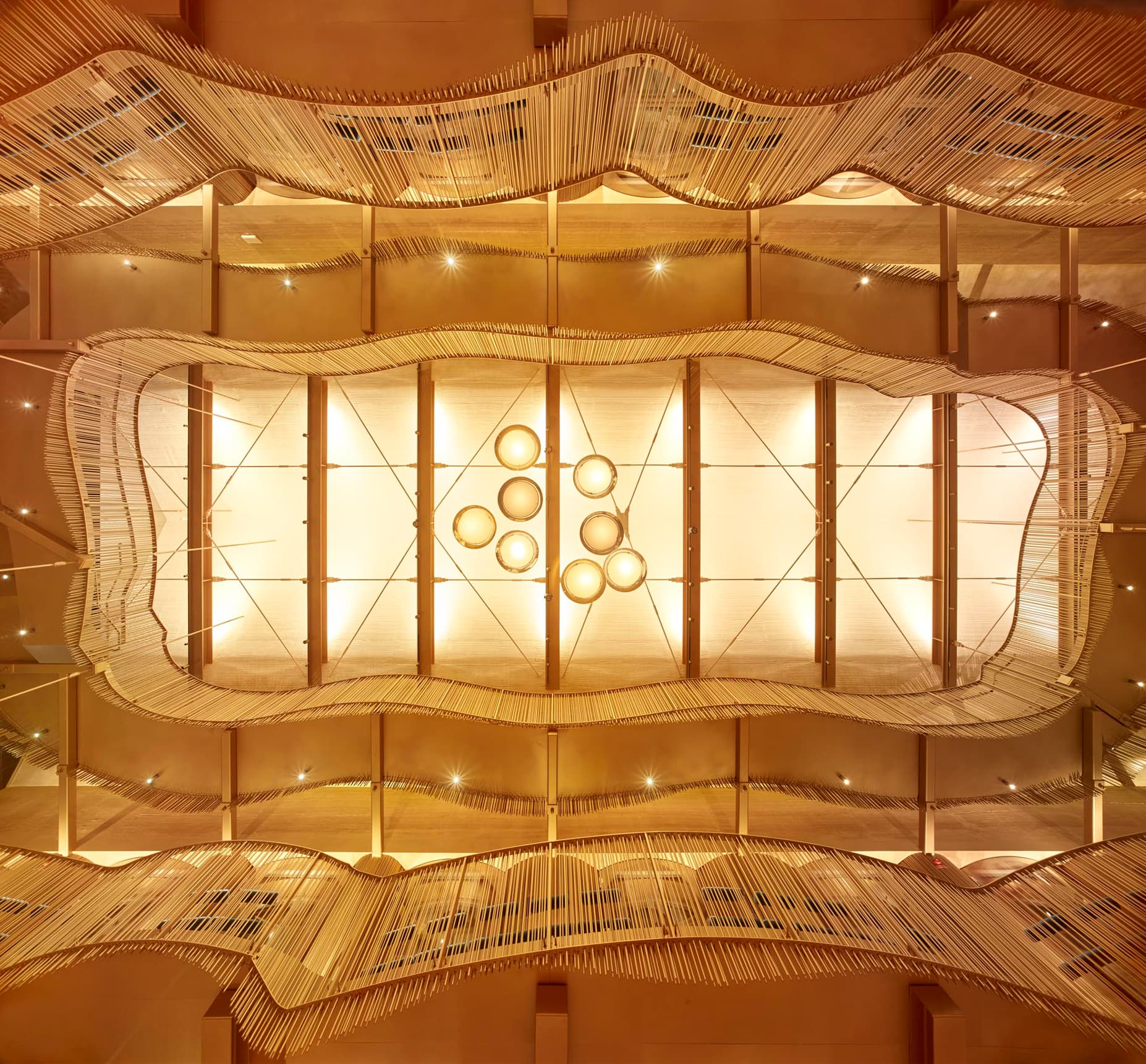
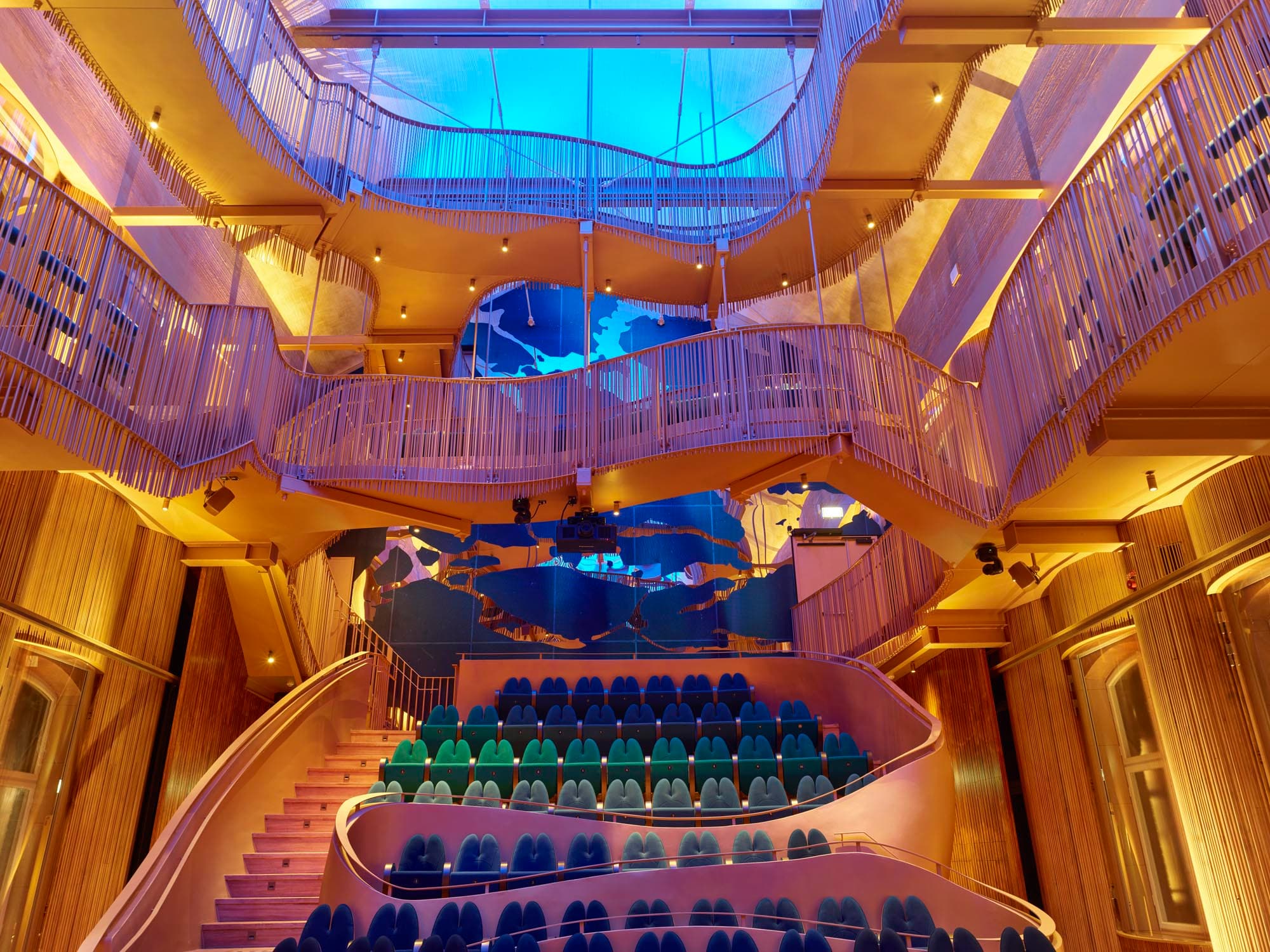
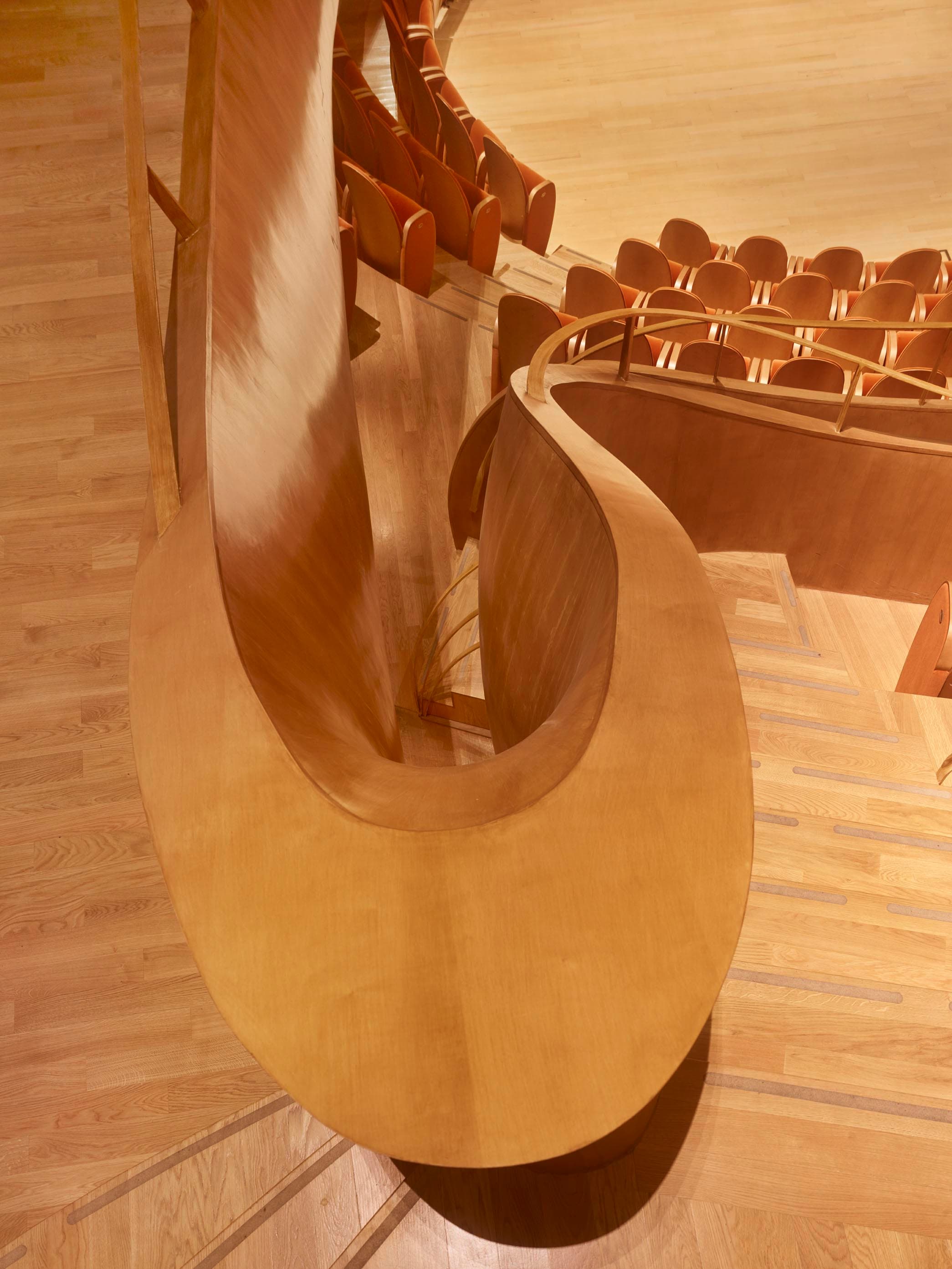
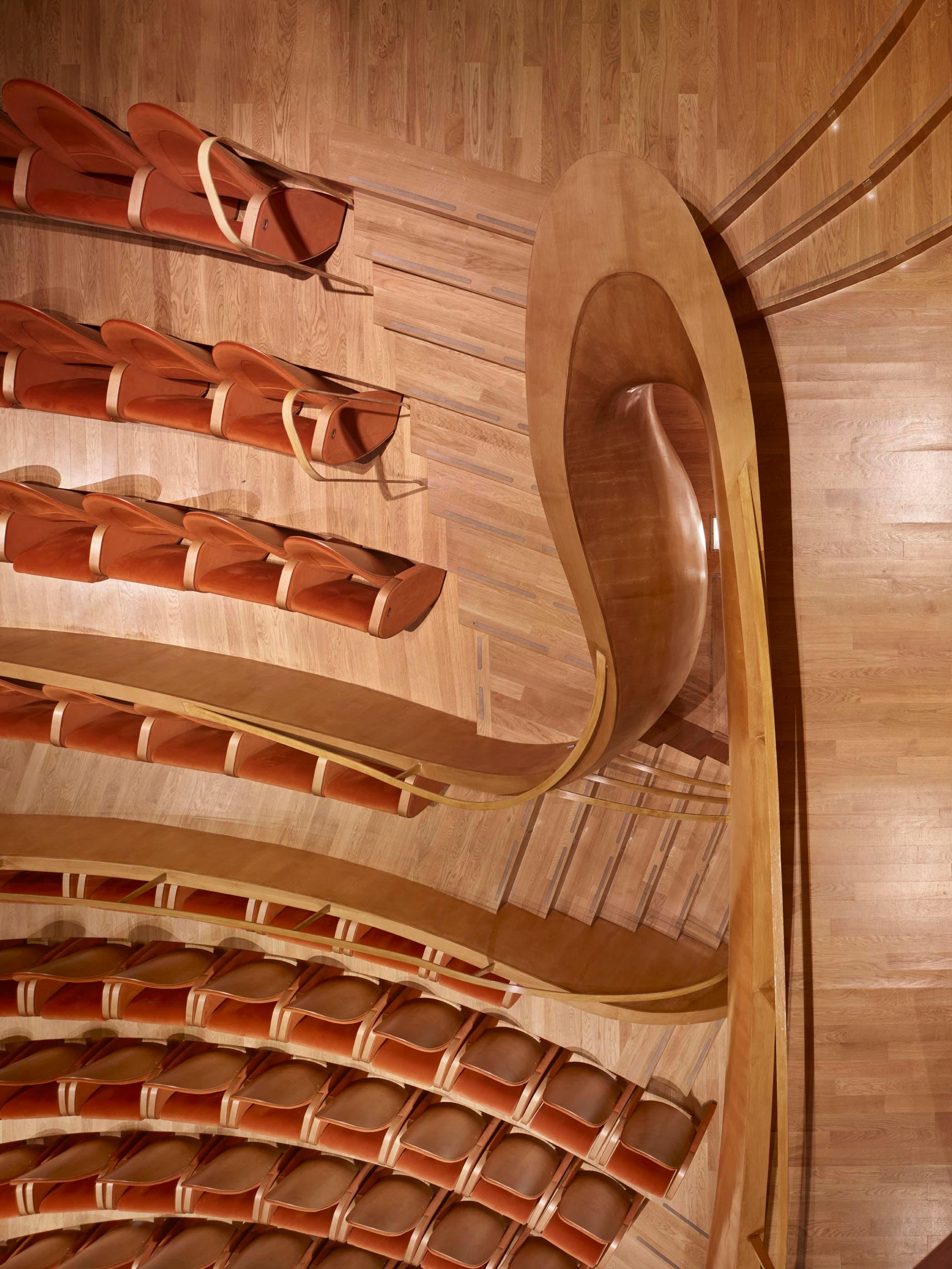
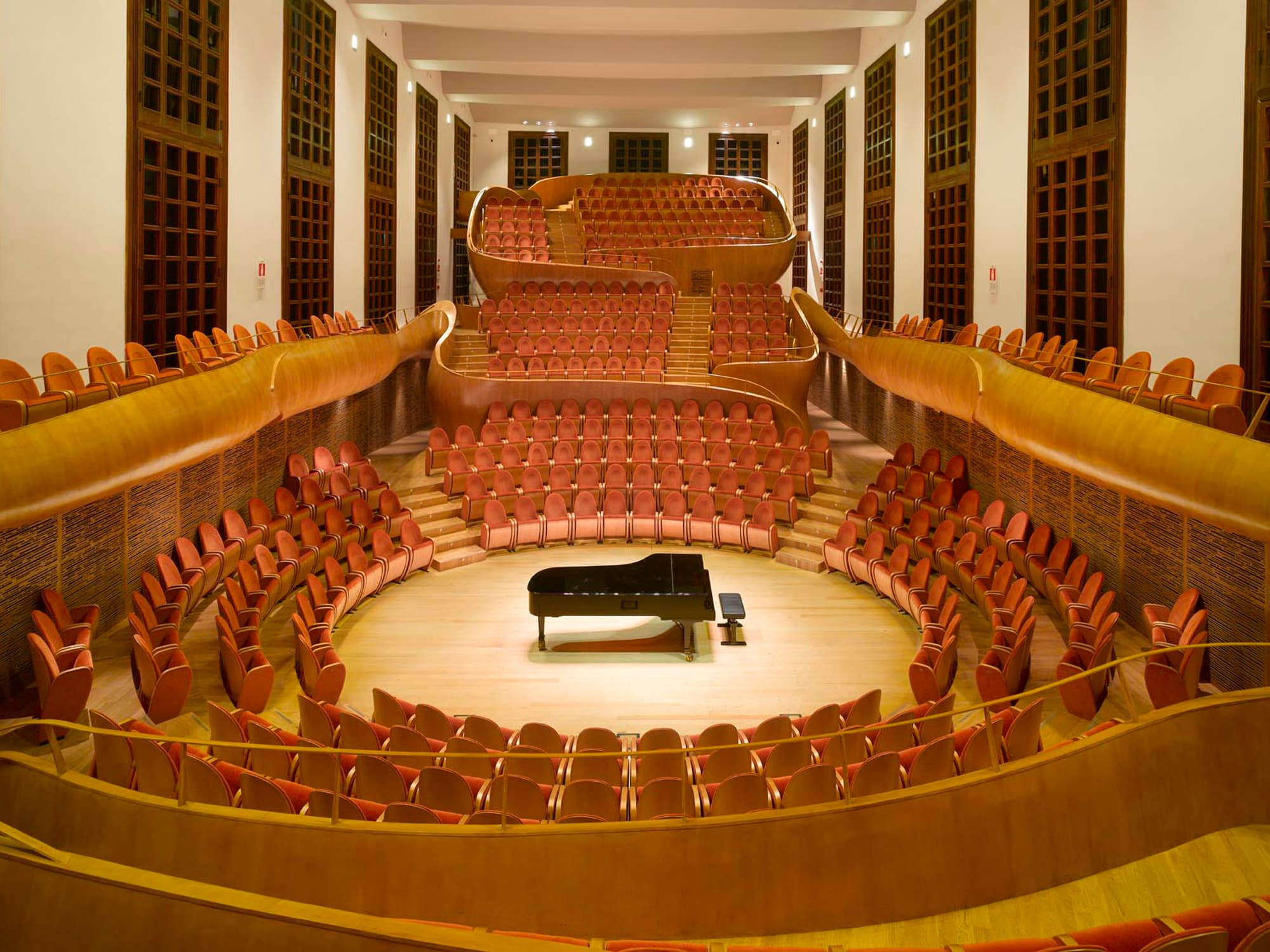
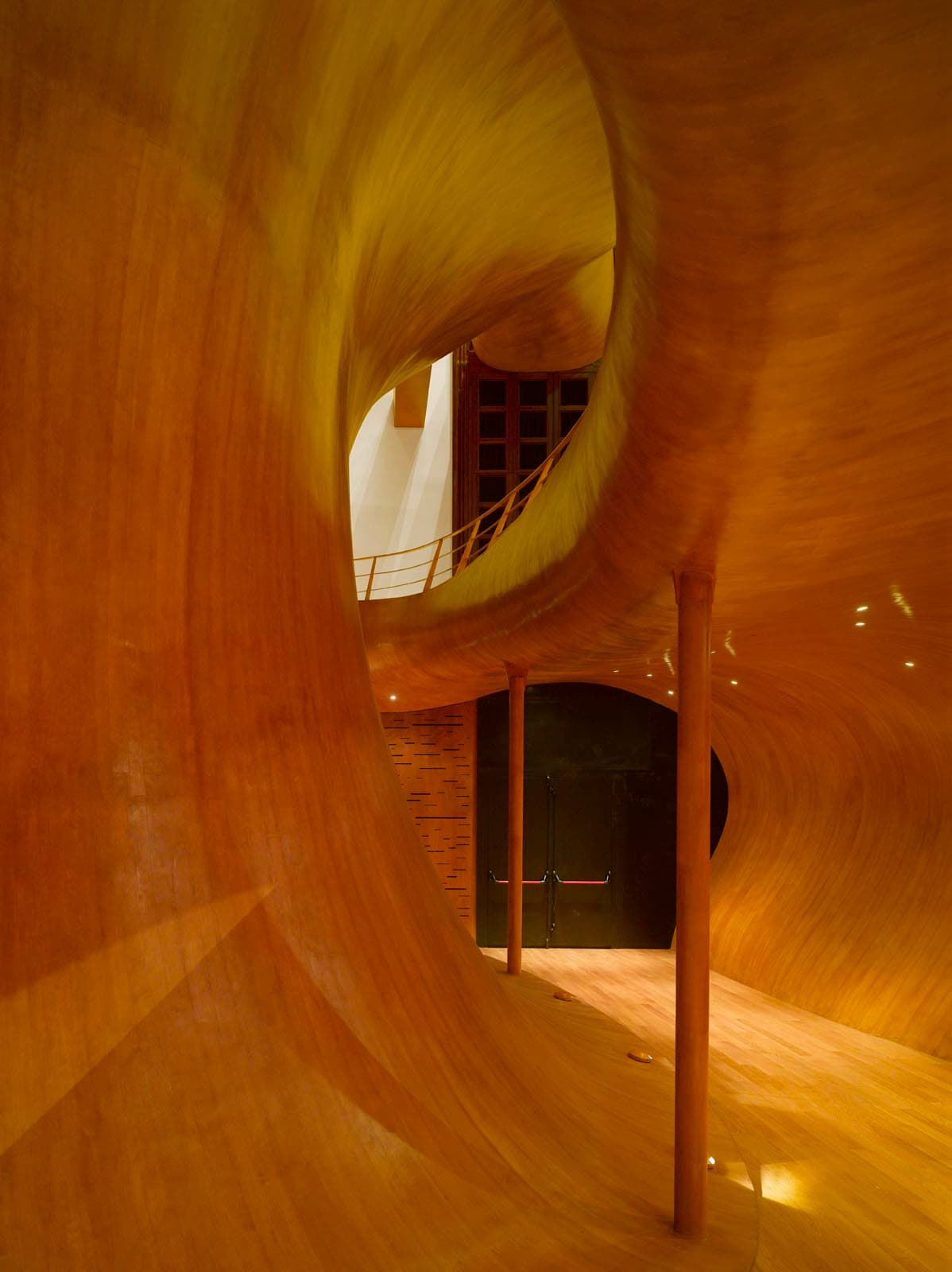
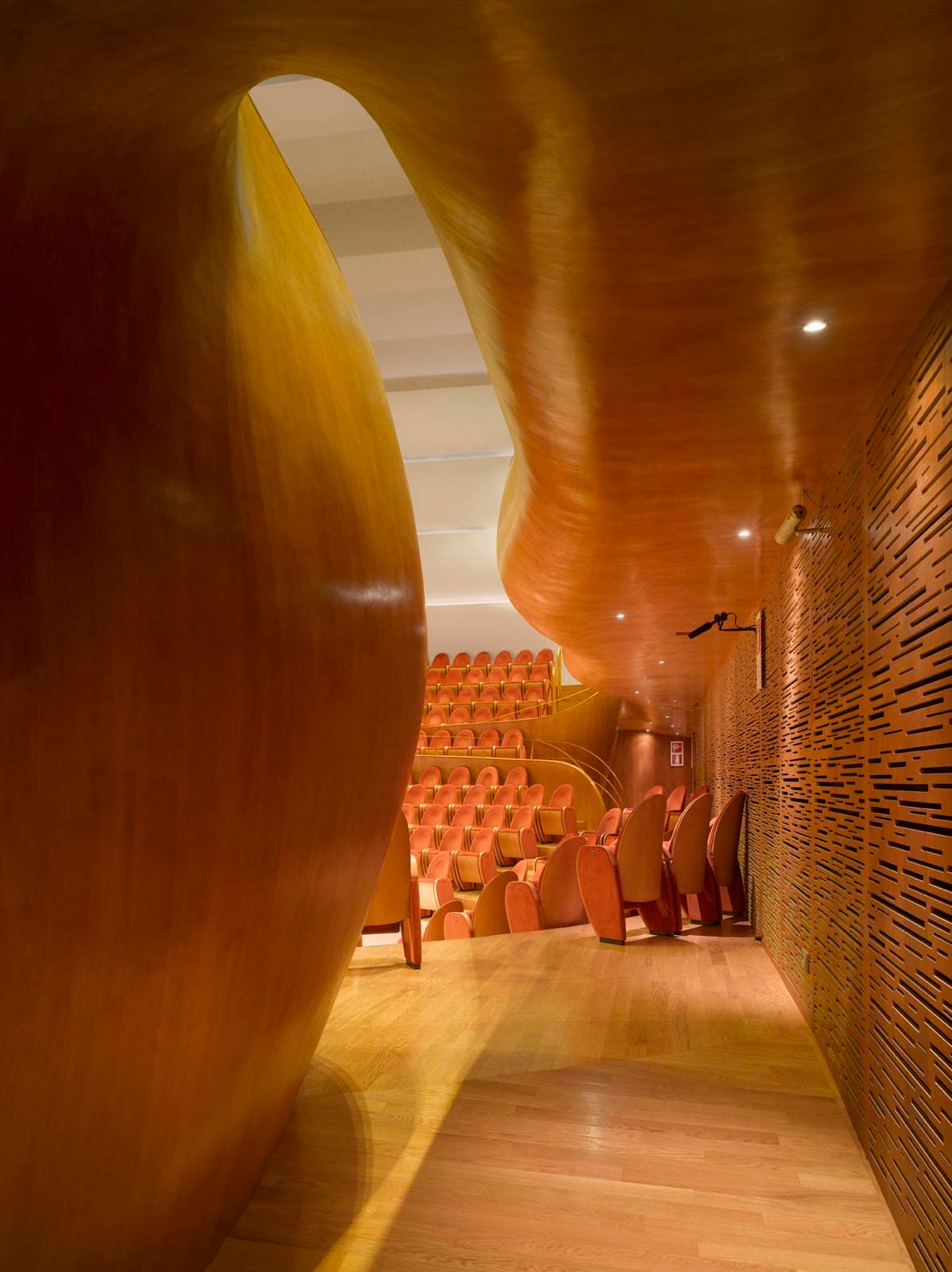
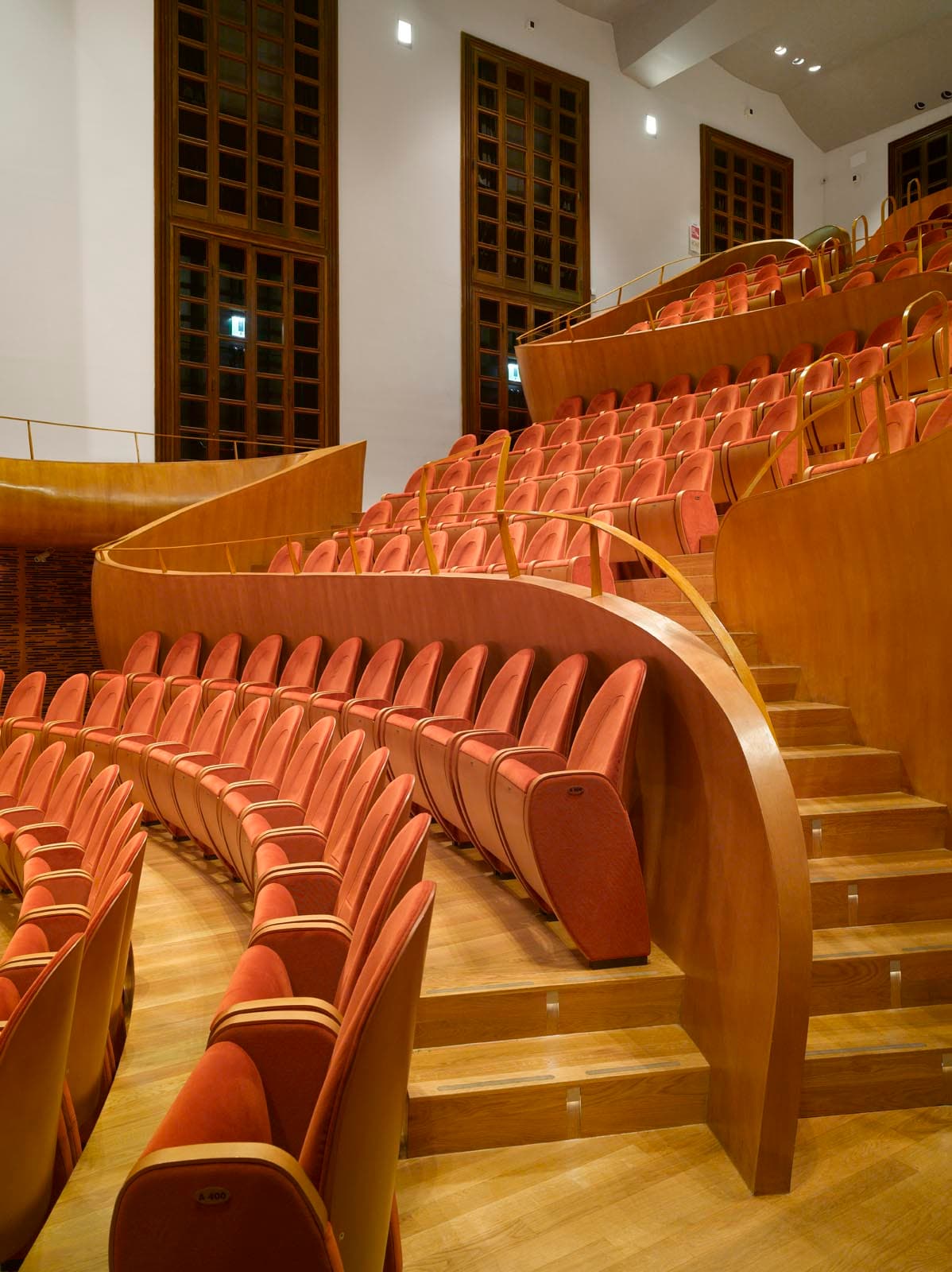
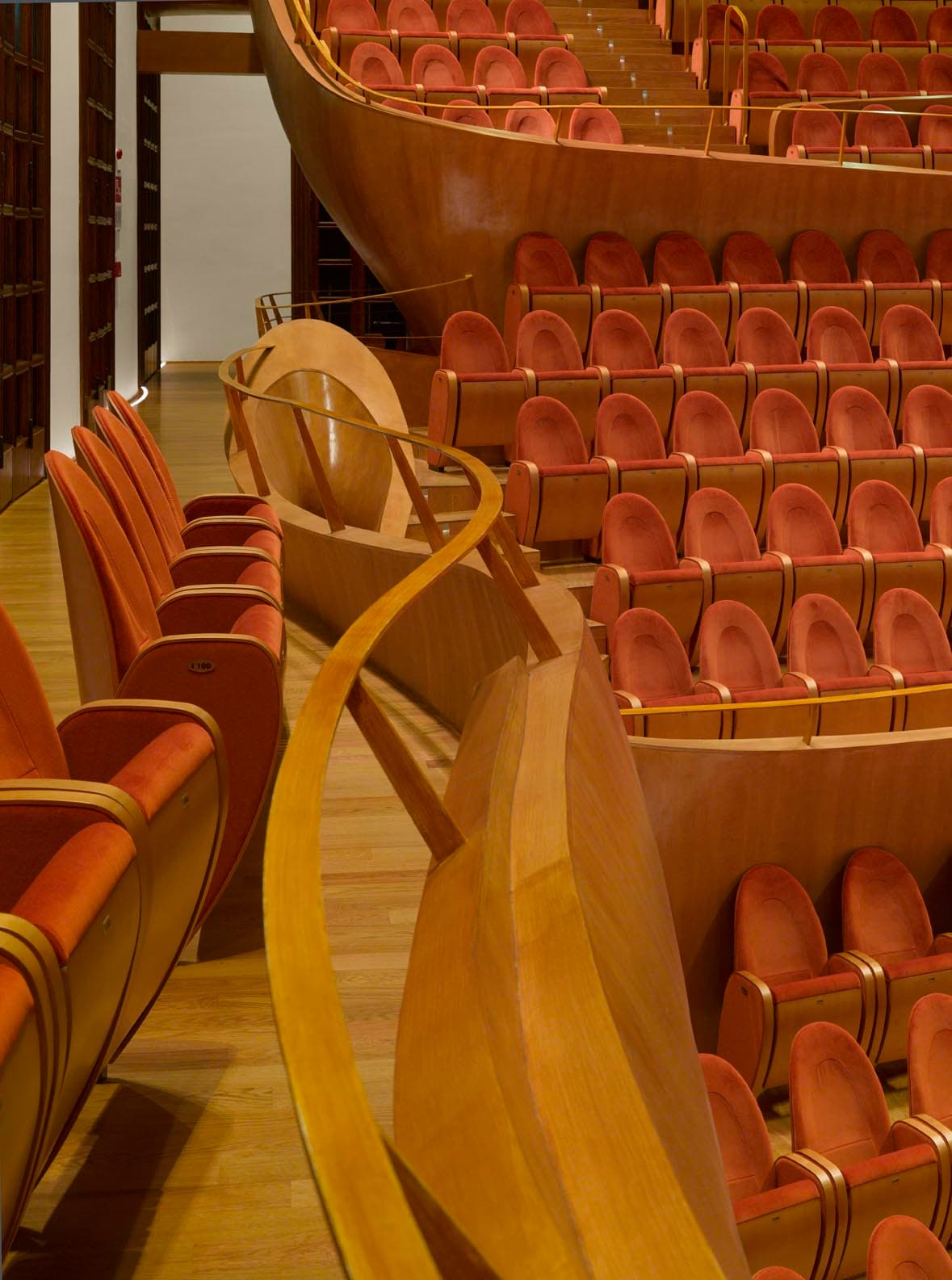
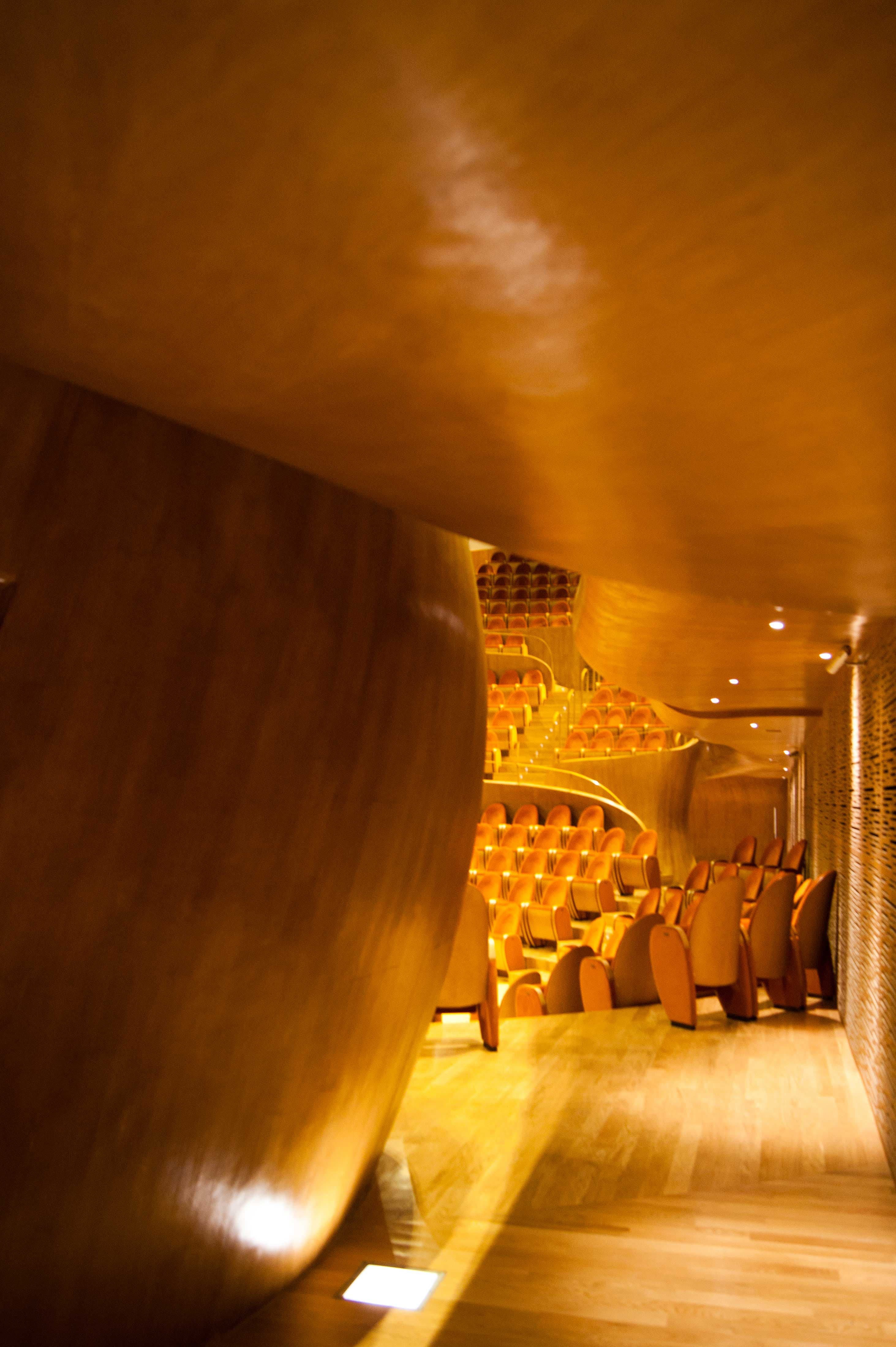
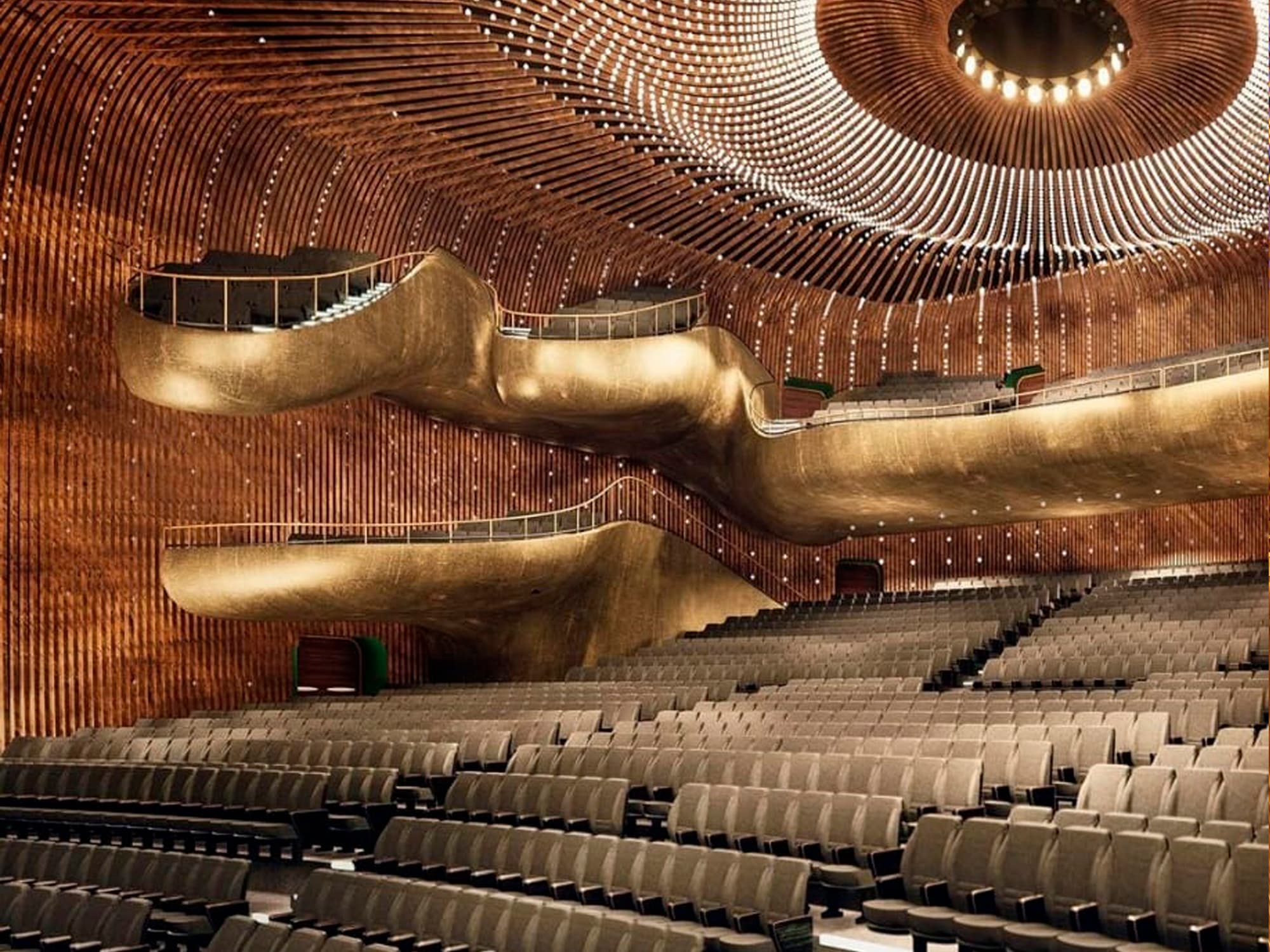
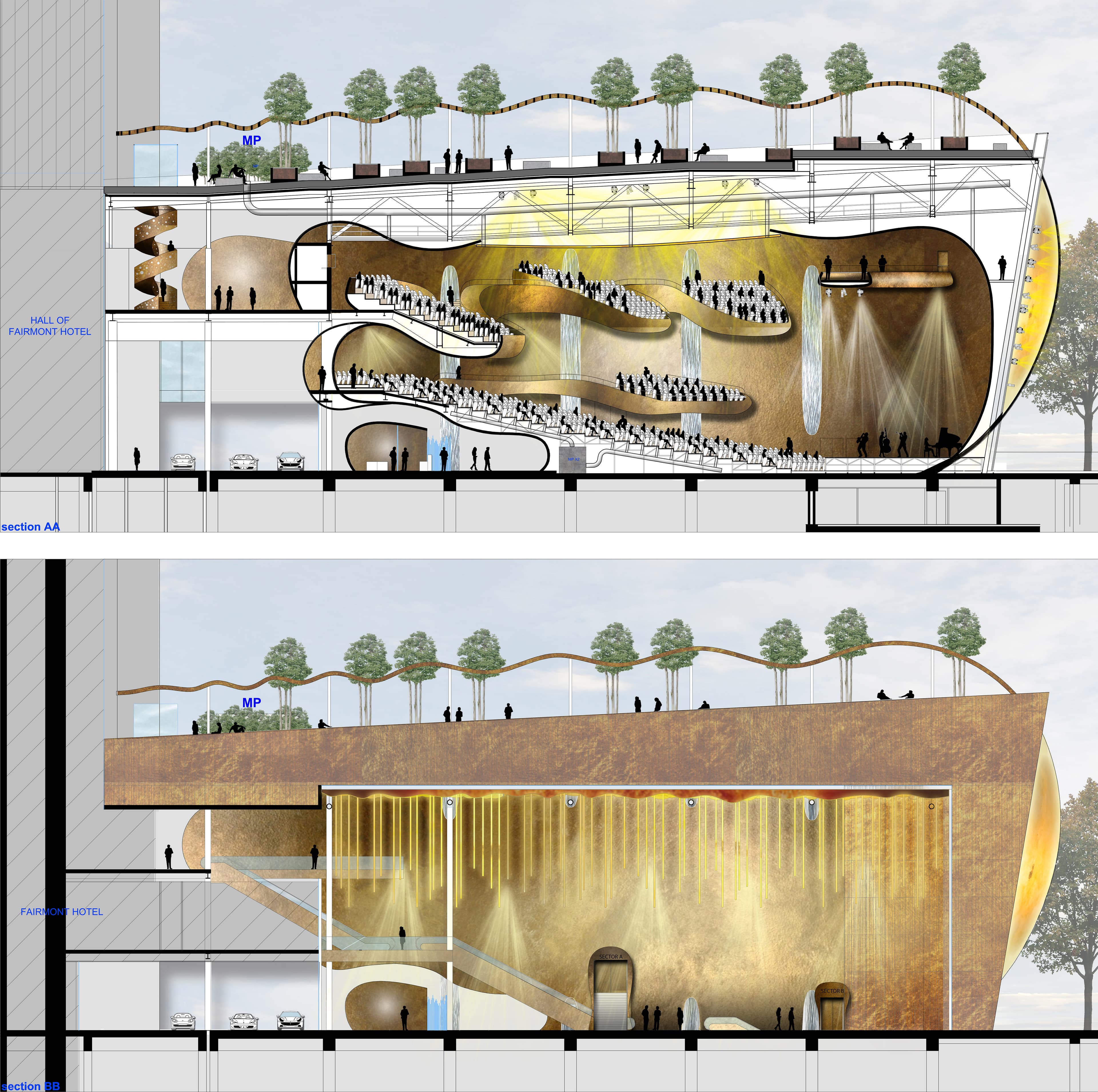
It is a place where spectators float, strolling on suspended balconies, in a space of inspiration and concentration that creates an immediate relationship between architecture, sound and music, musicians and audience.
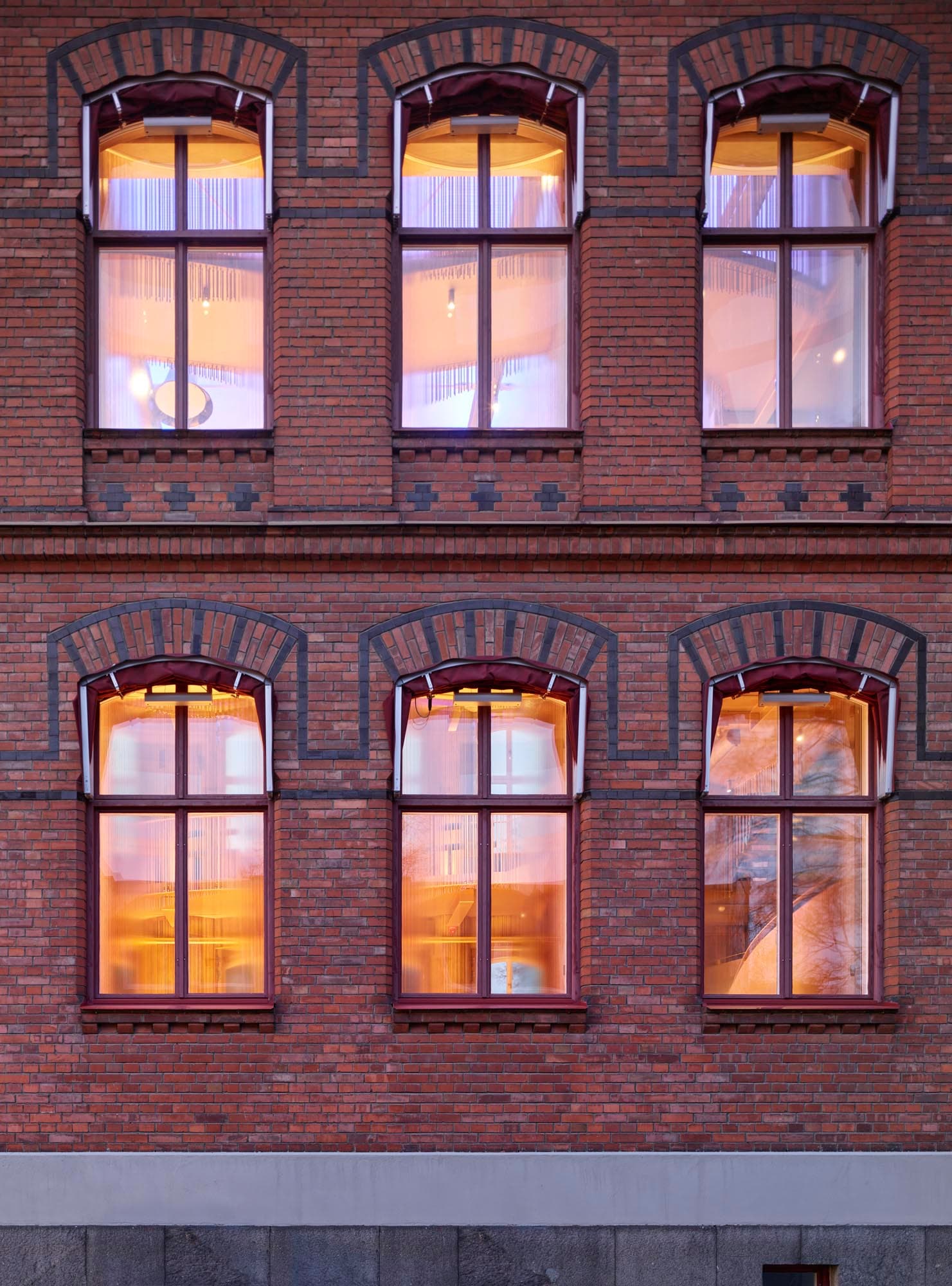
In 2015 Mark Tatlow, director of the Lille Akademien, the city's historic conservatory founded in 1998, asked architect Palù to conceive the new Concert Hall also as an educational center and natural extension of the O/Modernt, a creative and multifunctional project, combining the different arts, distant historical eras and different peoples' cultural traditions.
Research and experimentation have been the basis and starting point of the architect's work, aware that he is working towards the creation of a "democratic" and fluid educational space, with no physical barriers between artists and audience.
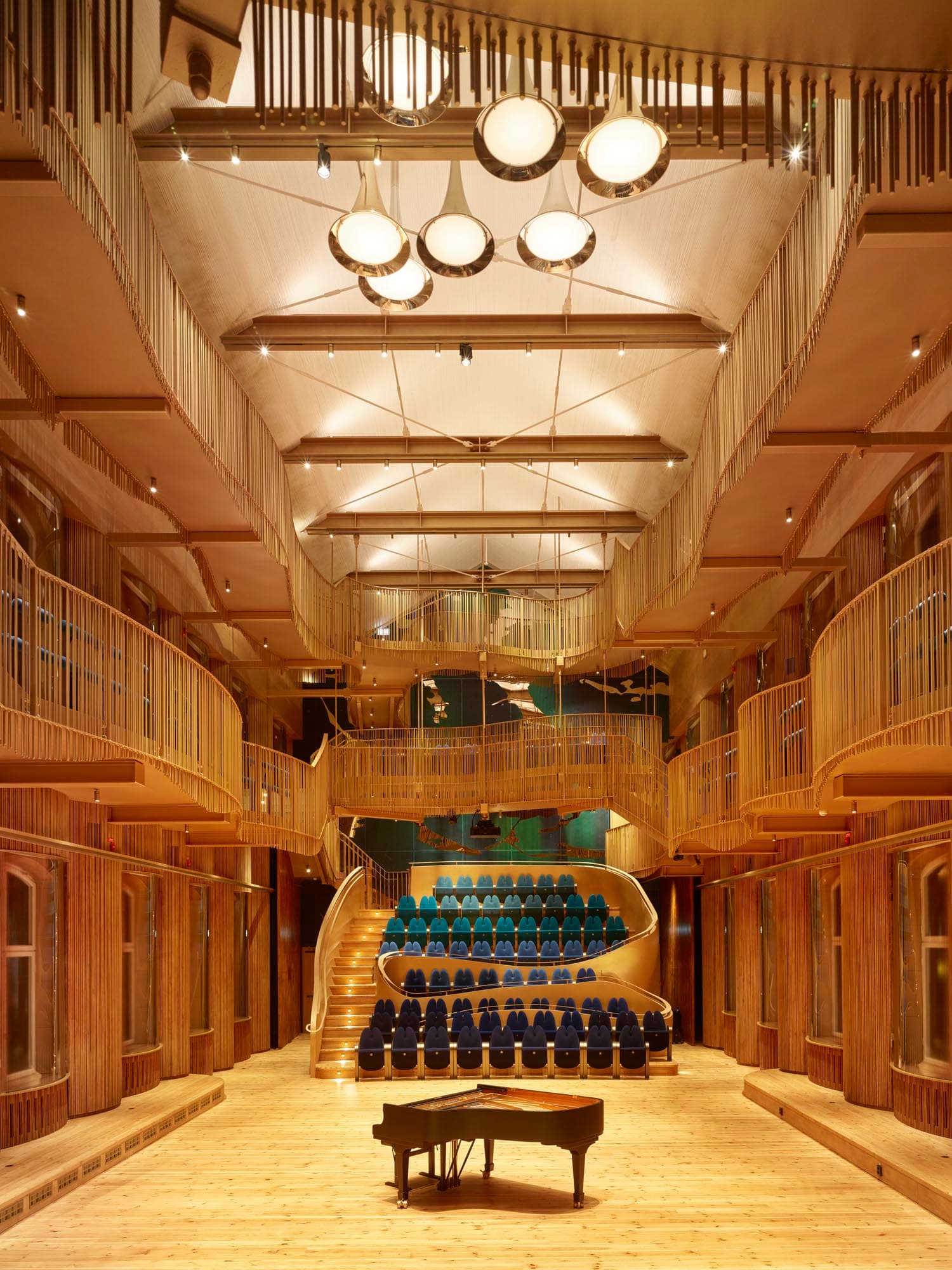
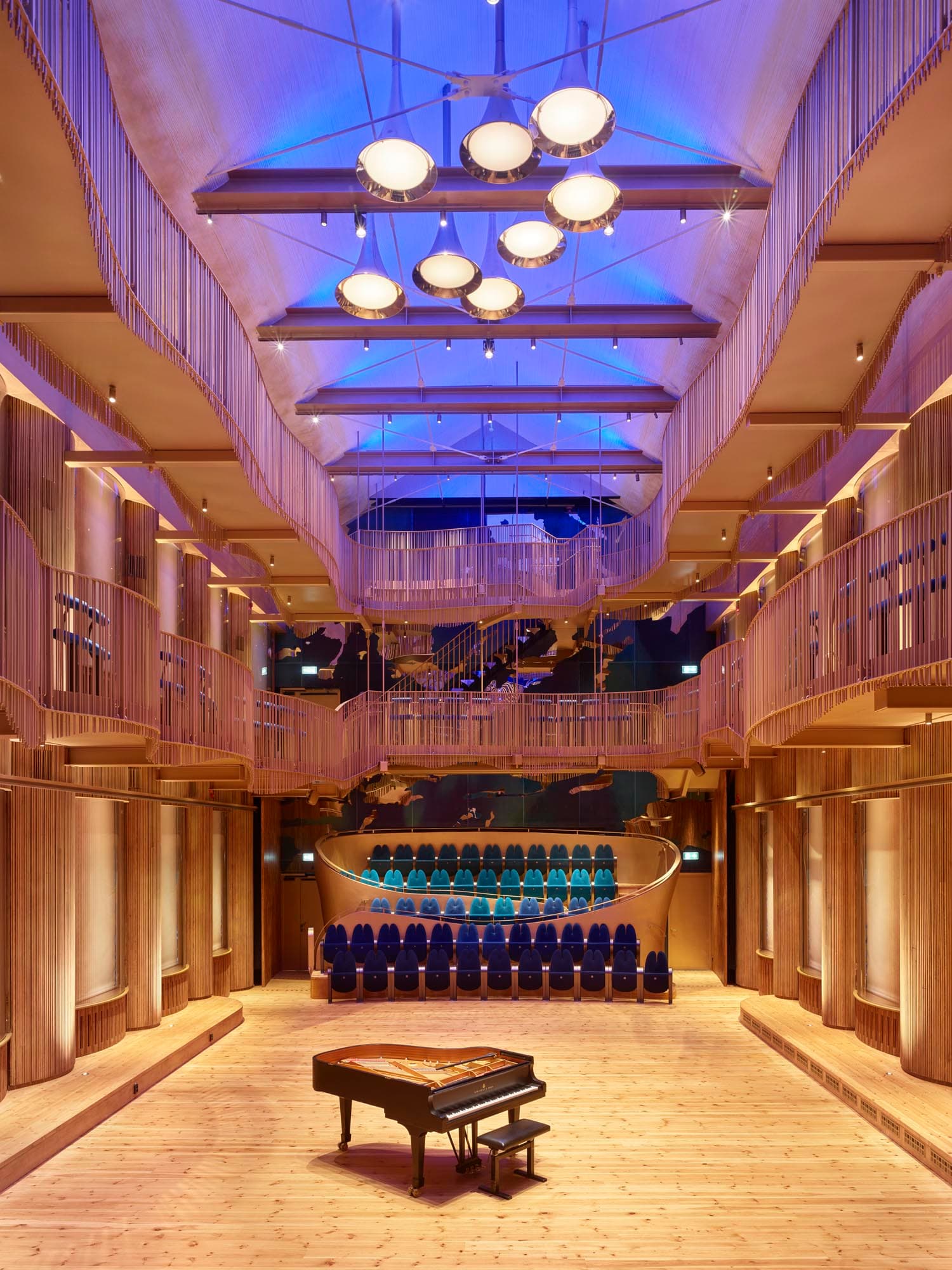
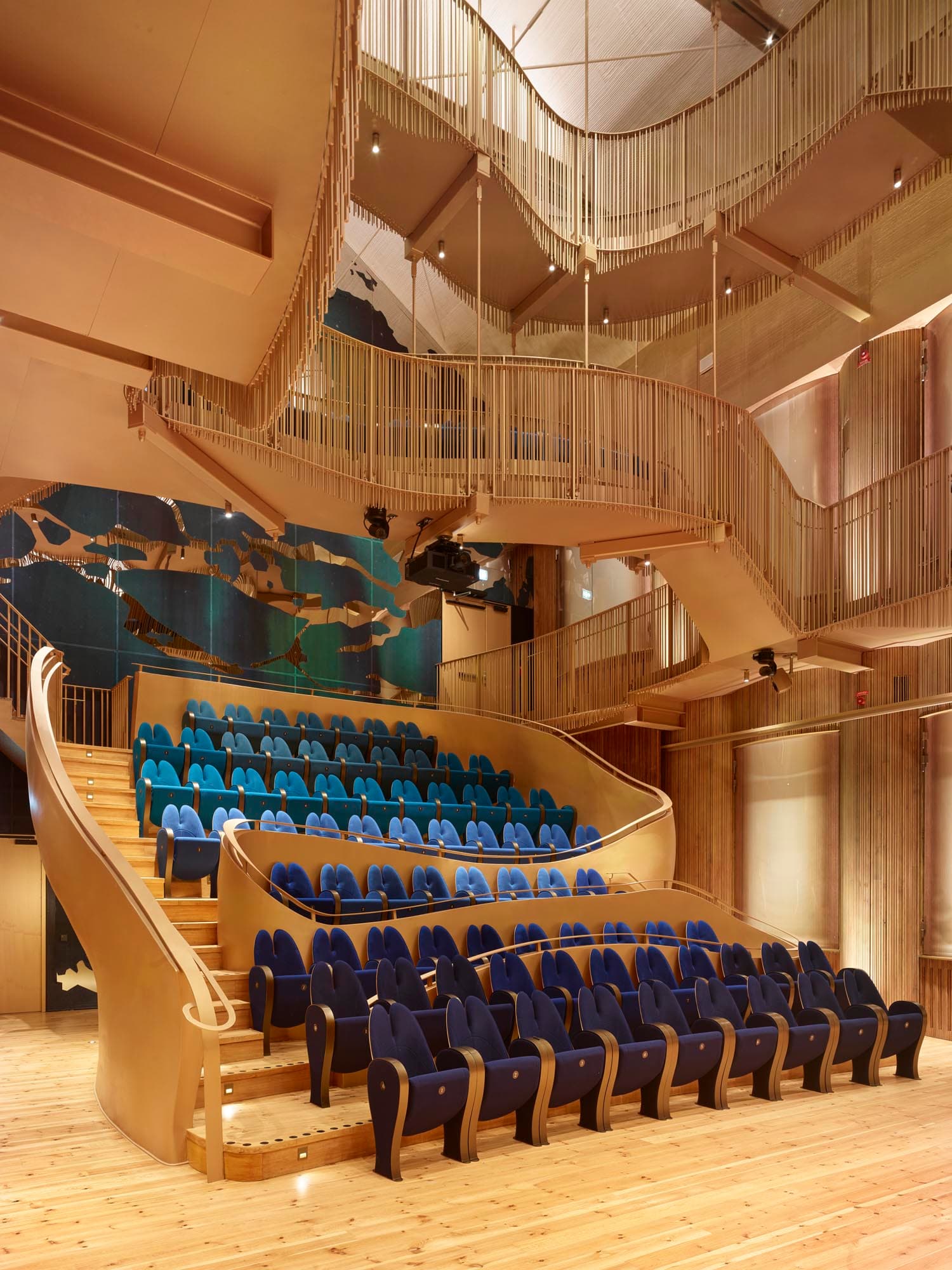
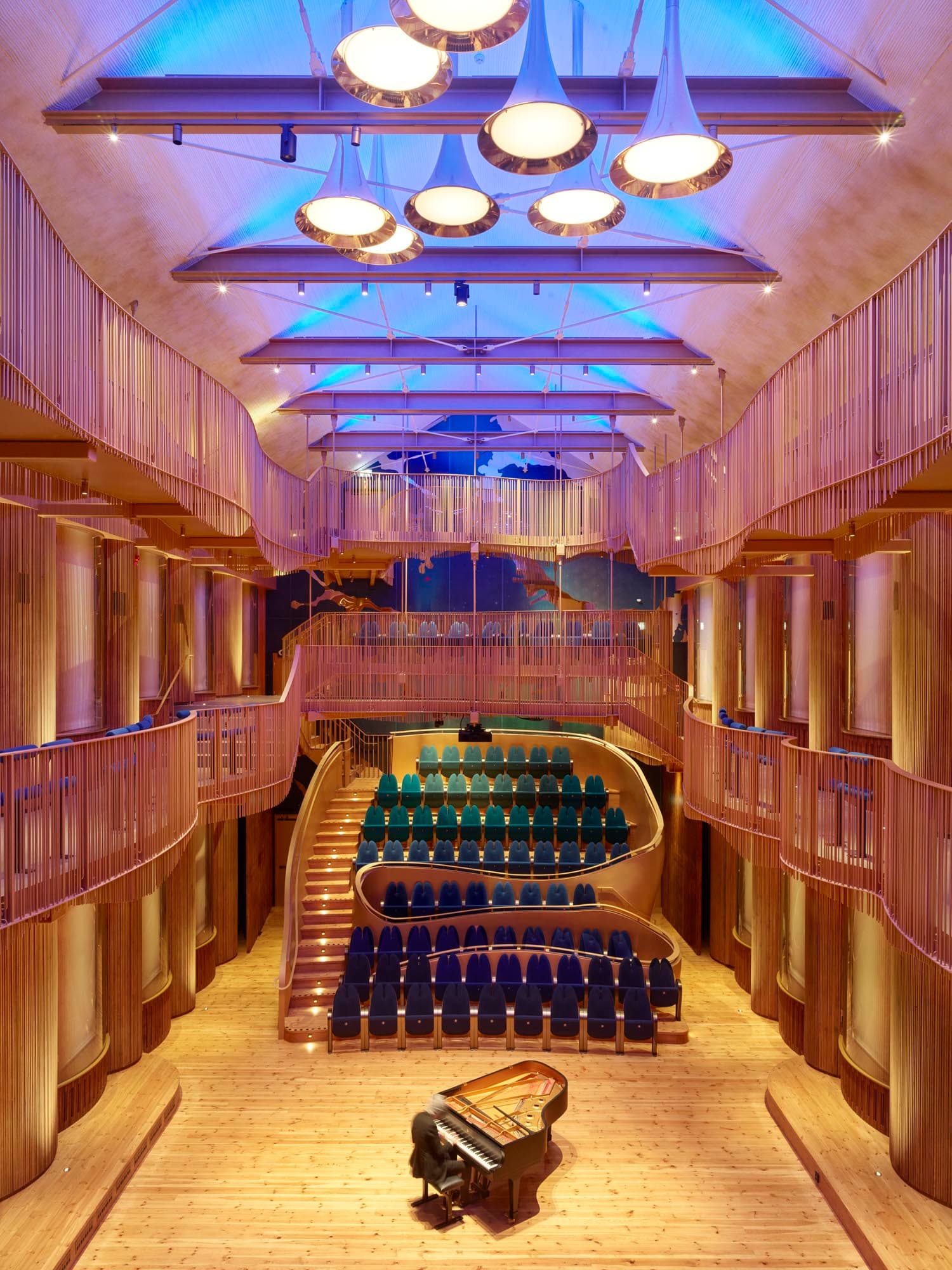
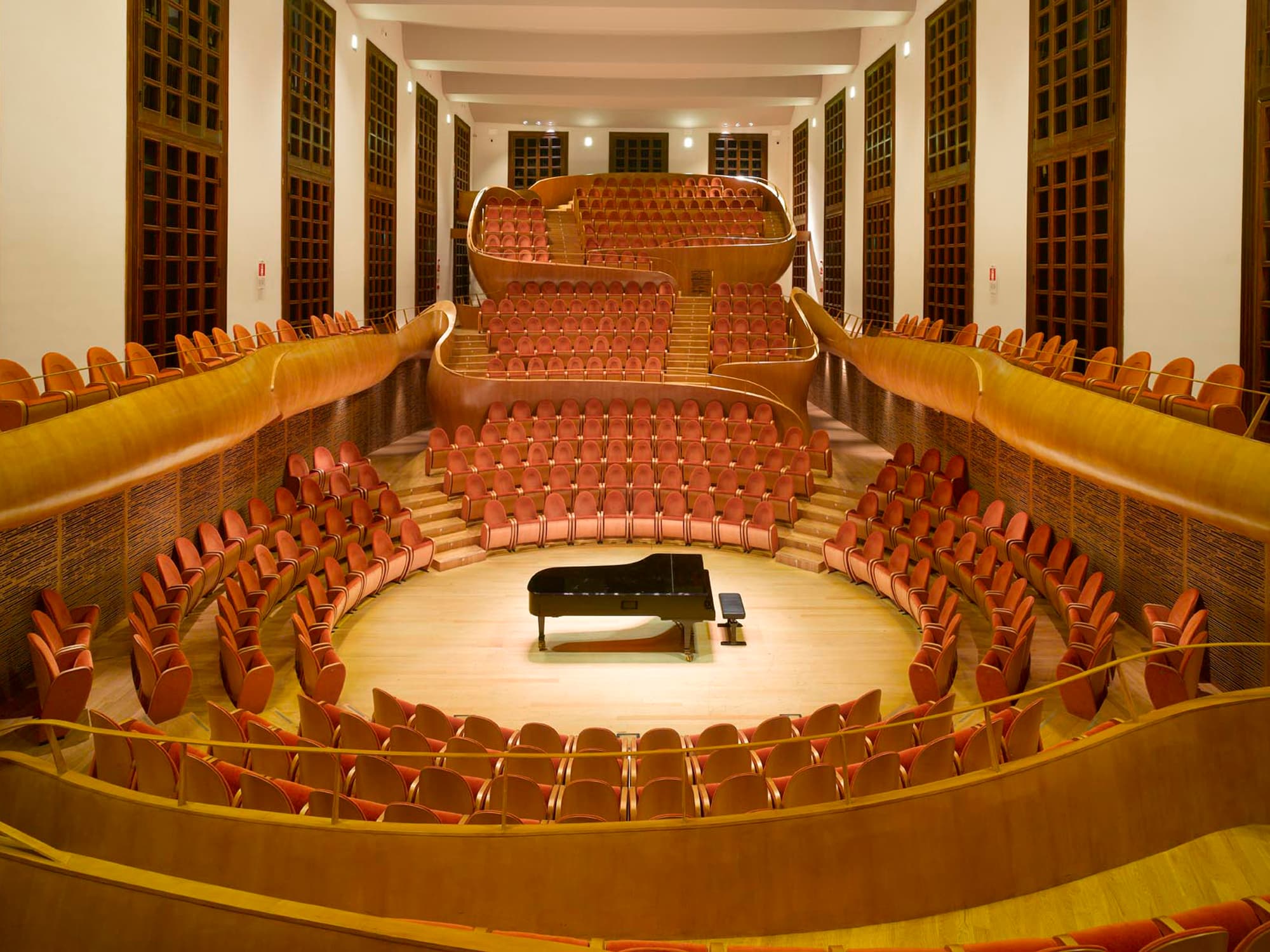
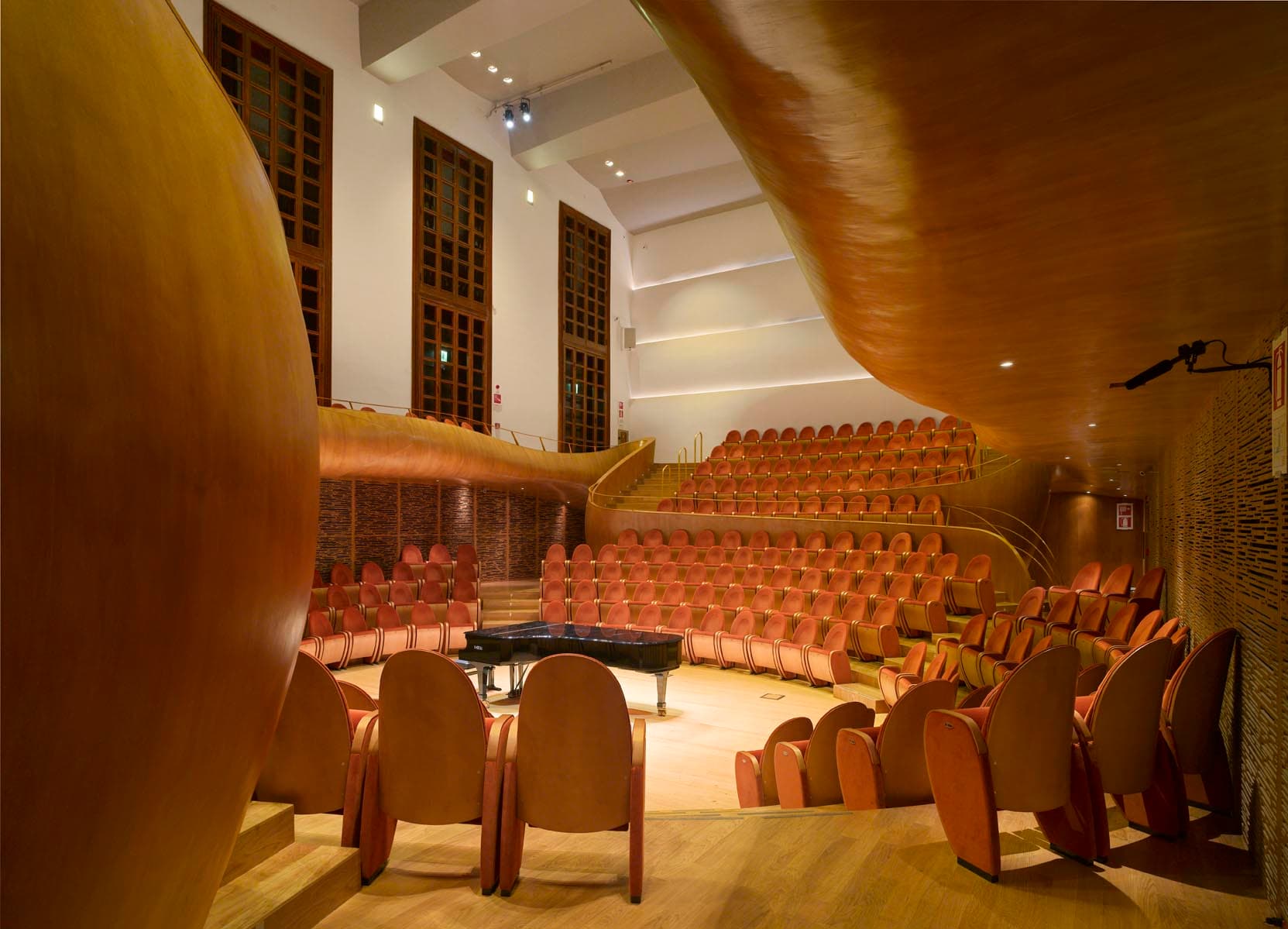
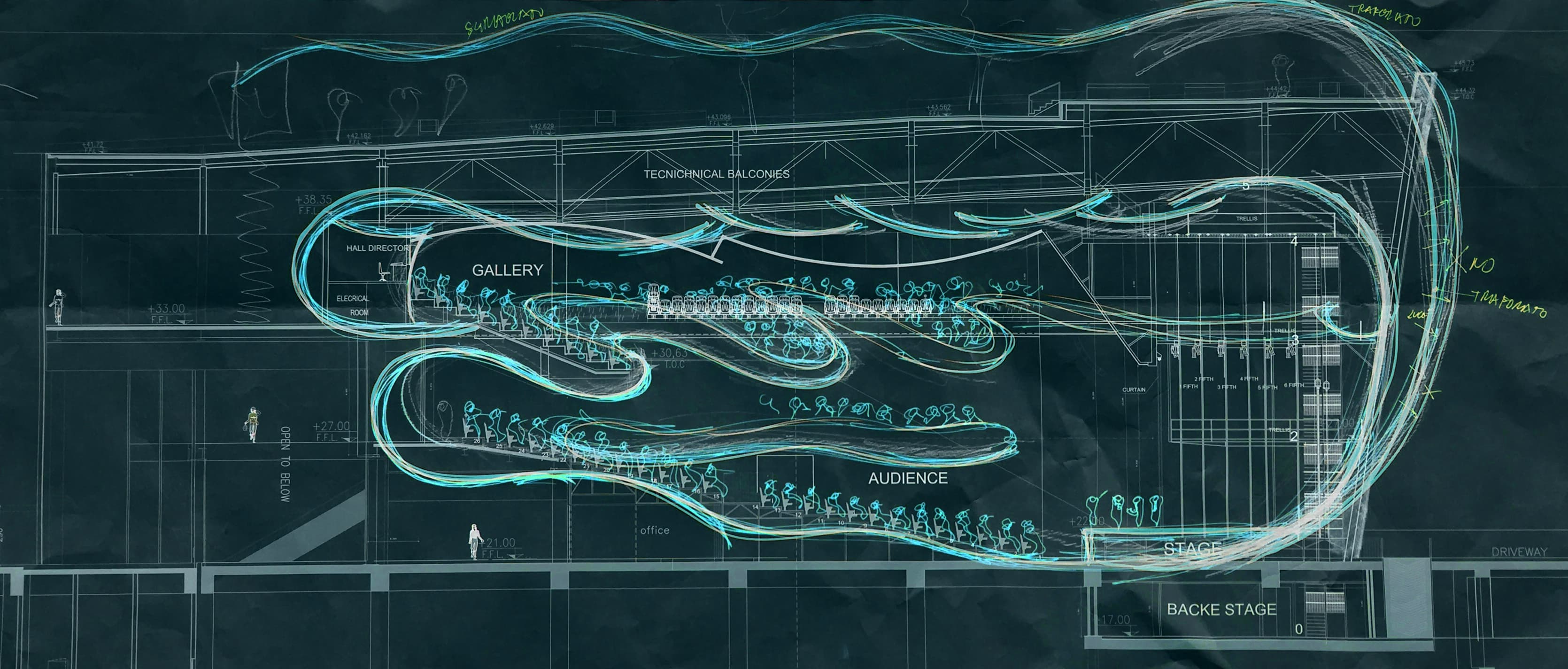
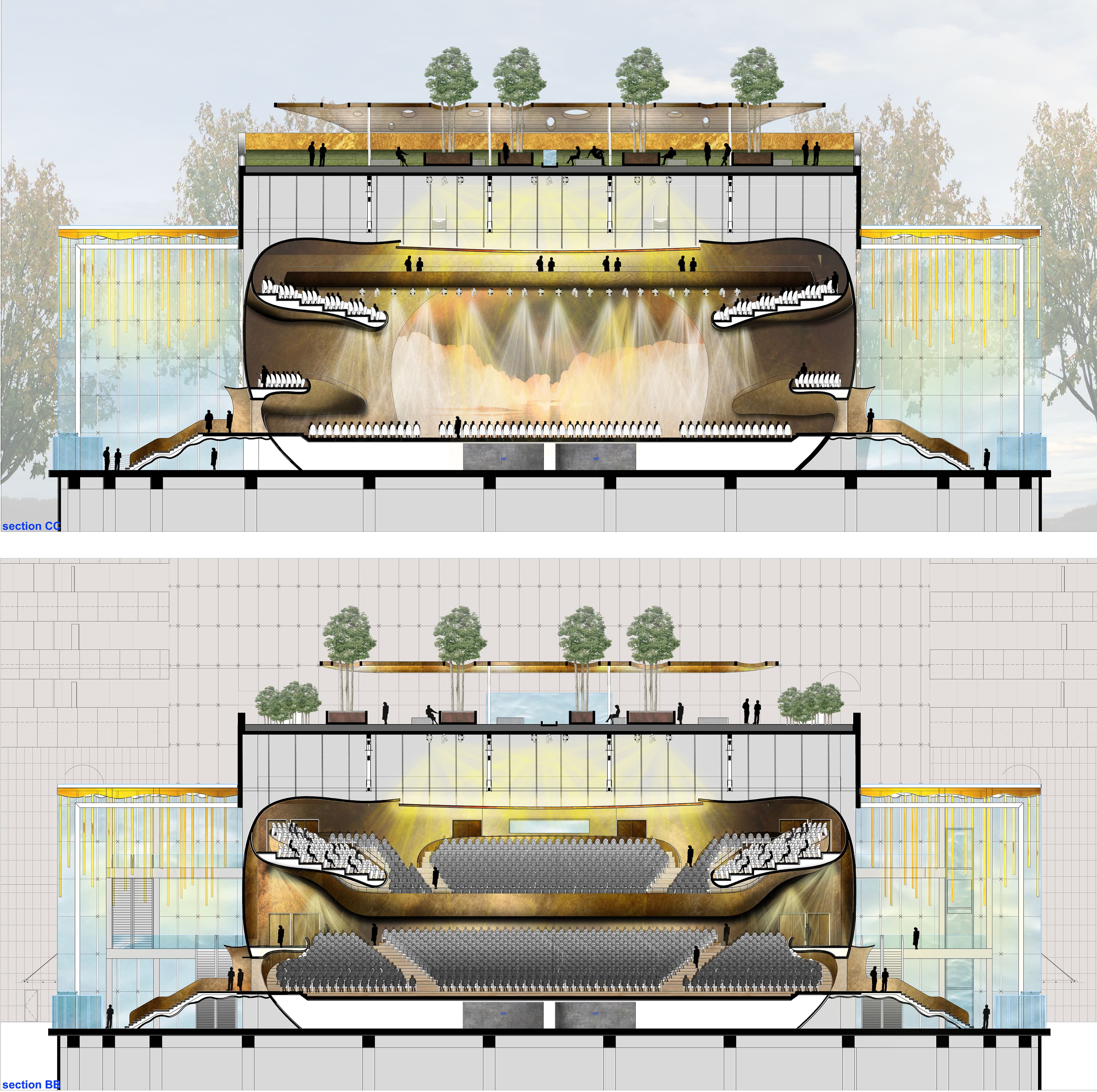
The hall, which is small in size, accommodating 300 seats, but equipped with a very large stage, was created as an experimental space, capable of hosting performances of a variety of musical genres, research works and interpreting the music of the future, imagining, on some occasions, even subverting the canonical order: the audience in the stage, the orchestra on the balconies.
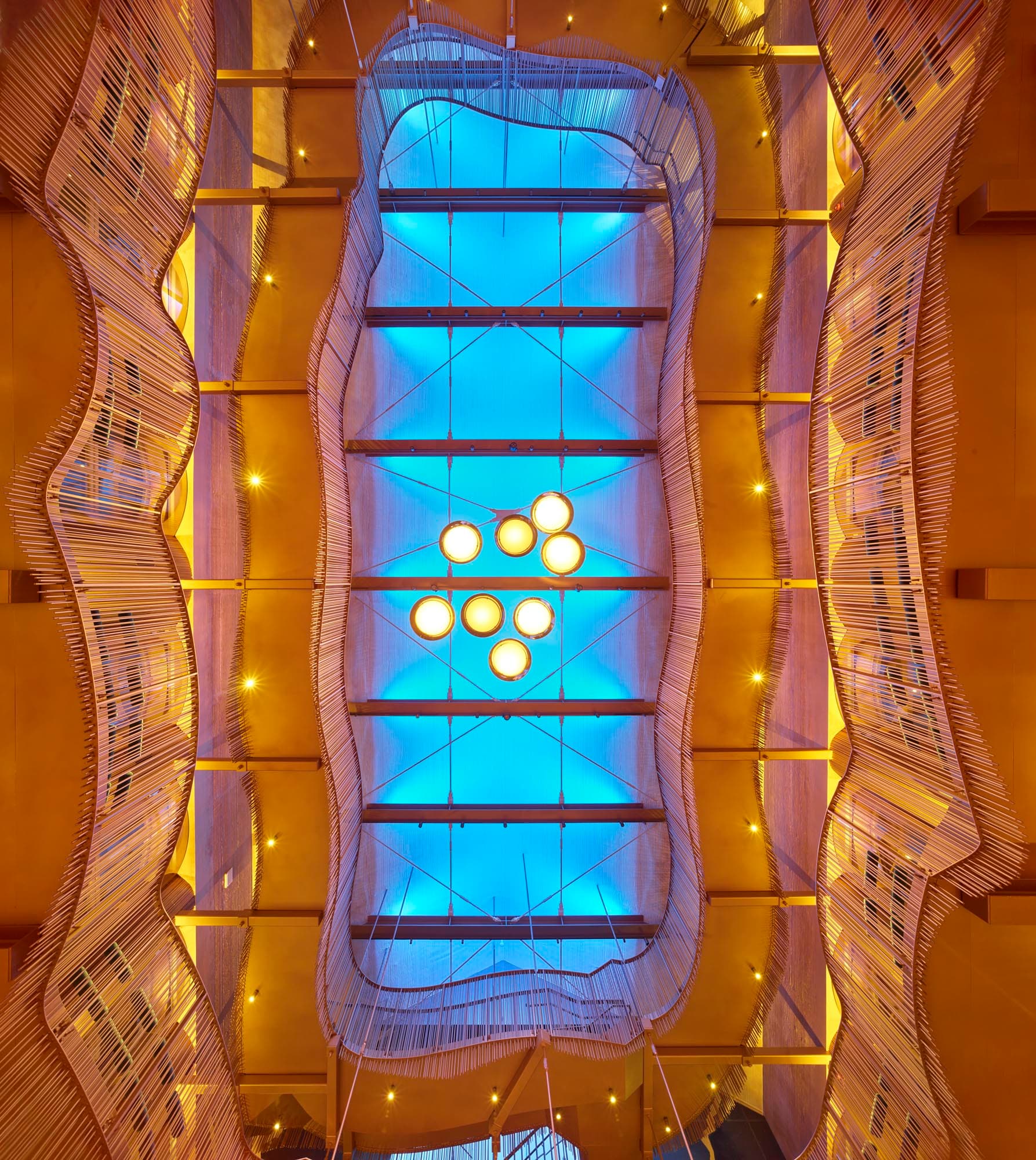
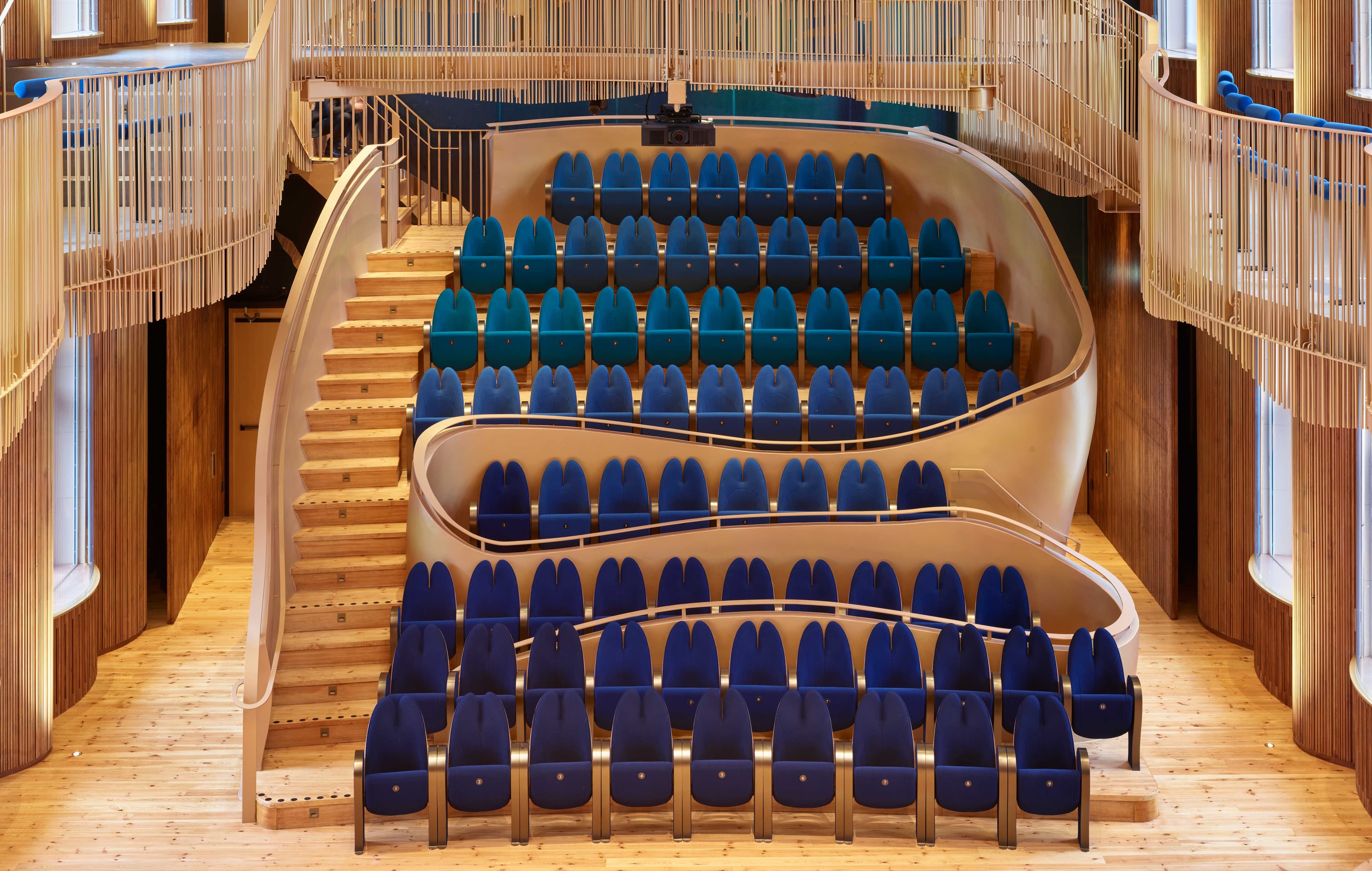
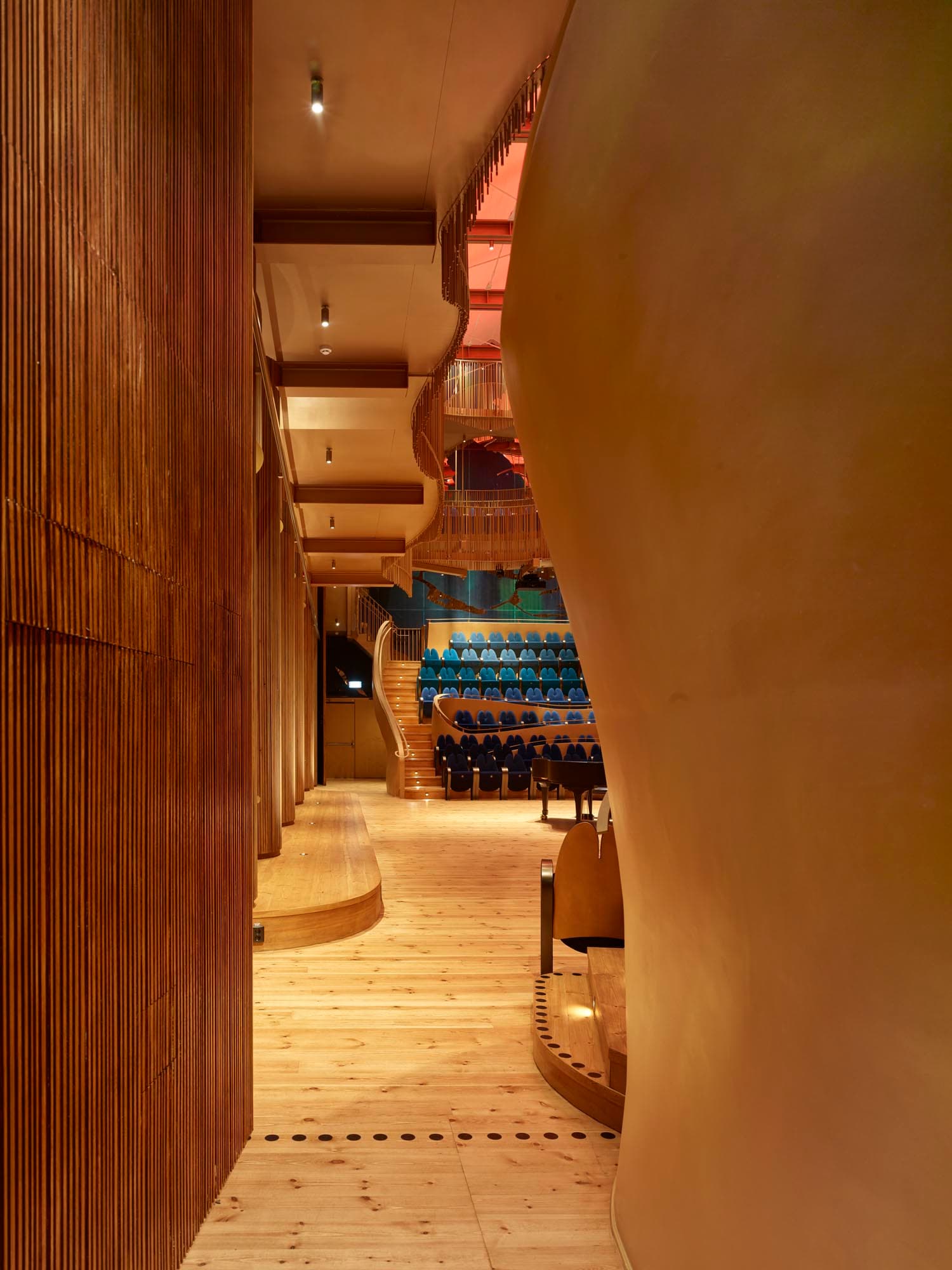
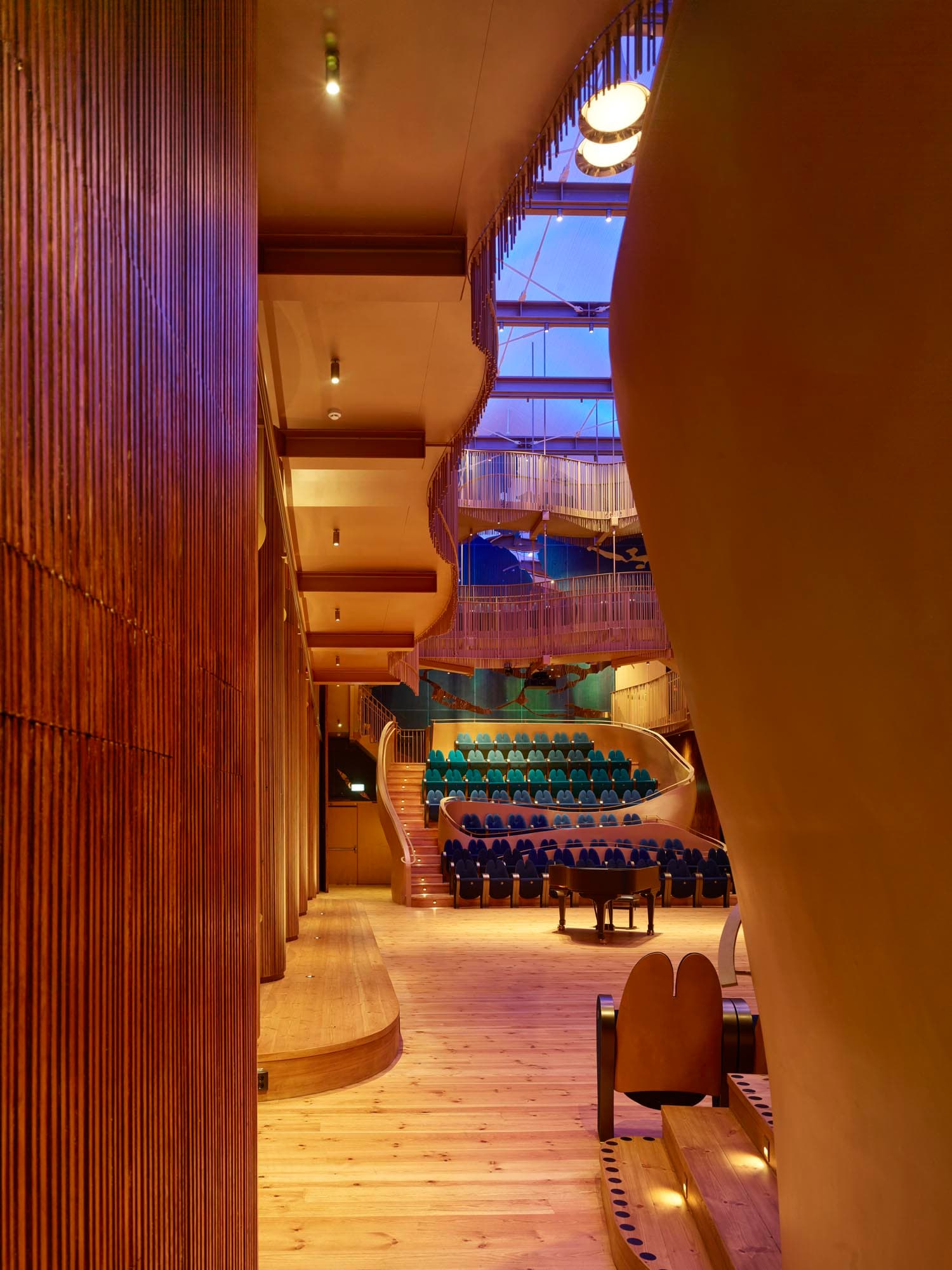
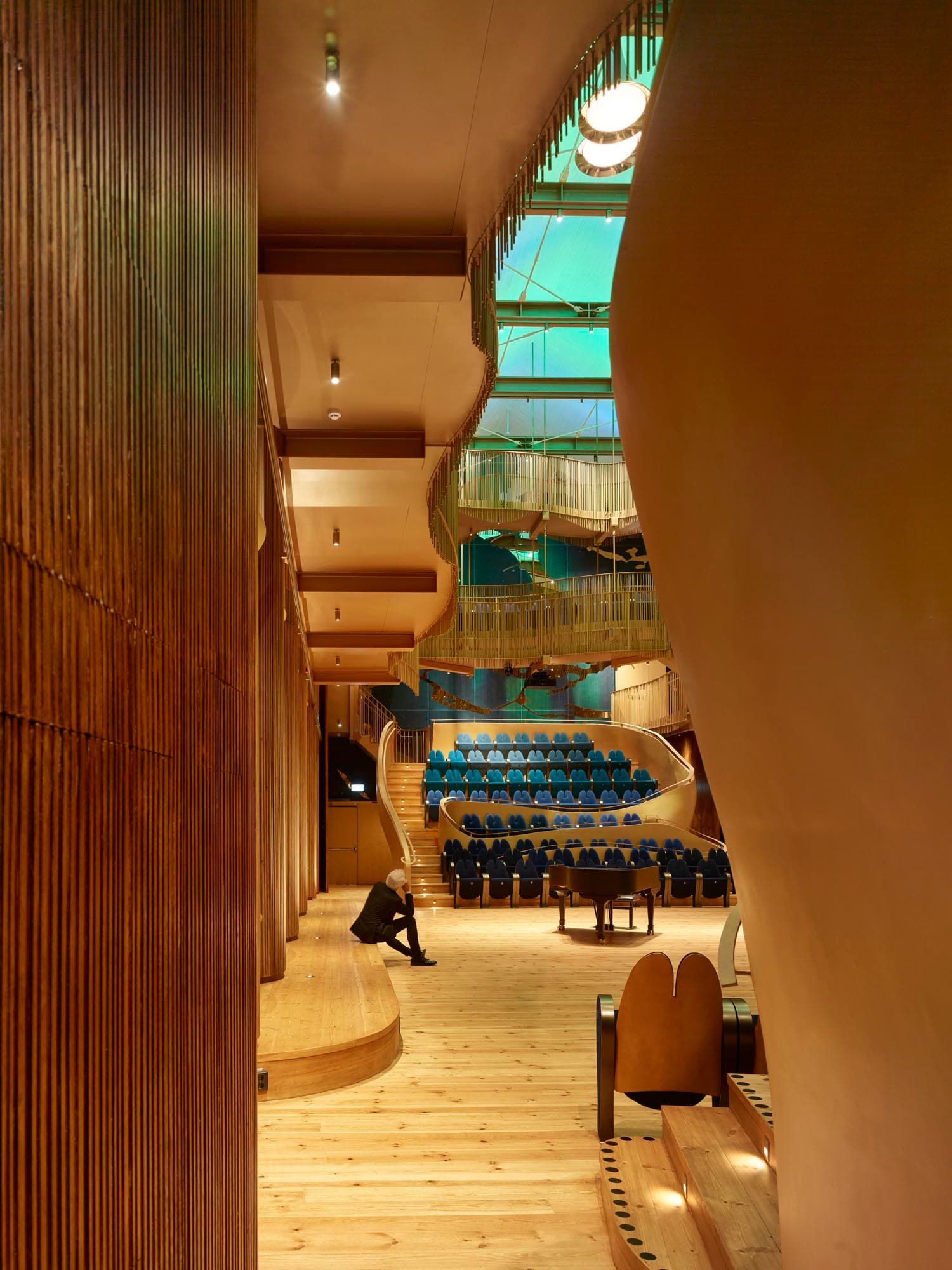
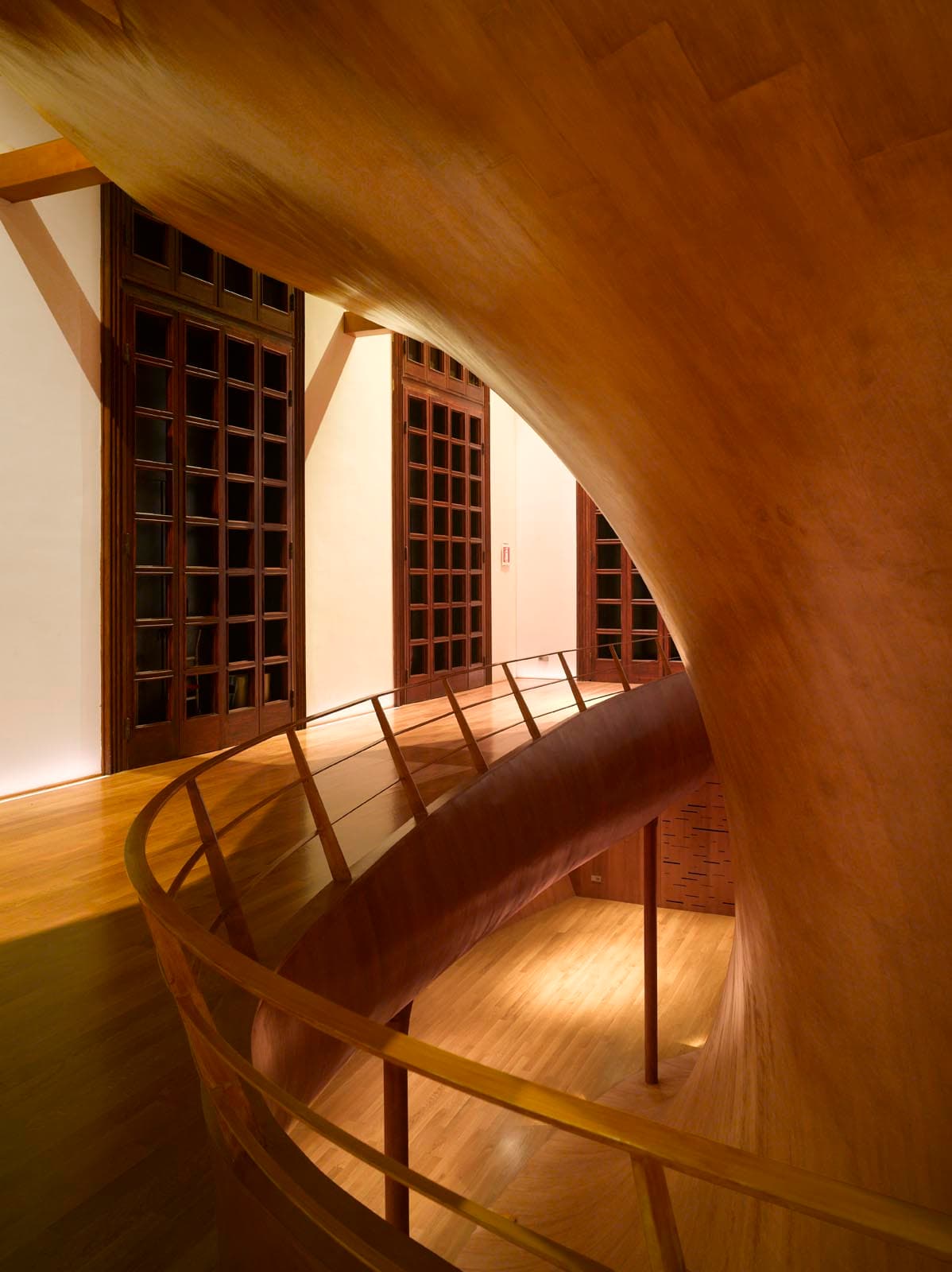
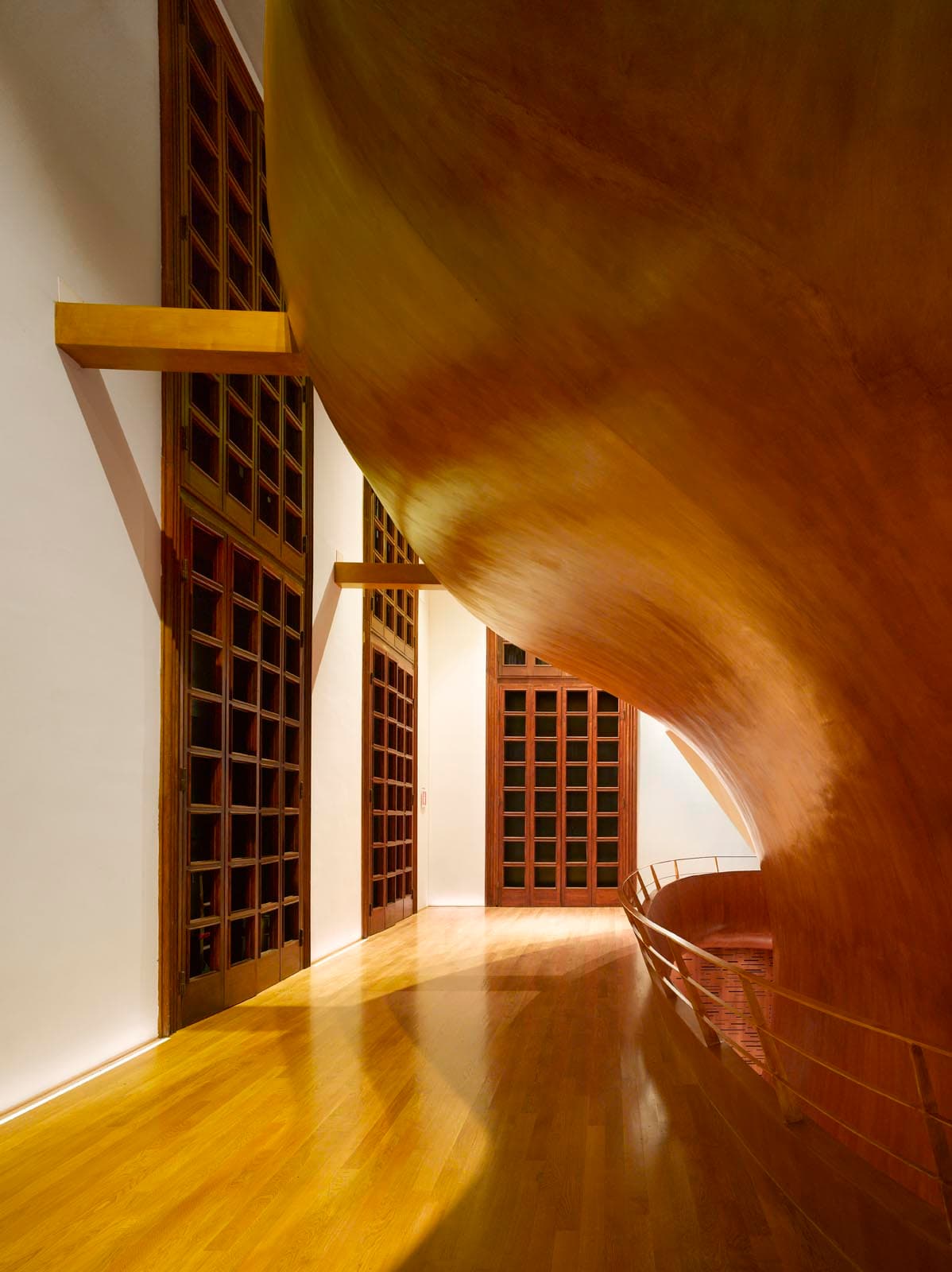
Even the foyer is not, as is traditional, on the ground floor, but high above: spectators are taken by a large elevator to the third floor of the building, from where there is a panoramic view of the entire hall, beginning the musical experience with an unexpected promenade architecturale, from the suspended balconies down to the audiences located below.
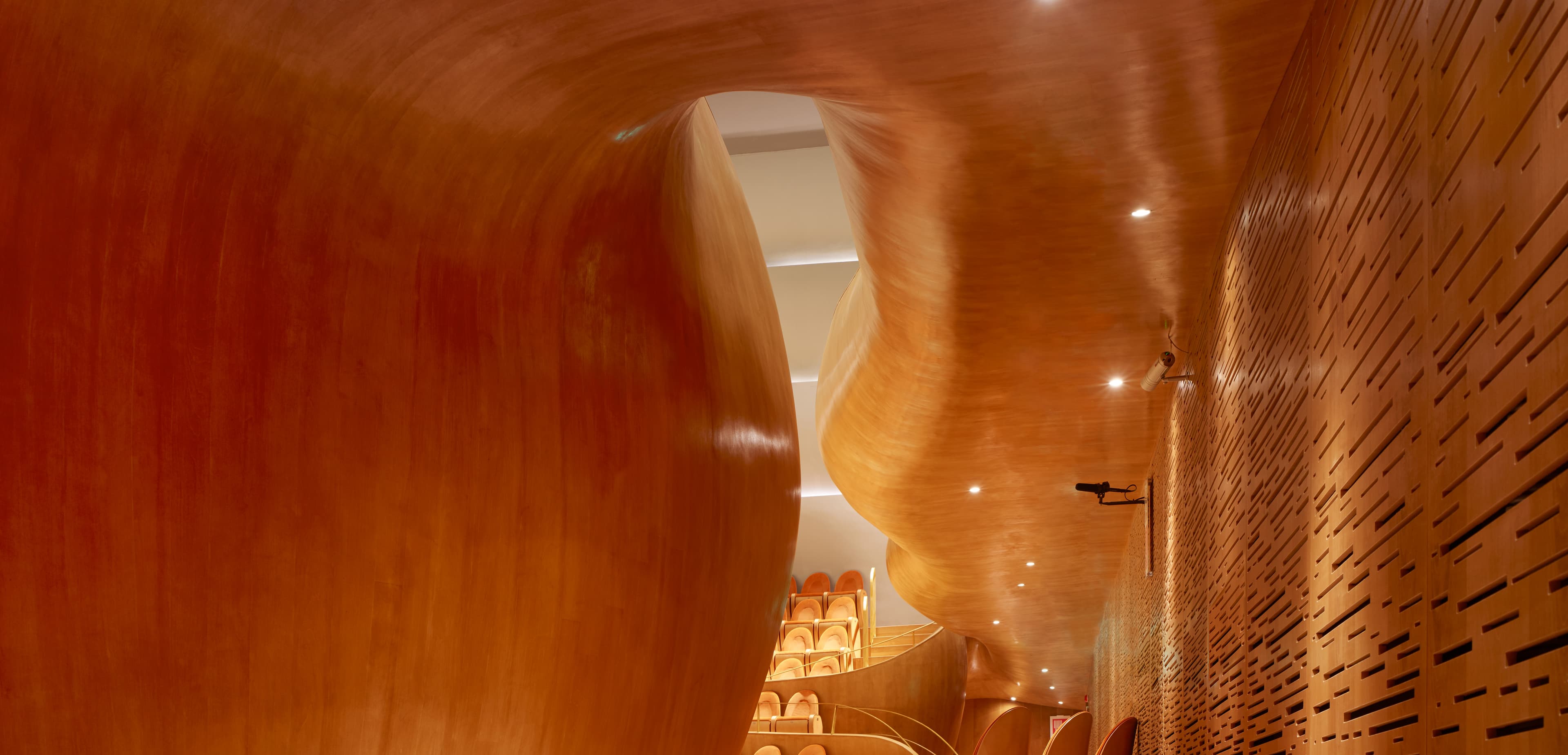
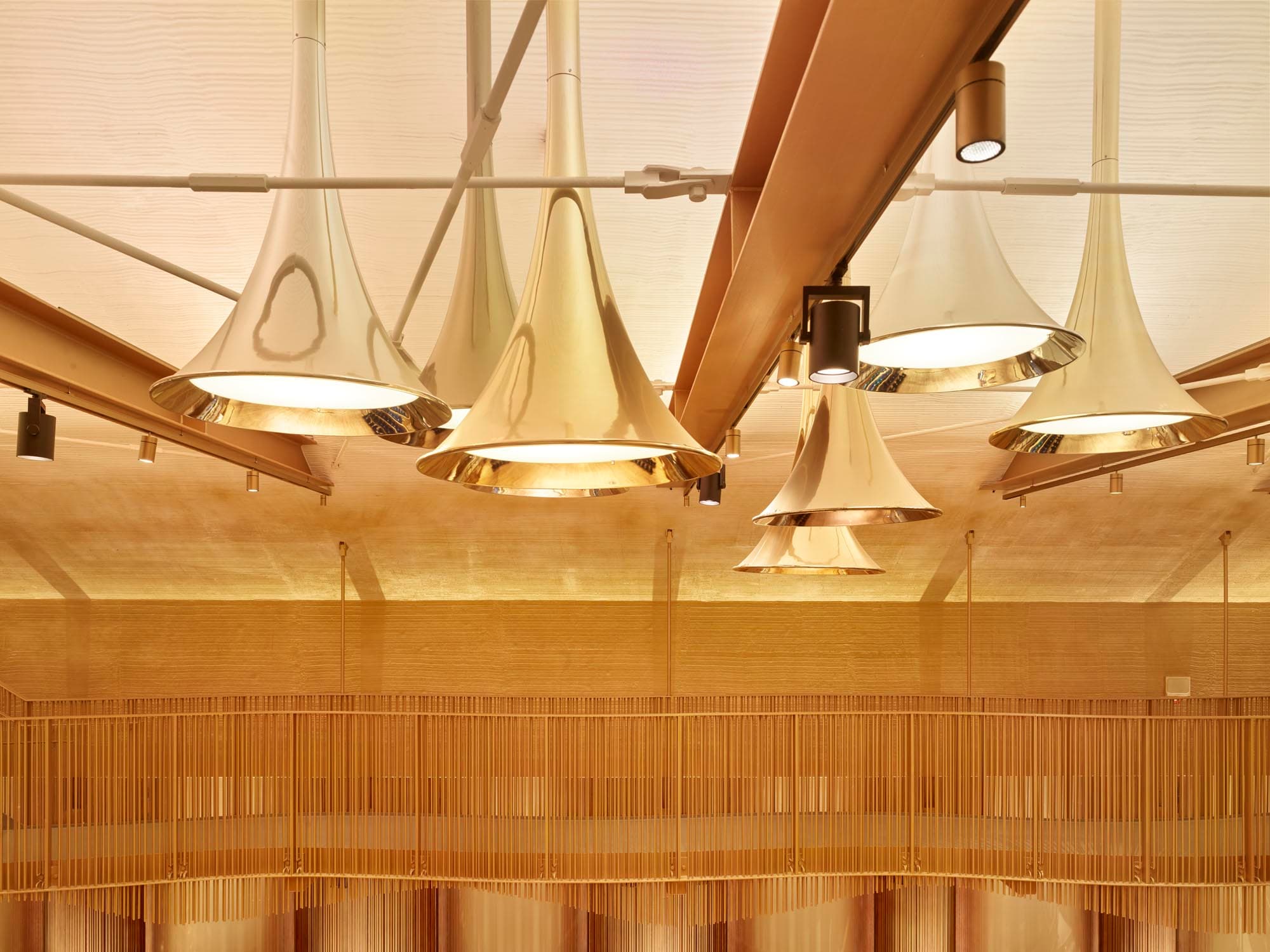
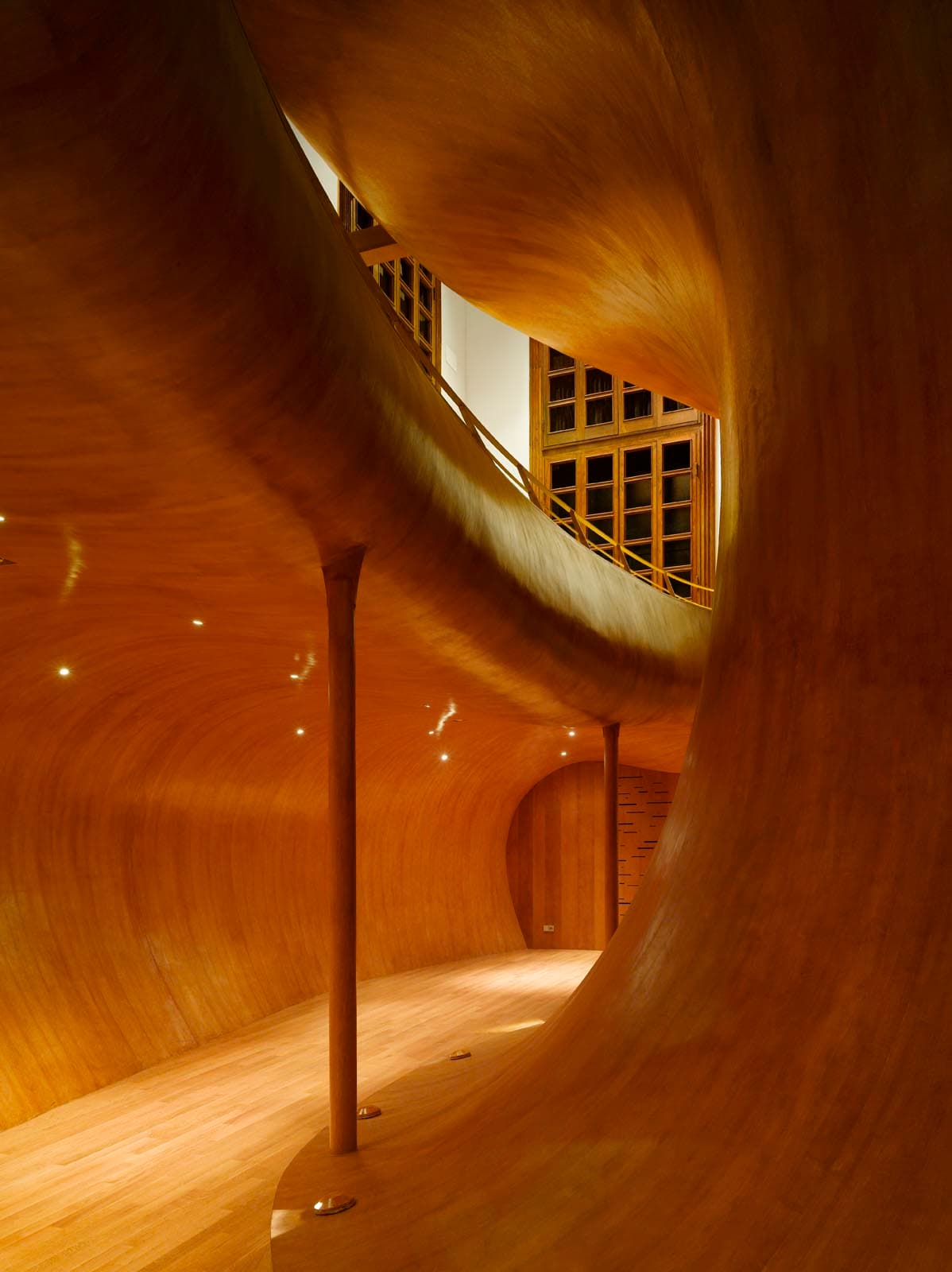
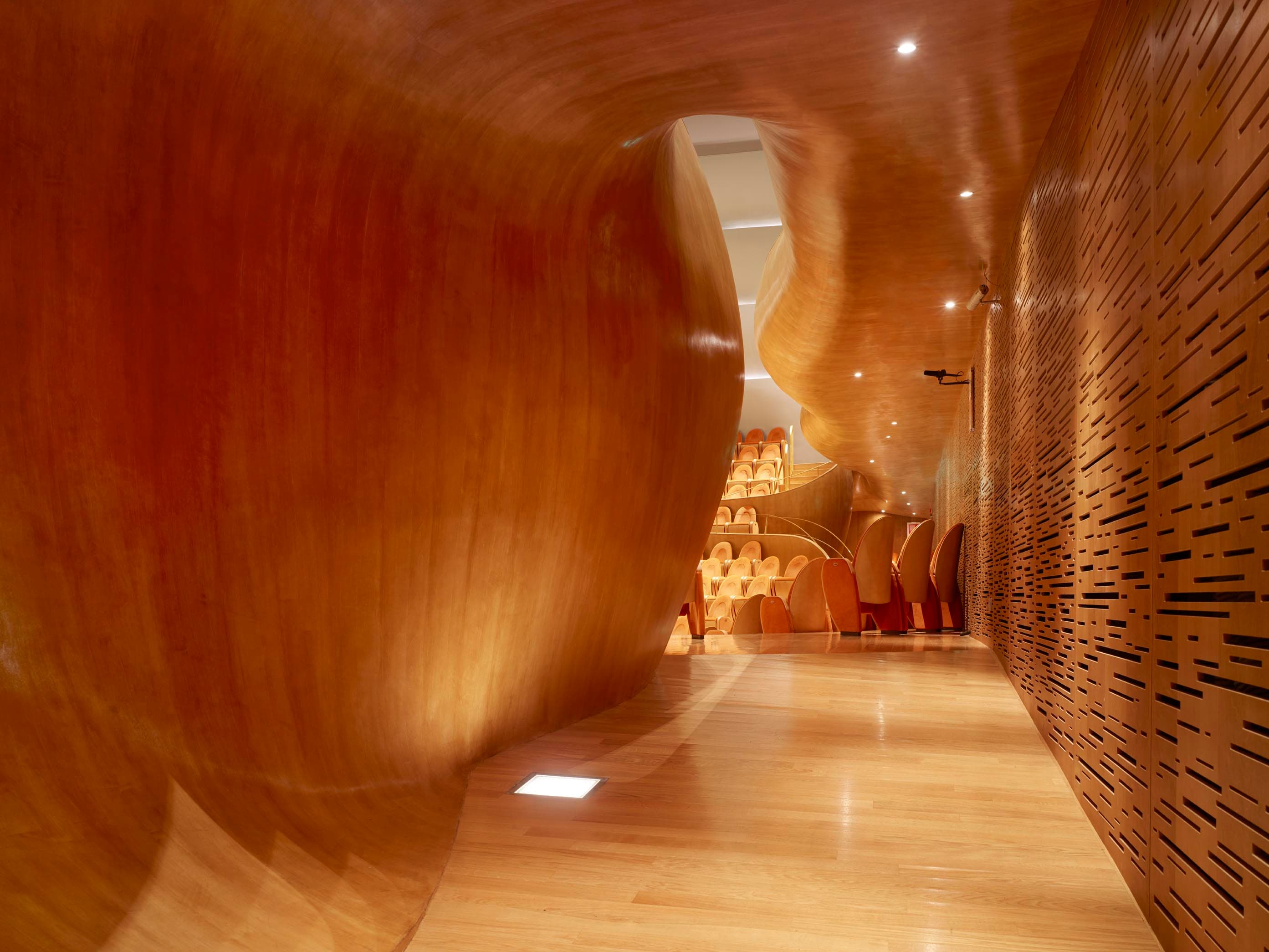
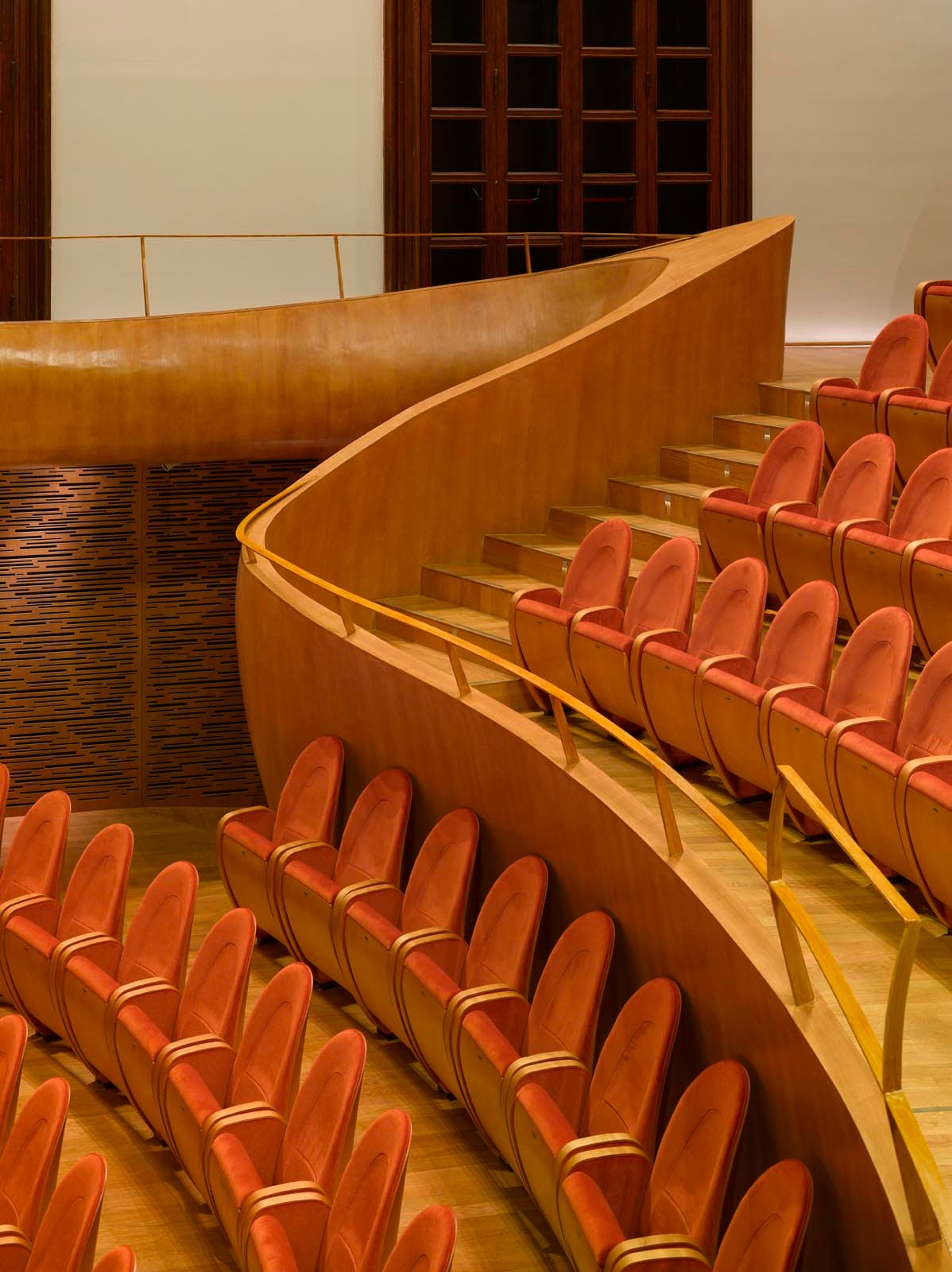
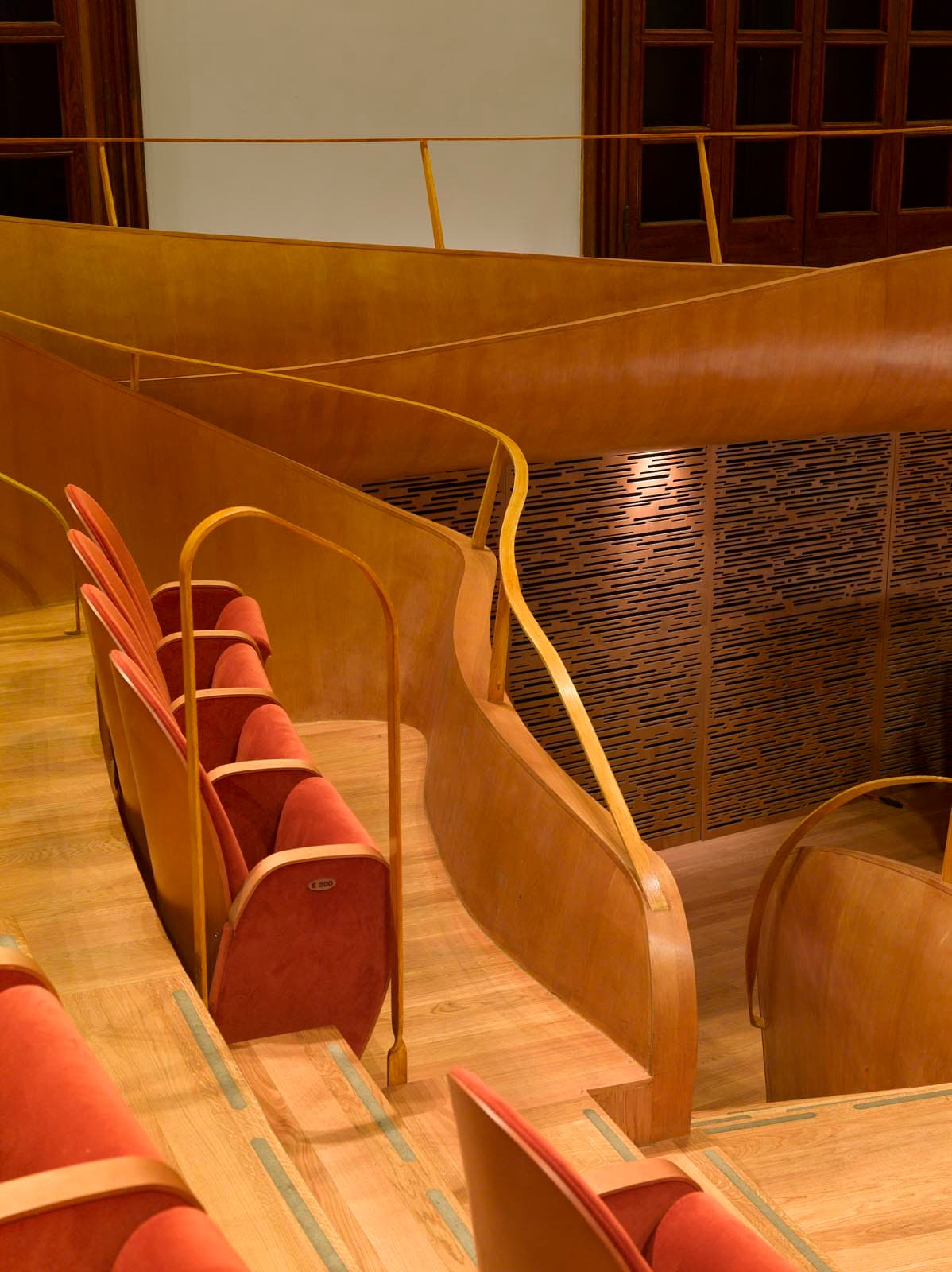
Musical fugues and legacies inform the continuous chasing and interweaving of walkways and volumes as if in a great embrace, in a harmony of form and color. A unique, "archi-sculptural" organism that incorporates design and acoustic needs, an aspect meticulously overseen by Japanese acoustic engineer Yasuhisa Toyota/Nagata Acoustics.
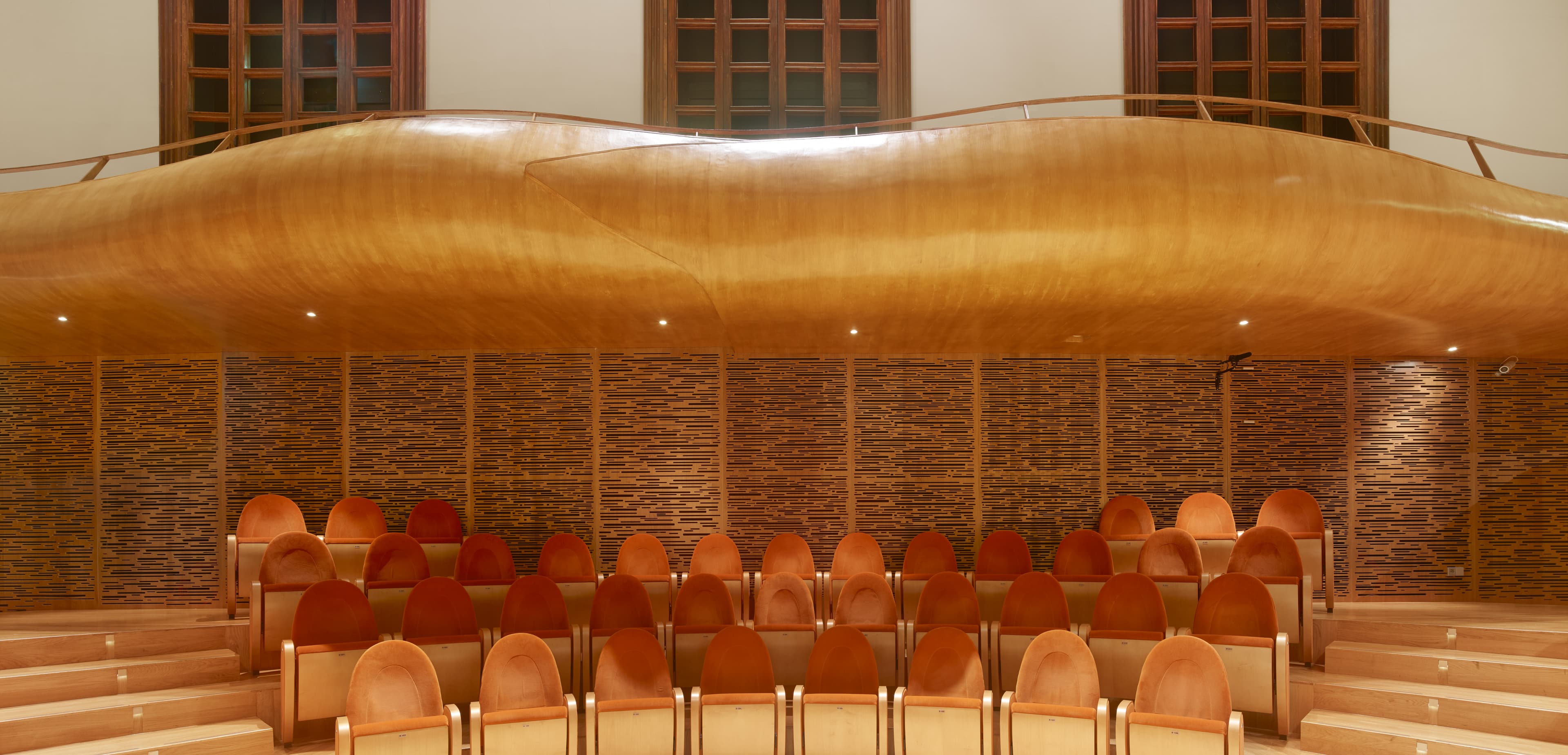
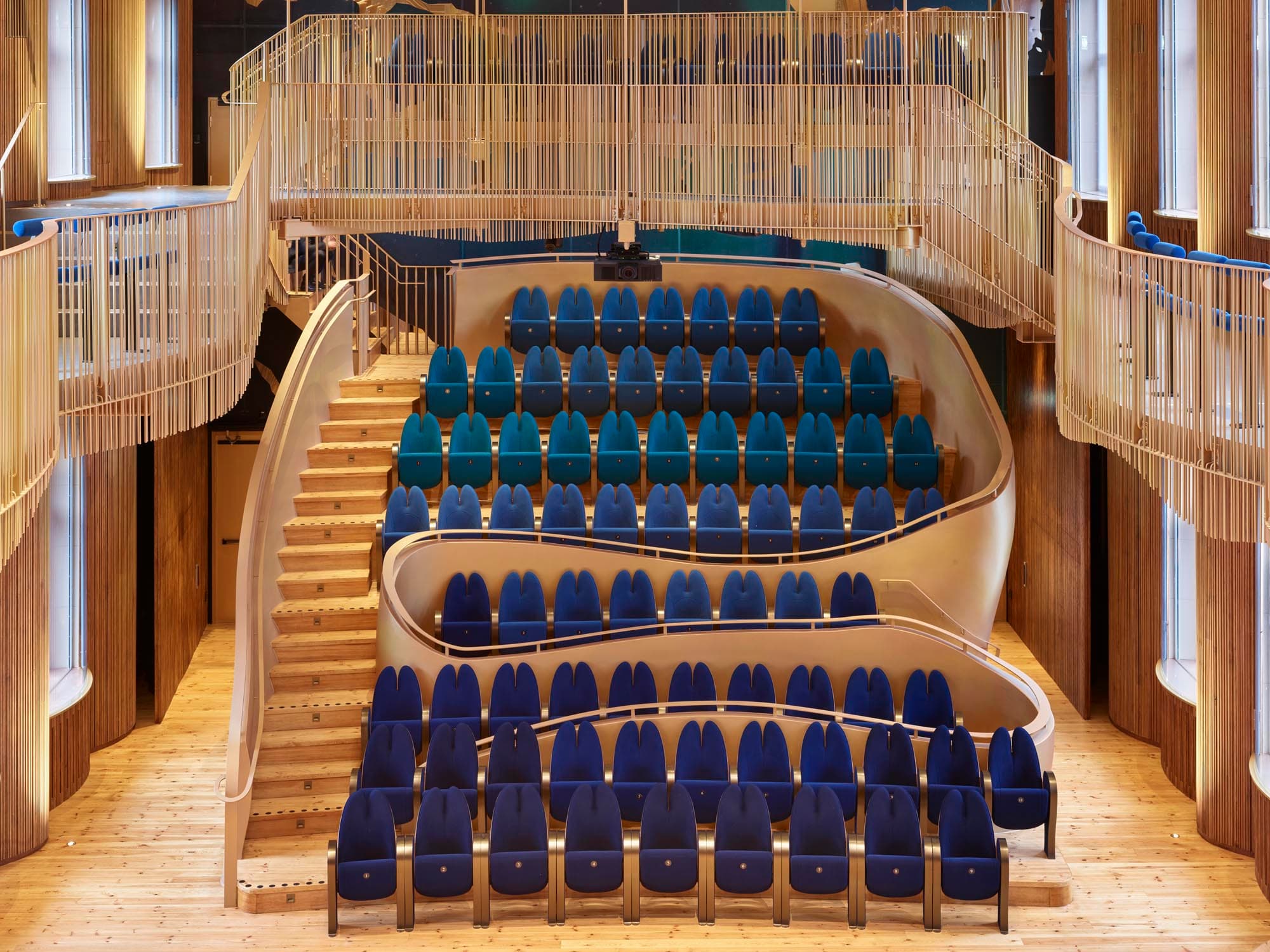
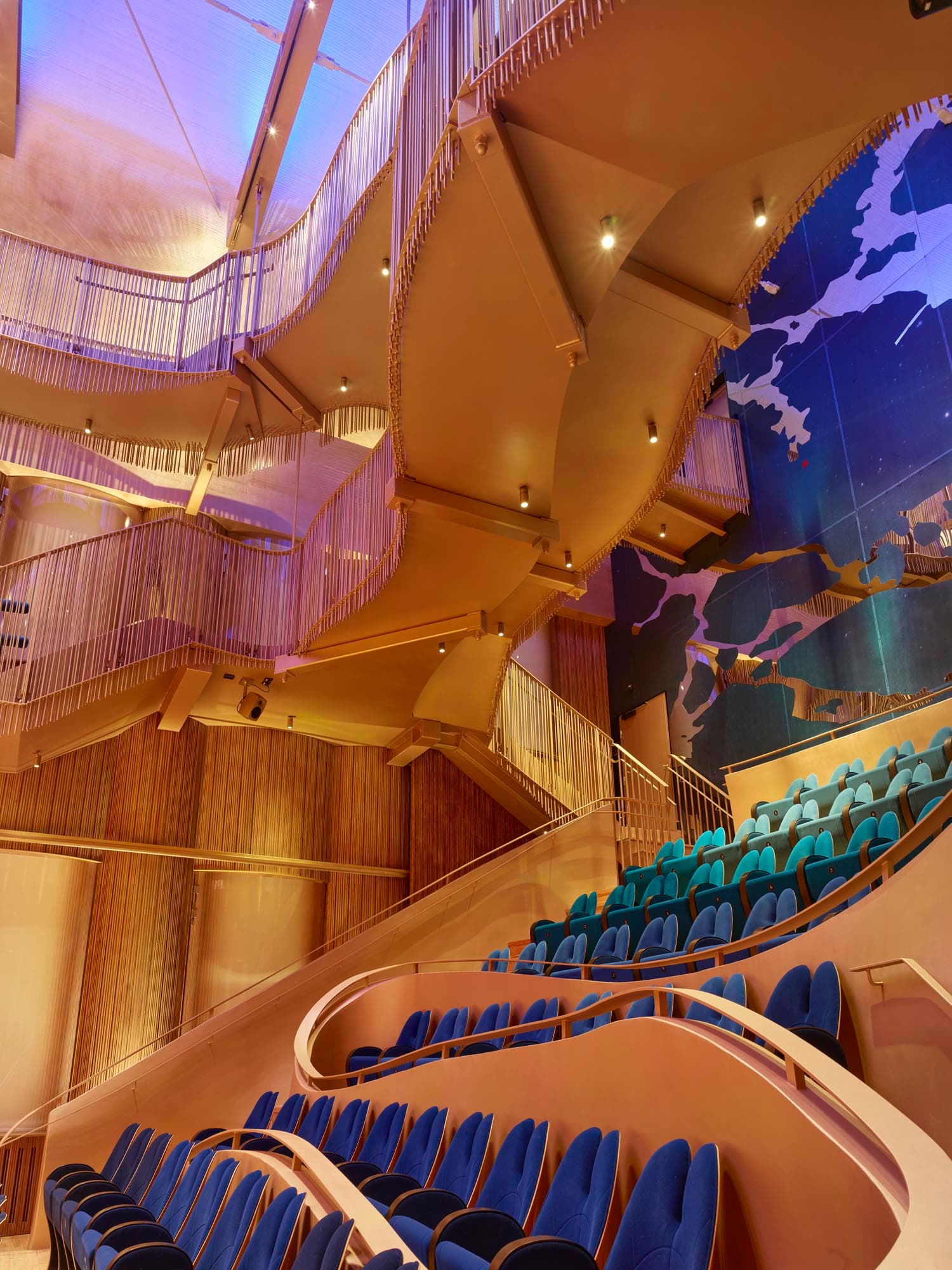
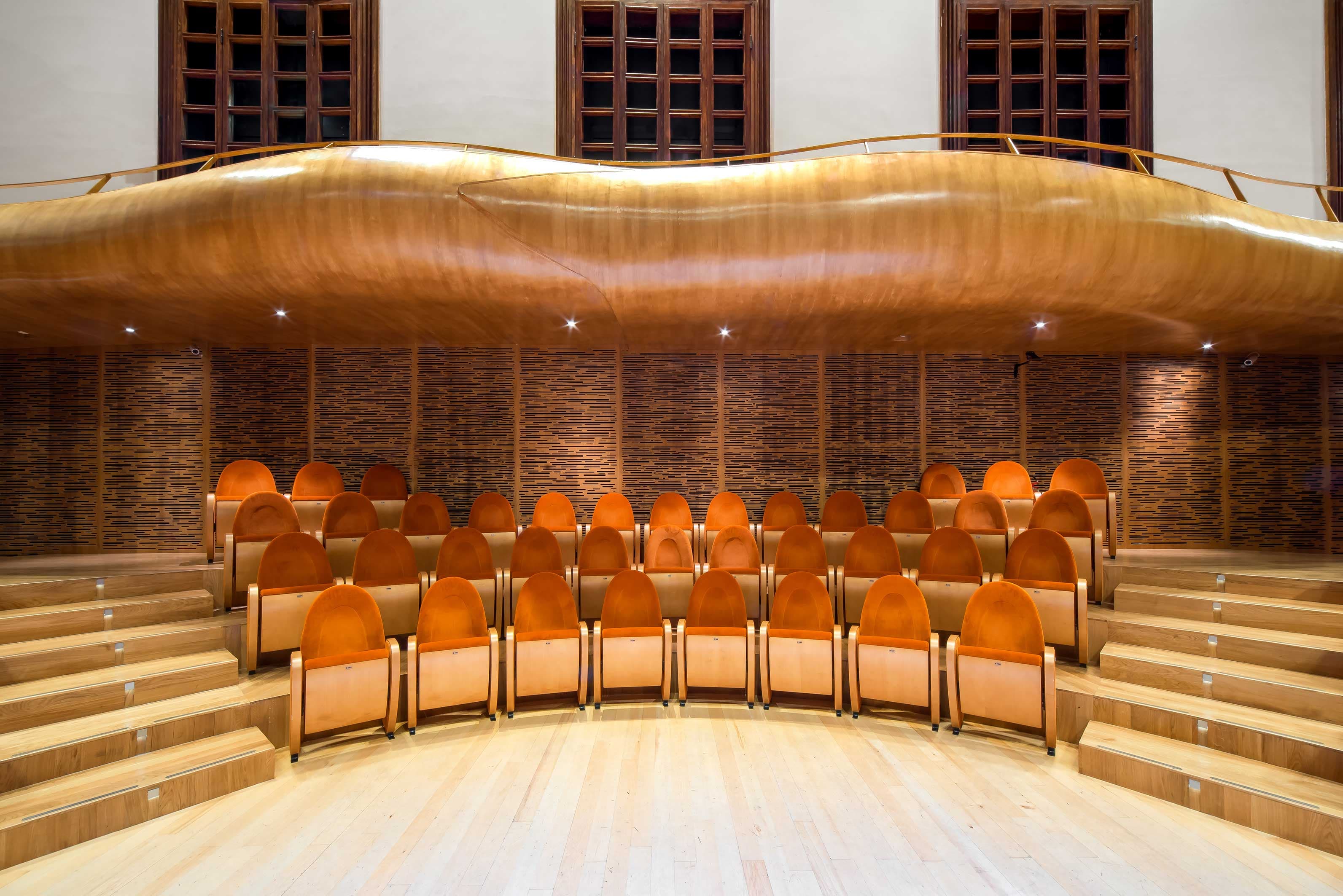
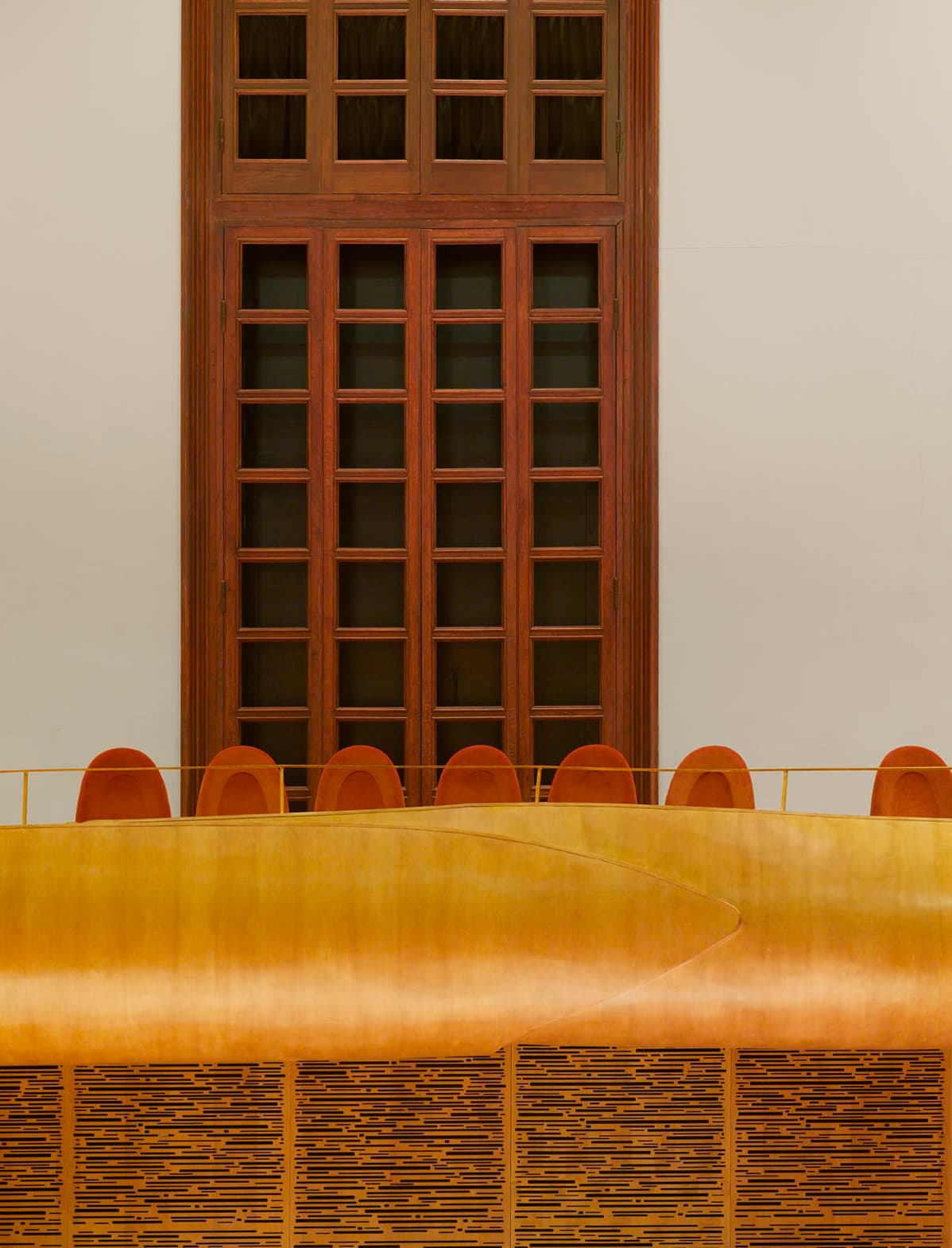
Each part of the hall is linked to the other: audience and balconies intertwine and also blend in shades from warm bronze to gold, creating a continuous gradient. A principle that also applies to the wooden parts: inspiration comes from the colors of Cremonese violin-making instruments, to which gold and bronze airbrush shades have been superimposed, adding a sense of warmth, intimacy, and relaxation.
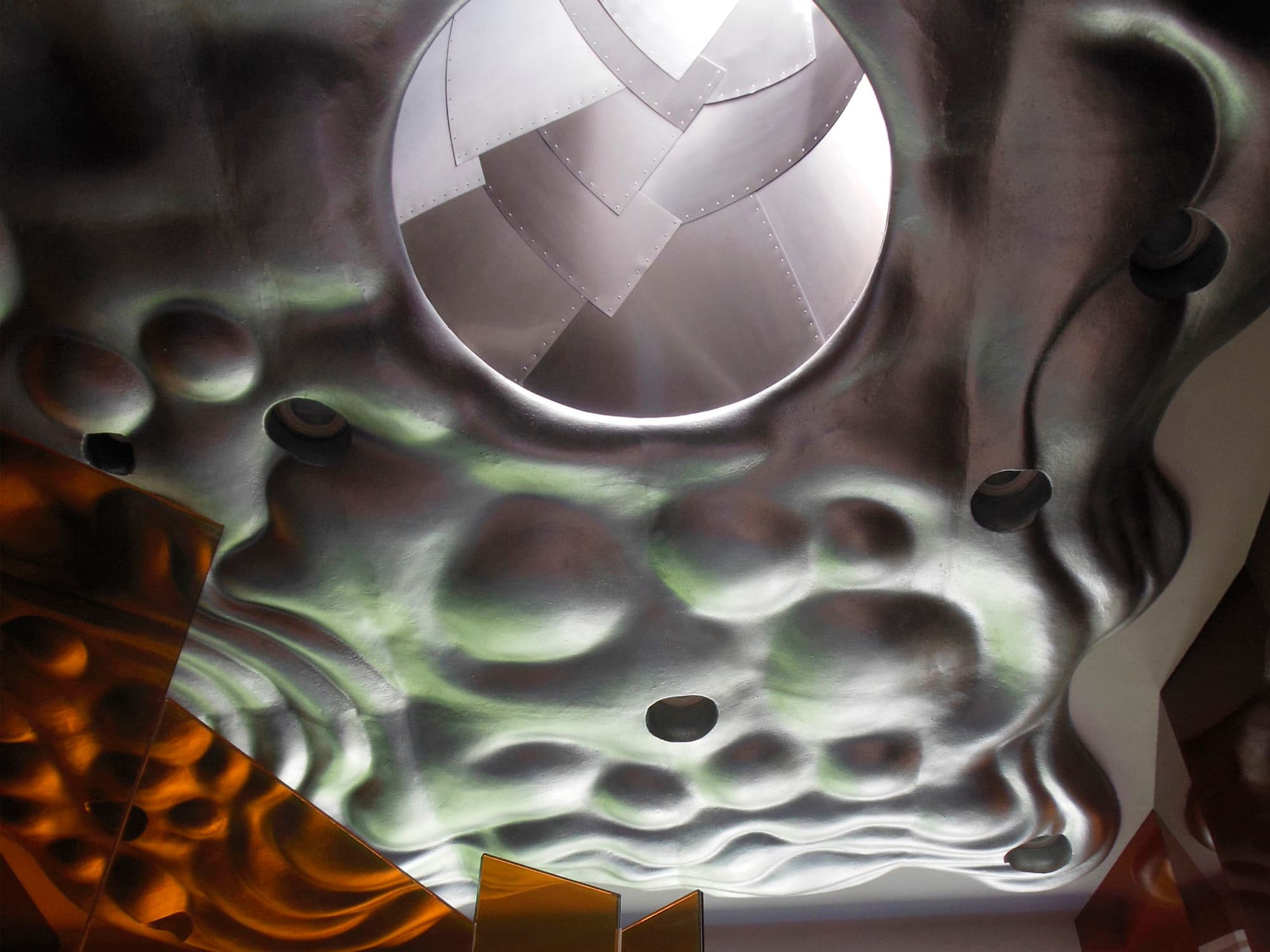
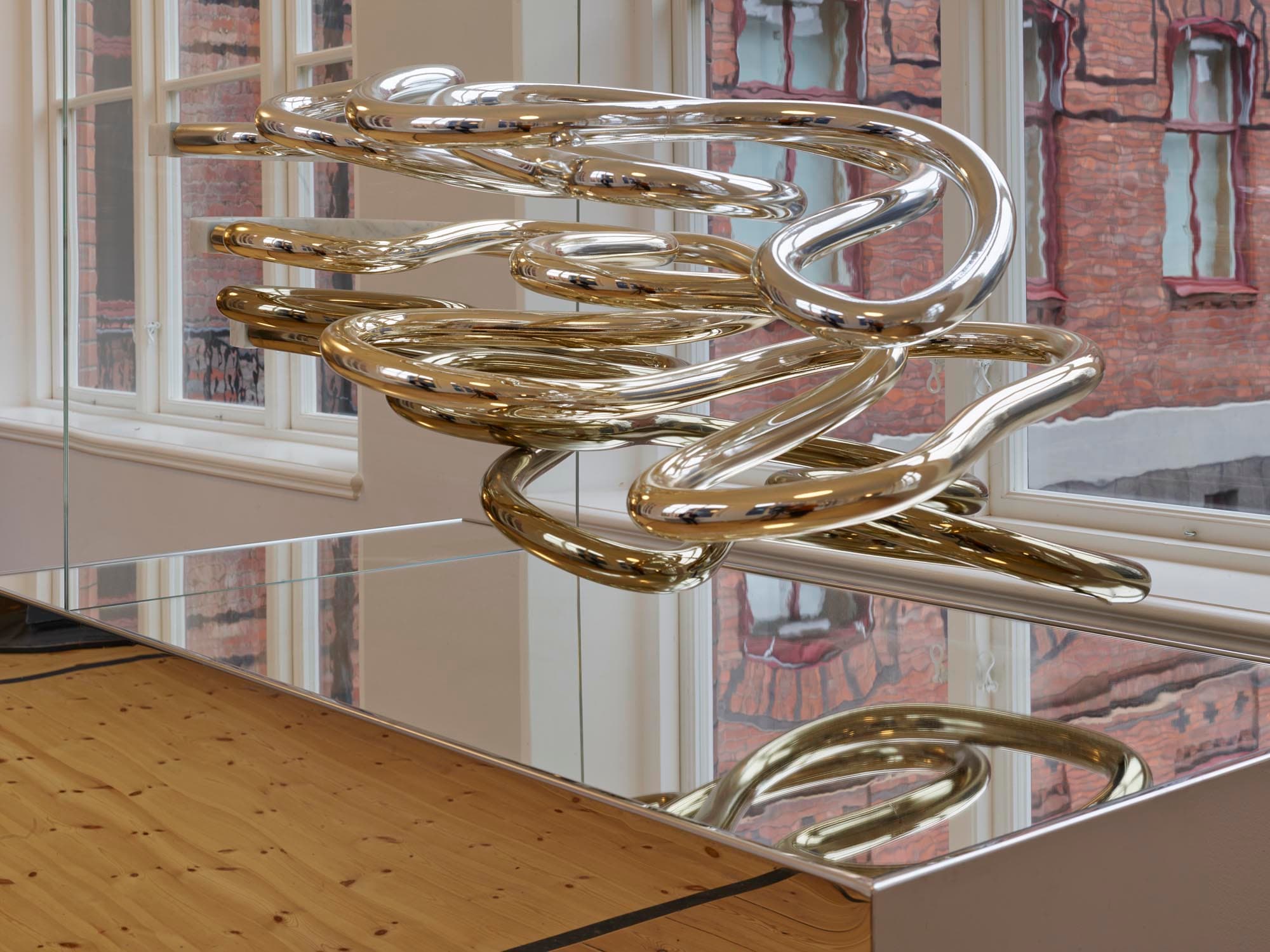
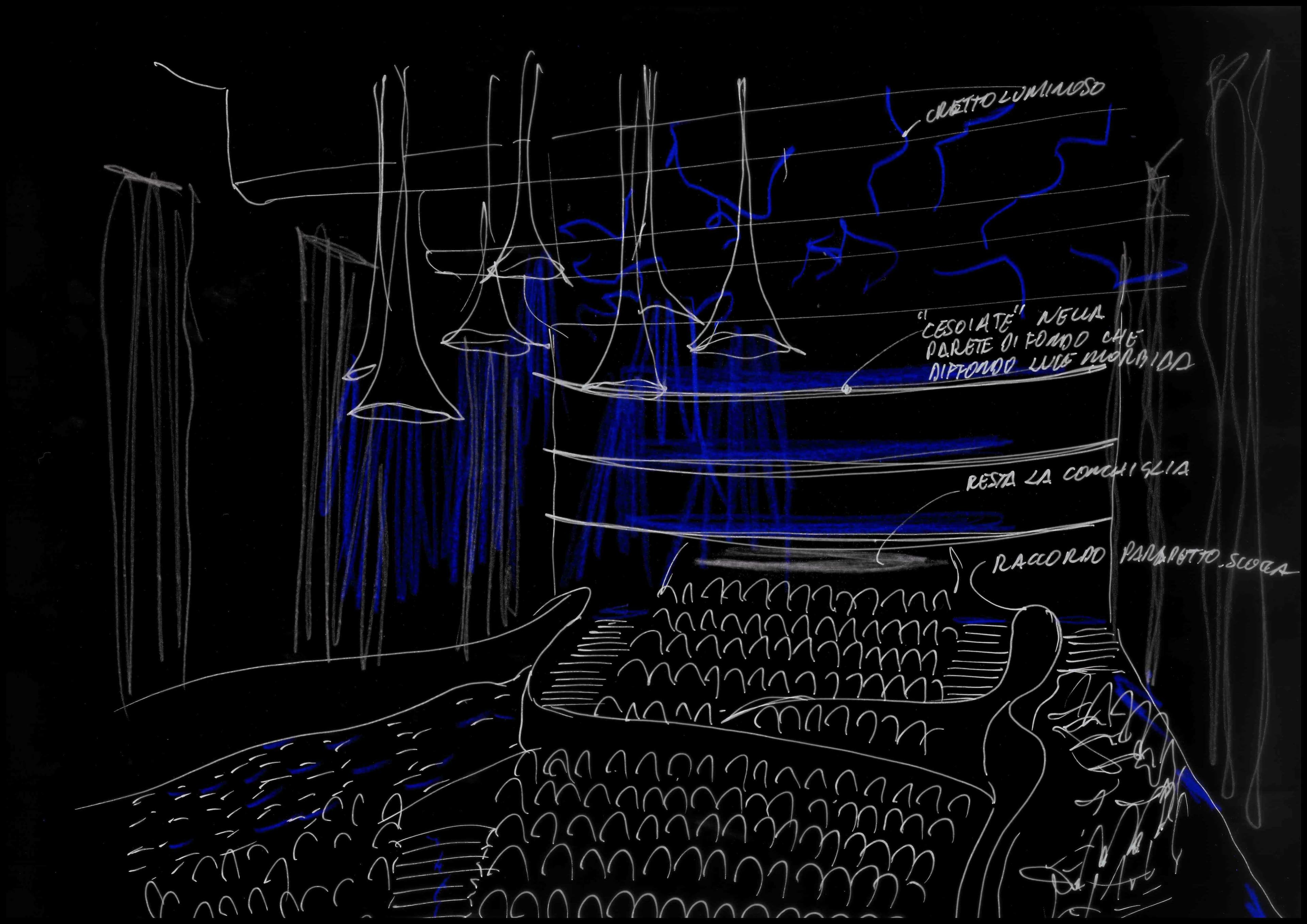
The two walls at the back, seem almost not to belong to the room, a space 'without walls,' infinite. Crossed by a Nordic, cold light, reminiscent of that of the aurora borealis, the backdrop depicts a view of the Stockholm archipelago from a satellite with the islands made of polished steel mirrored to create a play of reflections and fragmented images that sharpen the idea of an asymmetrical, syncopated space, but strong with an 'absolute harmony in the colors that decline the tones of the orchestra's brass. (ph. Roland Halbe)
Auditorium Giovanni Arvedi
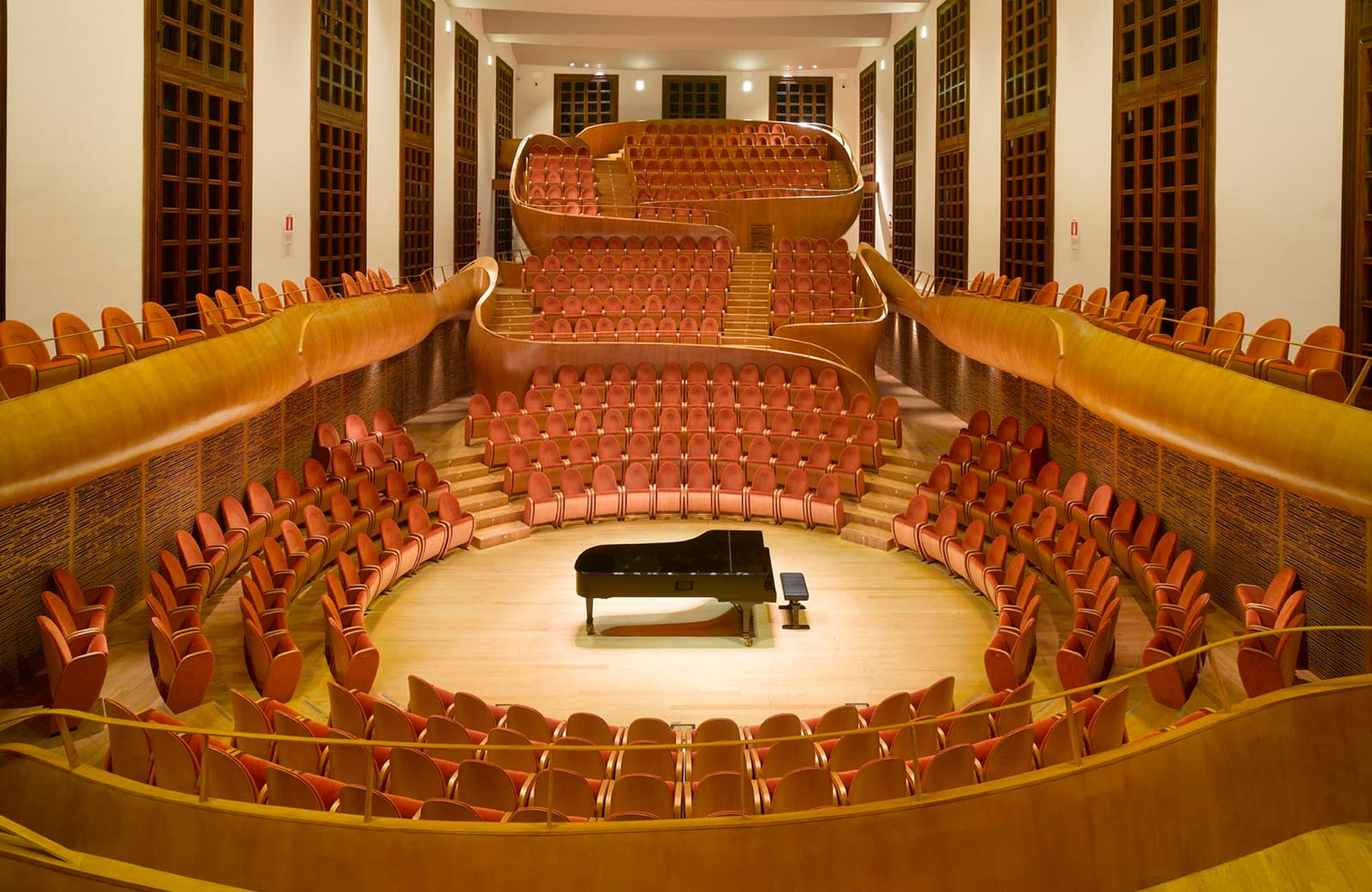
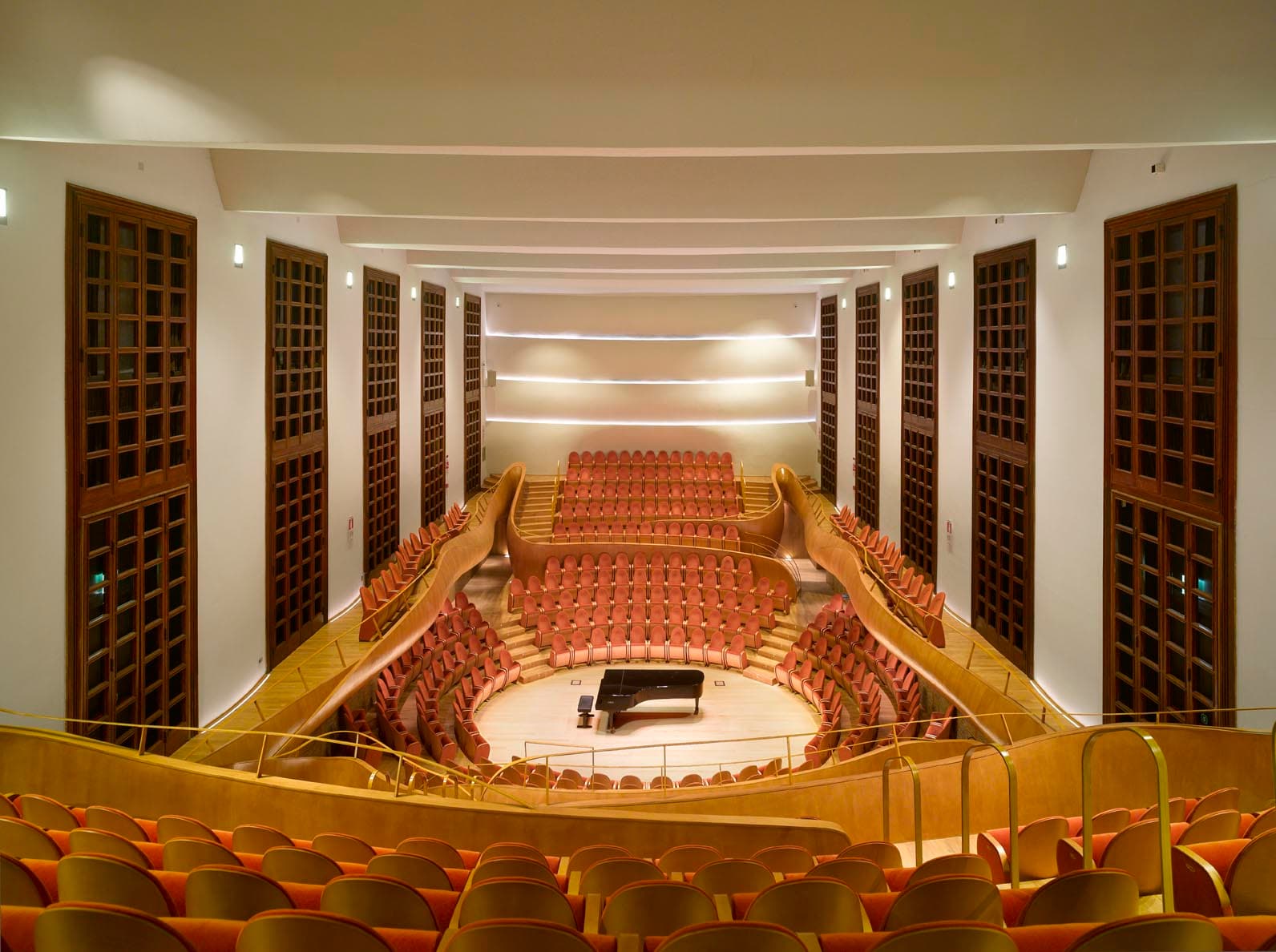
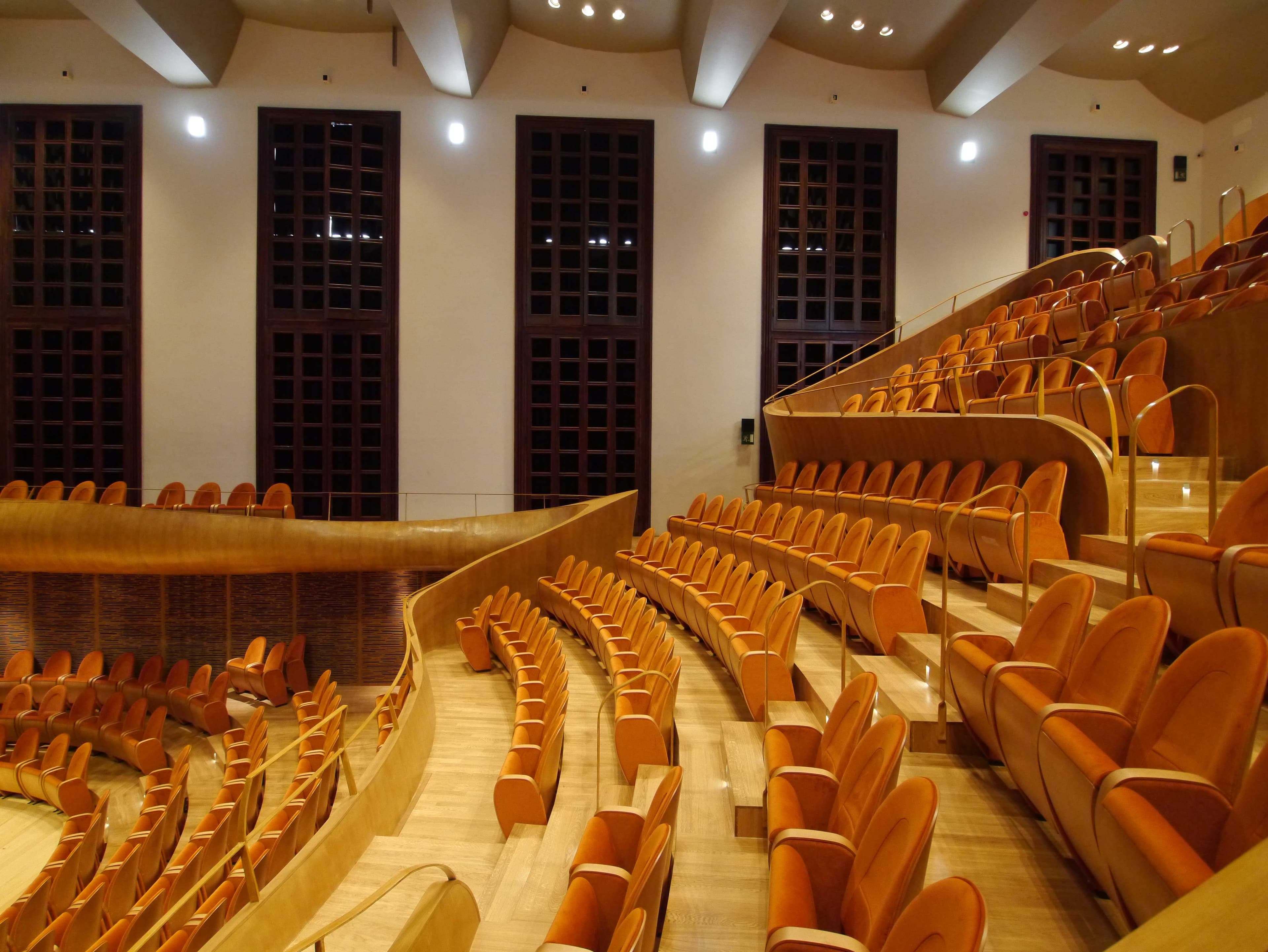
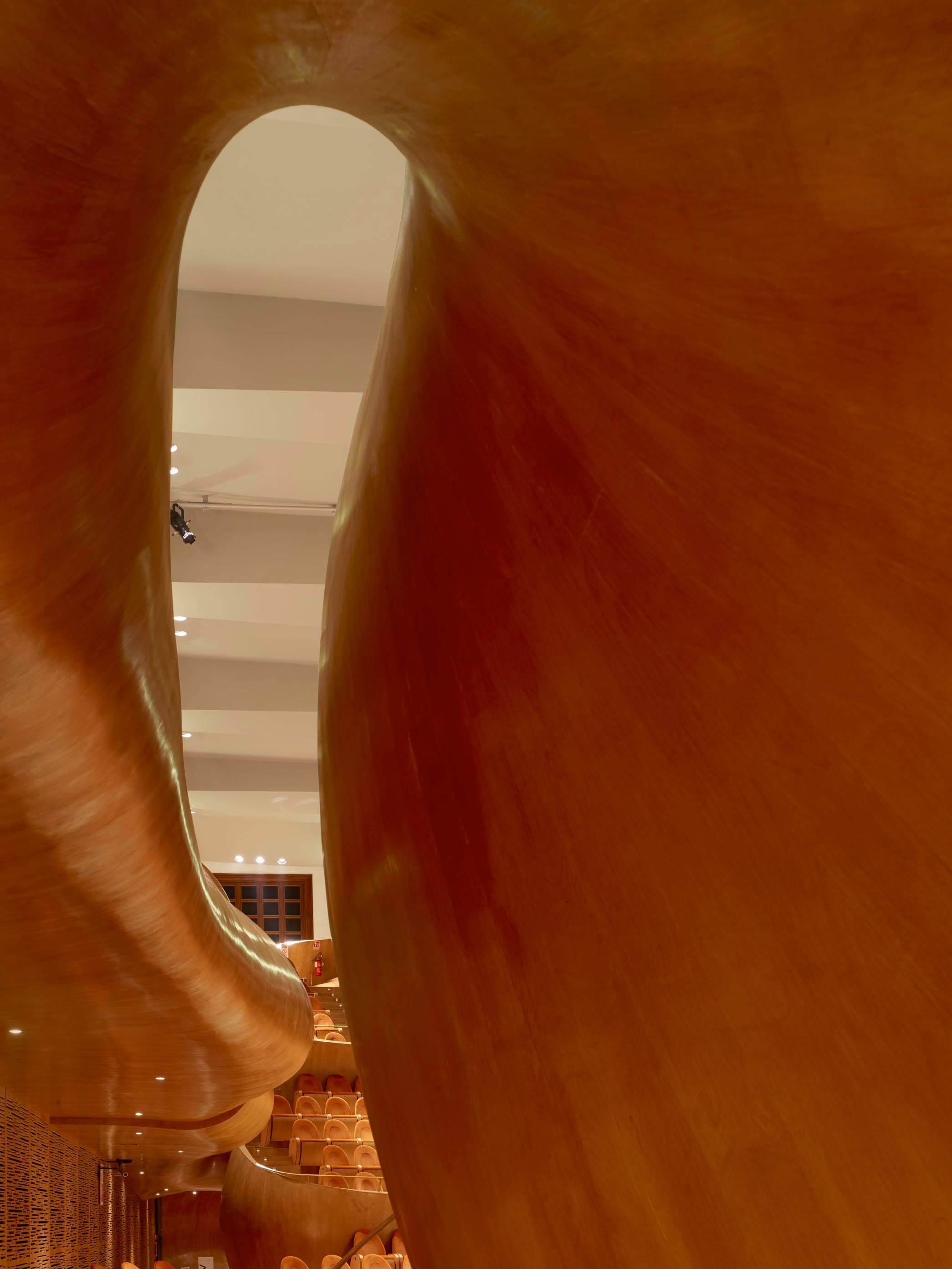
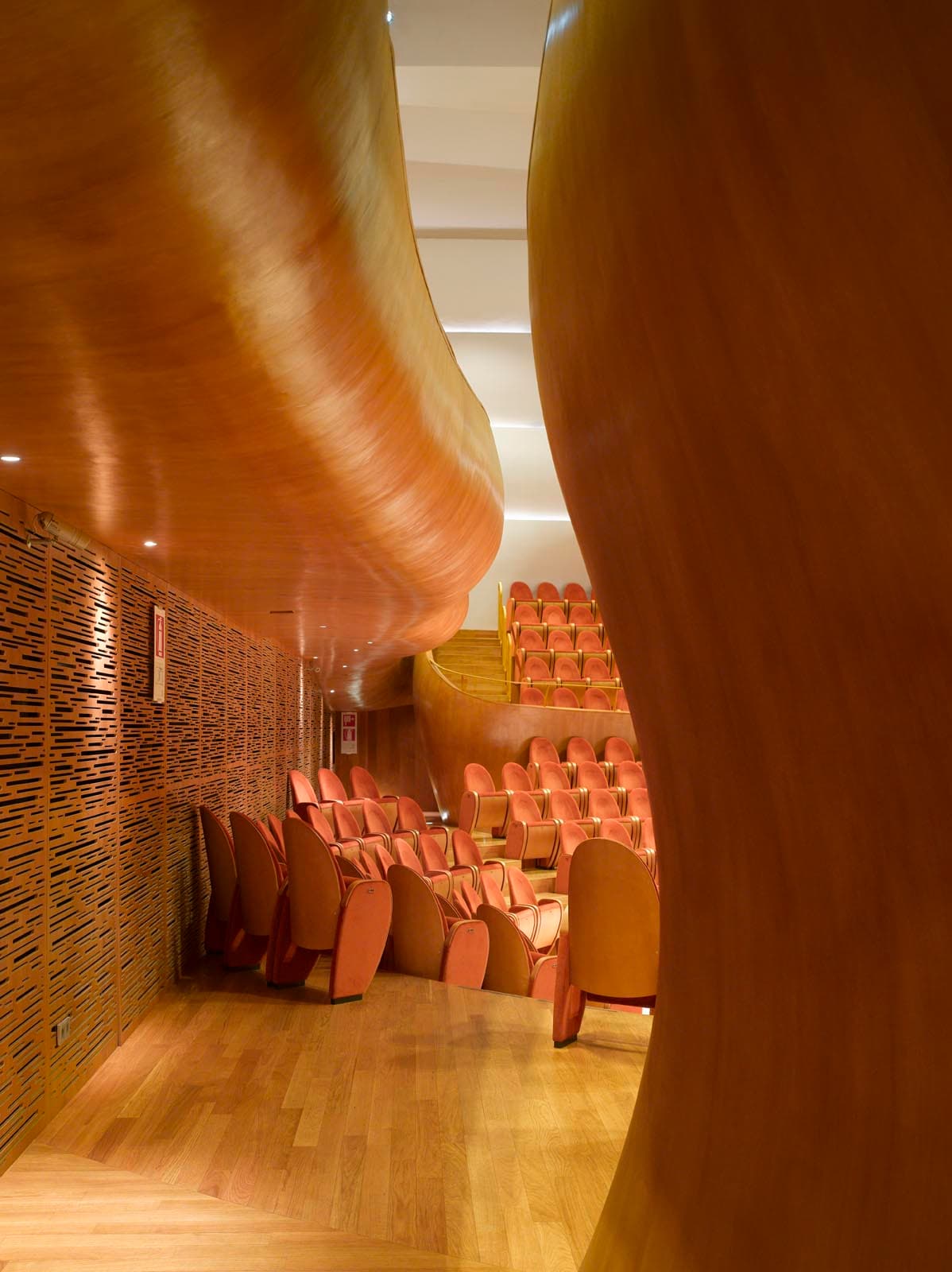
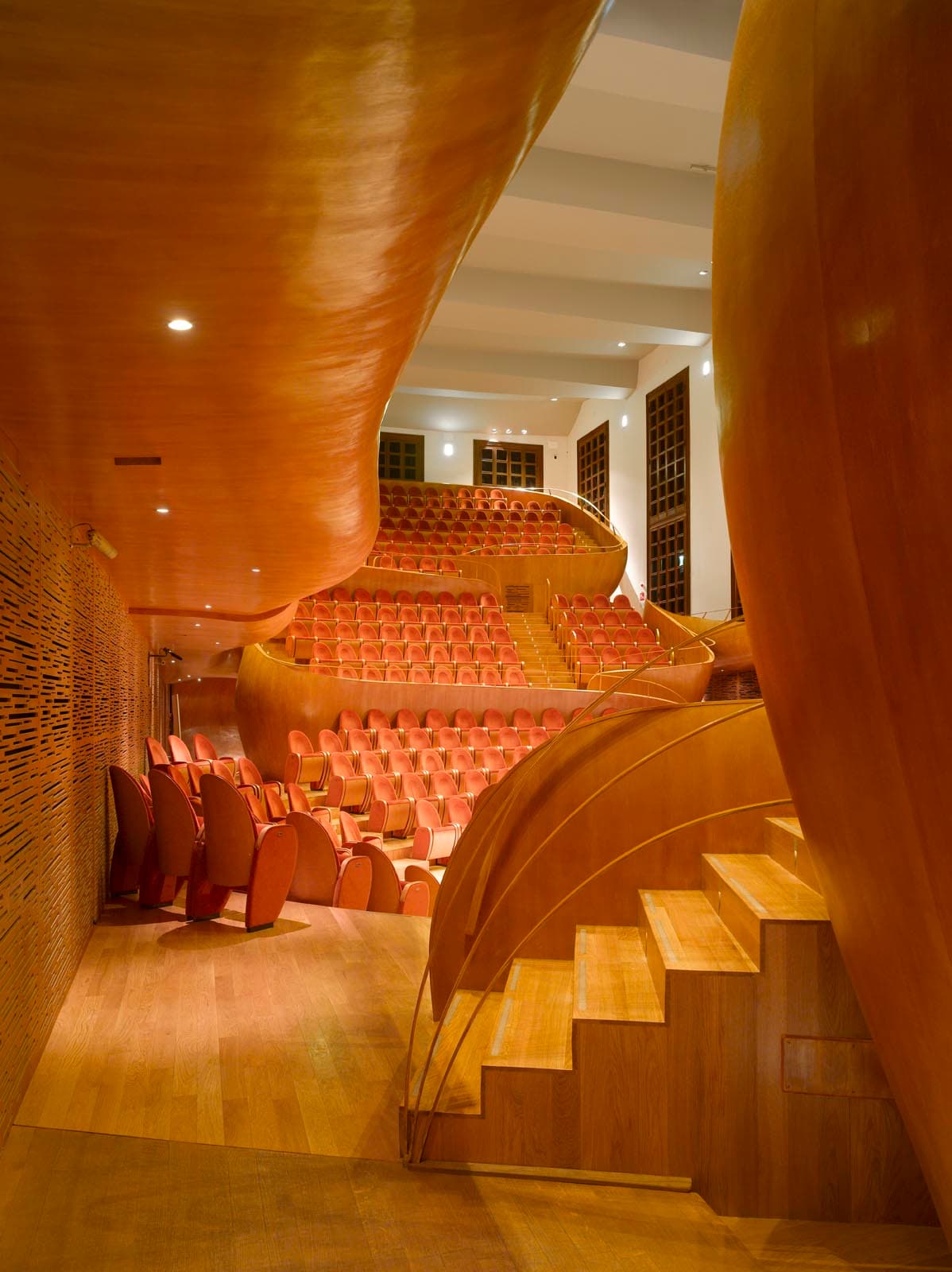
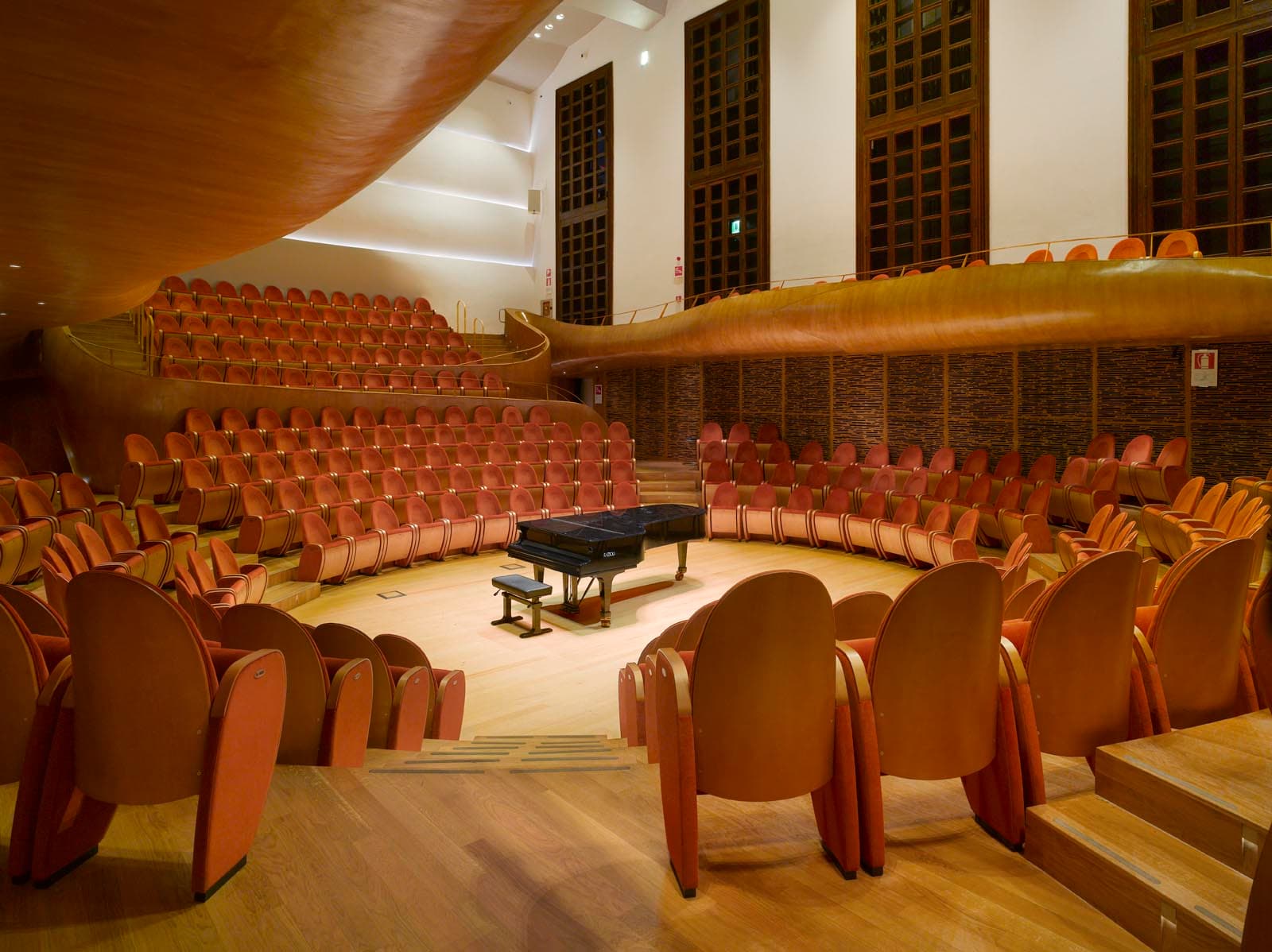
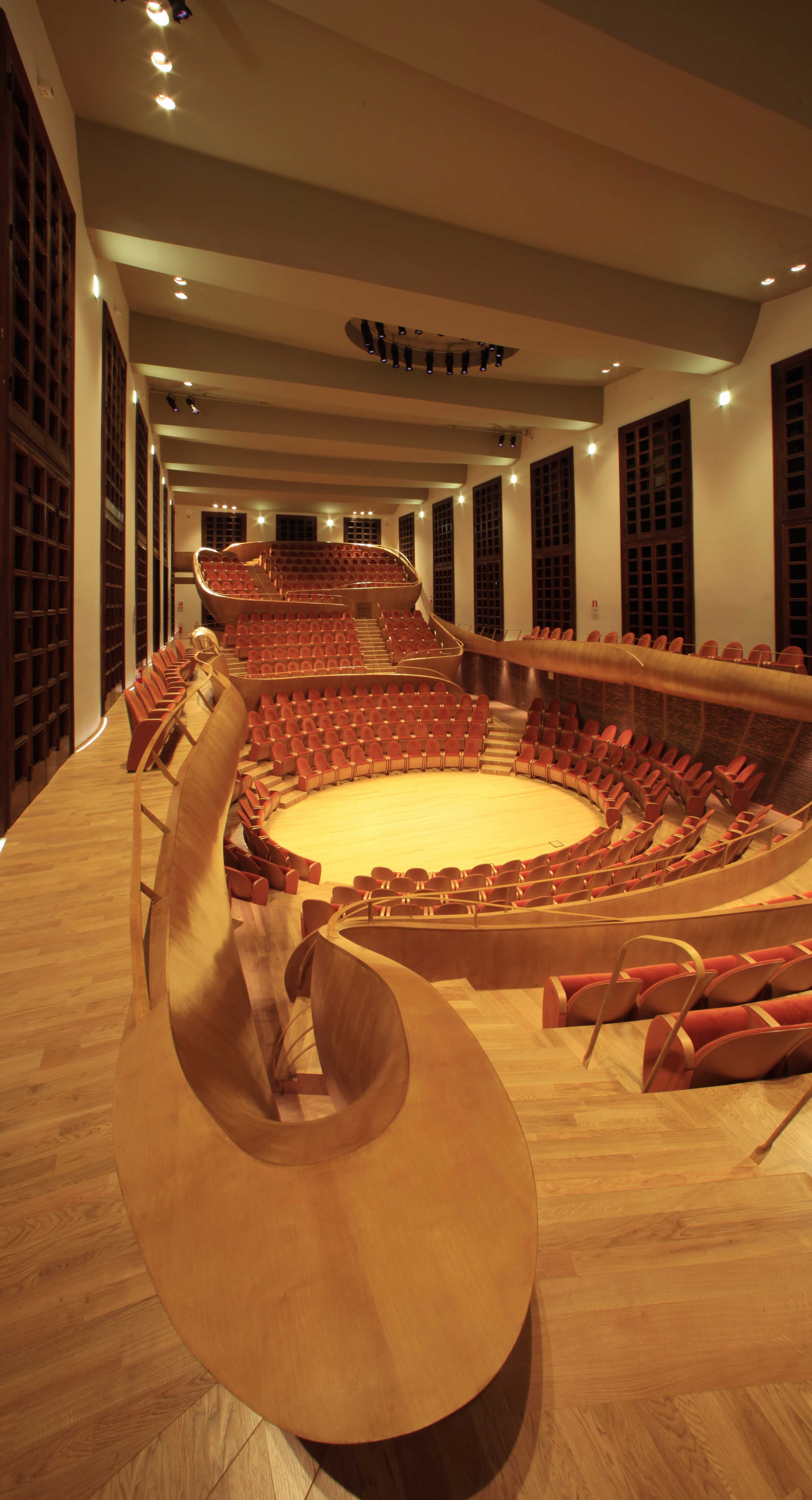
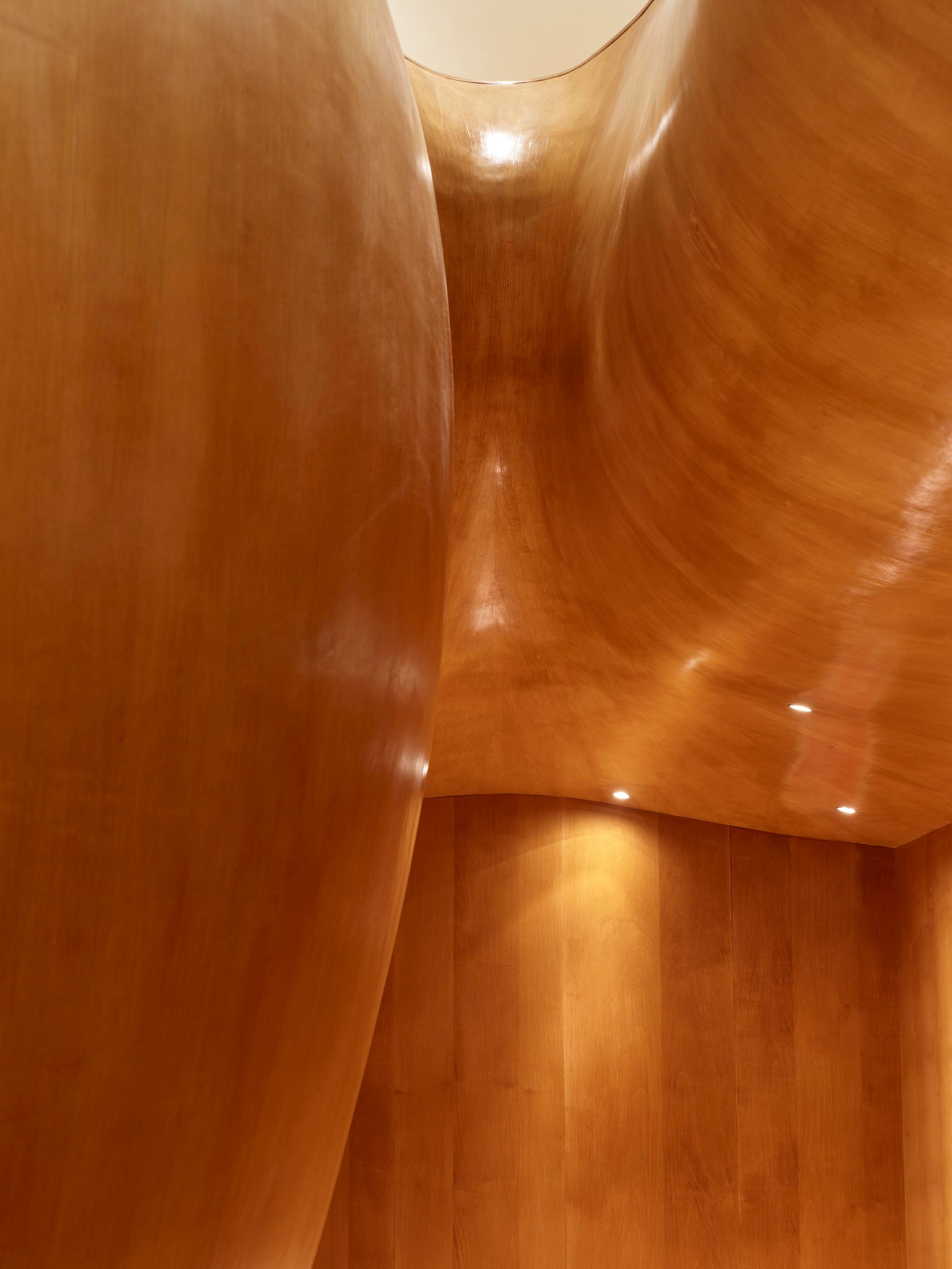
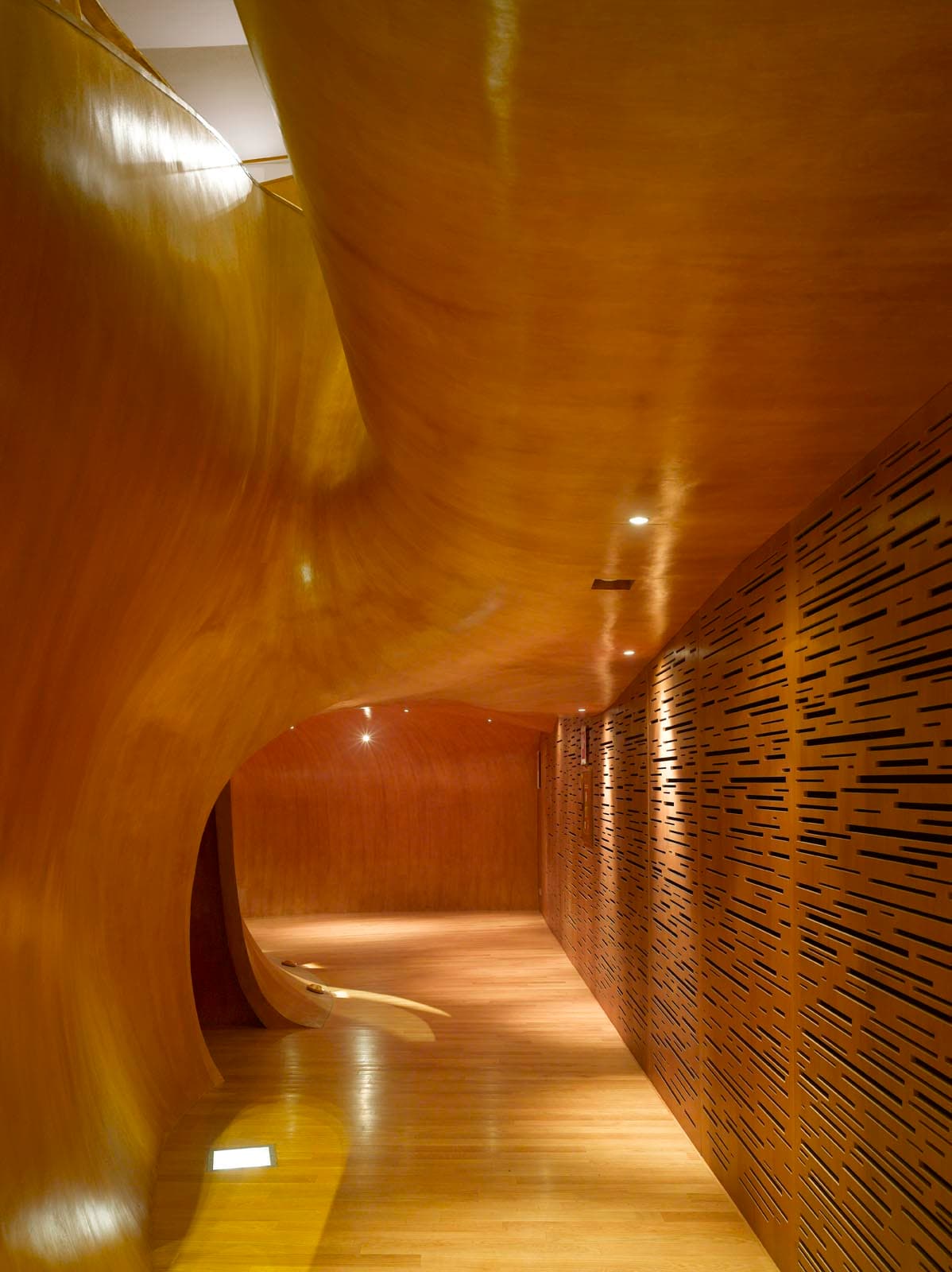
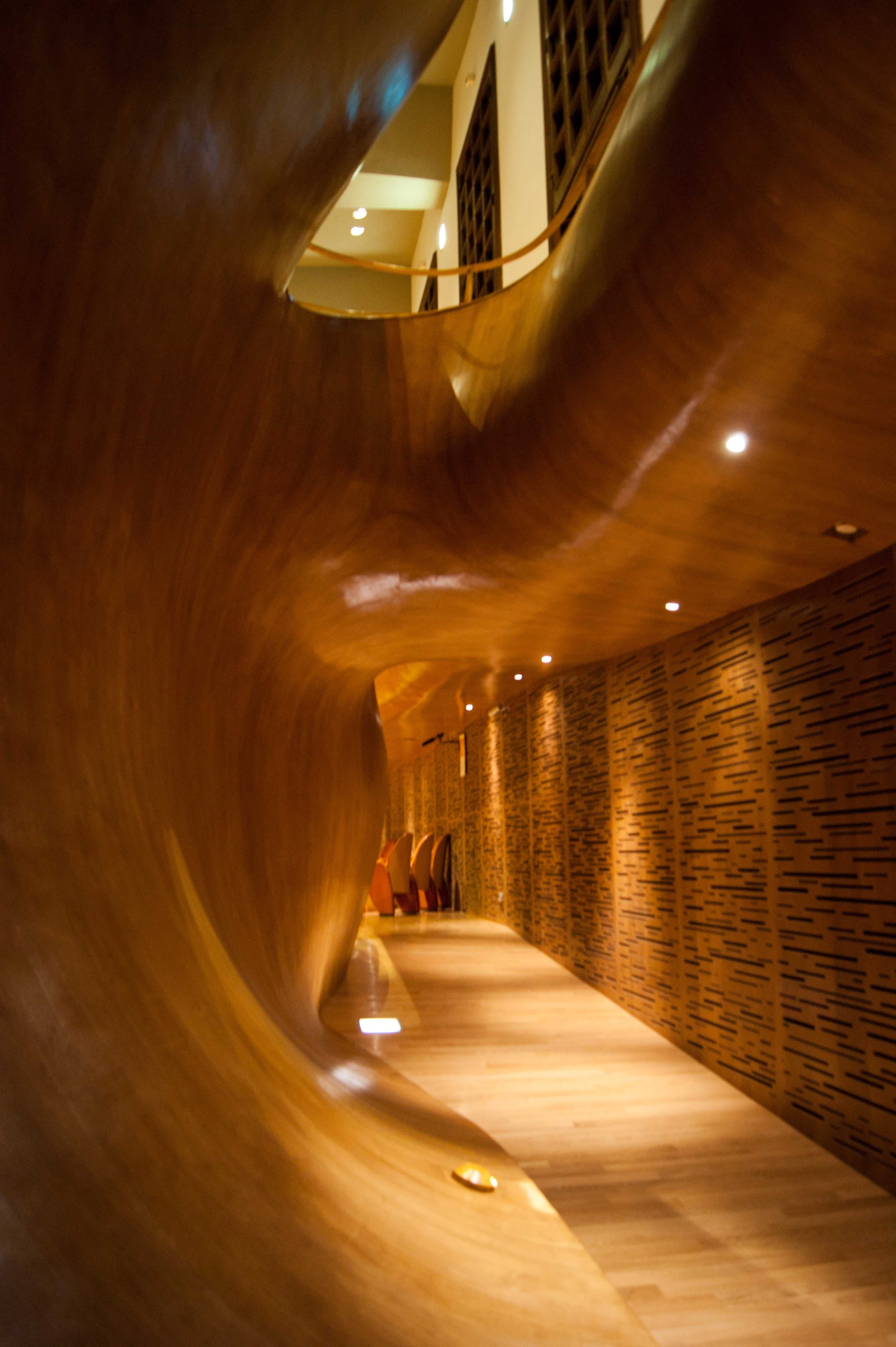
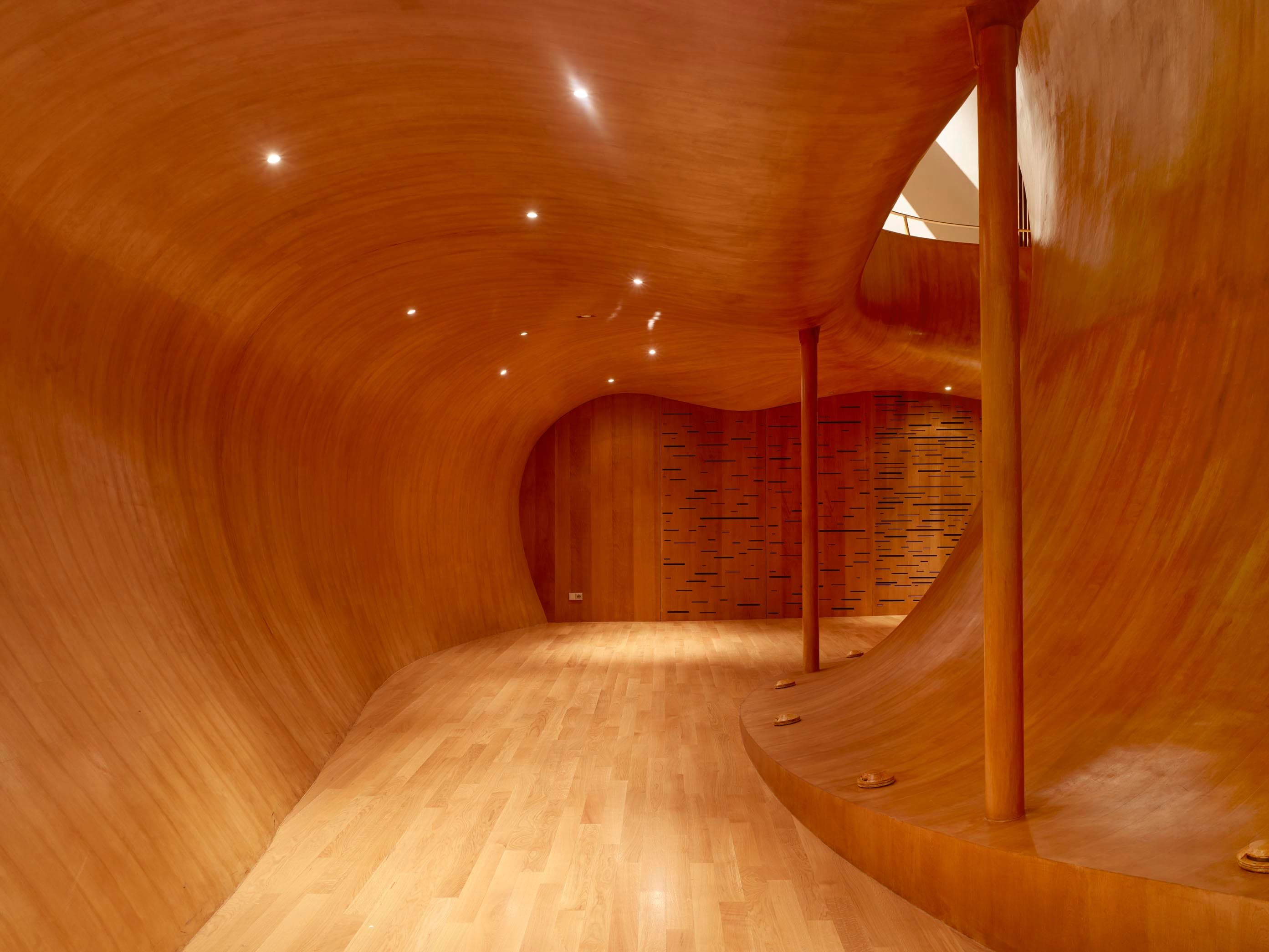
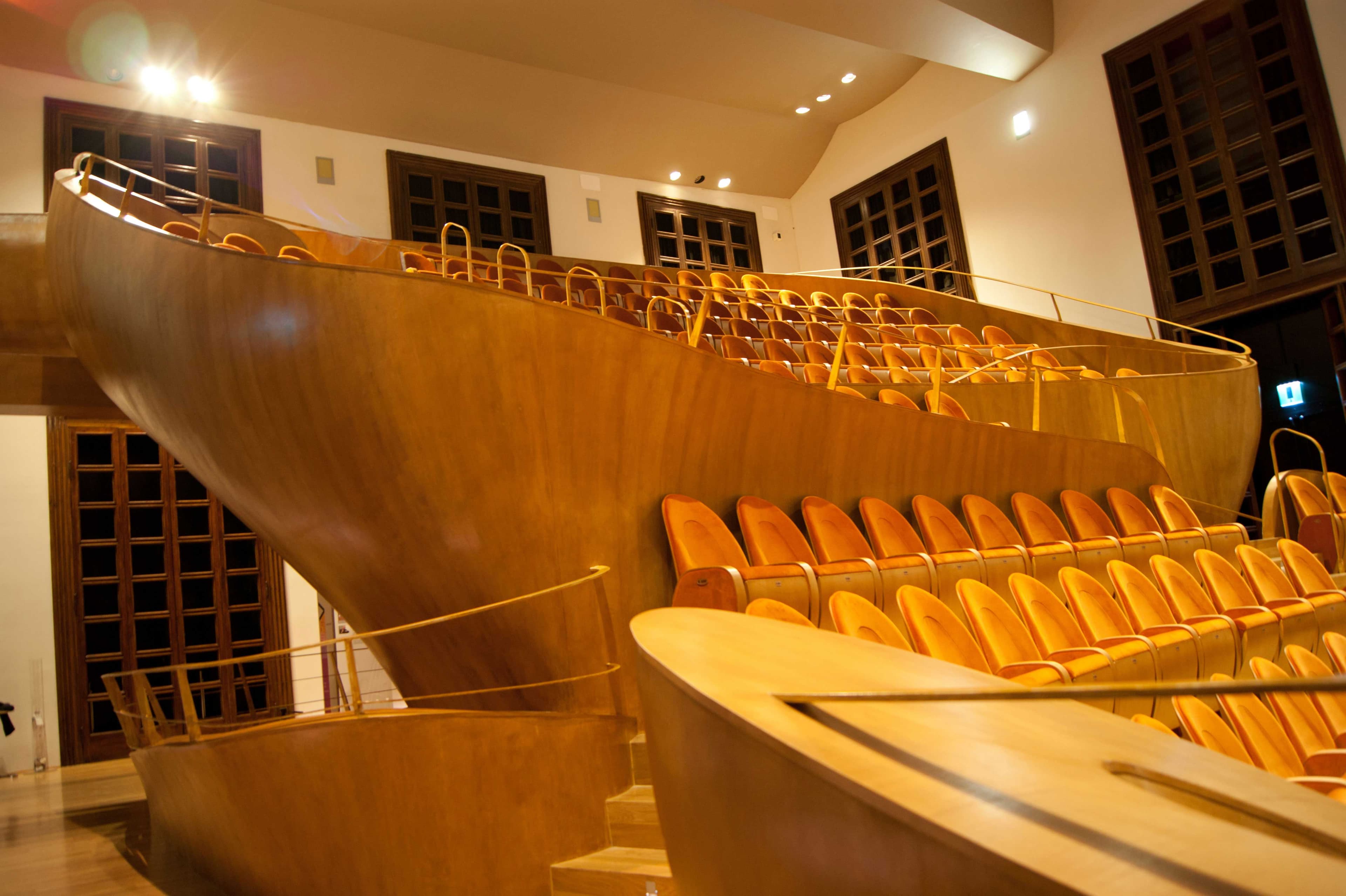
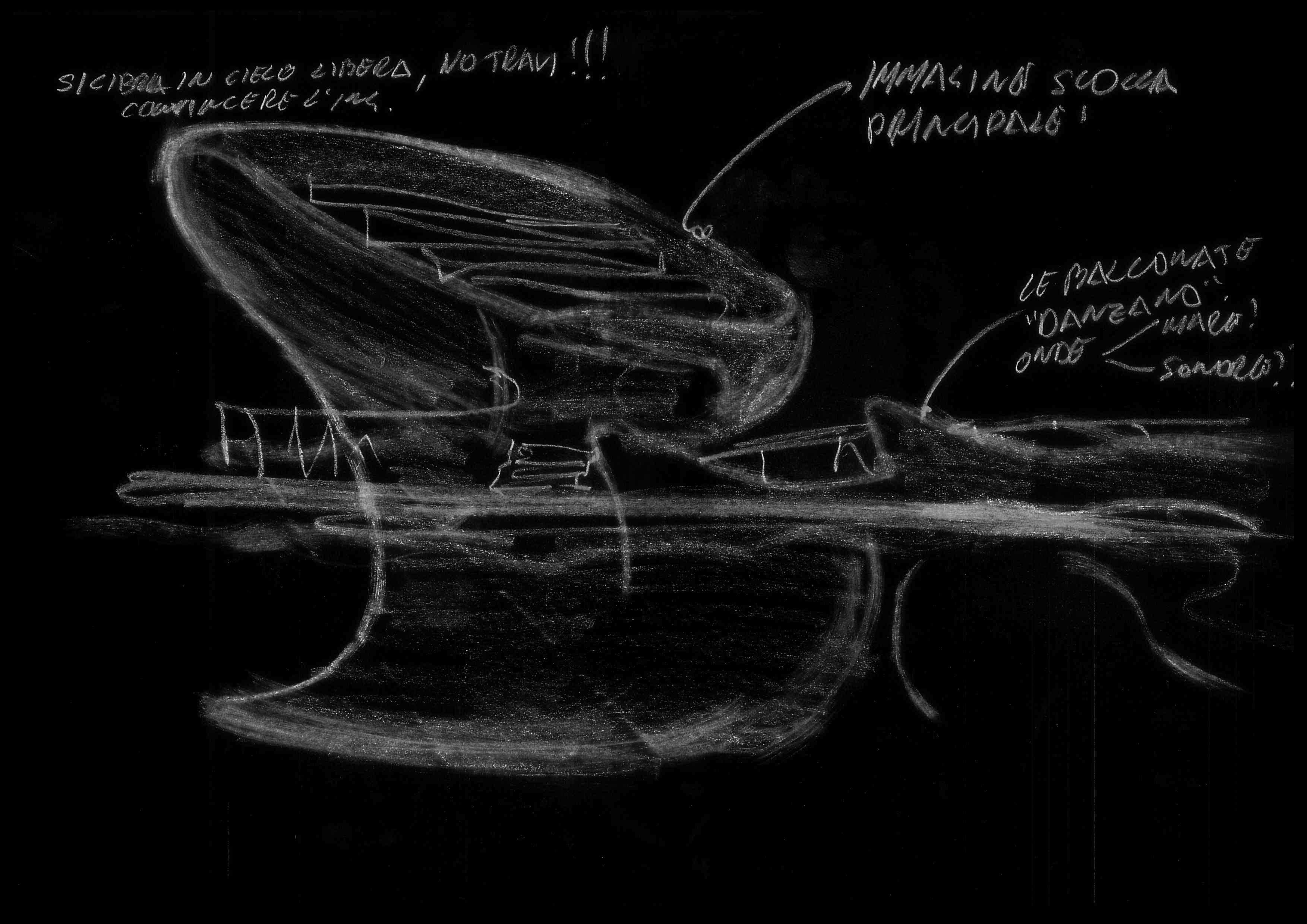
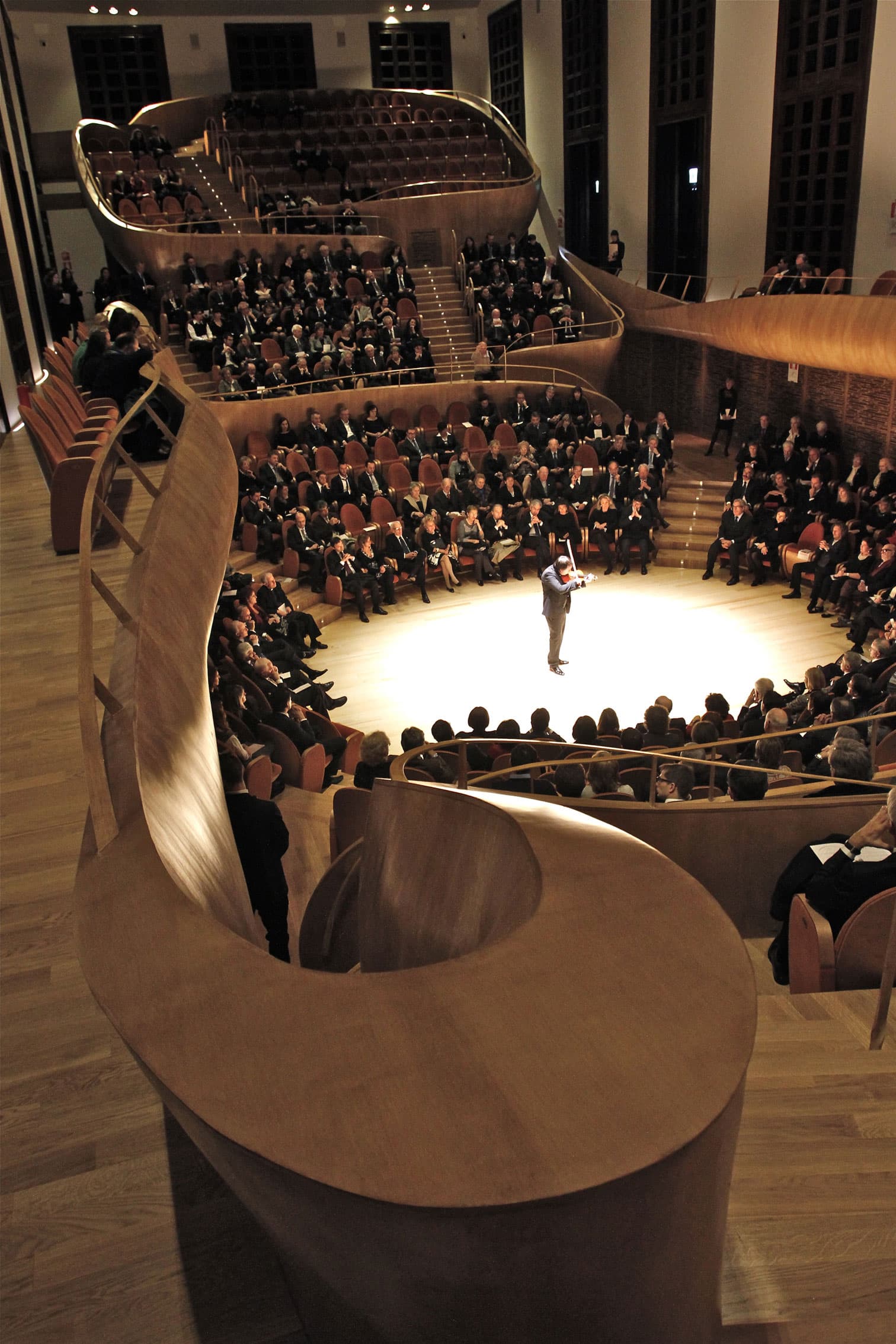
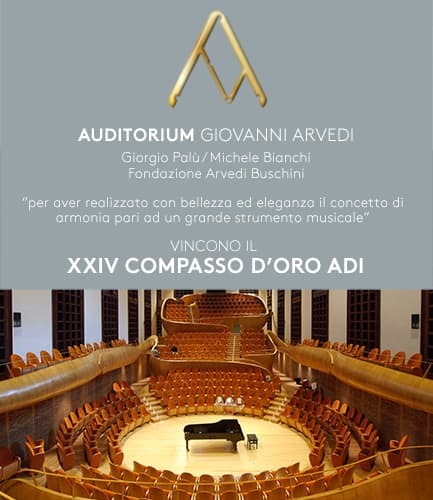
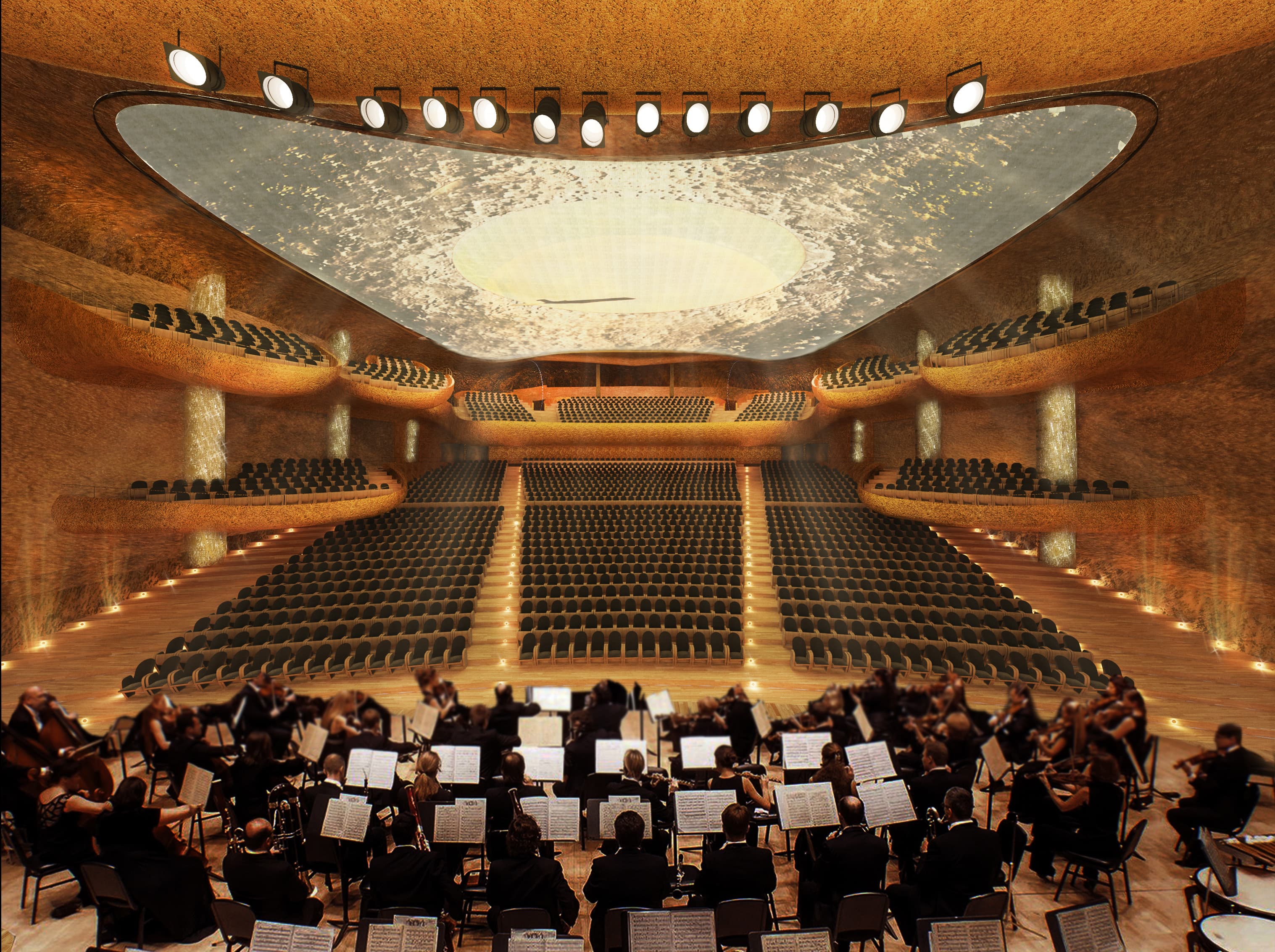
The Giovanni Arvedi auditorium was designed as a form of expression of the beauty of instruments and was created to represent the great musical tradition, but it also wants to confront the future of music. The result is a fluid project, made of soft volumes, sinuous lines that chase each other and draw a large organic sculpture that expresses the propagation of sound waves. A parallel project: architecture and sound, unfolding a sequence of forms, volumes, and views; the focal place is the central stage, on which attention is to be immediately centered. An important acoustic and architectural choice, in which immersive visions settle, almost as in a Totalteather of Weimaran memory.
The space where the sound is formed, the circular stage on the lower level of the hall, is grasped by the audience as a magnetic core, drawing concentration to the musical event and making it an image of full centrality. The audience 'envelops' the musicians, the dialogue that is created between spectators and performers produces a strong emotional impact and allows for a new experience that goes beyond the classical concept of a concert.
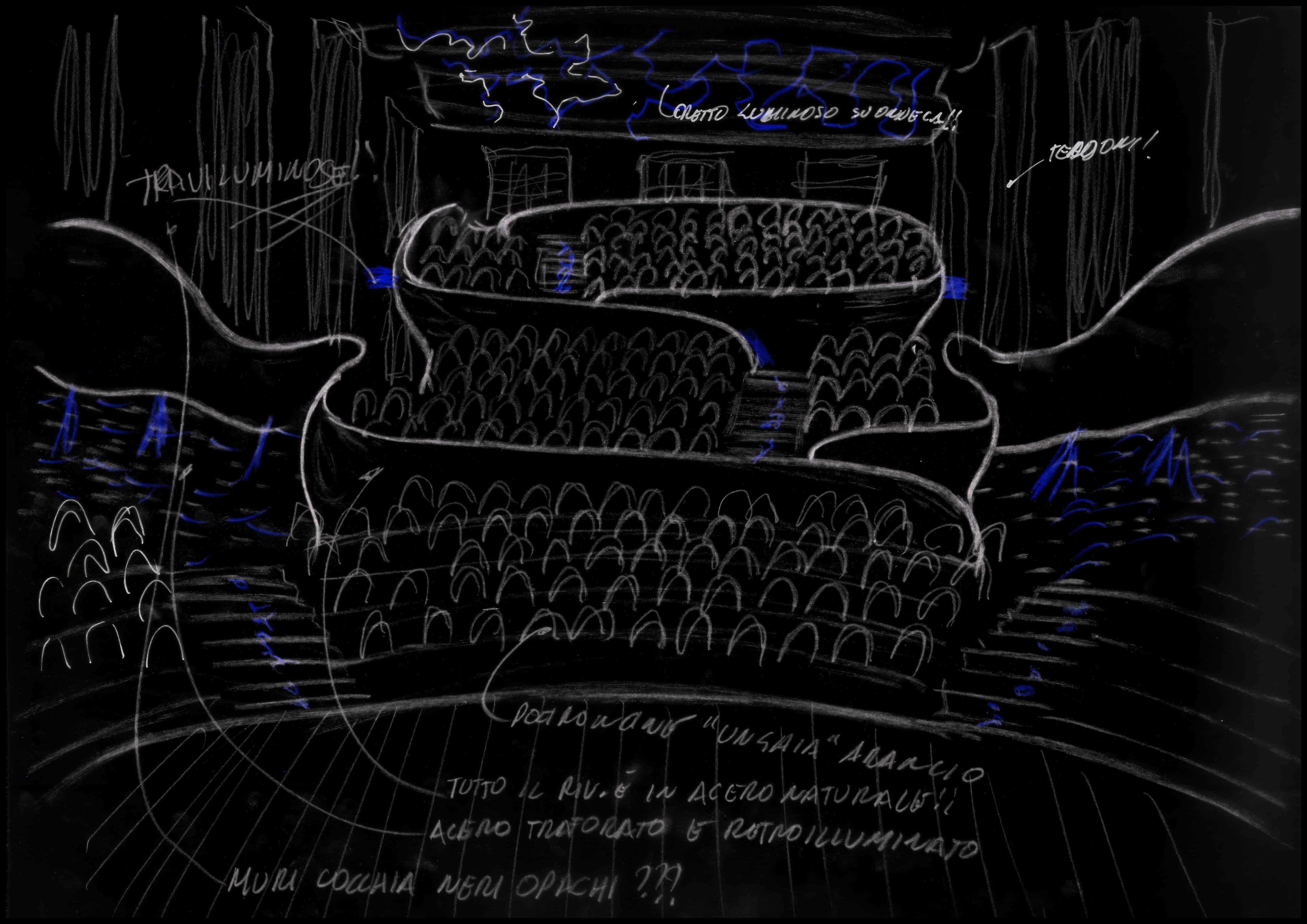
The architecture is made to excite, but the acoustics, studied by engineer Yasuhisa Toyota also becomes a strong point of the hall. The architecture, which panders to acoustic requirements, takes on a pressing prominence of its own: the evidence of the plastic forms of the volumes builds an expressive architecture, in itself, a fluid structure that evolves seamlessly, with softness of joints, in which everything connects and resumes, in a discursive unity, between calmness and demonstration of strength, parallel to the music that is the protagonist in the Auditorium.
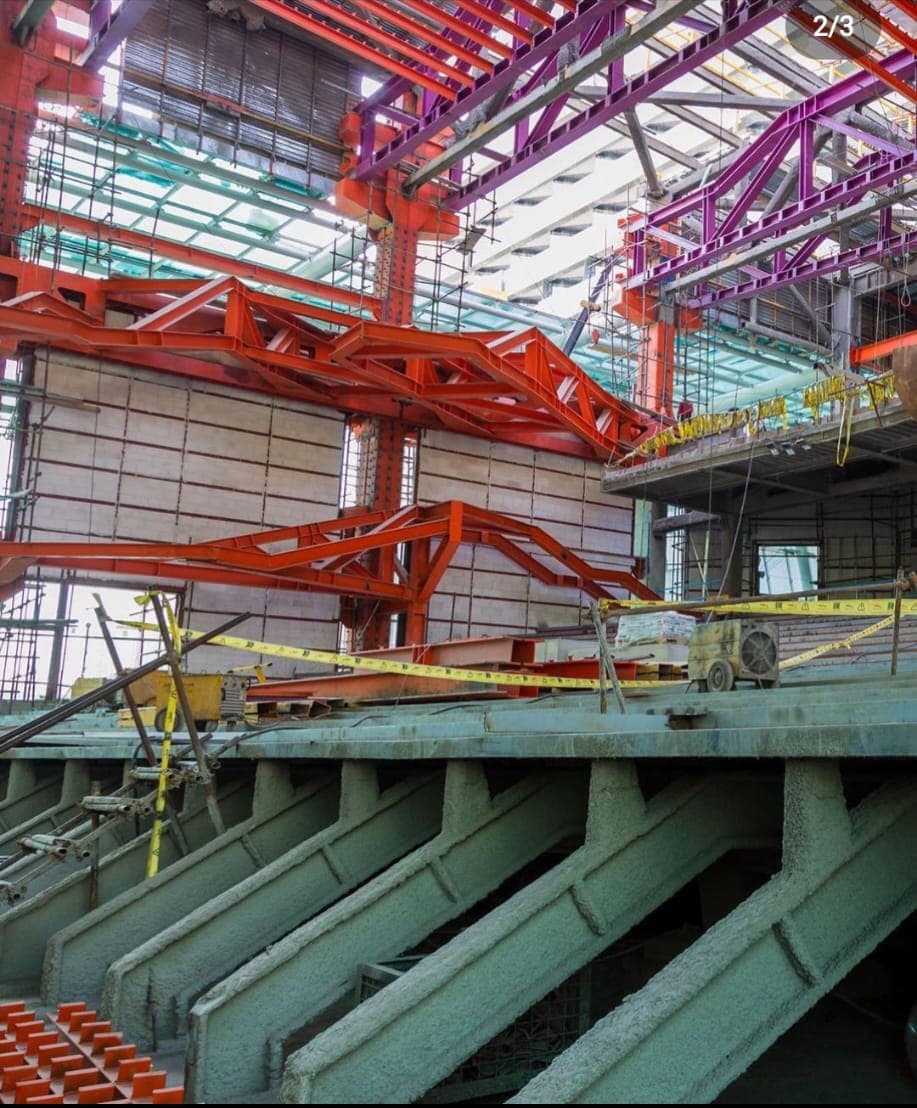
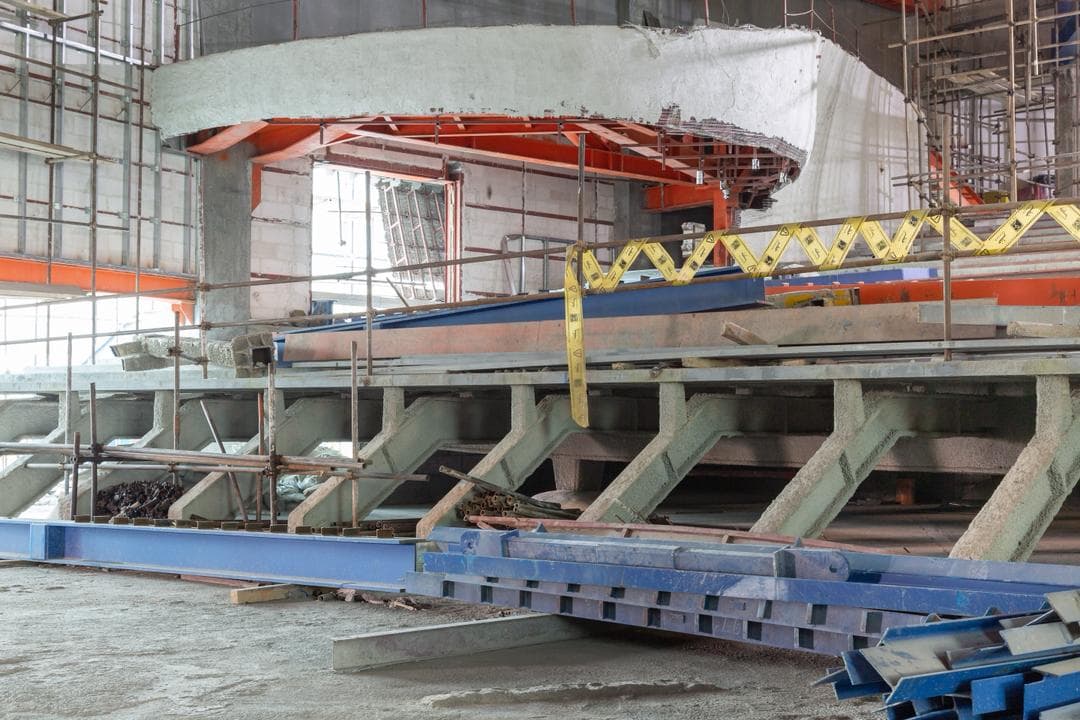
Architecture tries to "capture" sound to translate it into image; music, ephemeral by nature, becomes form, substance: permanent and ephemeral in a timeless dialogue in the place of the celebration of stringed instruments. Fluidity and organicity of architectural volumes, living and palpitating matter that is shaped by following curvilinear traces, contrasting the regular and aseptic definition of the parallelepiped hall that contains the Auditorium, like a box that opens to surprises. An underlying idea: to build by parallel lines an identity between sound and architecture, in the volumes that seem to crystallize sound waves. Concrete waves materialize along the ceiling of the hall.
The acoustic function is integrated with identifications of an aesthetic and architectural nature, to represent in the hall the upper limit of the envelope, in which suffused sensations of brightness chase each other: the upper limit constitutes that difference, in materials and colors, that makes the conception of the Auditorium more precious, a place in which sound and architectural invention are embedded. A place of multiplicity, surprise and wonder: mechanisms of an architecture that is built by combining softness and fullness of materials (concrete, hidden steel mesh, wood cladding), is defined in the fluid concatenation of volumes in which soft curves and narrow radii are emphasized, making surfaces vibrate and veer, an architecture that lives by open and foreshortened visions, by concentration and inventive essence.(ph. Roland Halbe)
Diocesan Museum
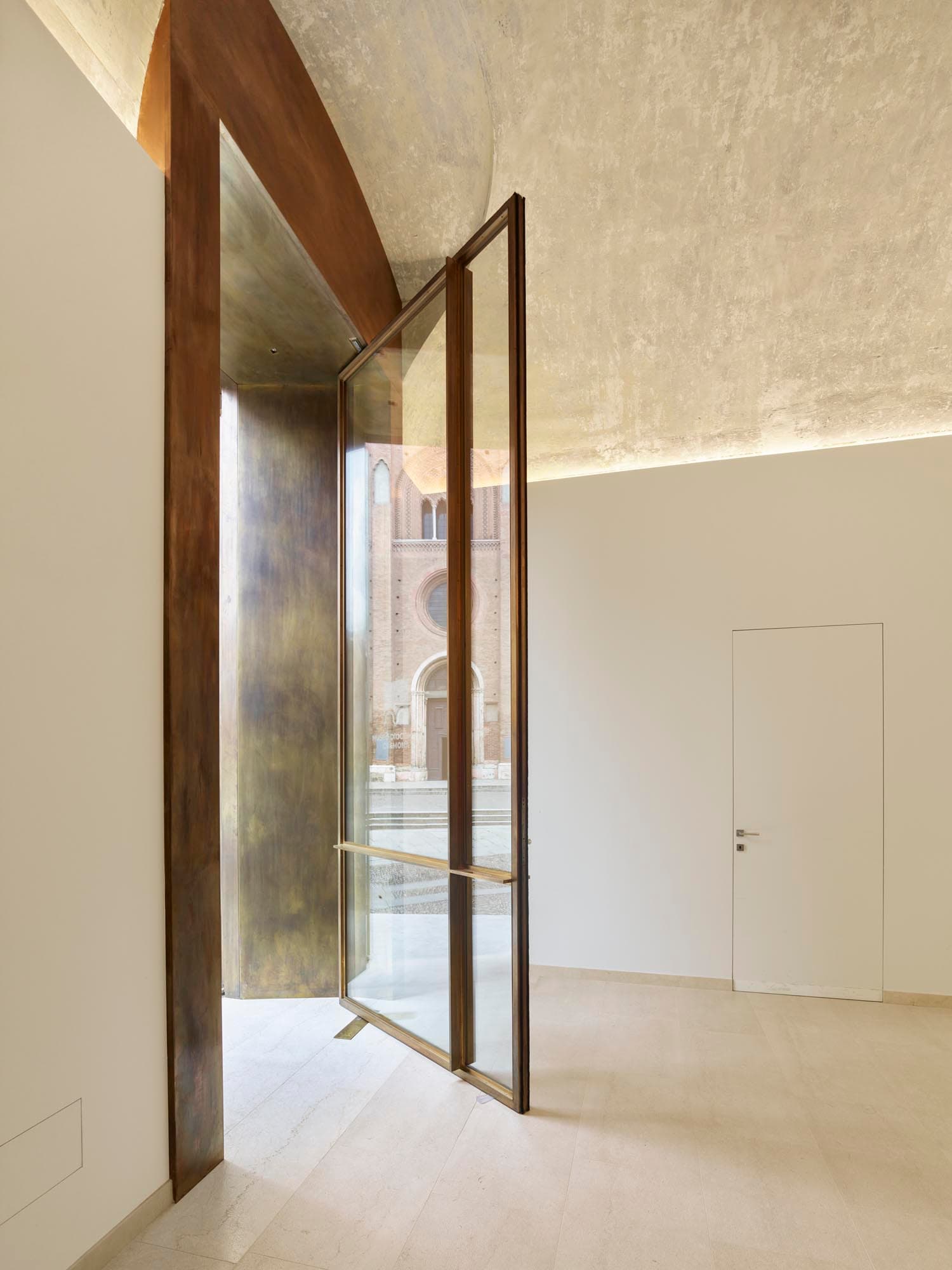
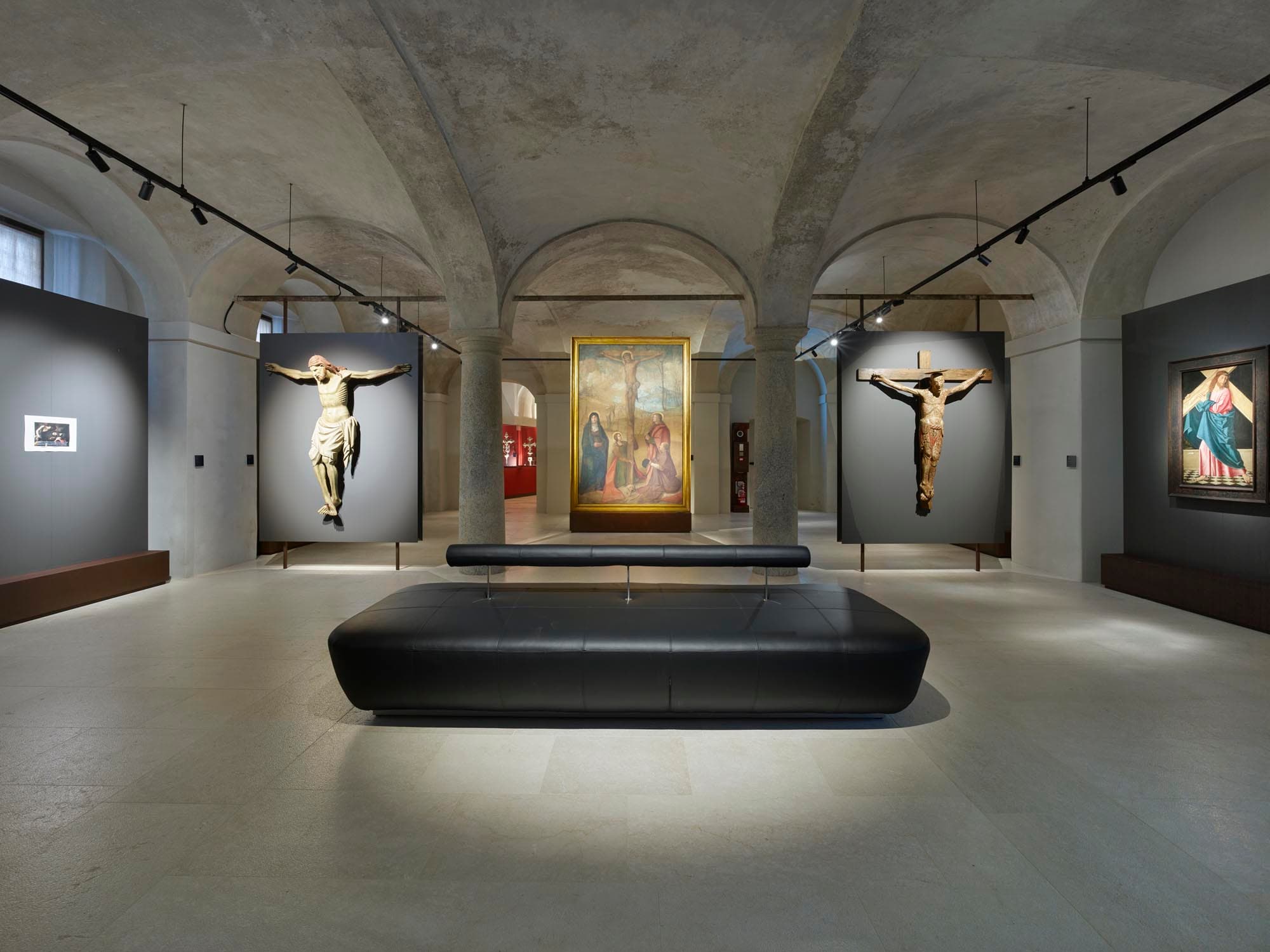
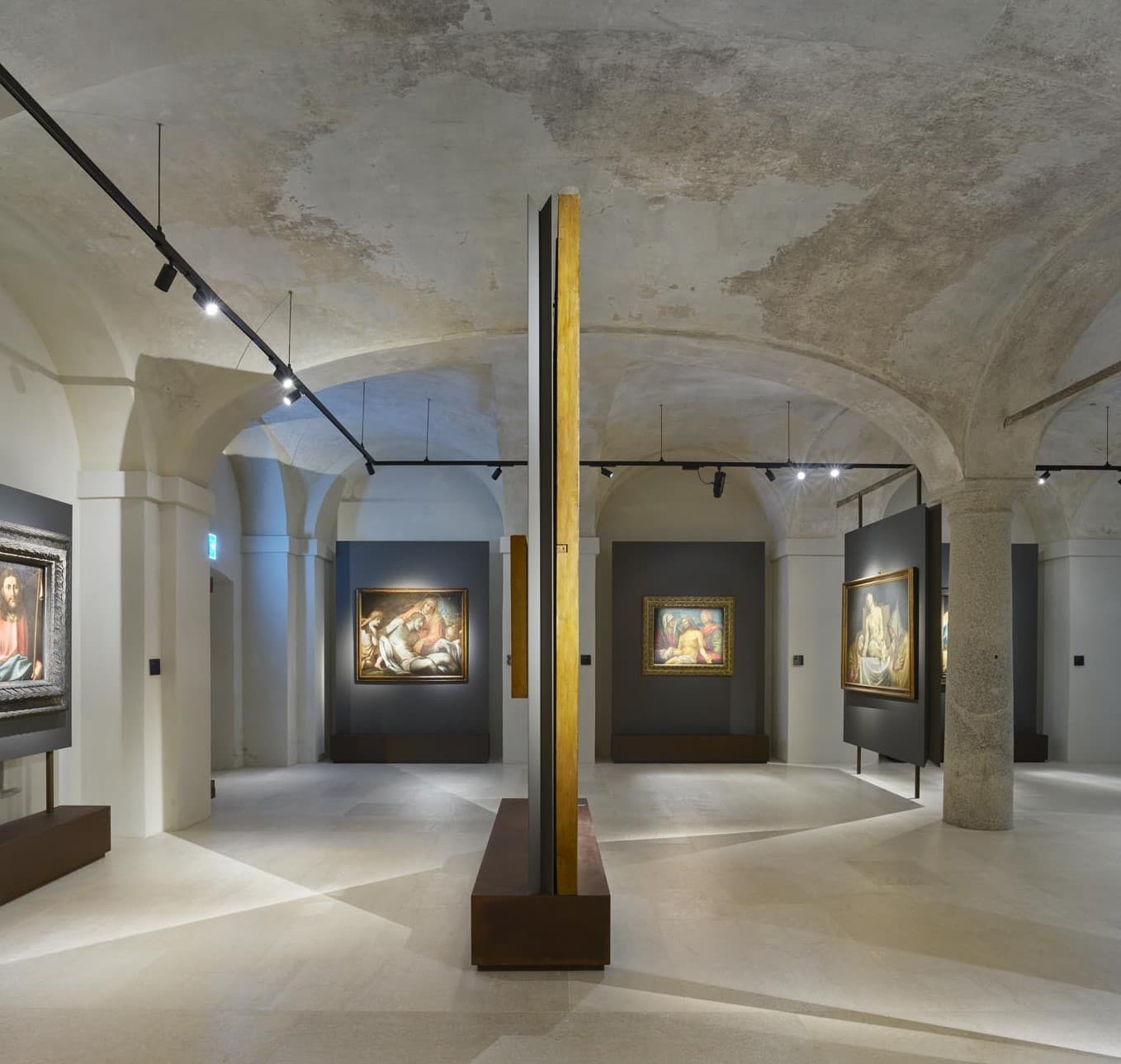
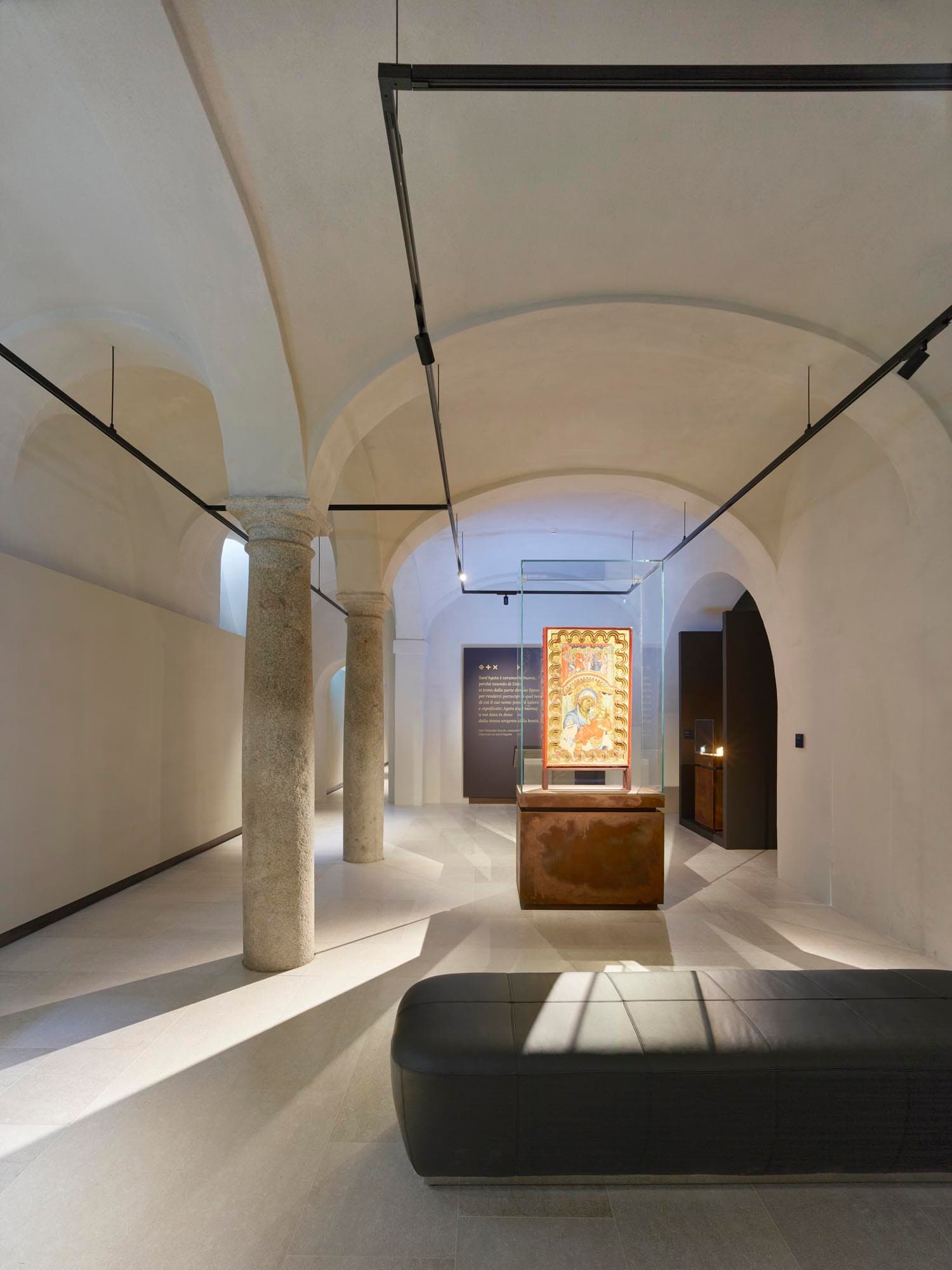
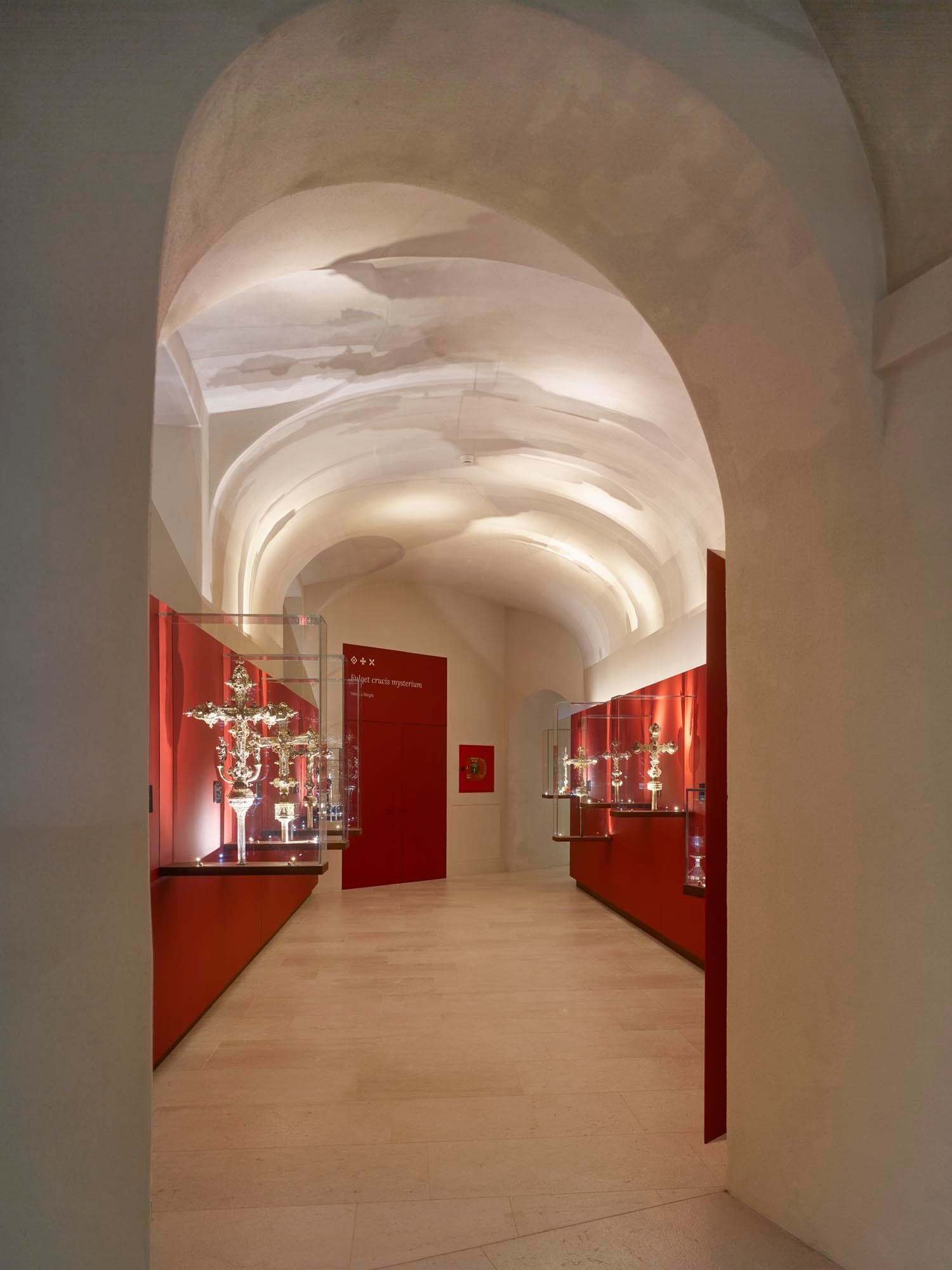
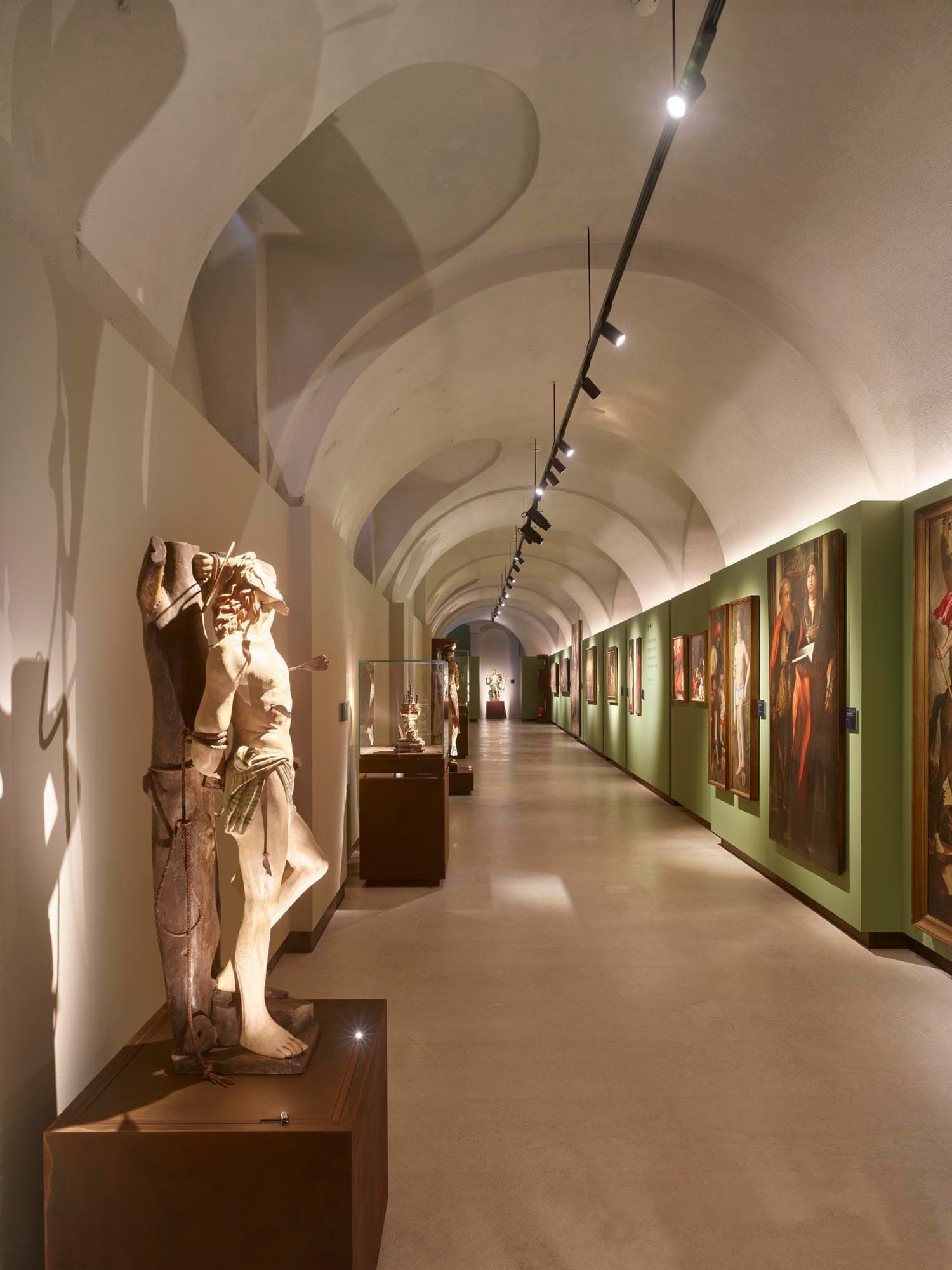
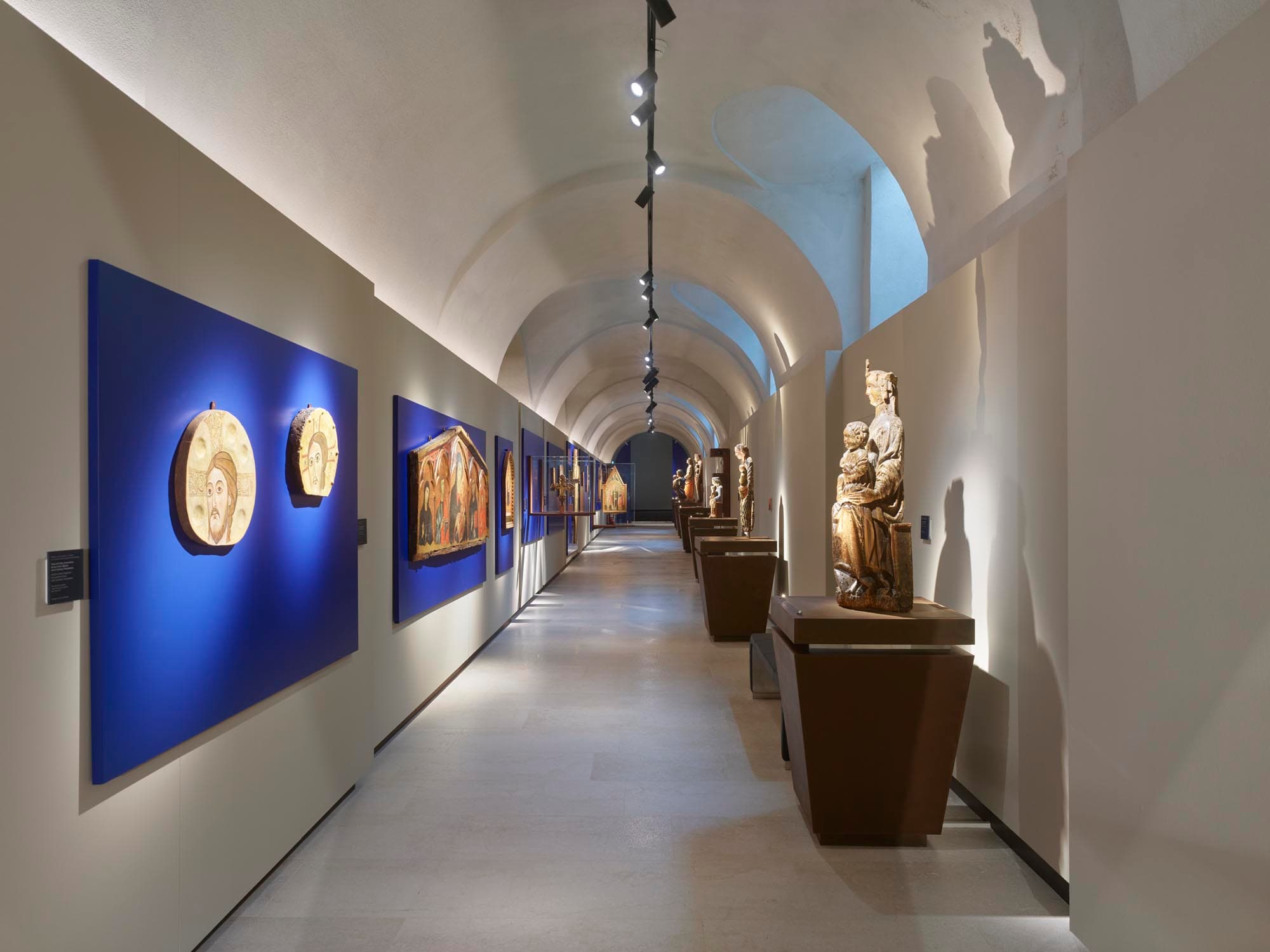
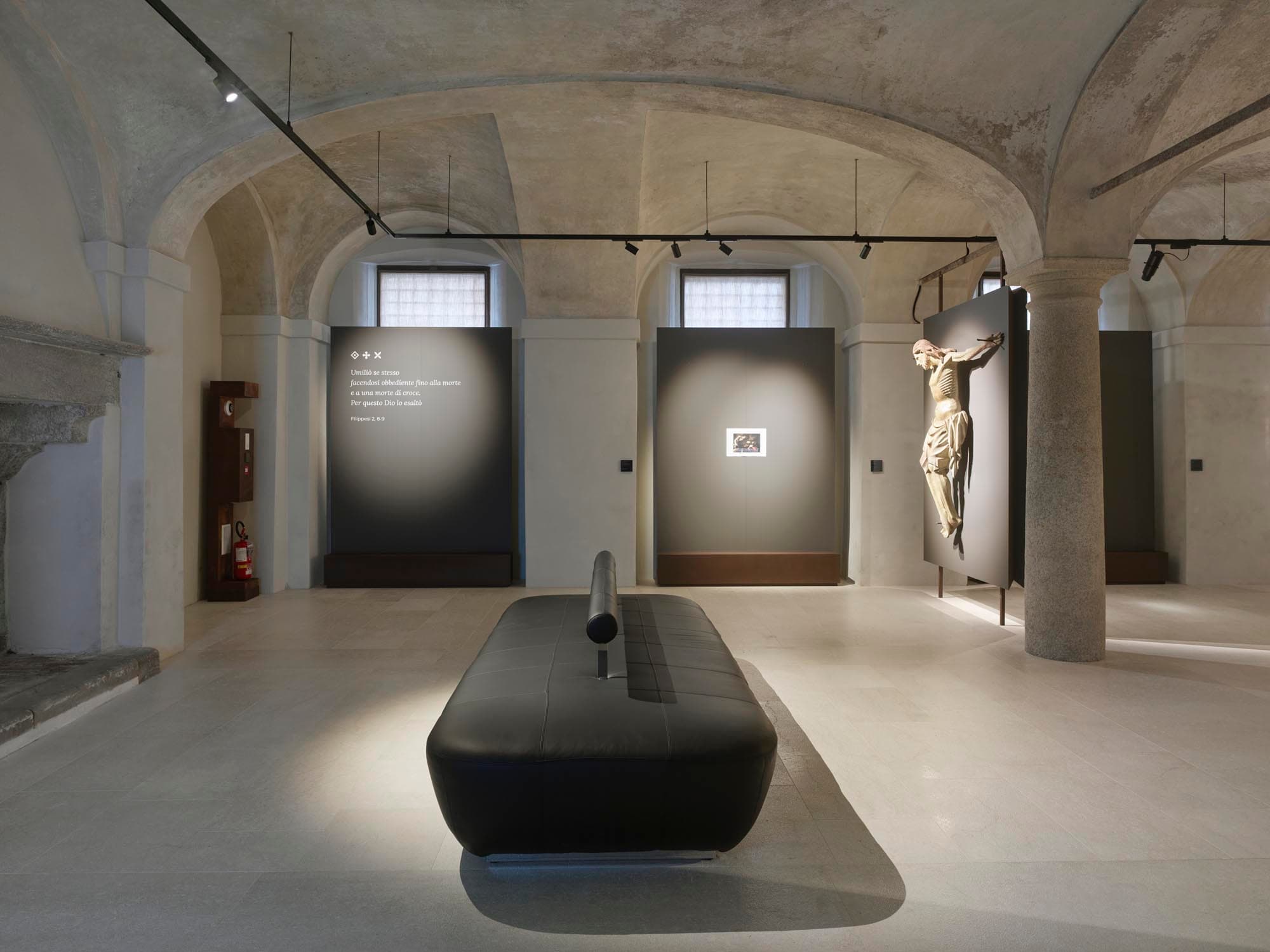
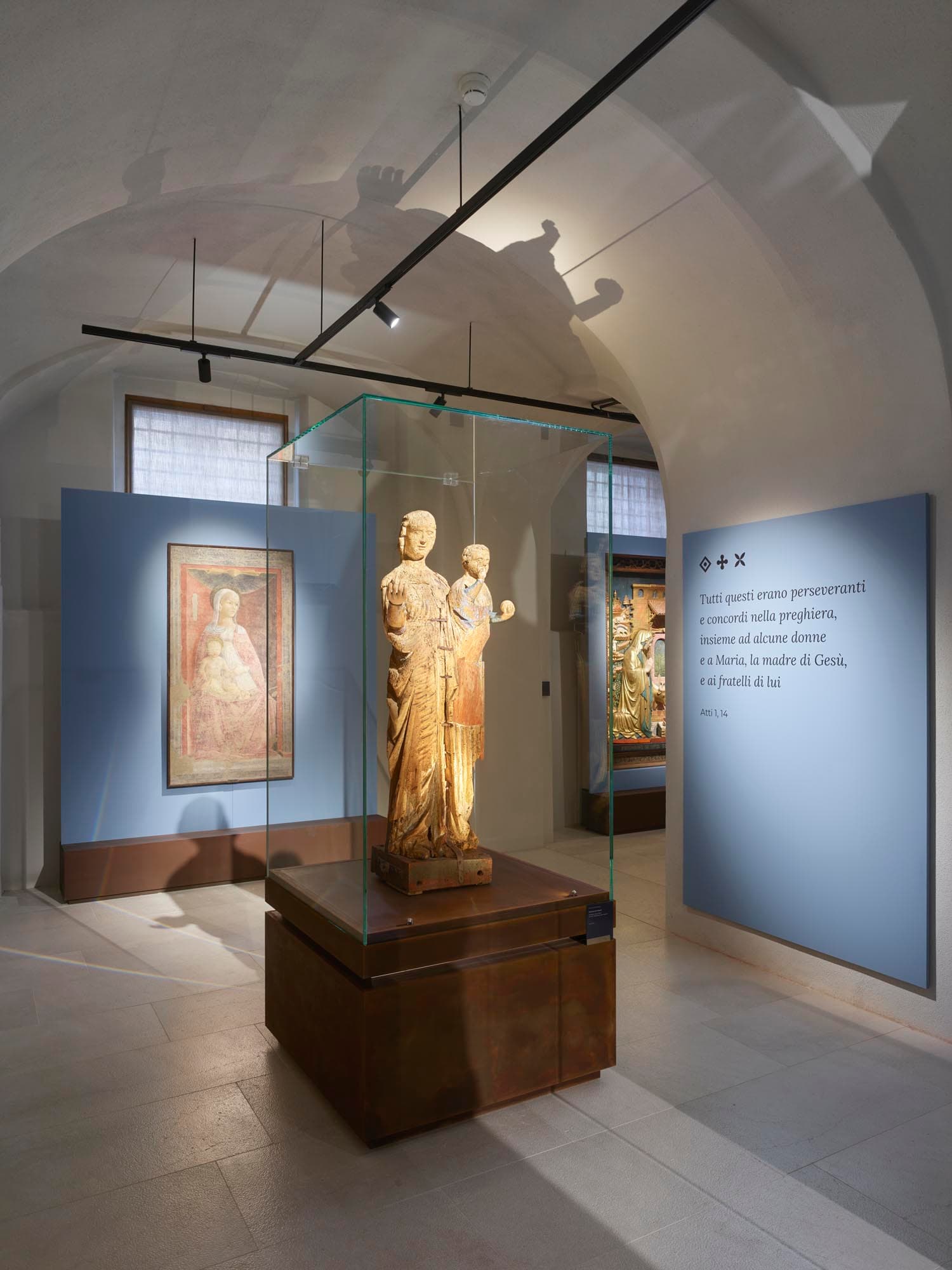
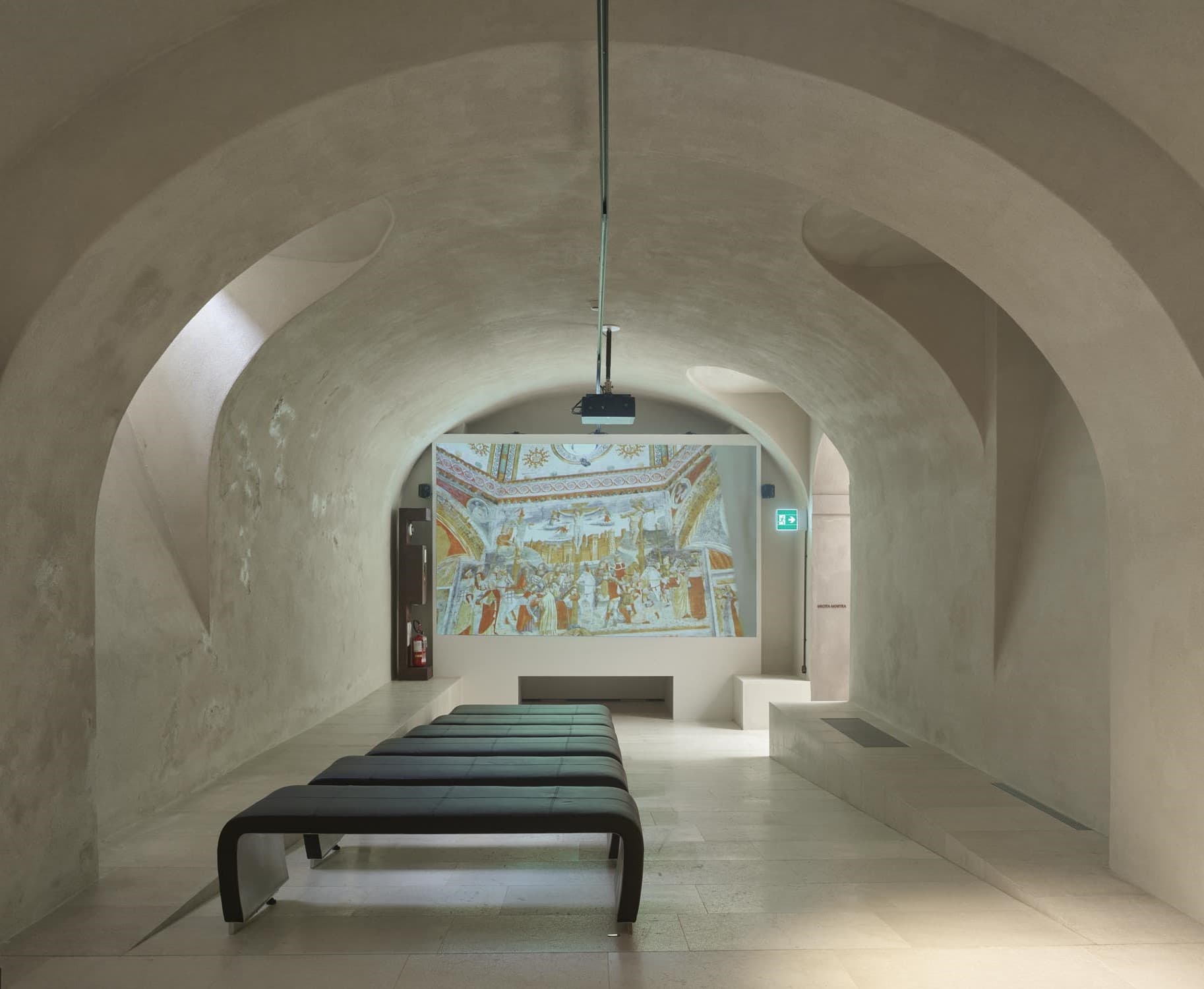
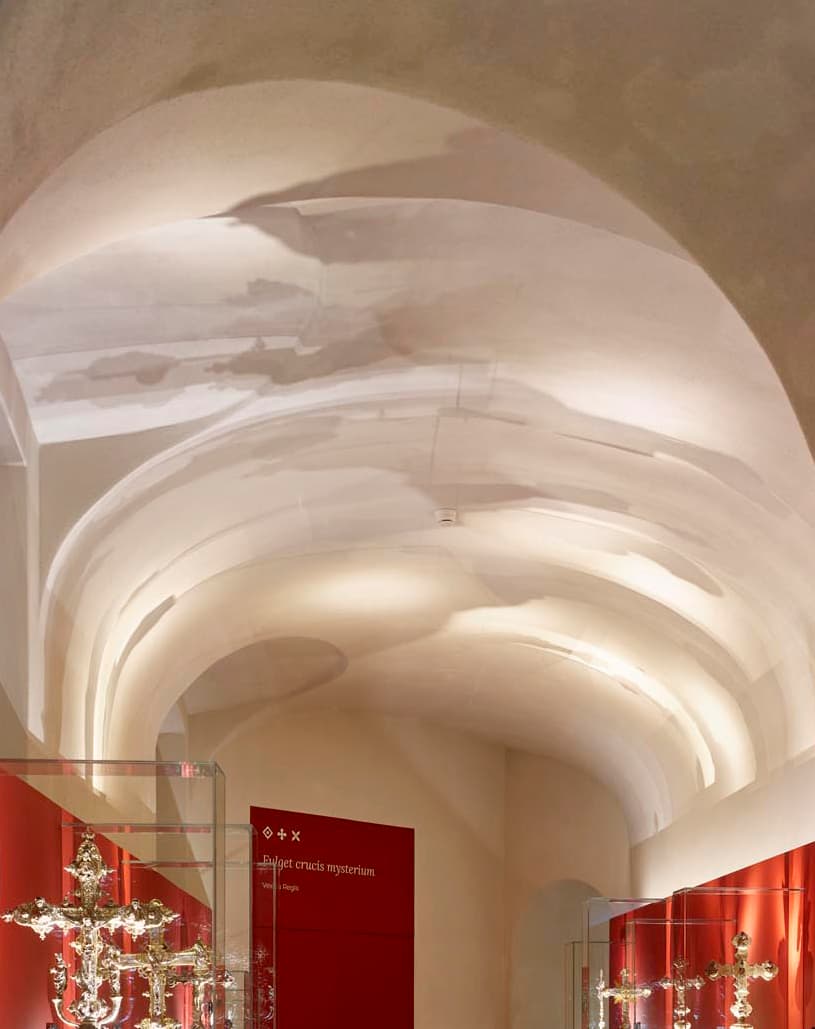
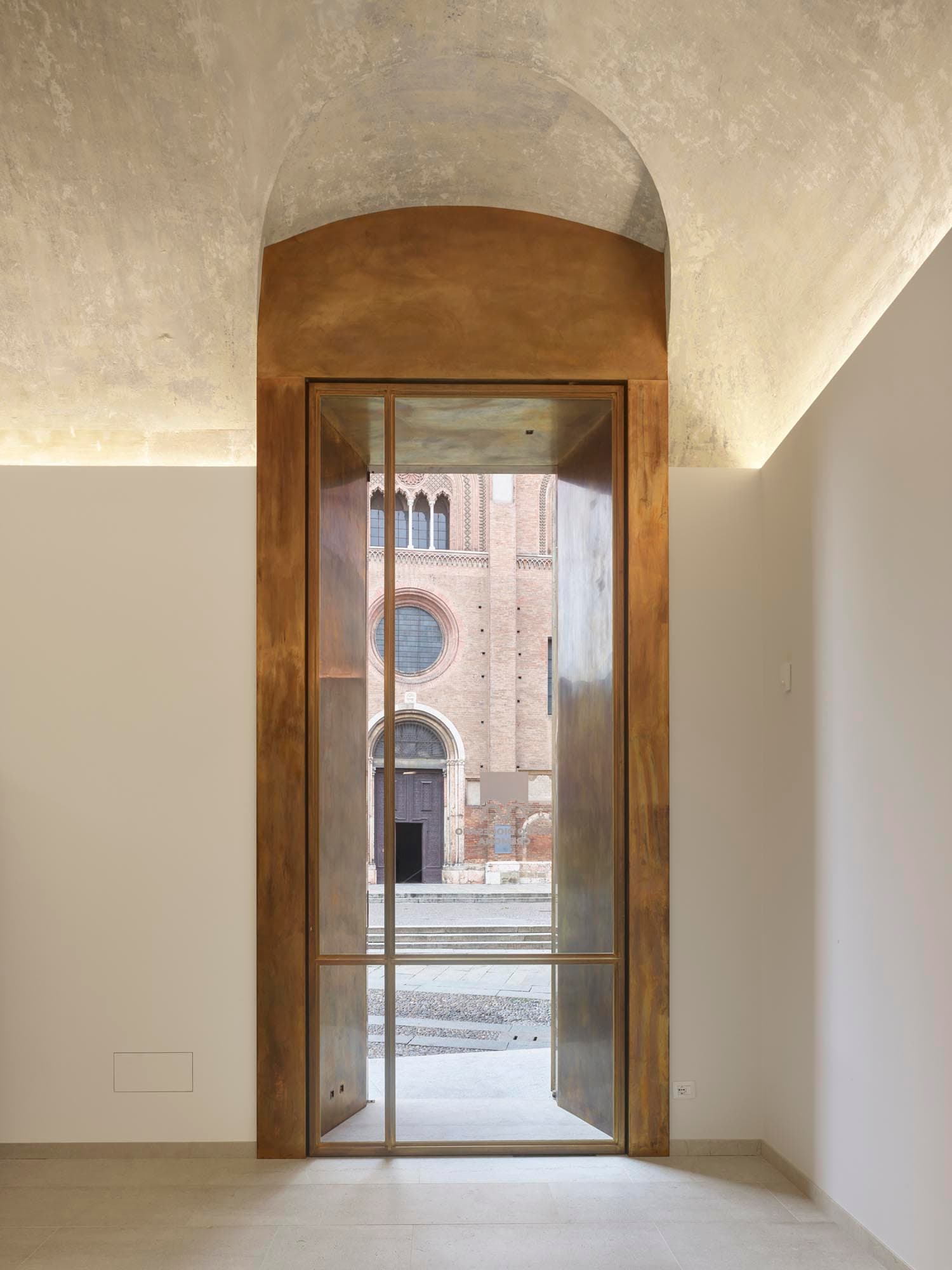
The location of the Diocesan Museum of Cremona is the episcopal palace, which is located in the vicinity of the Cathedral and the Baptistery; moreover the palace is home to the Romanesque Stones Museum and it is centrally located in the city, near the prestigious Violin Museum and the Municipal Palace. The spaces that house the Museum are the rooms on the second floor, the basements and the hypogea, connoted by great solidity and constant temperature and humidity, ideal characteristics for housing works of art. These areas of the Palace, long neglected and used as storage, have been, through this transformation, enhanced and recovered. In order to strengthen the biography of the building, with a contemporary and recognizable architectural language, the Diocesan Museum was conceived not only as an exhibition space, but also as a space for the conservation of the many works at risk of deterioration dispersed in the various locations of the Diocese of Cremona. The entrance, in the northeast part of the main facade of the Episcopal Palace, features a new bronze door that fits into the partition of the building.
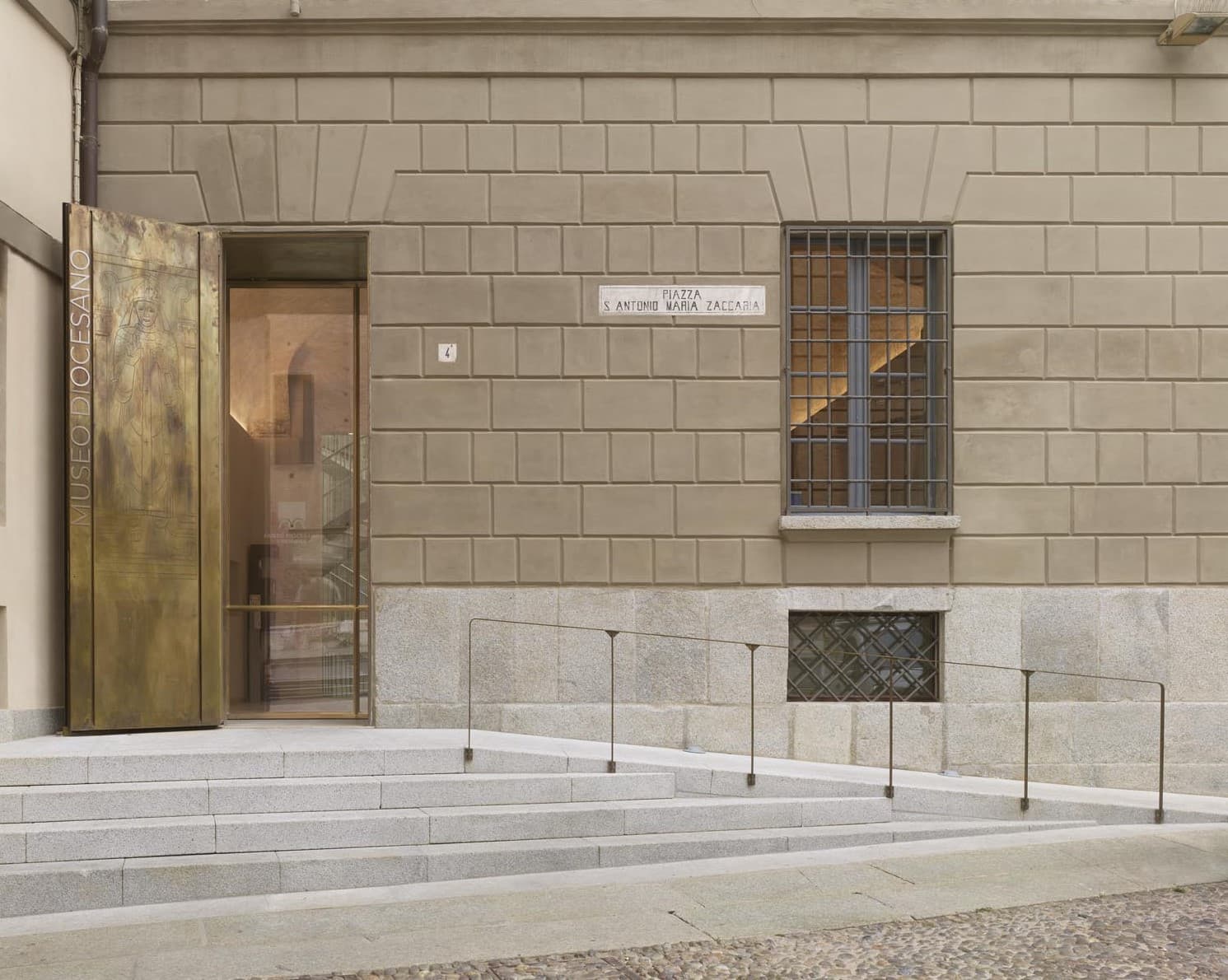
The imposing vaulted entrance halls on the ground floor house a reception area that includes the museum management, ticket office and bookshop.
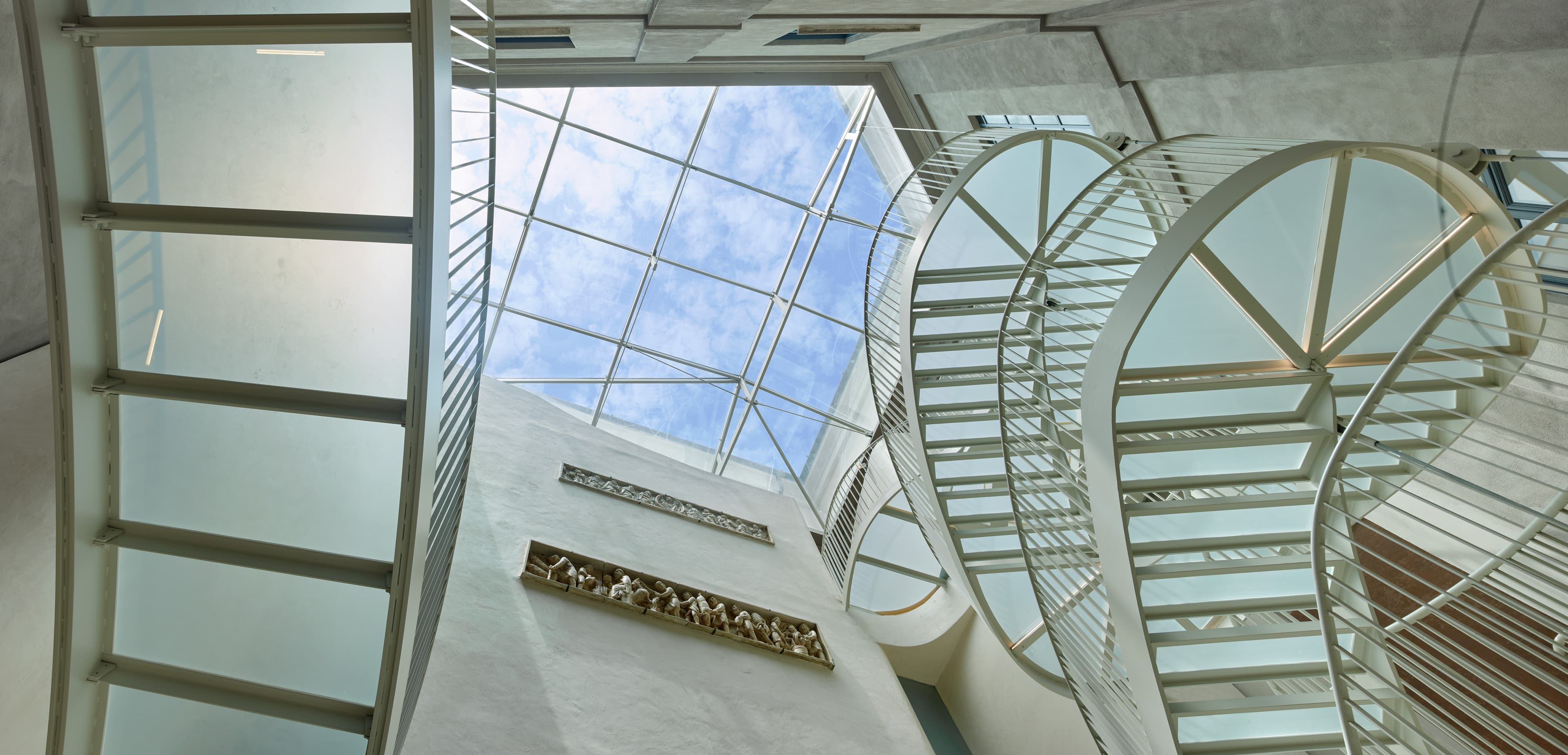
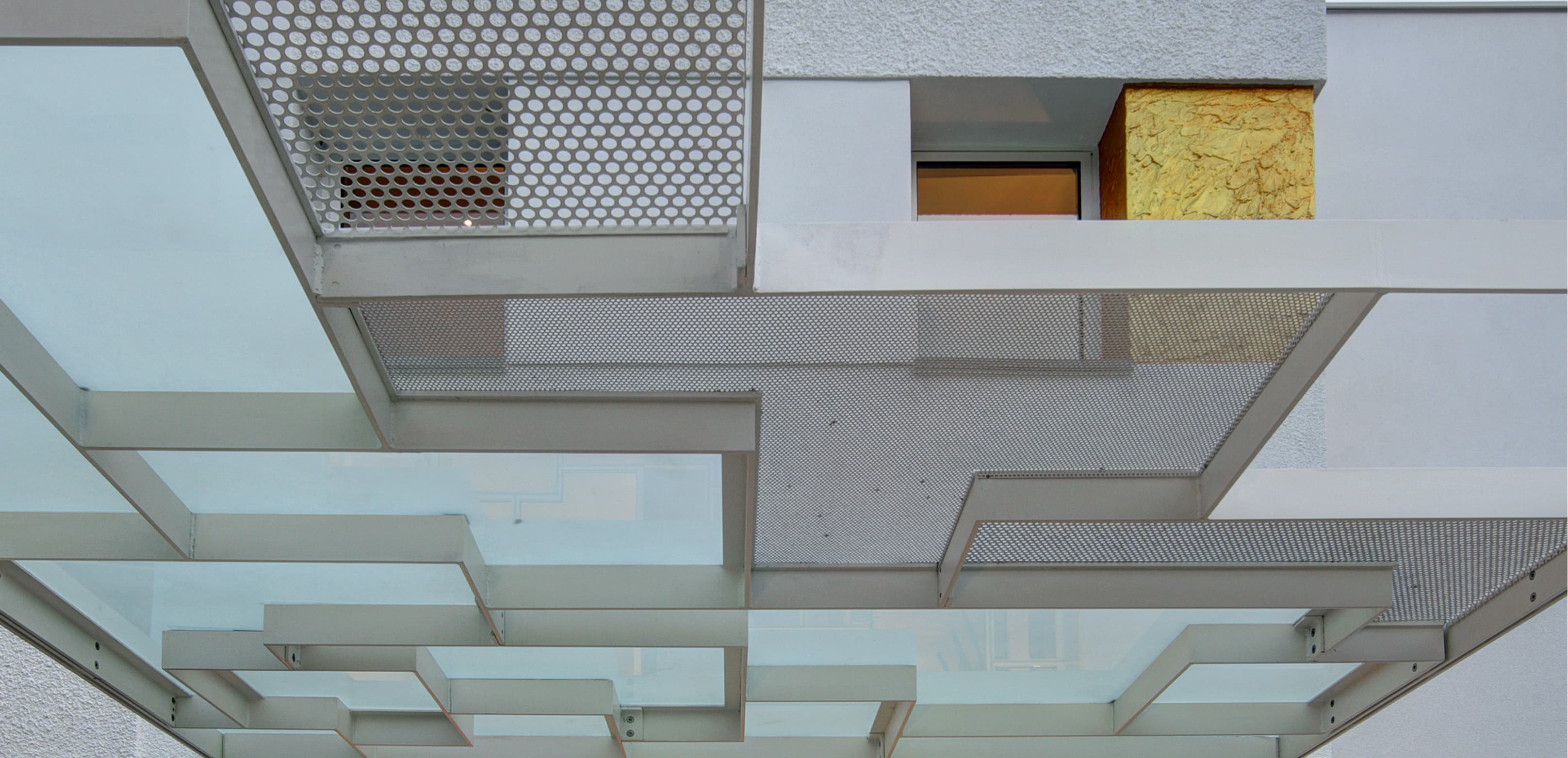
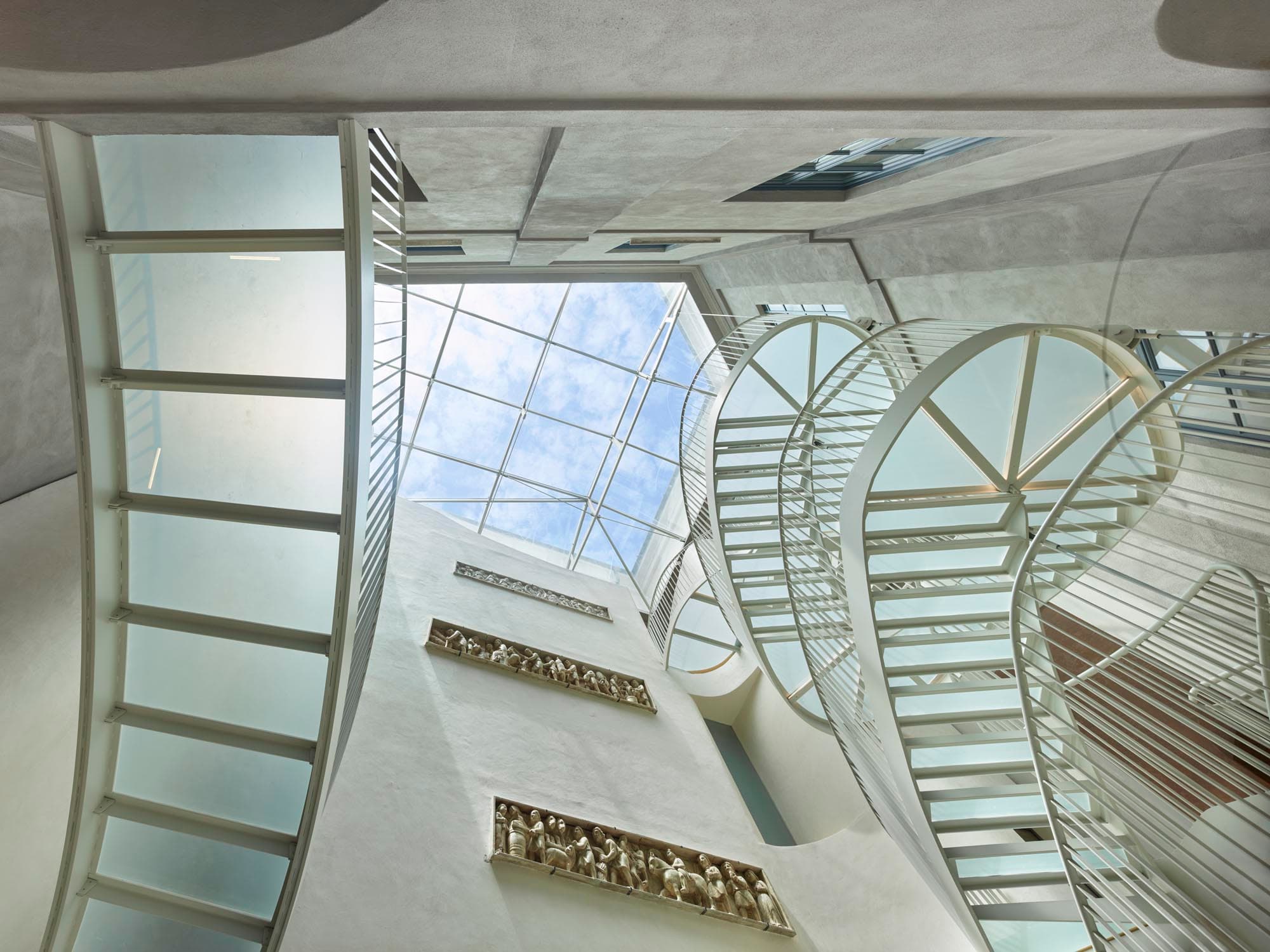
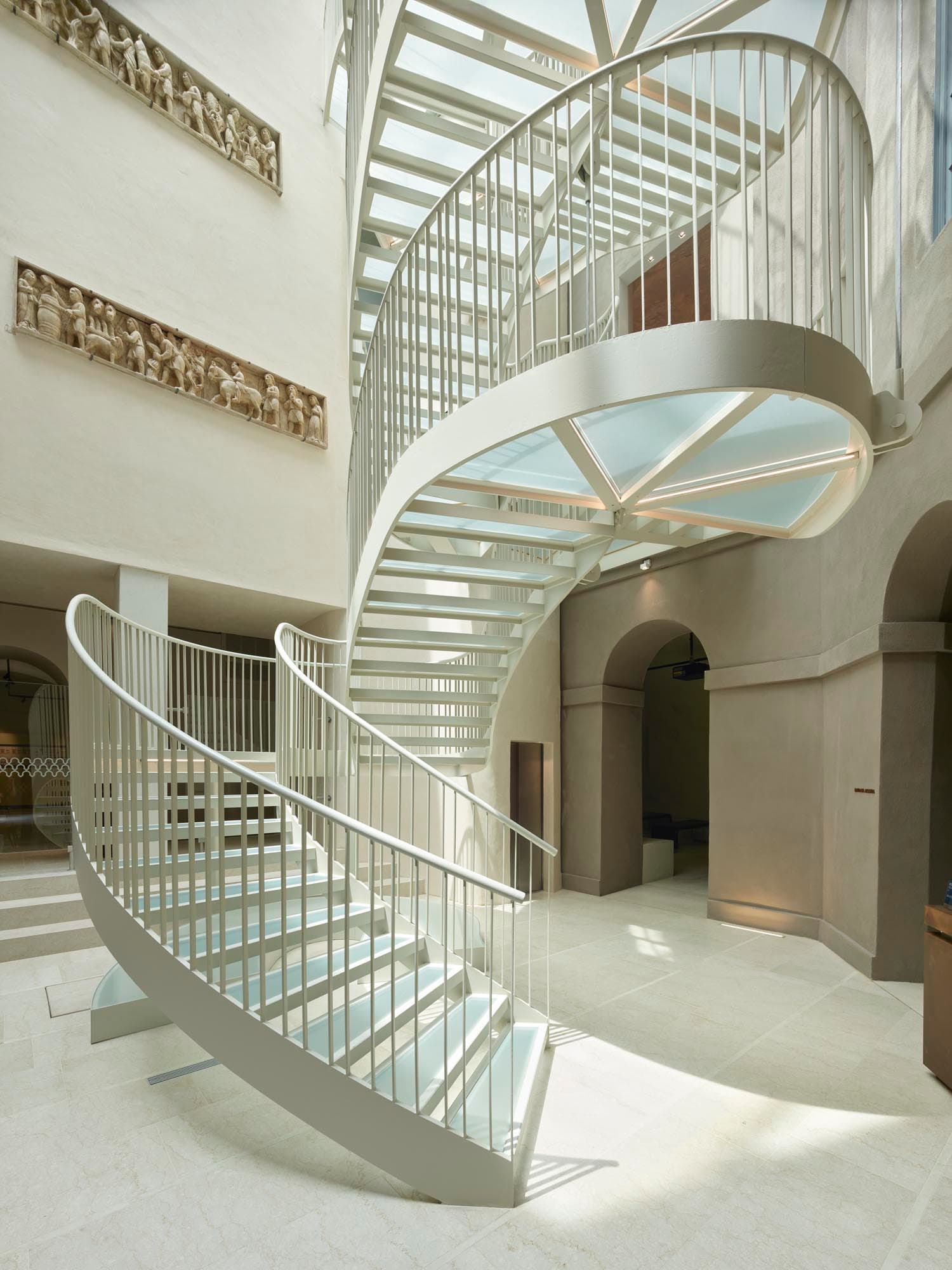
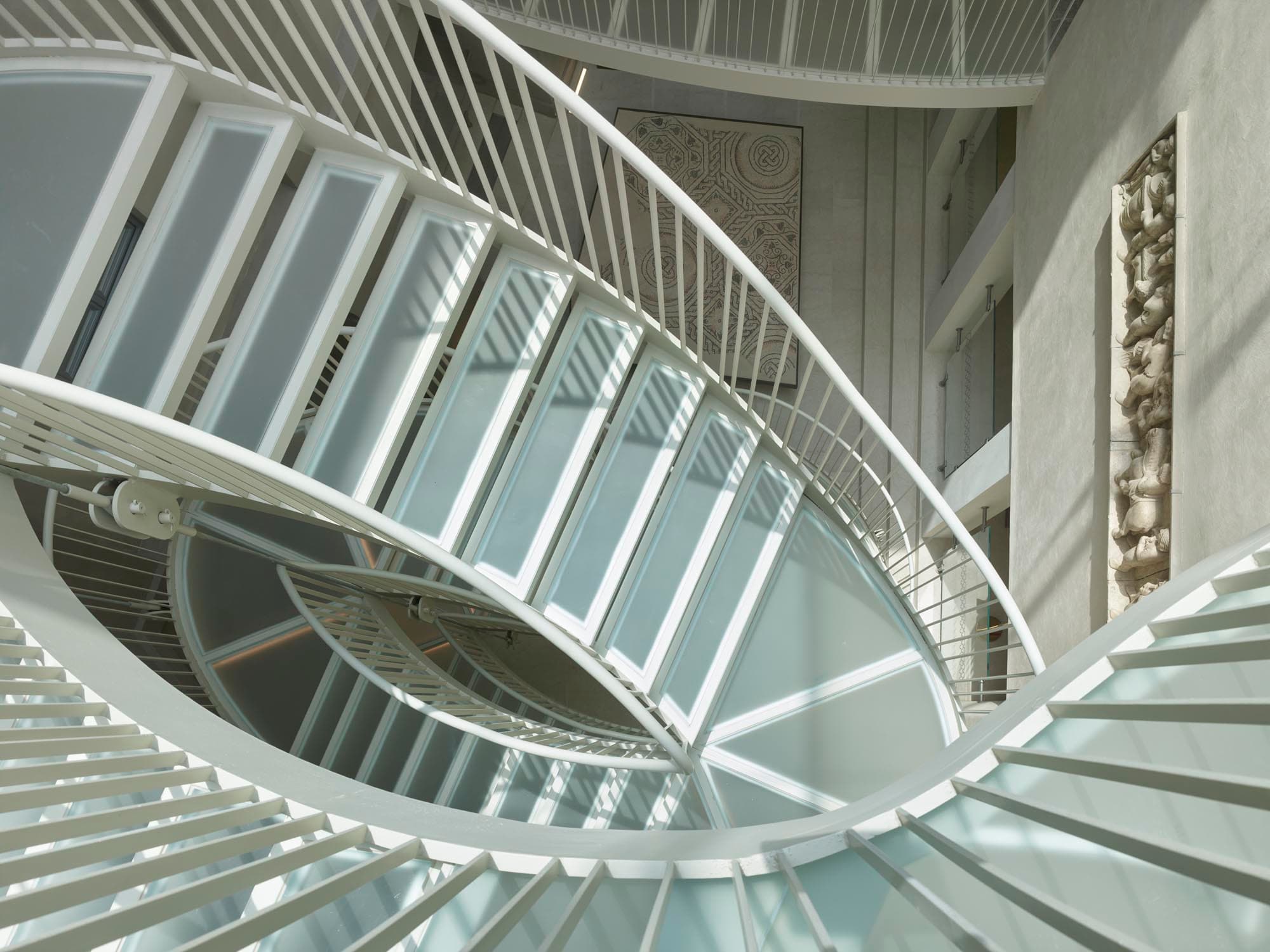
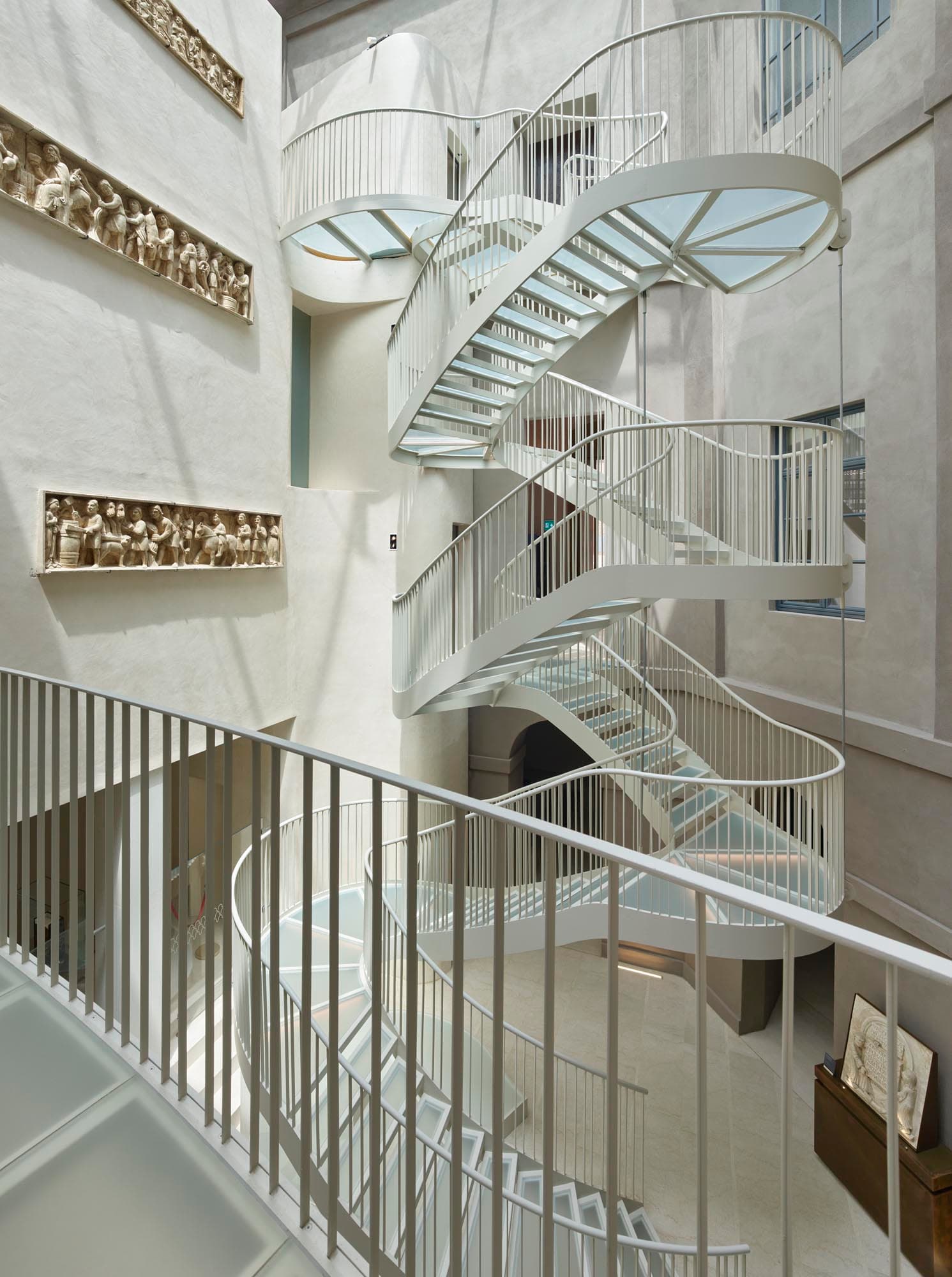
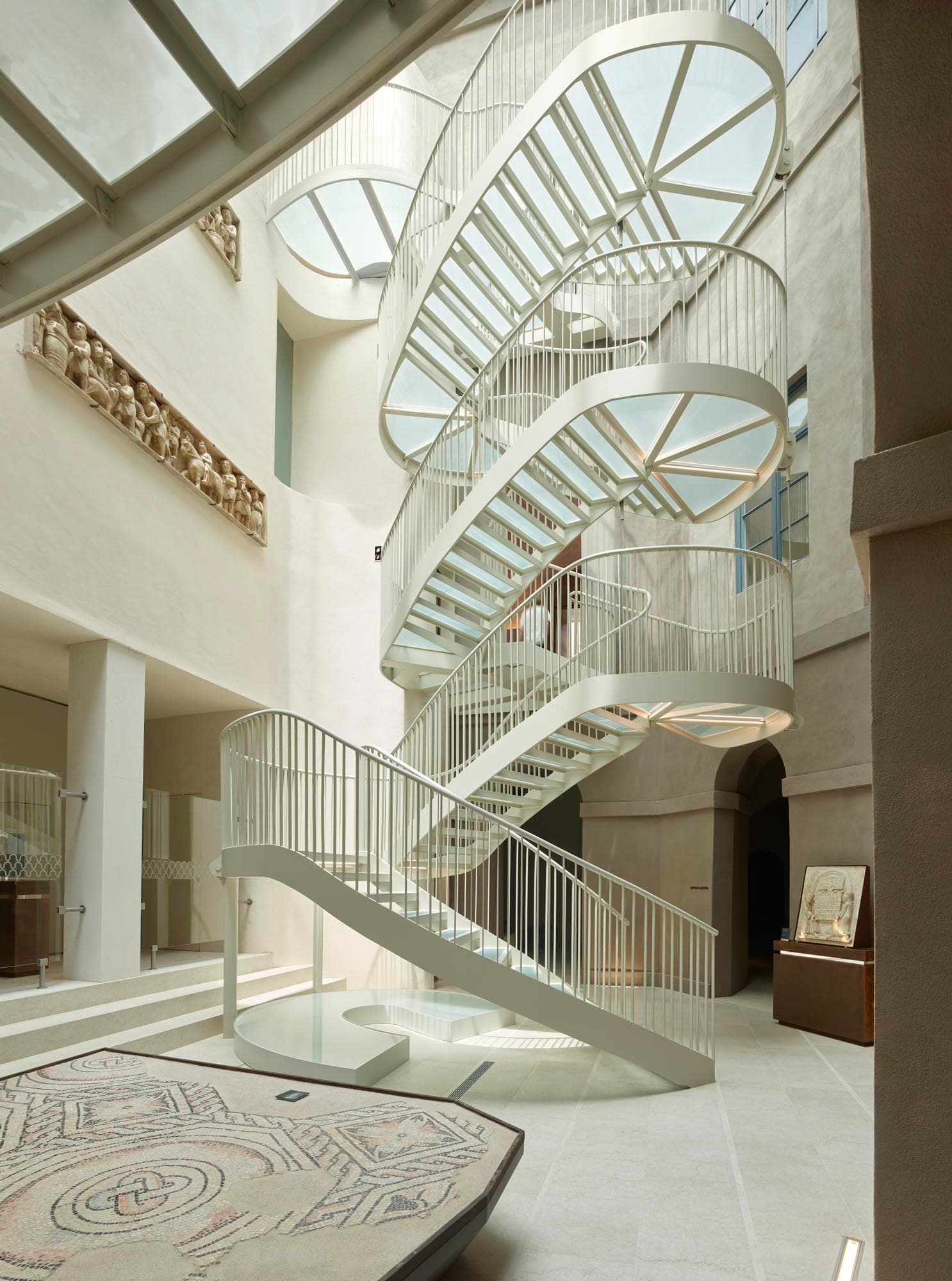
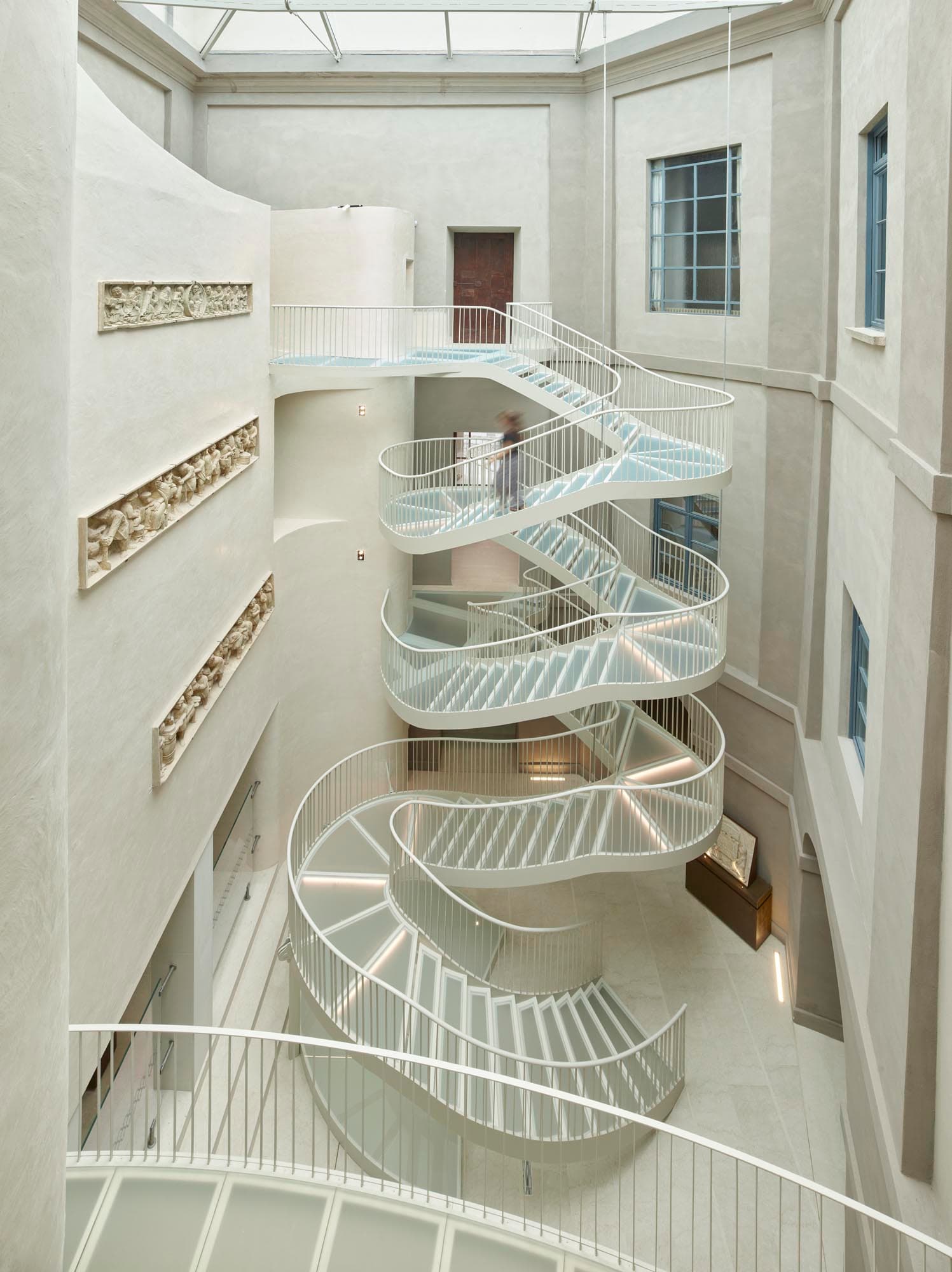
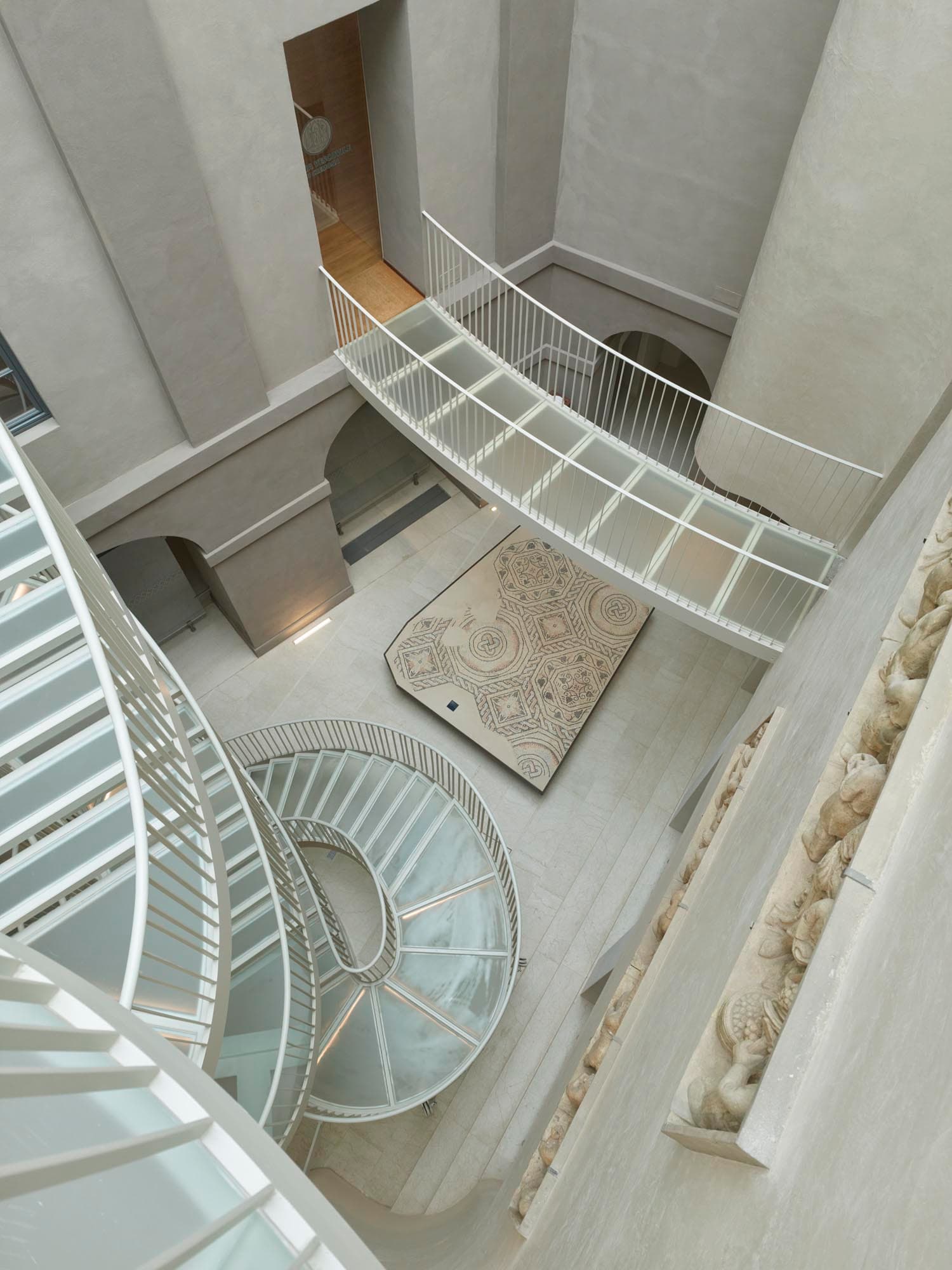
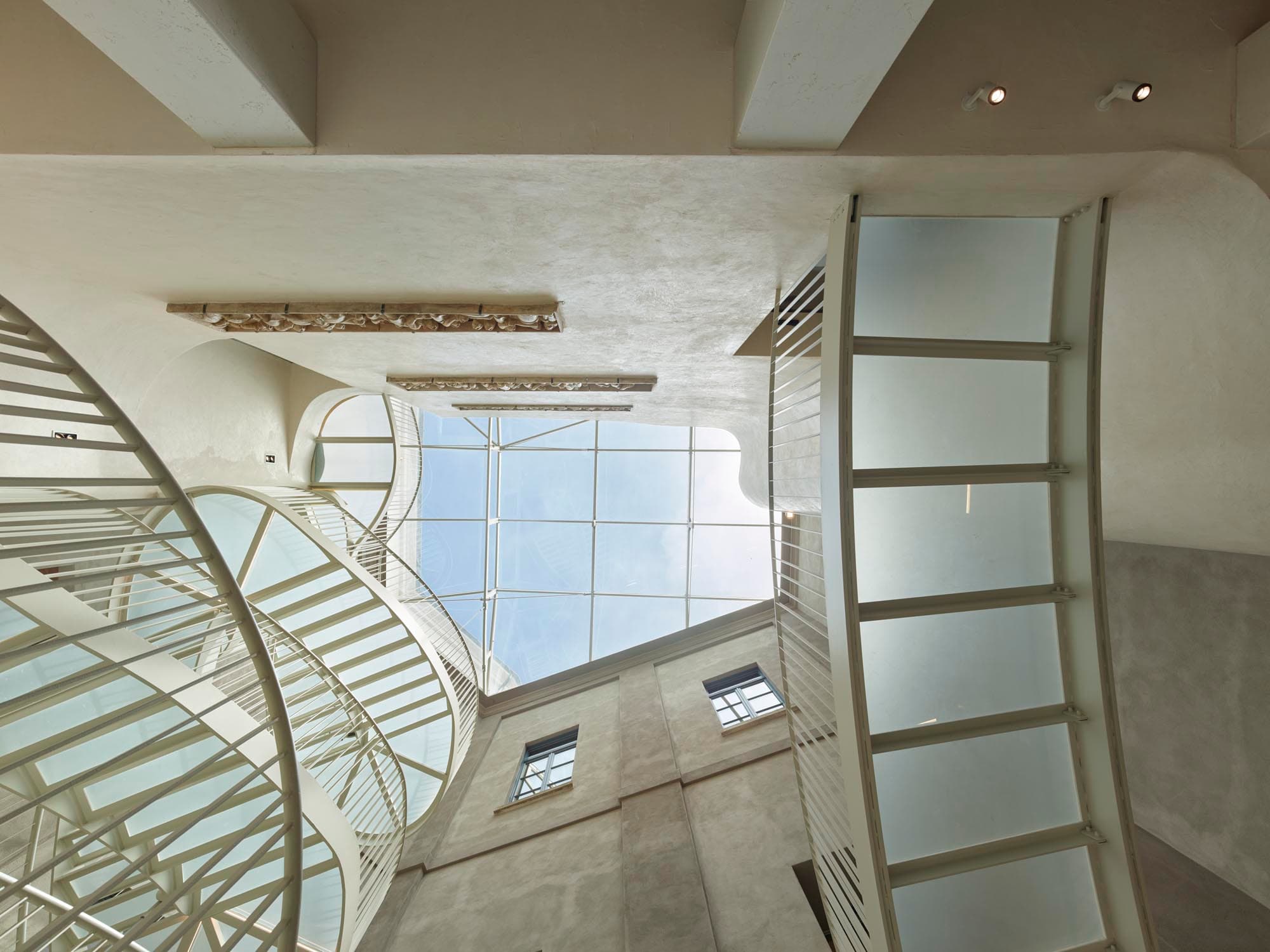
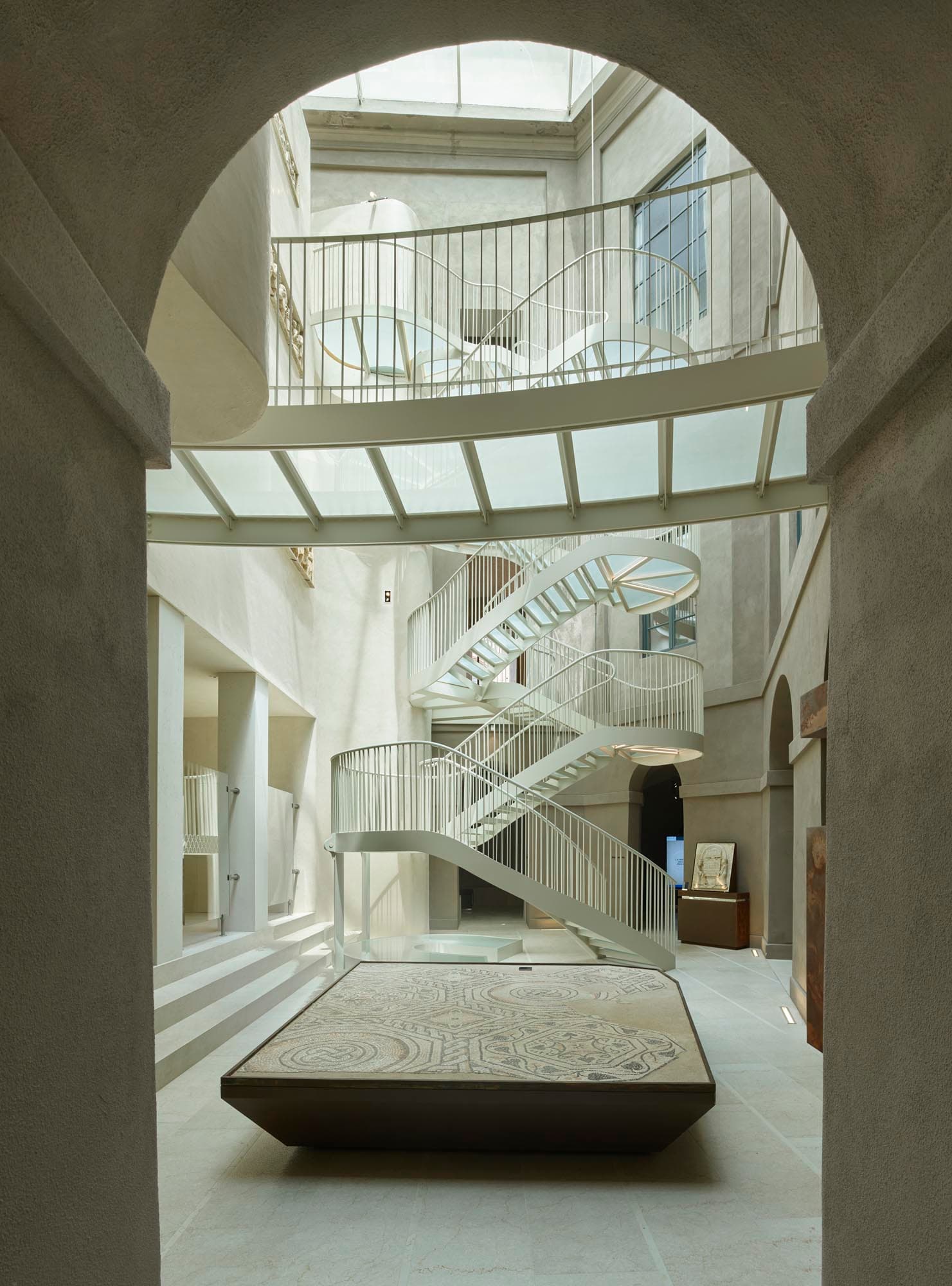
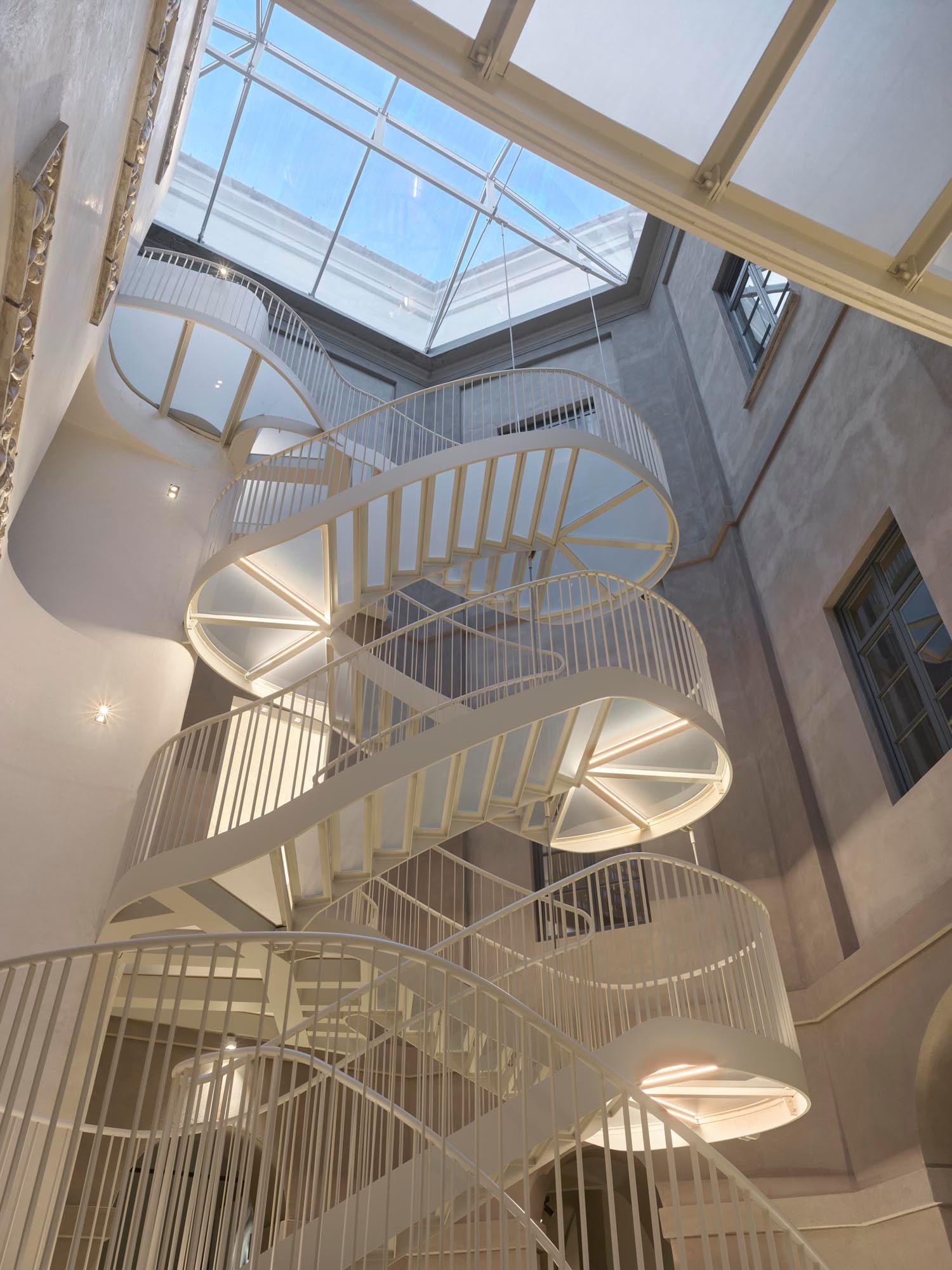
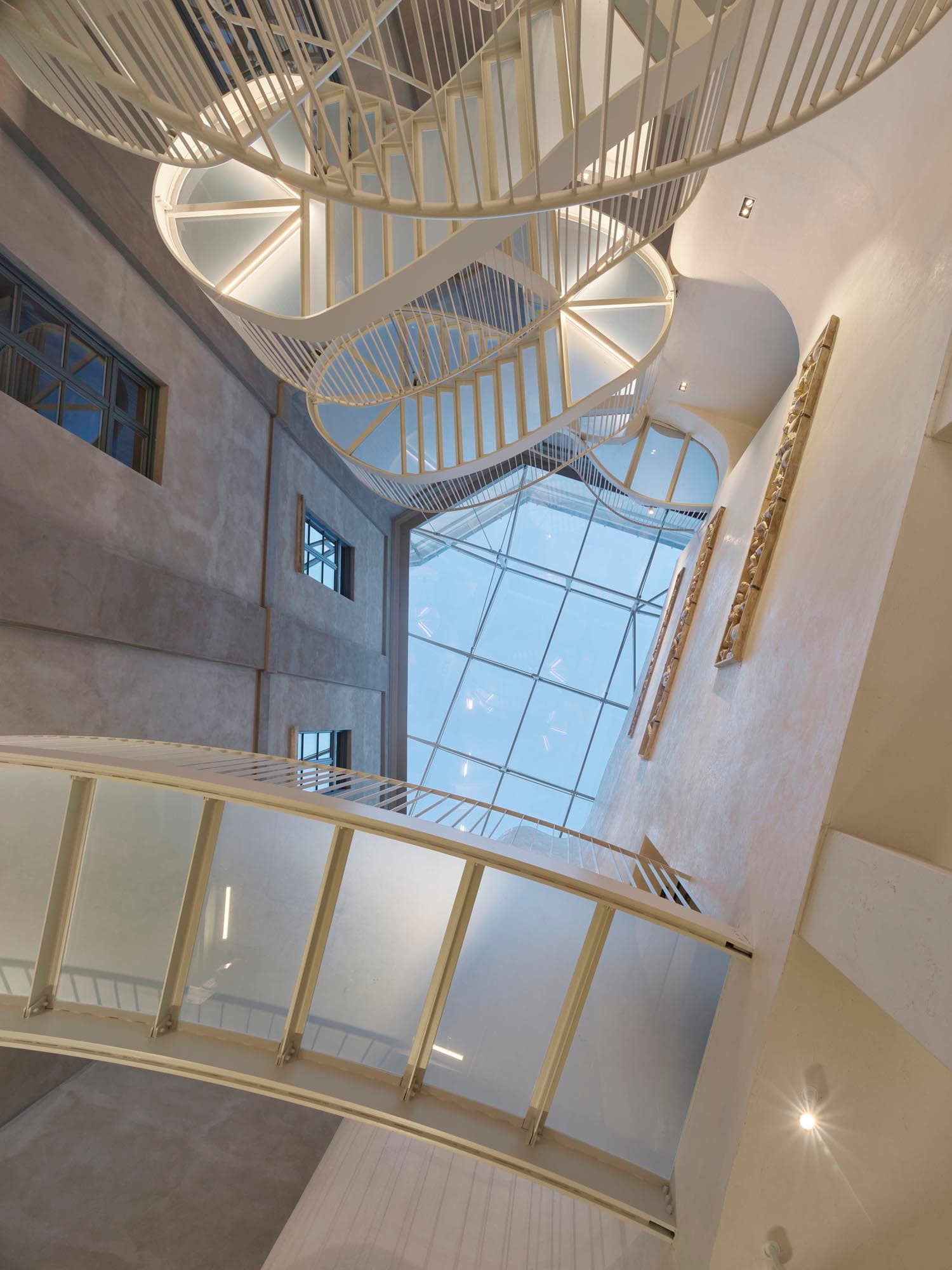
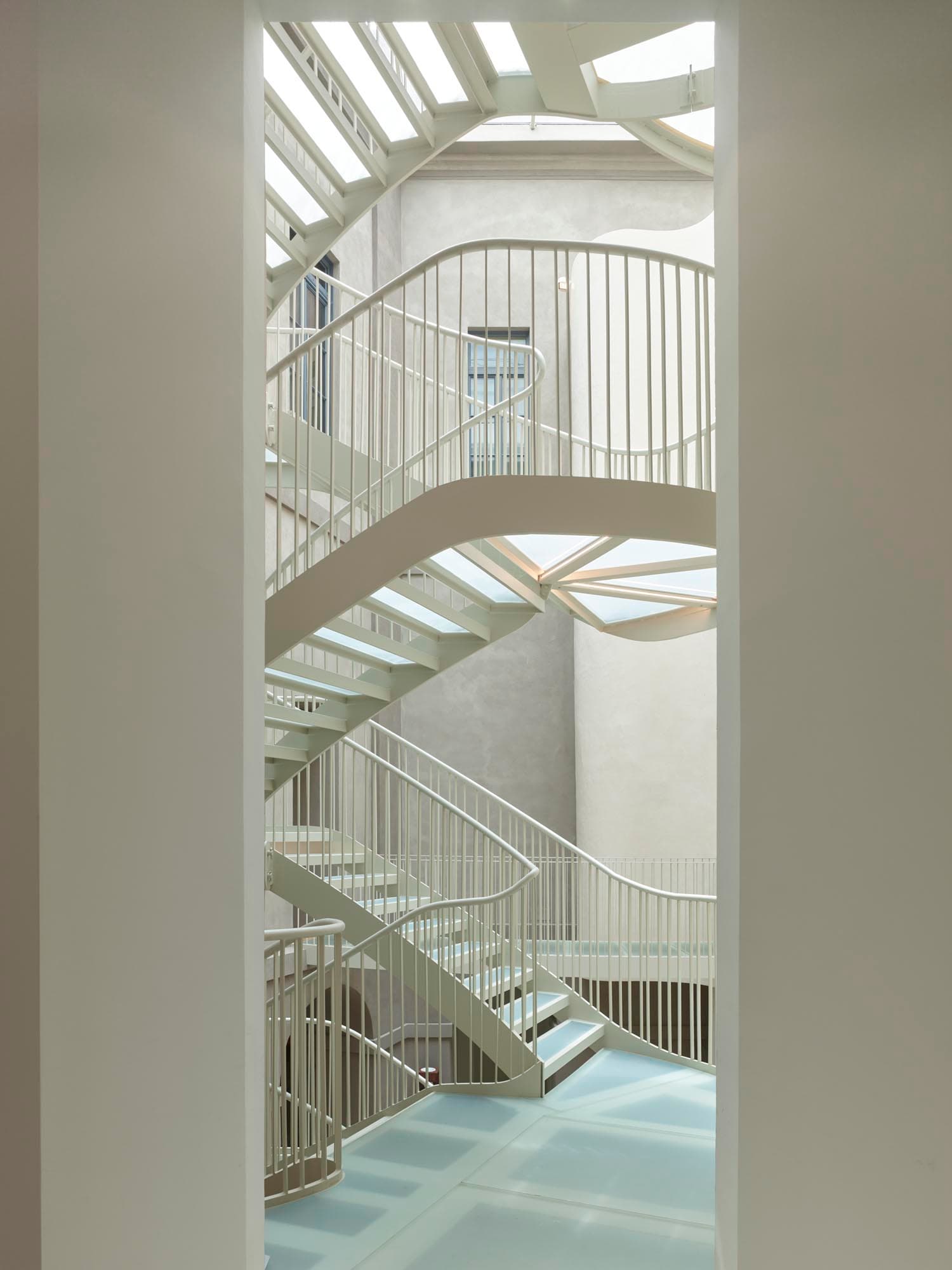
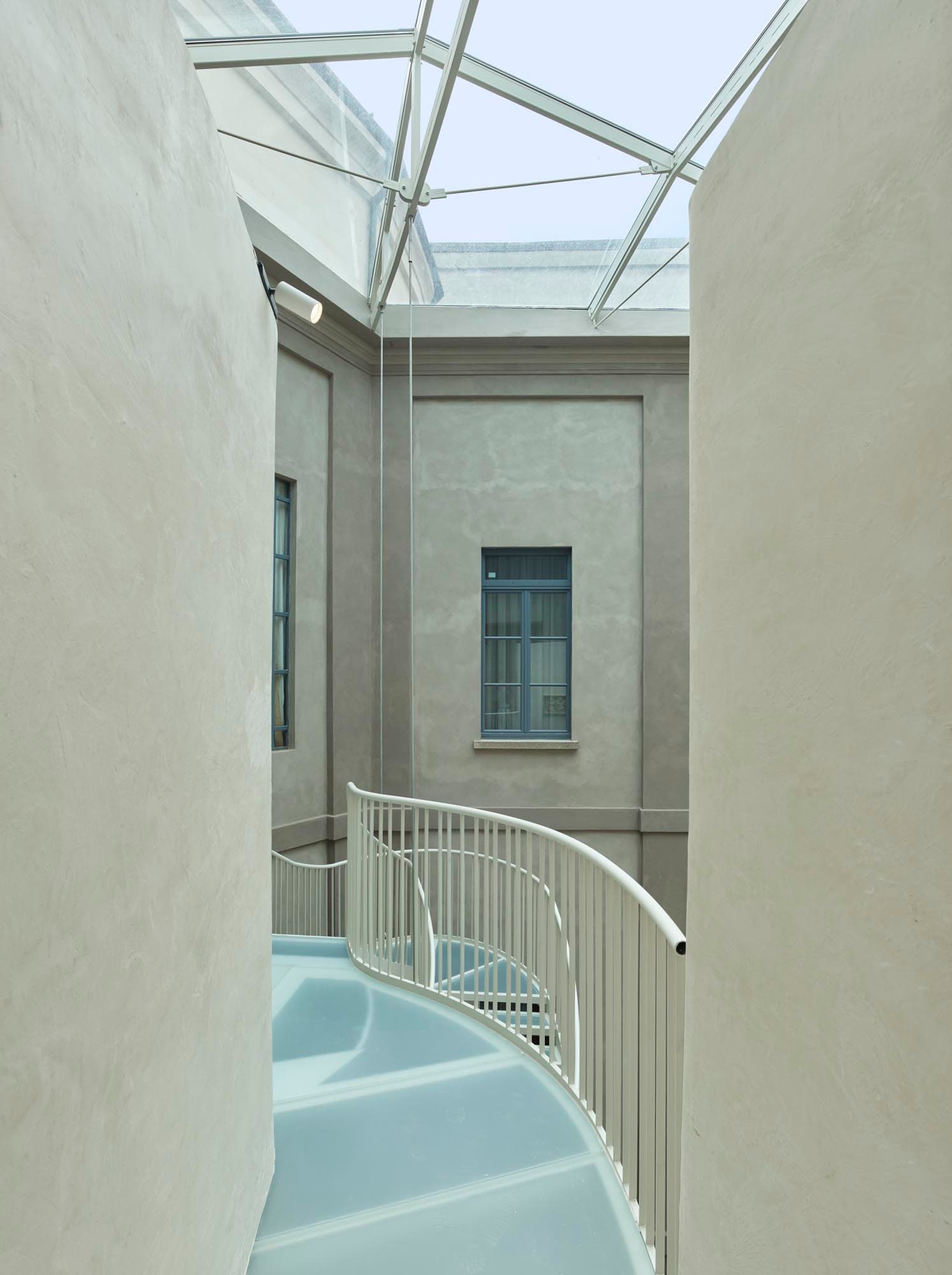
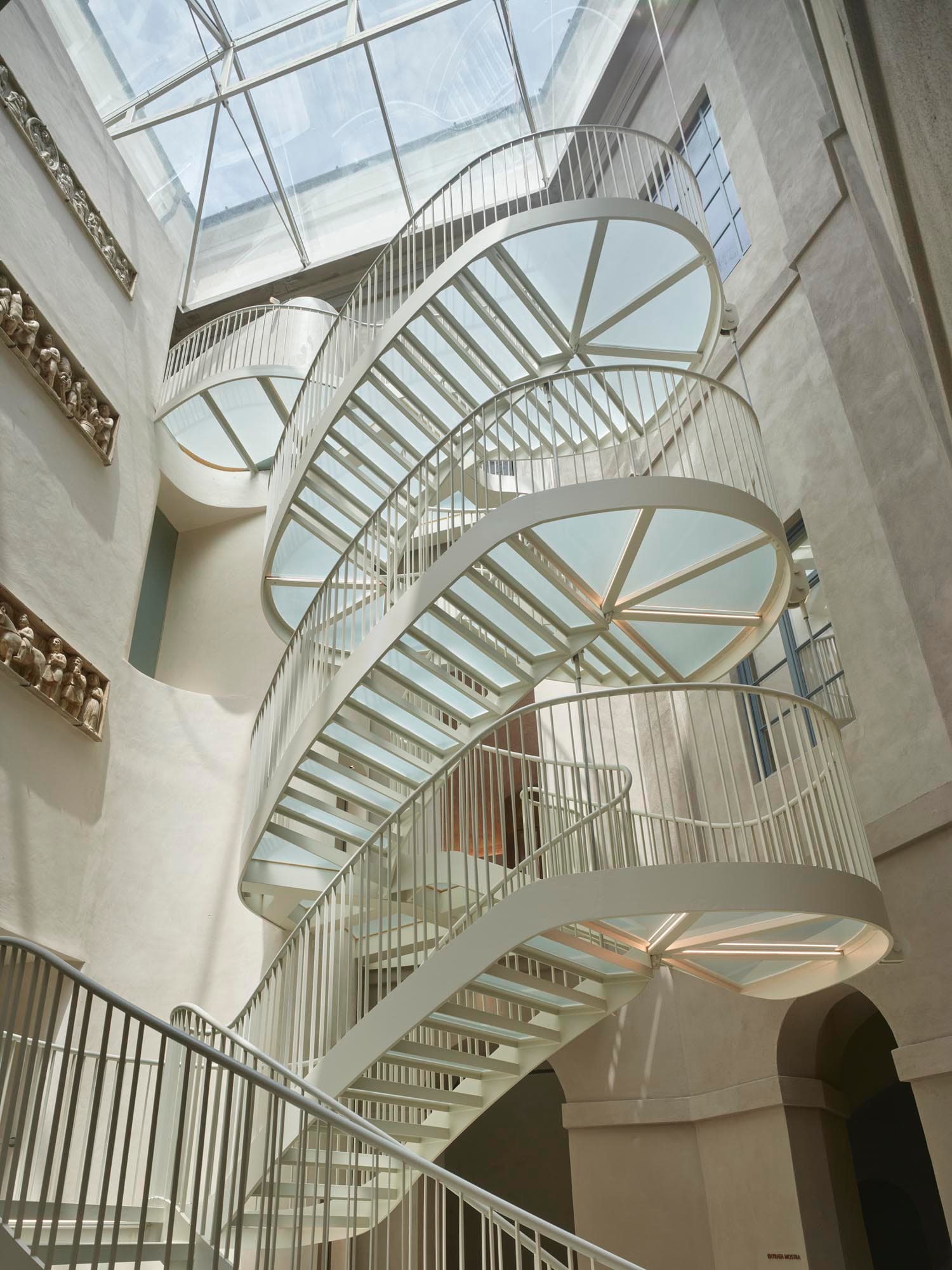
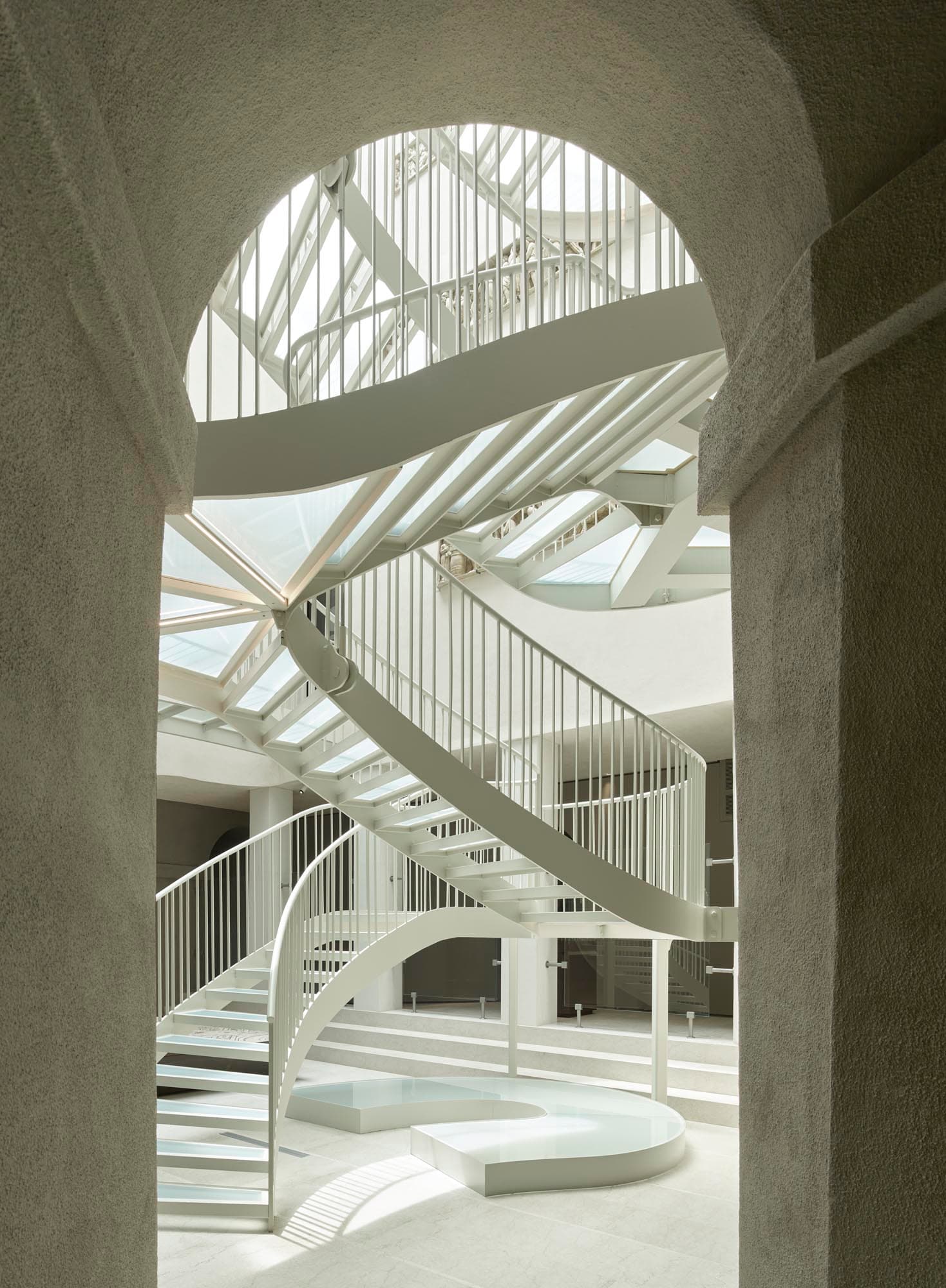
From the museum hall, one enters the former inner courtyard of the Palace, which has been covered with a light steel and glass structure and thus transformed into a natural light well.
In the center of this environment rises a large hanging staircase also made of steel and glass, the " vertebral column" of the Museum. This staircase provides access to the second floor (reserved for temporary exhibitions) and to the lower floor where the layout unfolds.
The basement has been restored and re-functionalized. Its total area is over 1,700 square meters, and it has been organized into 12 rooms, divided into 7 sections.
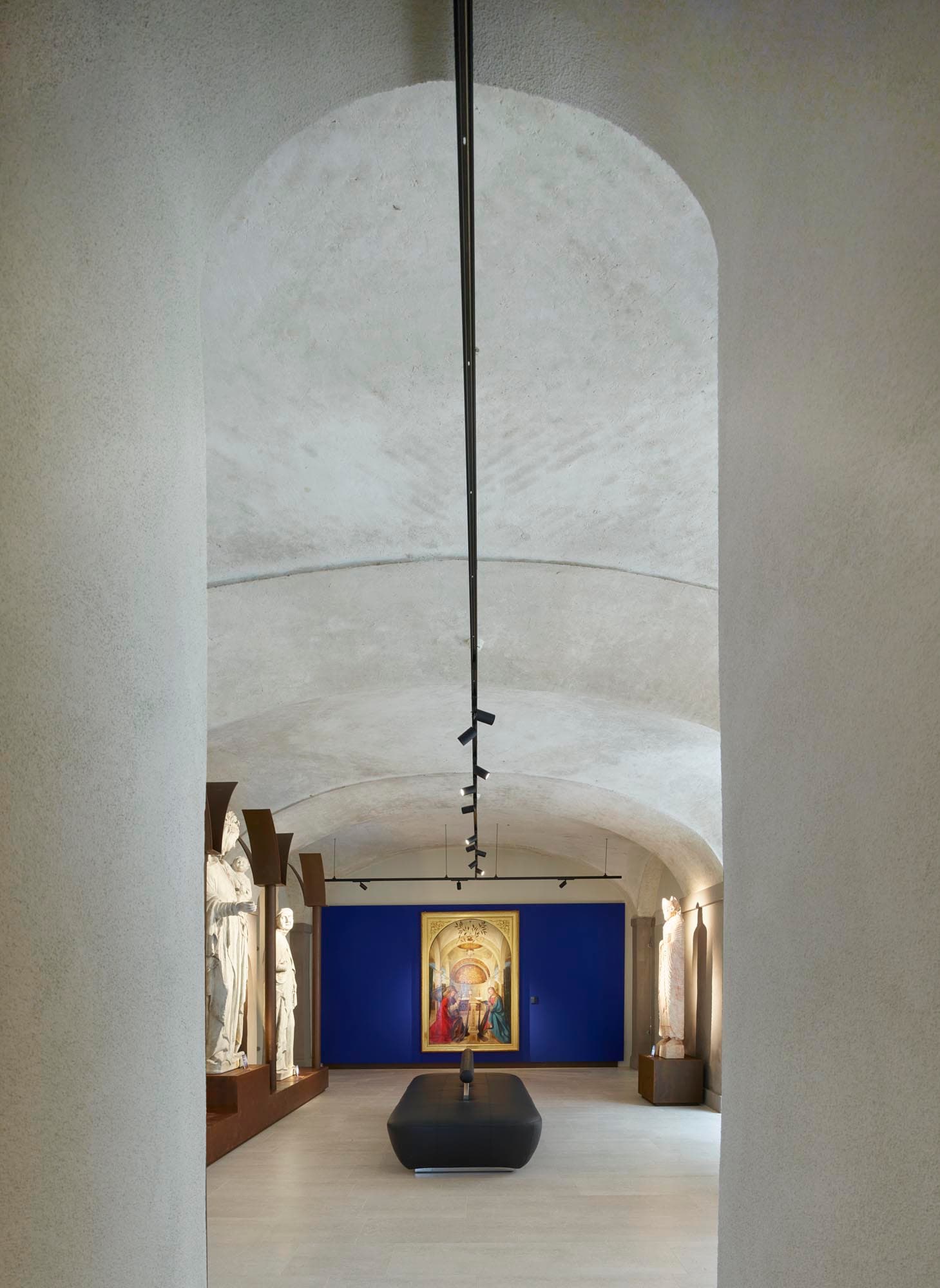
The concepts of compatibility, recognizability, and reversibility, as well as the choice of materials consistent with the pre-existence, inform the entire functional program and exhibition system and are the guidelines of the very conception of the entire project and the refinedly minimal exhibition design, conceived not to overlap with the importance of the works, but to be complementary and supportive of them, enhancing the treasures on display. Essentiality, simplicity and linearity are the concepts on which the project is based. The supporting elements to the works made of MDF and corten powder, give the whole a sober, single-material appearance that reduces the invasiveness of the elements inside the rooms.
The different rooms are characterized from time to time by different materials and colors that reinforce and intensify the Museum's message. The pictorial works are housed on freestanding display panels juxtaposed with the historic masonry, supported by metal tubing and consisting of MDF paneling.
In the lighting design, great care was taken to maintain a light incidence angle of between 30 and 35° to allow for optimum illumination of the works without the visitor being dazzled or glare created by the effect of light on the work itself. (ph. Roland Halbe)
Violin Museum and Marconi Square
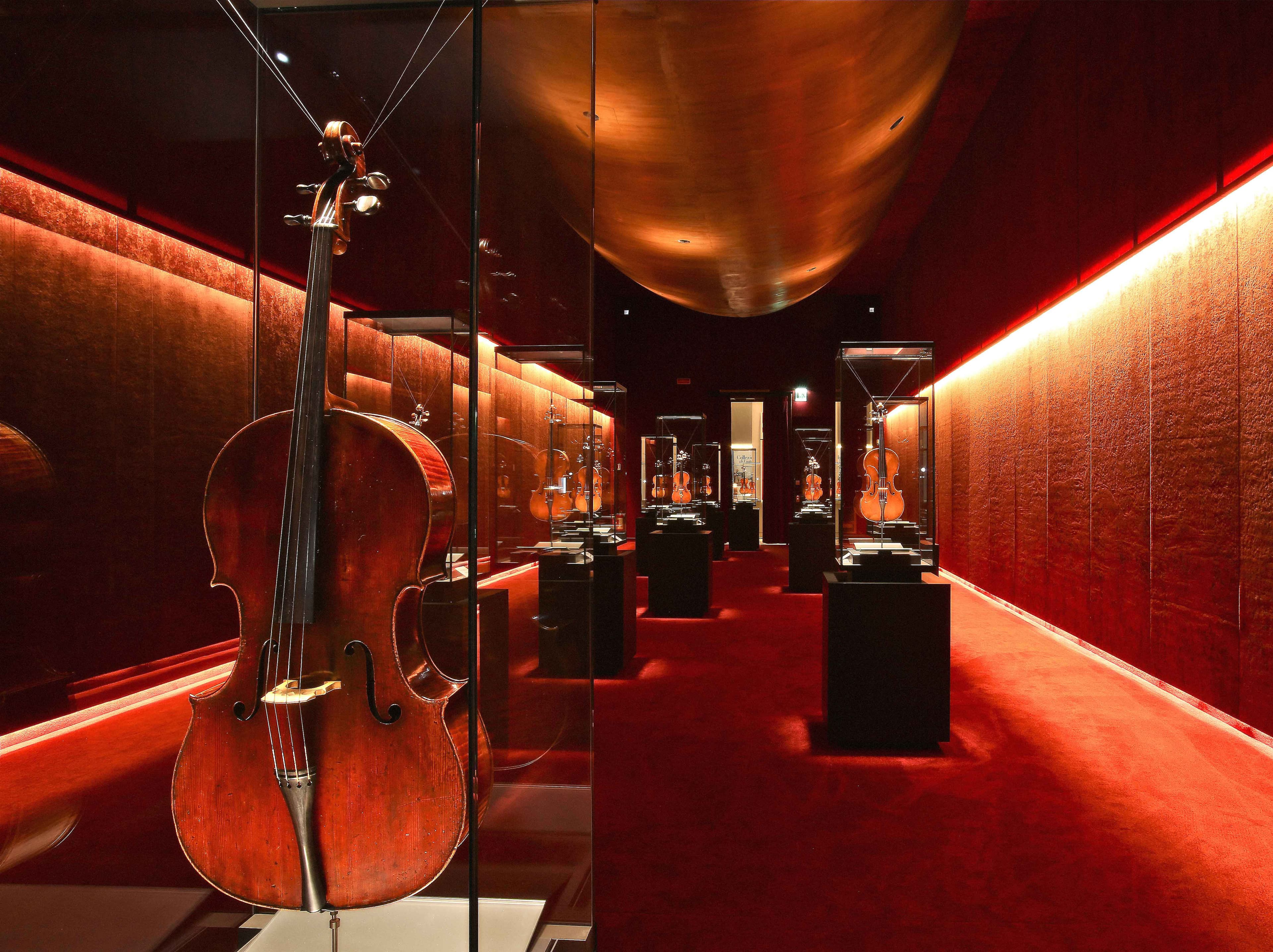
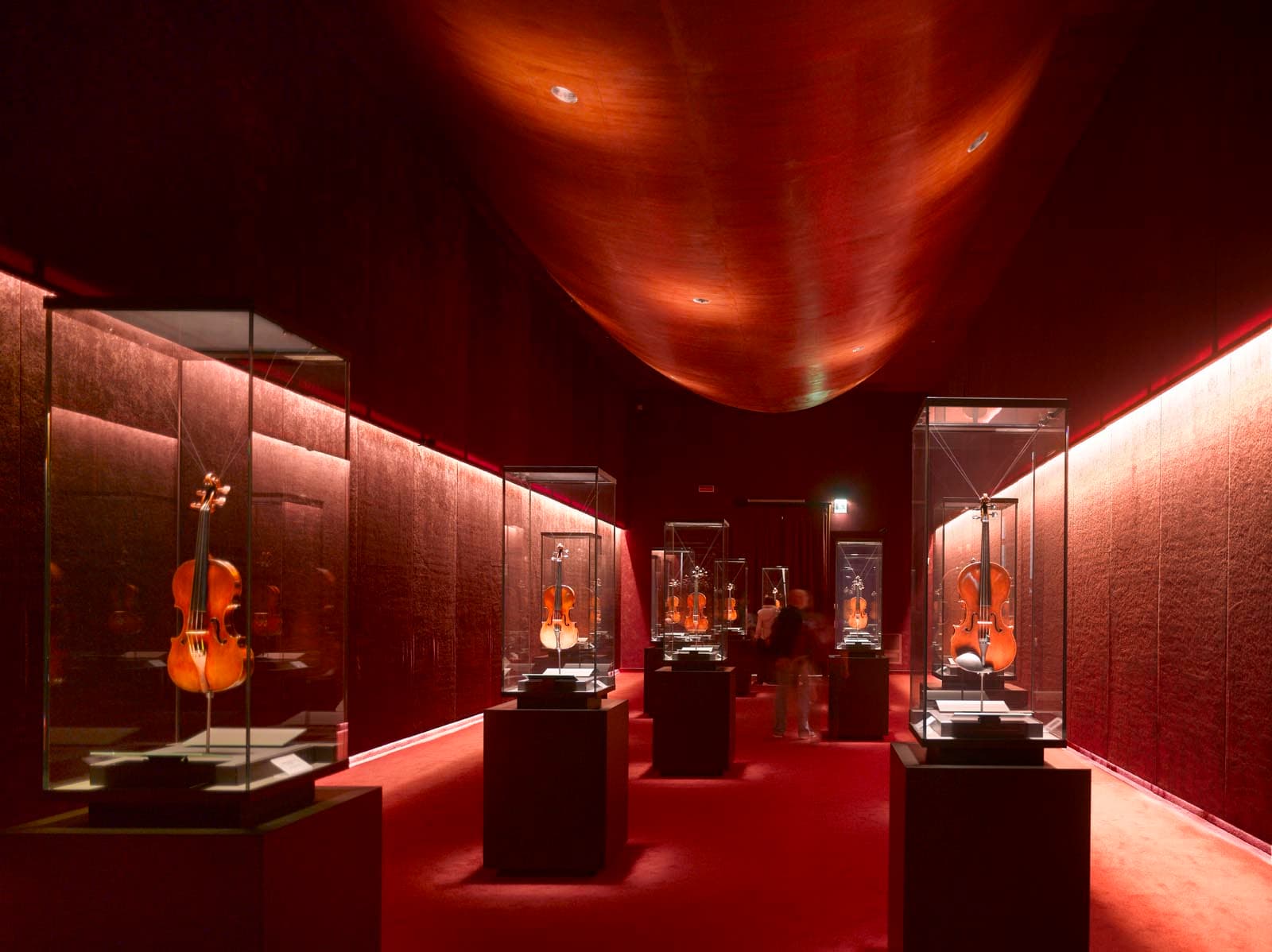
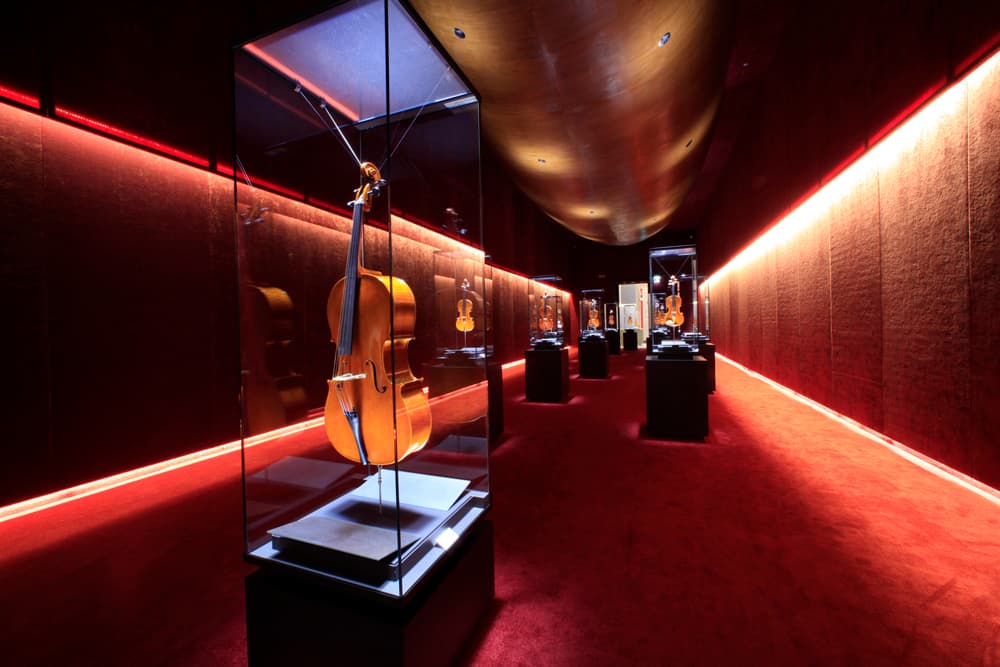
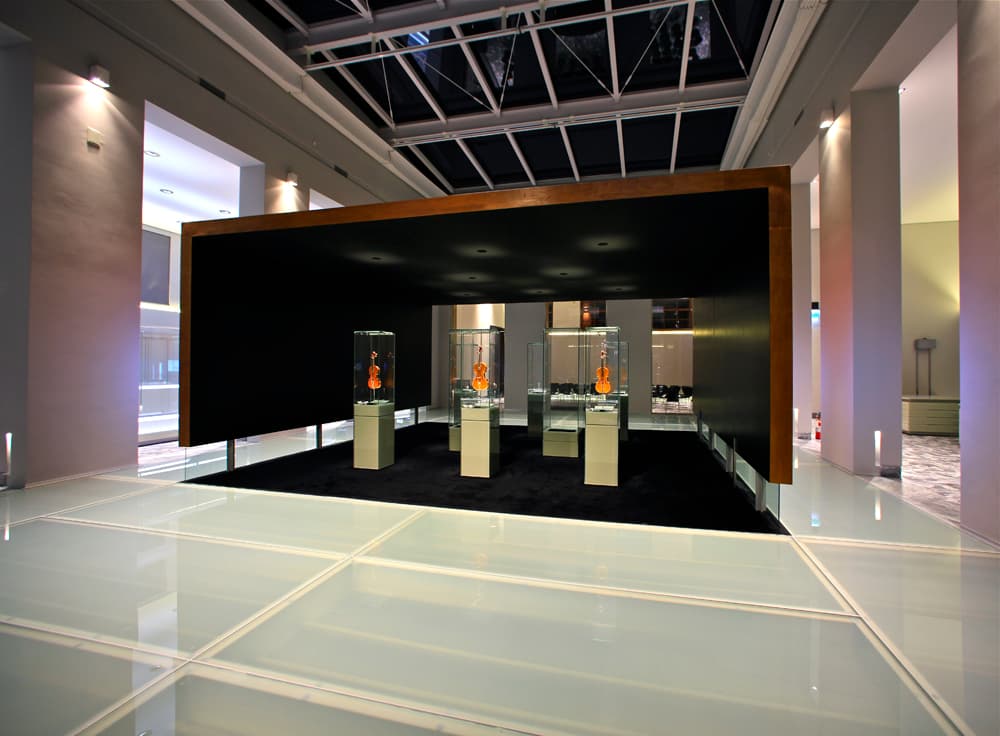
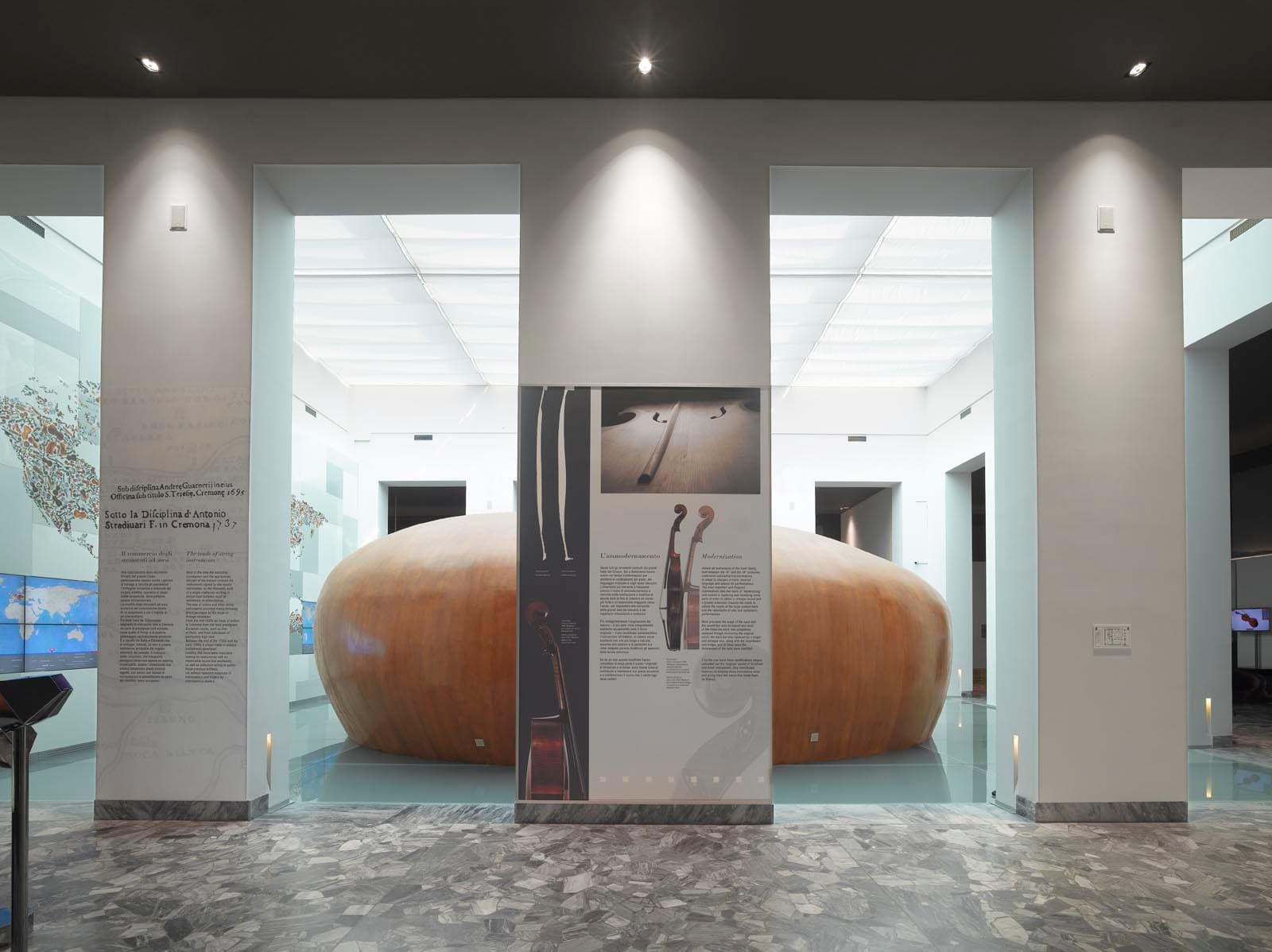
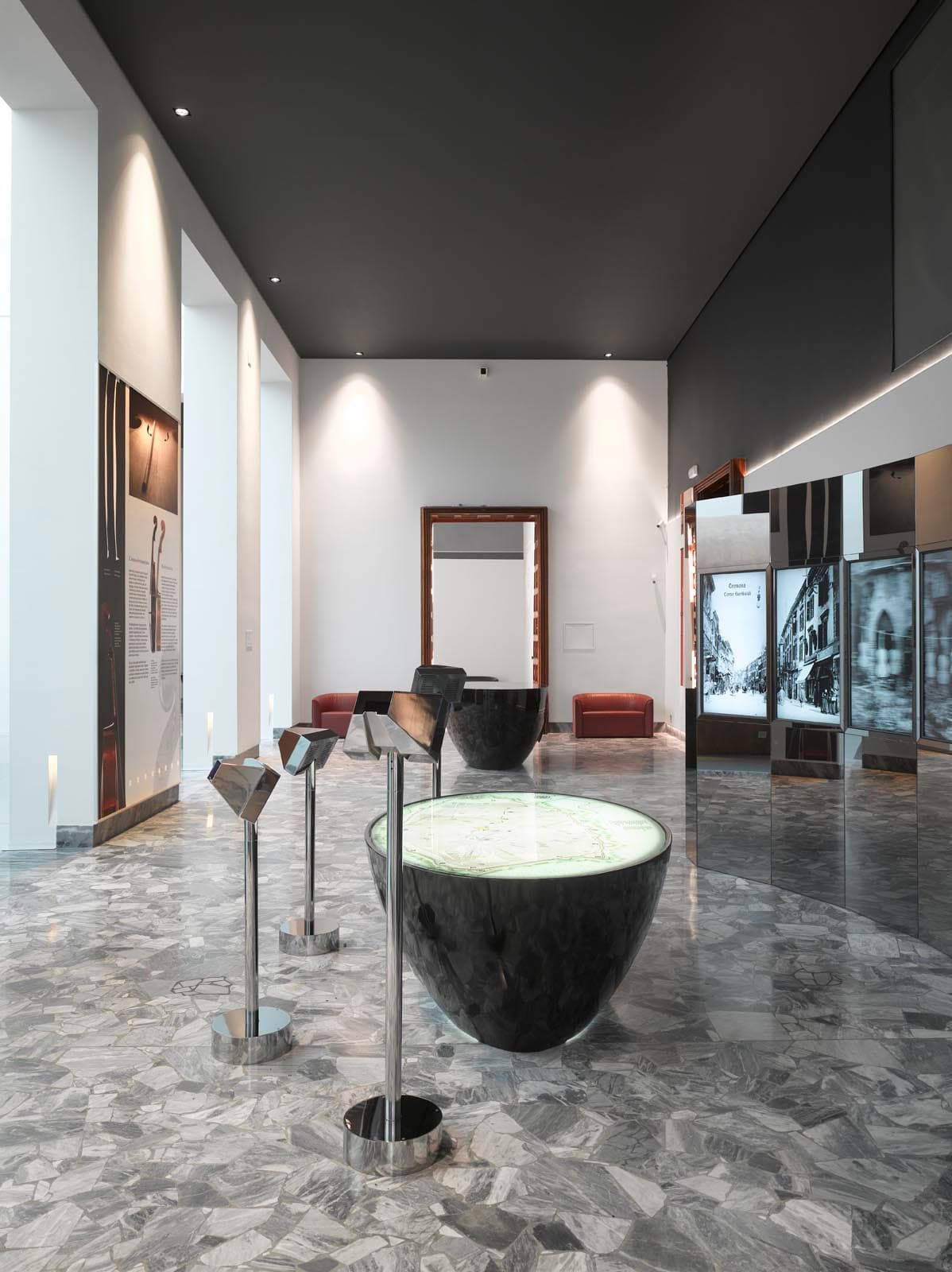
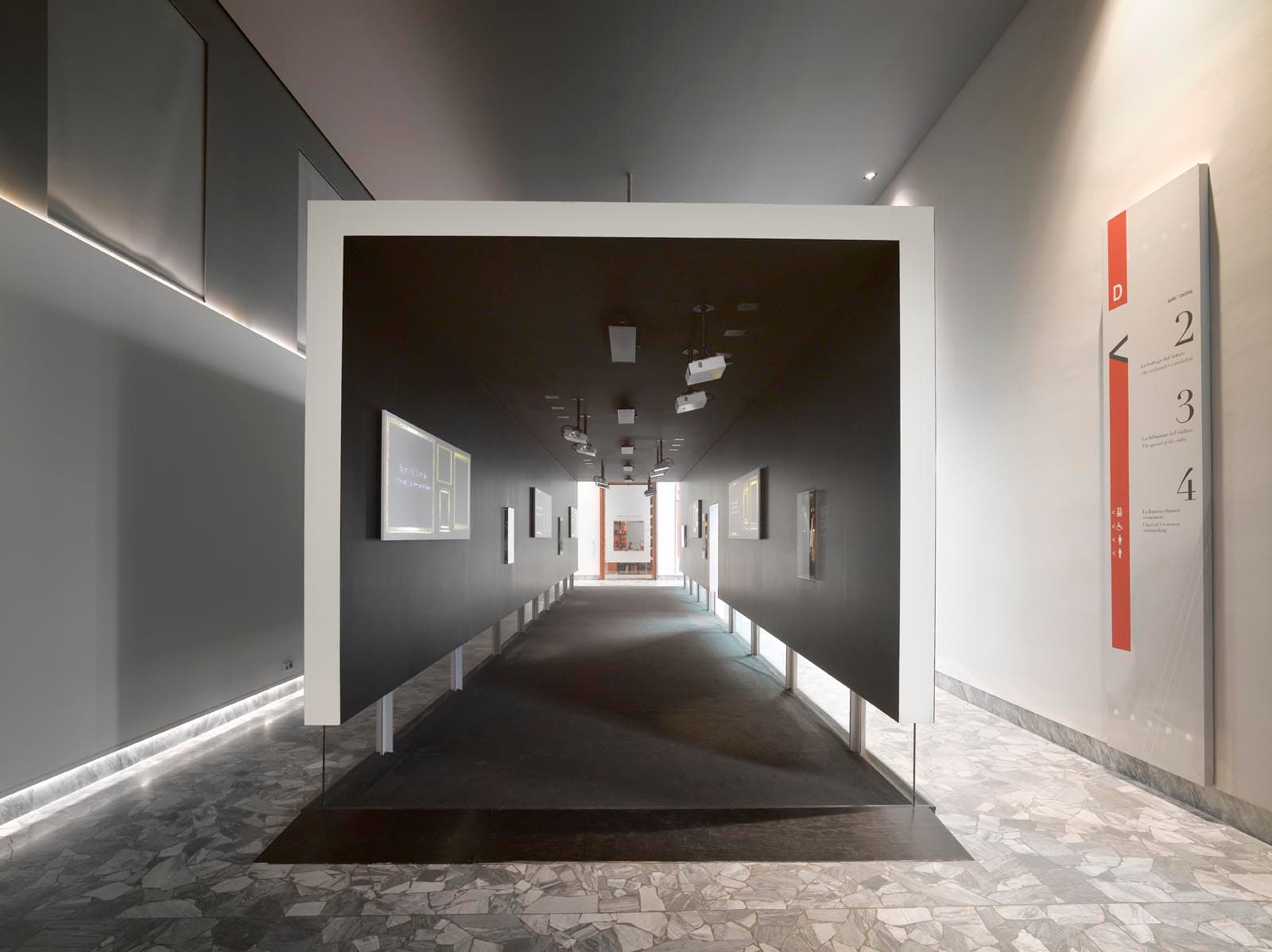
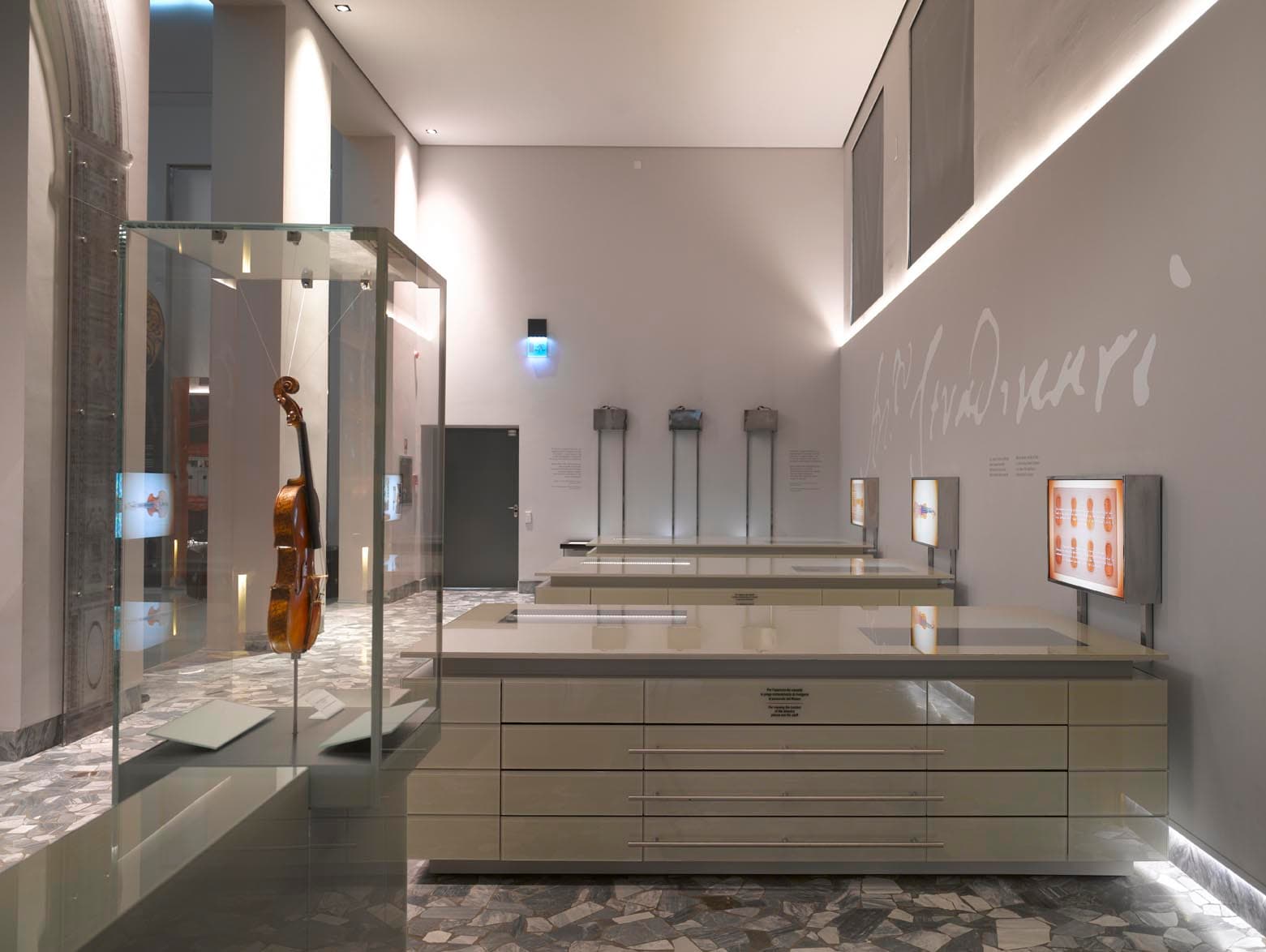
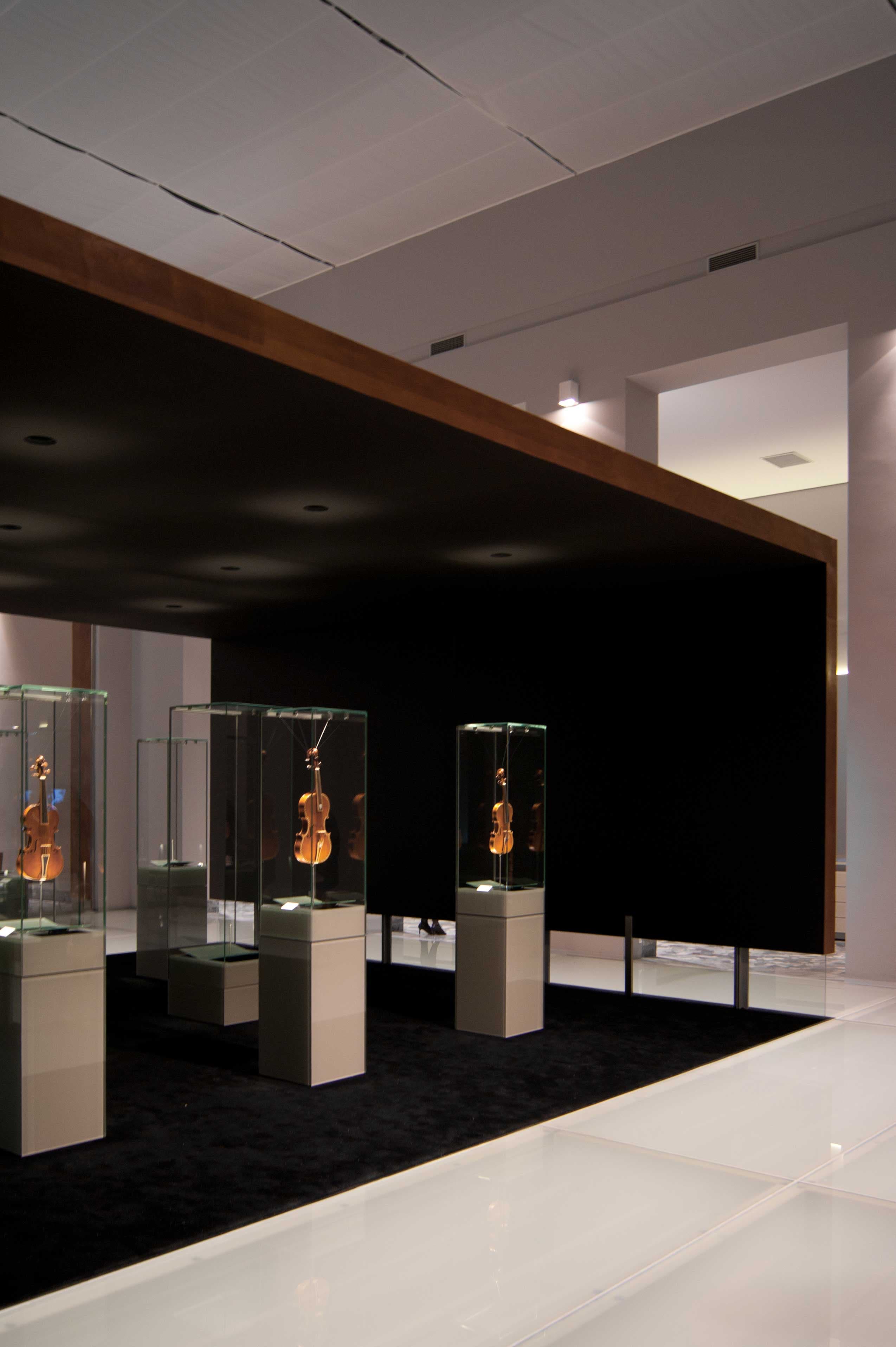
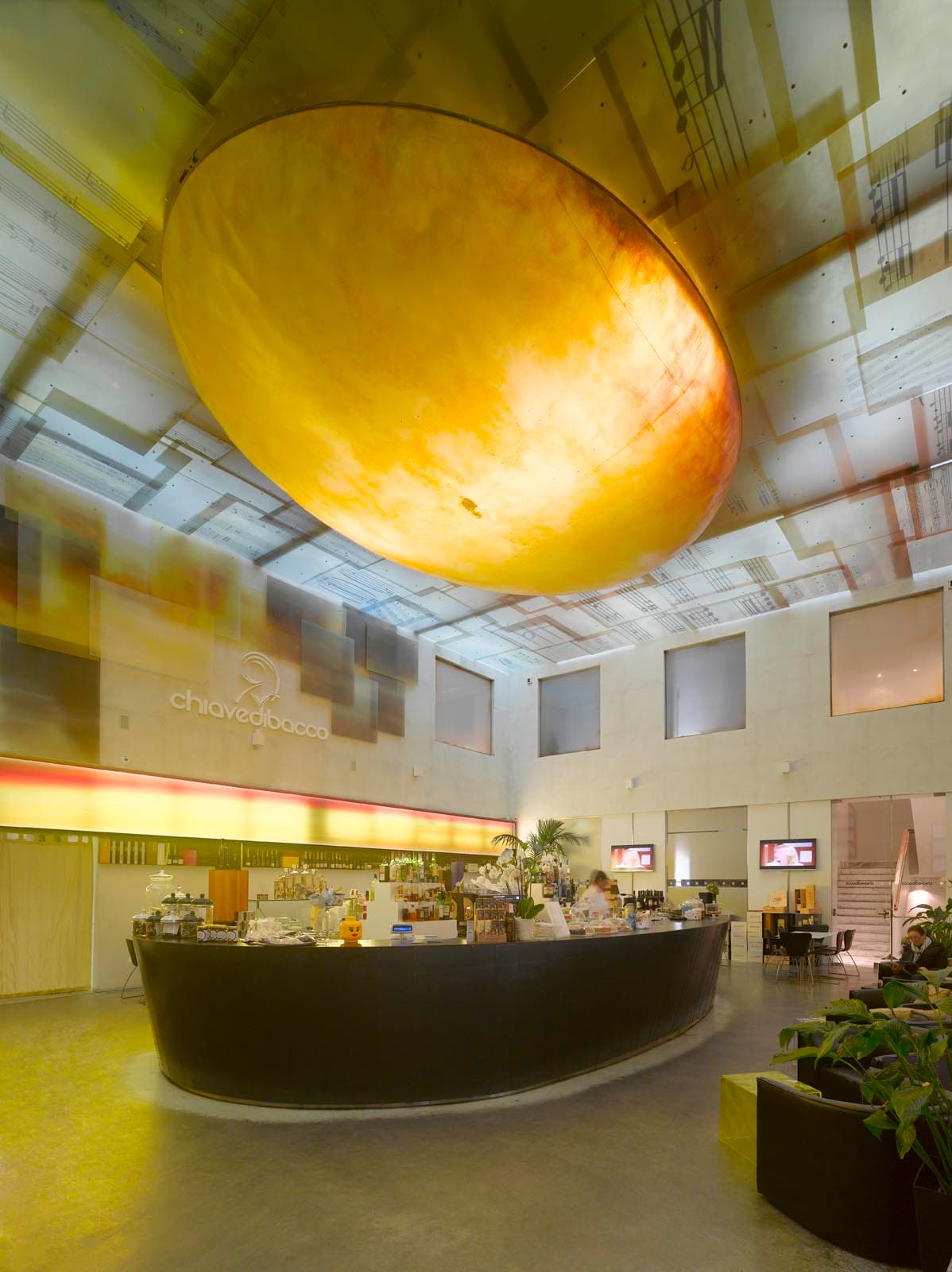
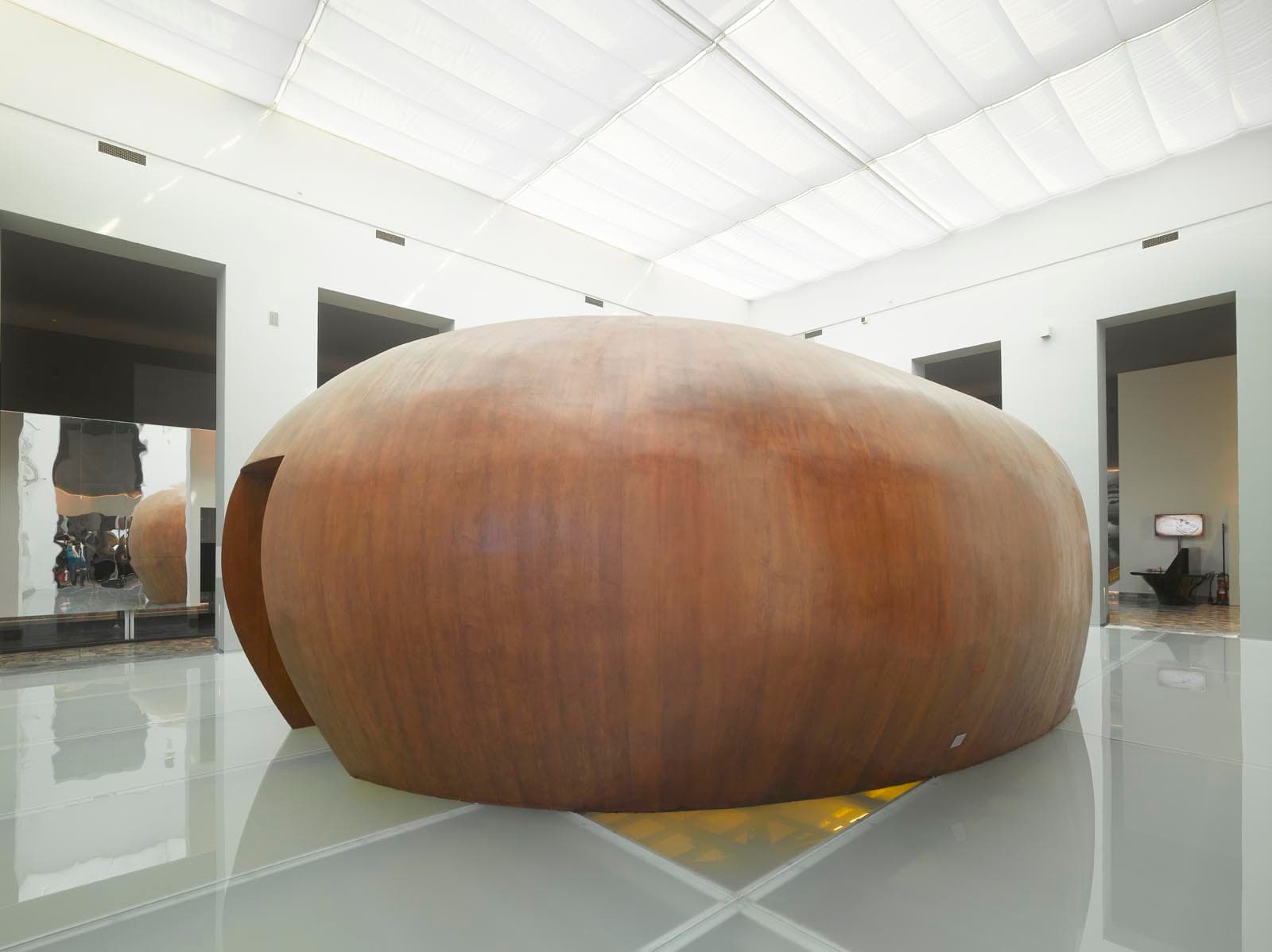
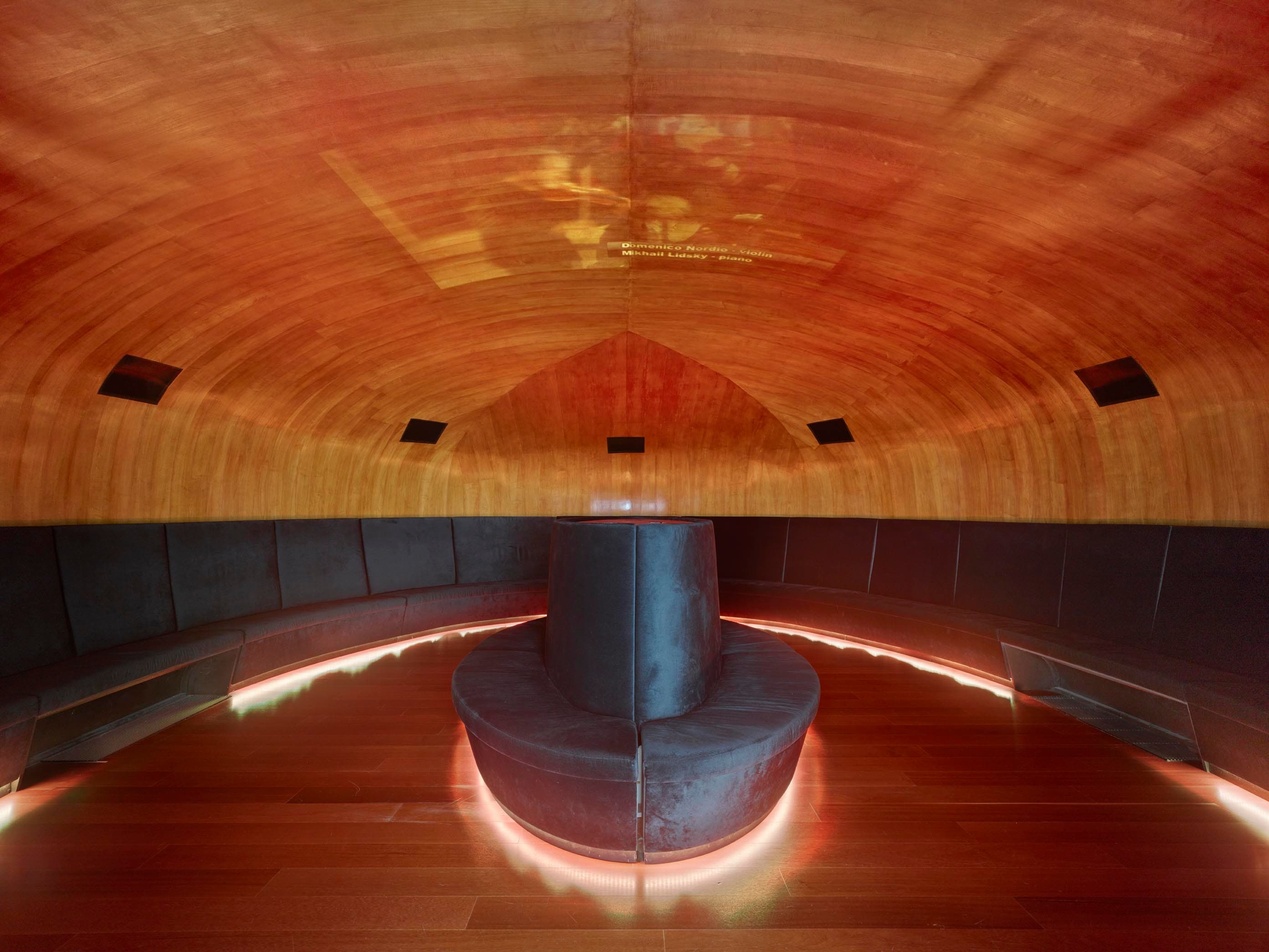
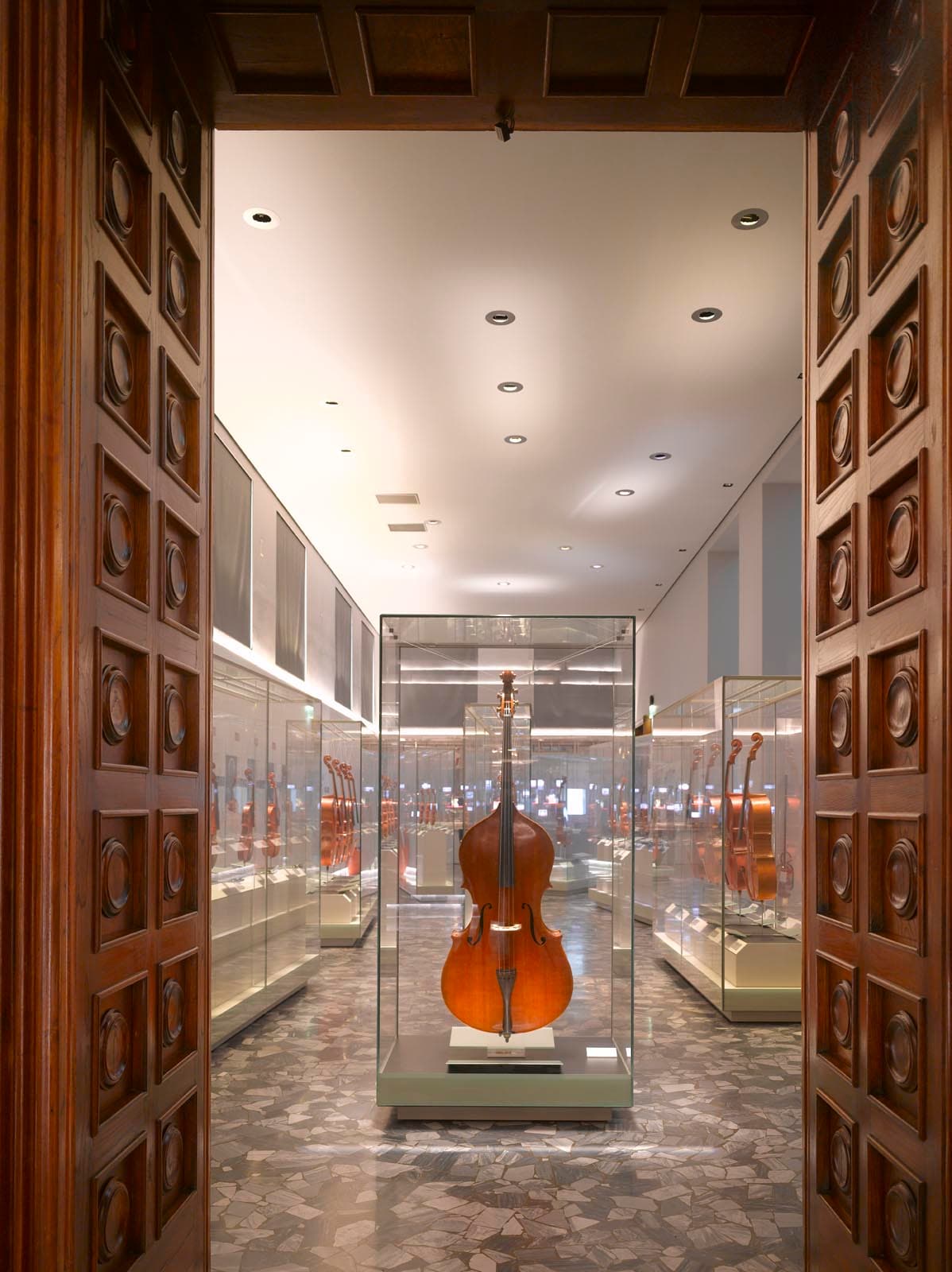
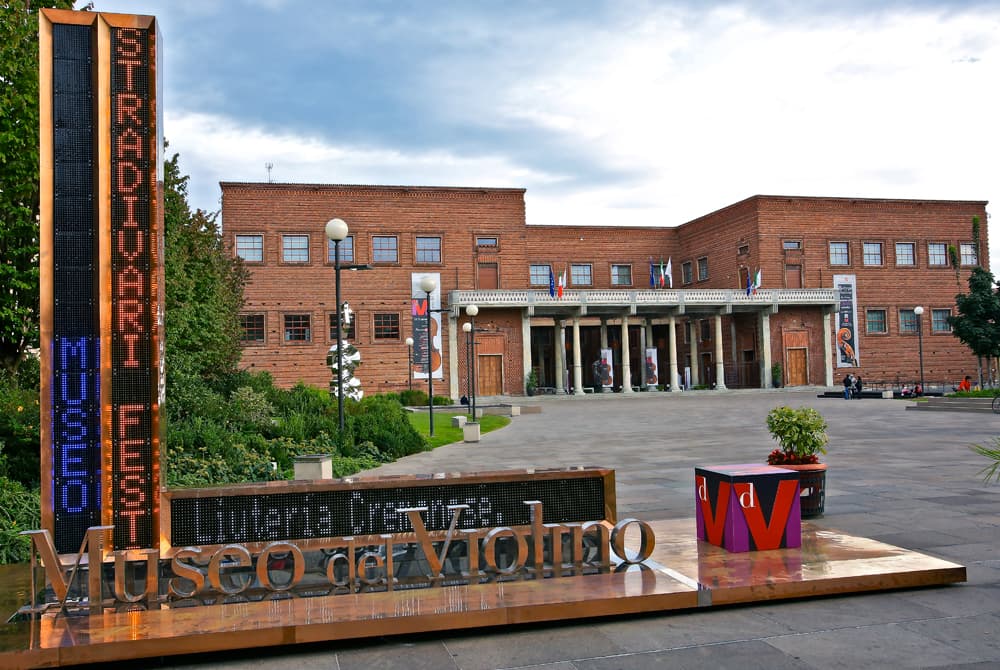
The Violin Museum is a museum of and for the future, it is the gallery that tells the story of the fascination of a "magical," mysterious and seductive instrument. An active participatory, exciting and engaging museum that was born with a strong idea: to bring together under one roof the best of Cremonese violin making expression by unifying three museums into one and by integrating other important functions to create a dynamic structure of worldwide appeal. A place that preserves the identity of three unified museums while diversifying the layout in all the different rooms. The functional program was reflected into the structural organization, making it pratical and easy to read: the ground floor hosts accessibility for commercial activities, the ticket offices, the auditorium and the contemporary art pavilion.
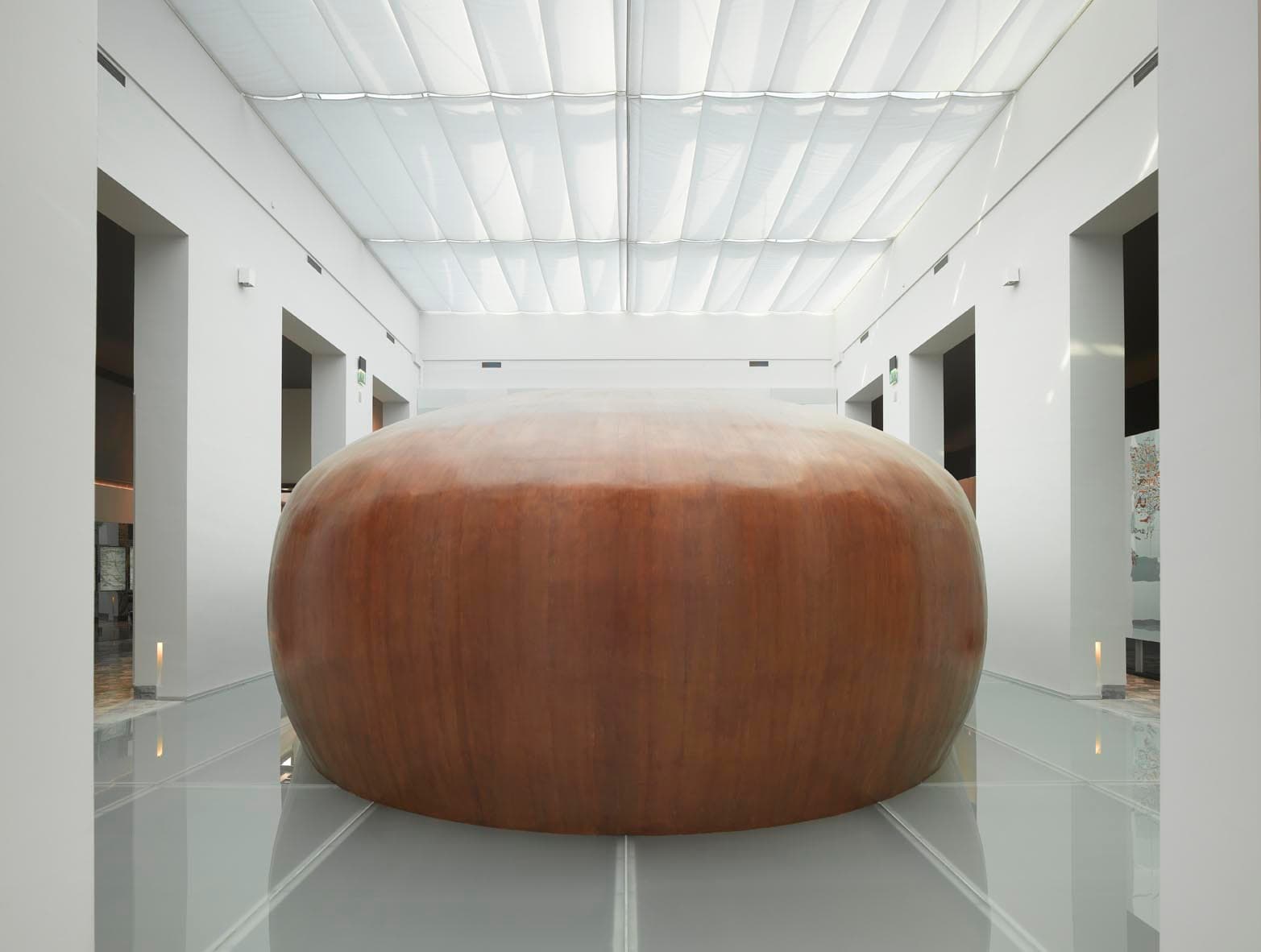
This configuration gives it vitality and constant renewed interest. By returning Palazzo dell'Arte to its specific exhibition functions and renewing the square that is its natural anticipation, the architectural project reasons on bipolarity: Palazzo dell'Arte and Marconi Square, architecture and its reference space: a square in which public attendance is encouraged, a space of accentuation of the elements characterizing the function of Palazzo dell'Arte that becomes a place of museums, violin making and music. The reflection between rationality, tradition and courtliness makes Palazzo dell'Arte a privileged field of architectural design, in which to carefully balance the stimuli of contemporaneity. The project fits shrewdly into the building: the goal is to constitute a high-level of coexistence among the multiple elements that are concatenated in Palazzo dell'Arte.
The architectural project connects a multitude of individual presences such as: the violin-making museums, the Contemporary Art Pavilion, the Auditorium for 485 seats, the needs prospected by multimedia, as an approach to the content of the museums and as a specific experience of the visitor. All of these entities are thus united in a complex, sectional, repeatable itinerary of knowledge and in a tendential circularity that crosses the building and enhances its focal places. (ph. Roland Halbe)
.jpg&w=3840&q=75)
.jpg&w=3840&q=75)
.jpg&w=3840&q=75)
.jpg&w=3840&q=75)
.jpg&w=3840&q=75)
.jpg&w=3840&q=75)
.jpg&w=3840&q=75)
.jpg&w=3840&q=75)
.jpg&w=3840&q=75)
.jpg&w=3840&q=75)
Gardens Beyond The Clouds
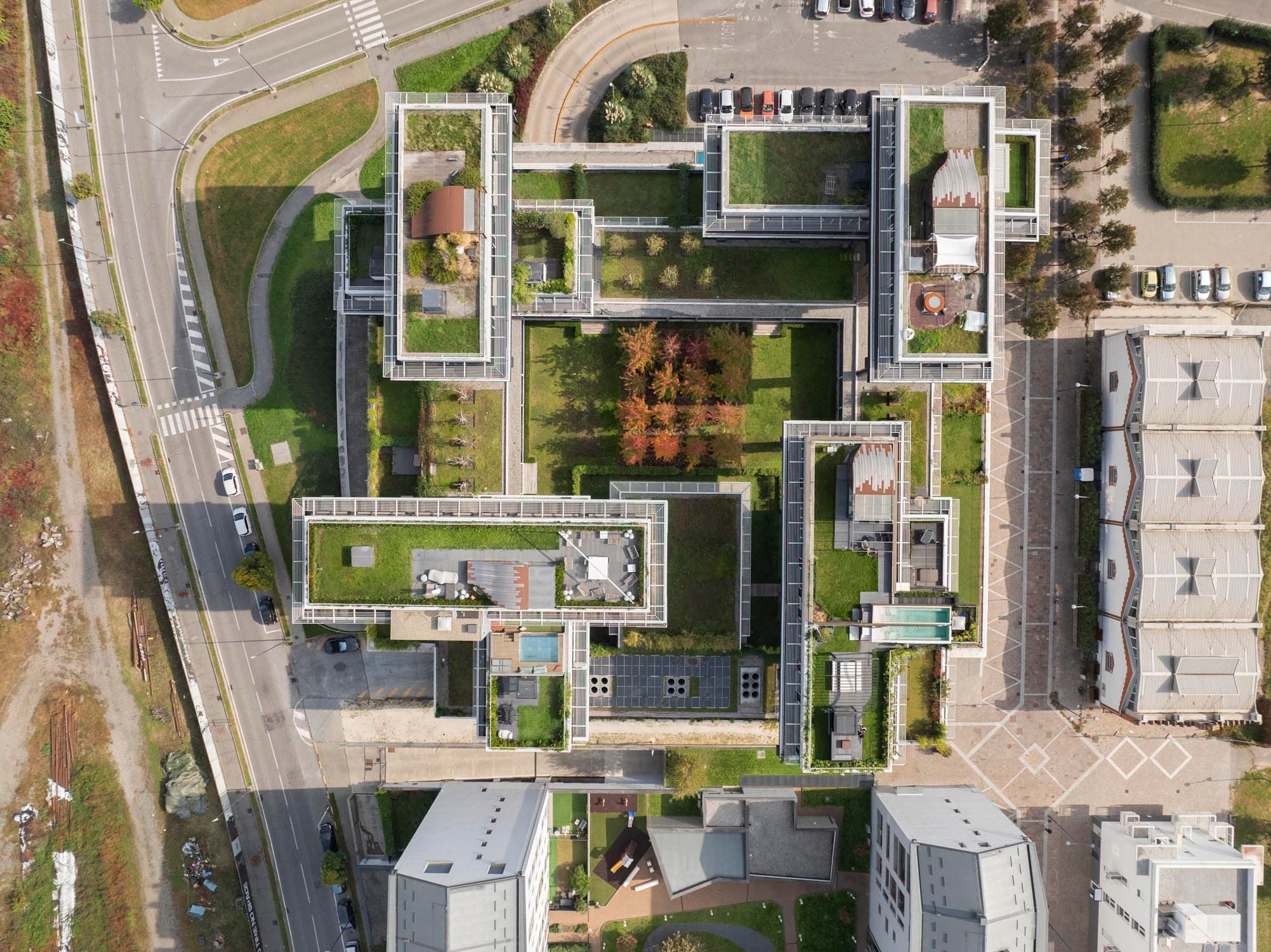
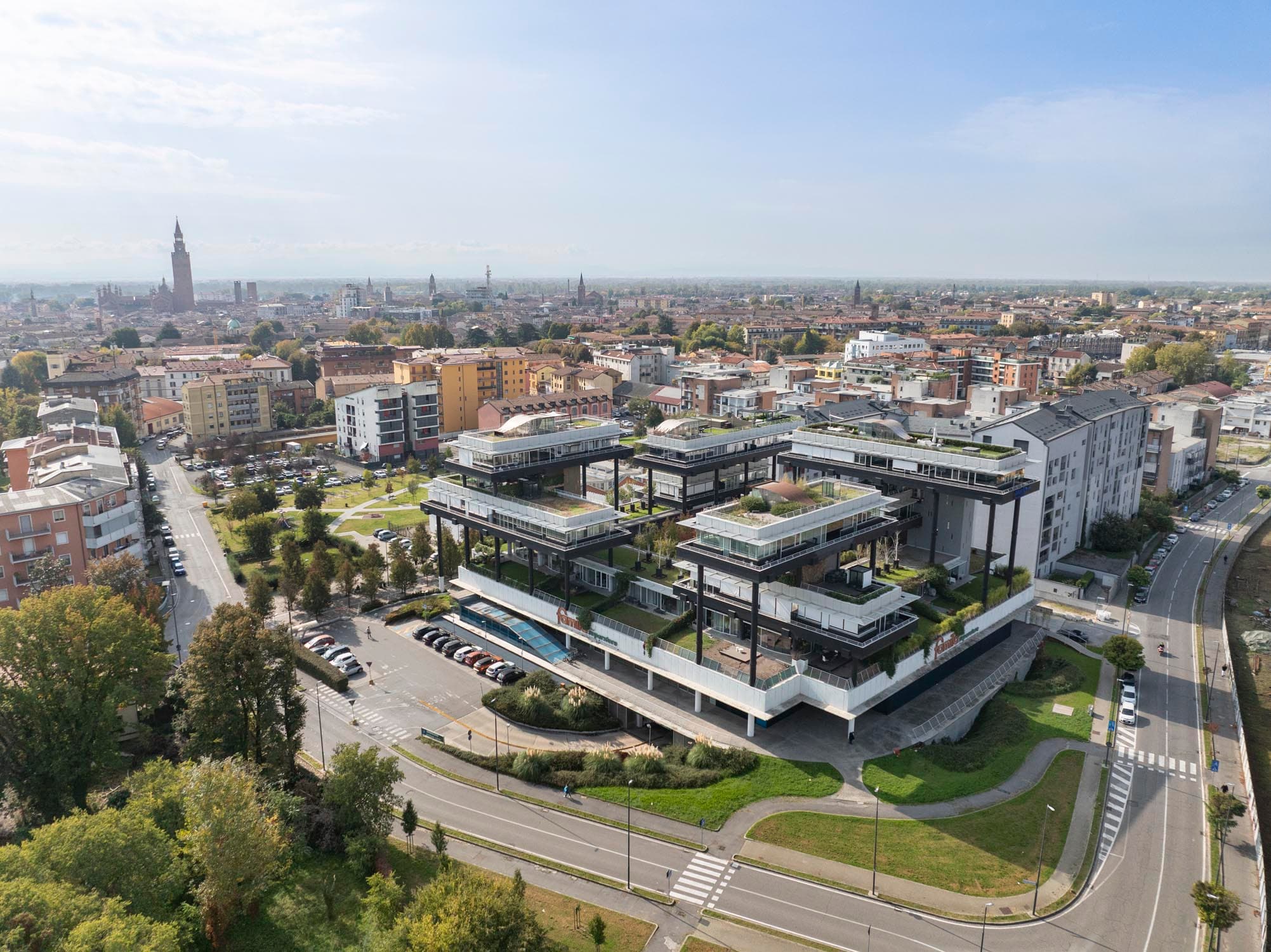
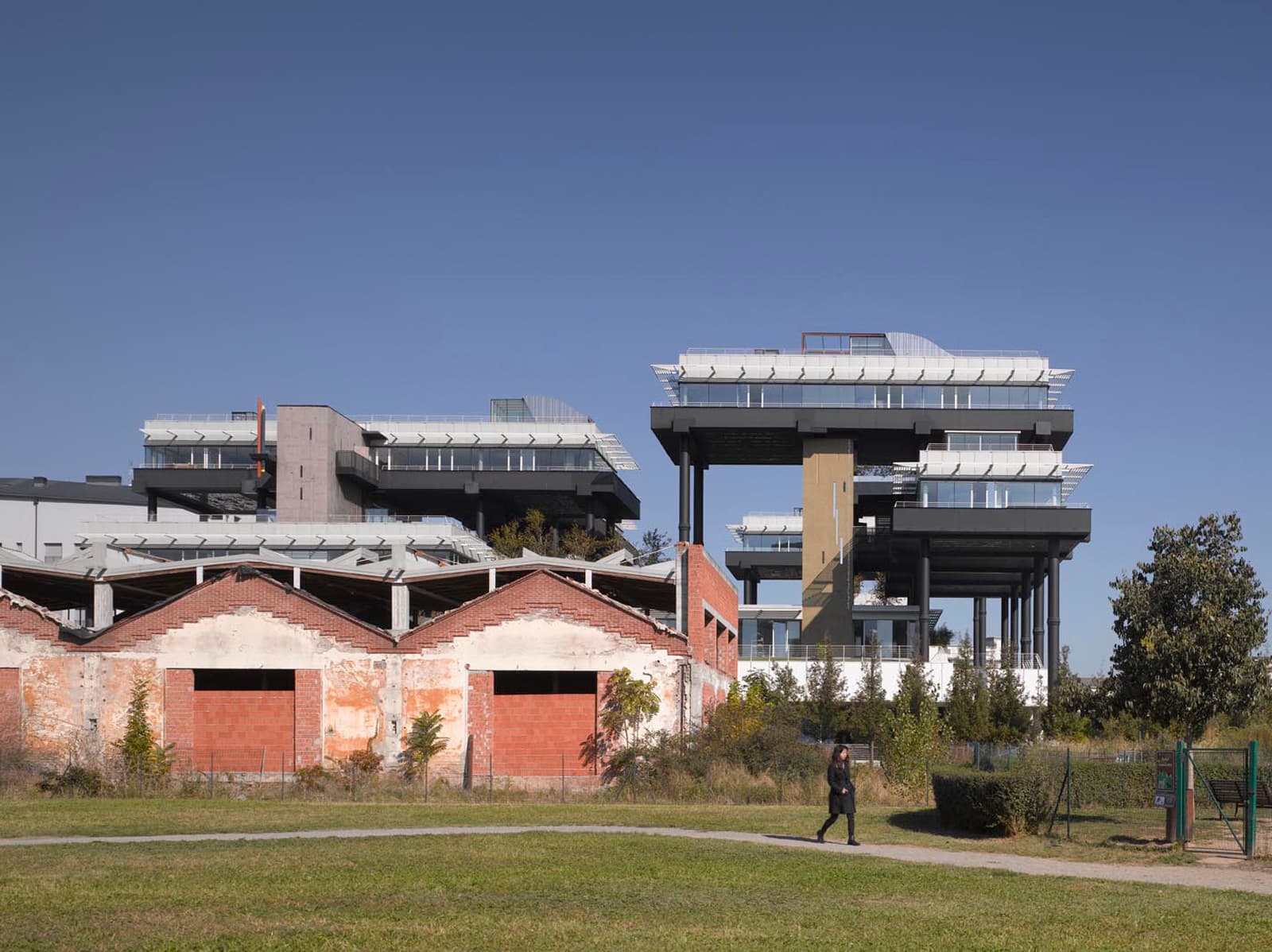
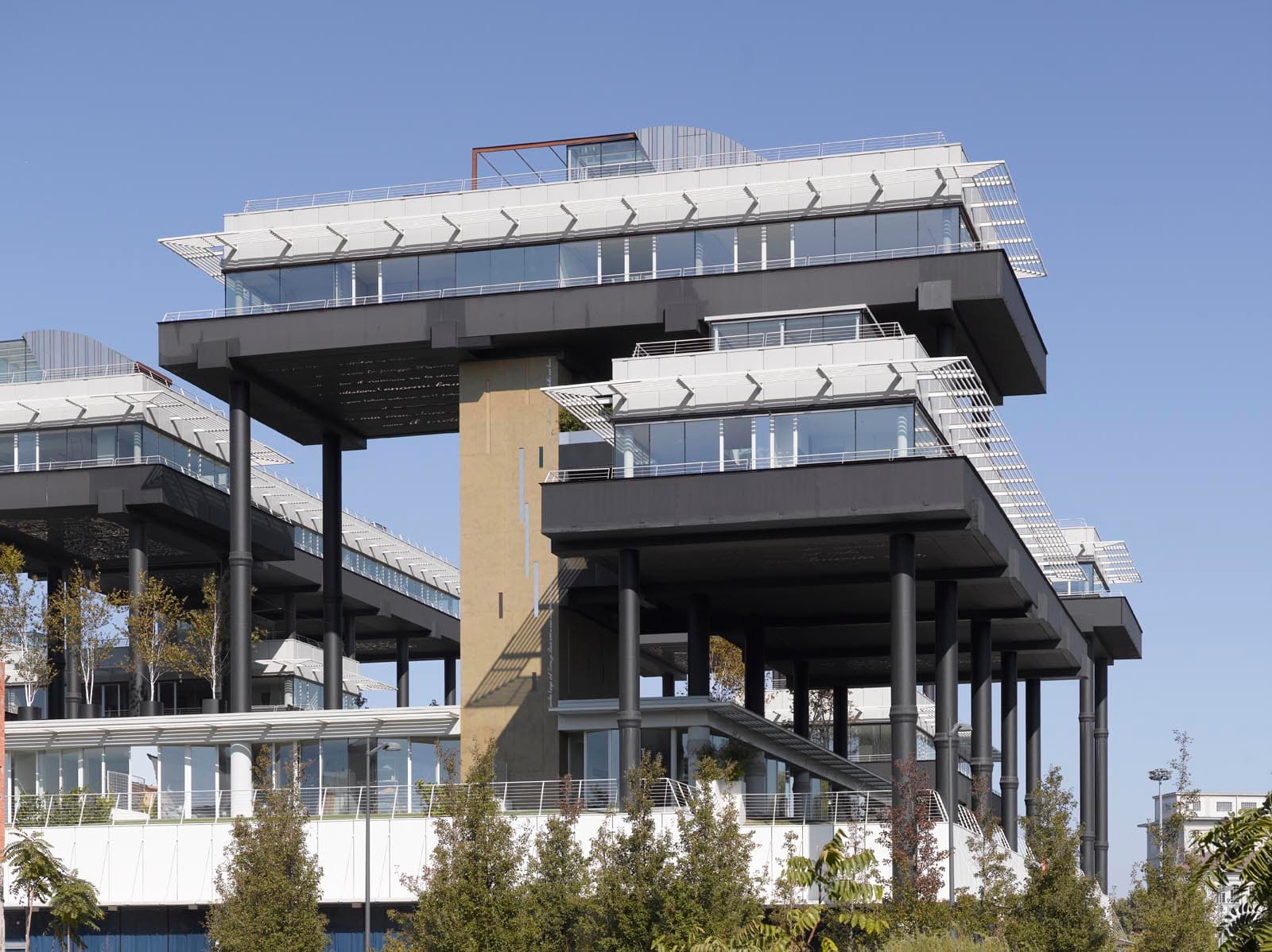
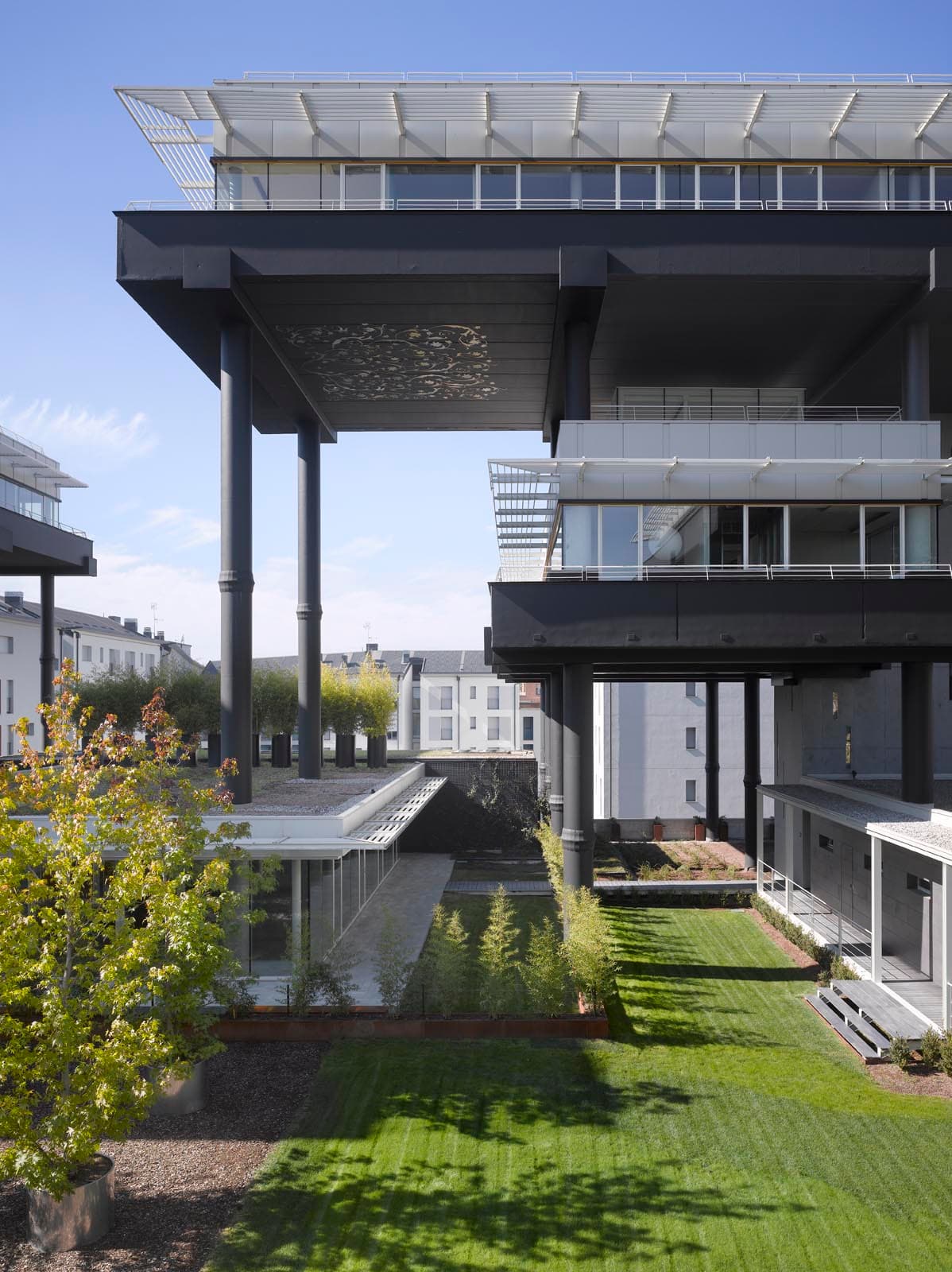
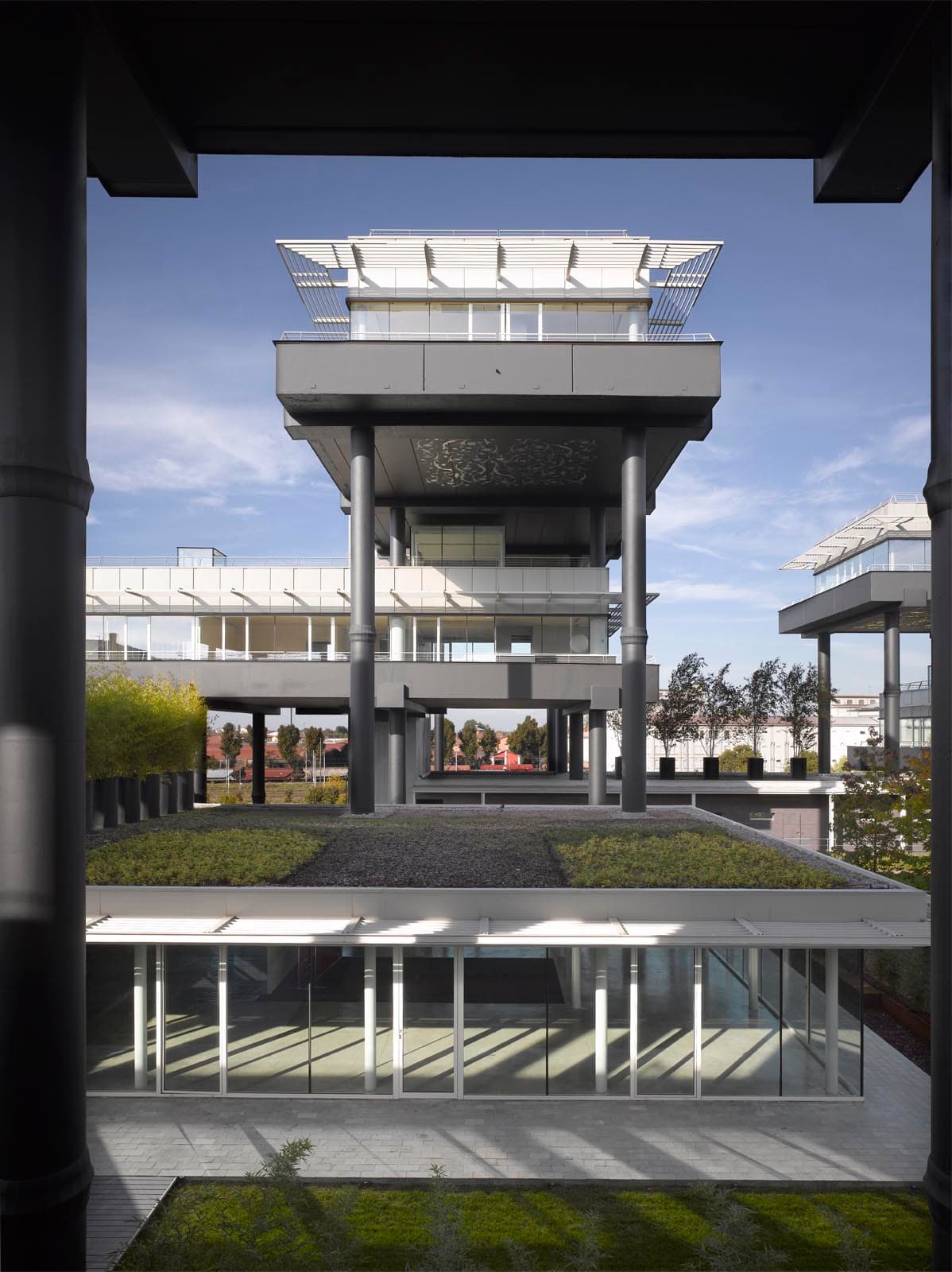
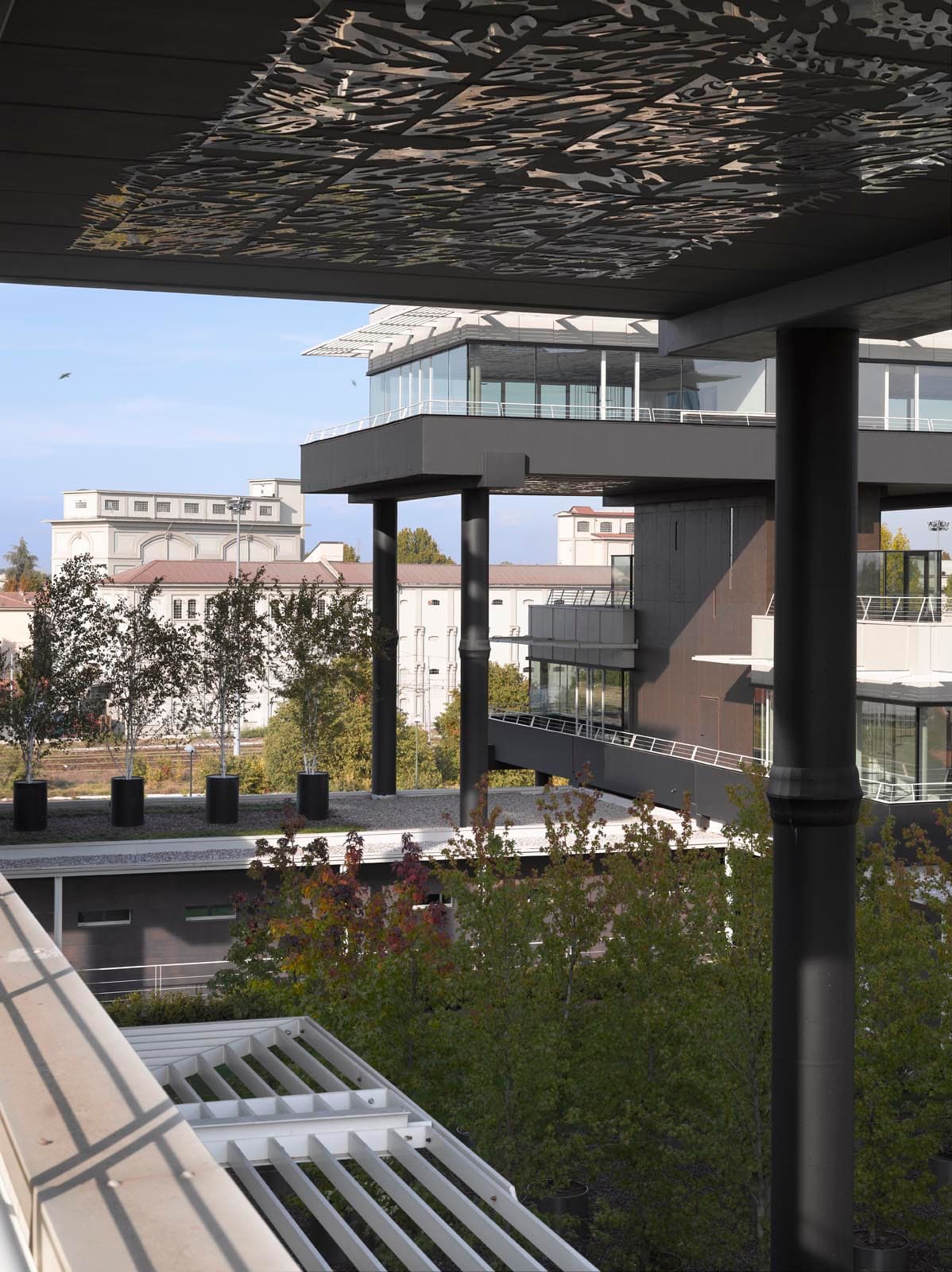
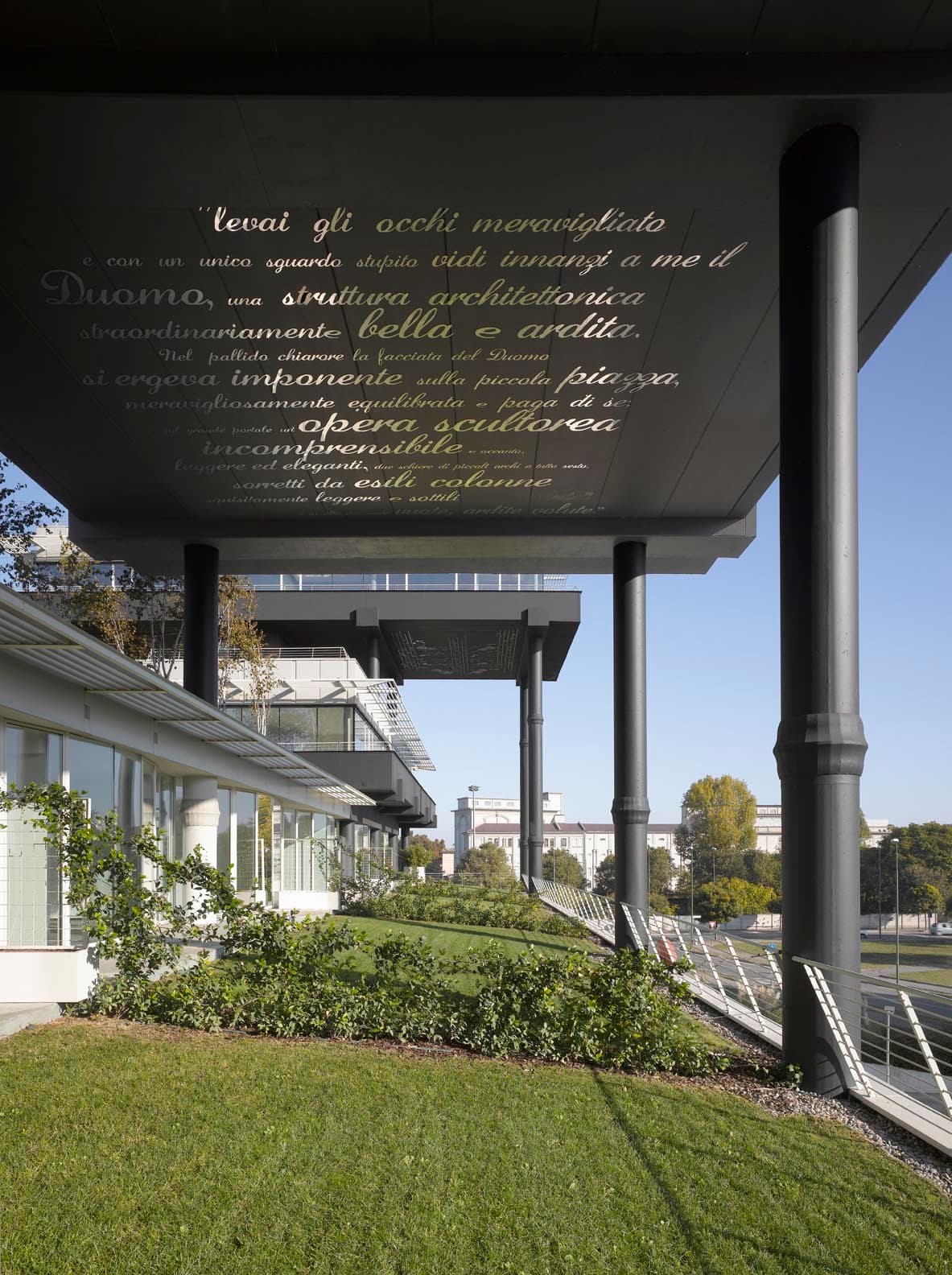
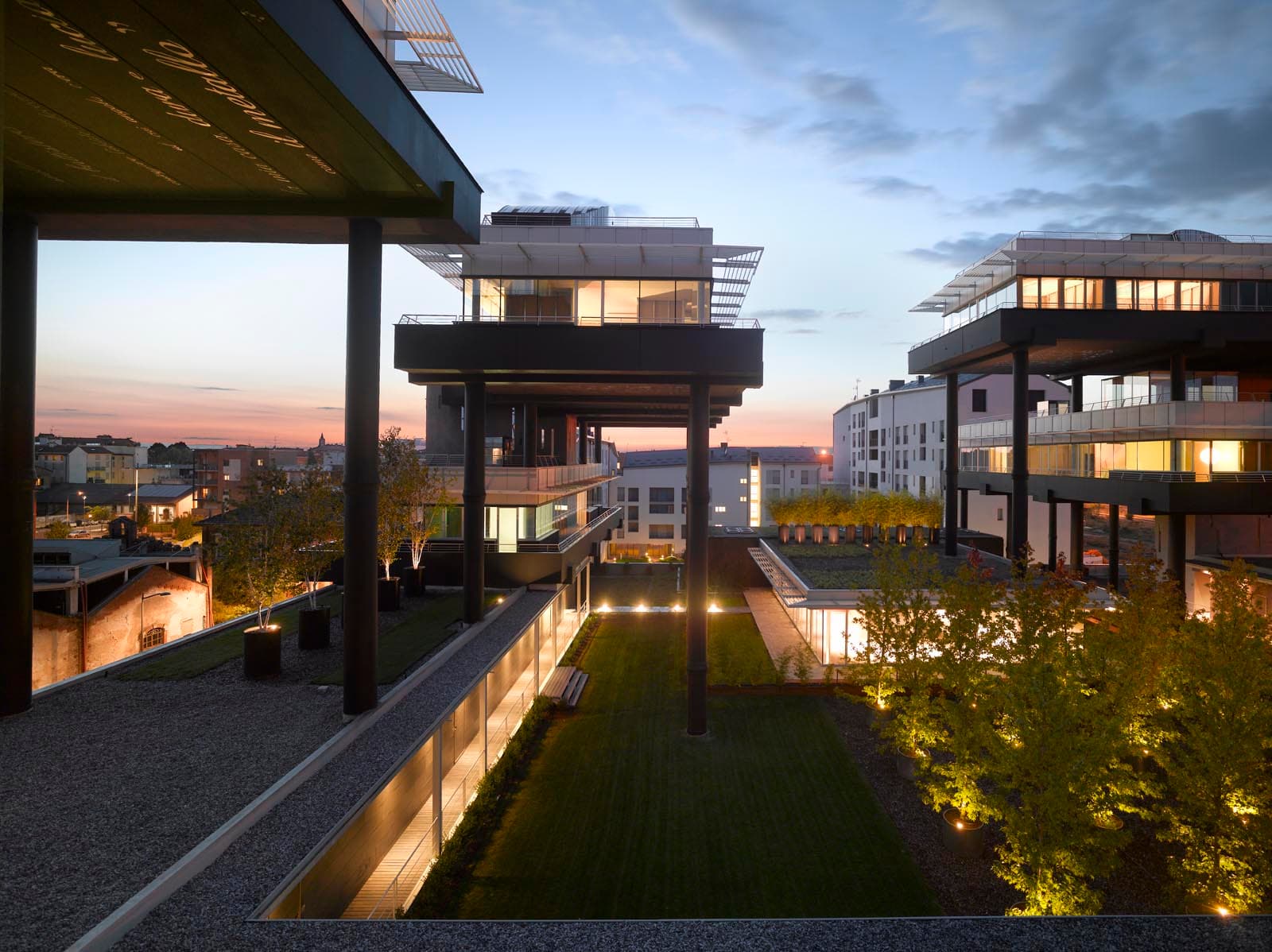
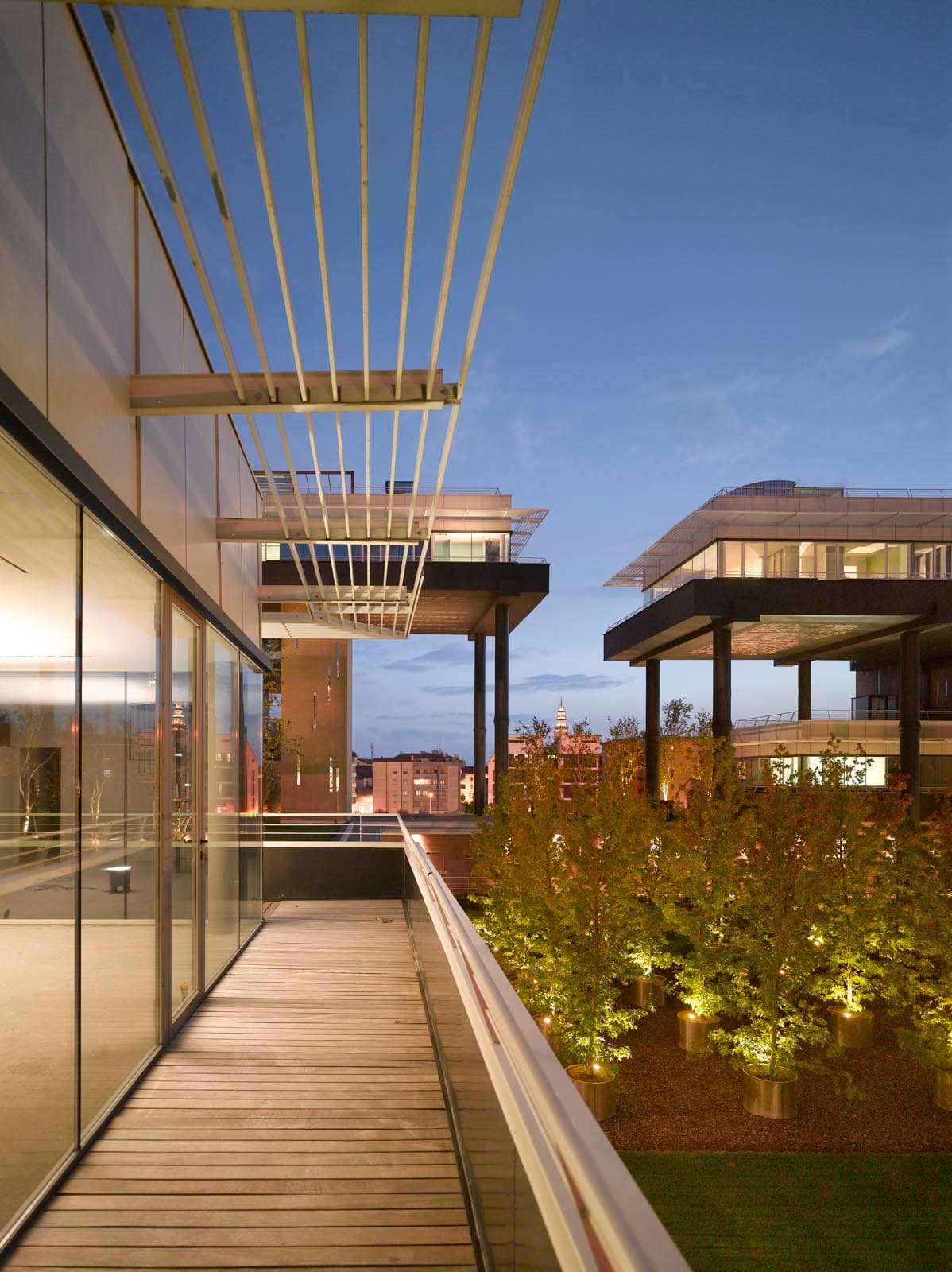
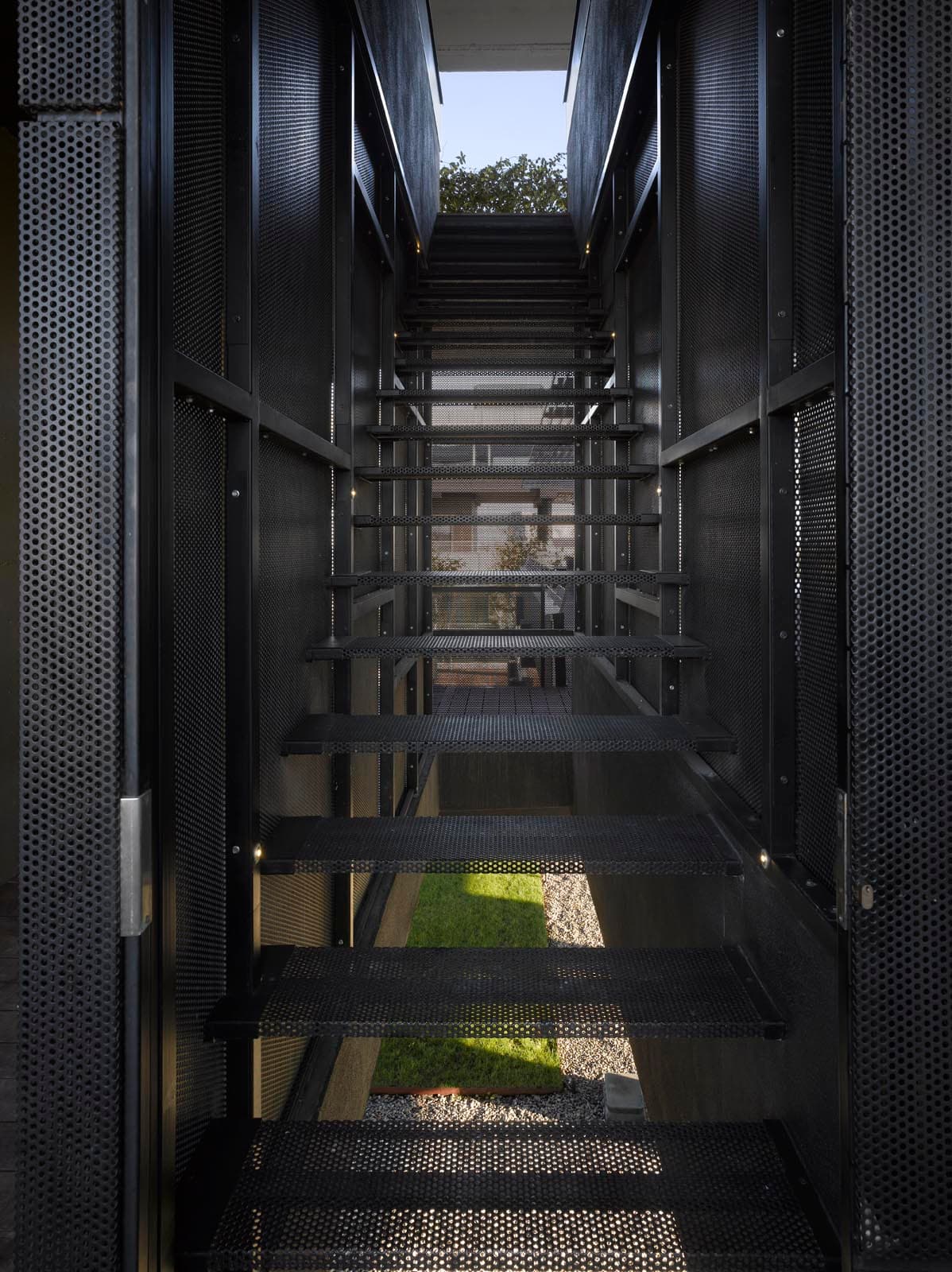
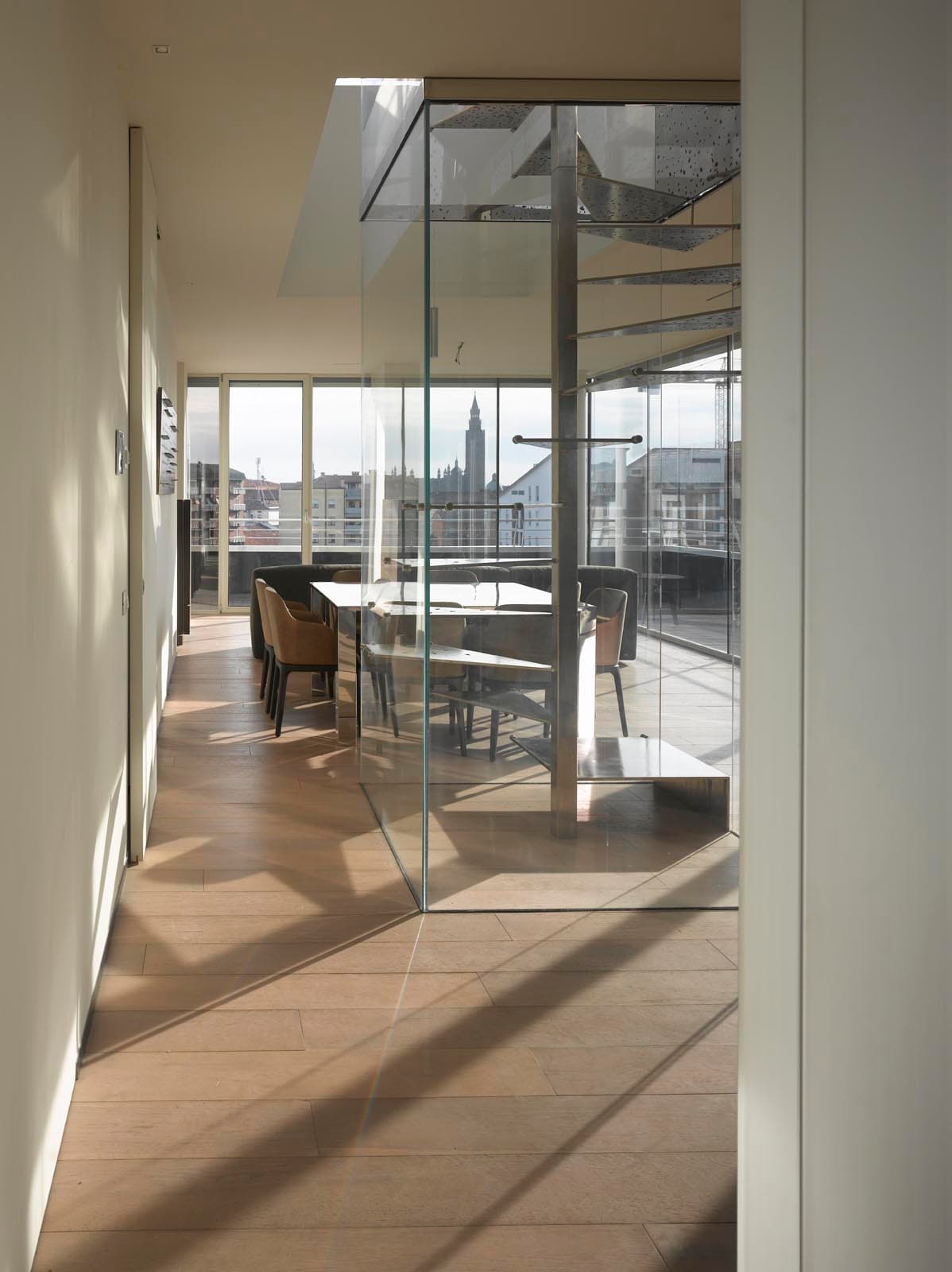
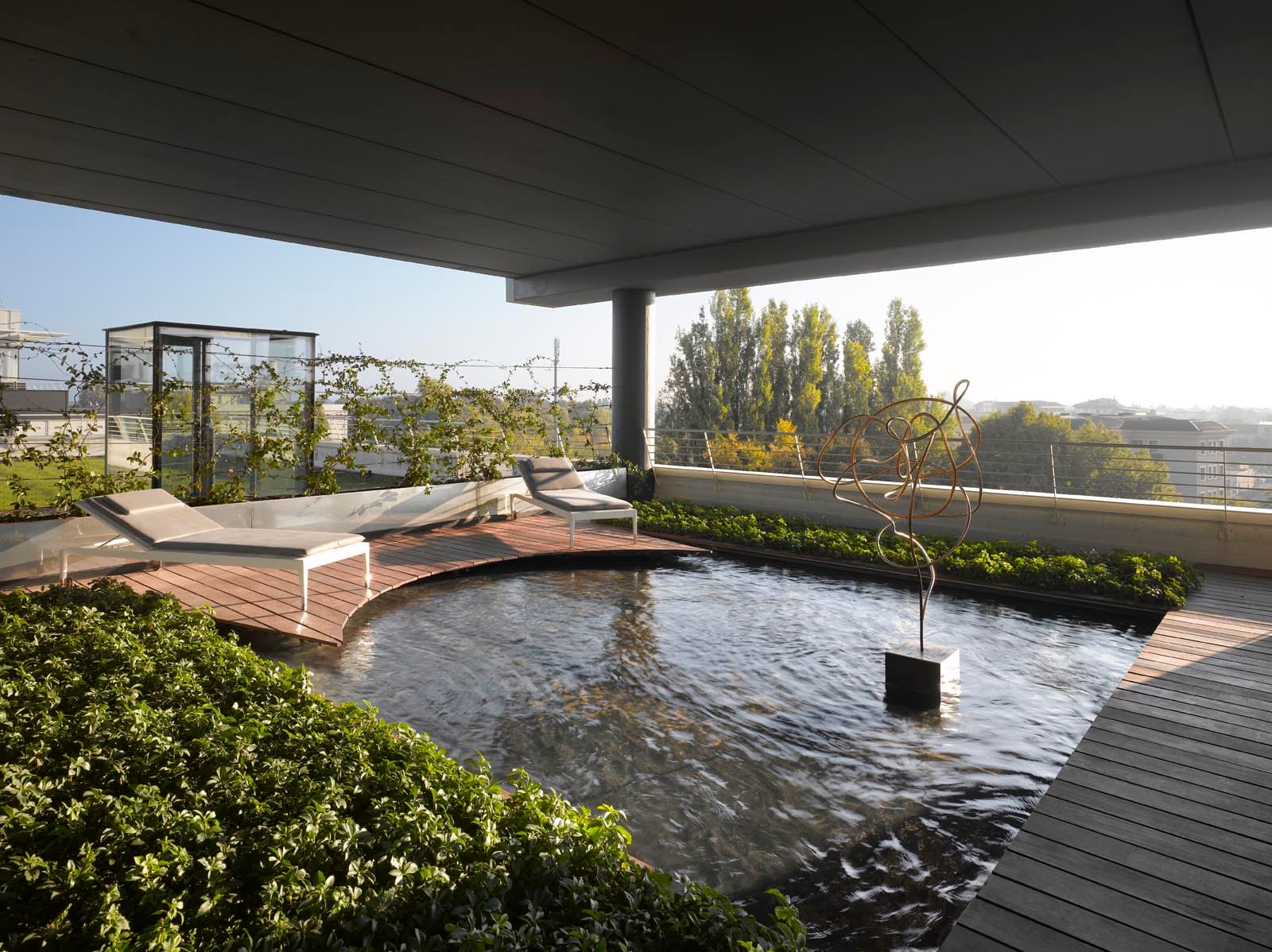
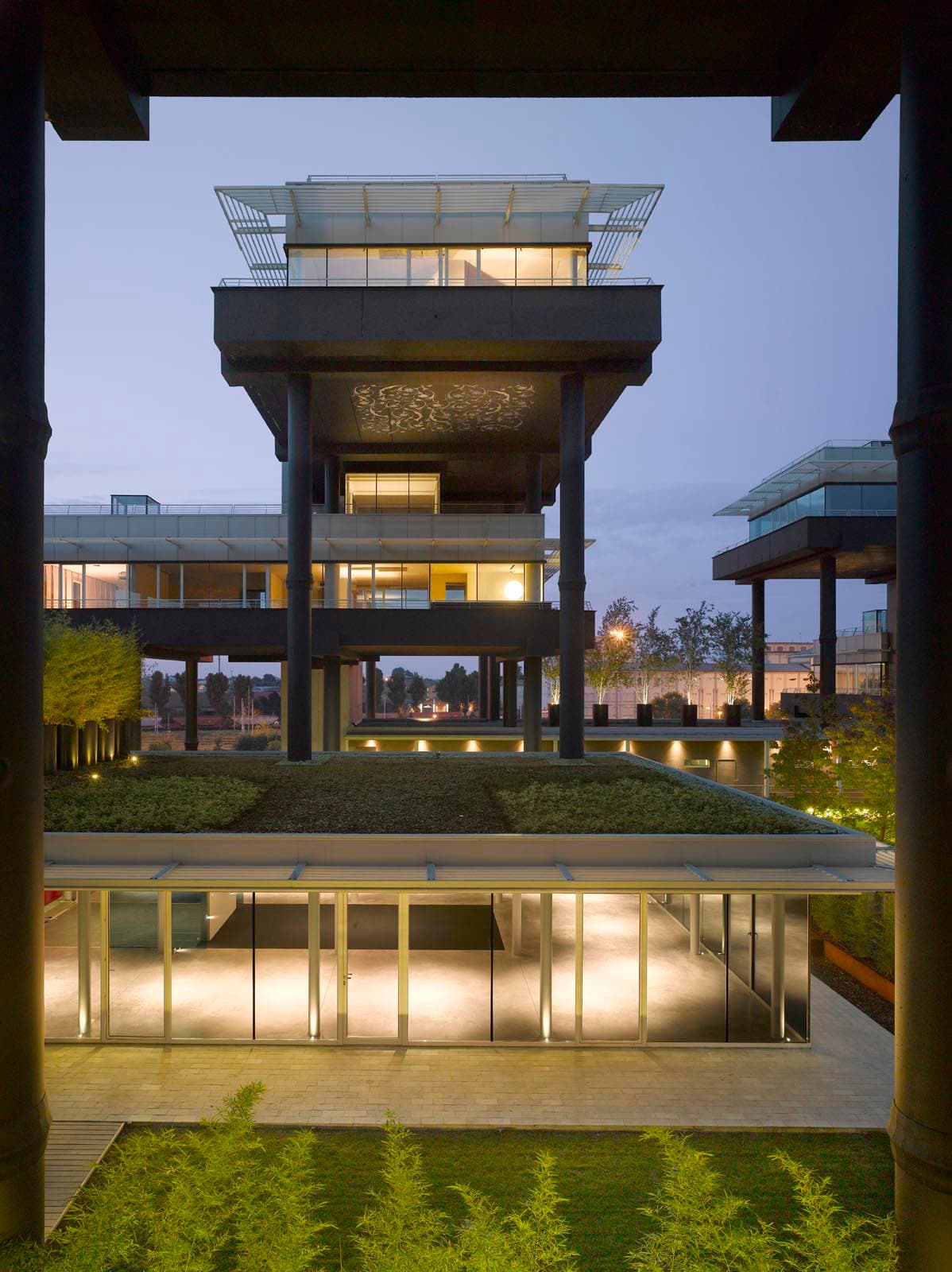
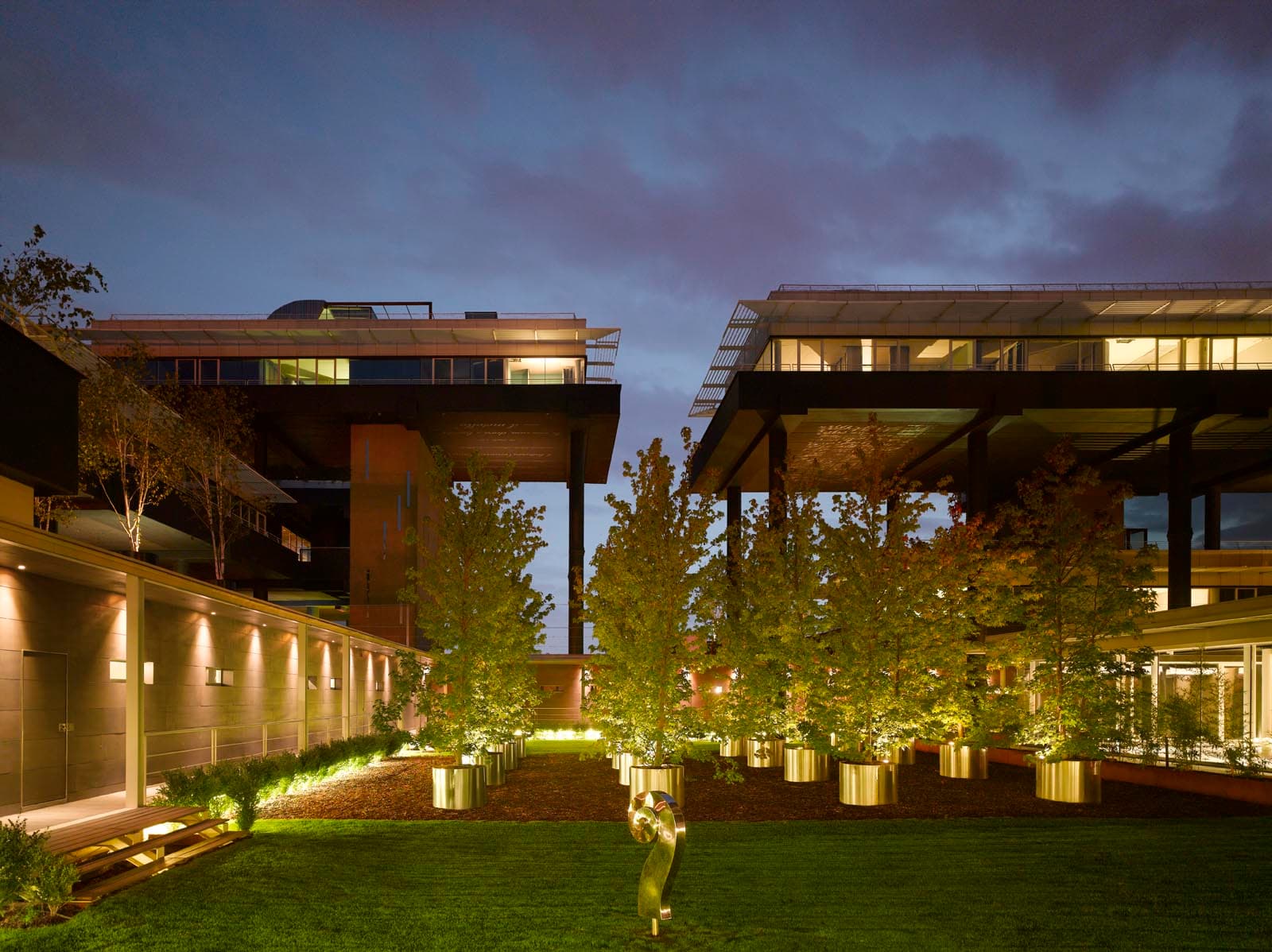
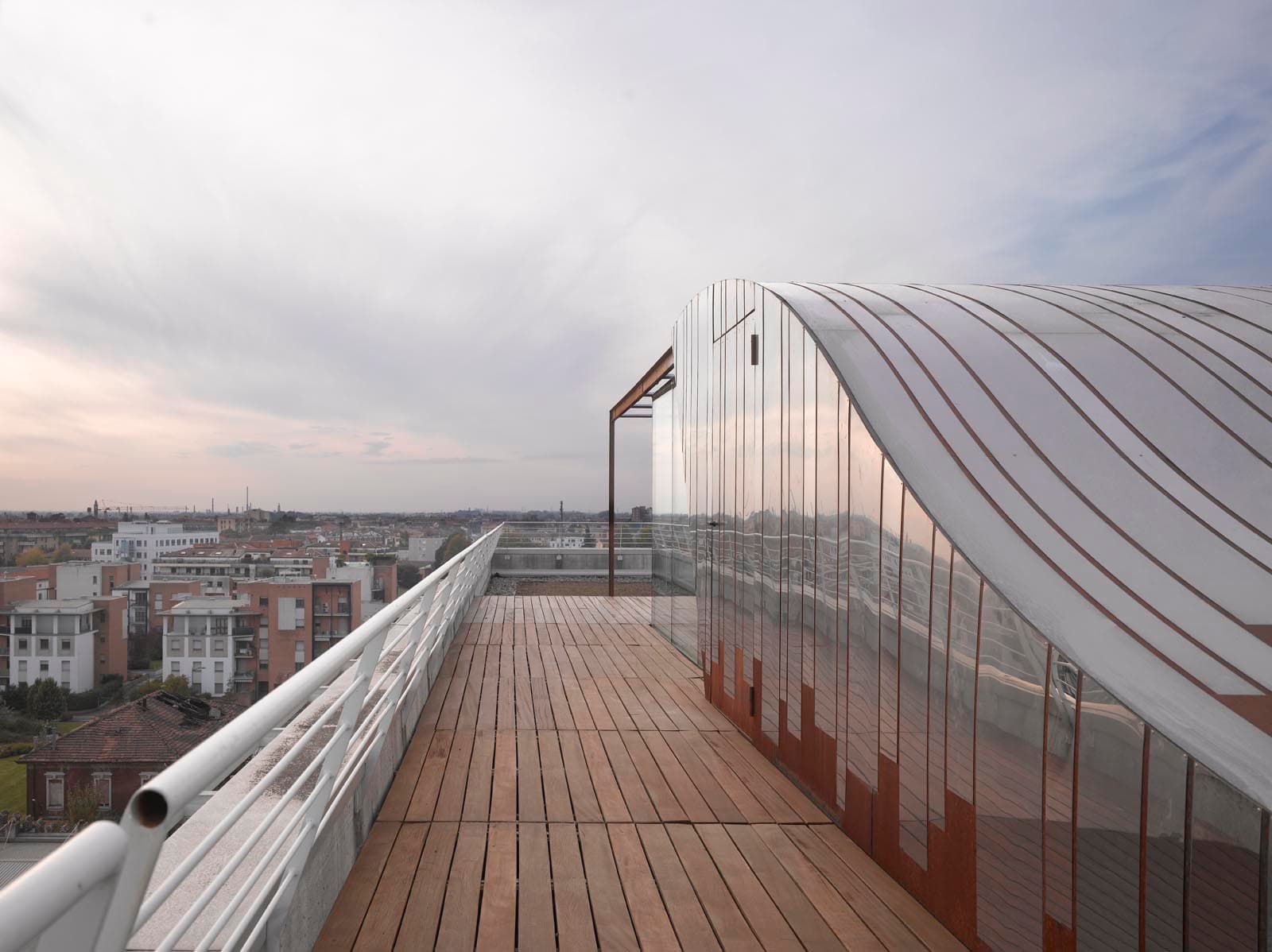
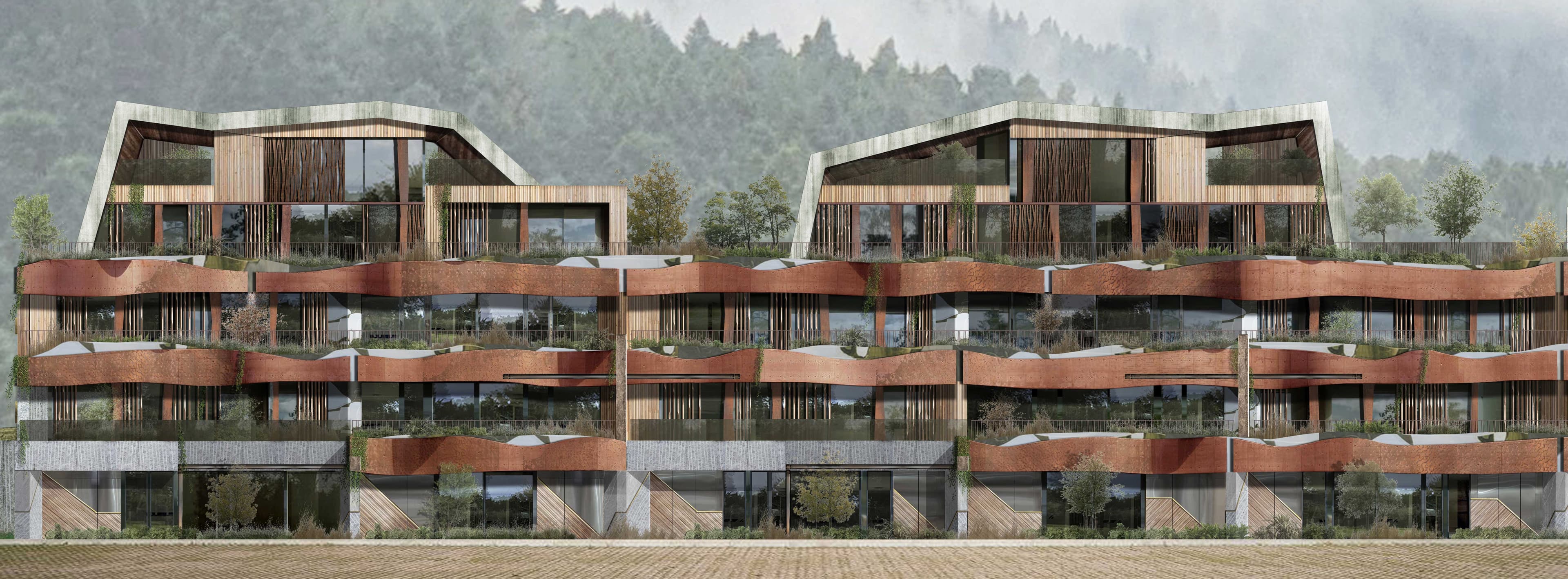
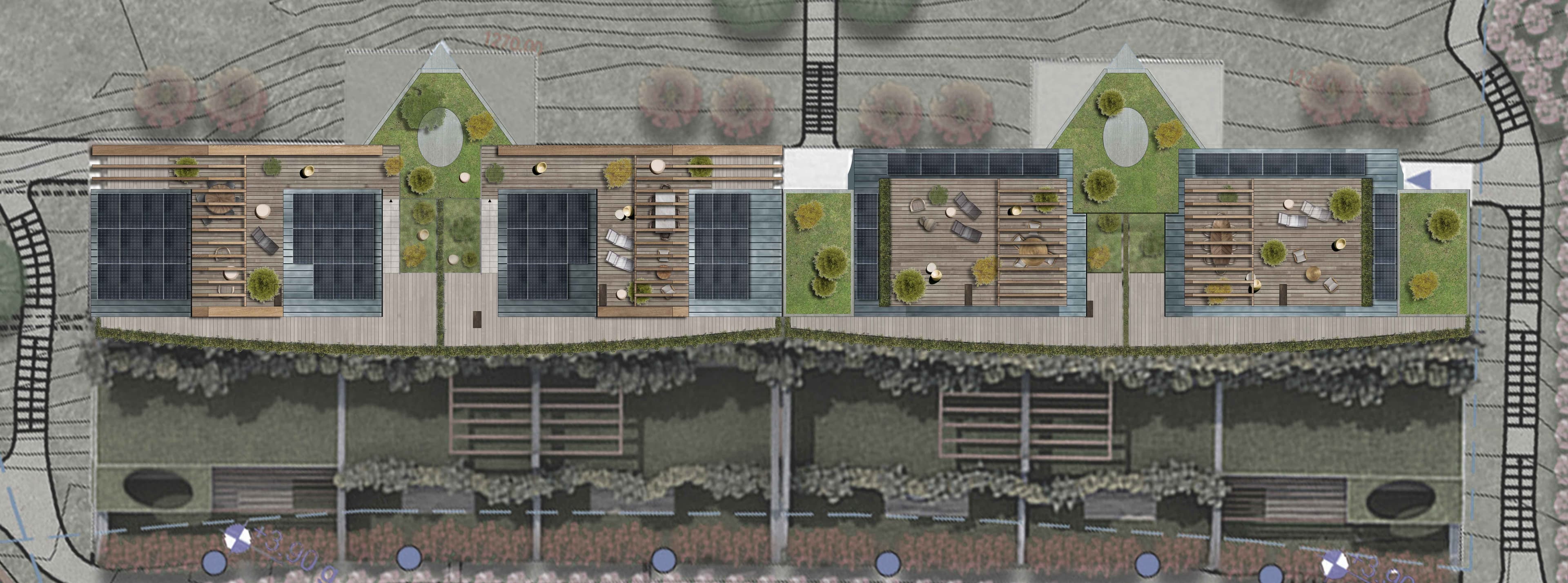
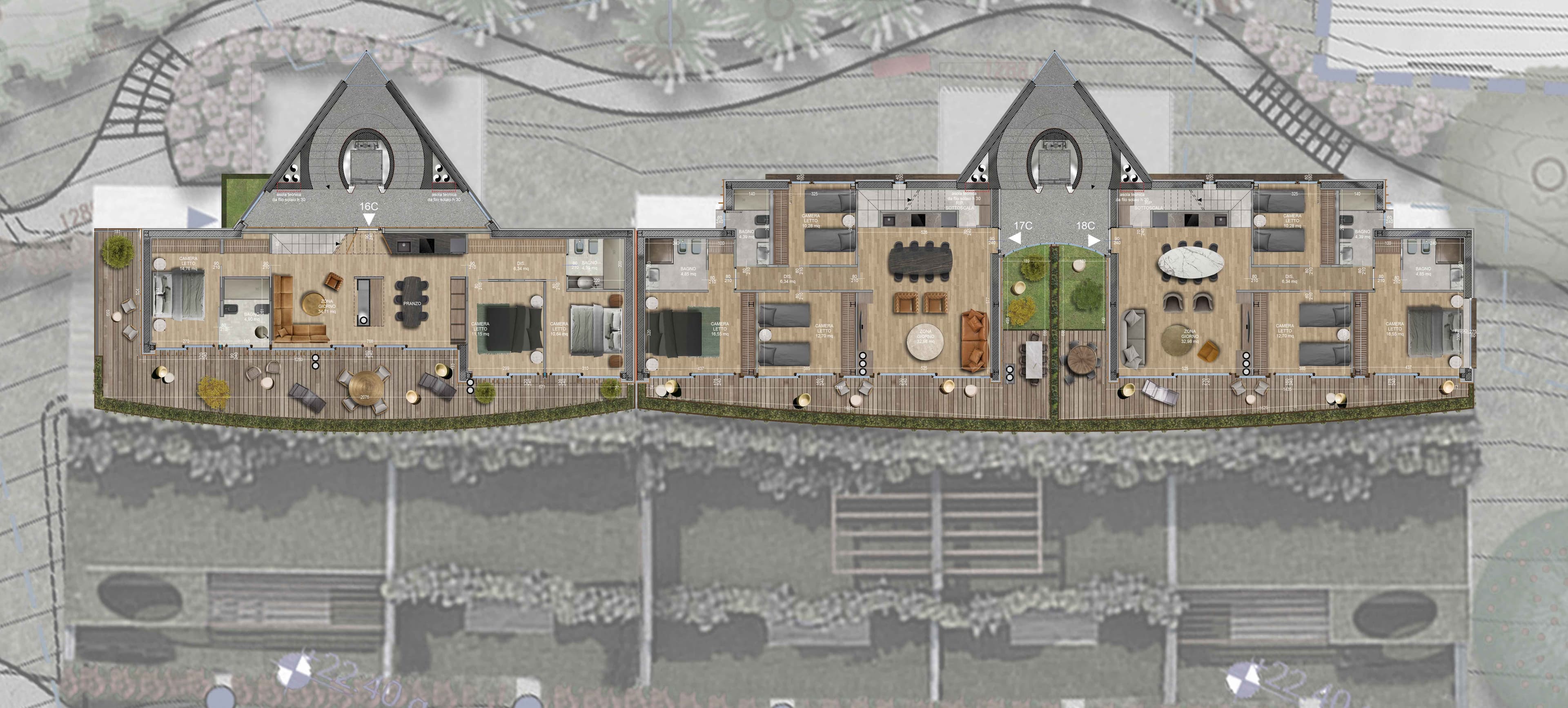
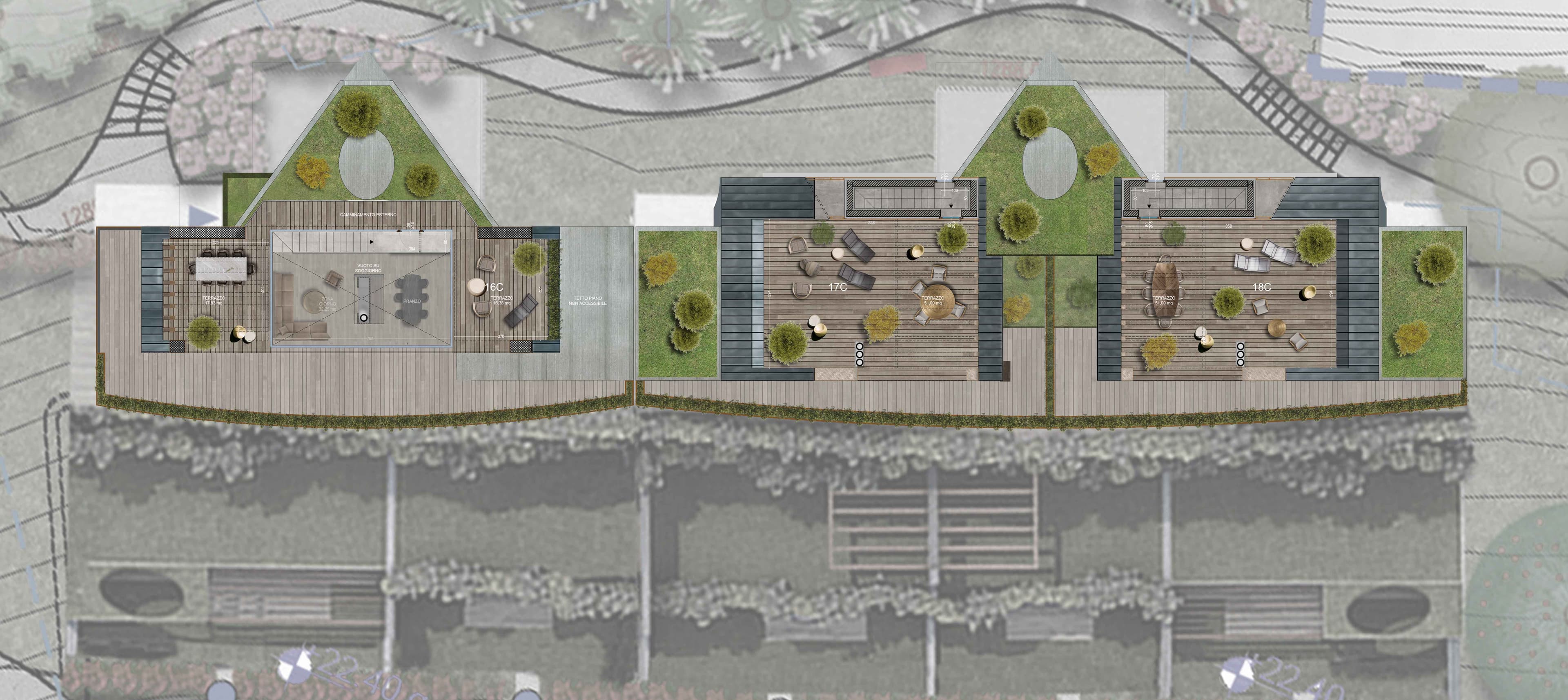
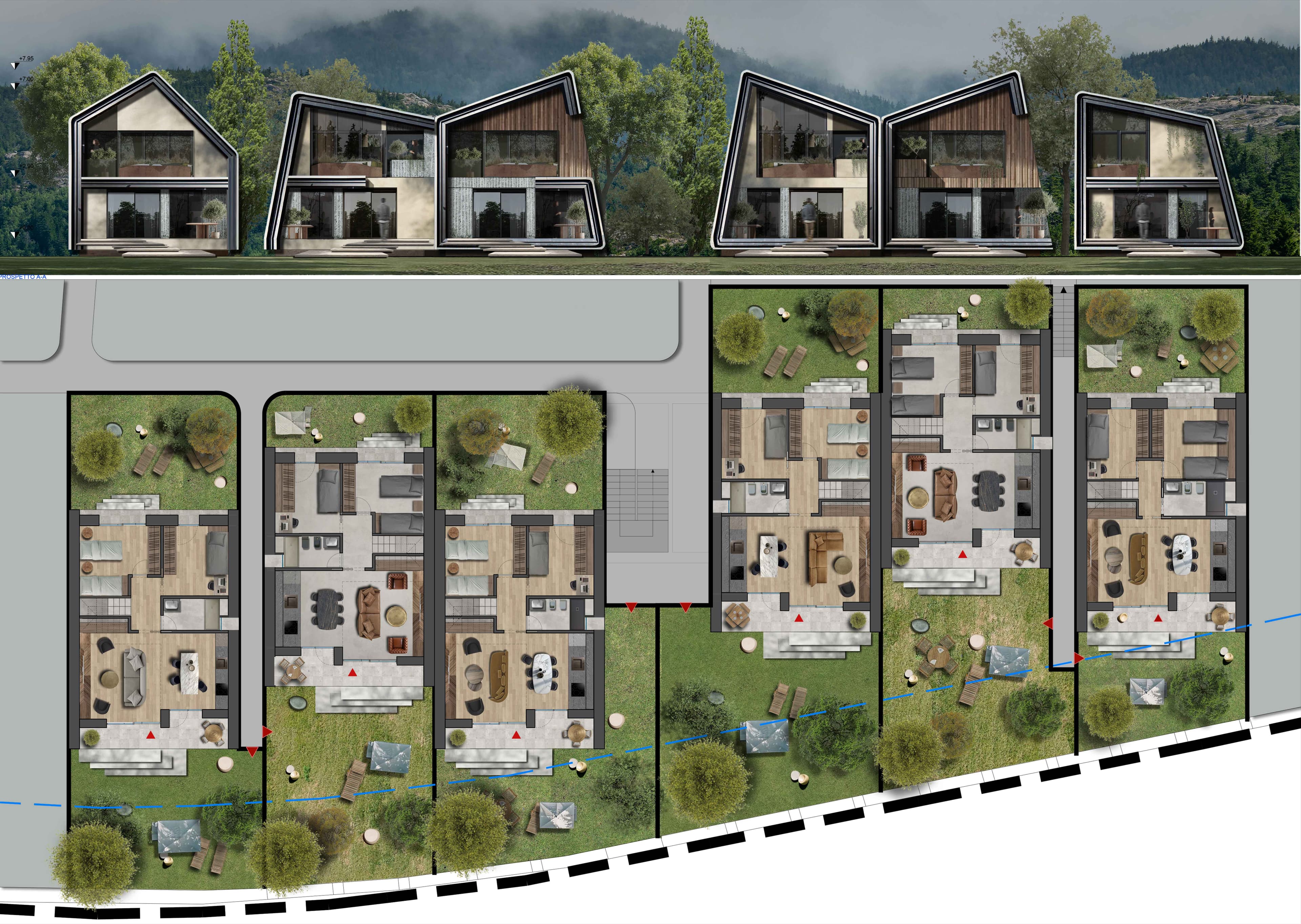
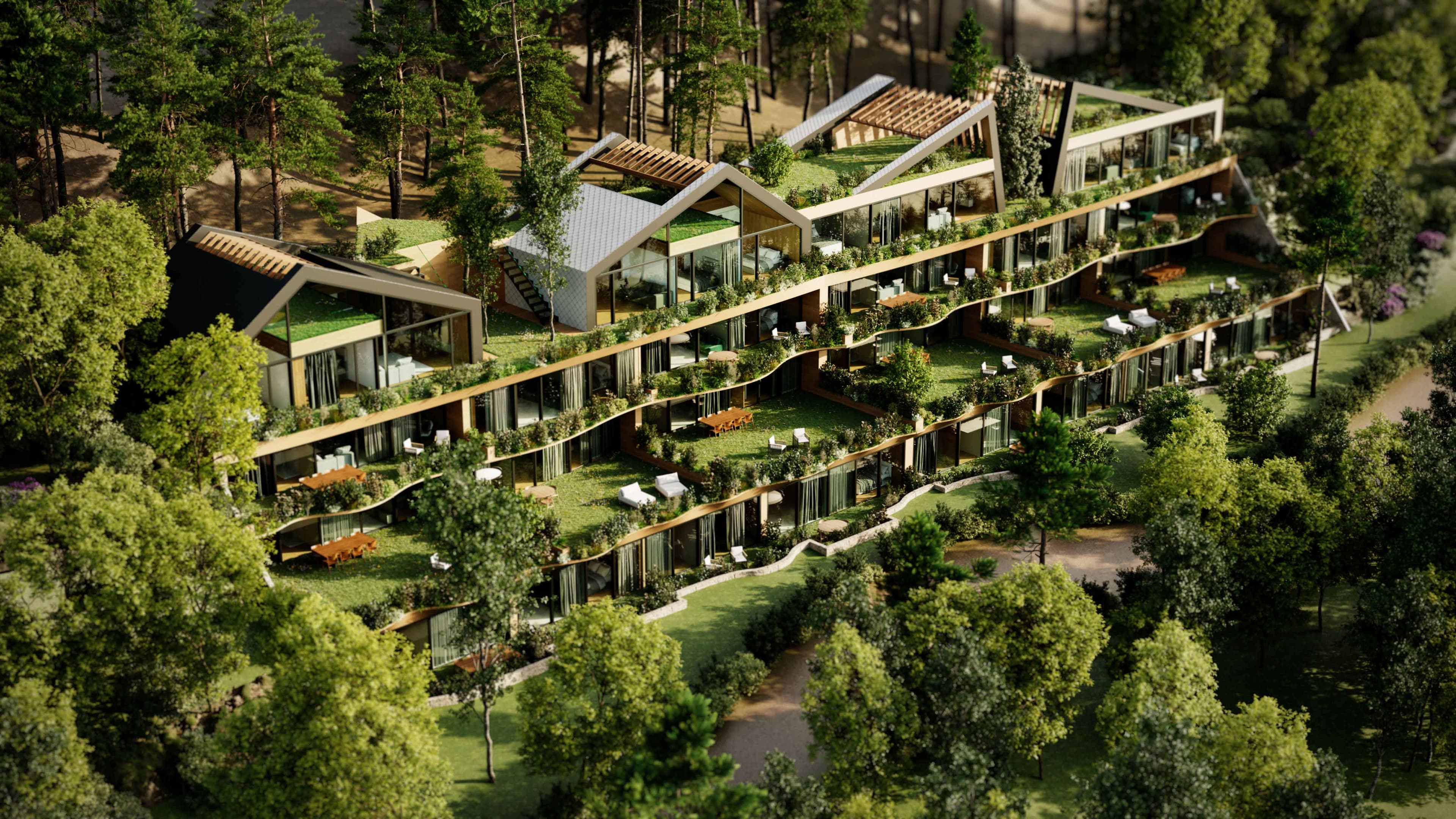
In this project experimentation and research lead back to one of the founding thoughts of the modern movement: those 5 points for “une nouvelle architecture” by Le Corbusier: pilotis, toit jardin, plan libre, fénetre en longeur, façade libre.
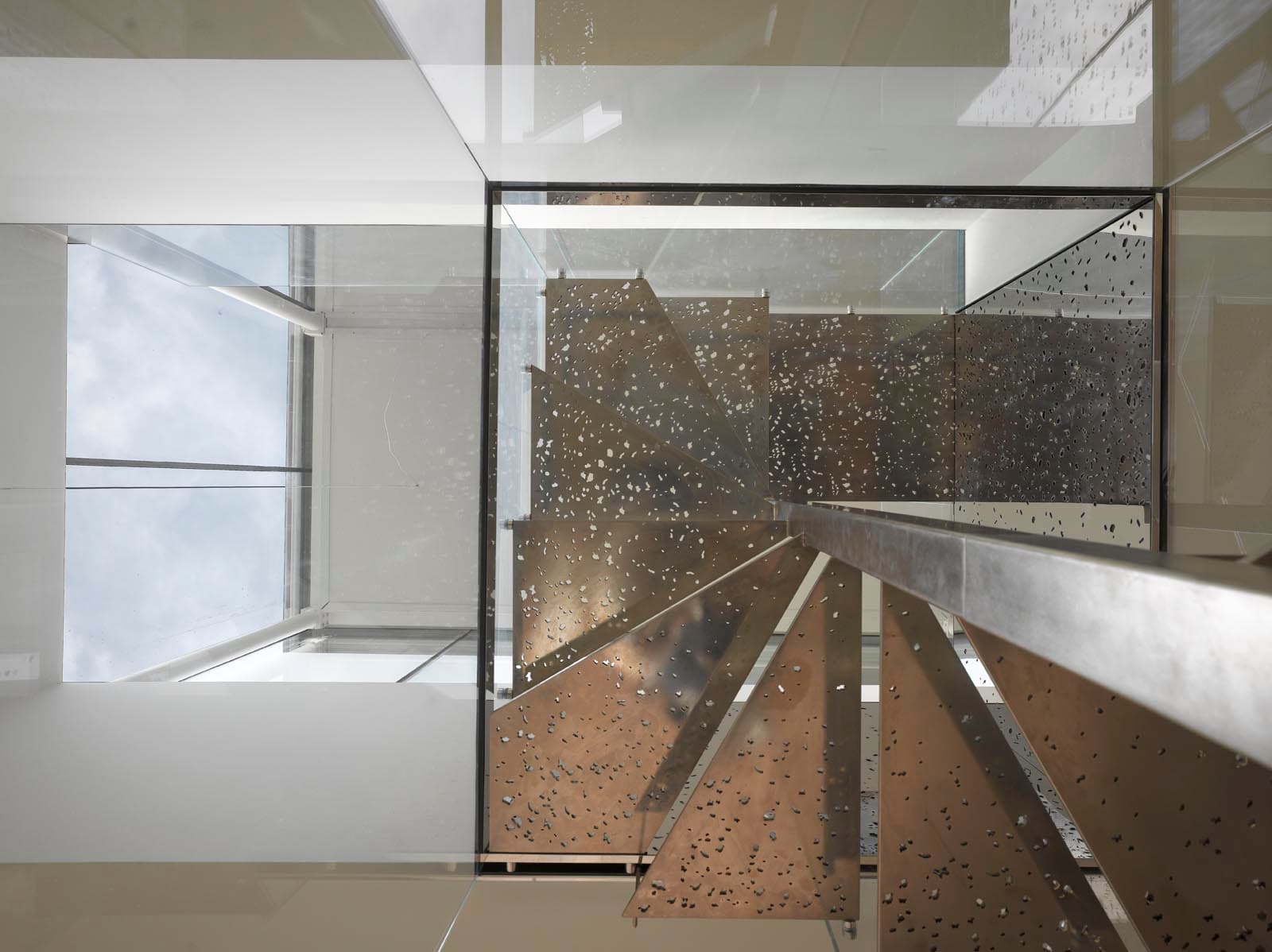
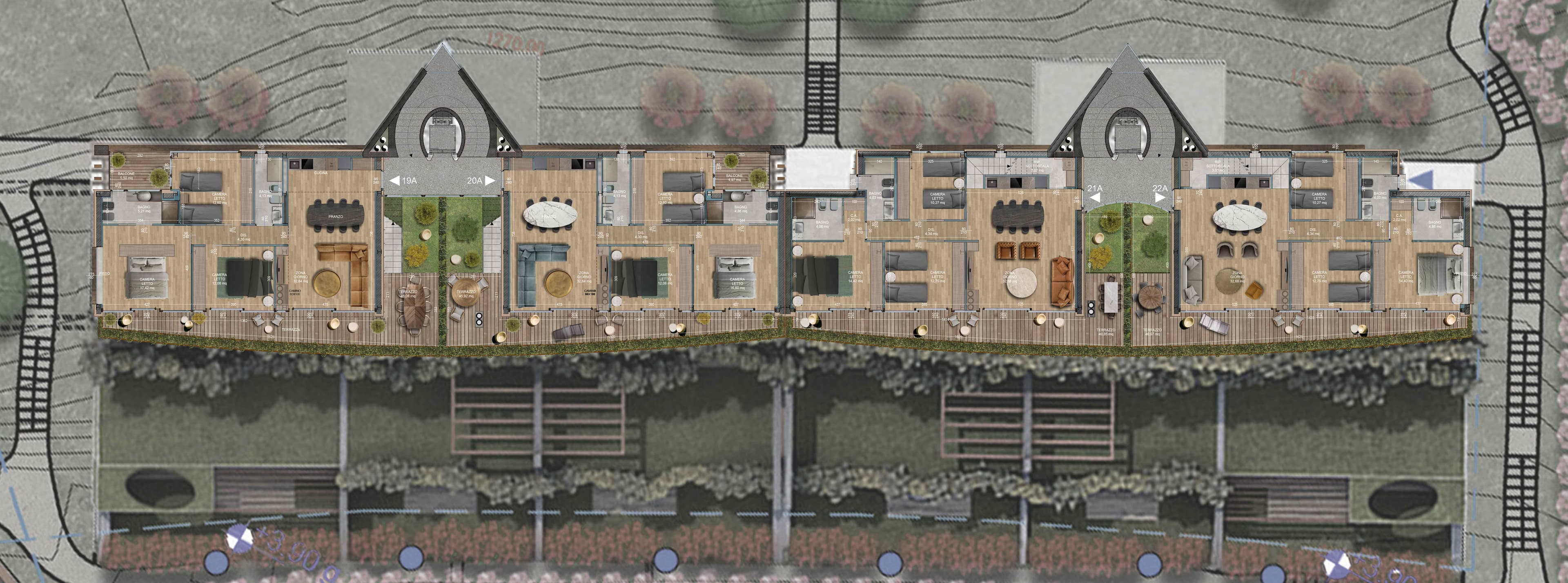
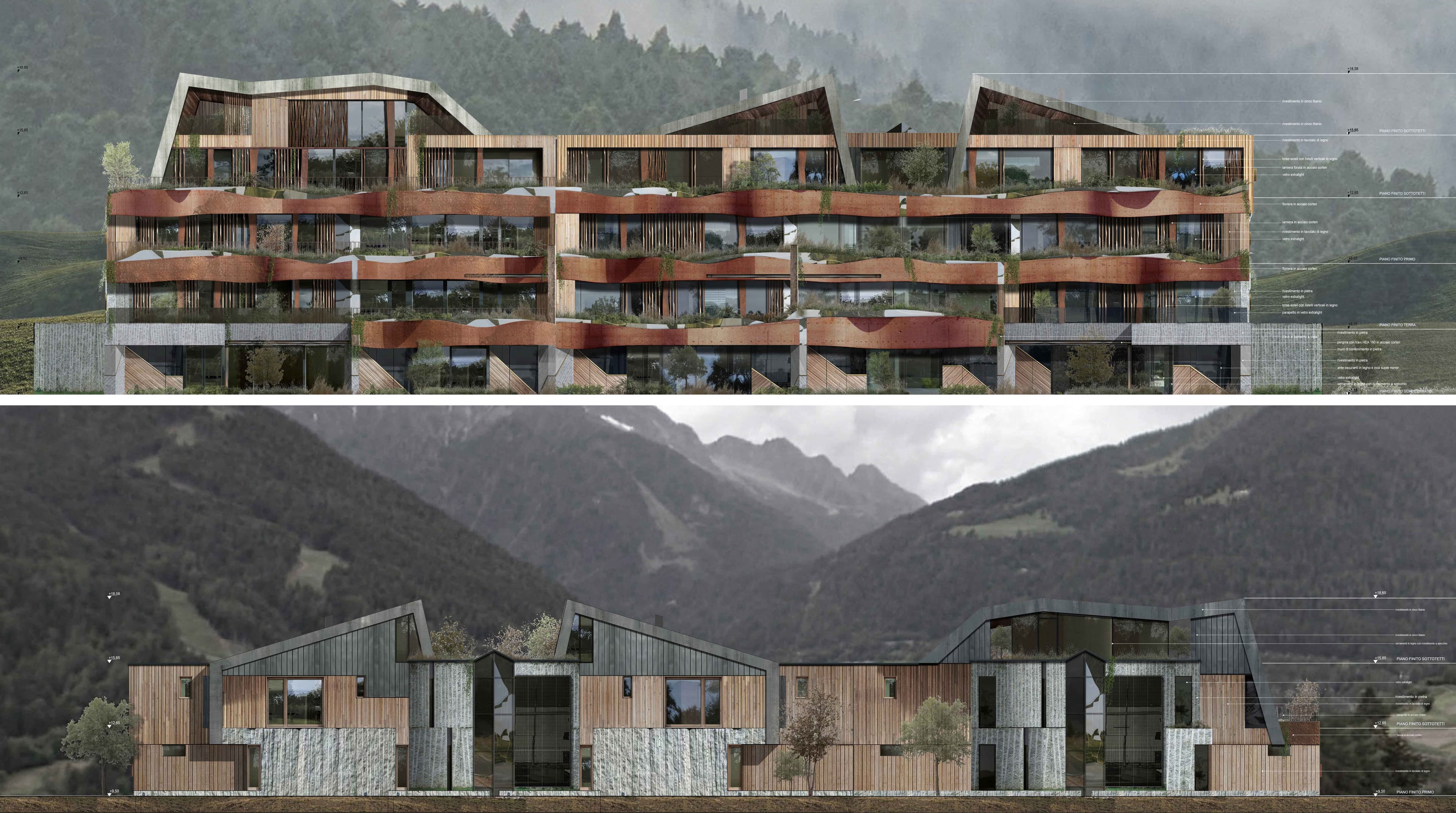
In the residential complex, the canonical relationship between air and built mass is subverted: a new body of volumes in which the voids generated are vastly outnumber the solids. The volumes follow the idea, disintegrating and juxtaposing, seemingly haphazardly, but according to a rigorous logic played on rhythmic alterations and studied asymmetries. Everything gives a sense of movement, fluidity, dynamism, lightness, a design freedom aimed at the search for compositional balance and harmony of the overall image.
The desire to create maximum overlooks of outdoor green spaces generates great design complexity and the formation of unusual volumes that allow the space to breathe and the dwellings to enjoy great perspectives and unobstructed views. The resulting feeling is that of living in a context of discontinued villas surrounded by greenery: "suspended in a rarefied and permeable architecture."
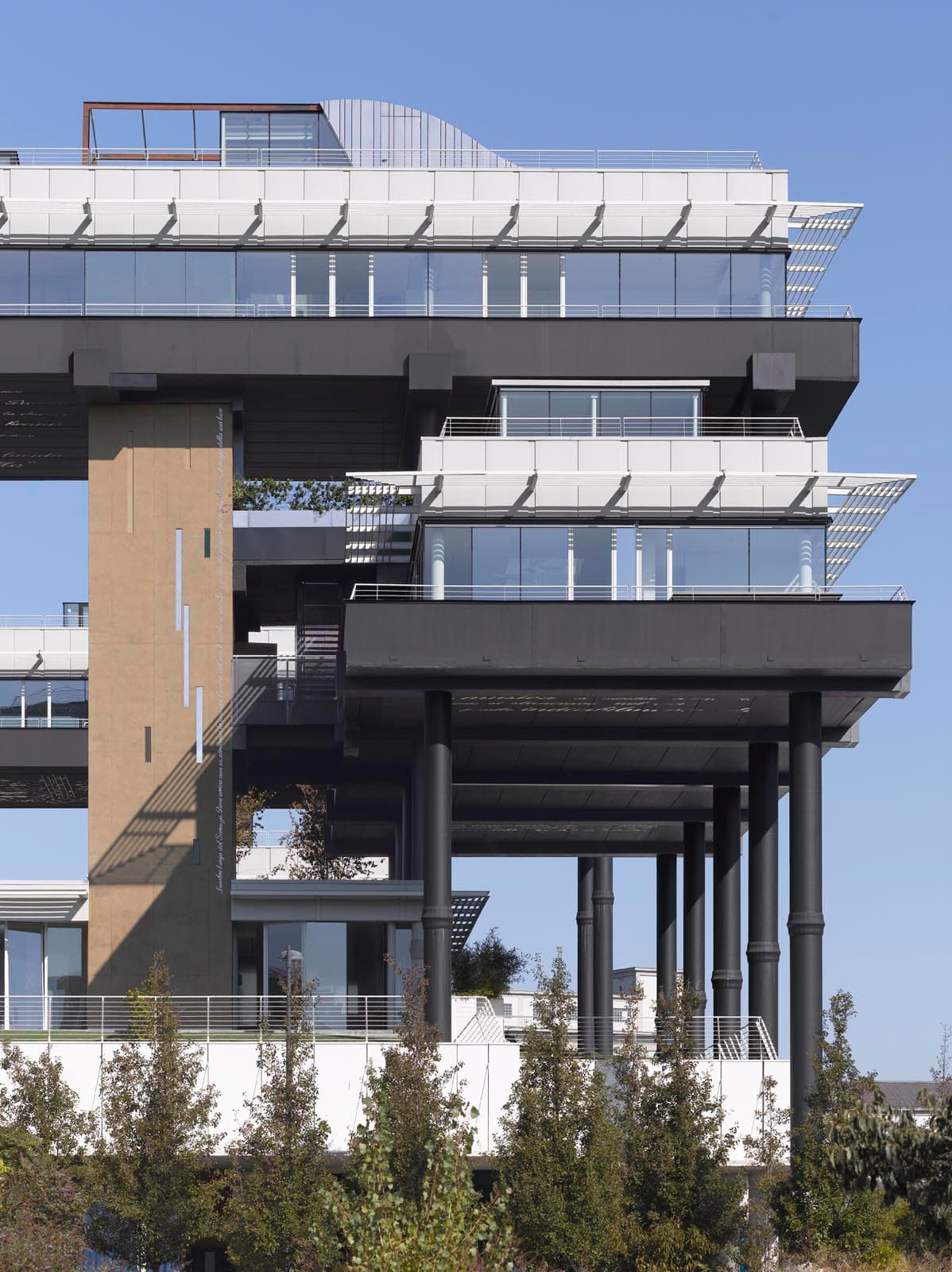
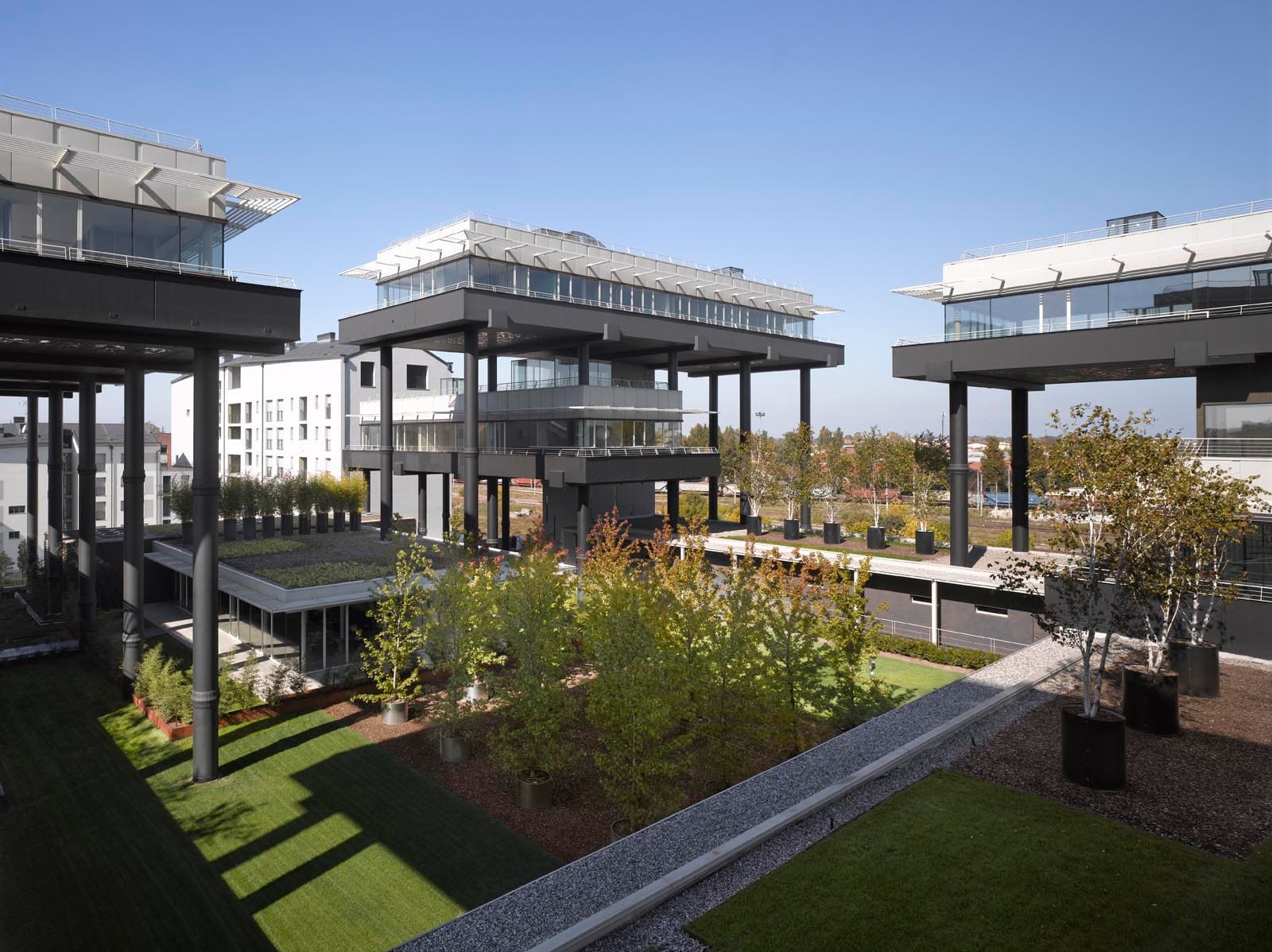
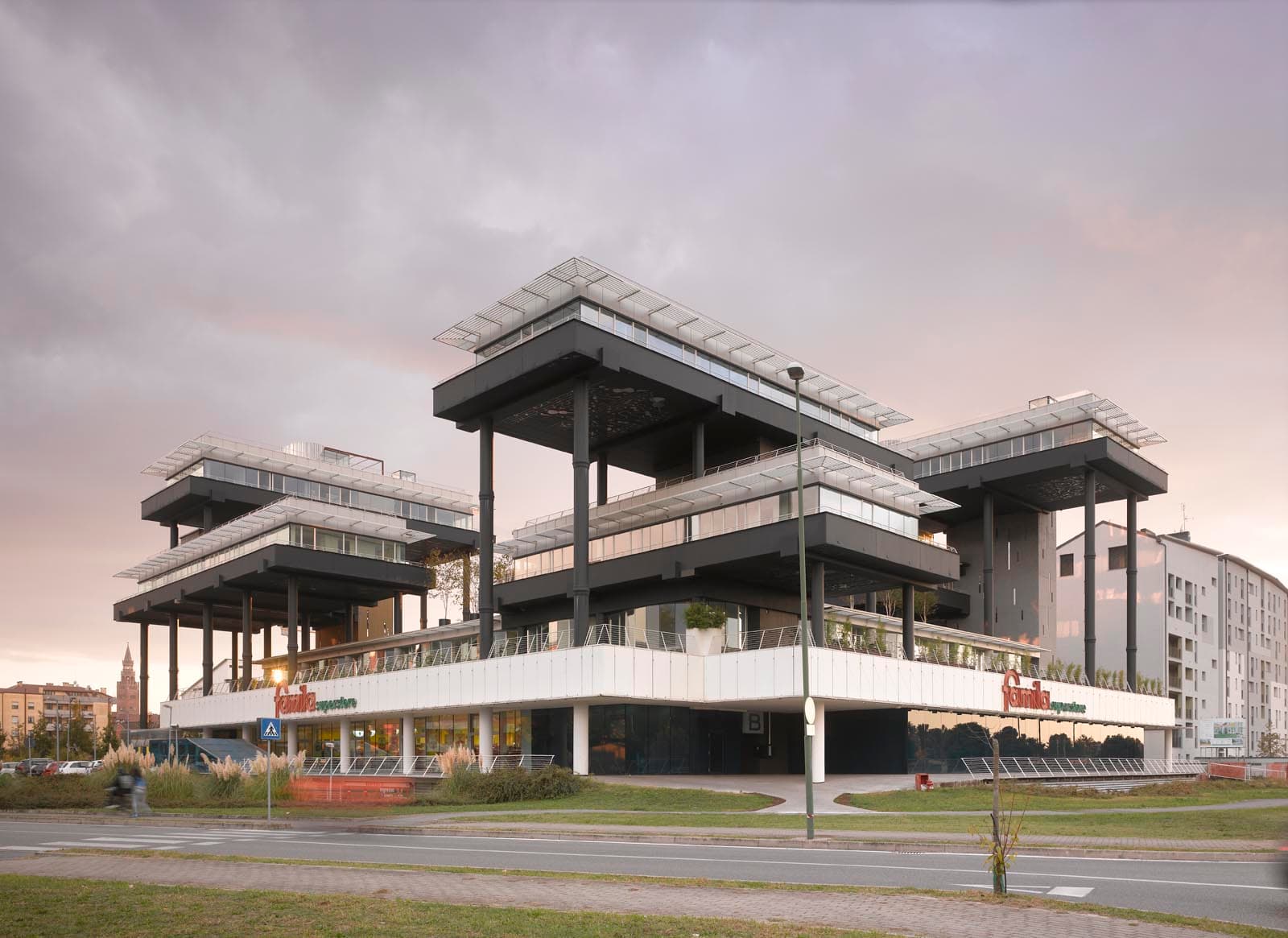
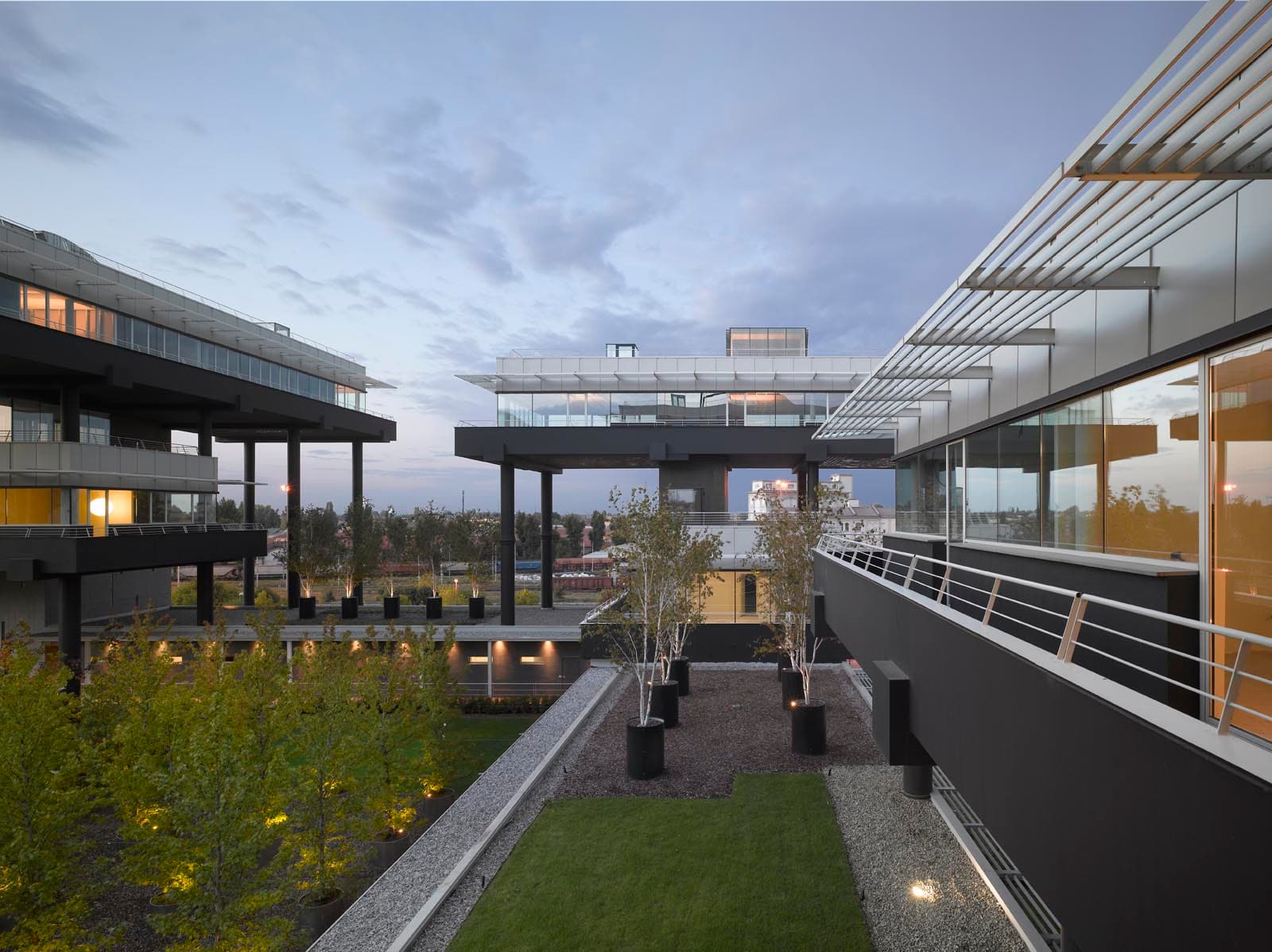
Apartment Building
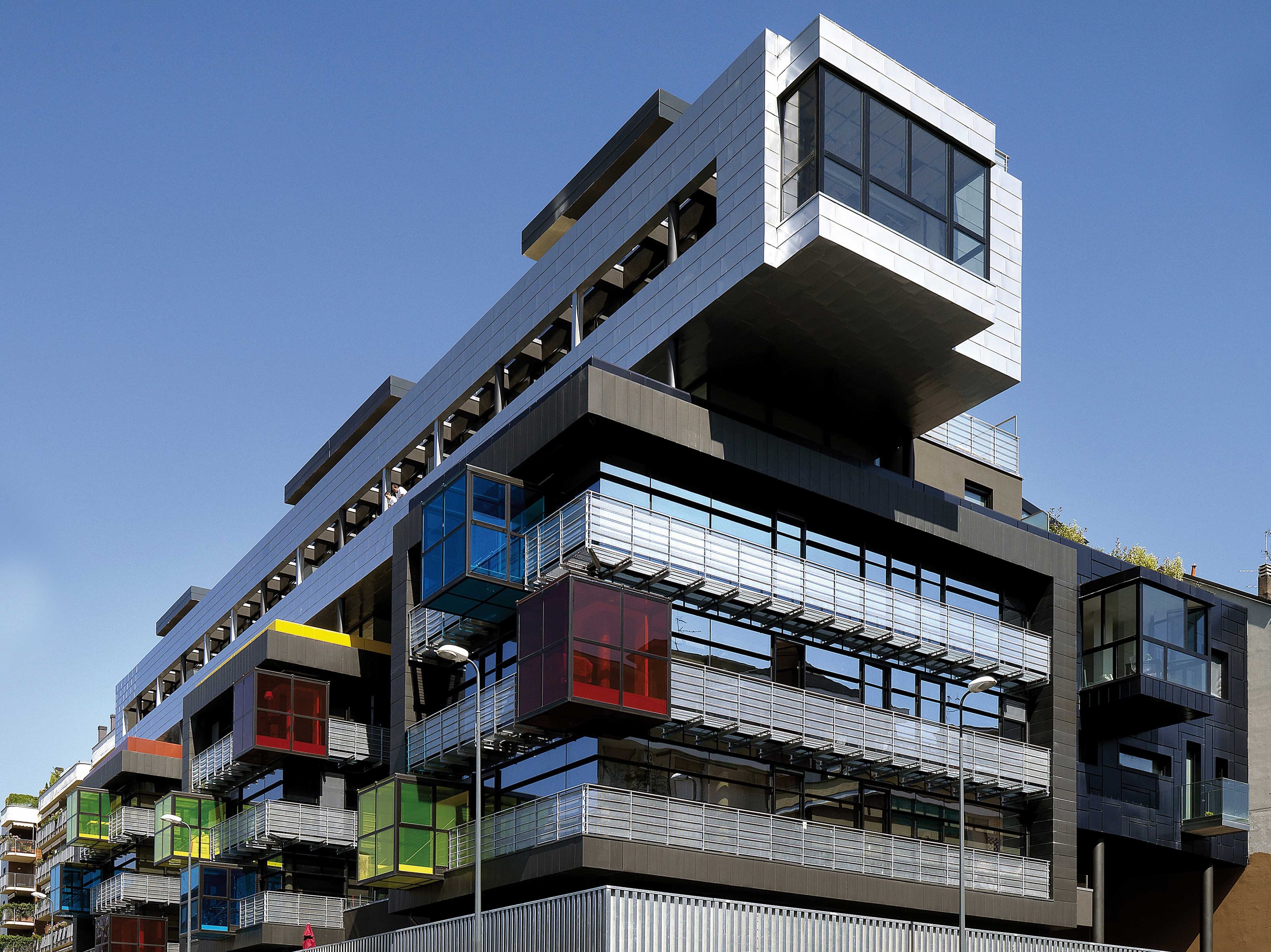
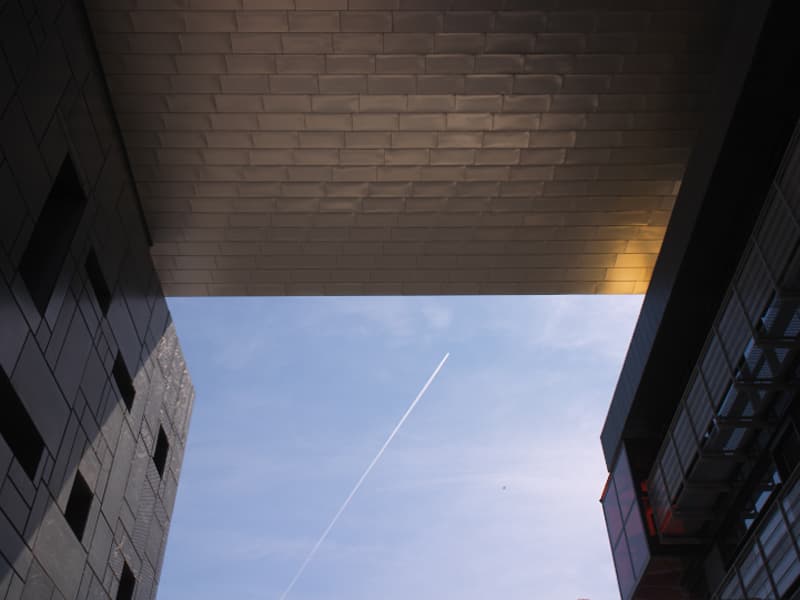
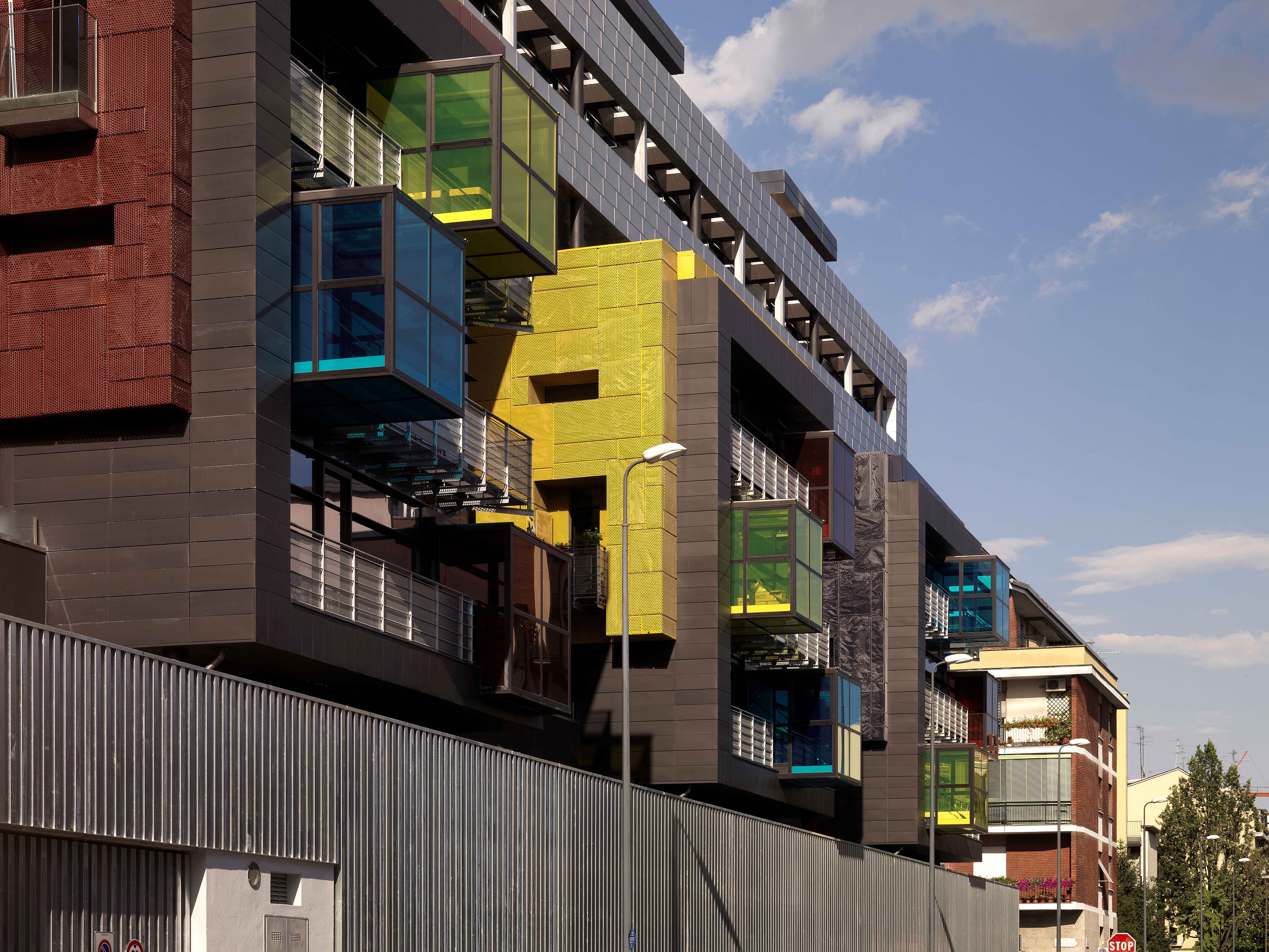
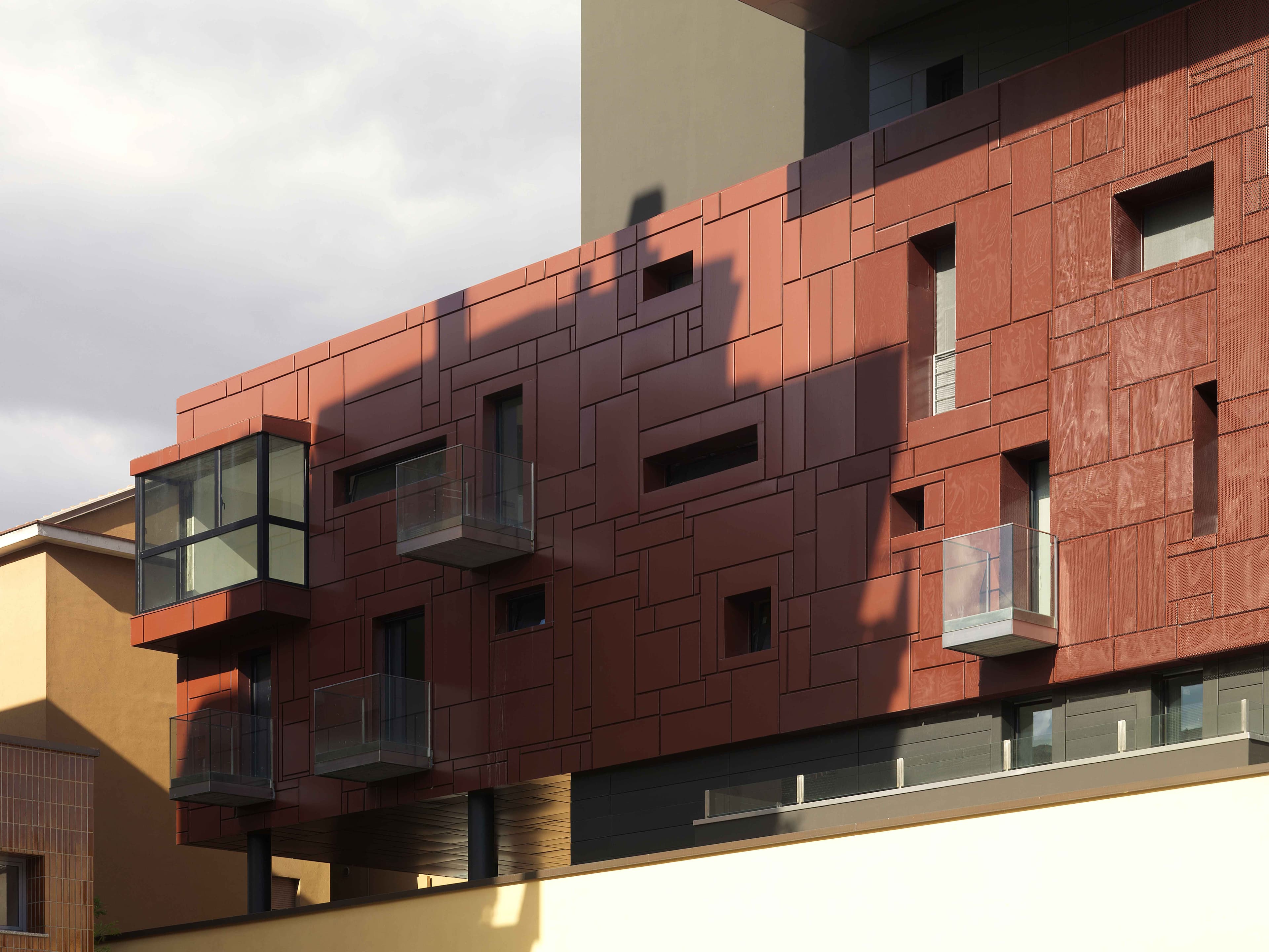
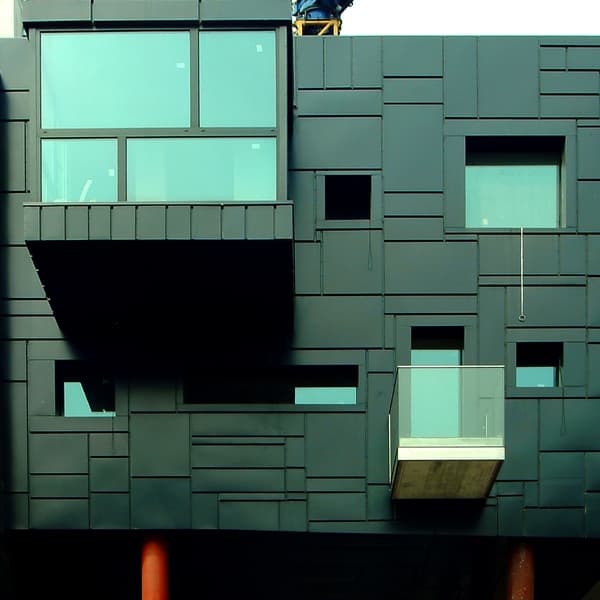
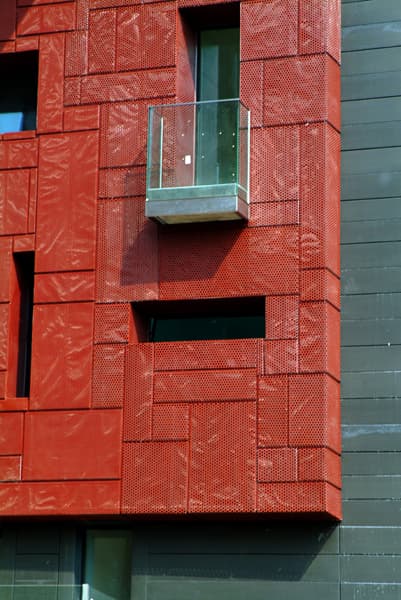
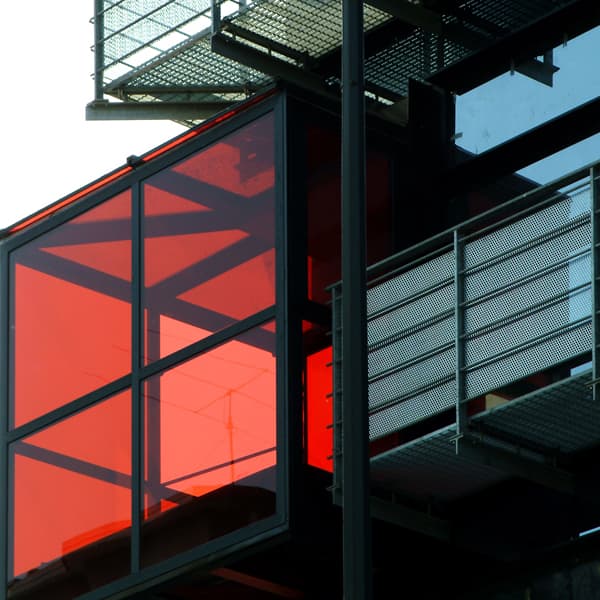
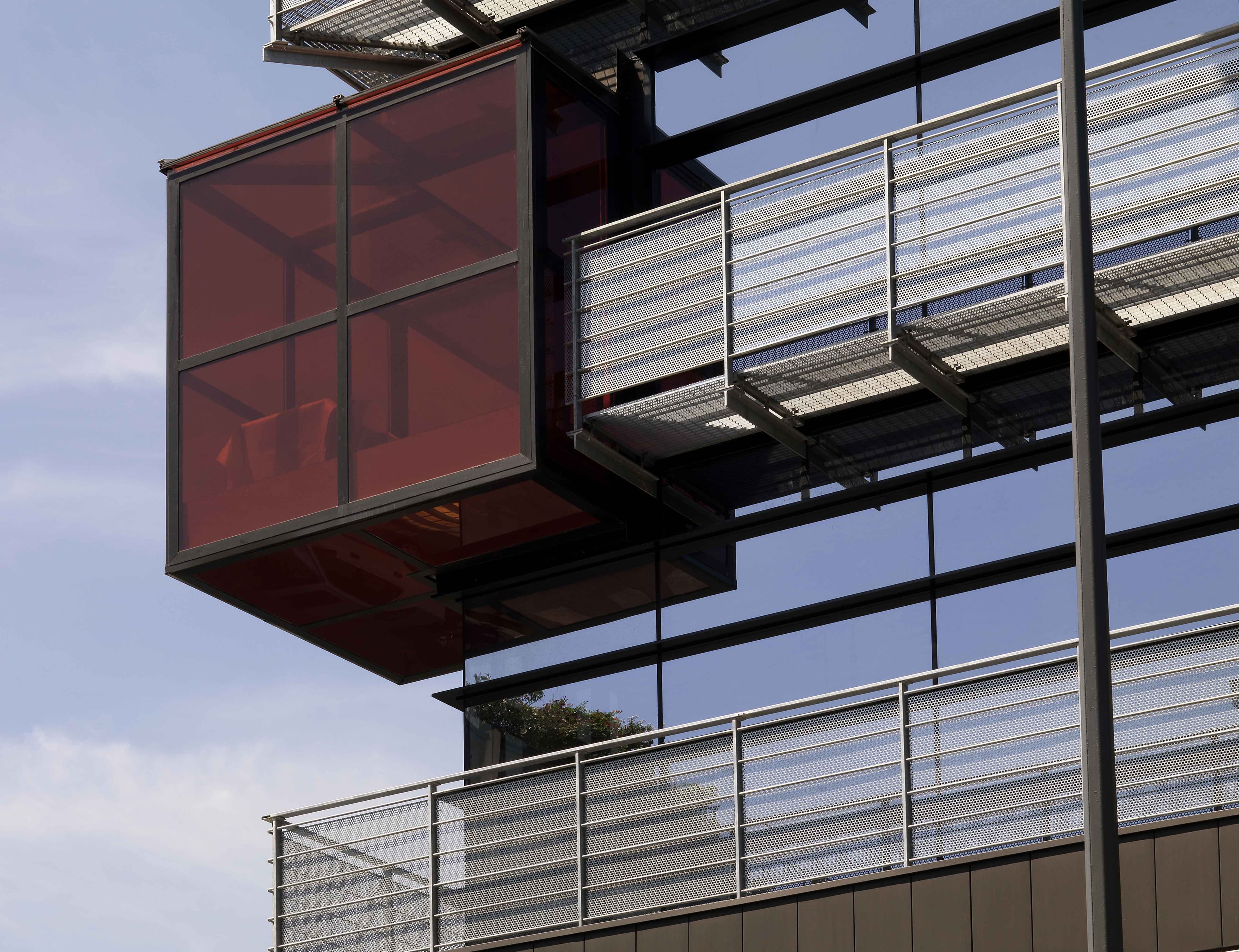
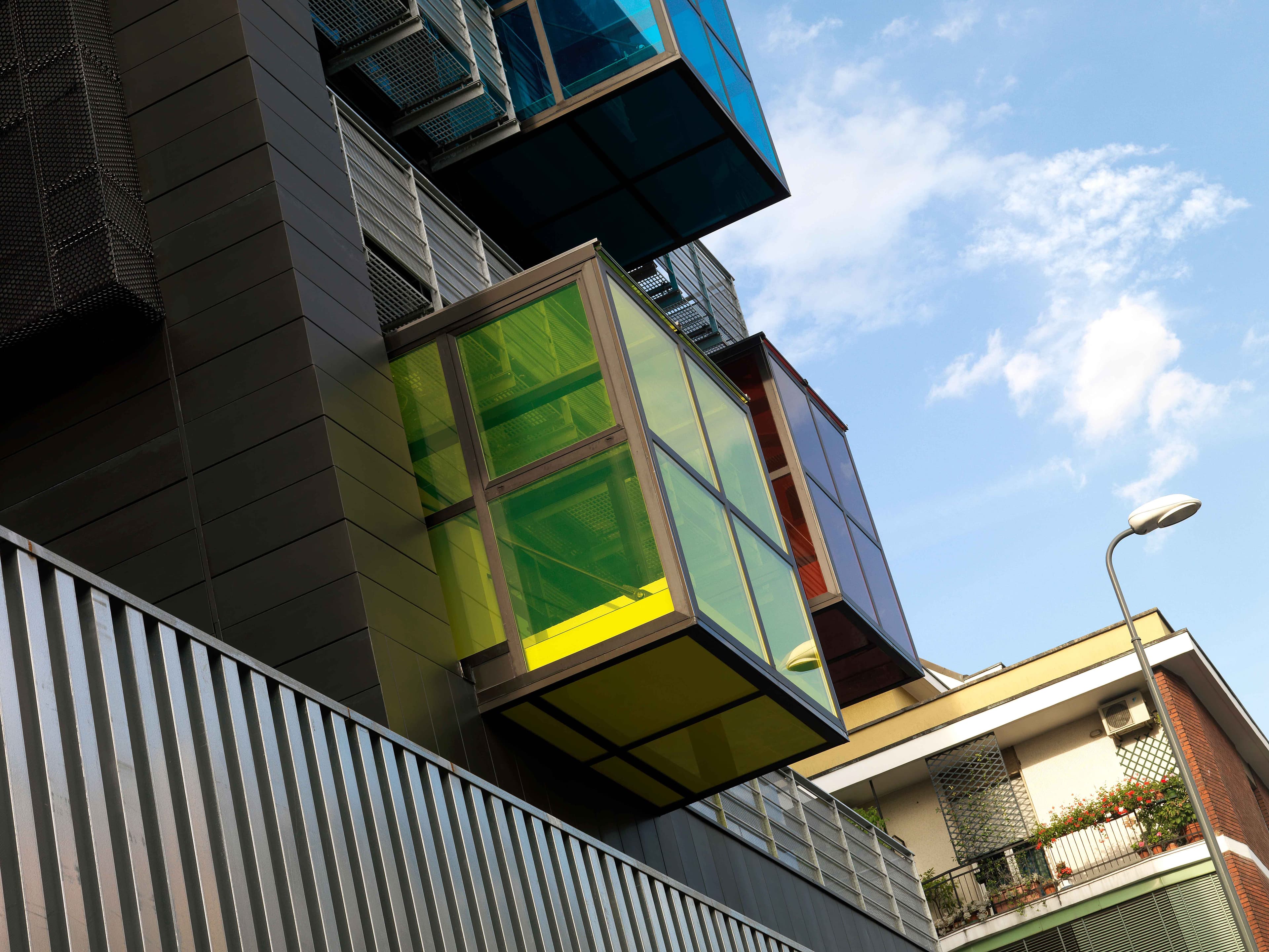
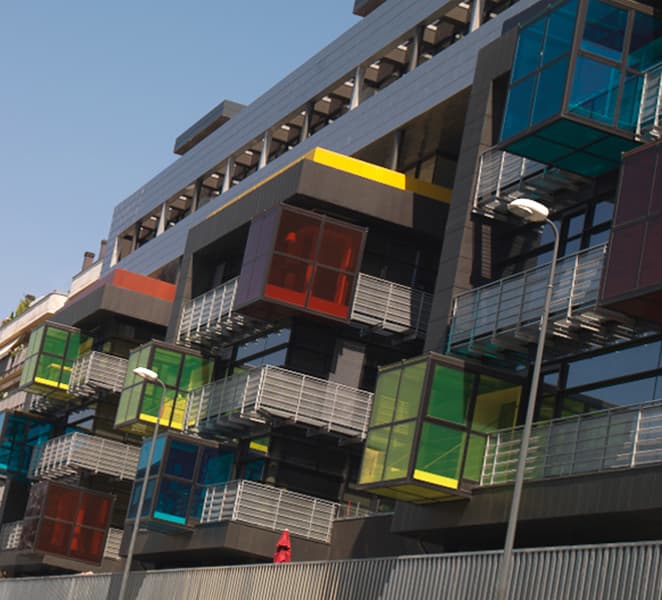
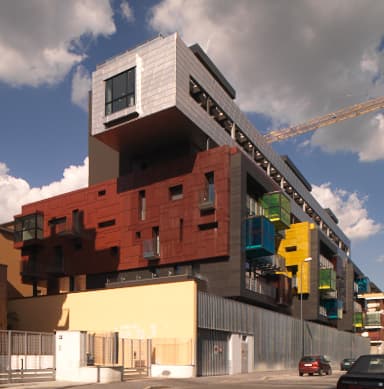
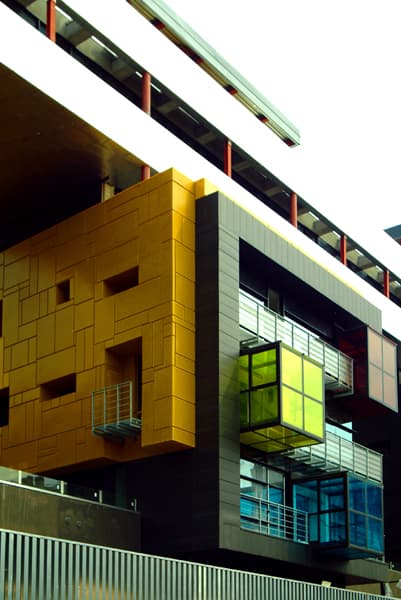
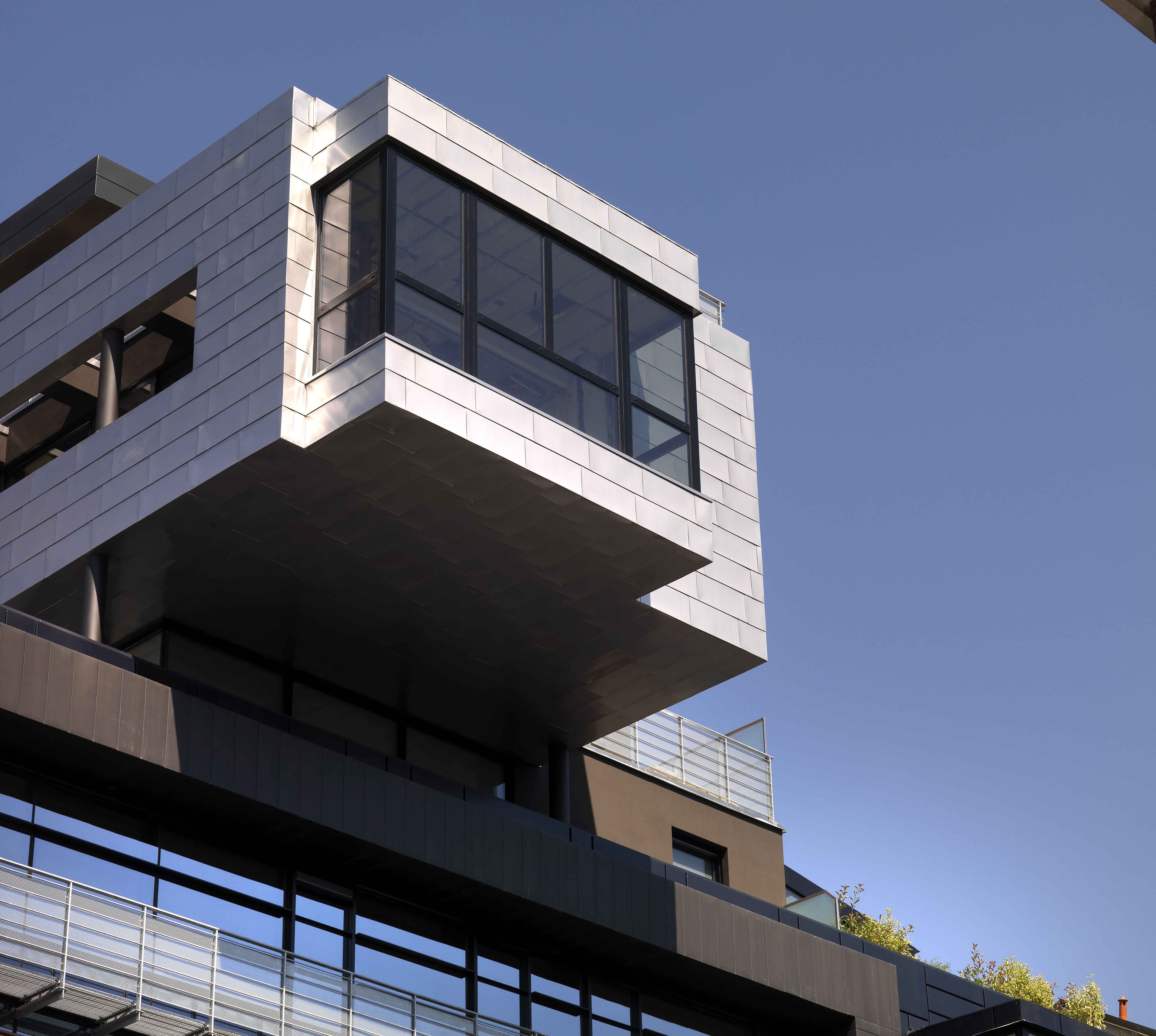
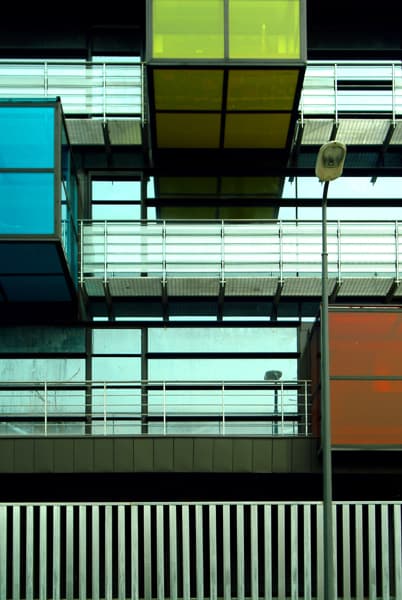
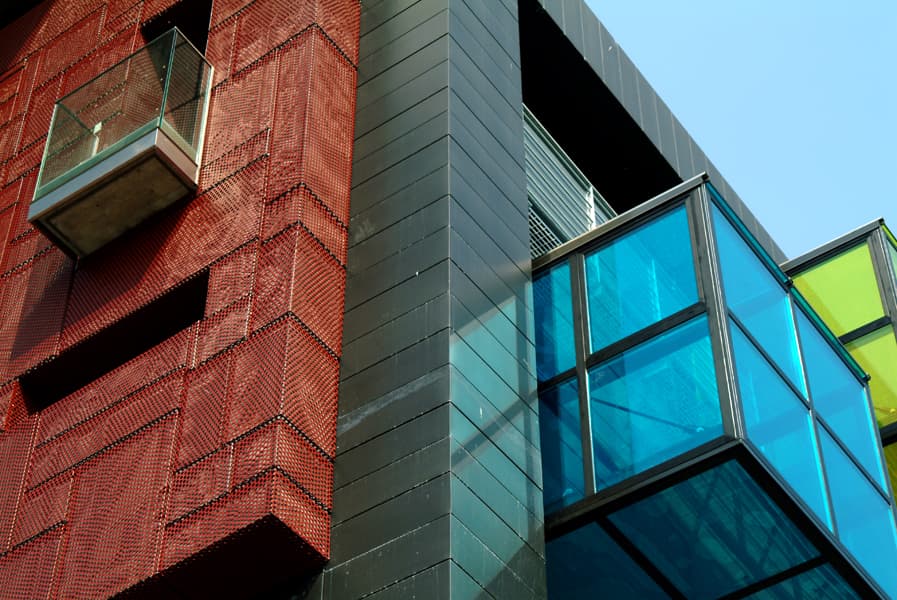
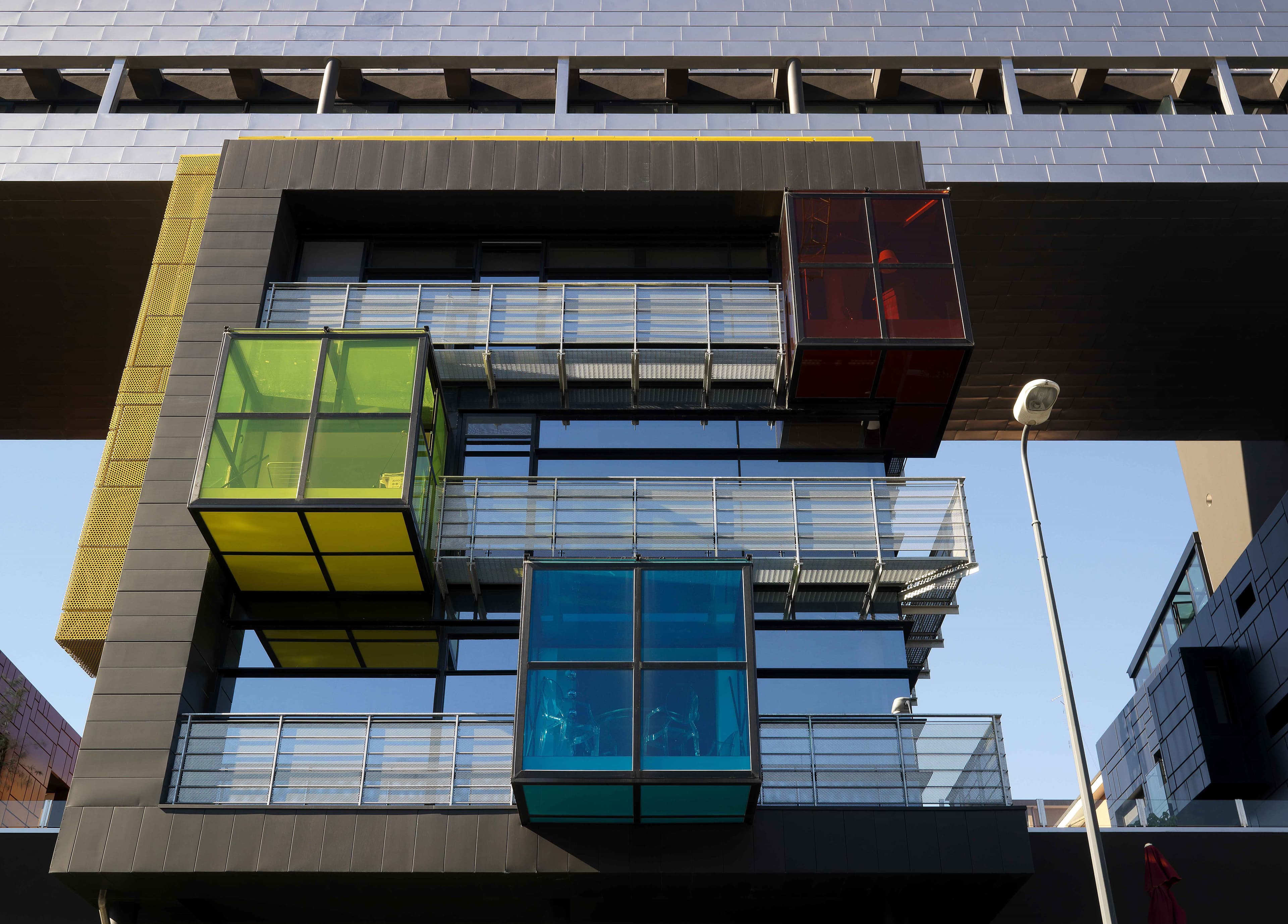
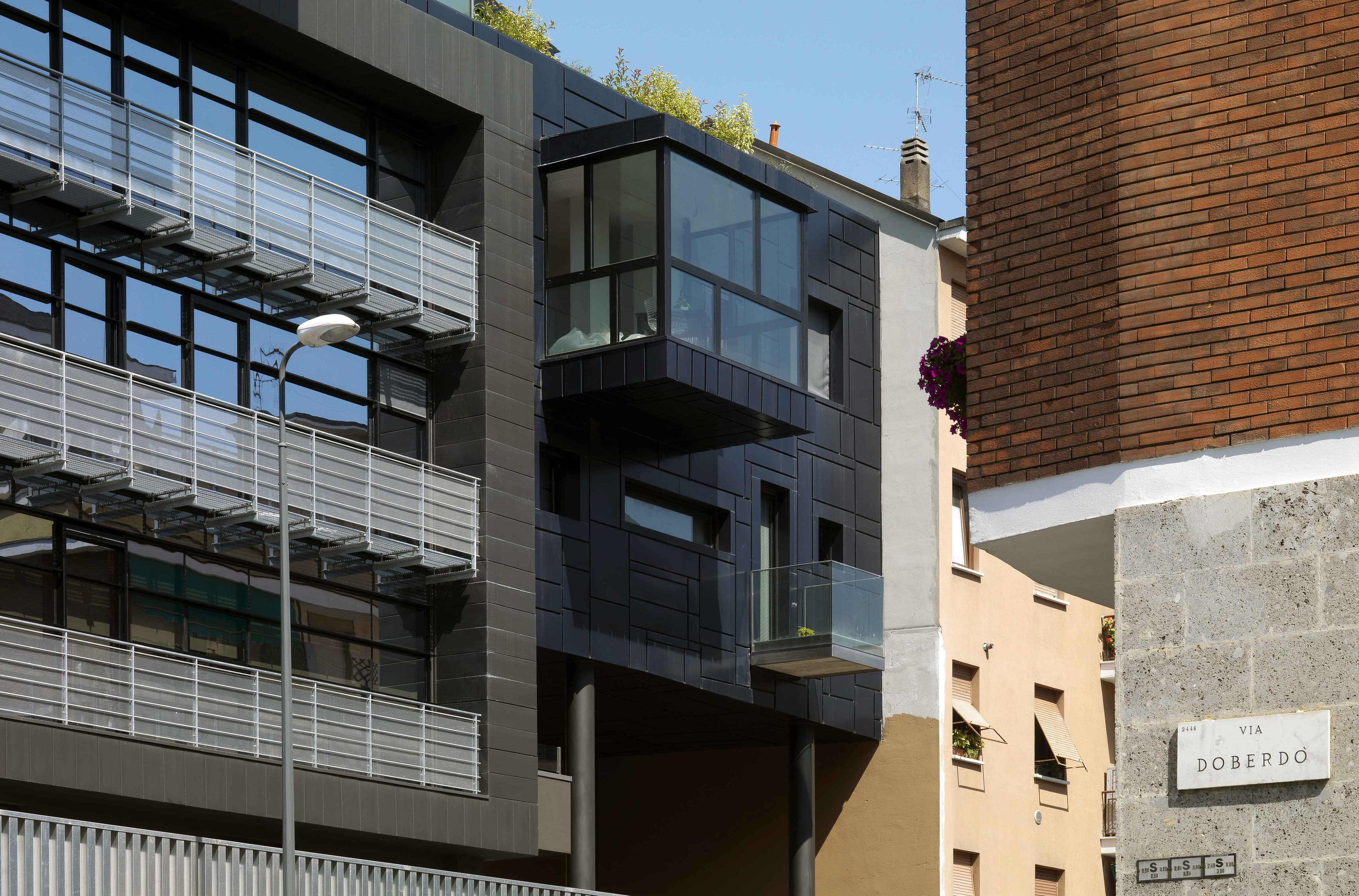
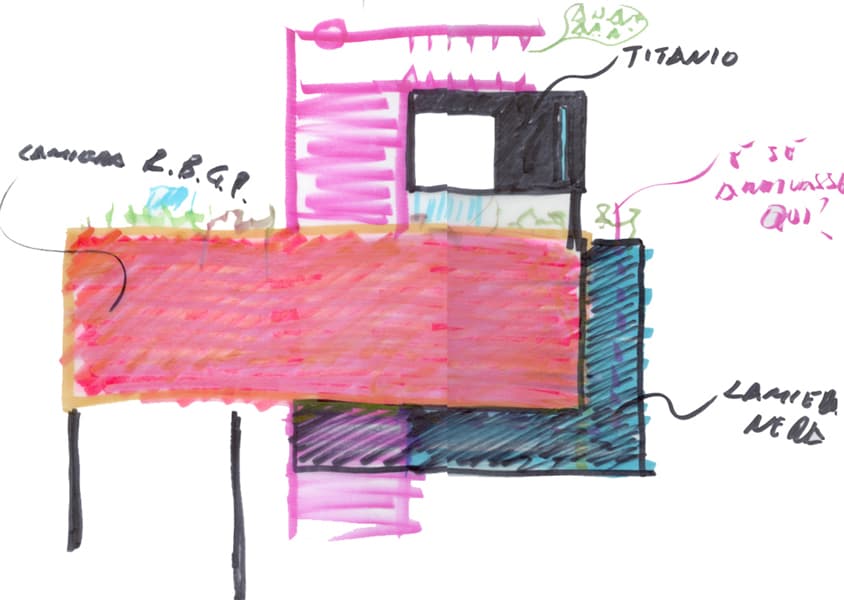
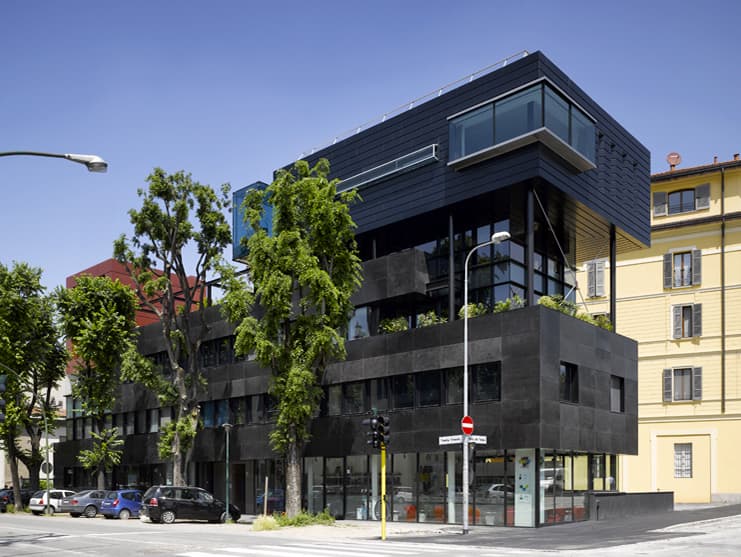
Located in the northern suburbs of Milan, at the corner on Doberdò and Fortezza streets, the building has three floors, 2 of which are underground for garages; the remaining 6 floors are dedicated to housing. The architecture dialogues between the vibrations of matter and the compositional freedom of primary colors. A continuous play of juxtaposition between the solids in anthracite zinc-titanium and the voids of the glazing, the volumes seem to come out of the facade thread looking for new forms of hybridization between architecture and context. The penthouse floor, on pilotis stands as a suspension bridge reconnecting the lower floors. (ph. Matteo Piazza)
.jpg&w=3840&q=75)
Villa in Soncino
The Project concerns a grand mansion located in the historic center of the town of Soncino, in the province of Cremona. The recovery and restoration work involved a late 19th/early 20th-century palace, part of an even older building of 18th-century origin.
This 350-square-meter portion was an old spinning mill, including a wide porch and a floor above, used for silk processing and housing for the spinners.
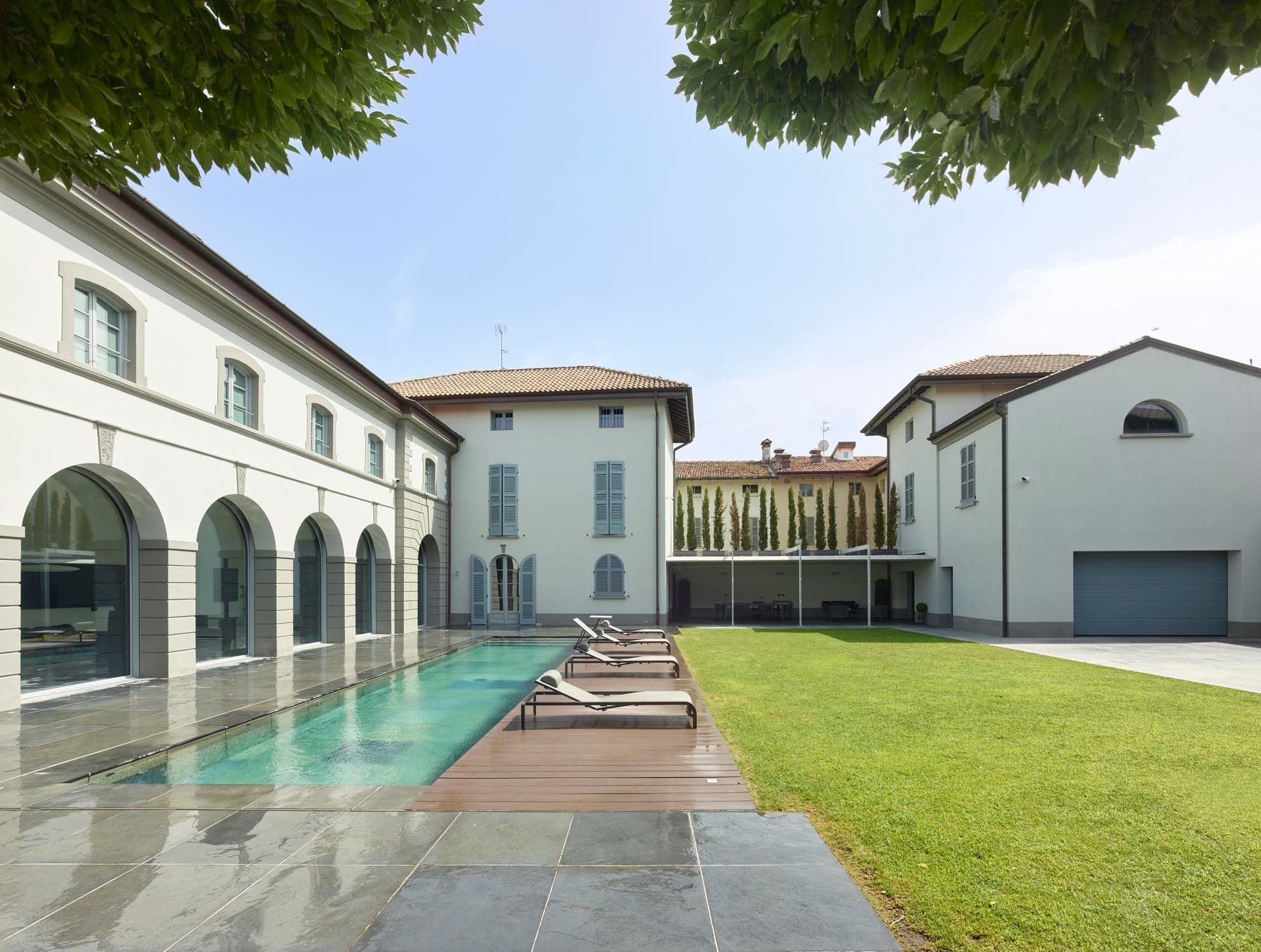
Abandoned for more than 40 years, reduced to a simple warehouse, the building was recovered and converted into a private home. While respecting its unique characteristics, the interventions were conducted in collaboration with the Superintendence of Artistic and Cultural Heritage with the aim of enhancing the characteristics of the pre-existing buildings, intervening in a recognizable and decisive way, with an essential style able to shape a new domestic soul in line with the contemporary and minimalist taste of the homeowners.
A new covered area was established in the large outdoor green area, dividing the building from the rest of the structure, making it independent.
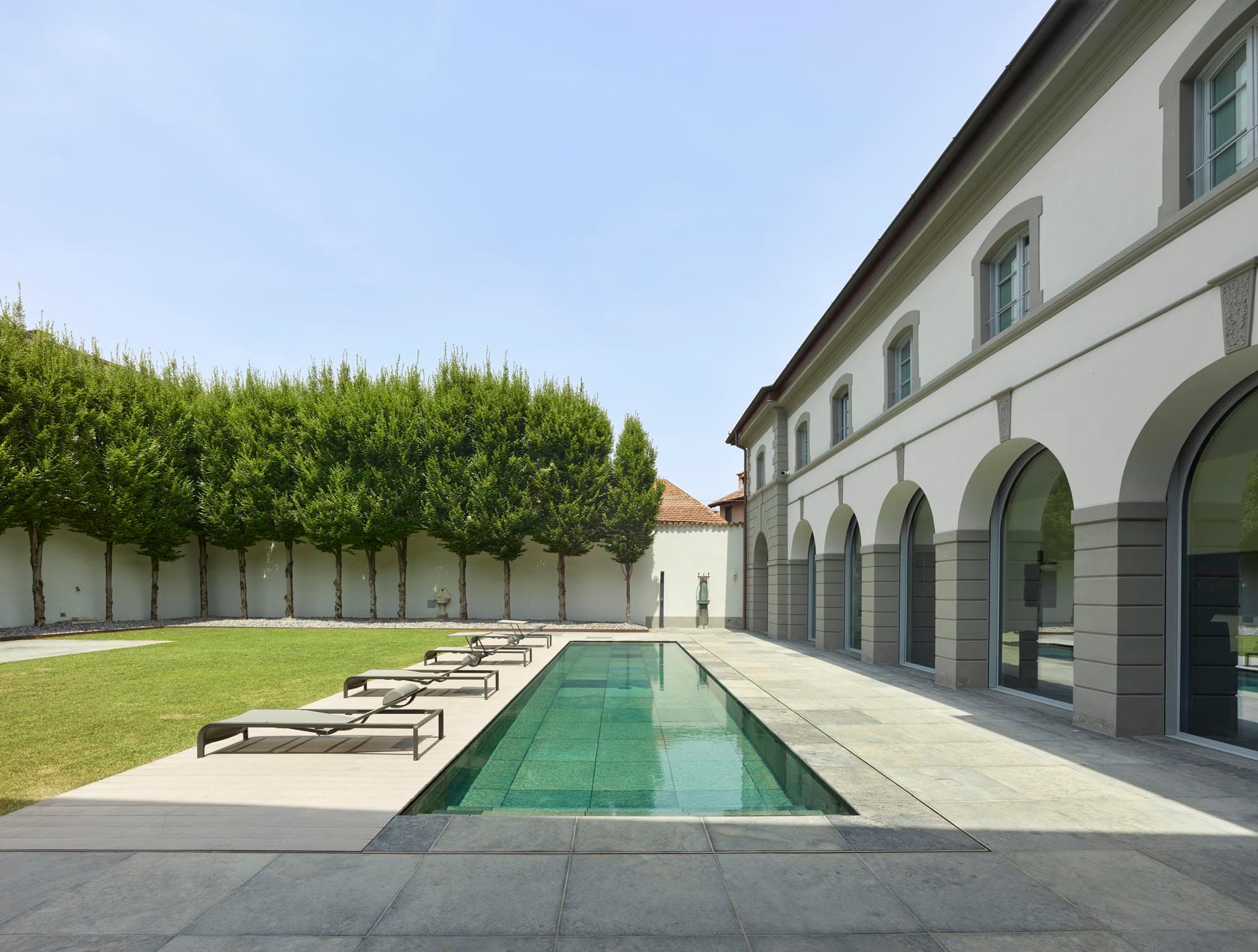
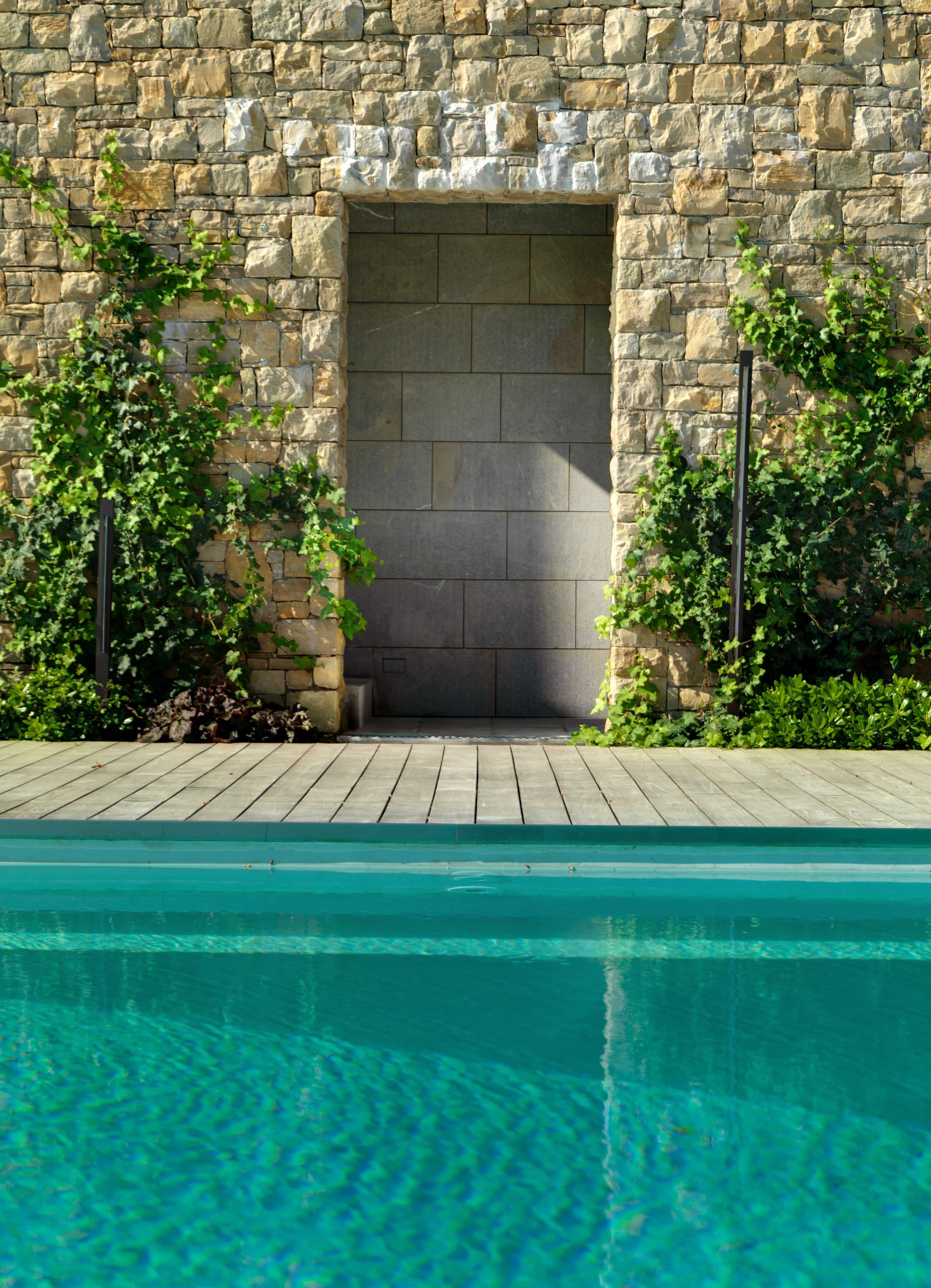
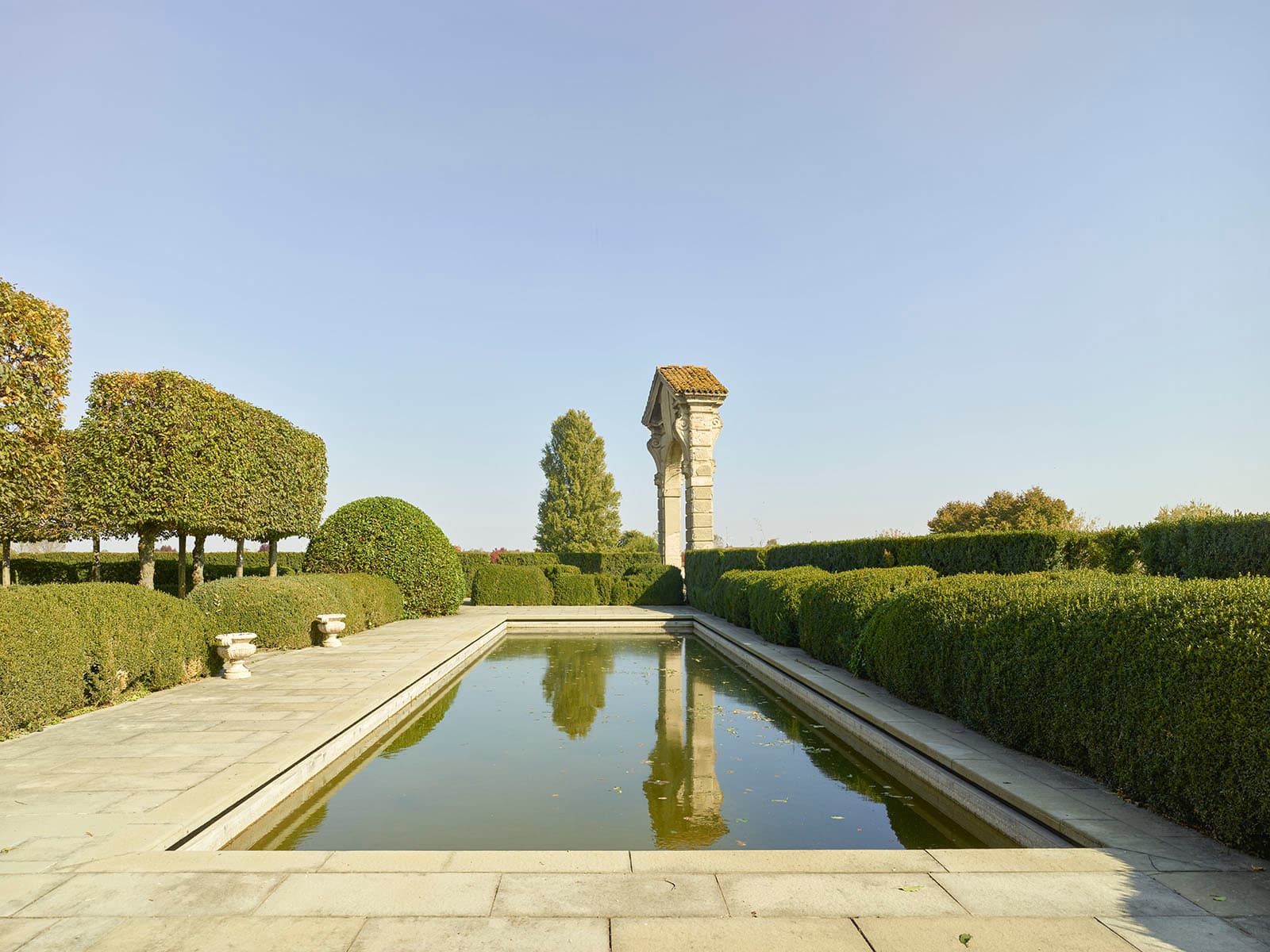
In front of the house an elongated body of water reflects the morphology of the building, restoring and doubling the image of all the arches of the former arcade.A dark natural stone background is visible under the transparent water so as to achieve a reflective effect; the same dark stone was also employed inside the house as in a play of continuity.
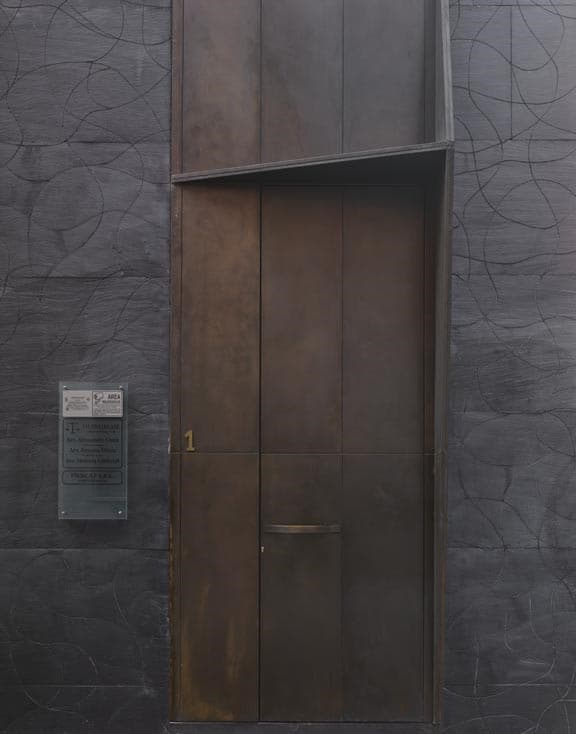
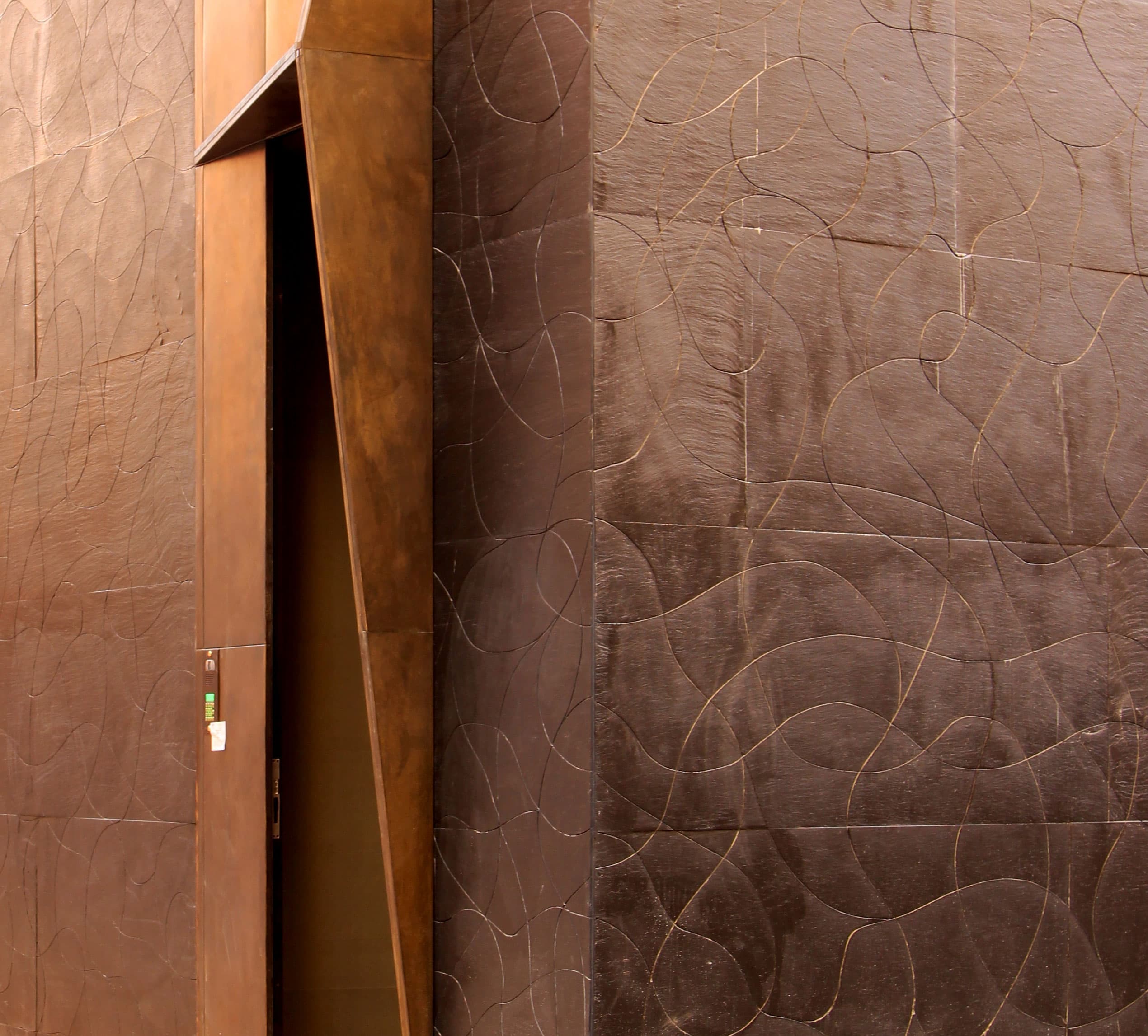
Access from the street is through the original oak door, which opens into a hallway area that leads to a second, thermally sealed door, the actual entrance to the house. This doorway provides both privacy and brightness thanks to a geometric play of alternating paneling: full bronze, of clear glass and etched glass. Its rectangular pattern returns in several furnishing elements in the house designed by Giorgio Palù.
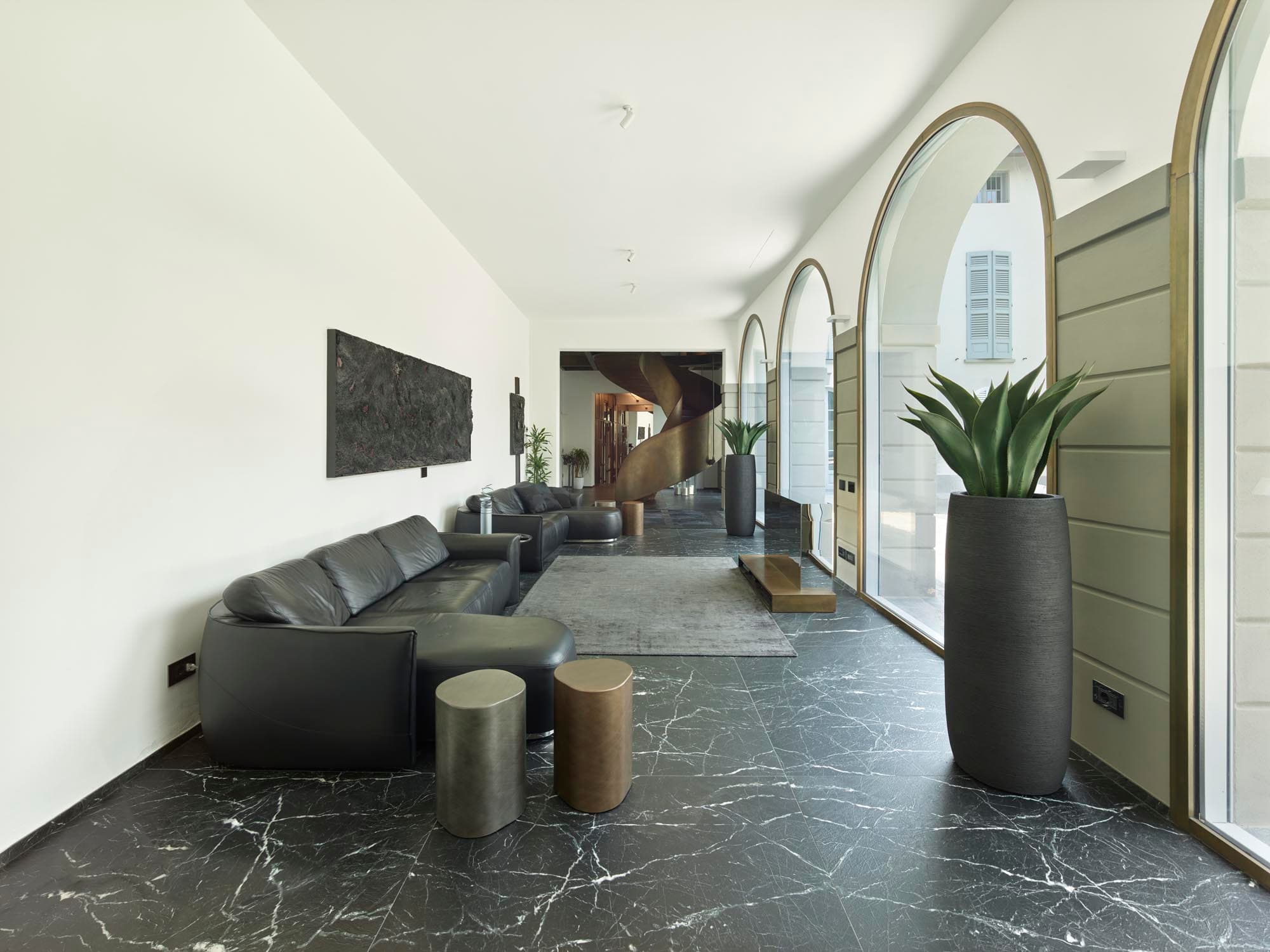
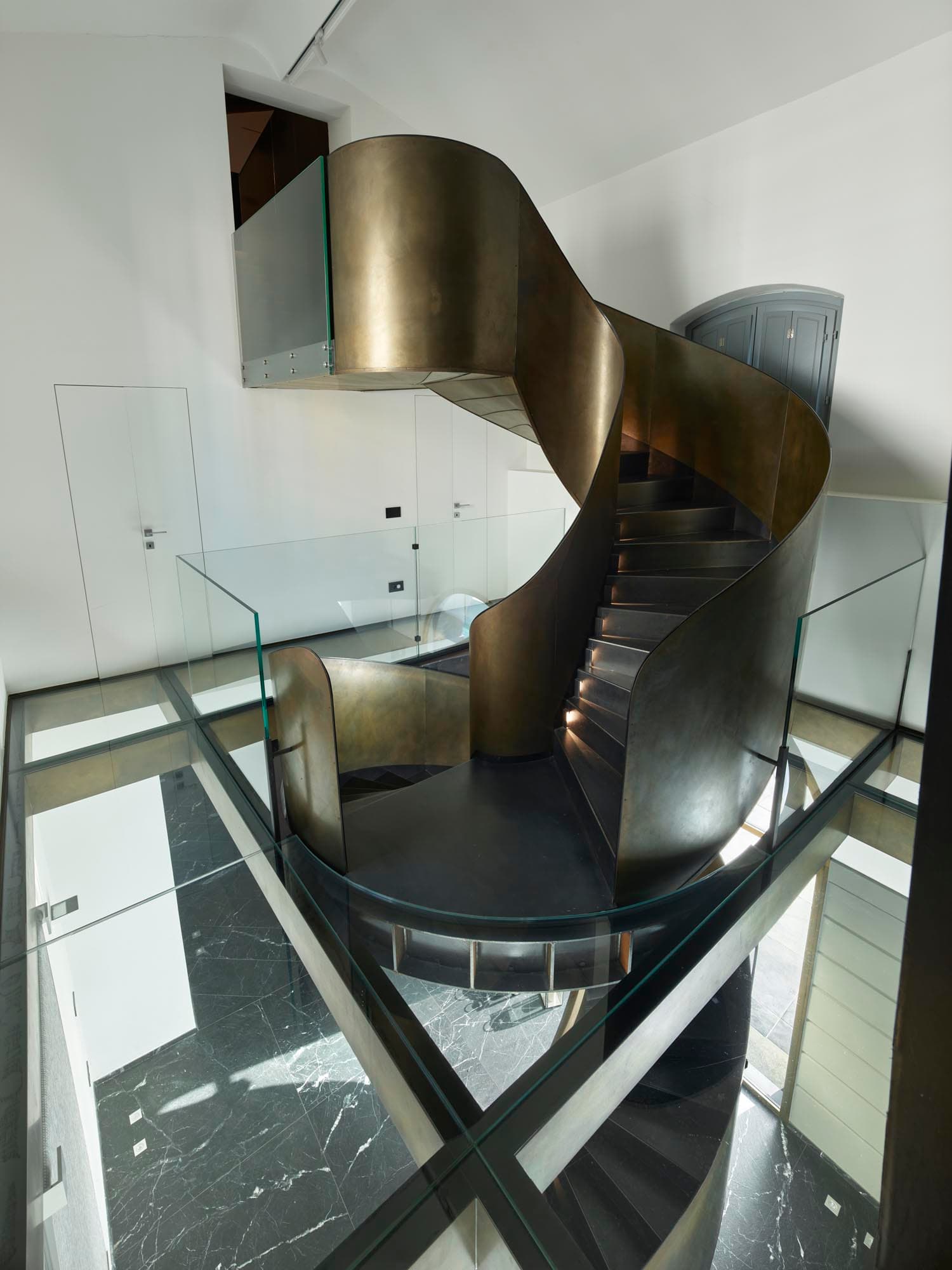
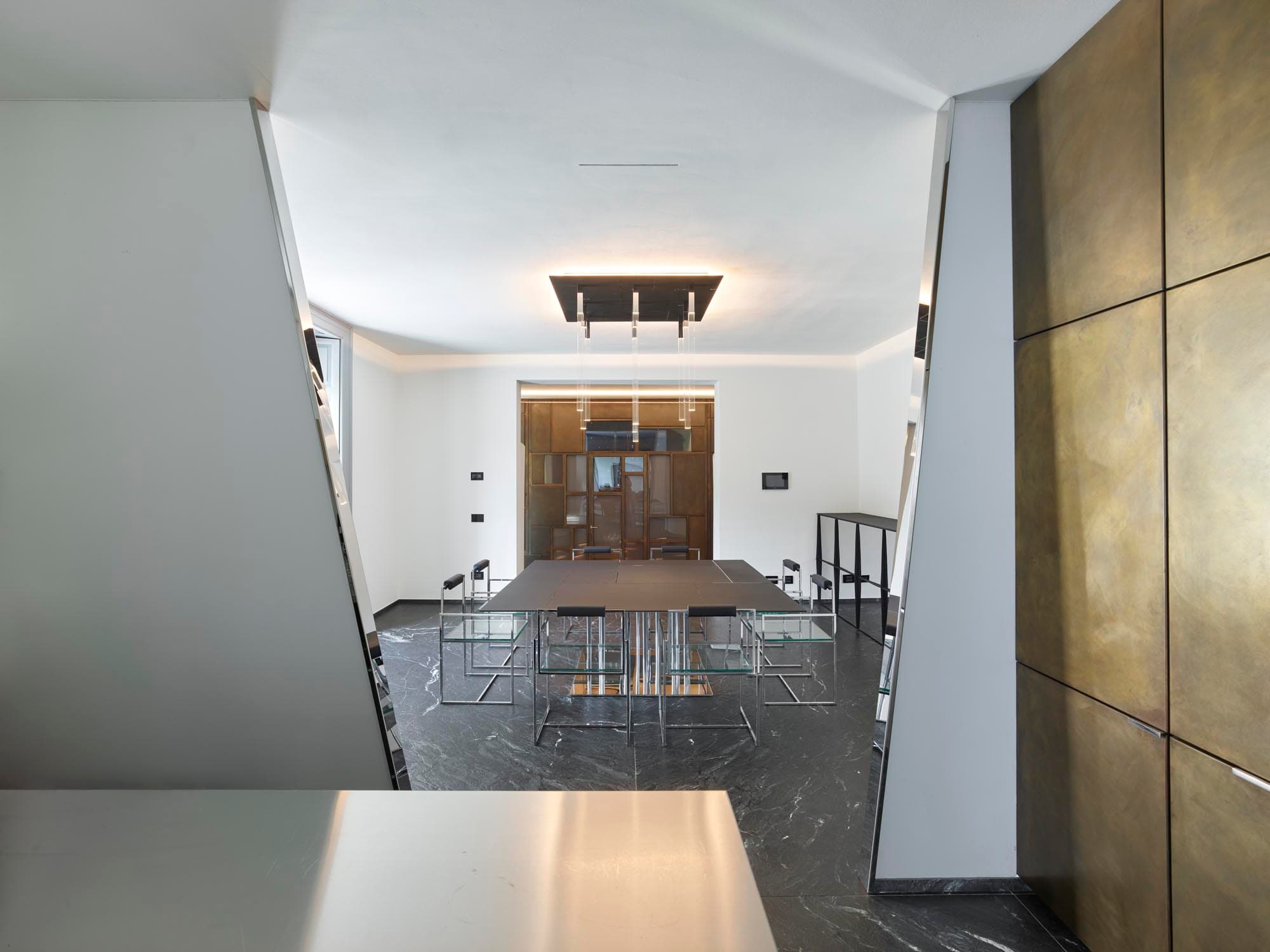
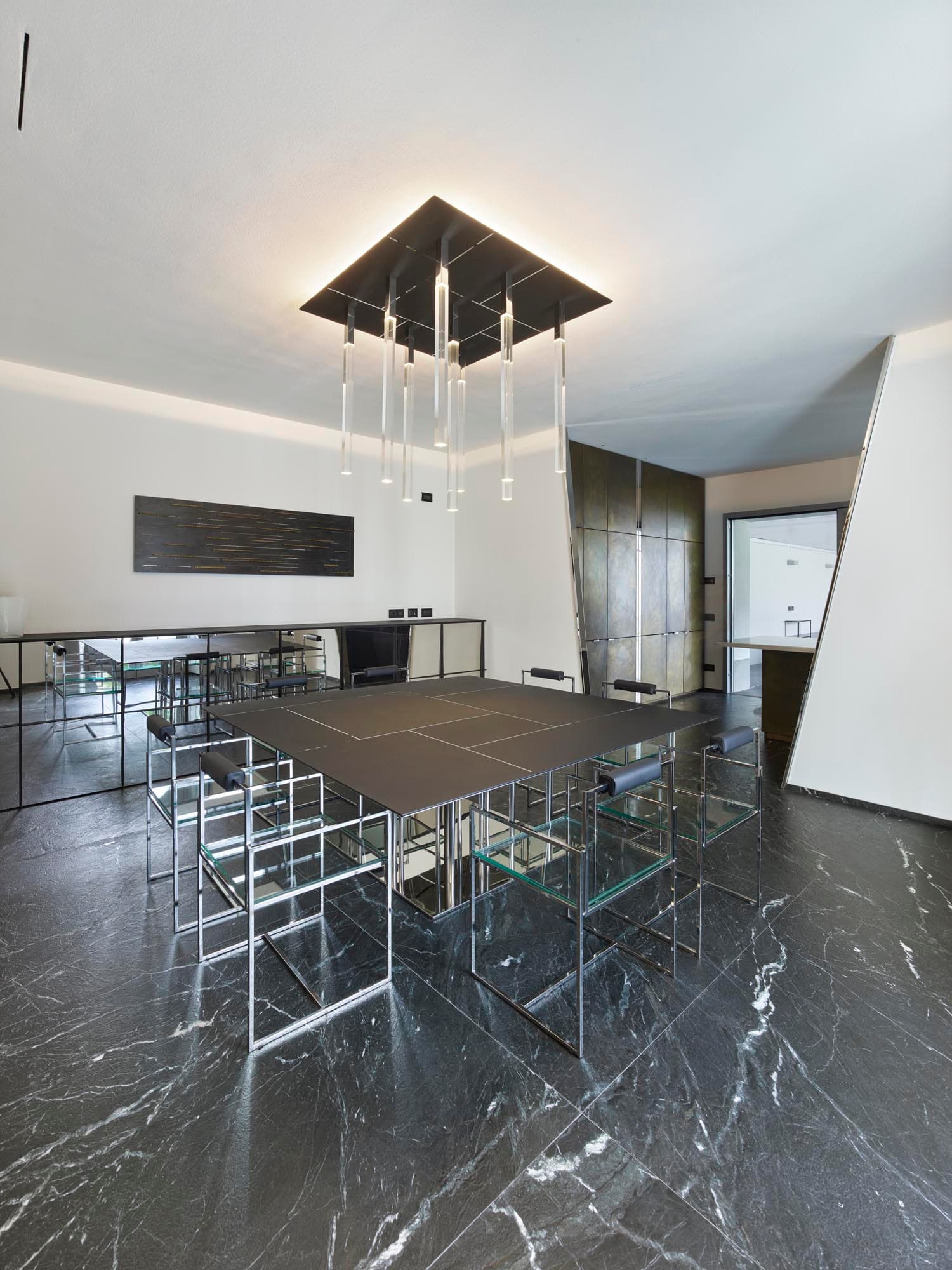
Upon entering the dwelling, a series of semicircular steps overcome the slight difference in height and draw a prominent entrance that leads to the two wings of the house. All the pavings on the second floor are black stone, with a dark, irregular texture: this material enhances essentiality by playing in contrast with the white walls and mirrored surfaces.
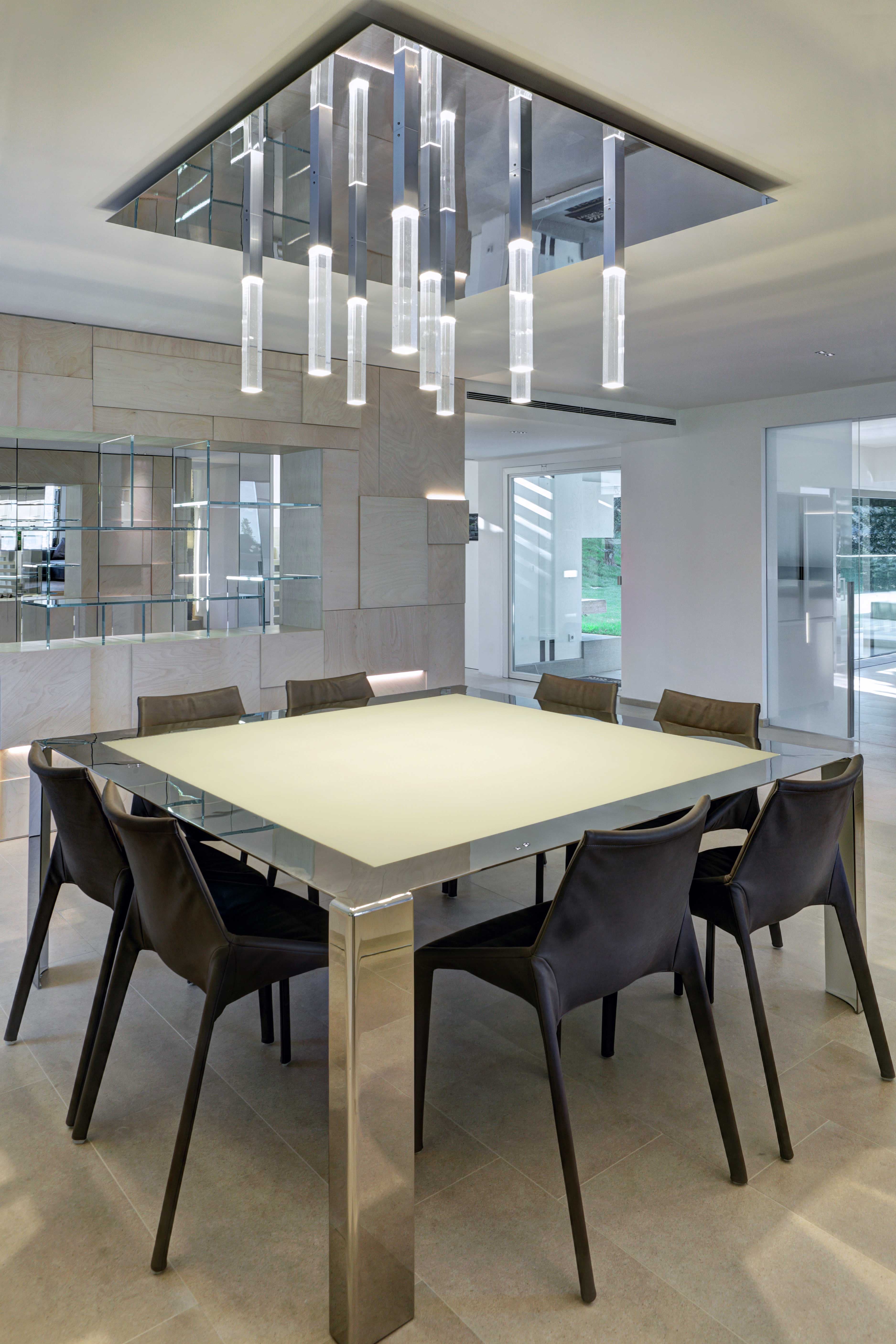
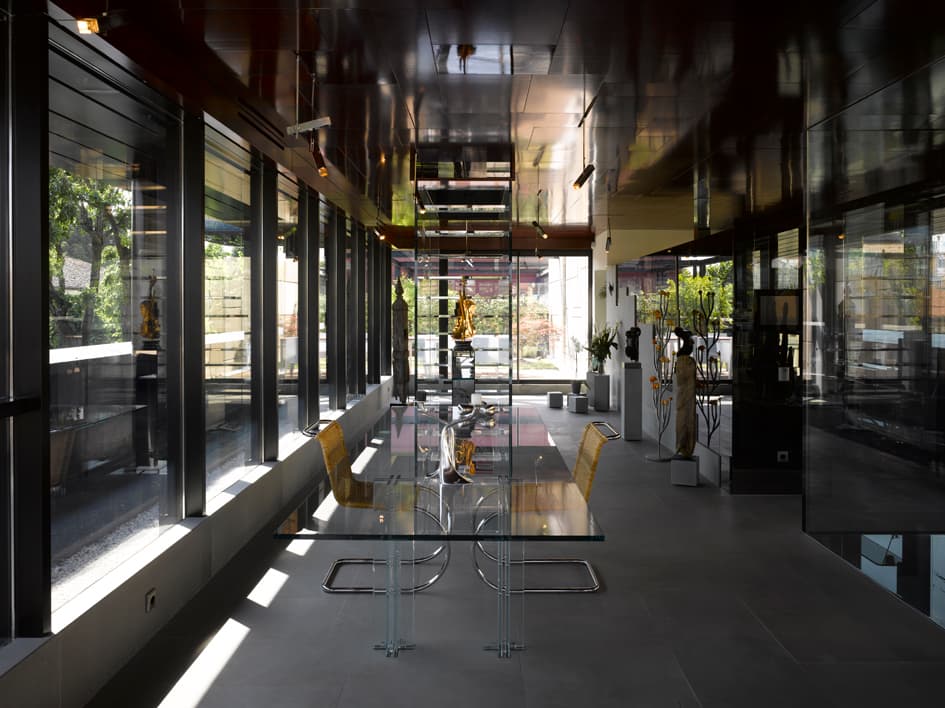
The dining room is located south and furnished, with a square metal and leather table in the center with chromed steel and extra light crystal chairs, which together with the sideboards and the important ceiling chandelier, were designed by Giorgio Palù for Metalli d'Autore. The area to the north, where the large arches of the portico were located, is occupied by the spacious and bright living area. A wall of leather and mirror-polished steel encloses a portion of it and creates a protected spot, concealing a study area. At the end of the room is an even more intimate space, consisting of a small hallway, a play area for children and a bathroom.
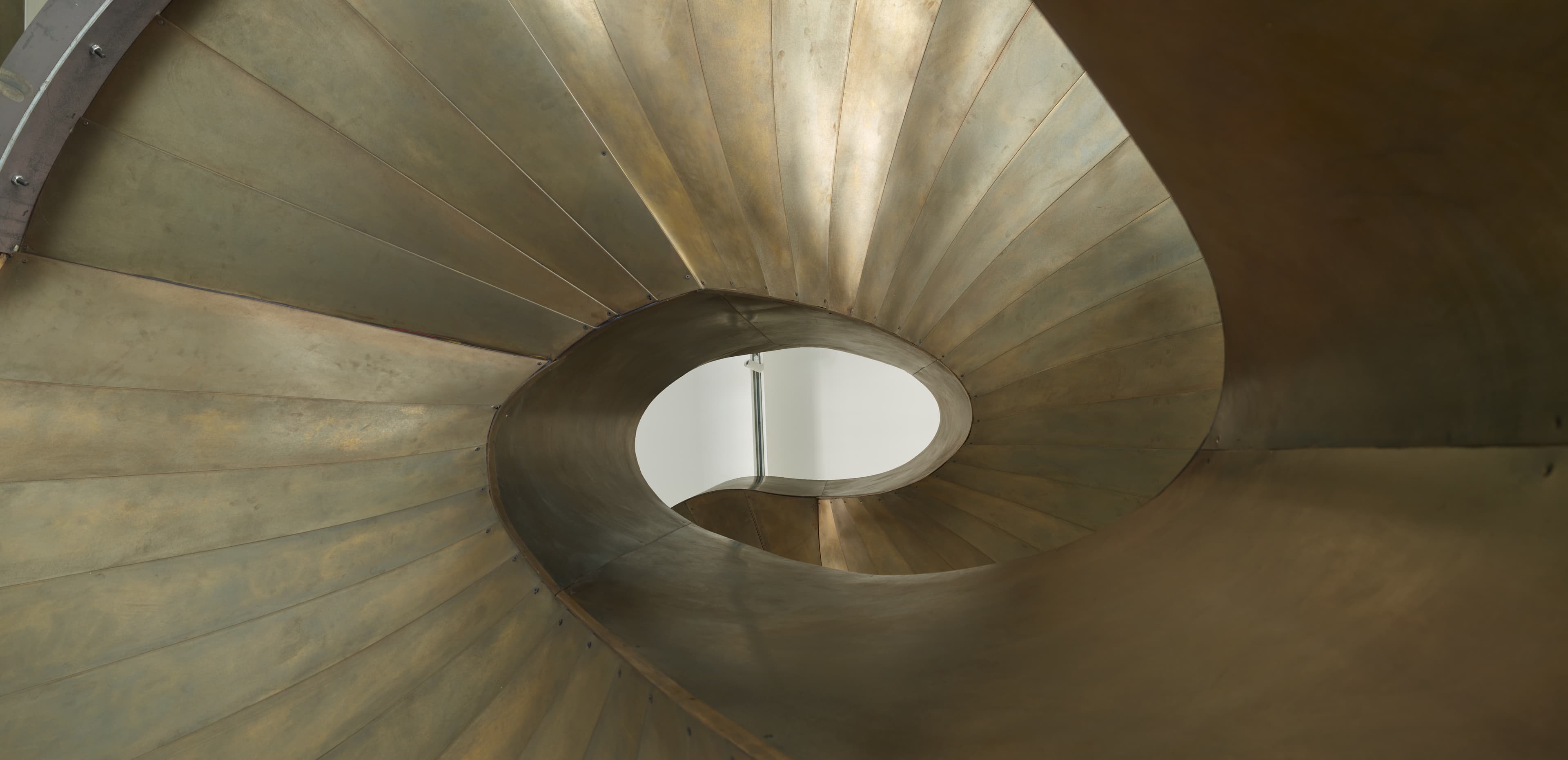
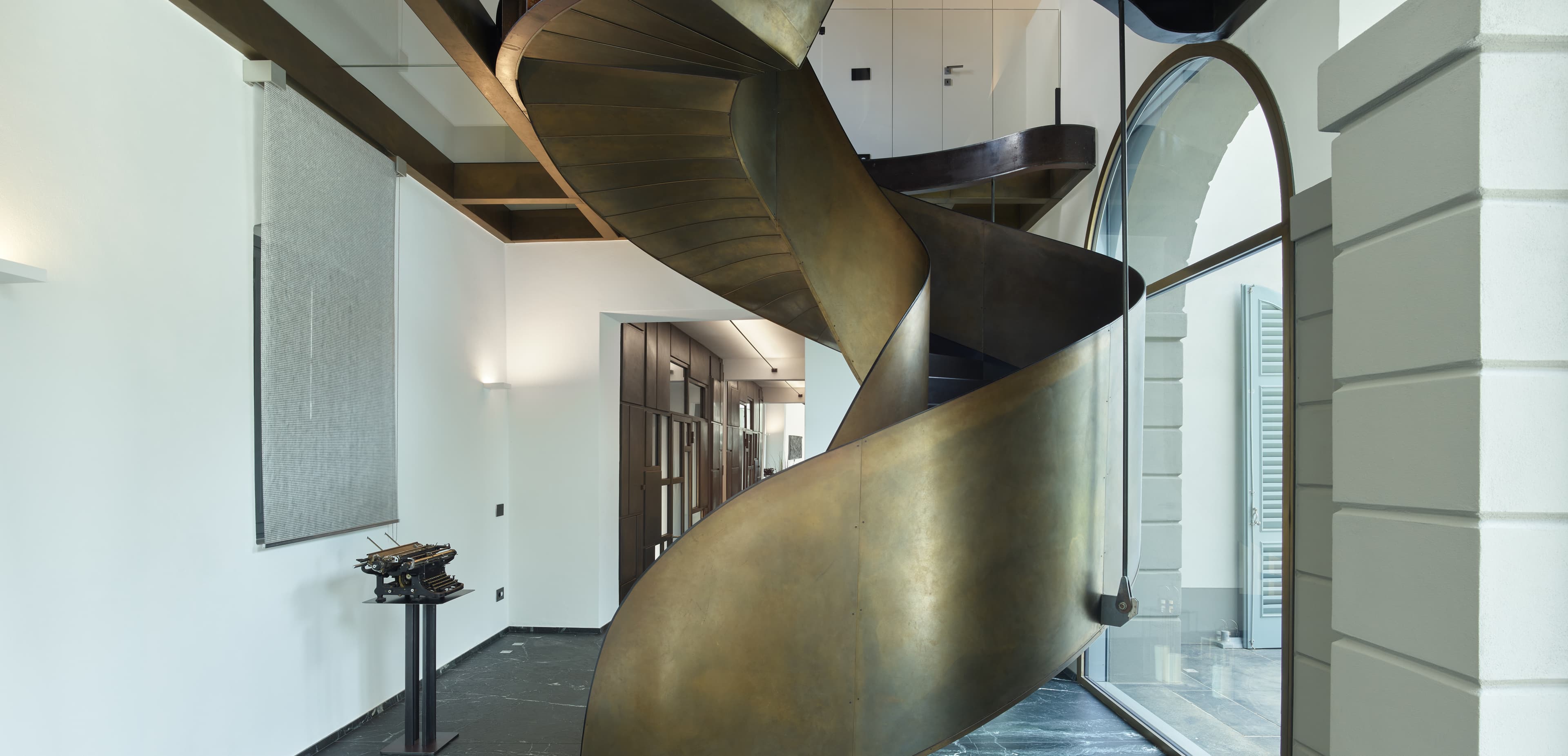
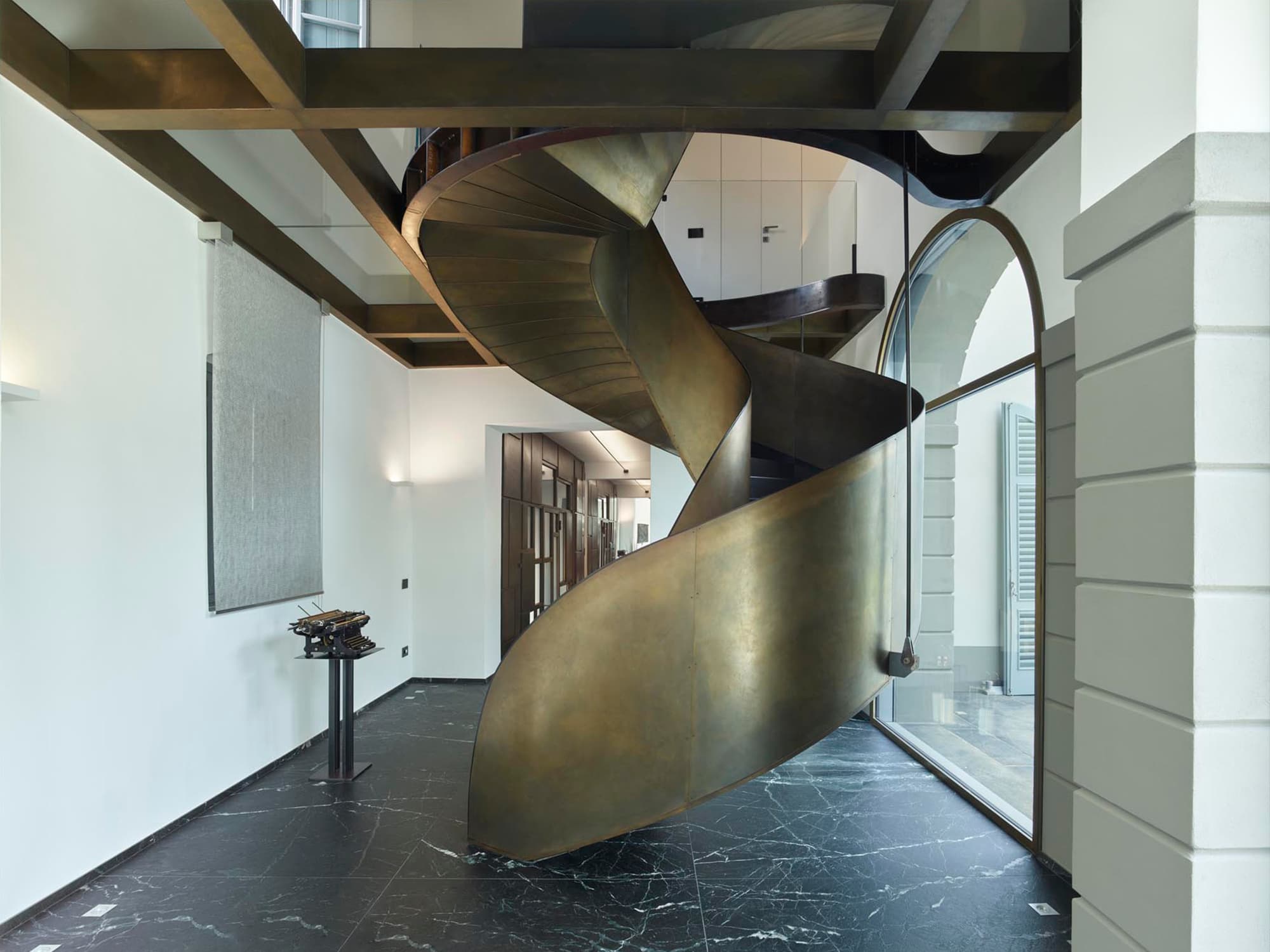
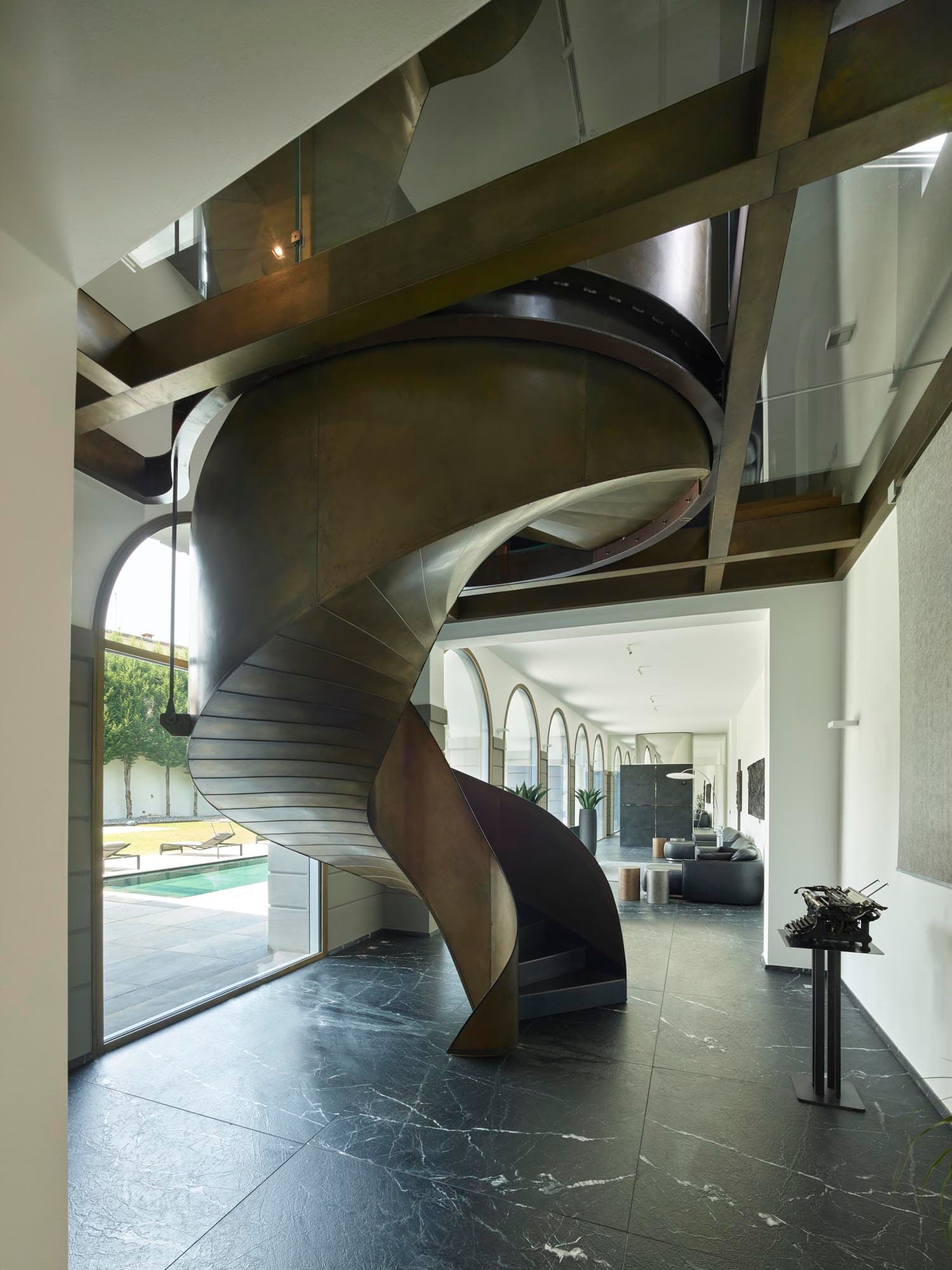
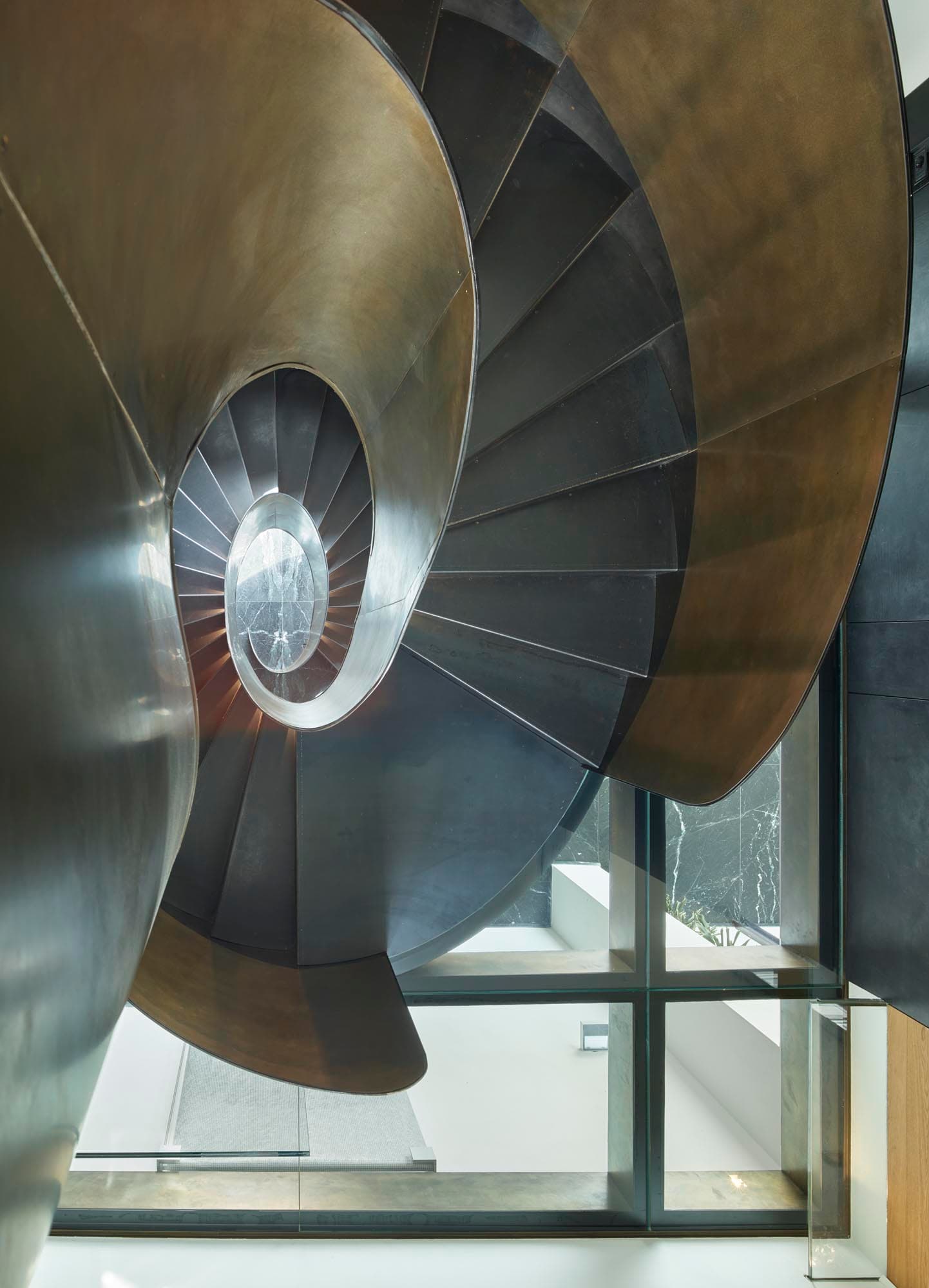
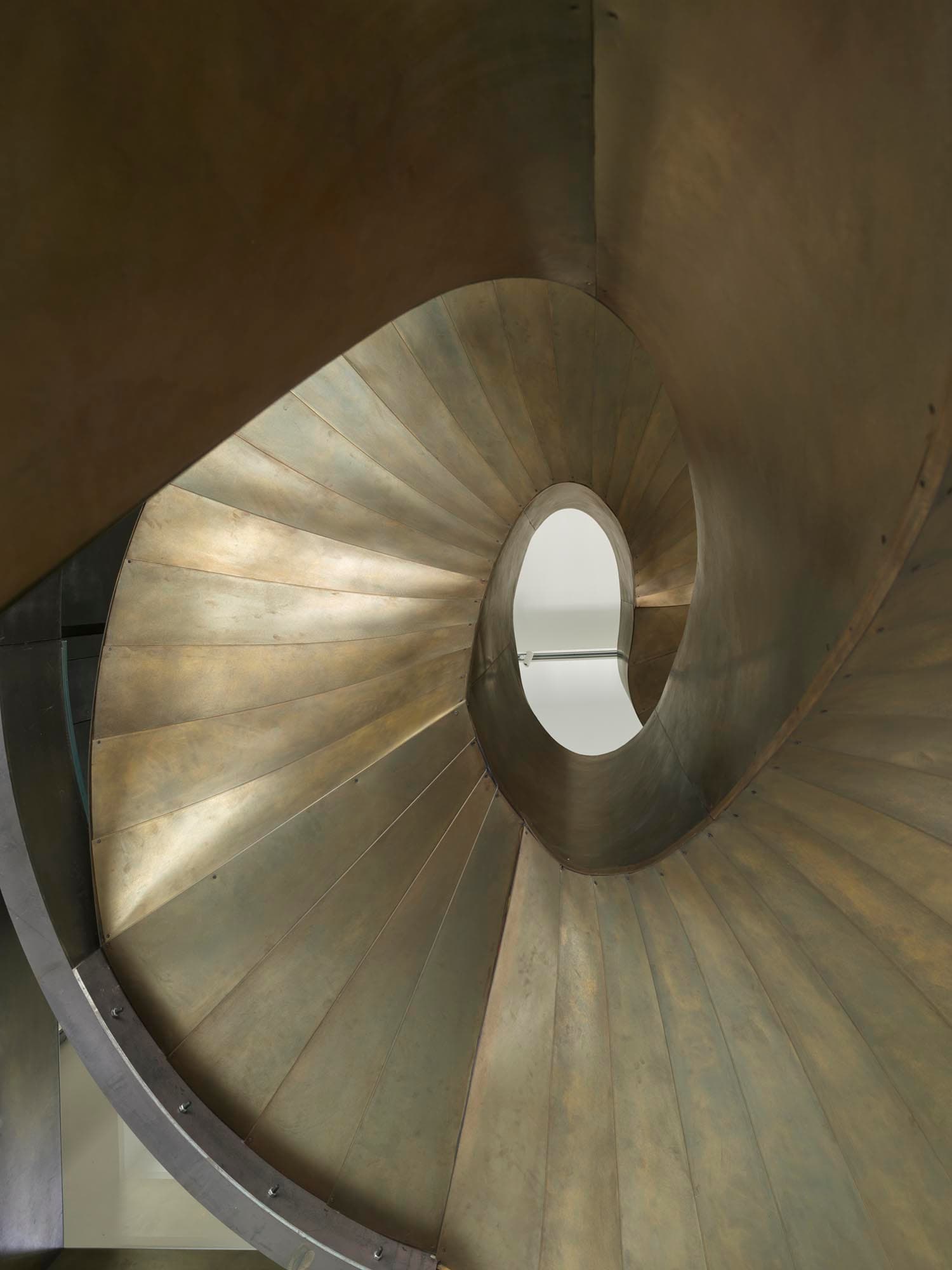
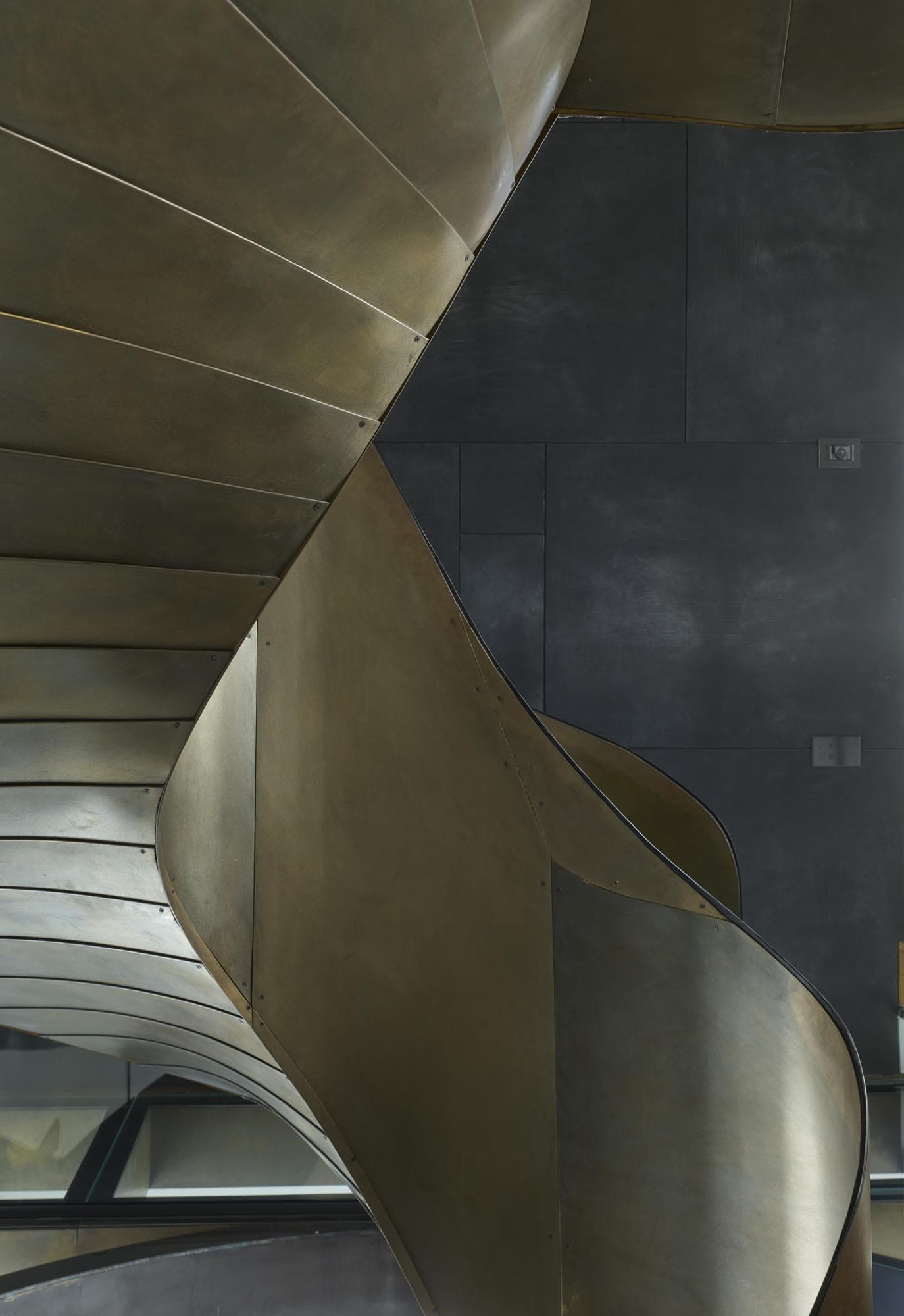
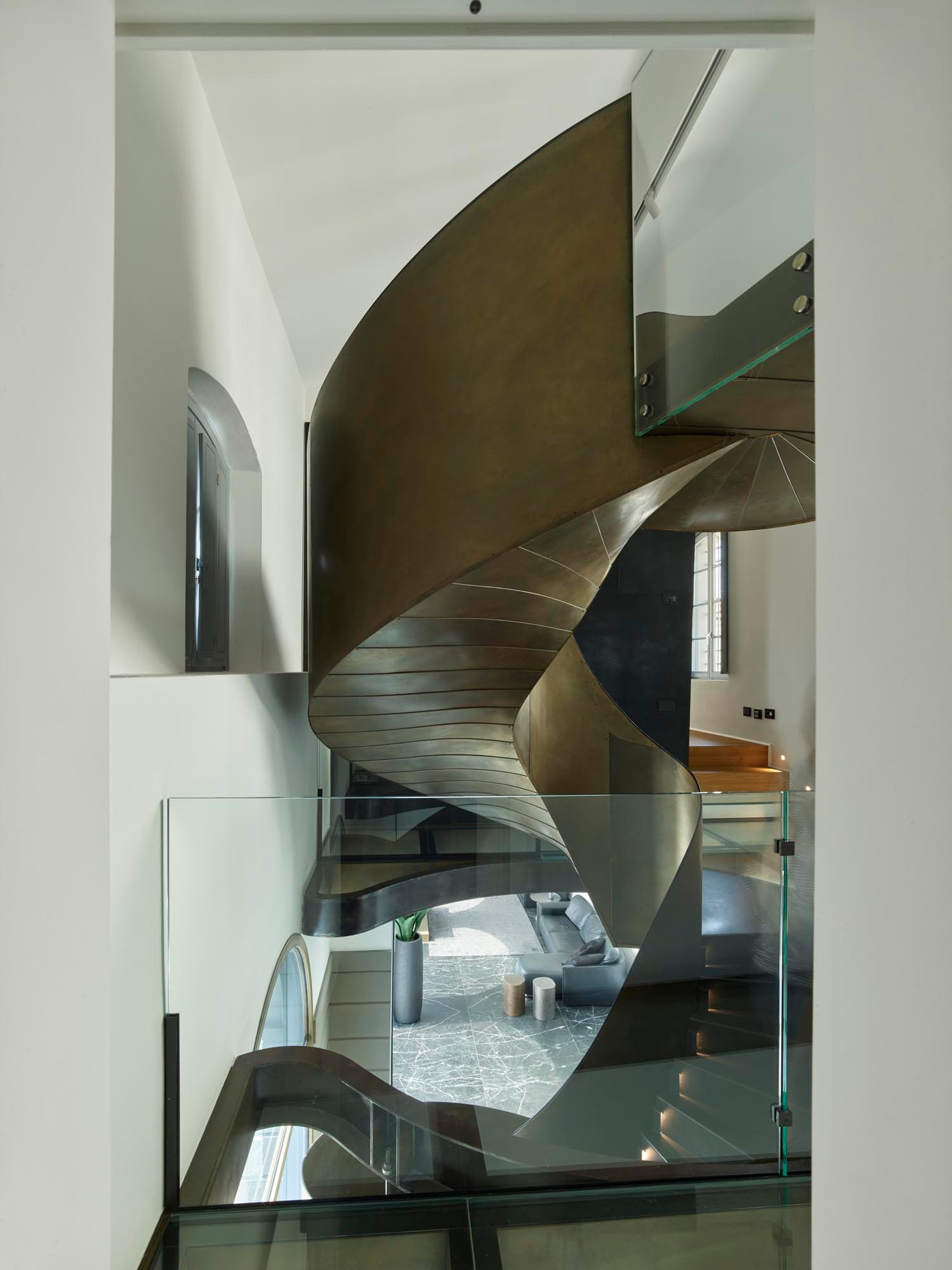
The central sculptural element is a distinctive elliptical scale, a large bronze scenic structure that connects to a suspended glass walkway and provides access to the second floor where the bedrooms and bathrooms are located. (ph. Roland Halbe)
.jpg&w=3840&q=75)
A Theatre of Shapes
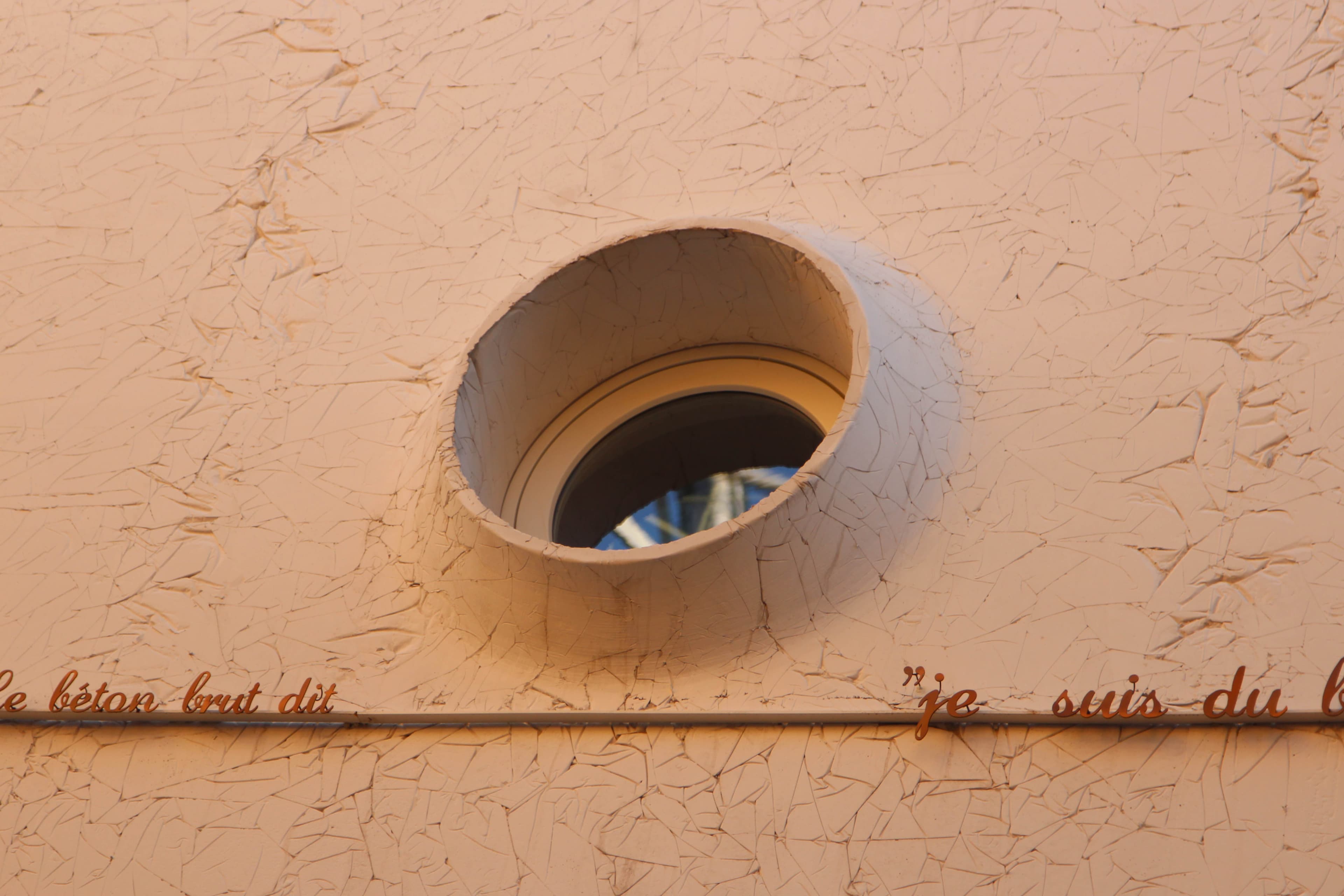
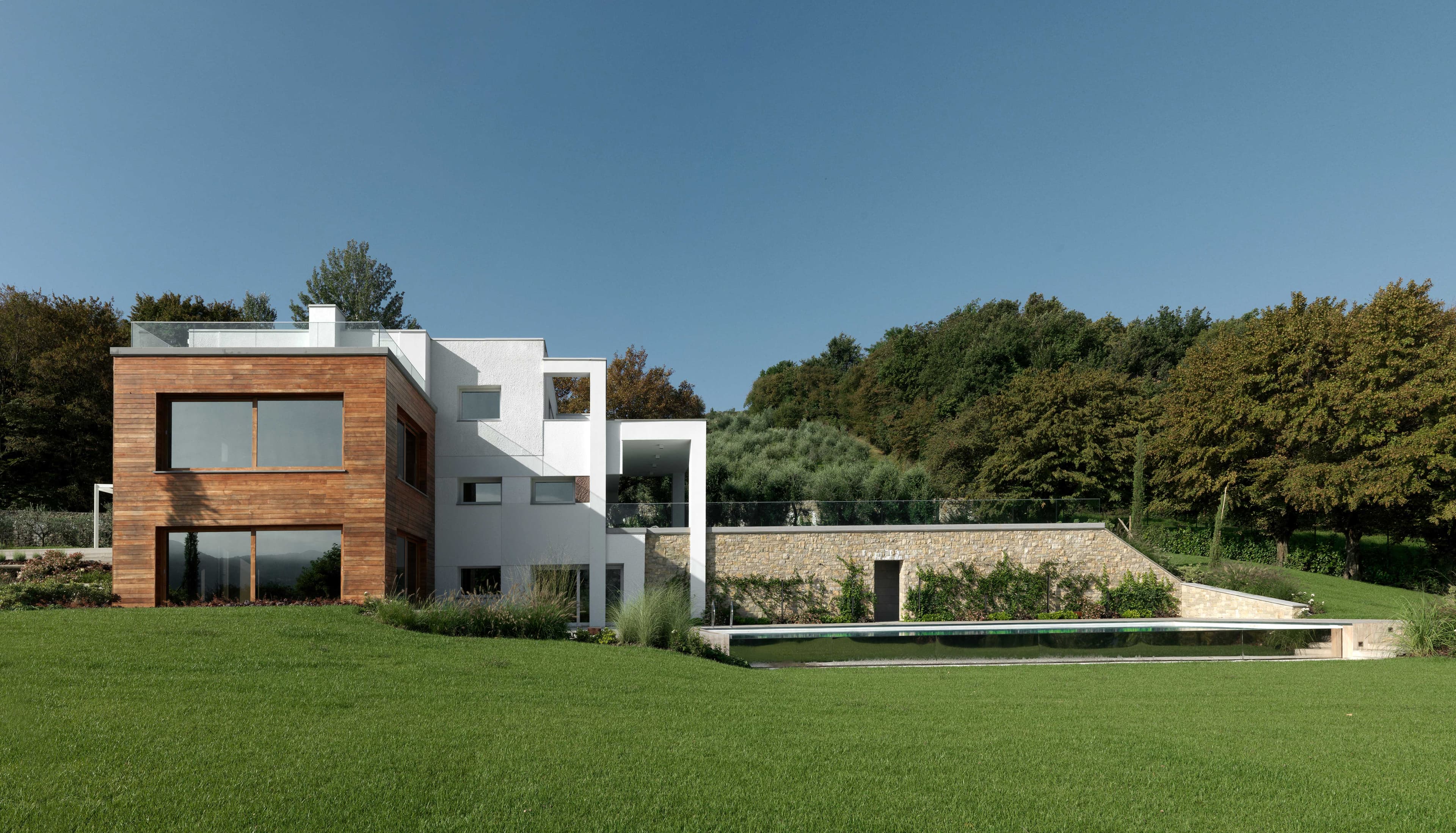
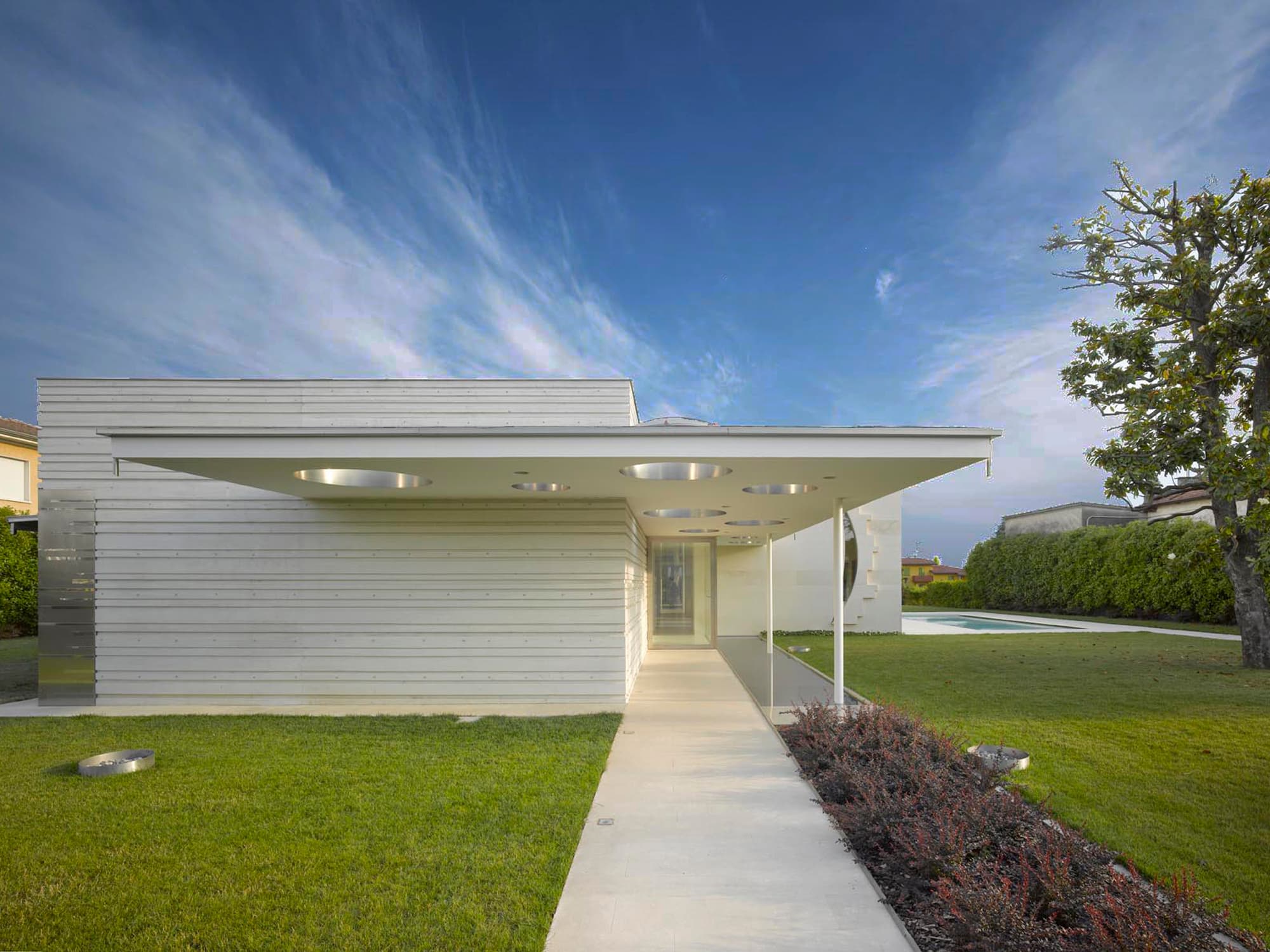
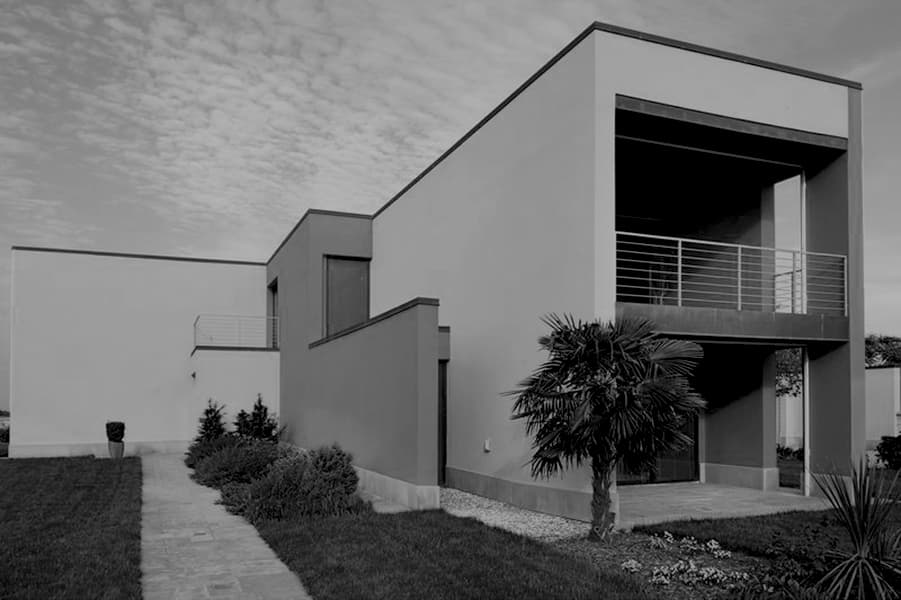
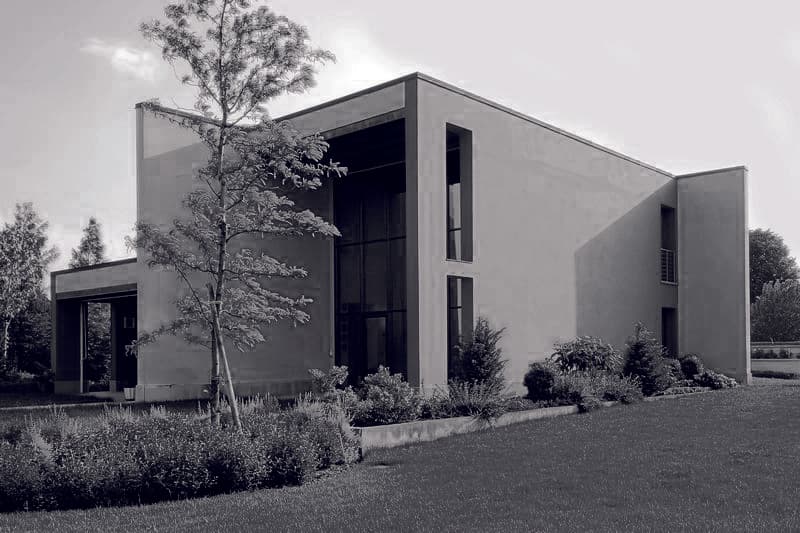
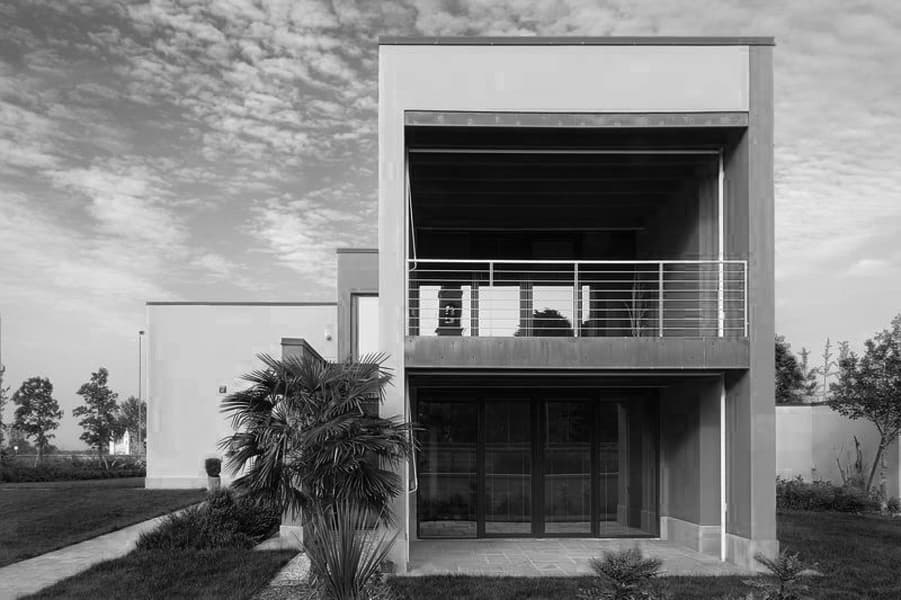
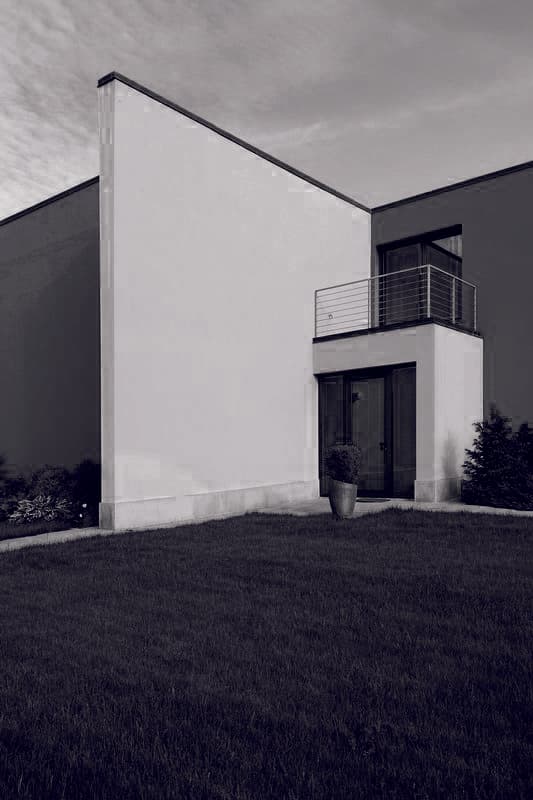
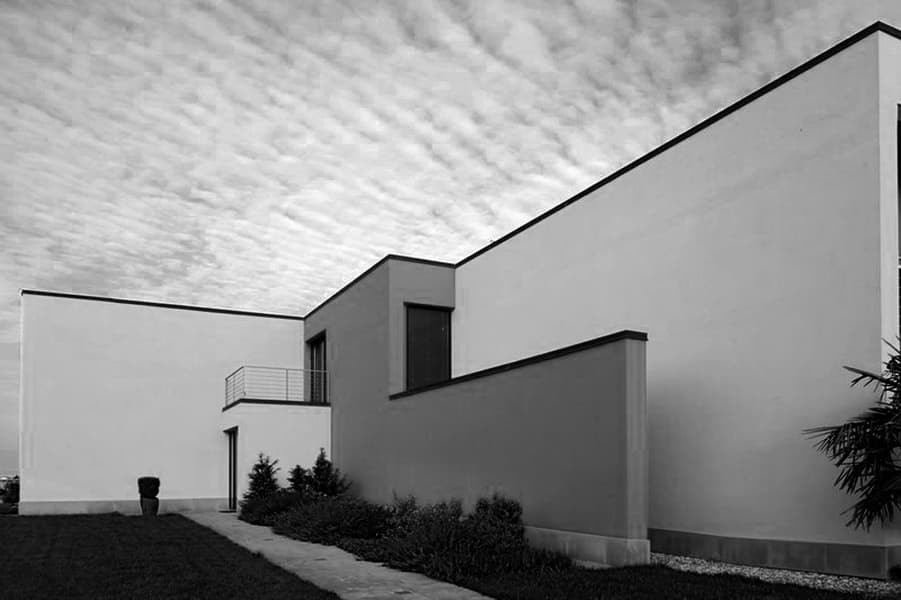
A detached town-house at Piadena, a small town out in the Cremona plain. The building stands in an architecturally nondescript built-up area which suggested the guiding theme of privacy: it develops on low horizontal lines. The plans by Giorgio Palù play on proportions and inventiveness of shape: space and materials are subtly interconnected. No features particularly arrest the attention: the image is built up by degrees and juxtaposition, a combination of details and use of space in an act of delicate introspection. What predominates in the layout is the central hall running right through the north-south elevation, and off this hall the various parts of the ensemble fan out. Though these parts are clearly differentiated and recognizable in their function or inner logic, there is no sense of a jumble of separate nuclei but a sophisticated kind of distinction within a unity of composition and image. This organically unified effect is rendered from the outside by the faint colour differences that tend to one homogeneous palate.The texture of the outside walls varies in consistency and treatment. The main bodies of the house alternate between smooth white architectural concrete with grooved horizontal lines running across it; render differing in look and consistency (fine skim, rough cast, pebbledash) used to create curving swathes of juxtaposed colour and textural differences in explicit tribute to Alberto Burri and his informal poetics; walls clad in ‘crazy’ stone. Knobs of stone project along the wall faces.And besides the combination of materials and wall surface treatment, there are two sheets of metal finished in gloss and matt horizontal strips: one on the western side forming the garage up-and-over door, and on the east a sliding outer panel protecting the guest-room french-windows (it opens the room up to the garden, visually and literally, jutting from the perimeter when open to form a sort of end stop). Visually and functionally, the complex contains some remarkable shapes; symmetries are broken, points of architectural convergence created.
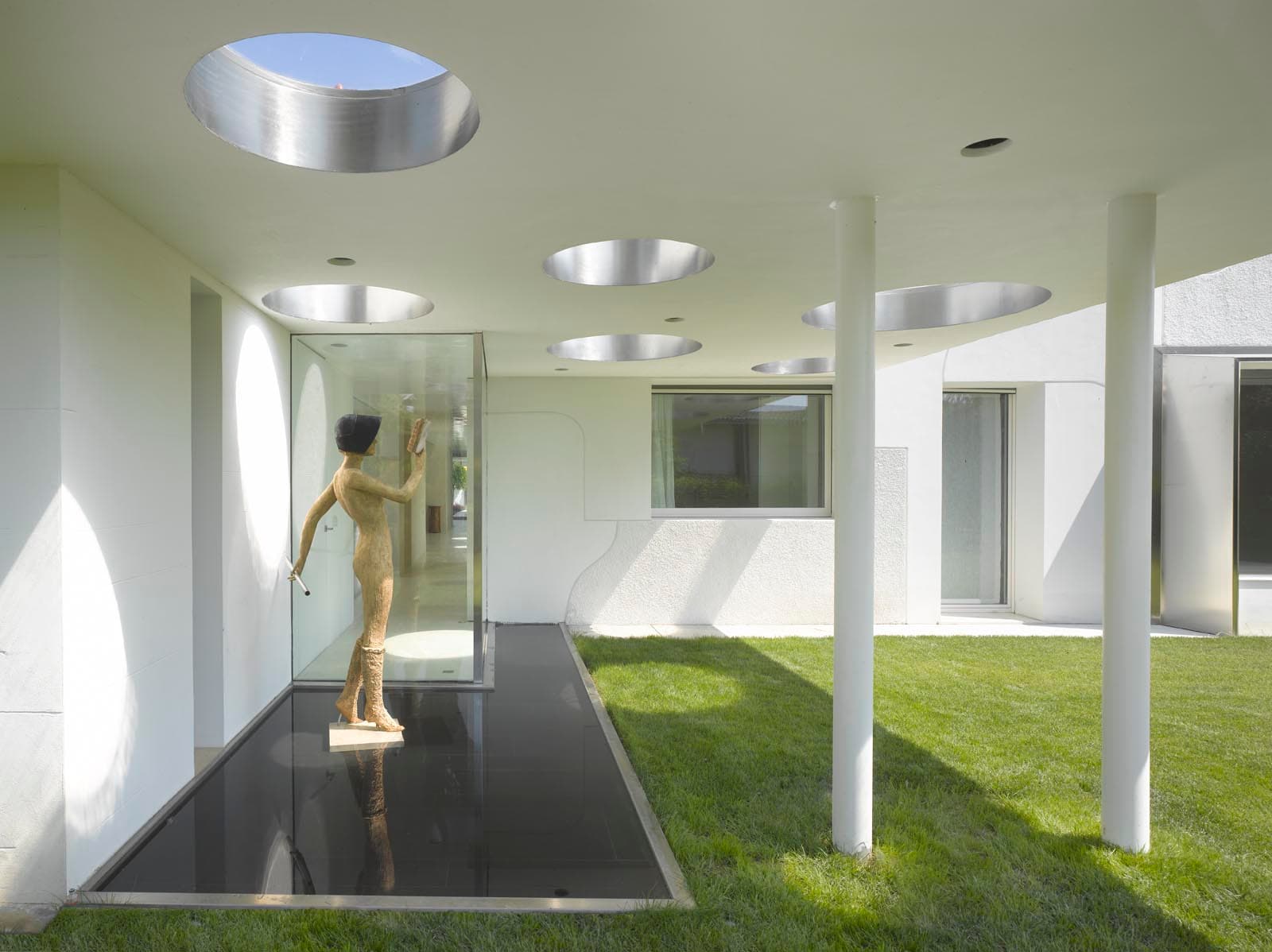
The corridor shaft off which the various rooms lead (bathrooms and kitchen, drawing room, two bedrooms) forms a tunnel of light. Inside it the eye embraces the whole length of the house; light-coloured walls and floors reflect back natural or artificial lighting; the windows onto the outside dematerialise the space as light floods in. Doors to more secluded rooms (bedrooms, bathrPalùooms, the kitchen) merge into walls so that only the play of light is registered. This shaft of light runs from the glazed entrance-hall right through to where it frames the distant garden feature of an aged tree, and all the way accompanied by light off water: the pool flanking the northern entrance path, the swimming bath on the western side, the water feature that appears on the southern edge of the complex. Either side of the corridor lies the main bulk of the residence which is all windows onto the exterior, funnelling still more light into the interior layout and expanding the living space out of doors – an effect enhanced by the unbroken stone flagging running throughout.
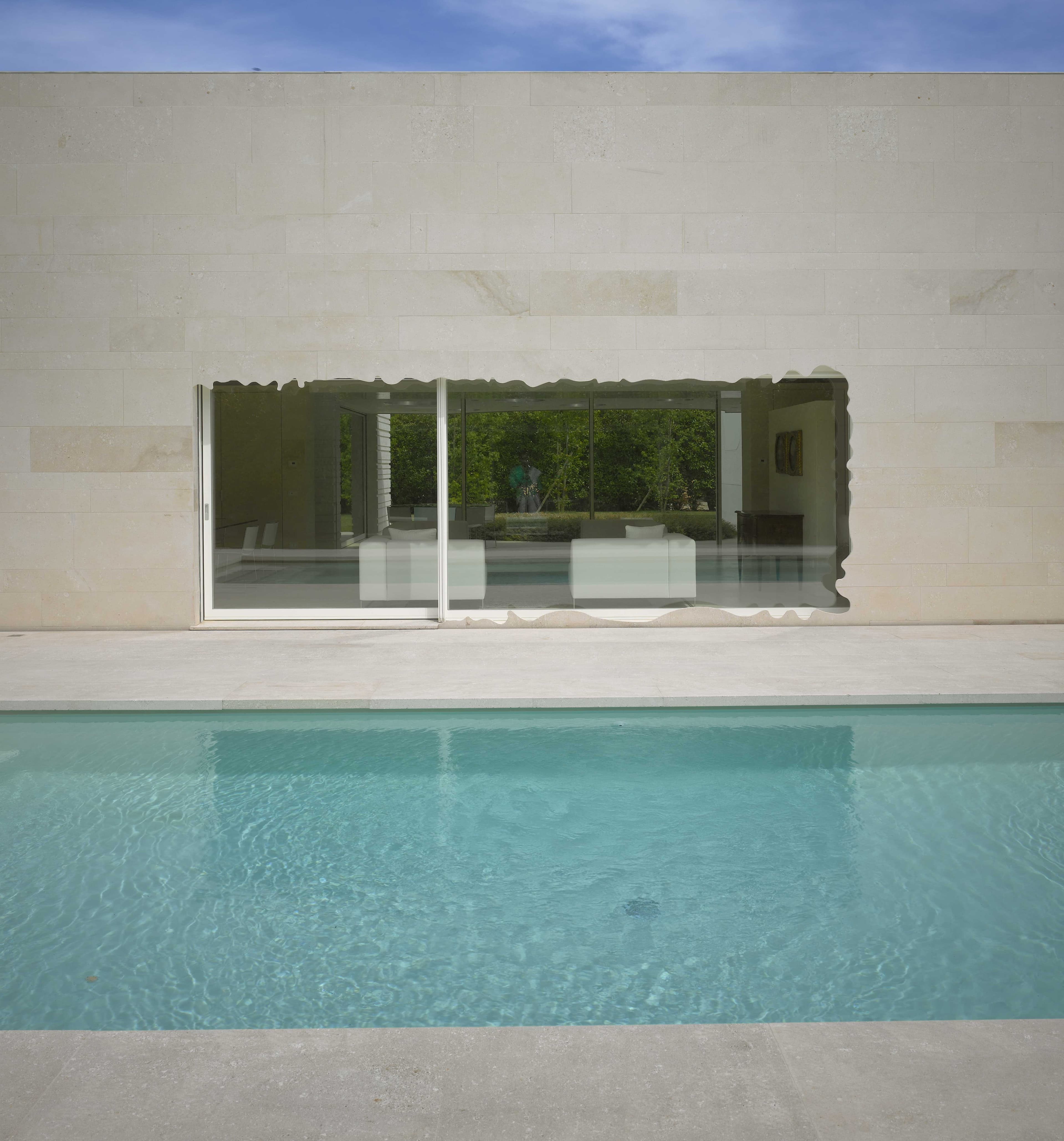
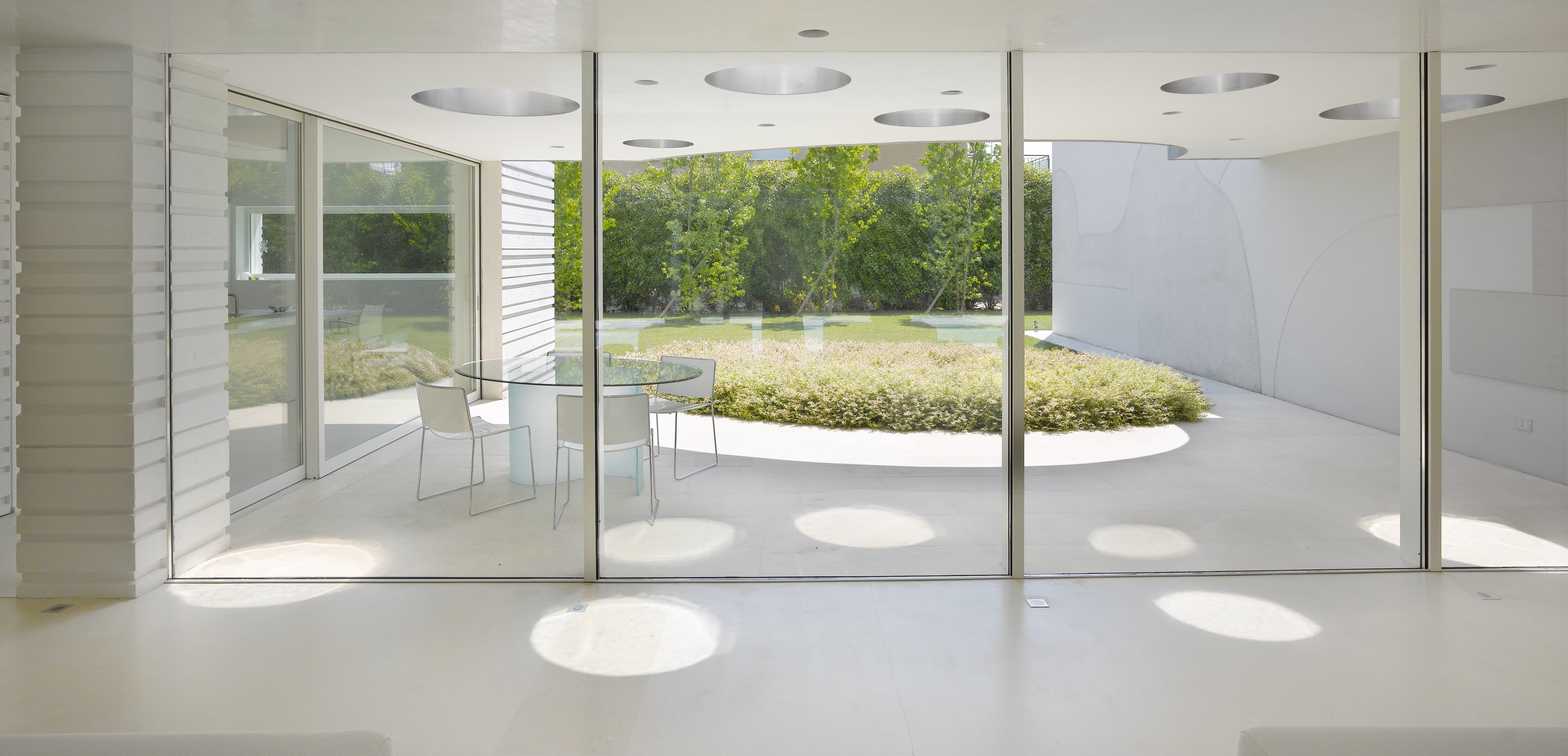
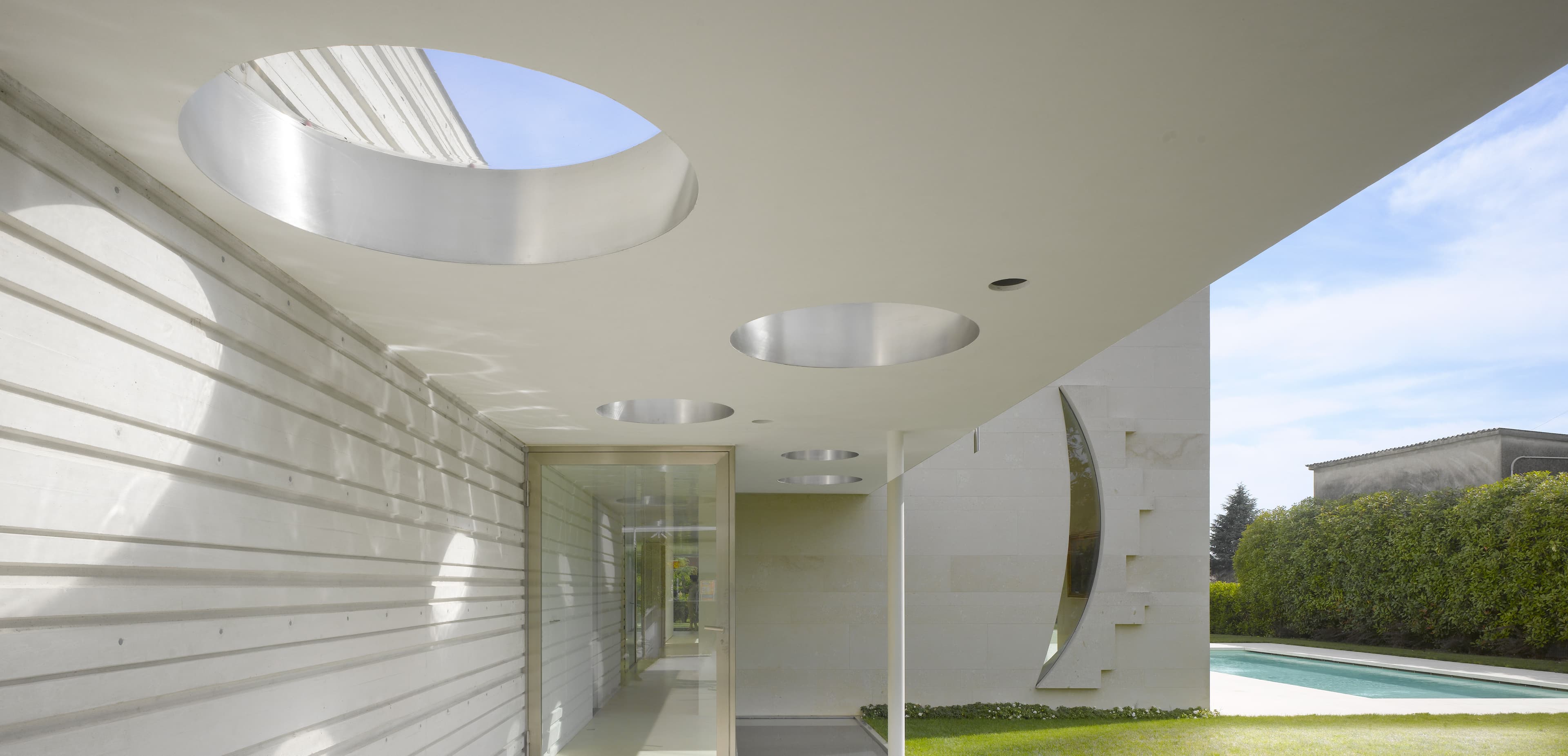
Off the tunnel of light to the east we have the sitting-room, connected by sliding windows to the garden and pool and itself forming a scenic backdrop (since the window is framed on the outside by a raggedly fretted cornice) as well as a place of secluded concentration; to the west a window opens onto a patio sheltered by a small curving white cement canopy pierced by round portholes. Visually, the east-west axis is a convergence of transparency: it slices through the building and forms a dynamic concentration of opposite effects: there is a sprawling and apparently centrifugal air to the layout, yet an overall ordering principle preserves the sense of unity. Separate yet related in its details, the composition is a thing of subtle touches mixed with simplifying linearity – different faces of one and the same architectural quest – in the whole and in the part; and the same message is conveyed by the slits and openings in inner and outer walls, the osmotic link between indoors and outdoors, and the unexpected visual ‘takes’ as one surprise gives way to another.
.jpg&w=3840&q=75)
.jpg&w=3840&q=75)
.jpg&w=3840&q=75)
.jpg&w=3840&q=75)
.jpg&w=3840&q=75)
.jpg&w=3840&q=75)
.jpg&w=3840&q=75)
.jpg&w=3840&q=75)
.jpg&w=3840&q=75)
.jpg&w=3840&q=75)
.jpg&w=3840&q=75)
.jpg&w=3840&q=75)
.jpg&w=3840&q=75)
.jpg&w=3840&q=75)
.jpg&w=3840&q=75)
.jpg&w=3840&q=75)
.jpg&w=3840&q=75)
.jpg&w=3840&q=75)
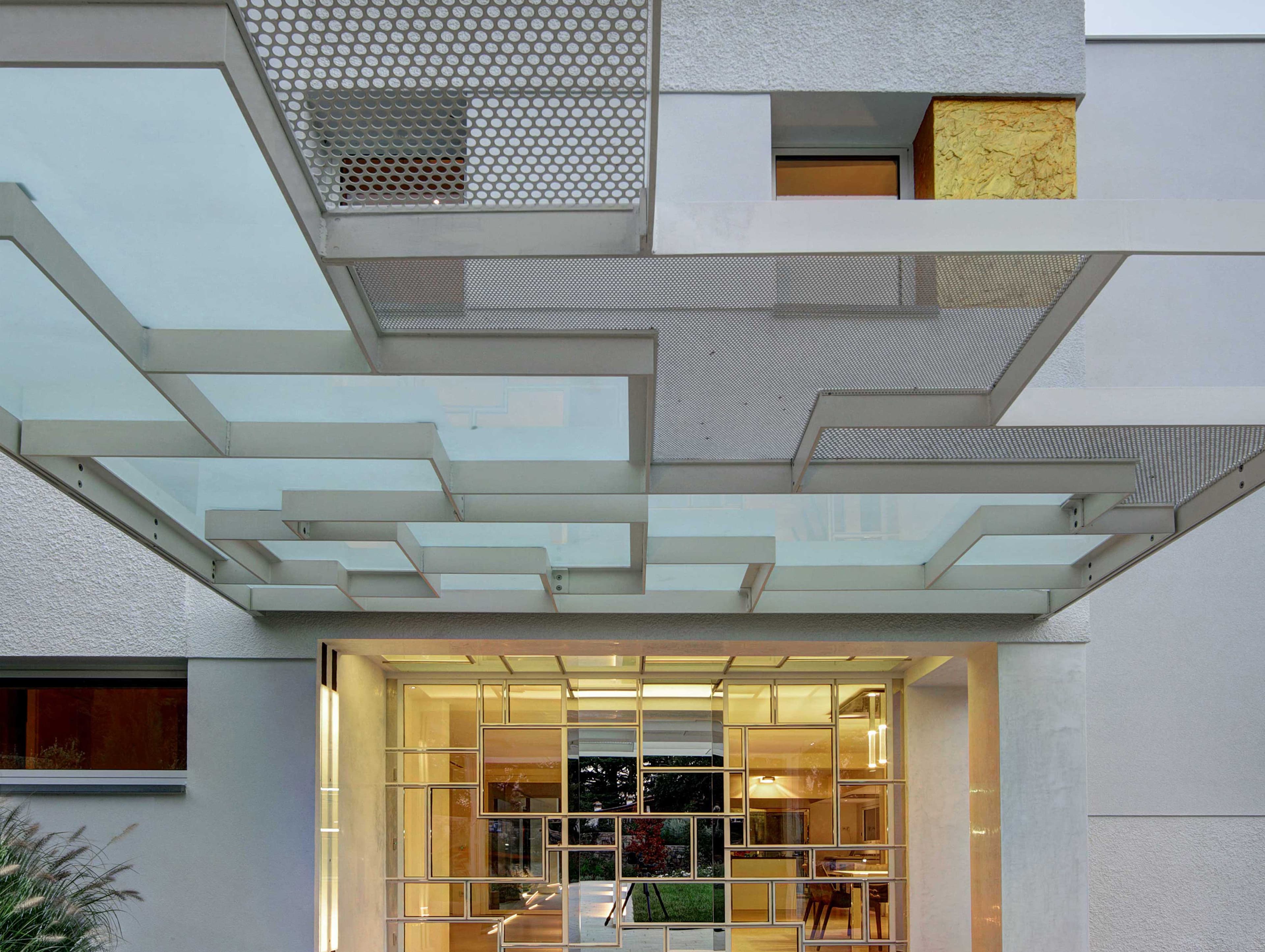
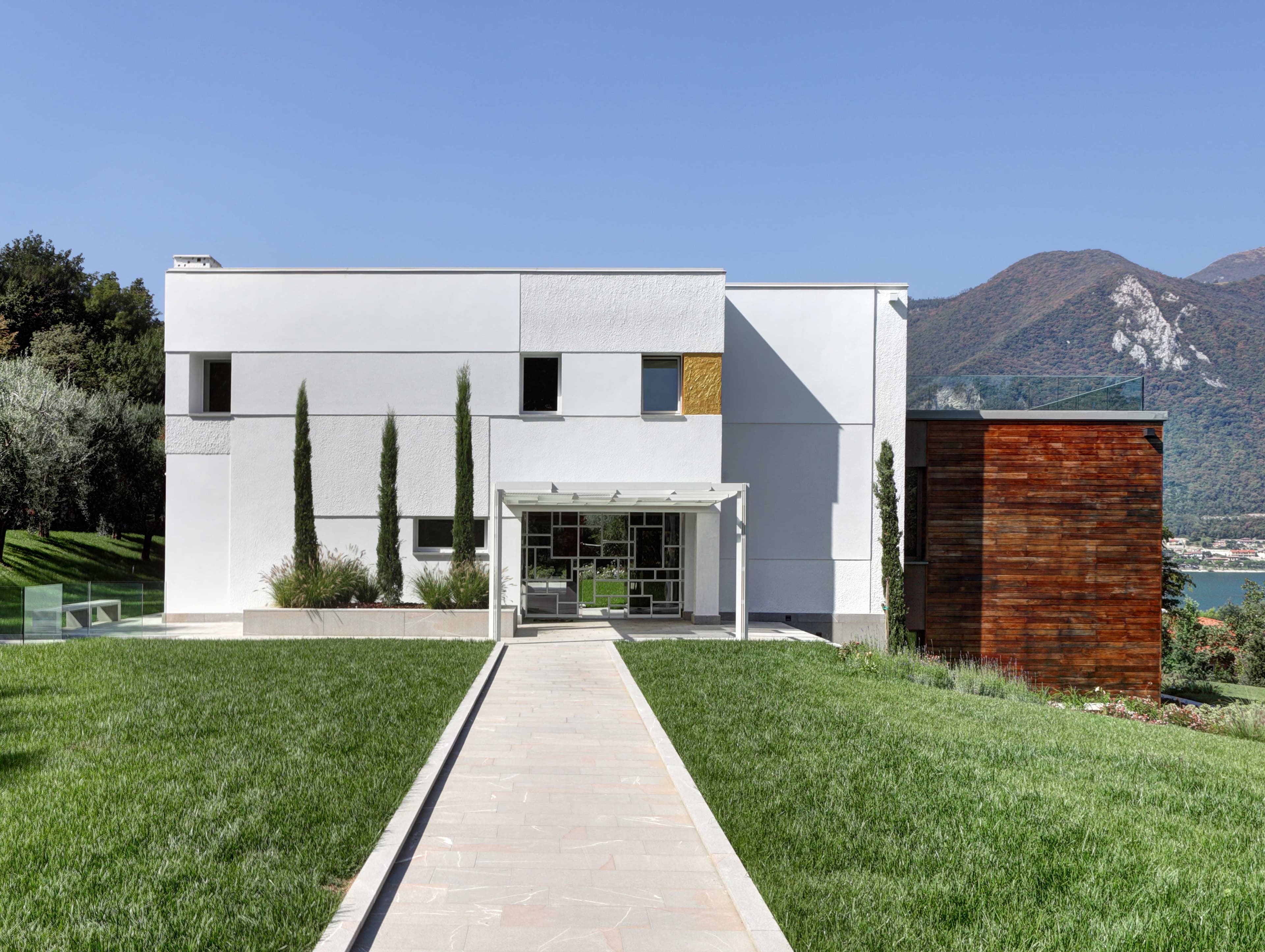
Villa a Clusane
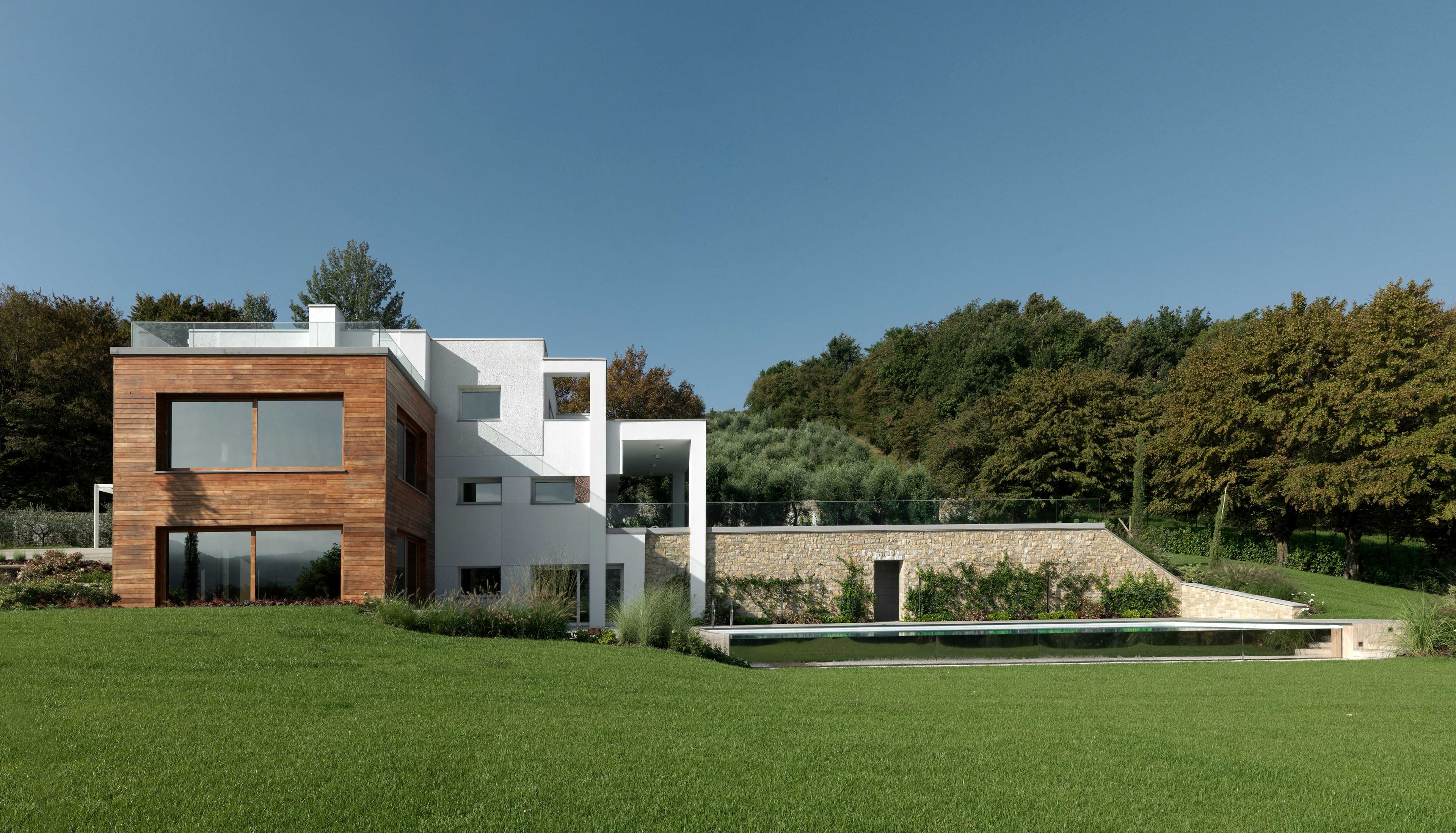
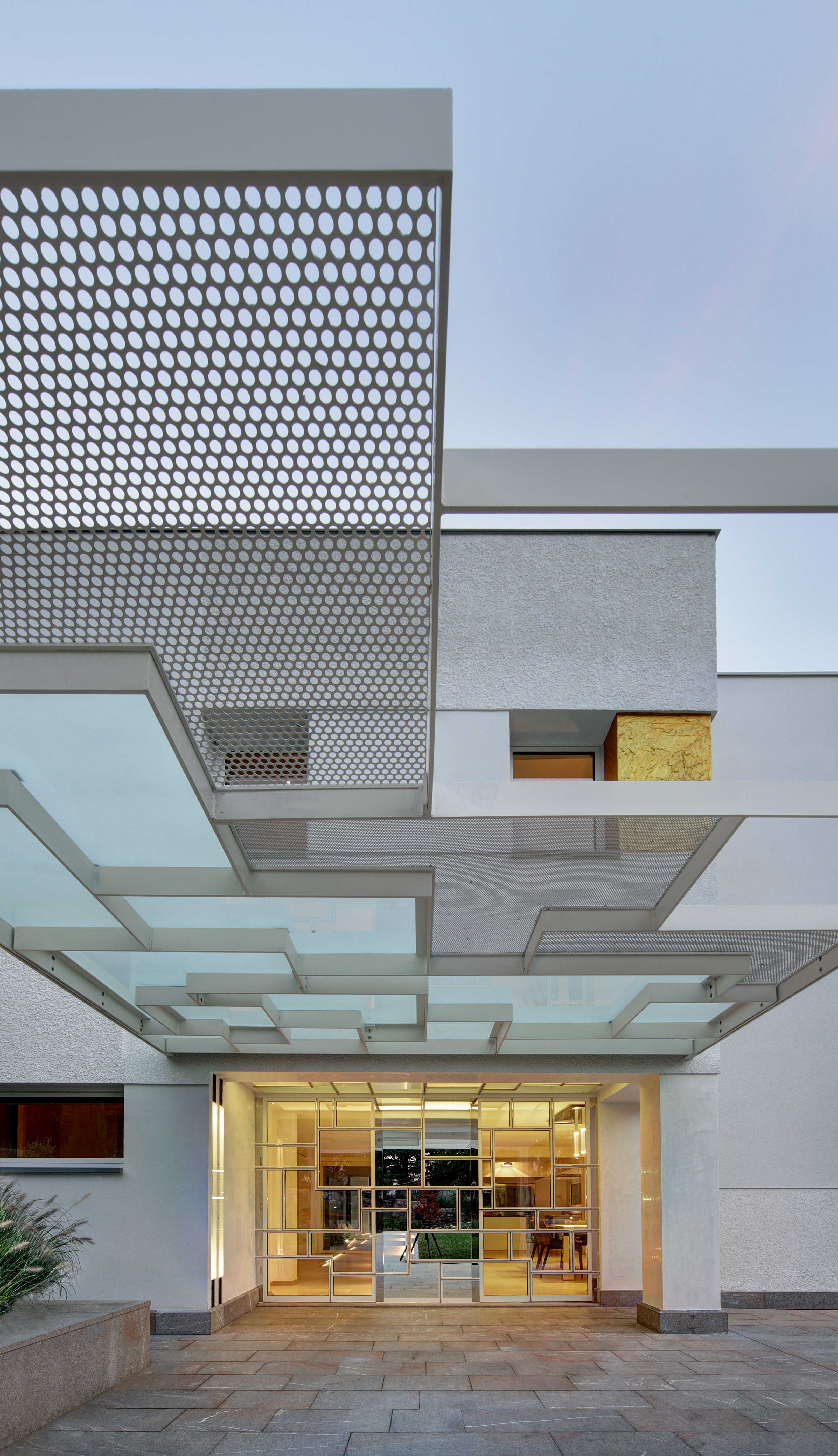
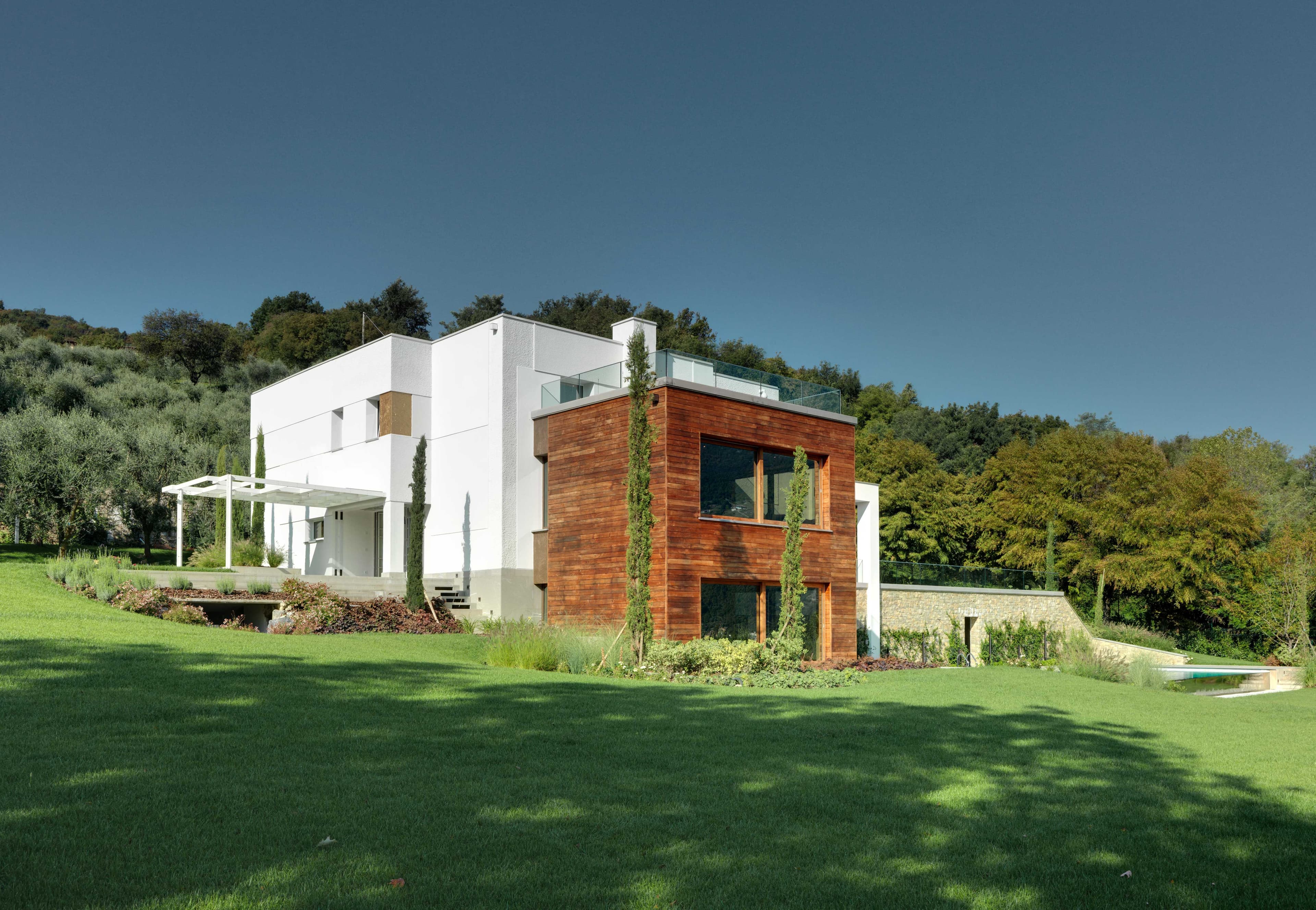
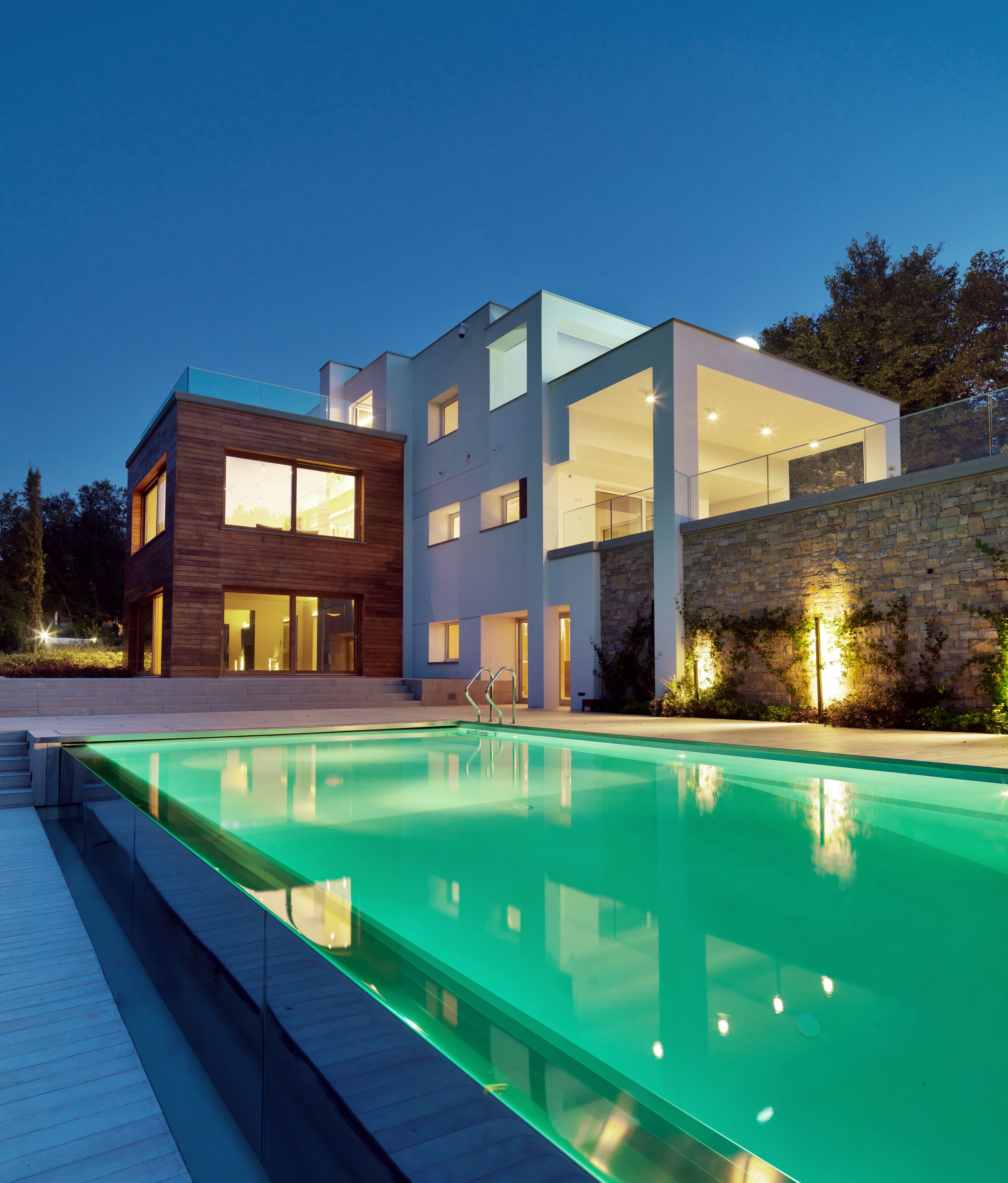
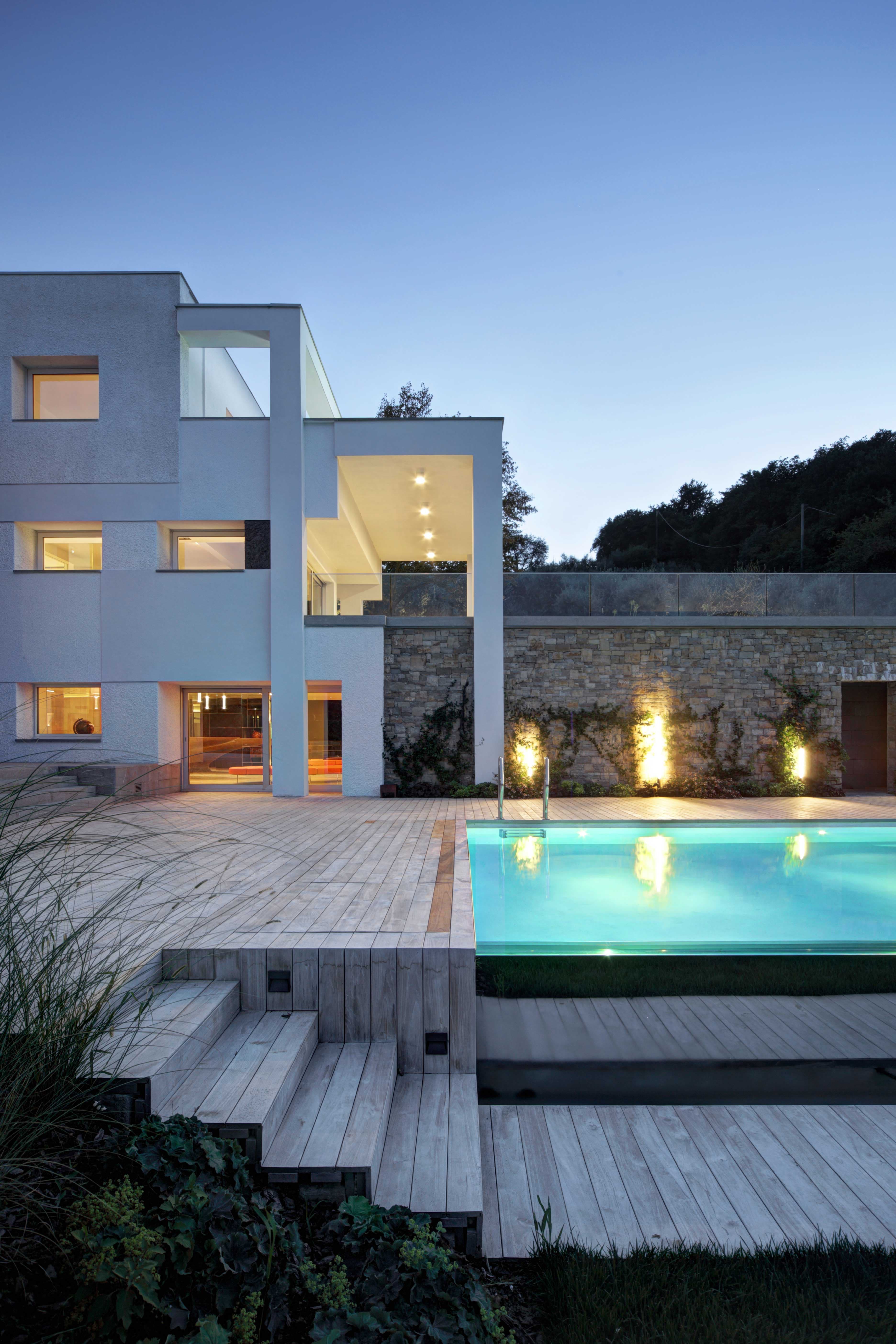
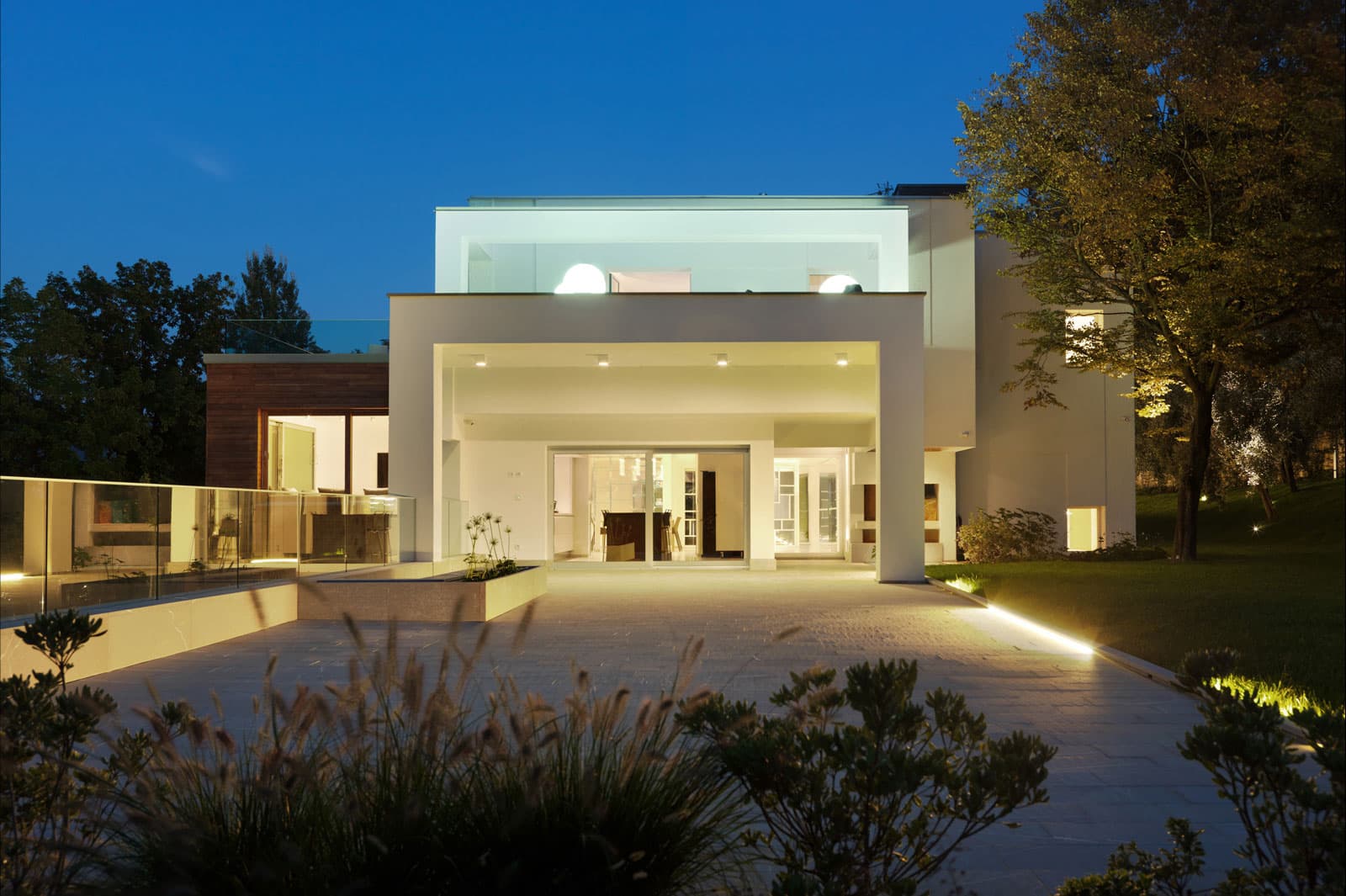
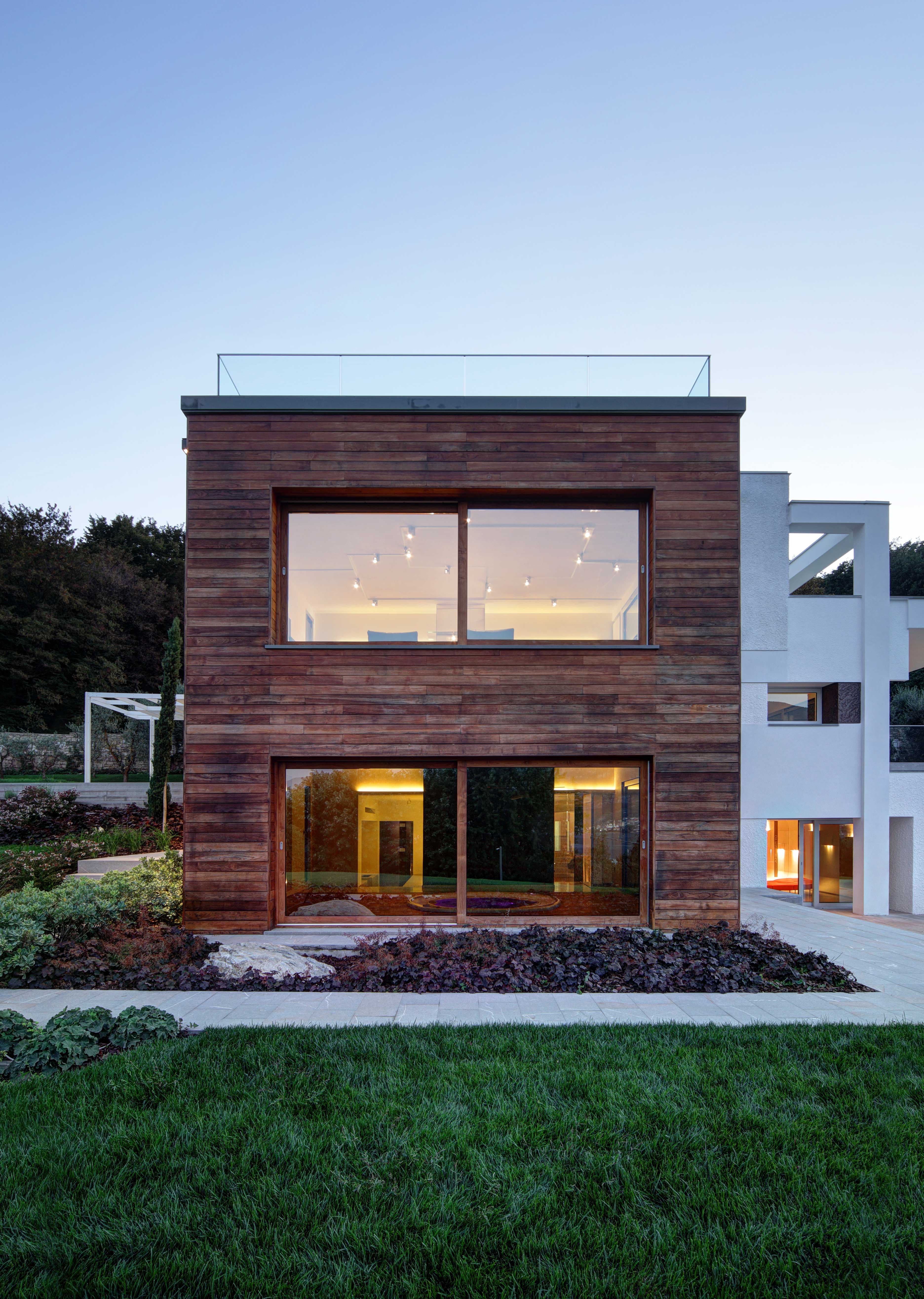
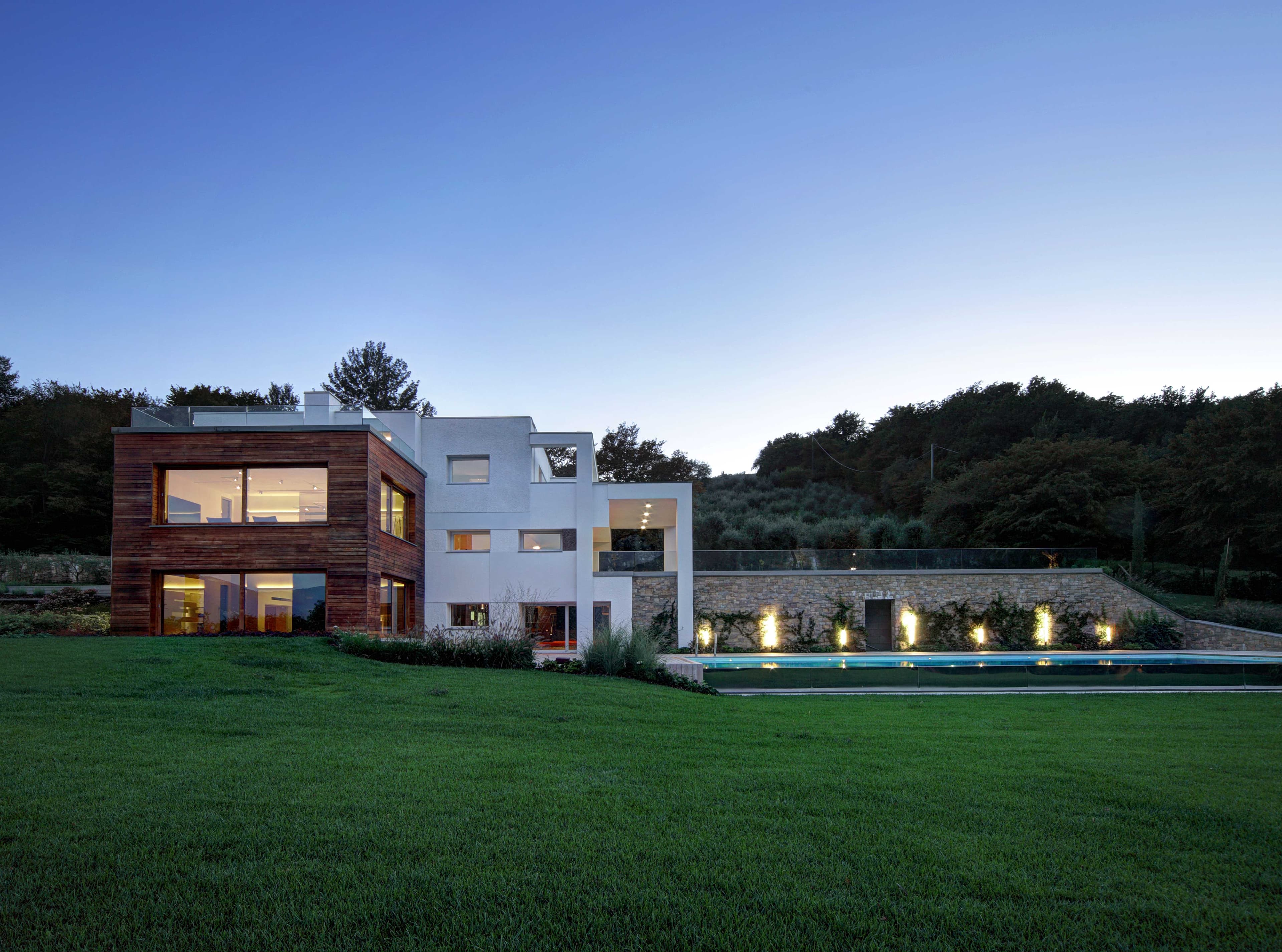
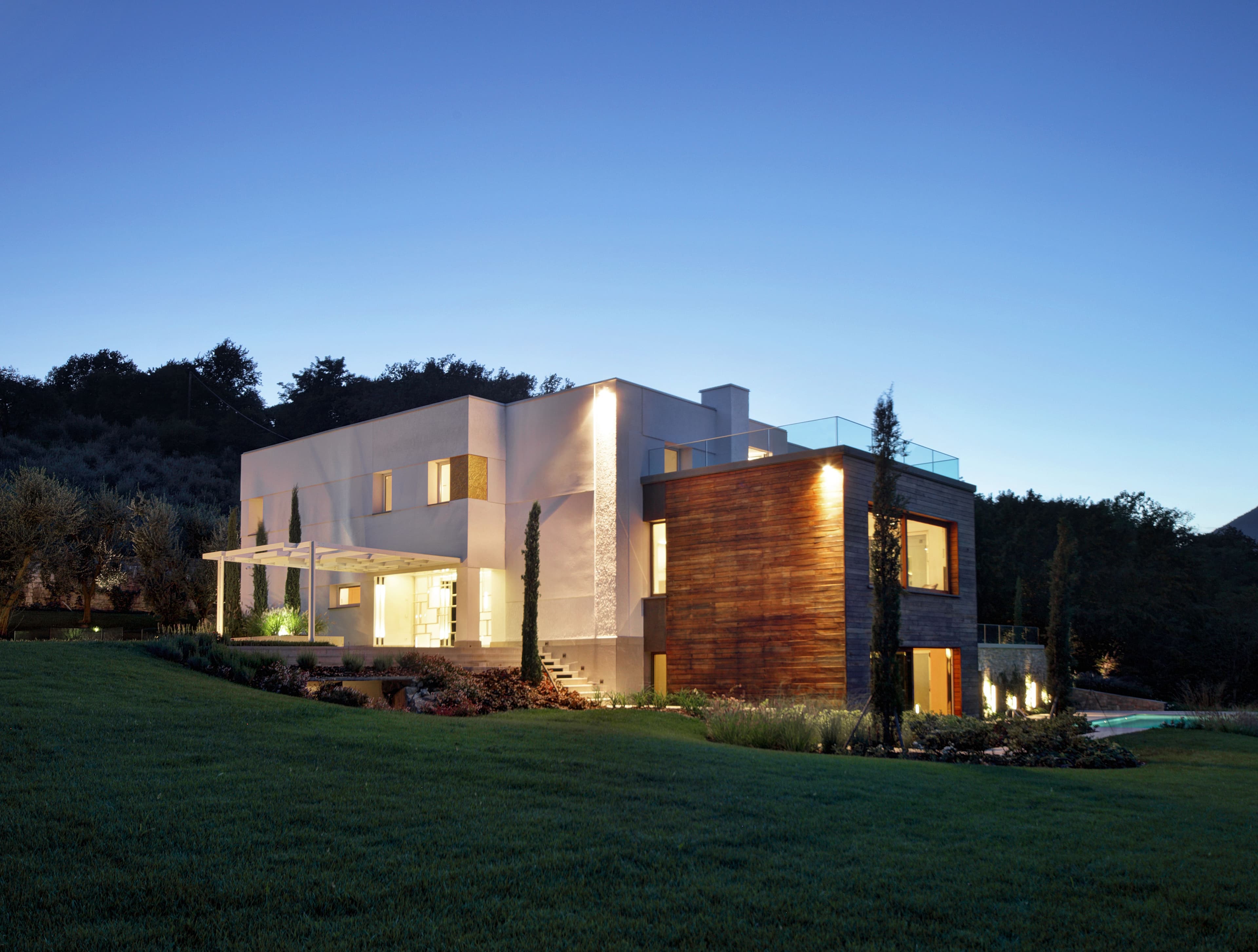
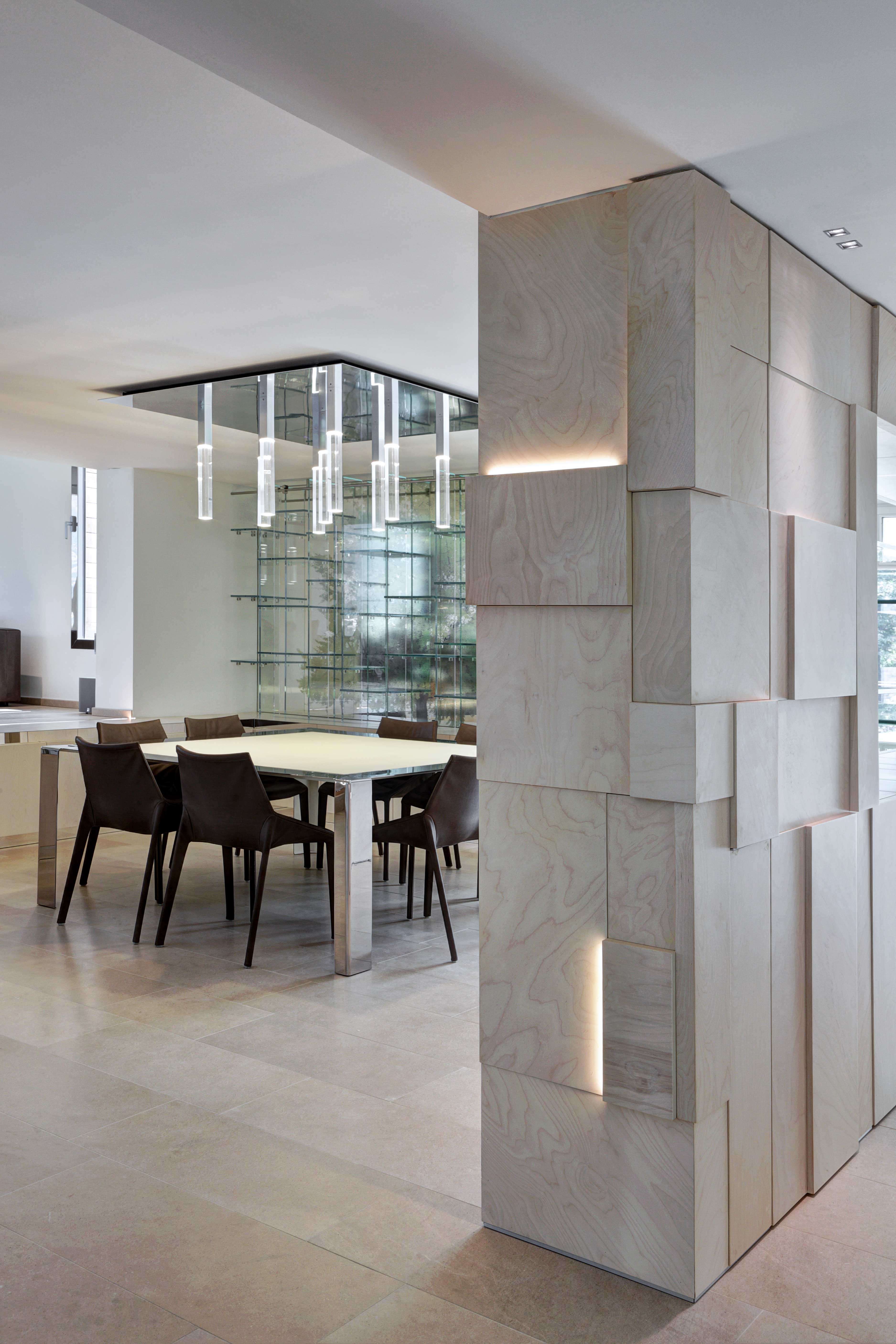
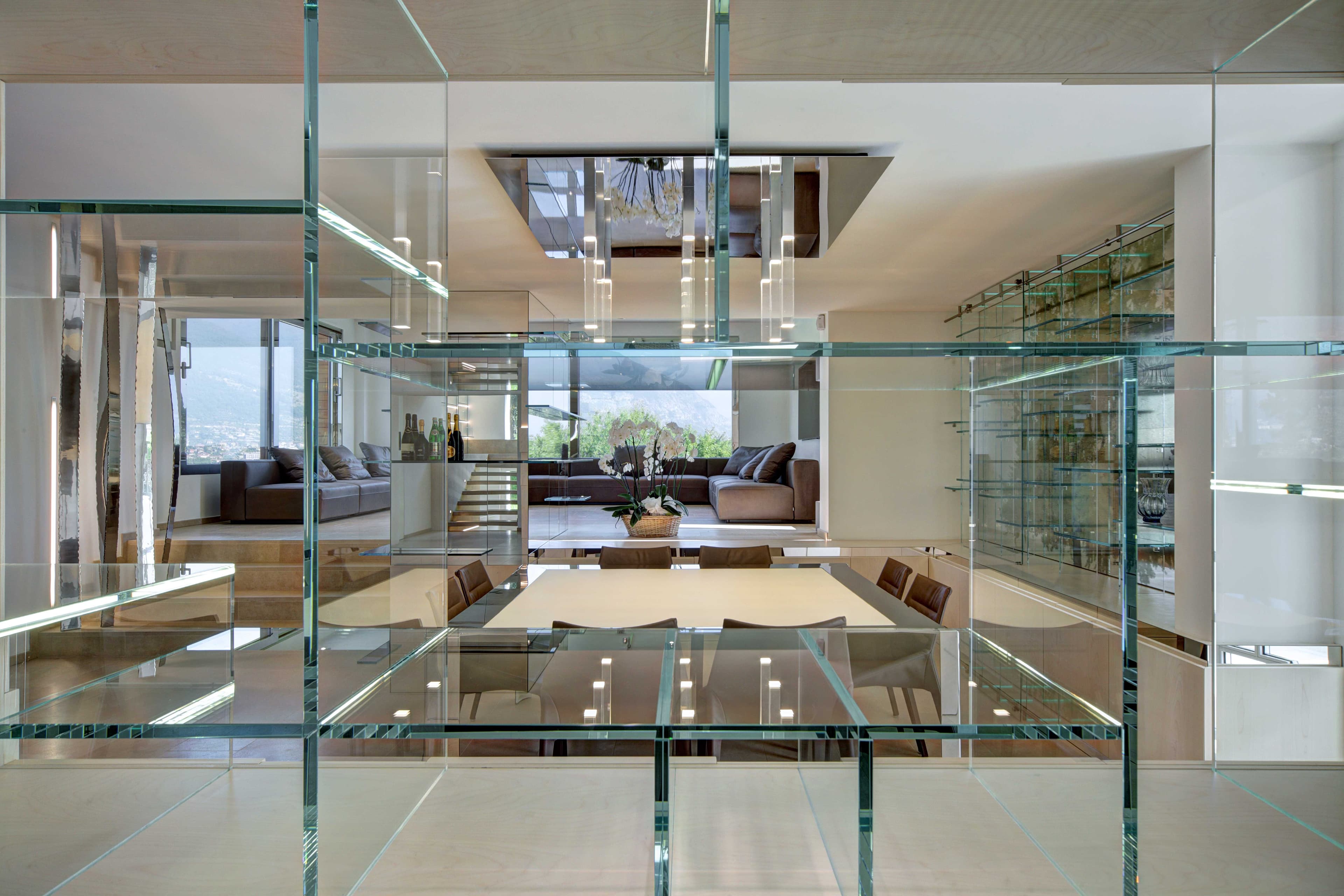
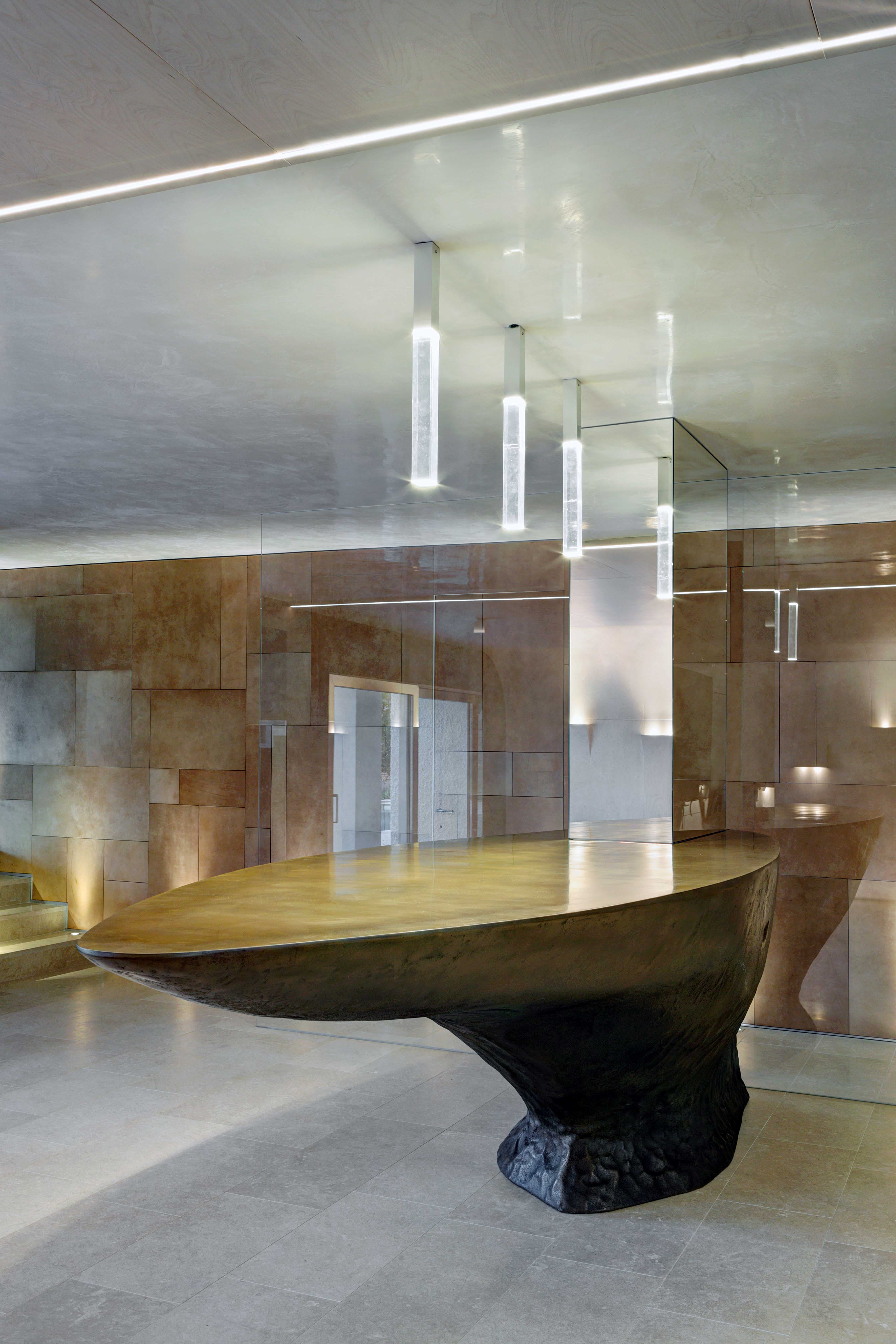
TT2 - I Volumi Houses
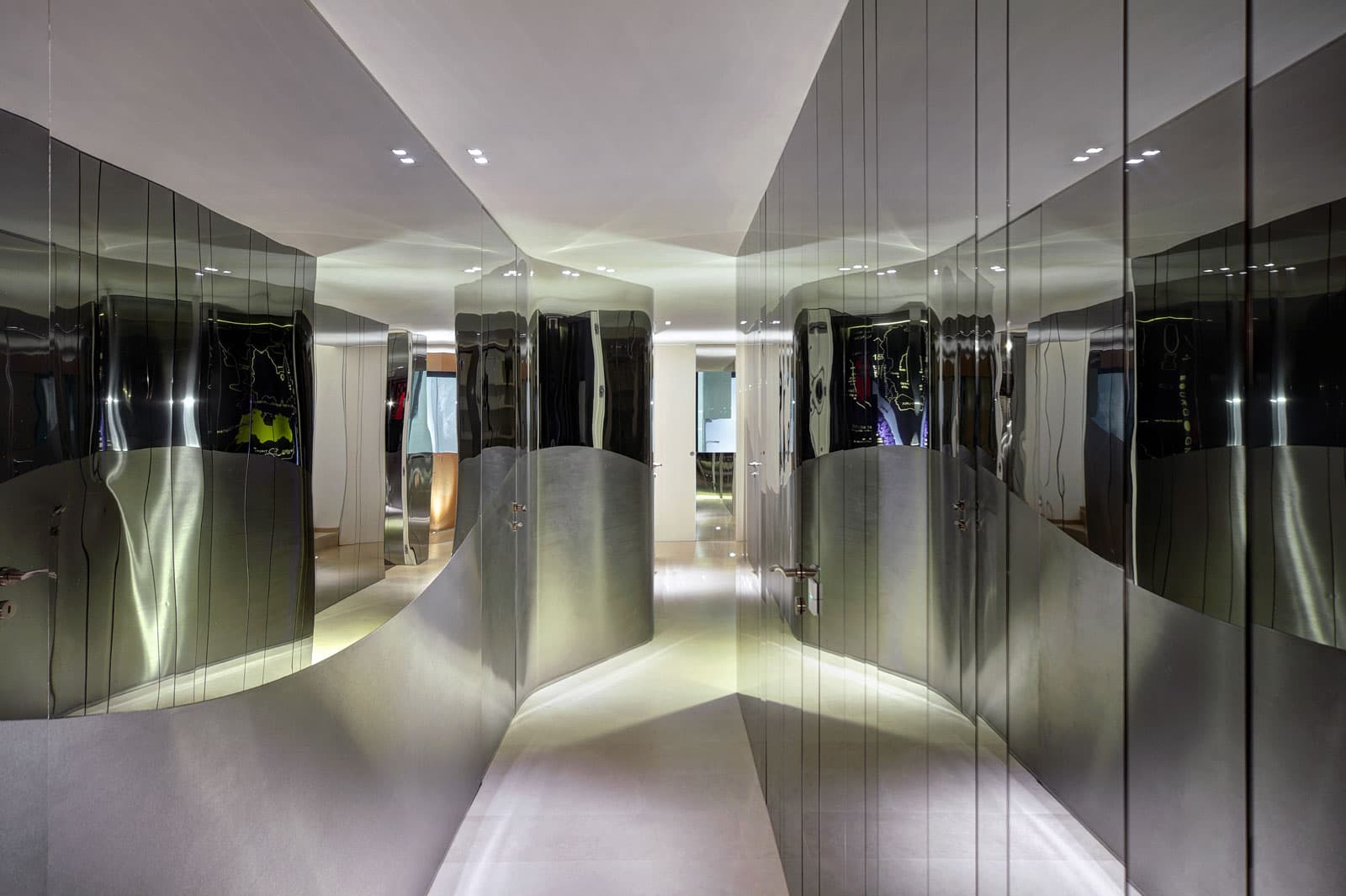
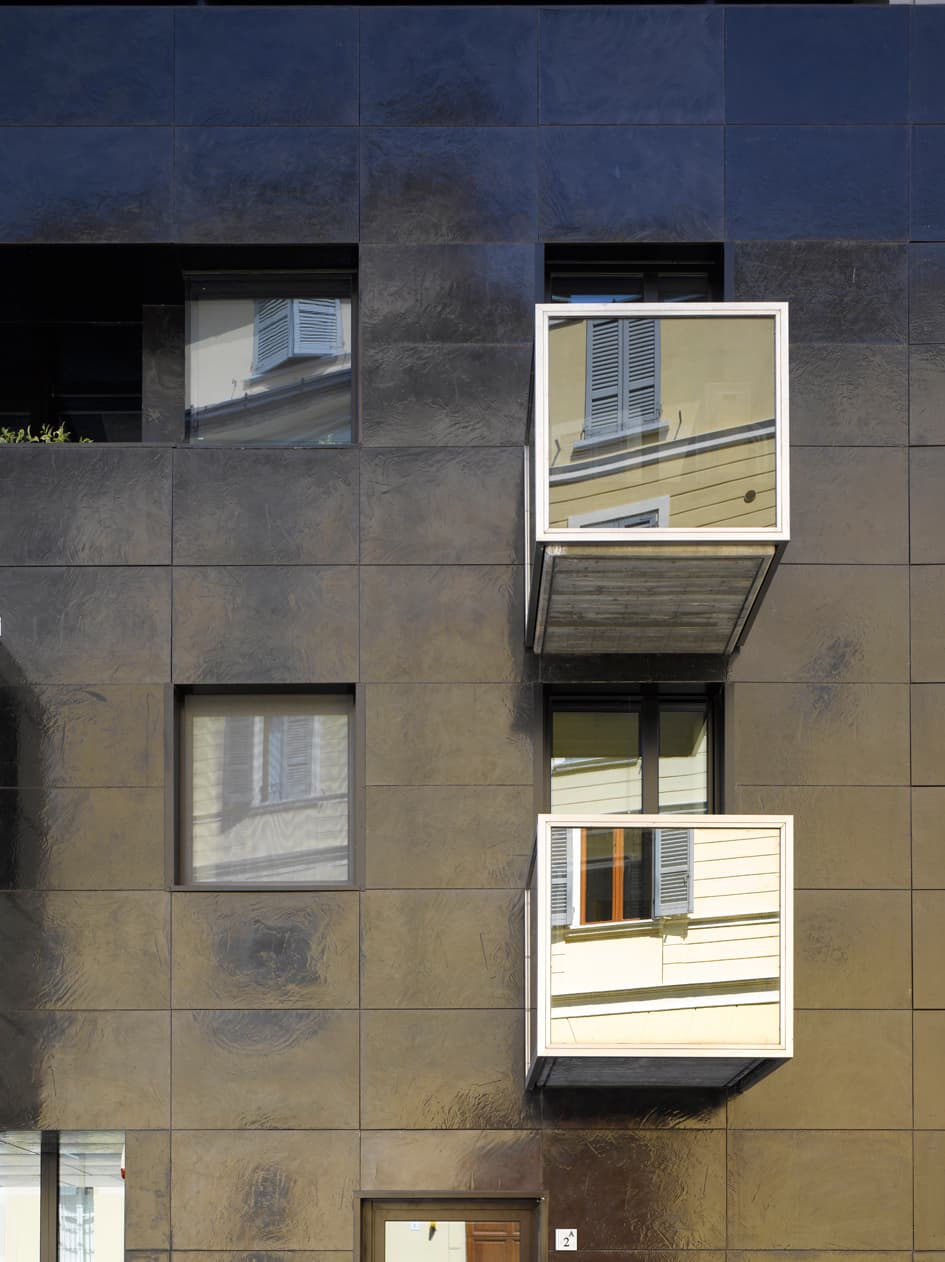
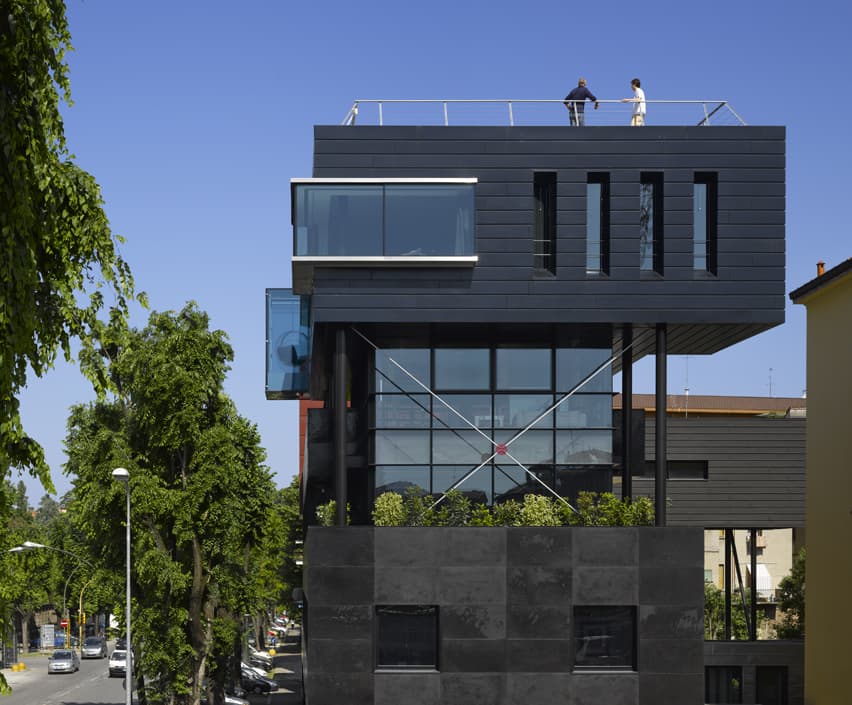
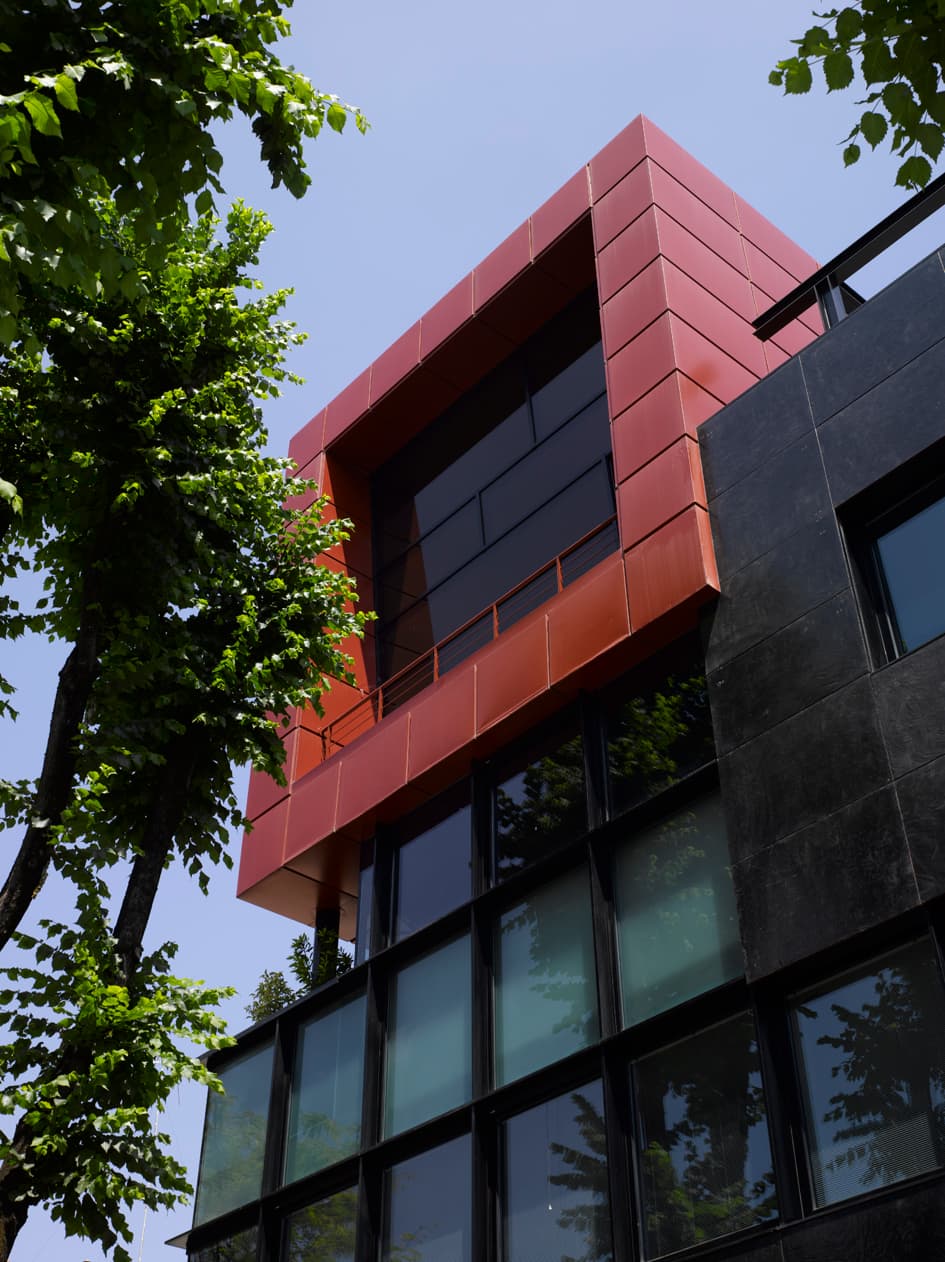
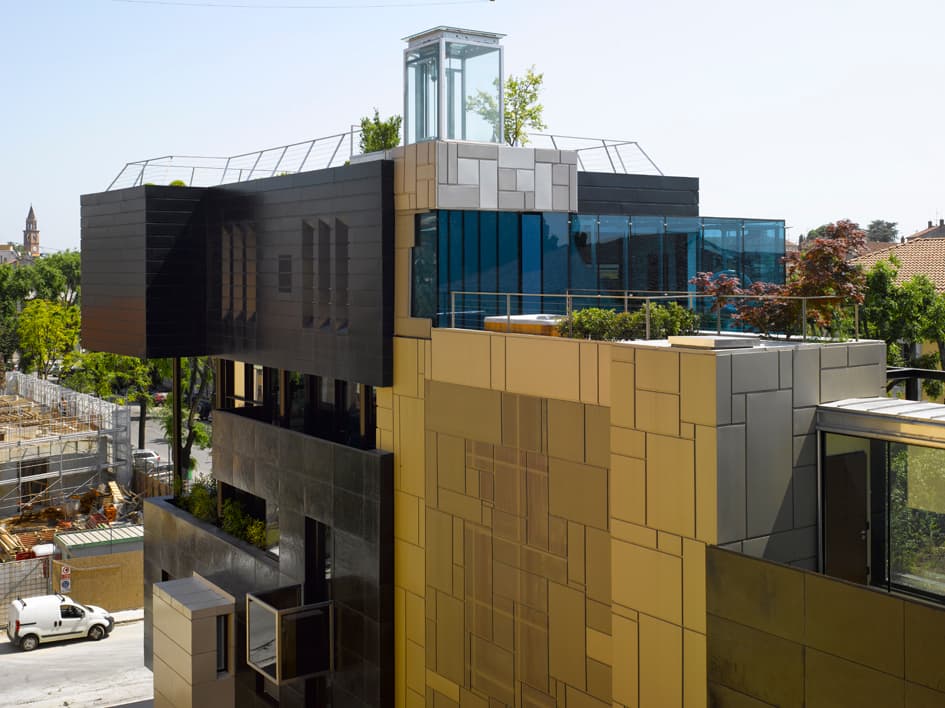
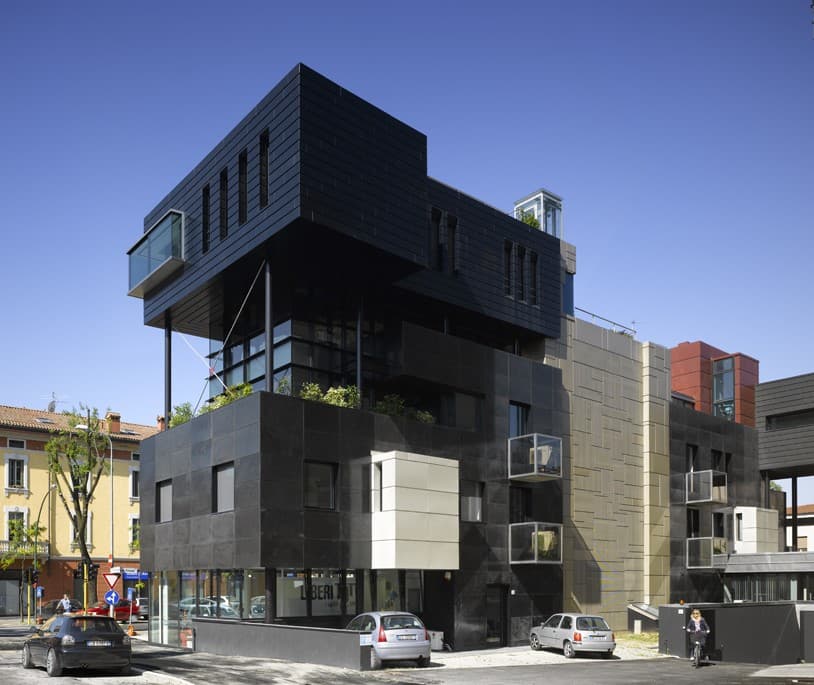
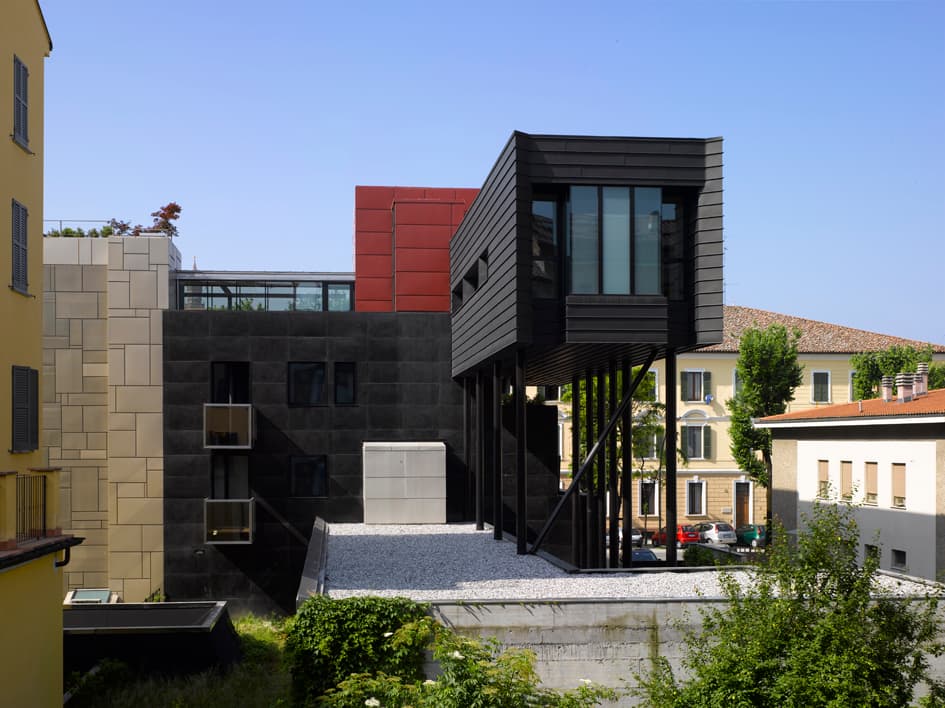
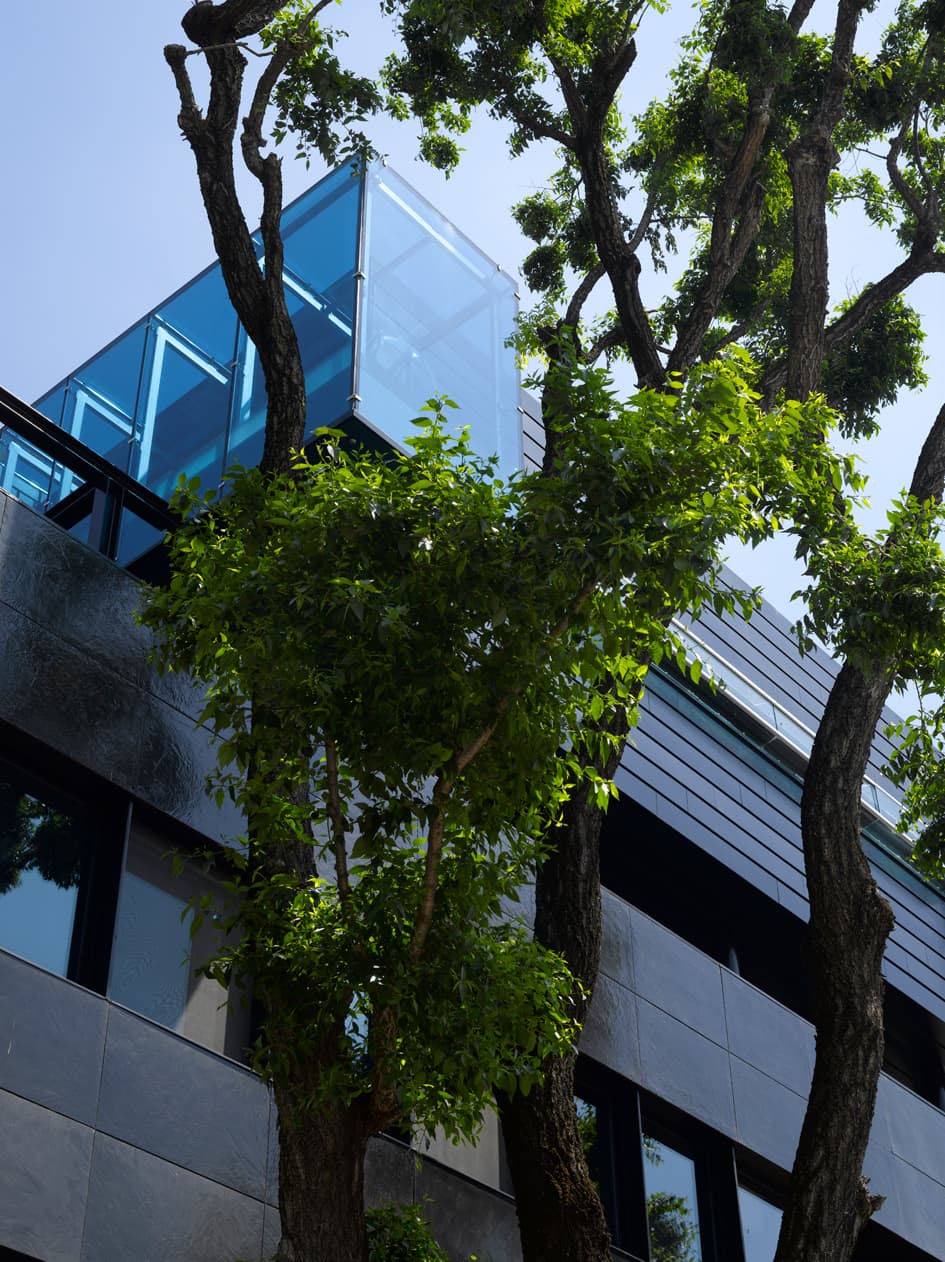
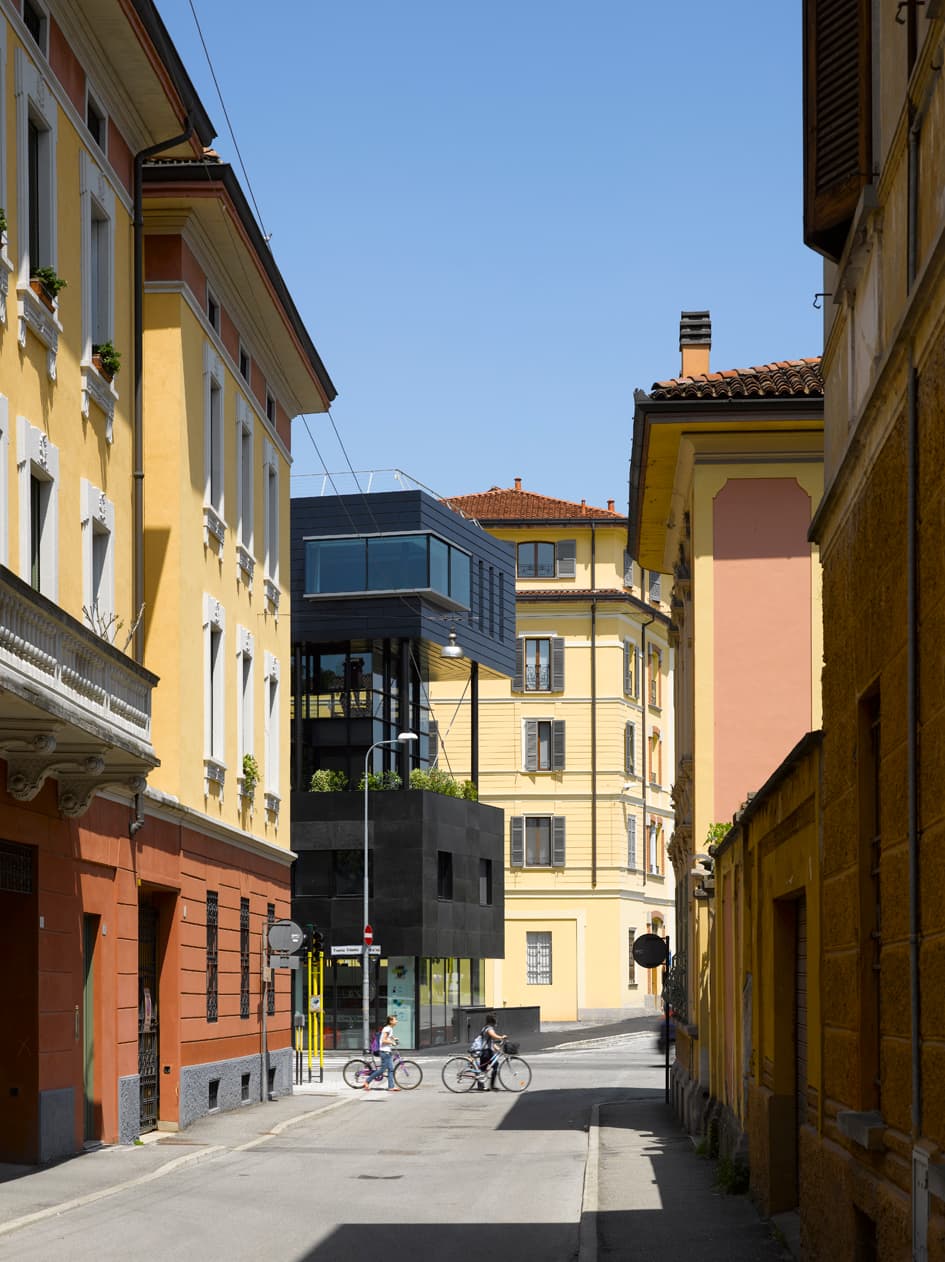
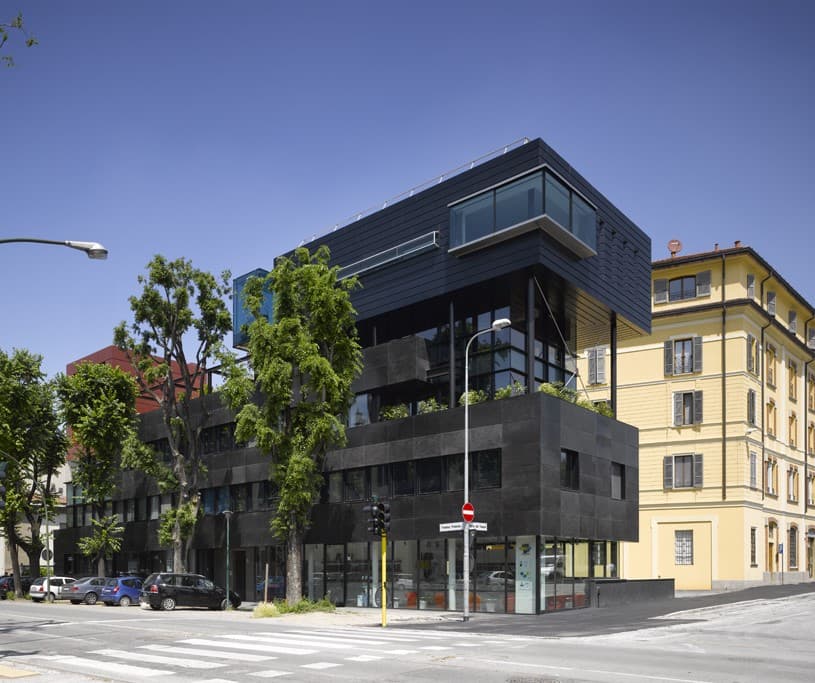
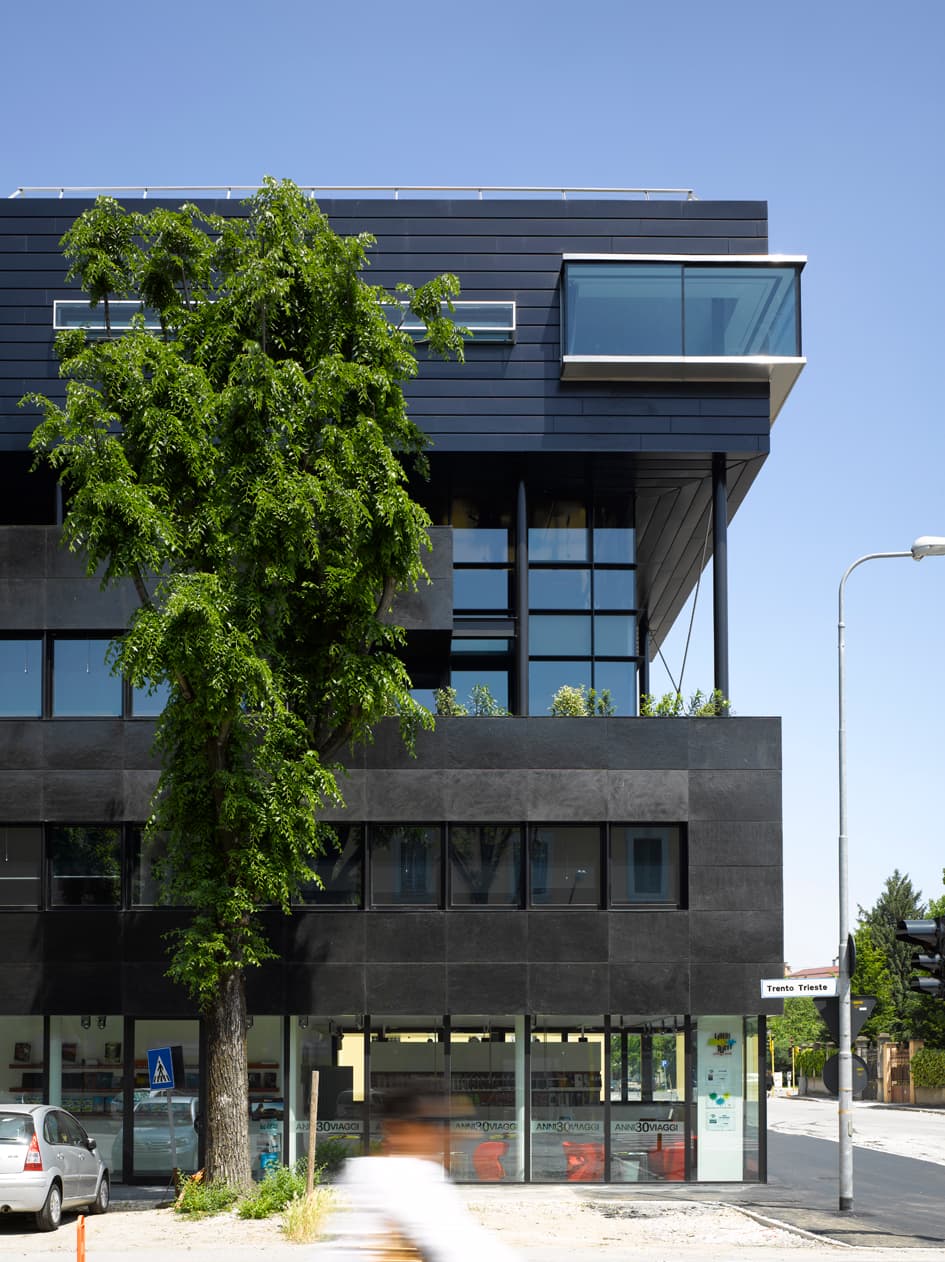
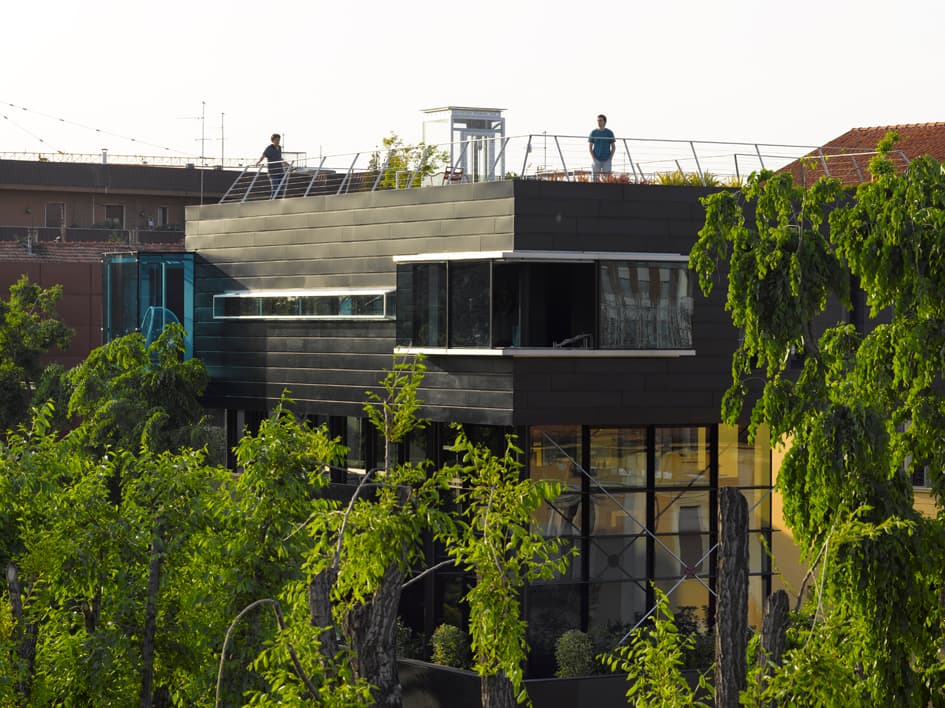
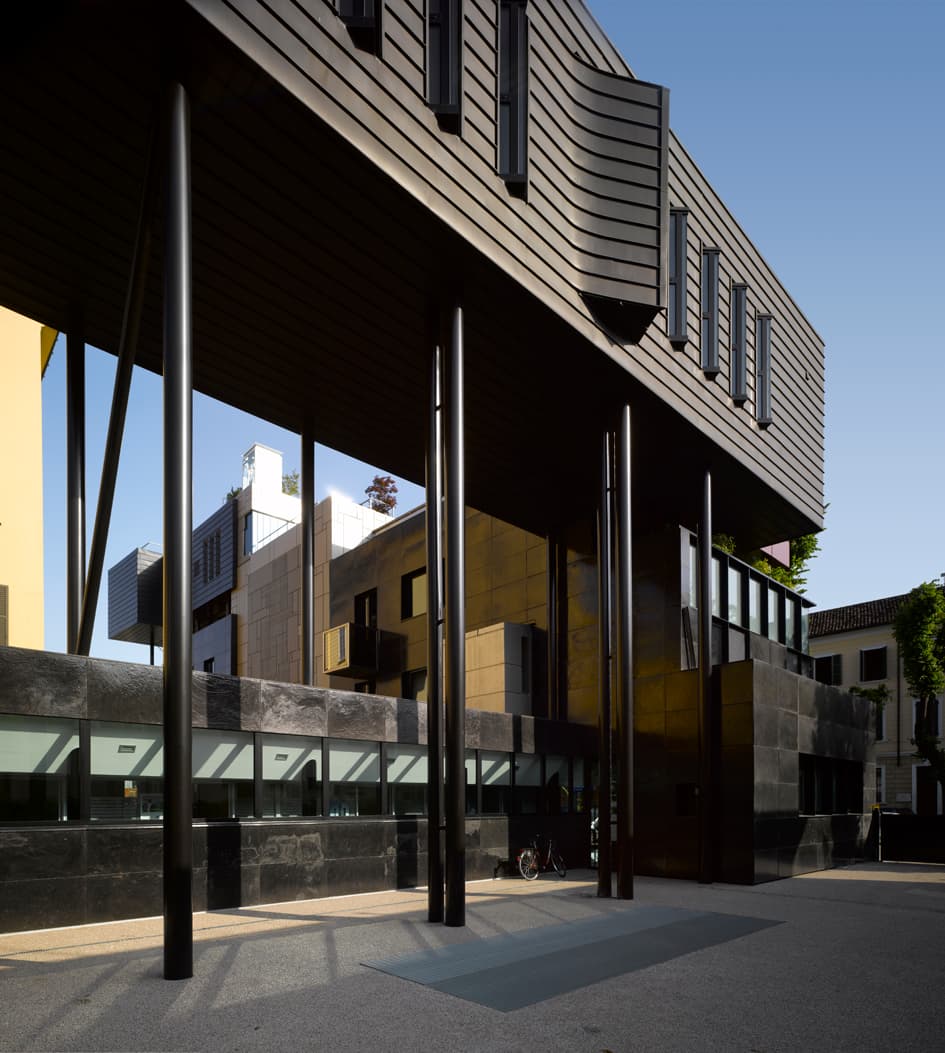
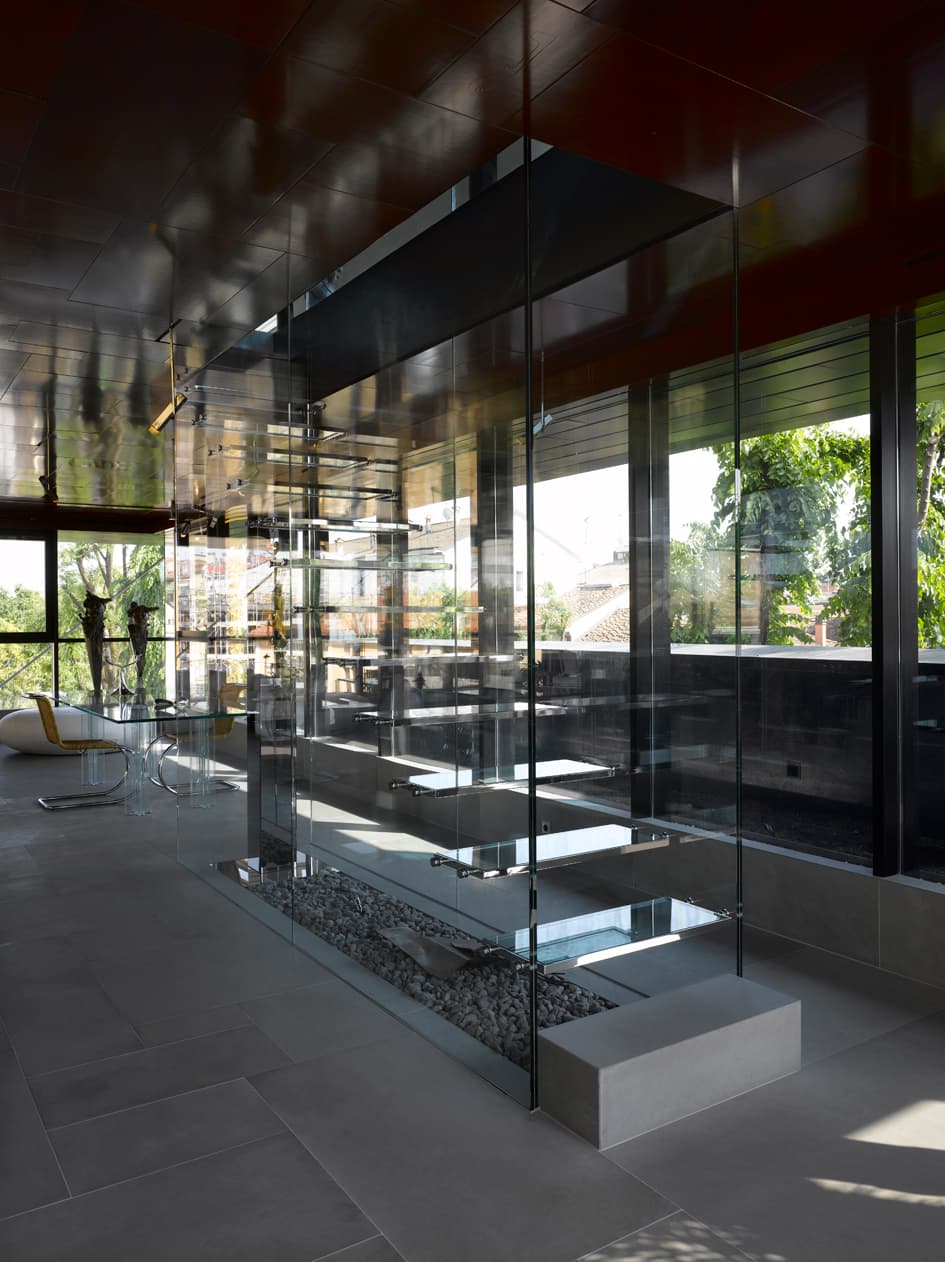
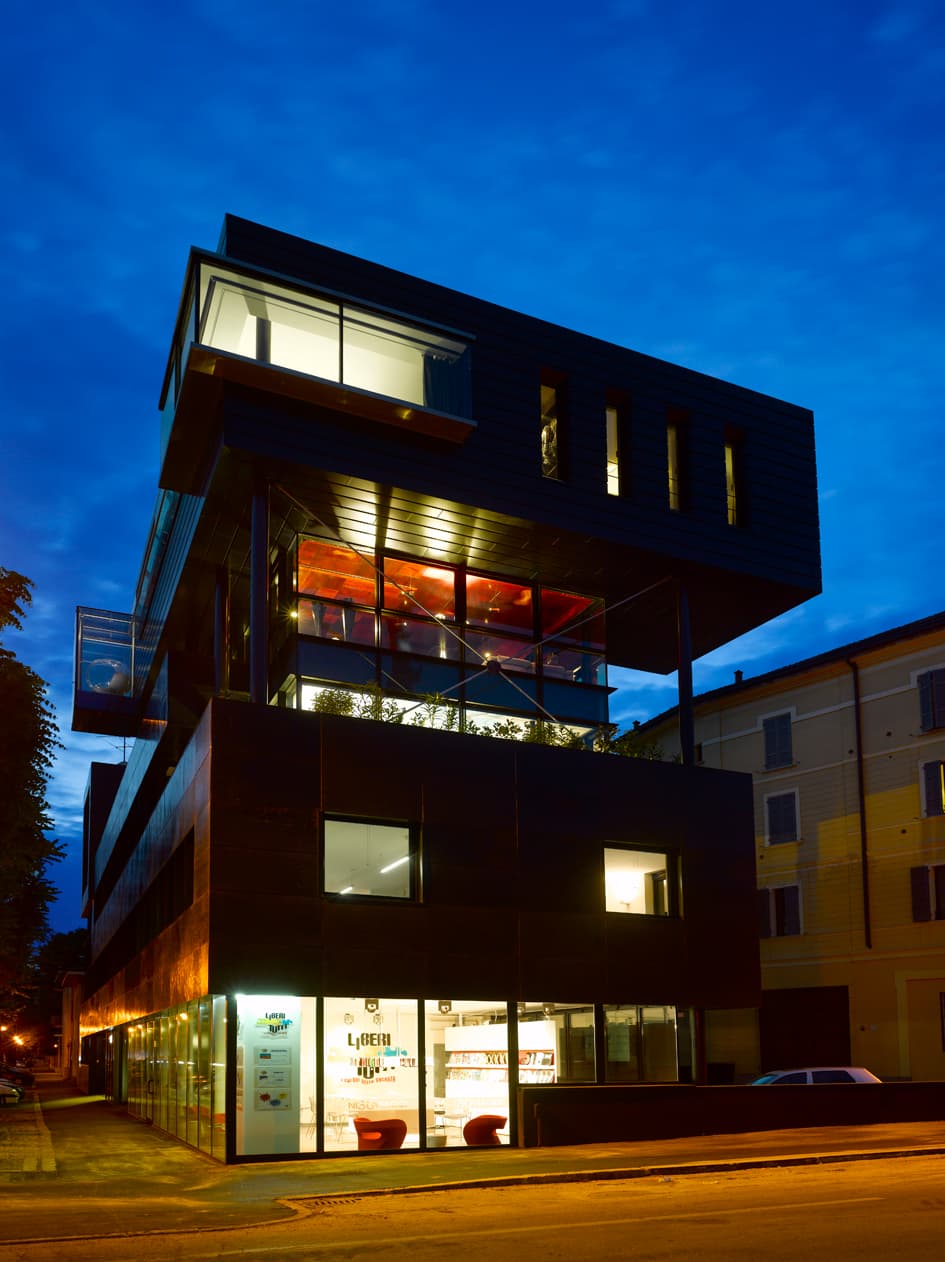
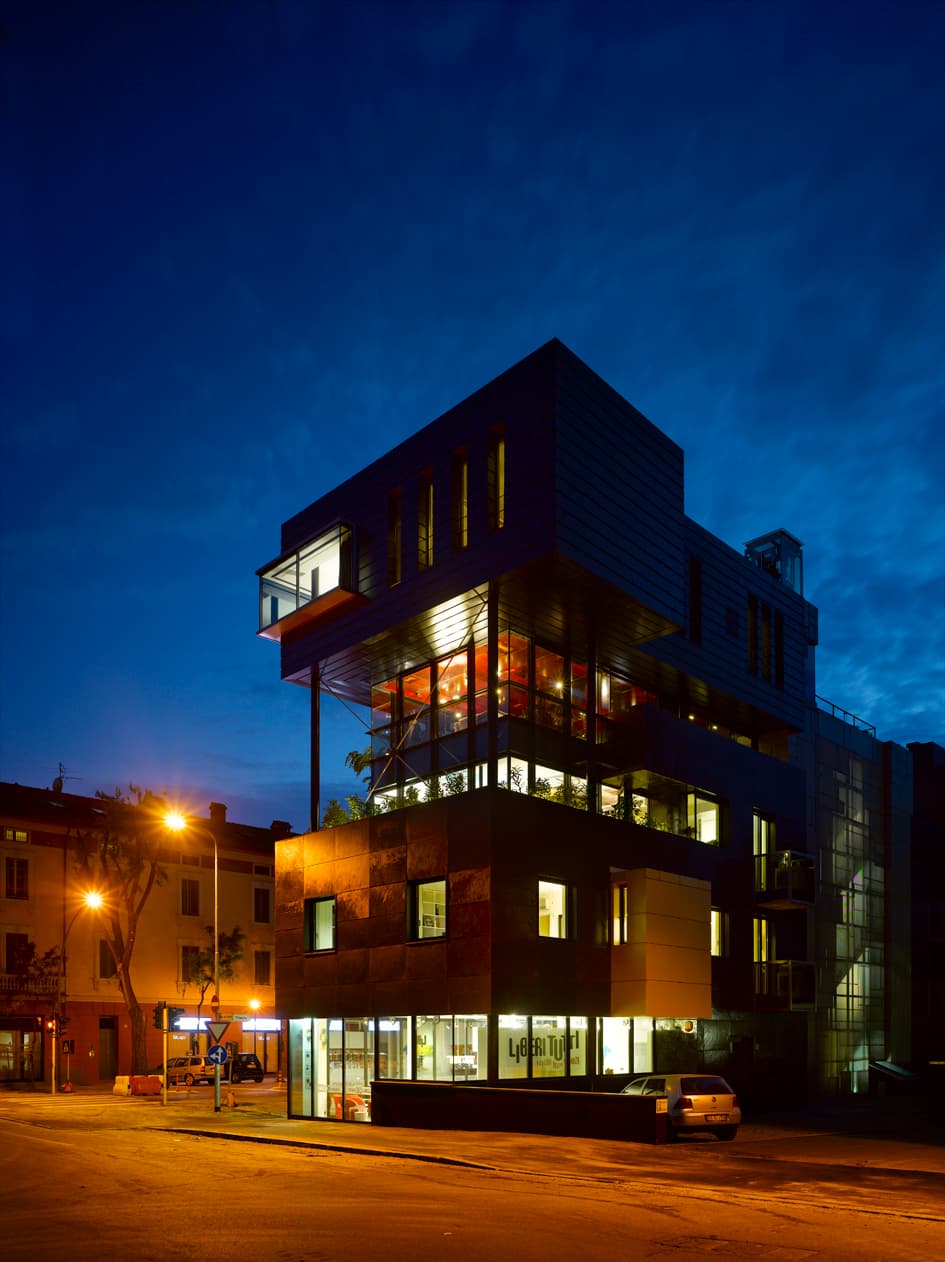
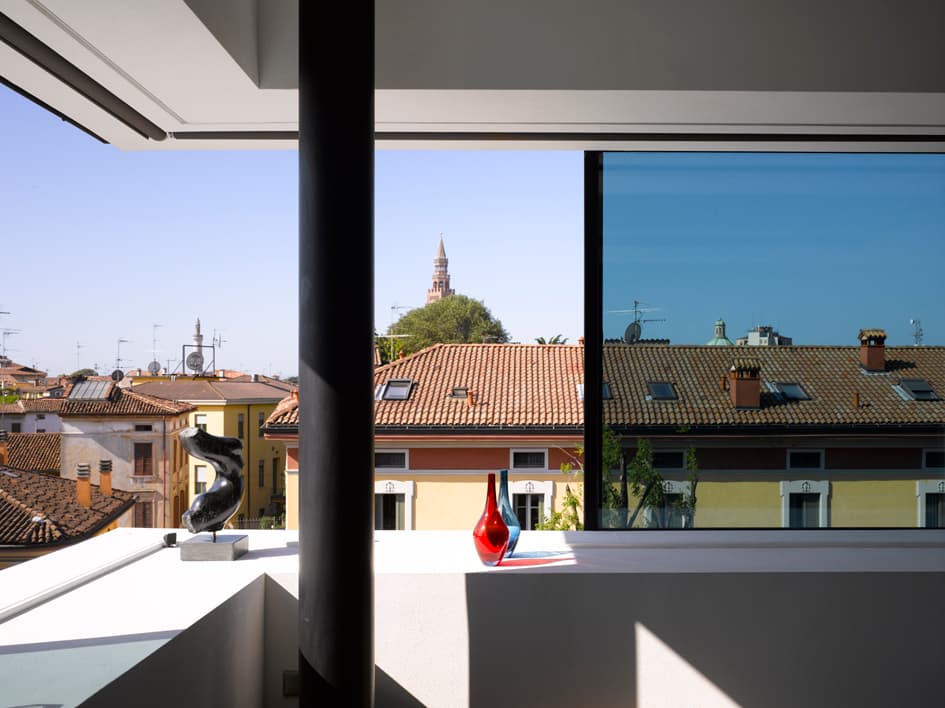
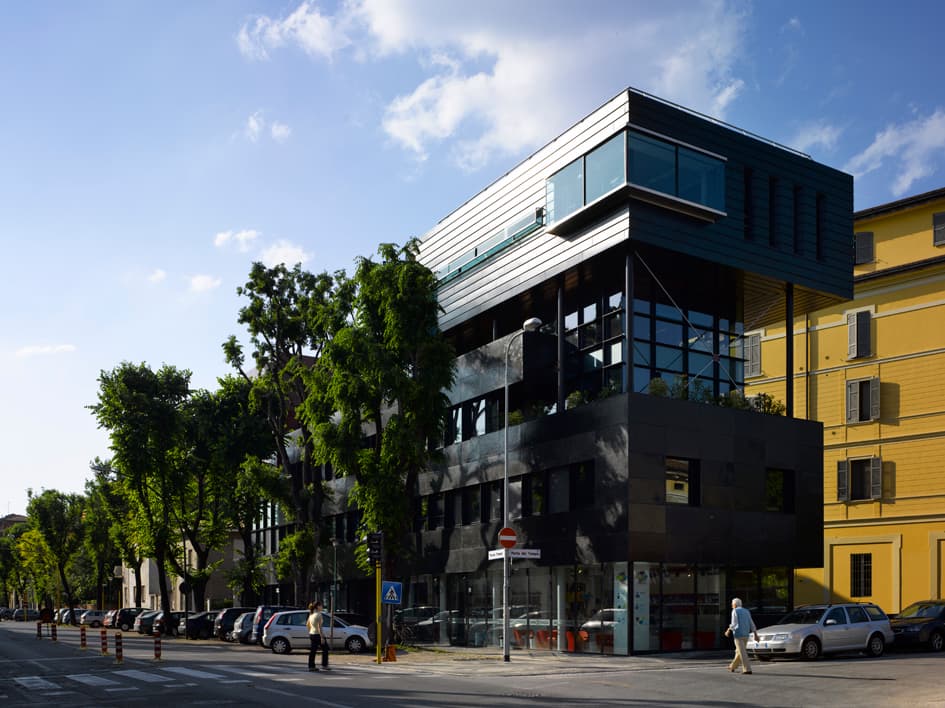
The that includes residence and commercial surfaces on the ground floor, is located n the building curtain along a tree-lined slip road within the city of Cremona and it is the result of an experimental project: the aim is to concatenate sectorial typological solutions and articulated architectural volumes in the same structure. The building represents the idea of bright commercial surfaces through refined mirrors on the street, the concept of housing of high residential quality and the notion of two-level suspended villa, an artist's residence, connecting these distinct forms of living in a single complex. Therefore the architecture is multifaceted, appearing a linear street front that in rising exposes projecting volumes, marked by the prominence of glazed walls and primary colors in the cladding, and dematerialized transparent volumes, which form an interruption in the strongly drawn materiality. The intent seems to be directed toward an open and evident confrontation of contrasts and oppositions defined by the project in an architecture that wants to express its own experimental contribution, by volumes, geometric forms (that are regular and orthogonal, but connected in a disruptive combination) and the wall surfaces themselves.
The fronts programmatically assume the need to offer luminous and perceptual variations, adding to the prepainted aluminum facade cladding a feature of liquidity, by laying down a transparent polyurethane casting so that the colors change as the light changes, in addition, the presence of the light and irregular reliefs makes indistinct the very material of the cladding.
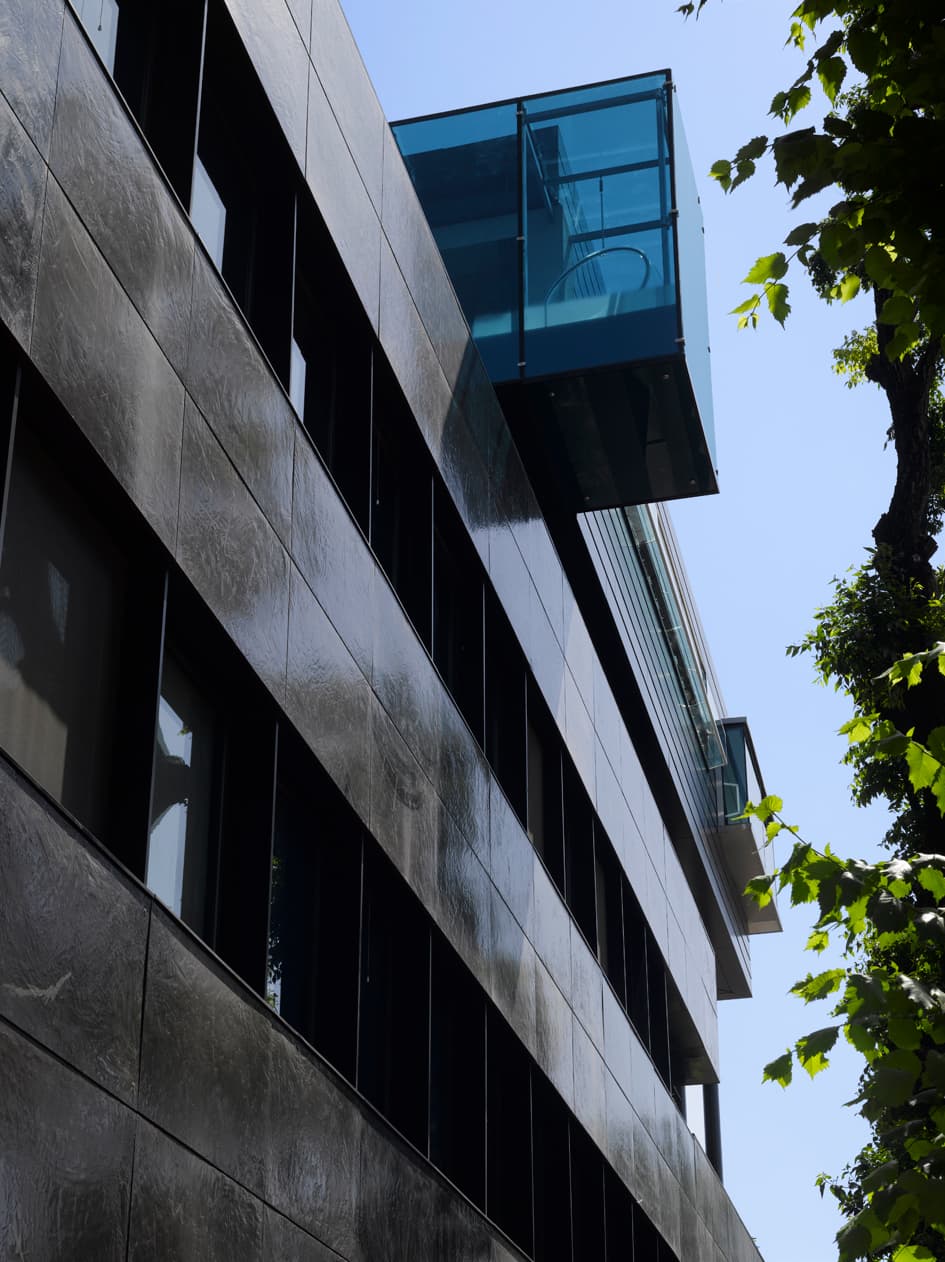
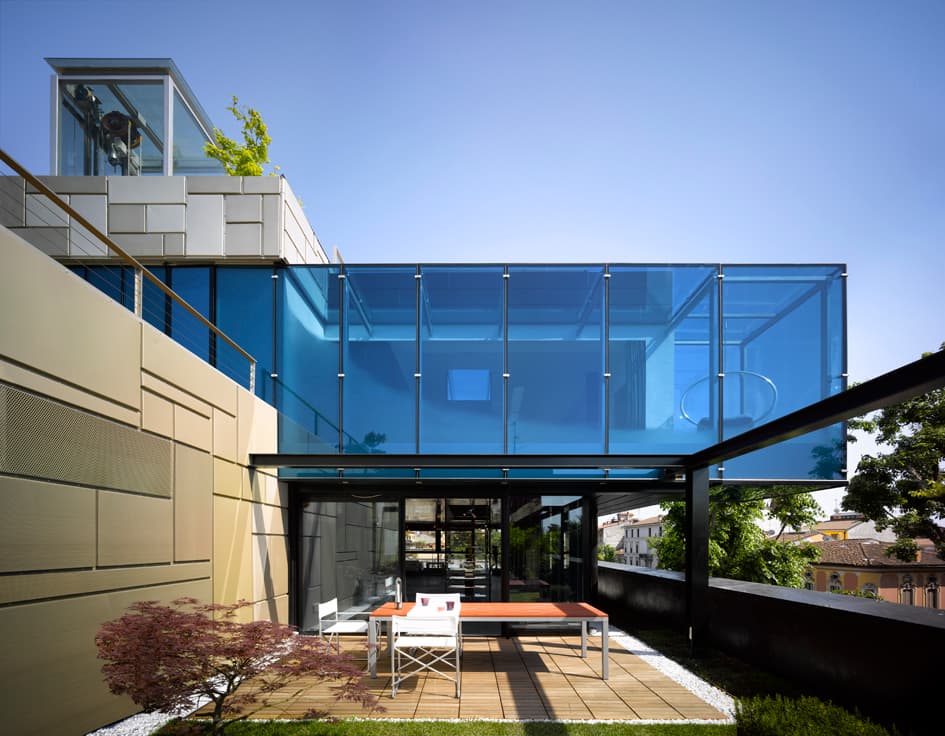
The geometry of the volumes is segmented and on the front the upper level is divided into two opposing attics, free on all sides; the thin blue volume is contrasted by a cube in the primary red color, on which a parallelepiped clad in anthracite Rheinzink is grafted and suspended. Volumes orthogonal to the main body on the street front, raised on slender steel pilotis, disarticulate the building in a complex dynamic, which nevertheless remains within a stated and still legible geometry, crowned by flat garden roofs, to offer spectacular views toward the ancient monumental fabric of the city.
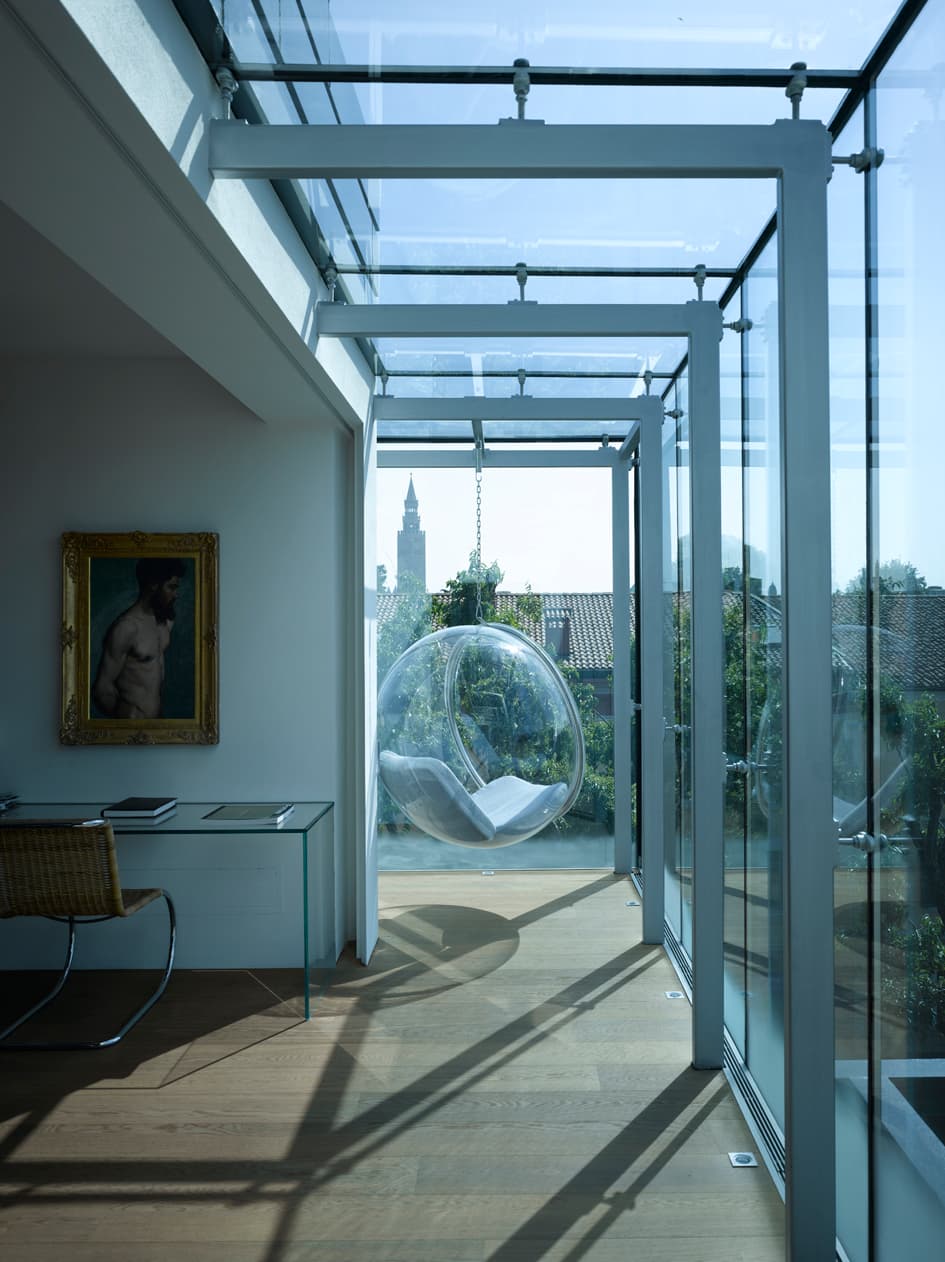
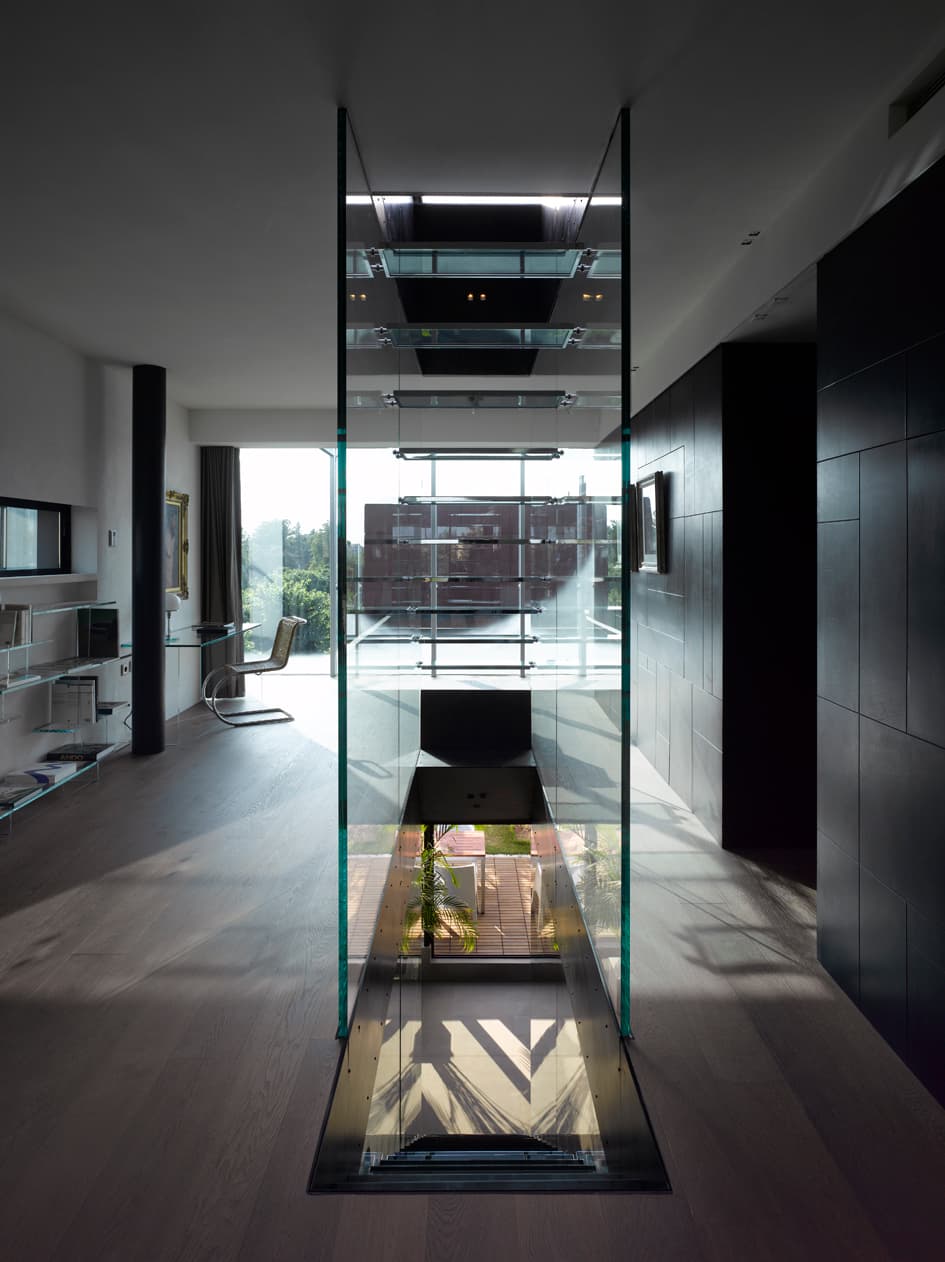
The design aims to dematerialize and make the architecture essential, concentrated, even in the sequence of compositional inventions: the interiors, especially in the suspended villa, also obey this logic of introducing an ambivalence of geometries and transparencies, crossing horizontal scans and vertical aspirations, caesuras in the fronts and upward escapes in the interiors. The long blue glazed tunnel, which runs through the body of the building and overhangs the front, is a measure of this ambivalence: it is simultaneously interior and exterior, transparent and protective, it is a boundary and an escape. Thus, the idea of privileged views toward the city also governs the composition of the living quarters: glass windows make the corners of the building dematerialized, staircases with glass steps become almost invisible in interiors punctuated by opaque or reflective walls, by textured maple wood ceilings and by artworks scattered on surfaces and emerging in the space of the living rooms.
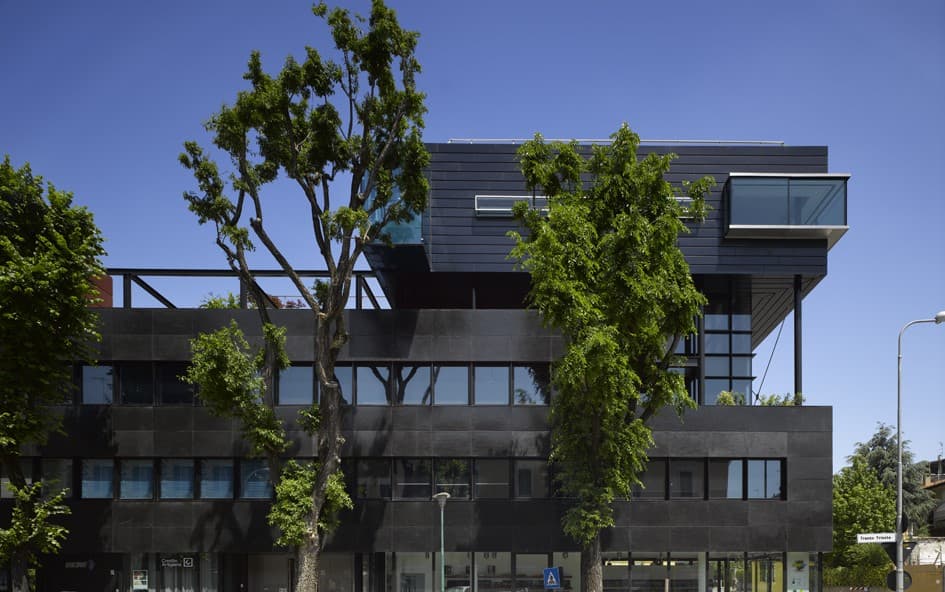
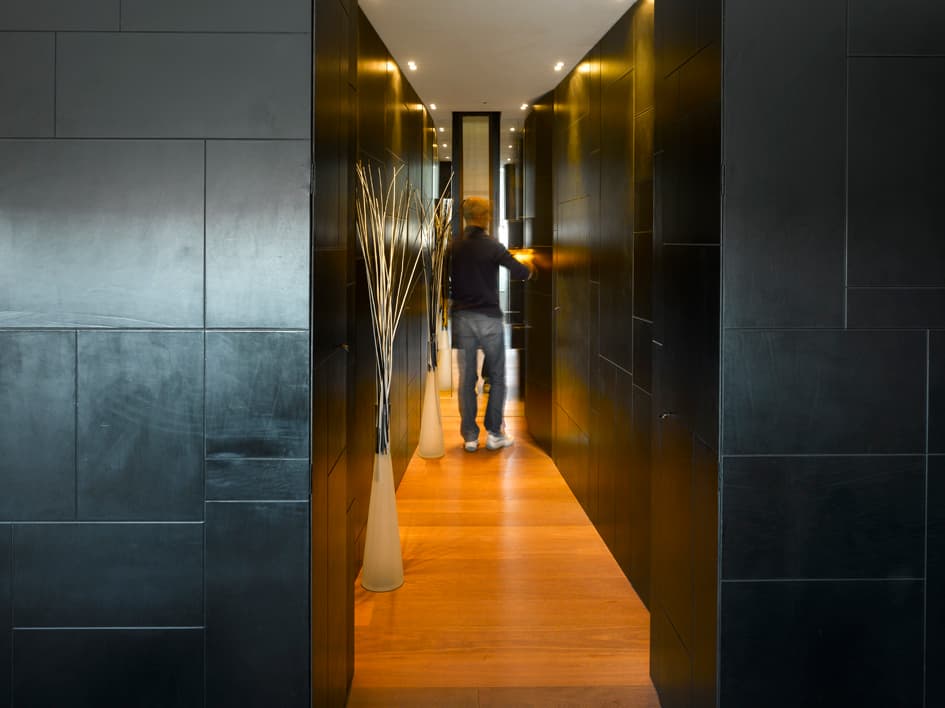
Architectural details underscore the incisive character of the project; the inventive abundance catalogs and argues the experimental line. In the suspended villa, the glazed lower volume orients "liquid" and immaterial conditions inside, accentuated by the interior mirrored surfaces that reverberate light. On the upper level, the atmosphere is transformed following obvious textures of materials which are contrasted in the rigor of the room's form: white plaster, oak wood floor, vulcanized gray, a wall covered in black leather with a refined texture concealing the doors to the rooms behind.At the same time all these contrasts lead back to the unity and to the essentiality of the architectural design.
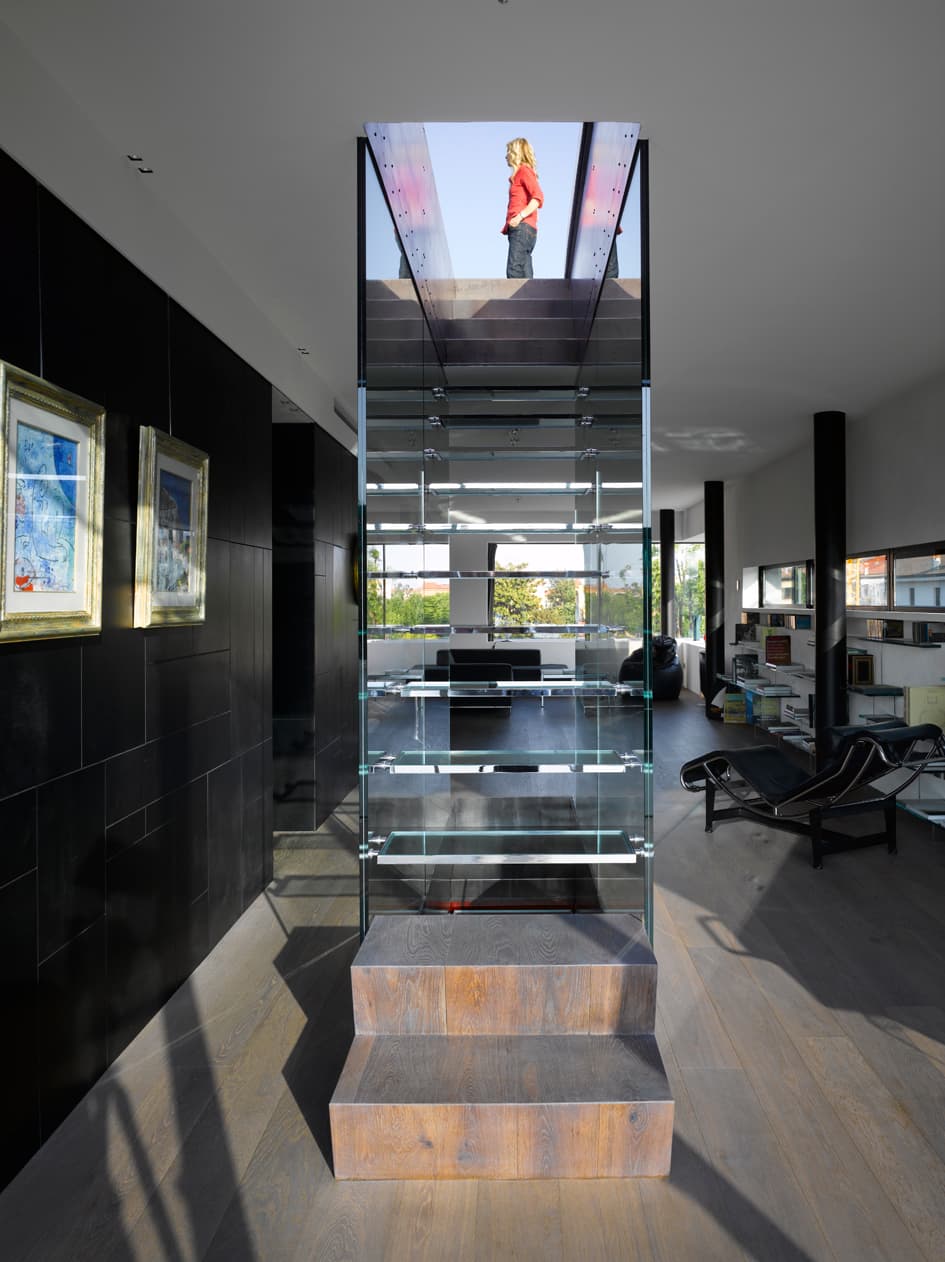
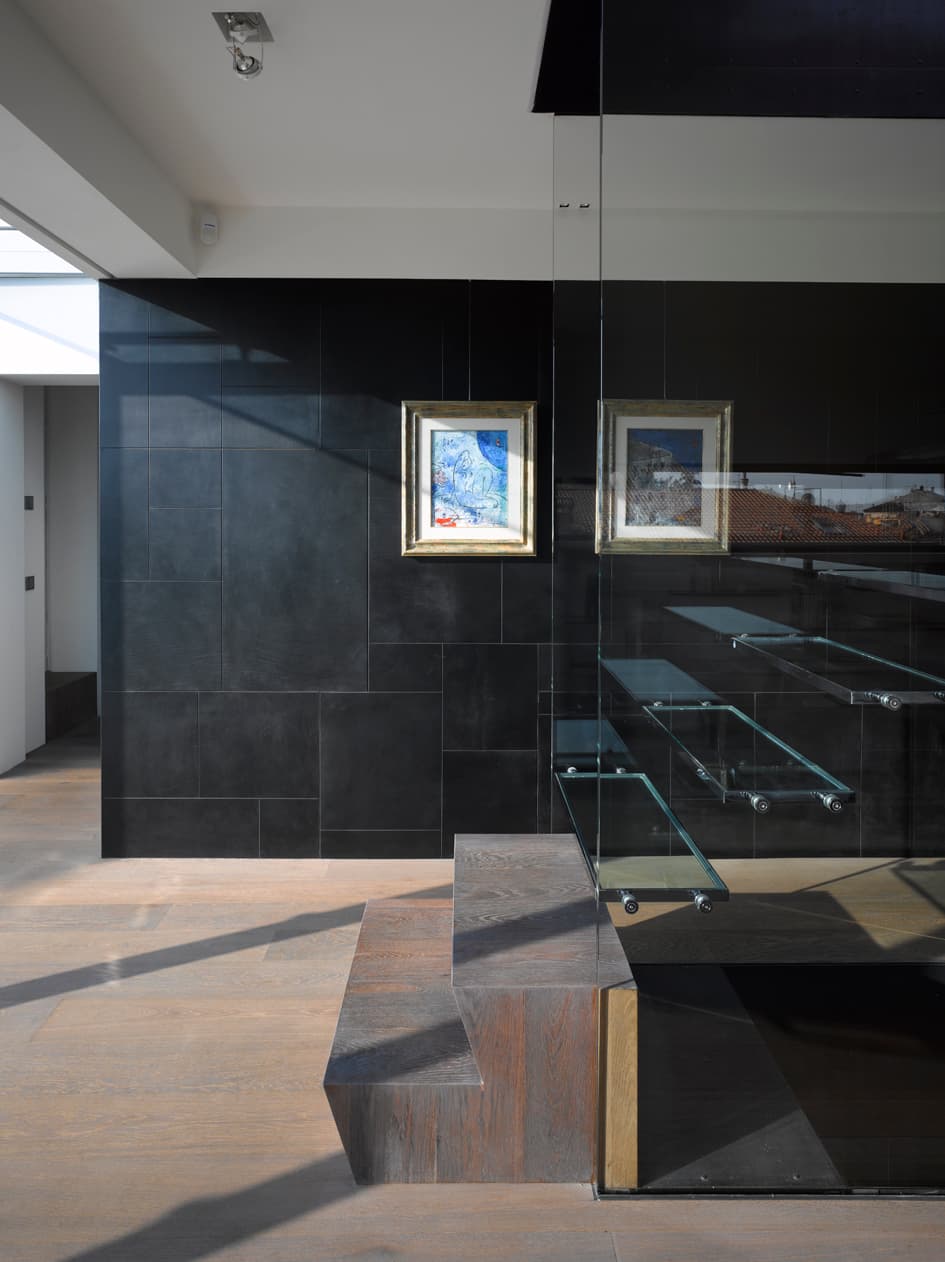
And emotional paths abound. The elevator with transparent cabin accompanies the movement with walls enriched by a performance art, in which images are passed in accelerated review, finally offering the surprise of a higher landing in the glazed cube of the roof garden overlooking the city. The upward tension is reflected with great luminous evidence along the glazed, immaterial staircase: it connects the floors of the suspended villa and it leads to the roof-garden, through a horizontally sliding skylight in continuous and immediate contact with the sky. Inside the suspended villa, the reference to Antonio Stradivari's hometown innervates a path of emotions; the classical forms of the violins on the ceiling segment the spaces, until reconstructing the unity of the design in the string quartet that concludes the decoration of the living area.
Materials and lights: natural light filters through the motorized blinds, concealed in the wooden veils, which allow the surrounding urban harmony to shine through and the entire interior space to permeate moreover, the spotlights with random distribution reflect light on the walls making the environment ethereal and immaterial and accentuating the tension of the building and the living quarters. A new relationship between interior and exterior is established according to which immateriality in the light reverberations suggest reflective ways of living, accompanied by the elegance of materials.
Francesco Pagliari
Curved Concrete
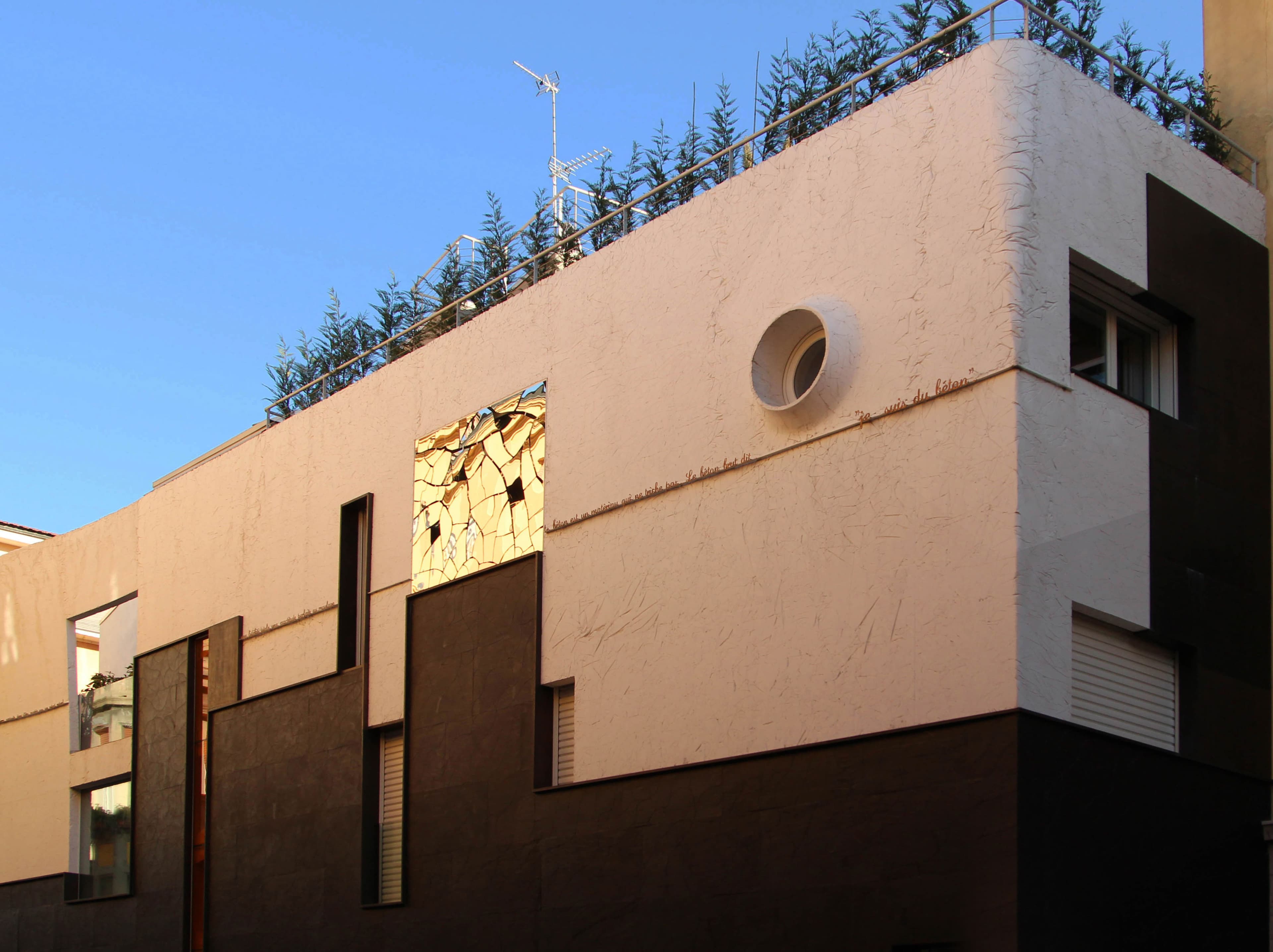
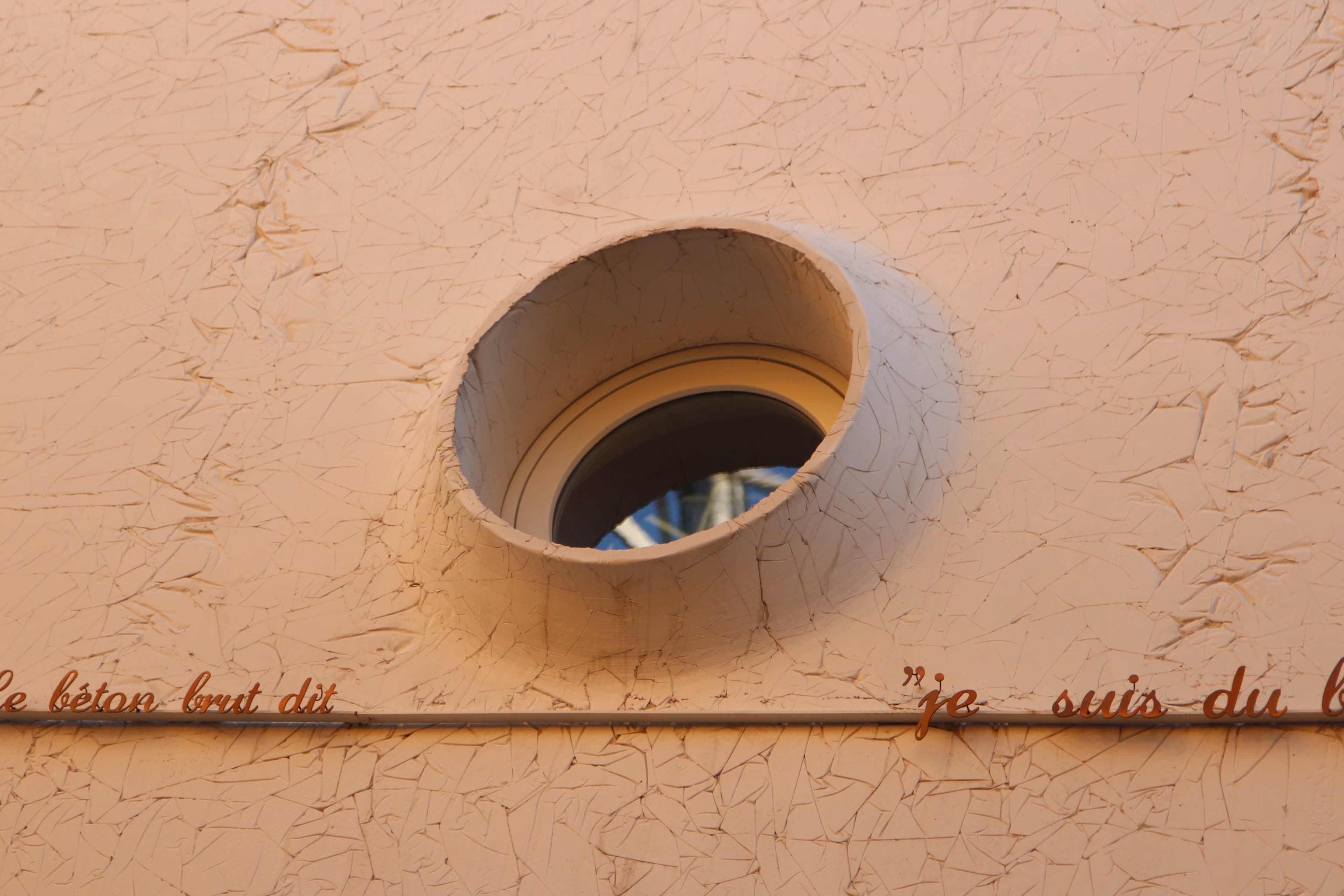
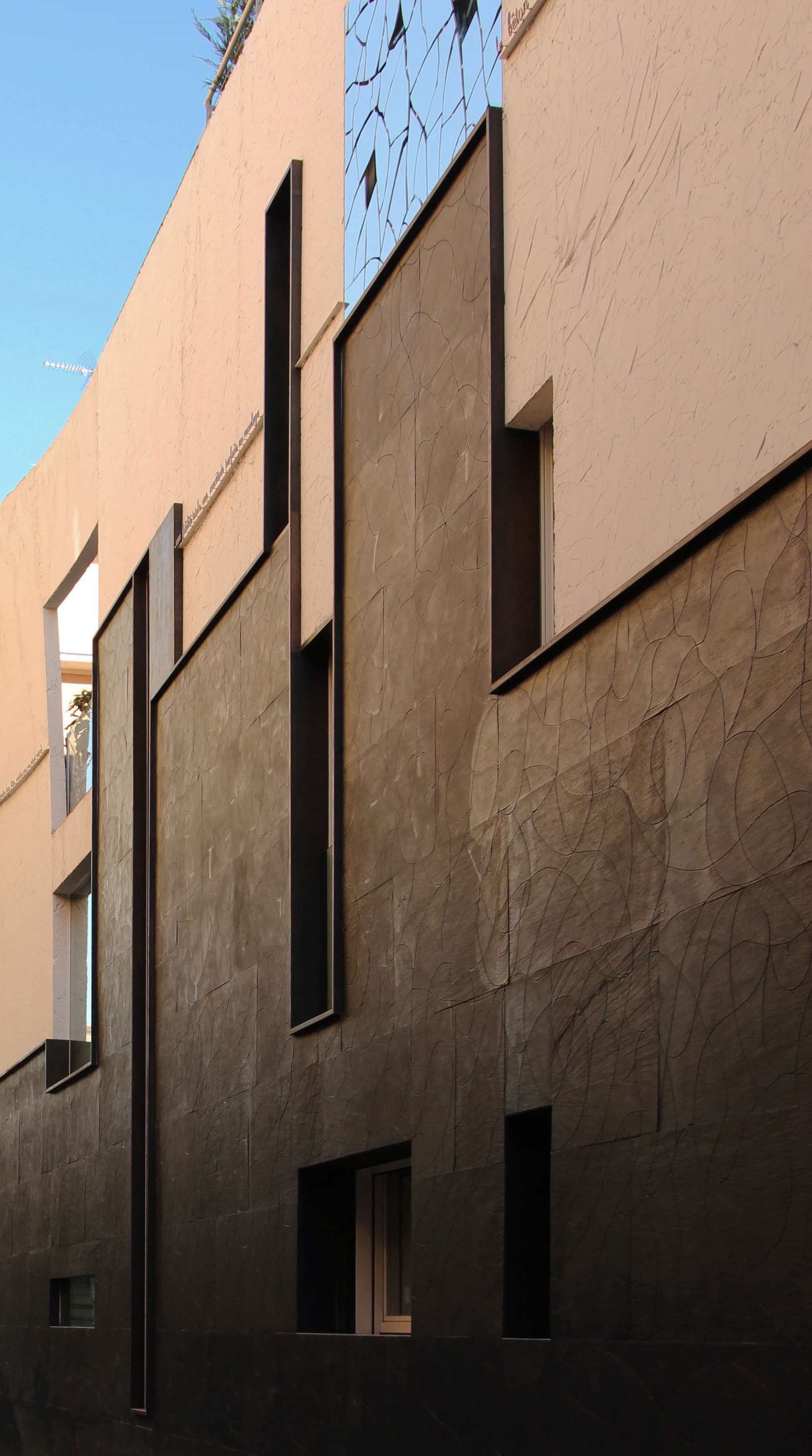
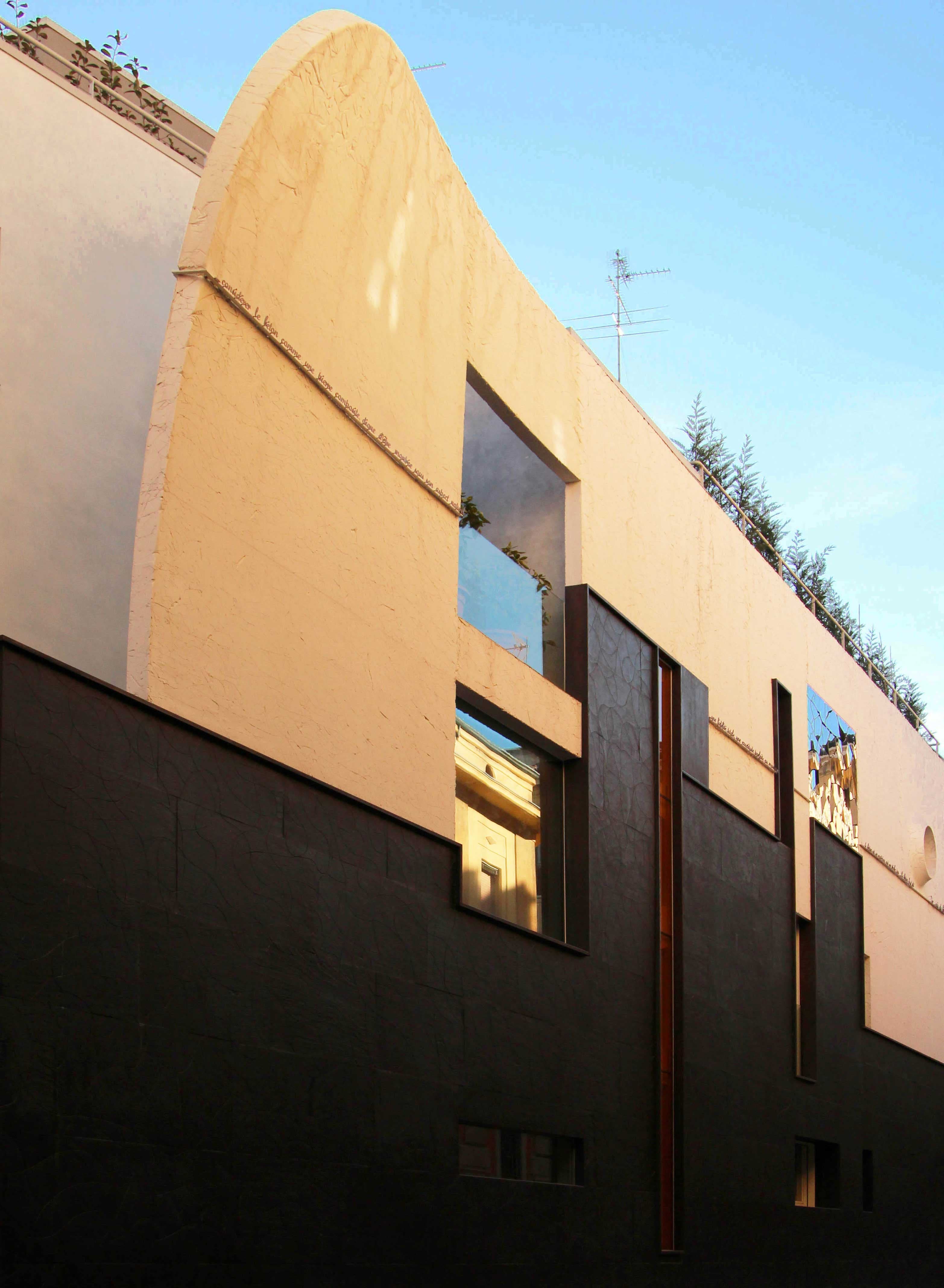
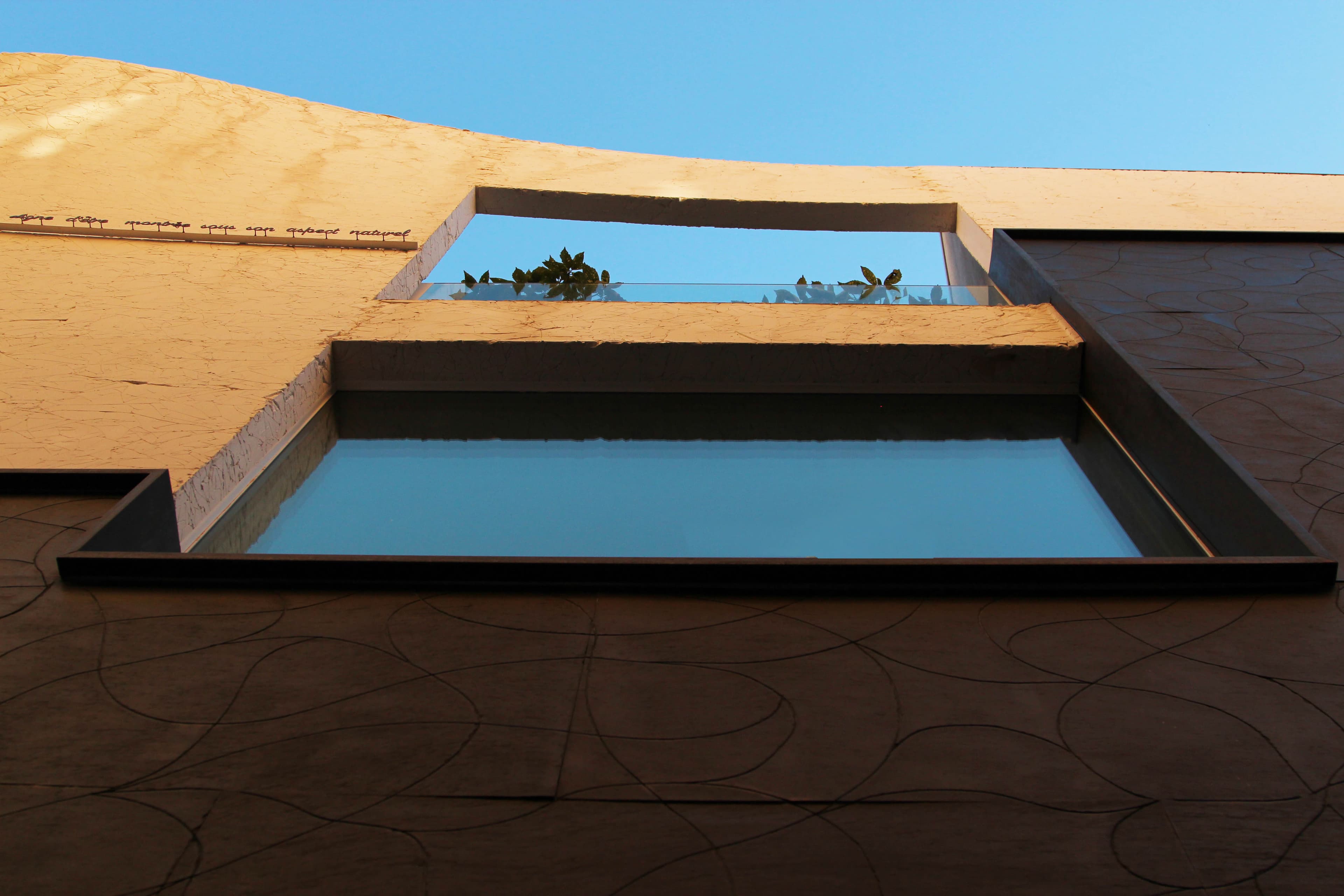
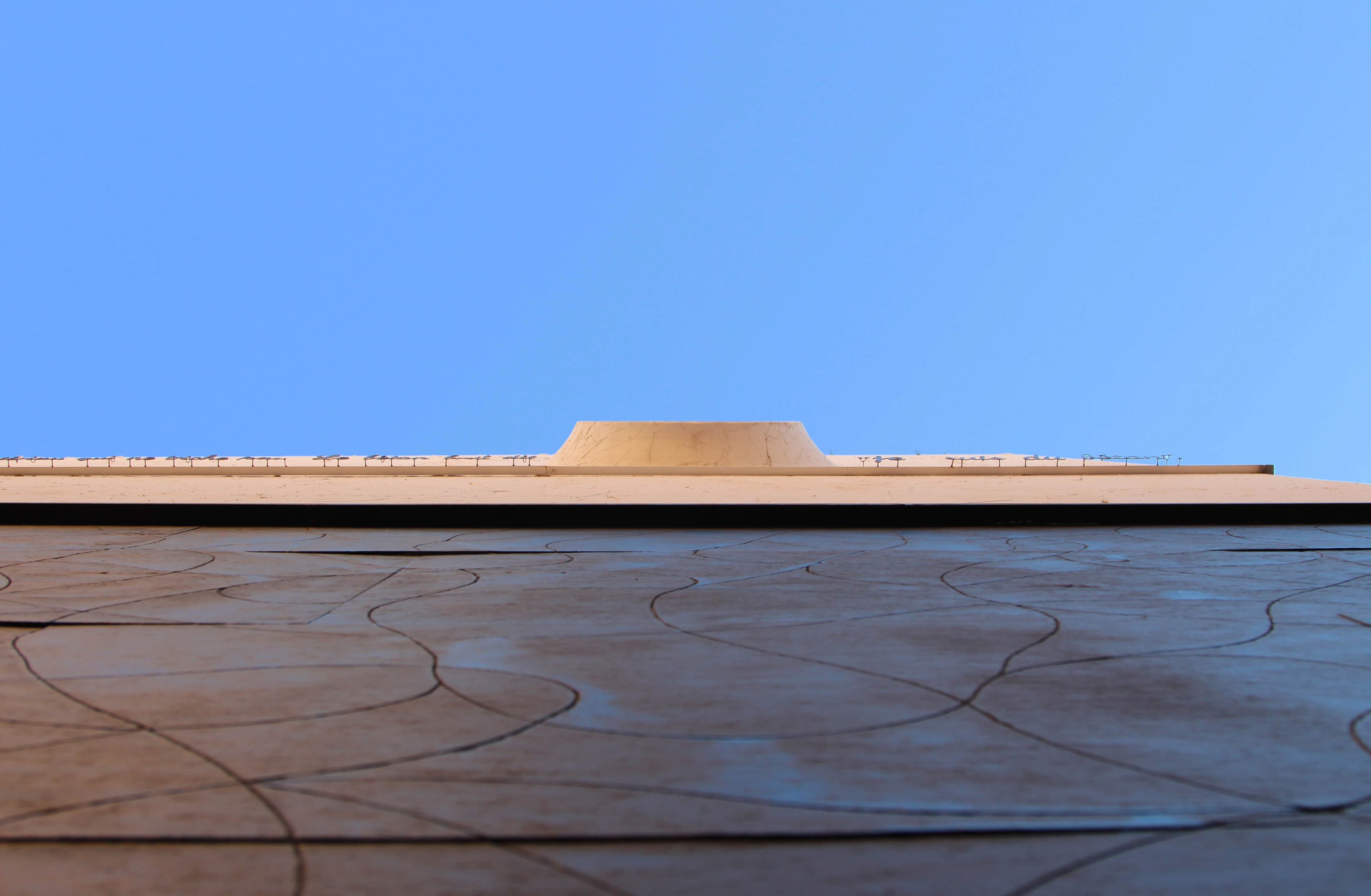
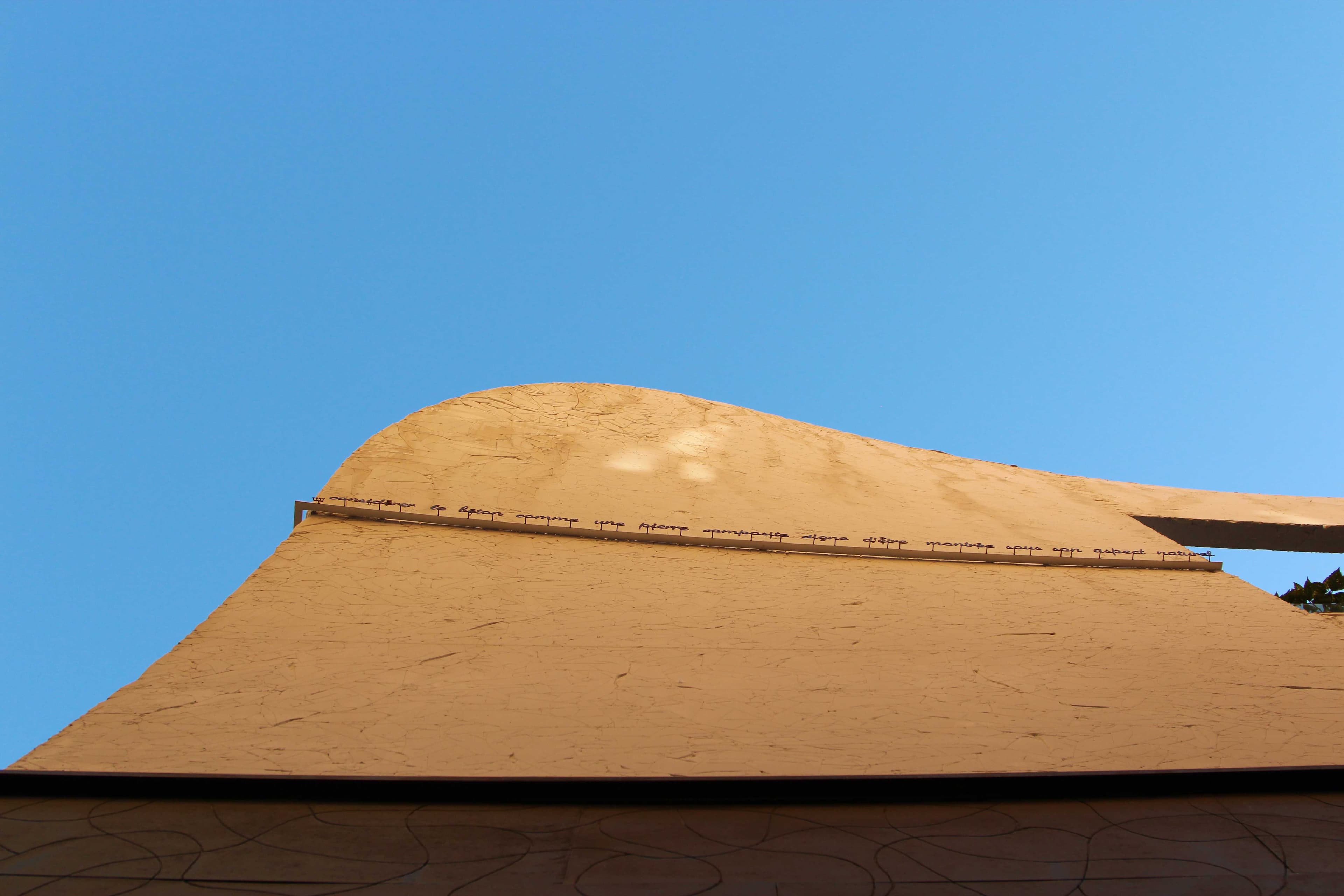
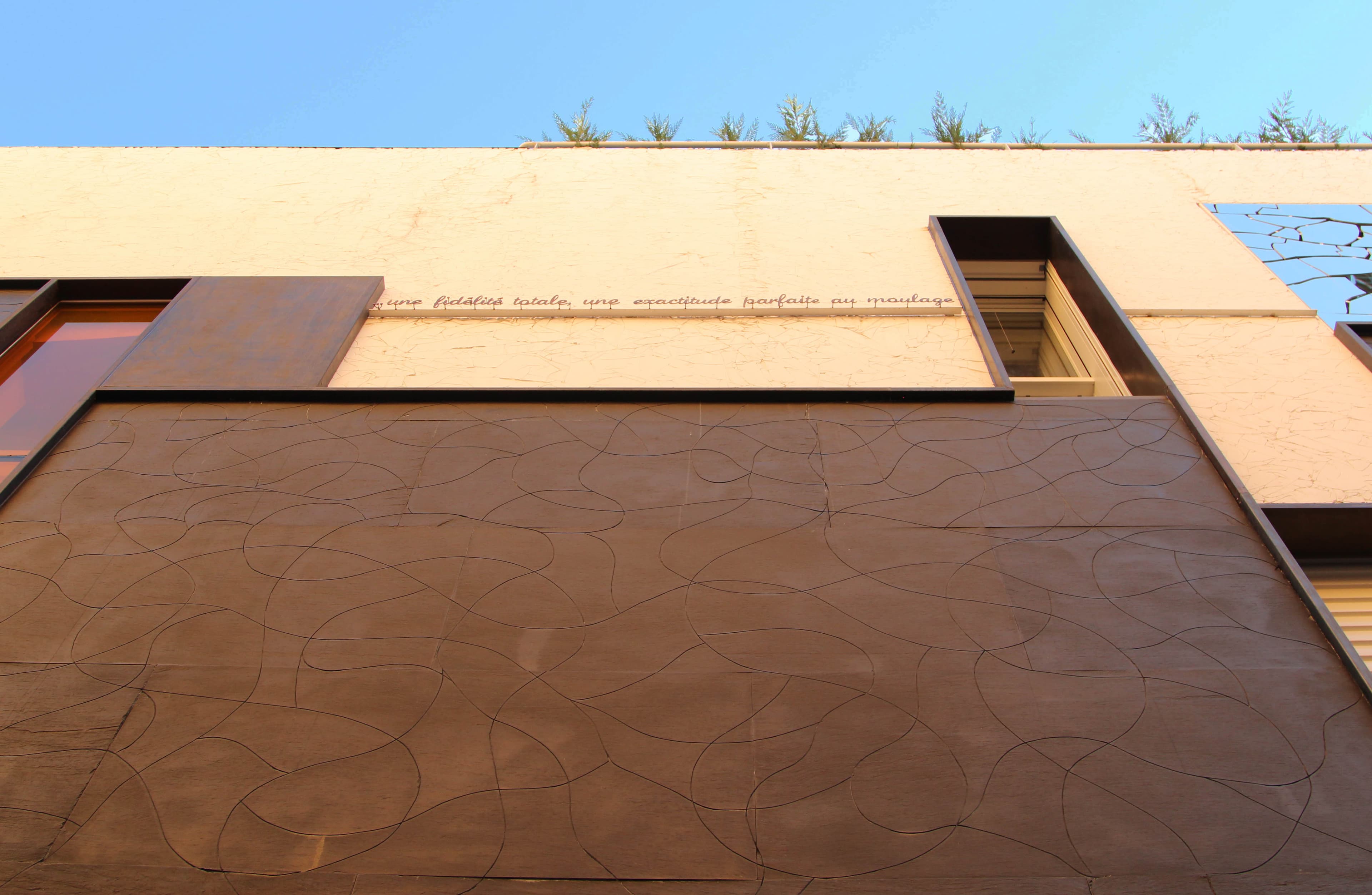
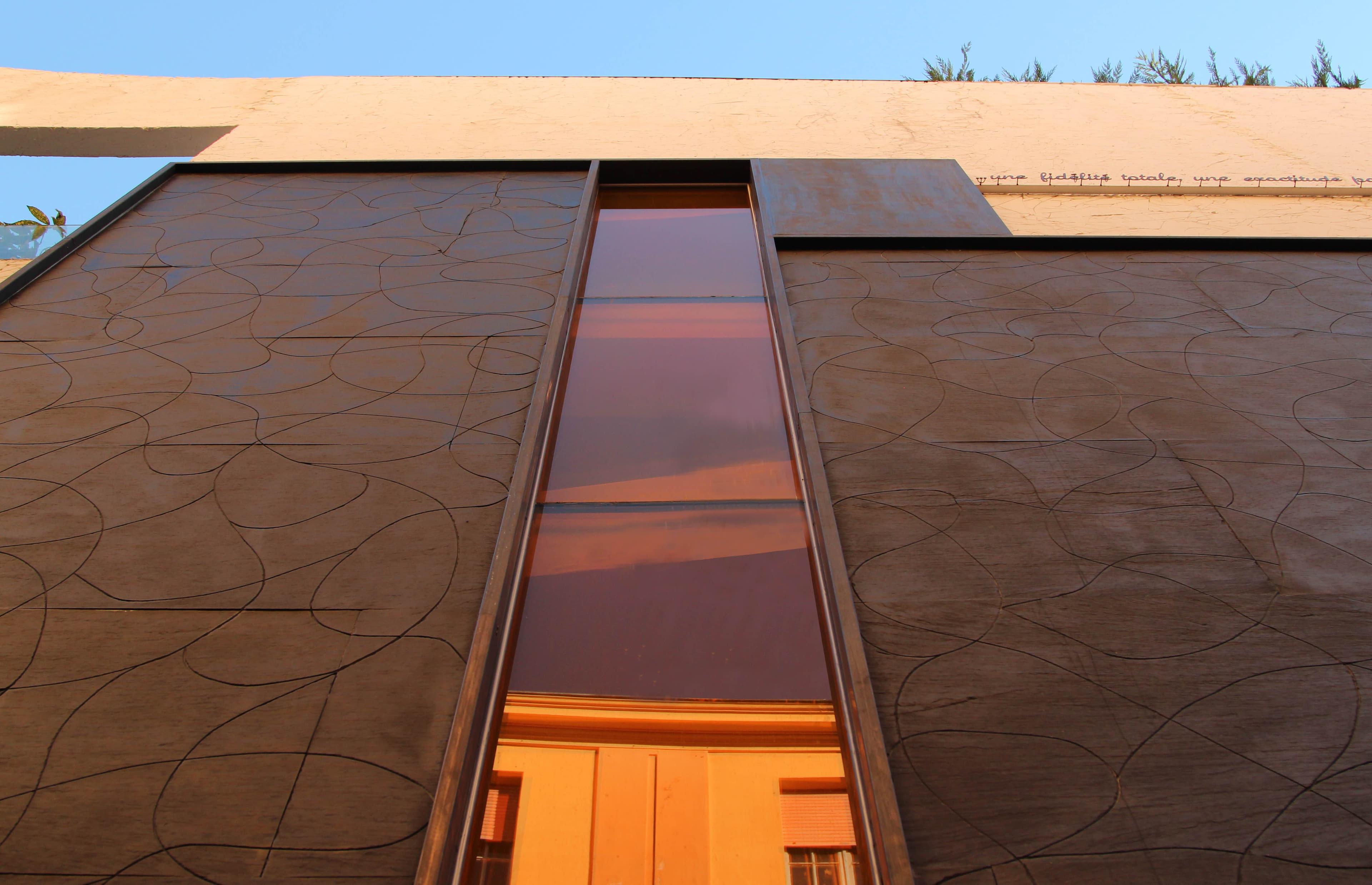
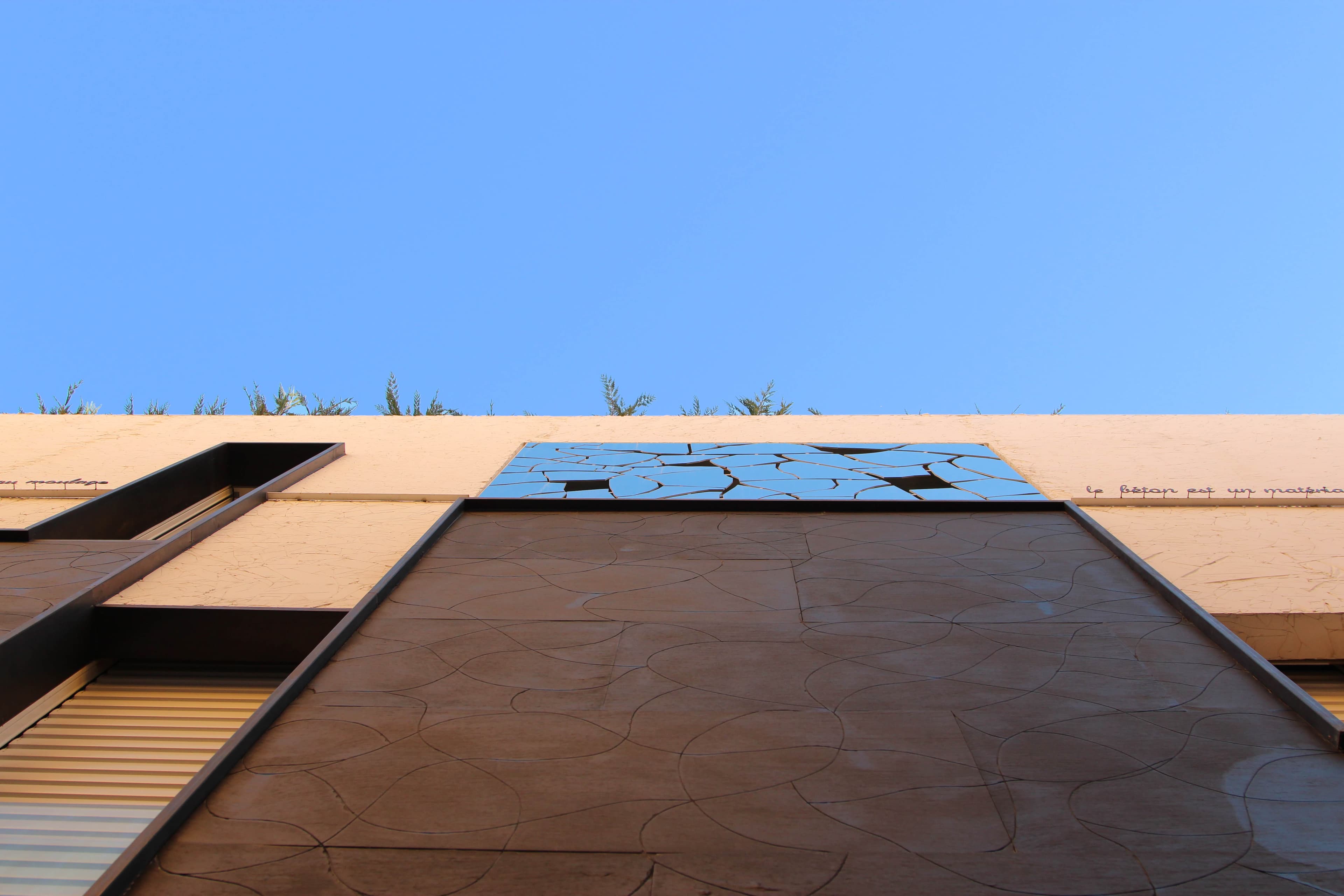
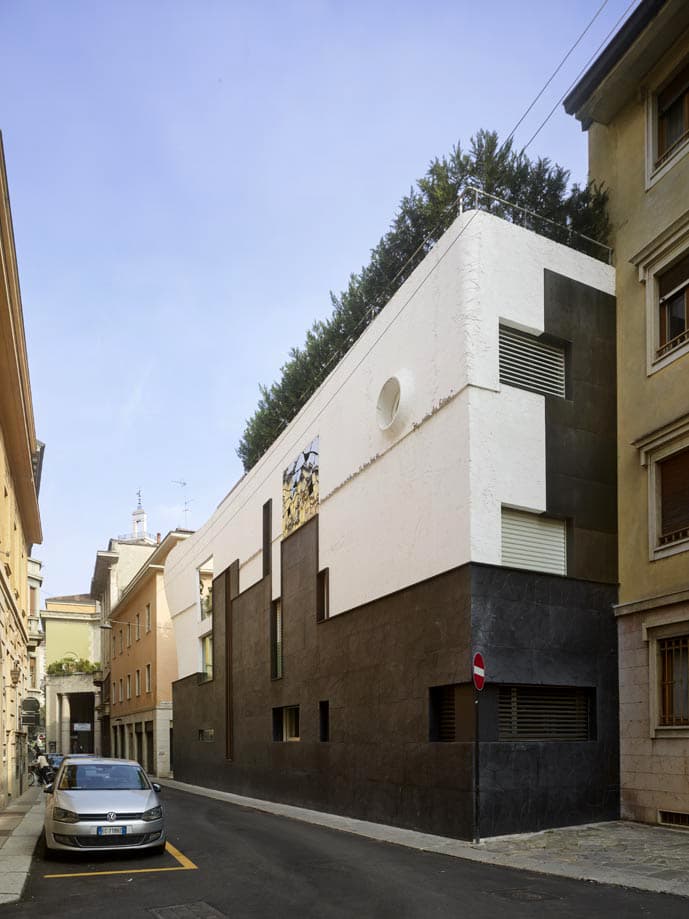
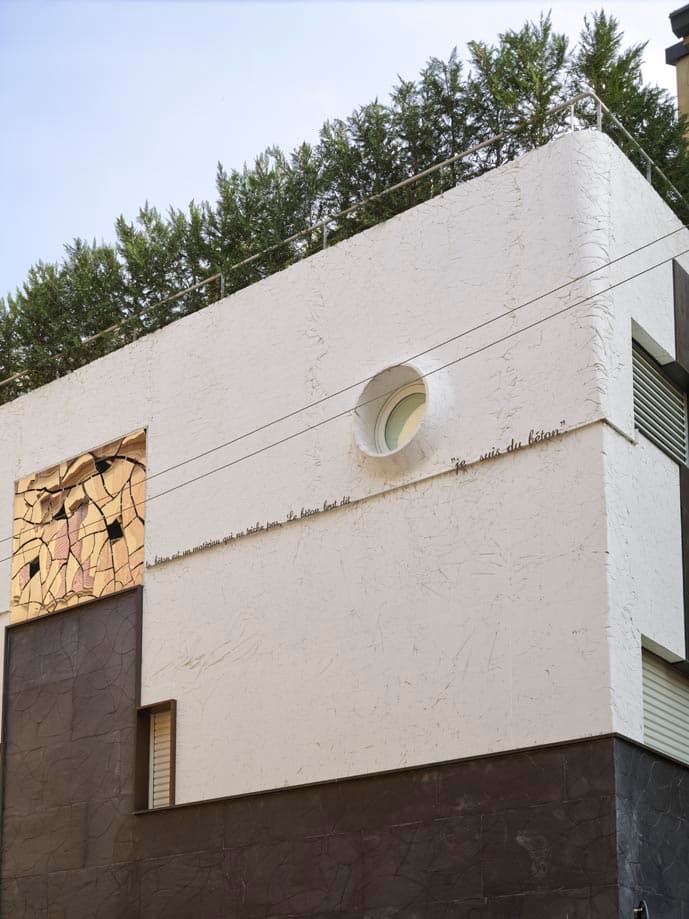
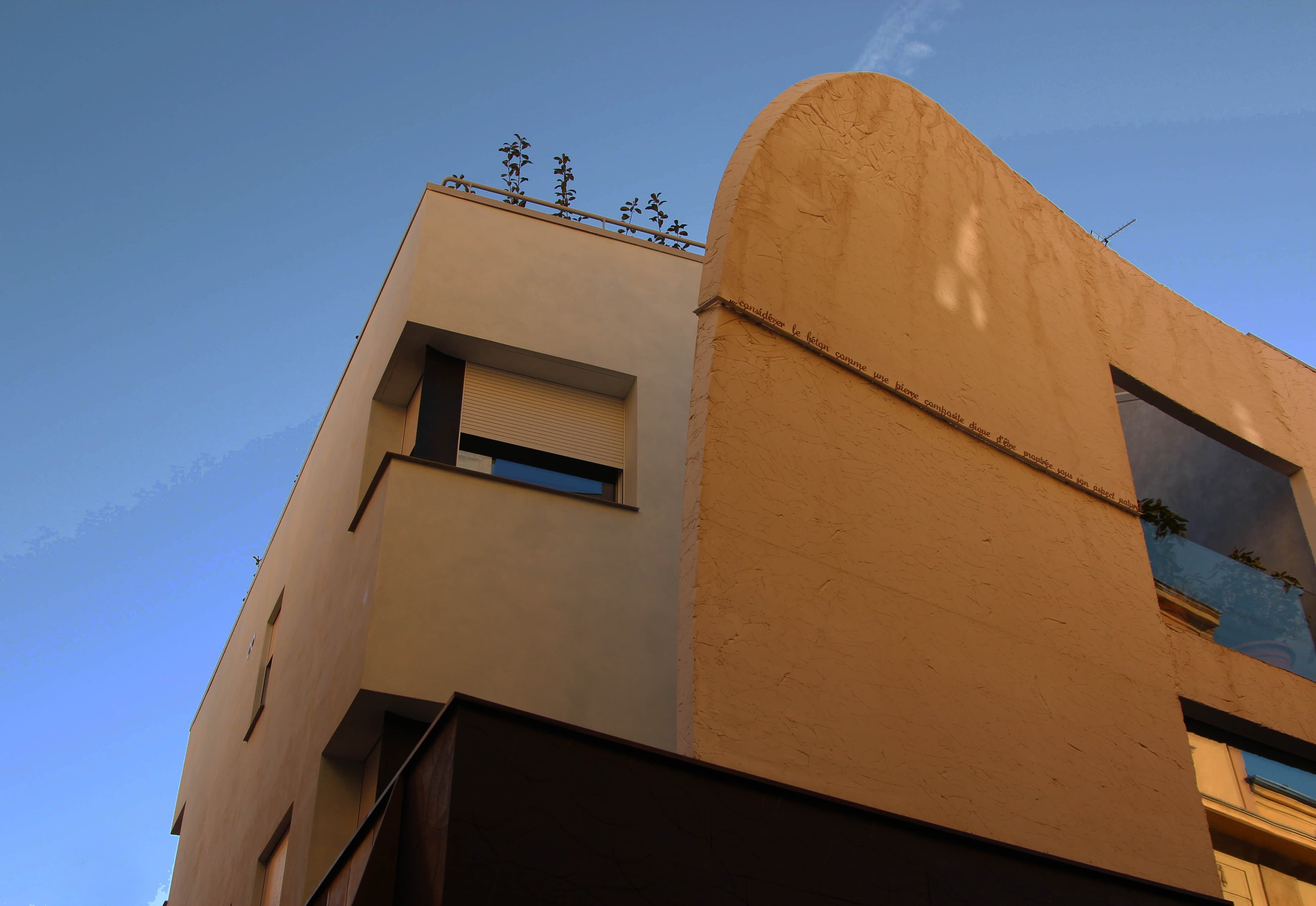
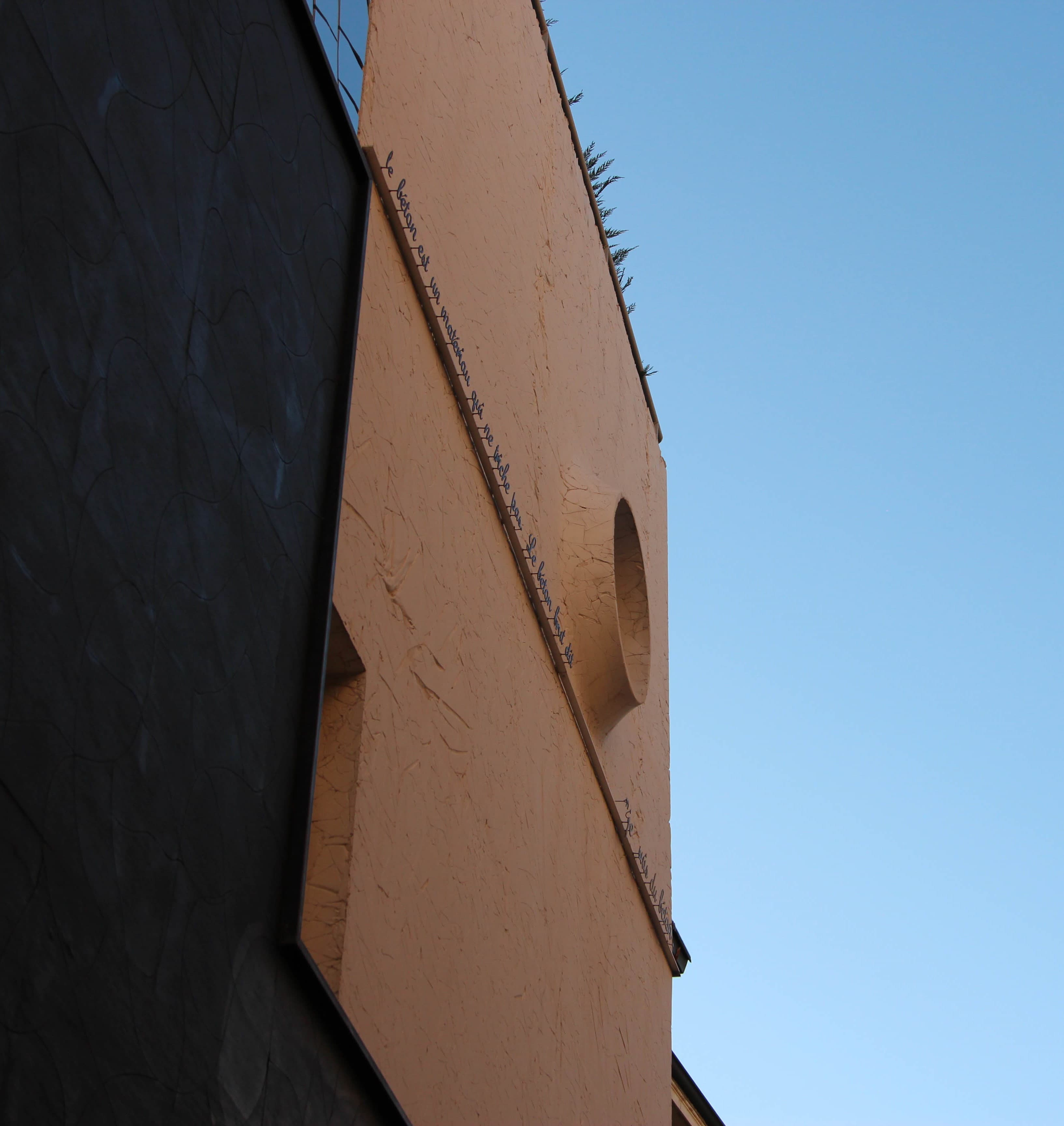
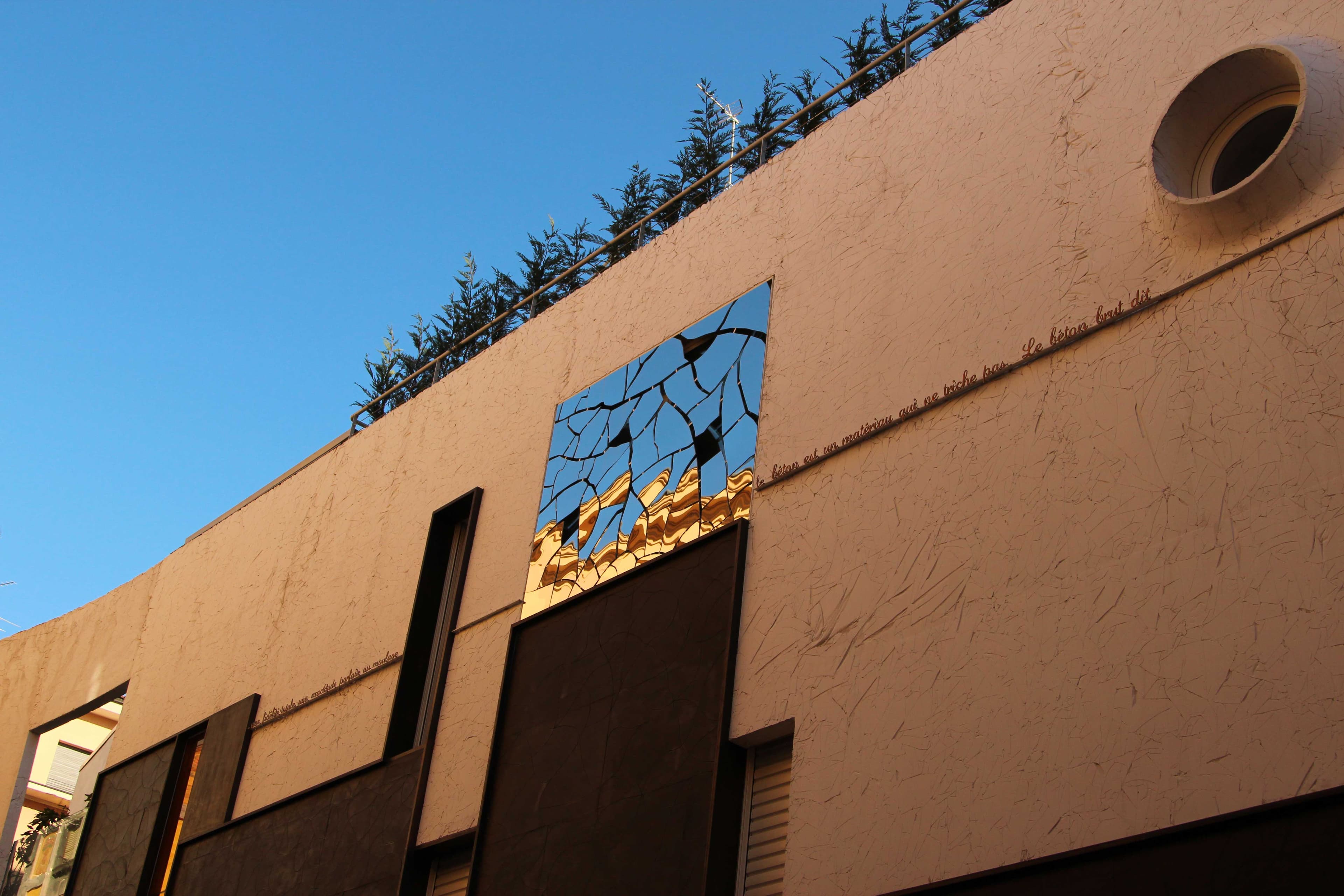
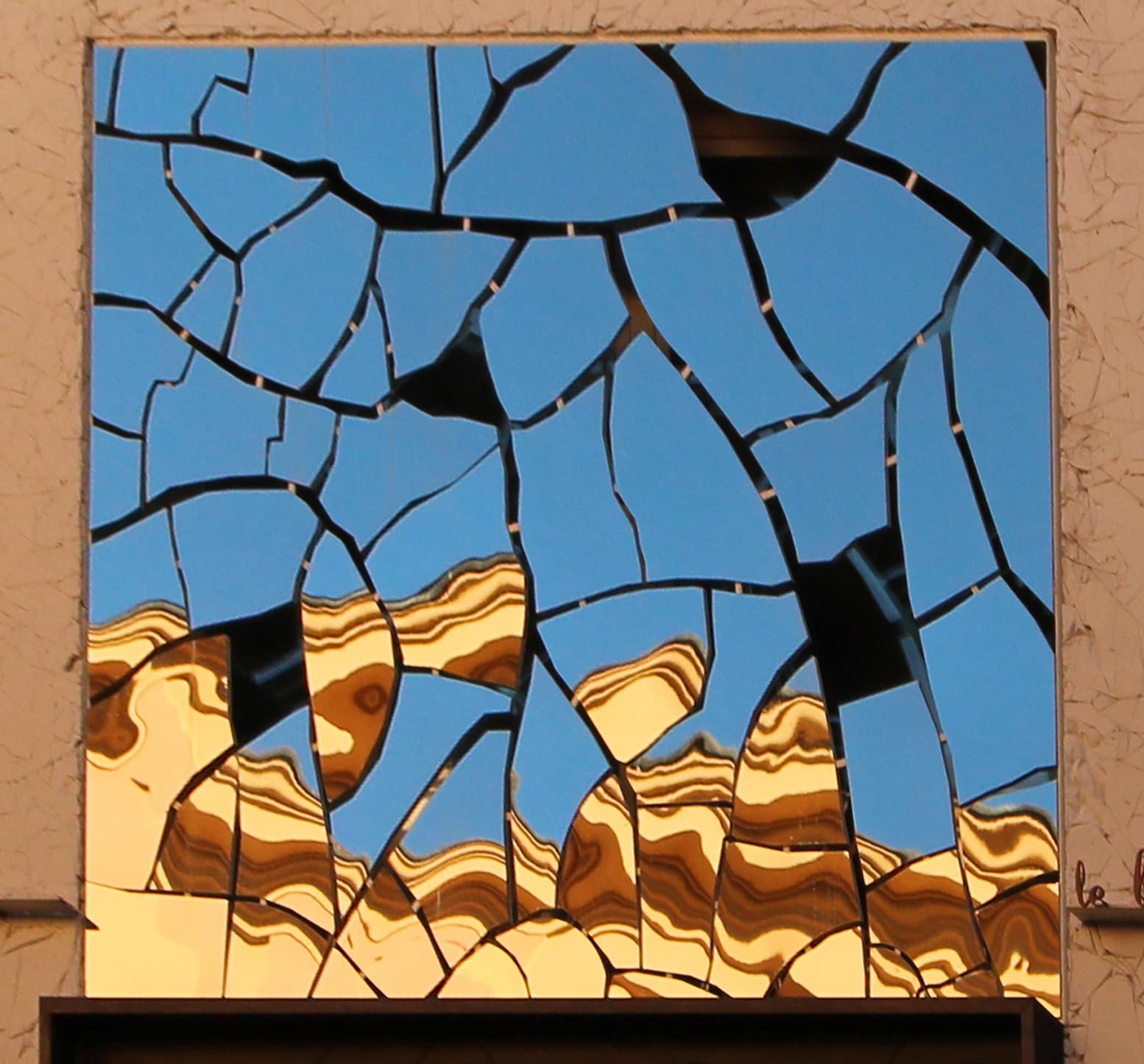
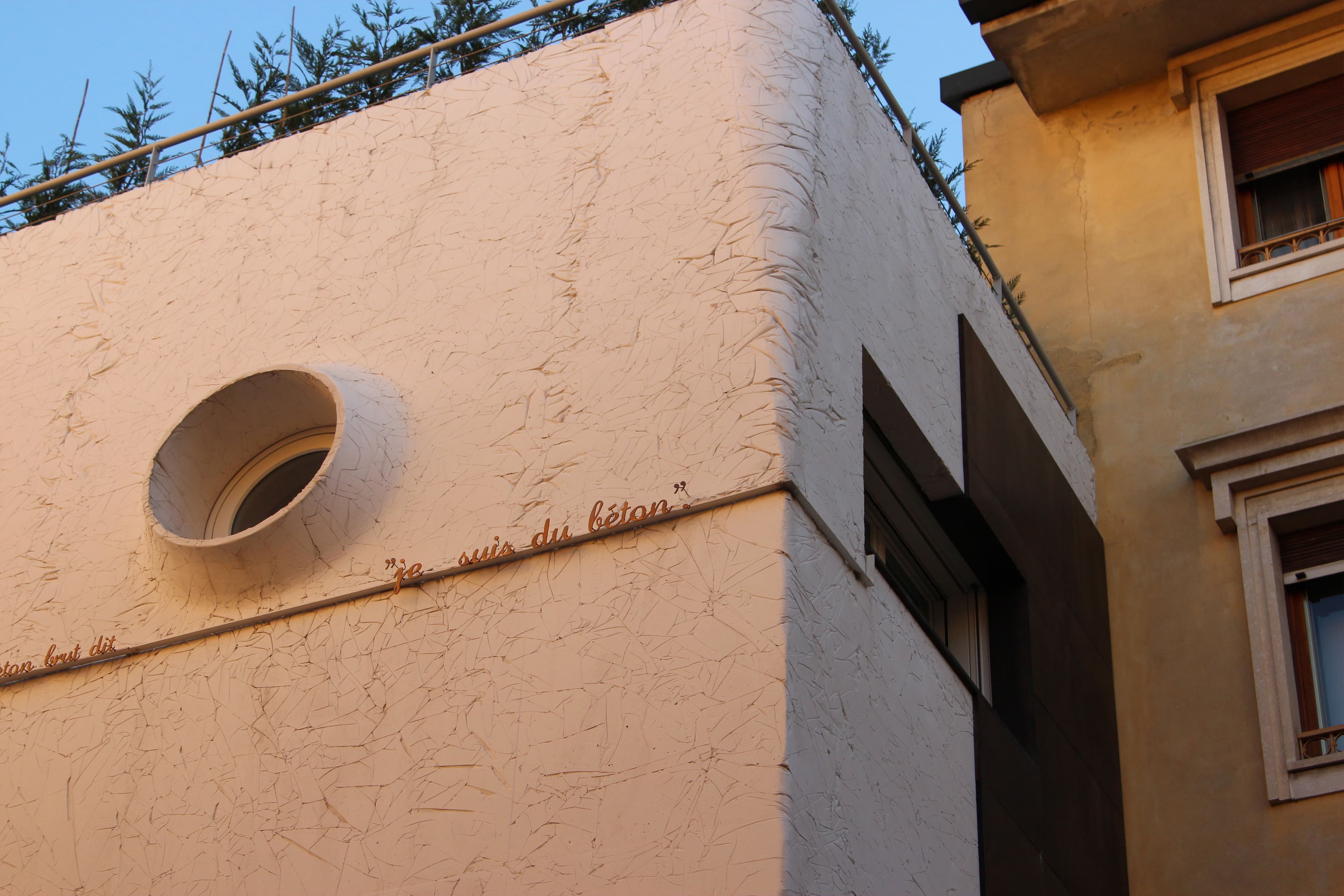
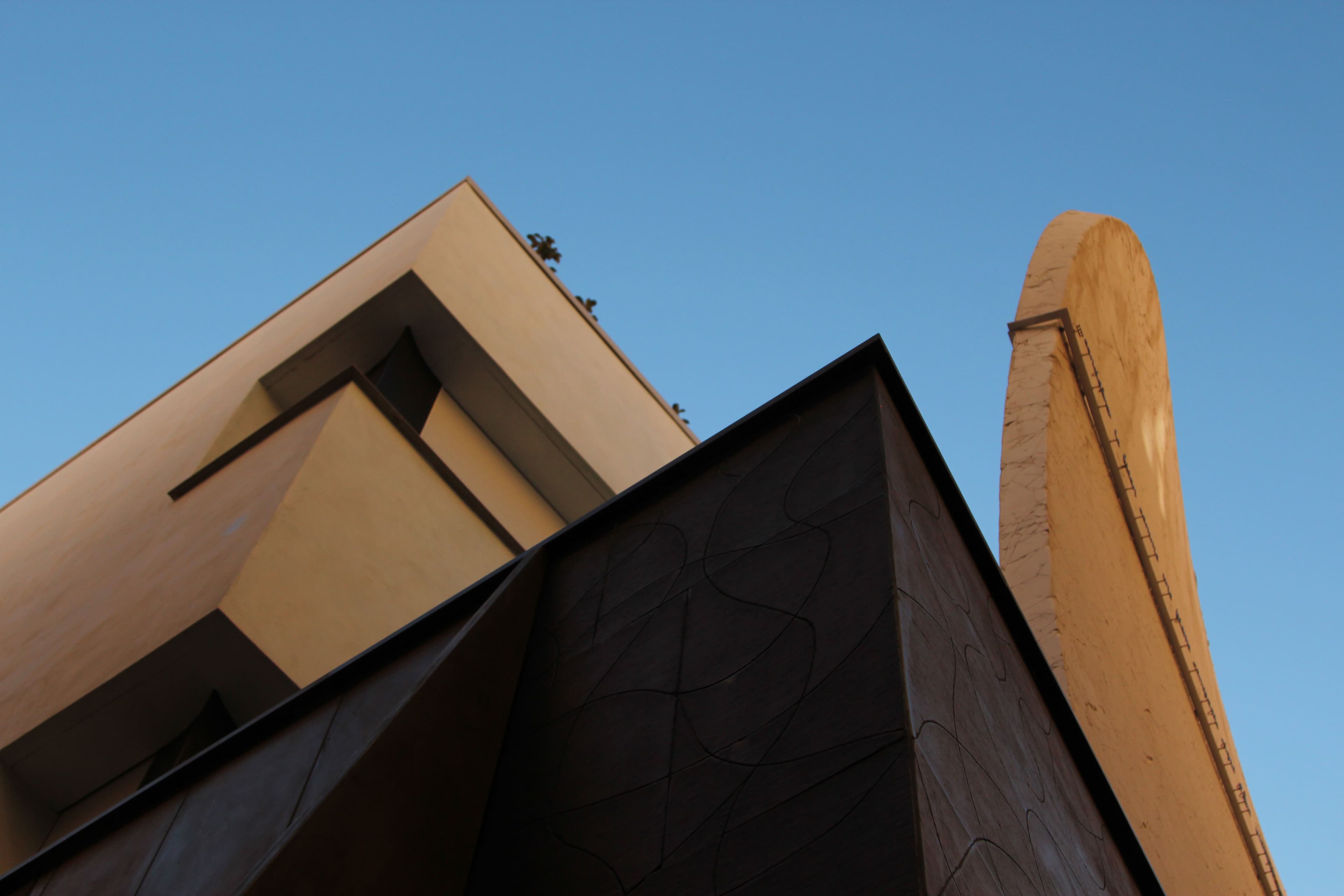
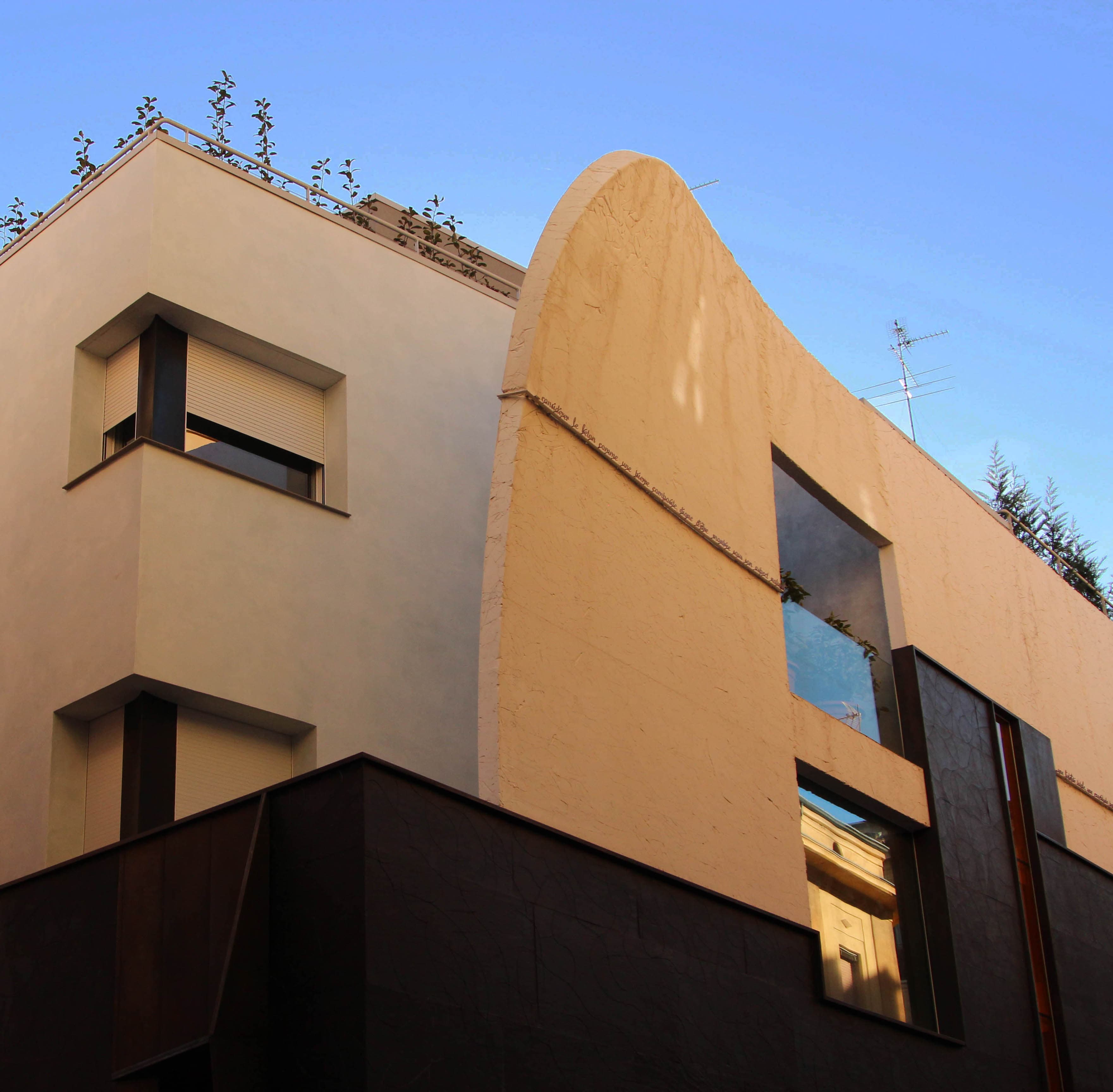
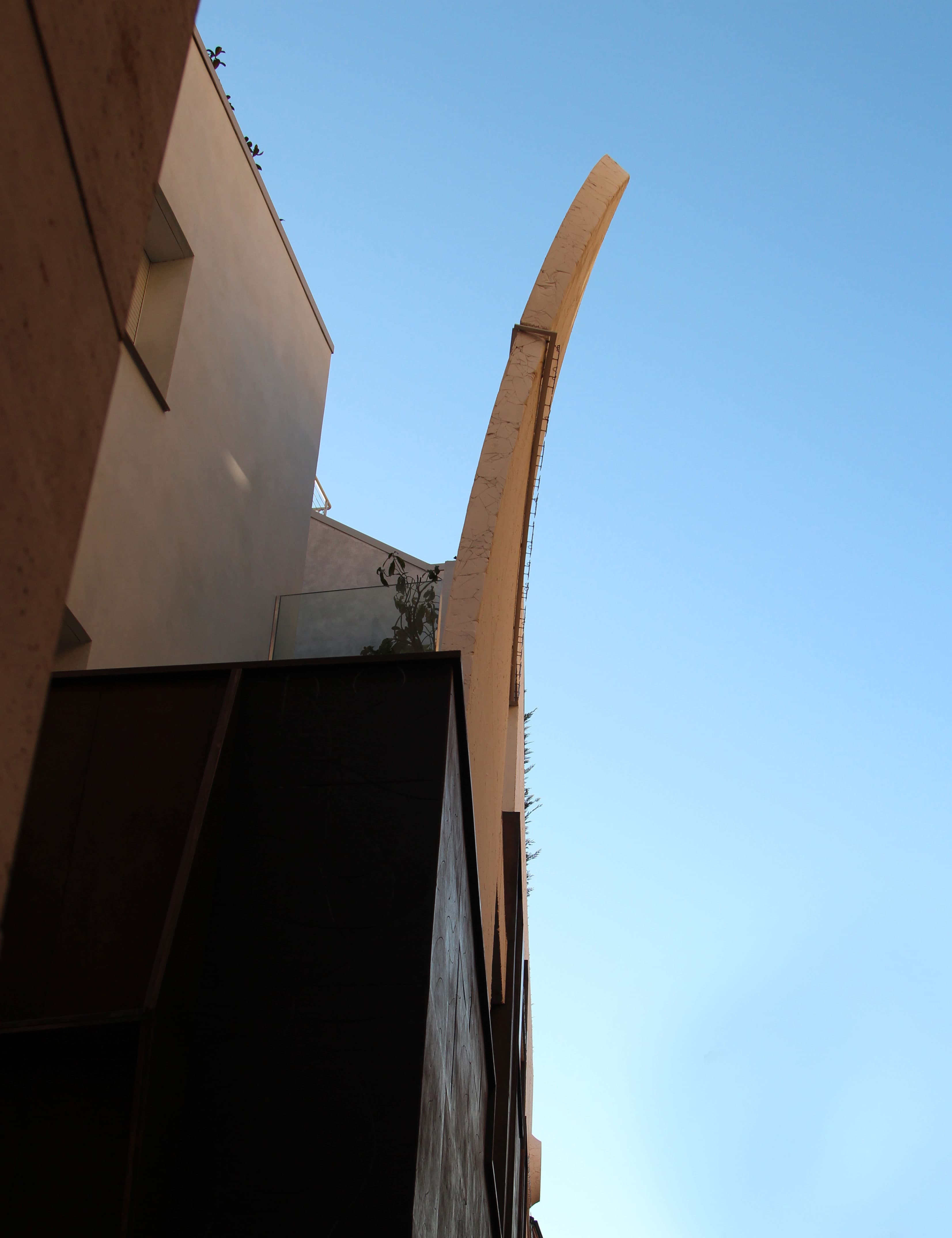
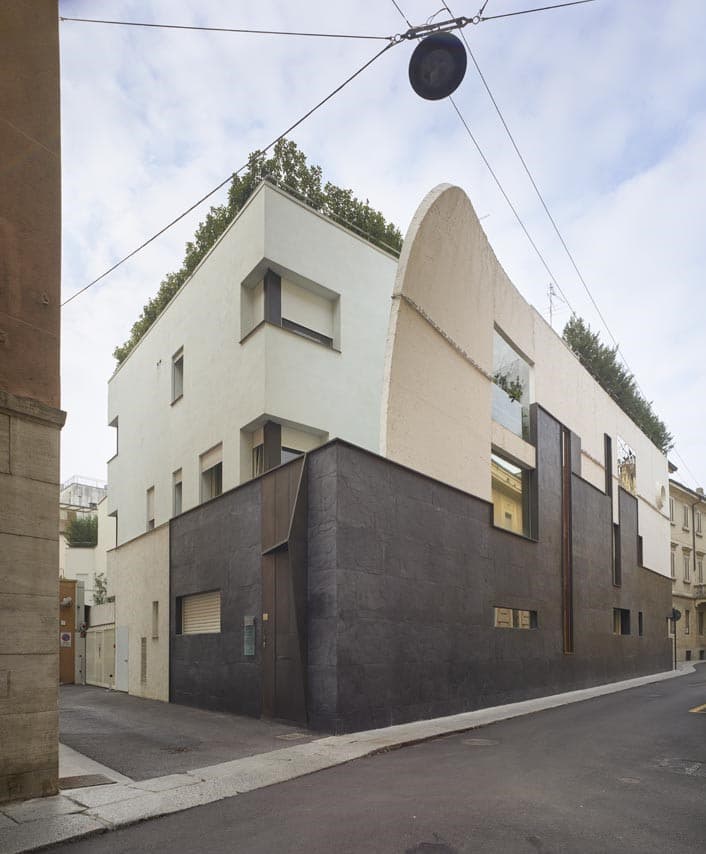
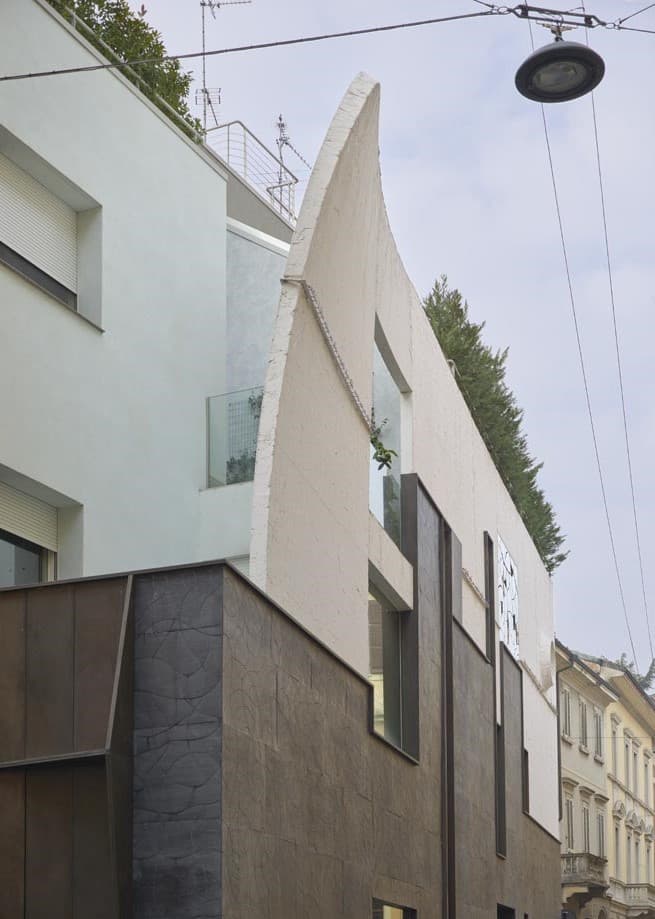
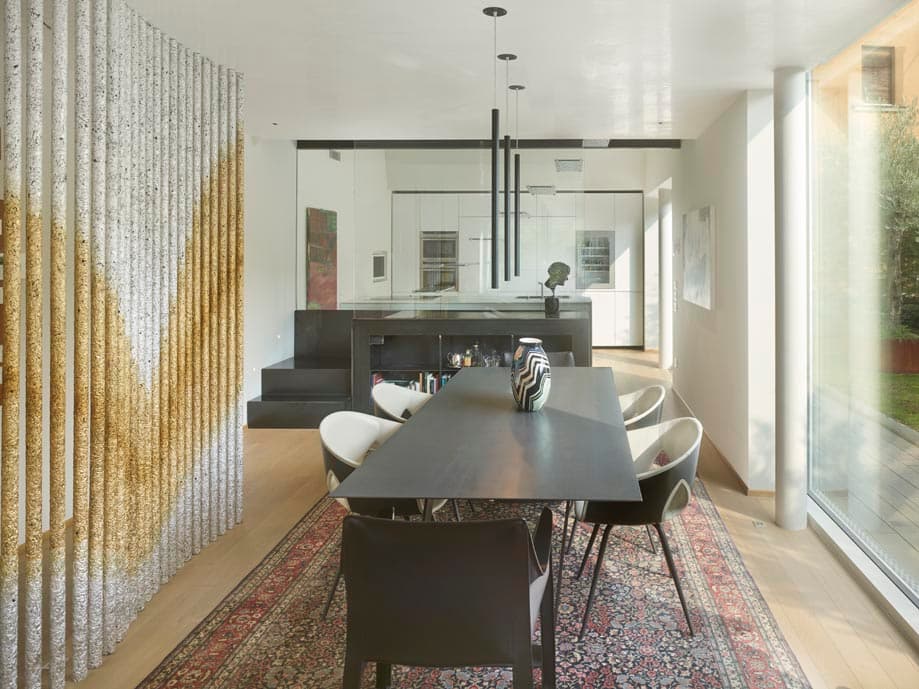
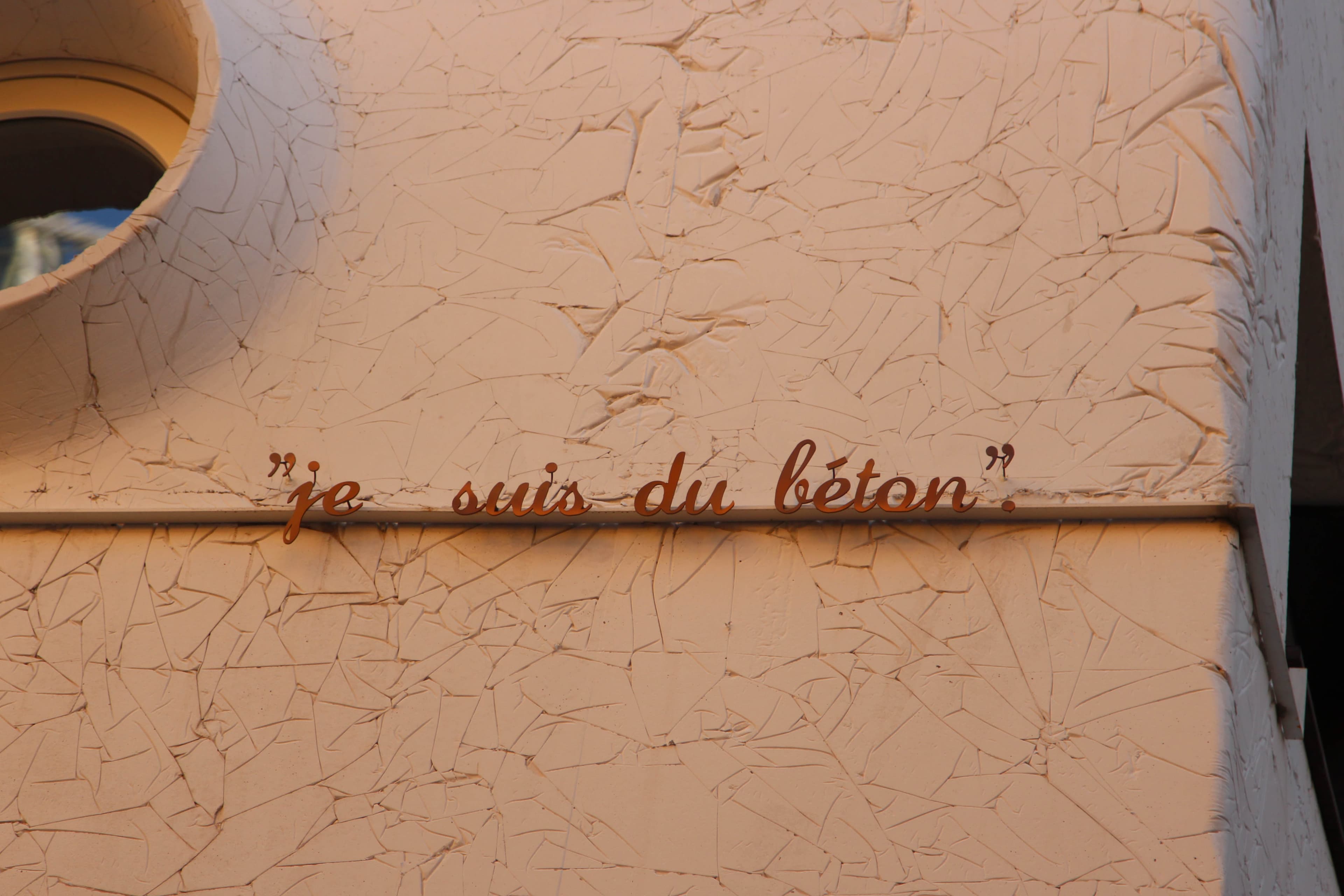
In place of anonymous 1960s concrete building formerly a movie theater on a side street in the historic center of Cremona, a building for residential use, an earthquake-proof, energy-smart, acoustically insulated building with underground garages and all modern conveniences, forcefully imposes the theme of contemporary language consistent with the times.
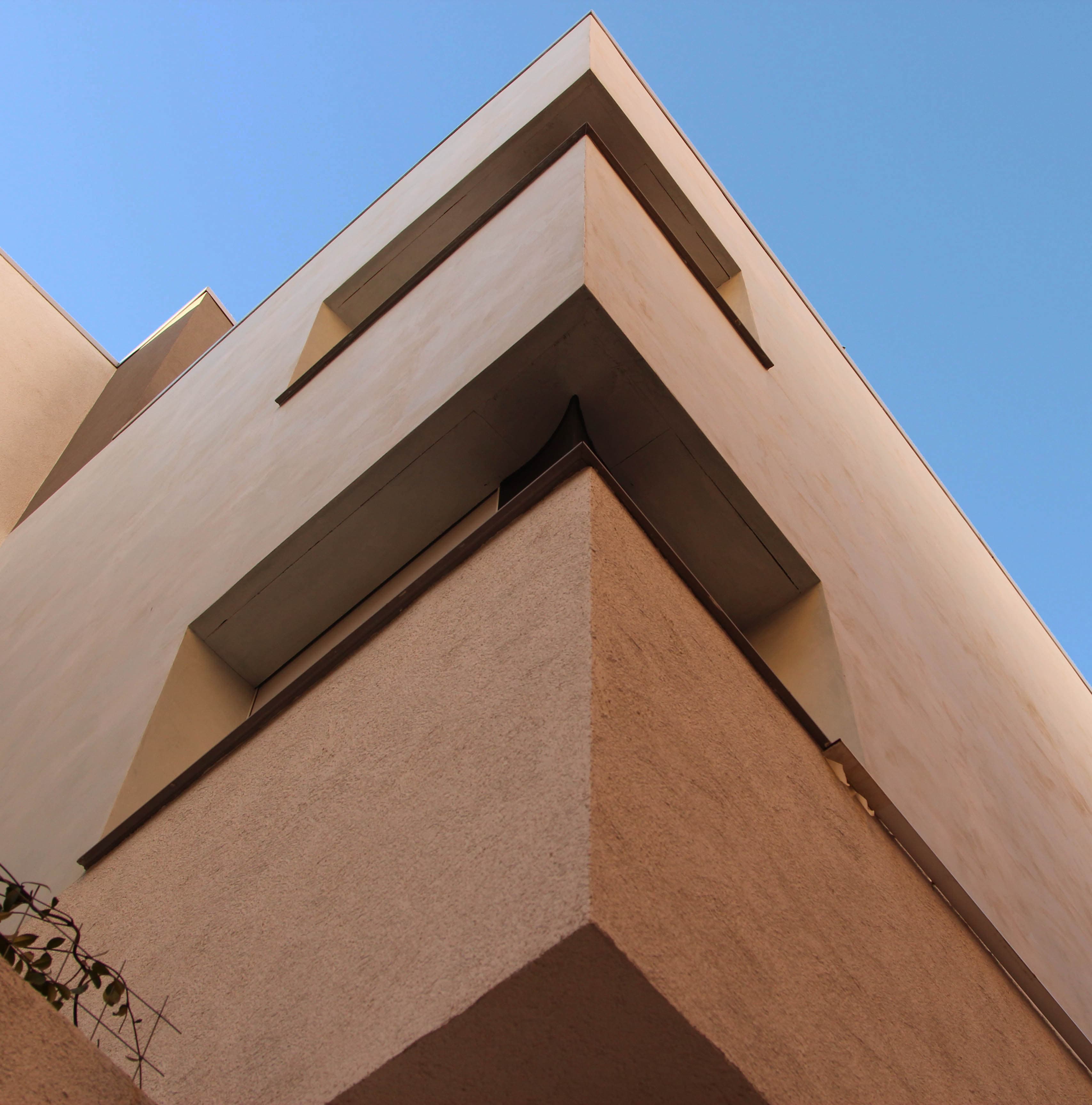
The project is an articulated volumetric decomposition that generates 3 distinct building bodies: an interior block, one along Anguissola Street, and a bridge that connects them on the third floor.
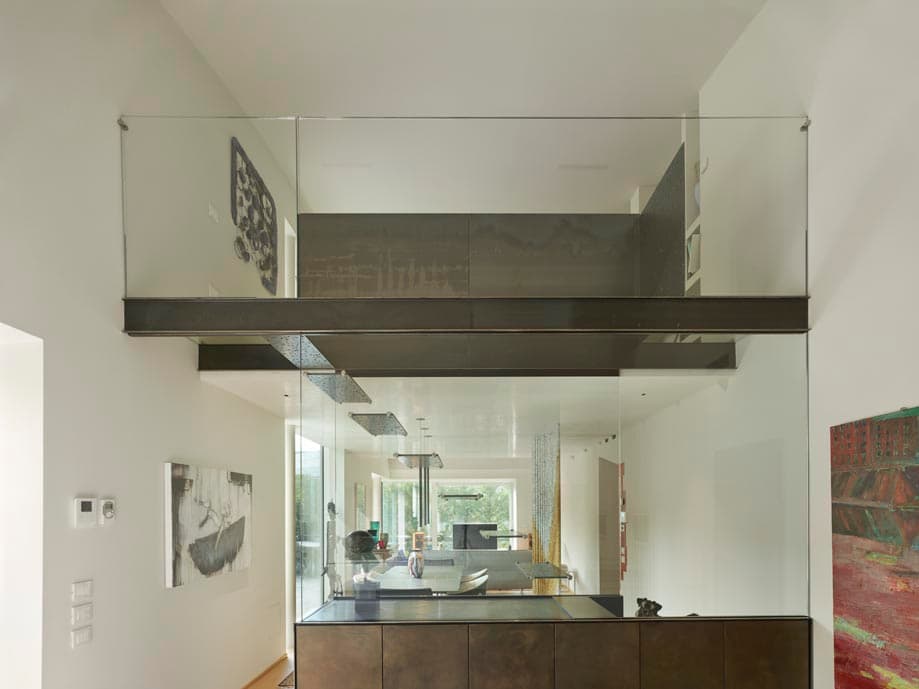
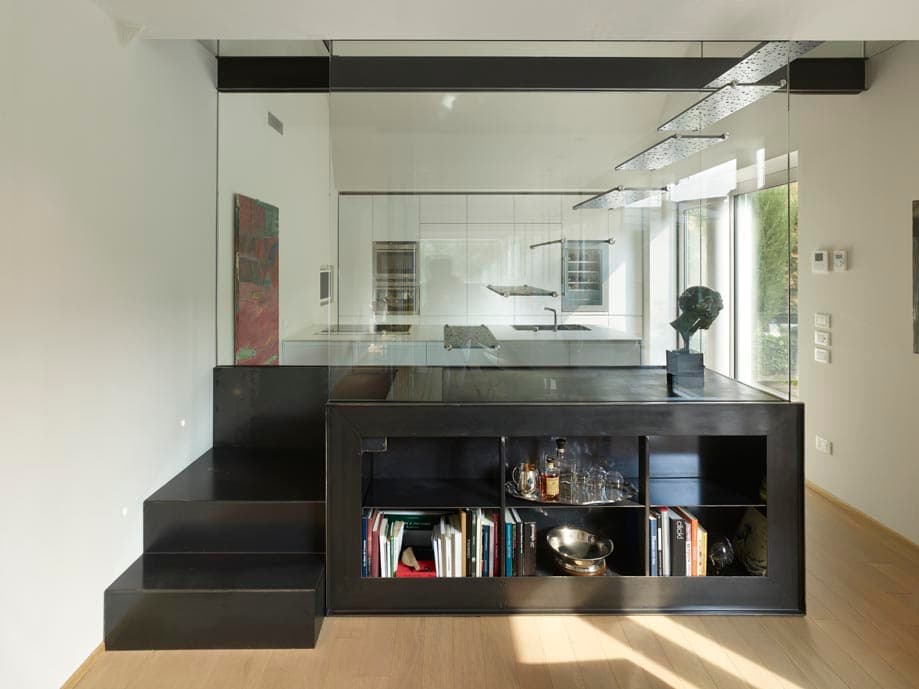
Unique accommodations rewarded by overlooking private roof gardens, covered and uncovered courtyards, and terraces thus create unexpected spaces in an architecture that thrives on open and foreshortened visions, with studied asymmetries and rhythmic alterations always striving for a dynamic balance. (ph. Roland Halbe)
Liquid Trasparencies
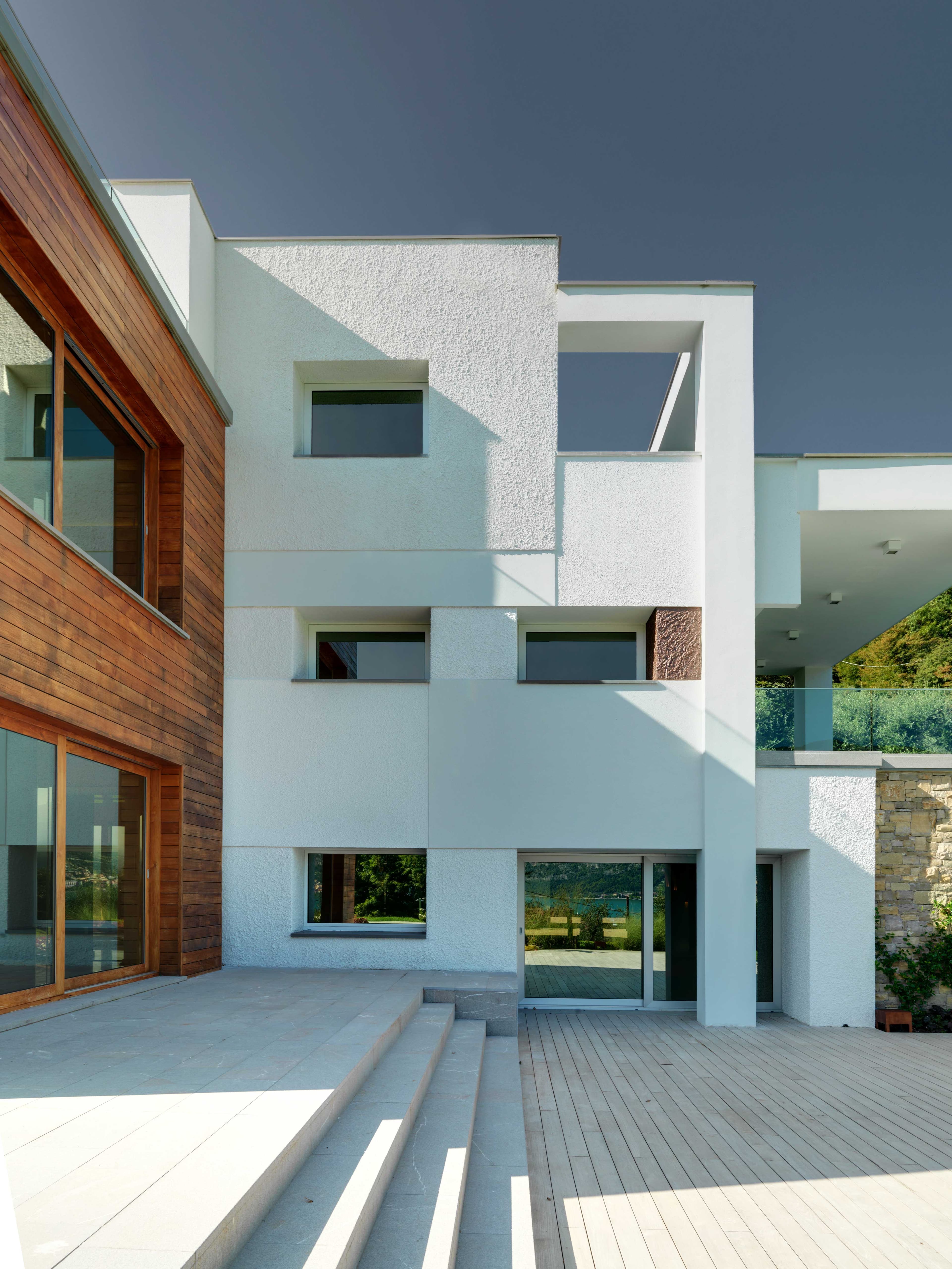
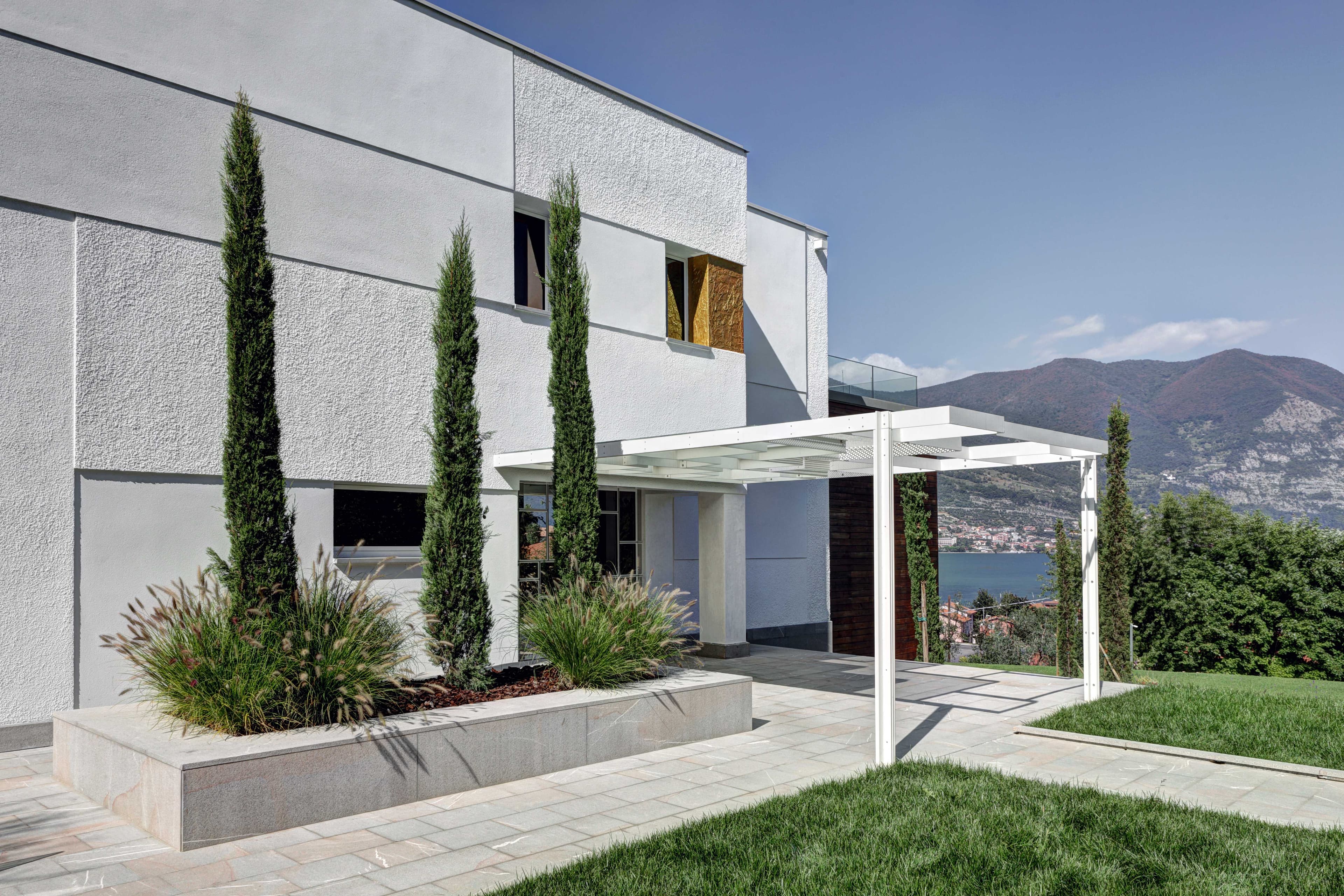
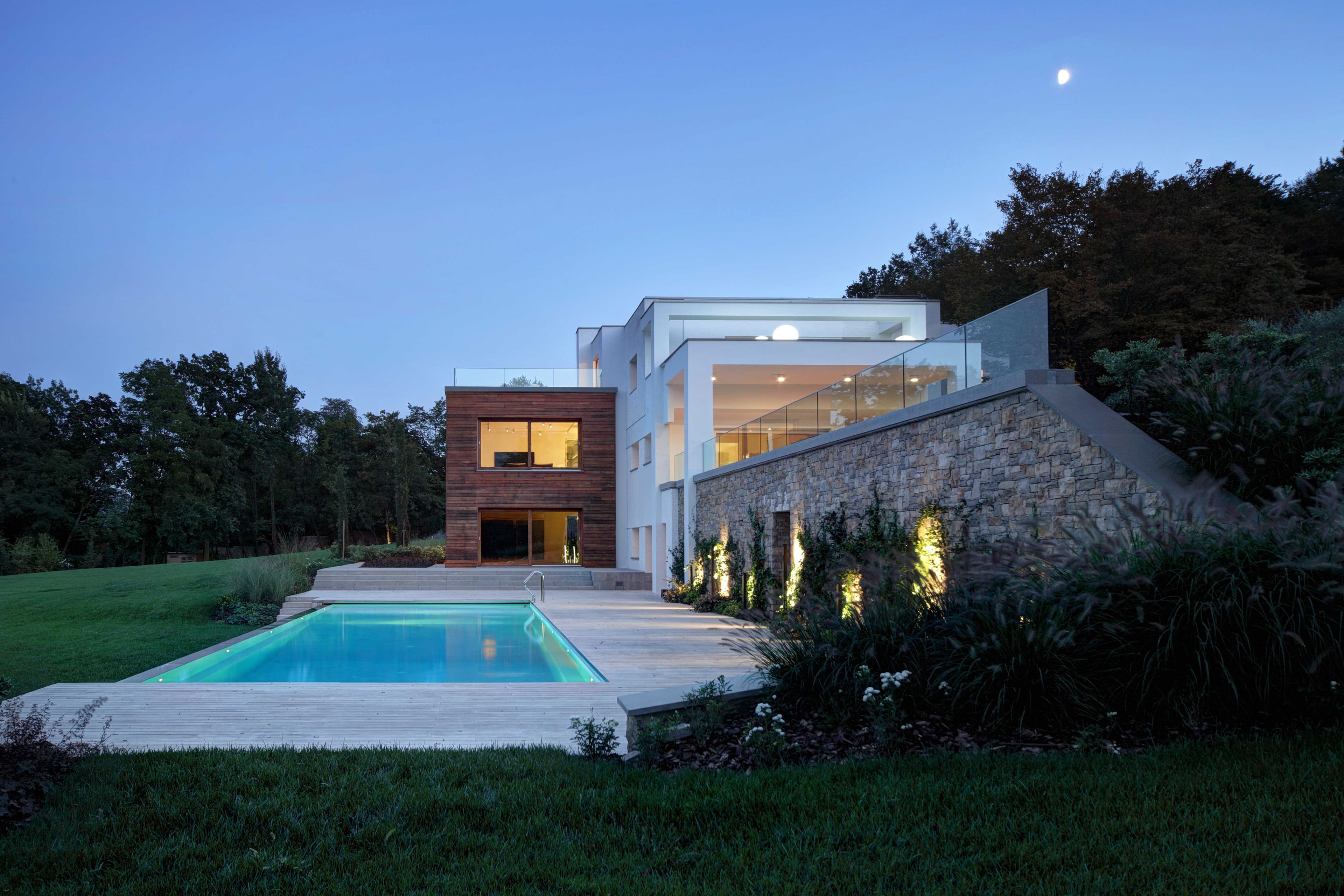
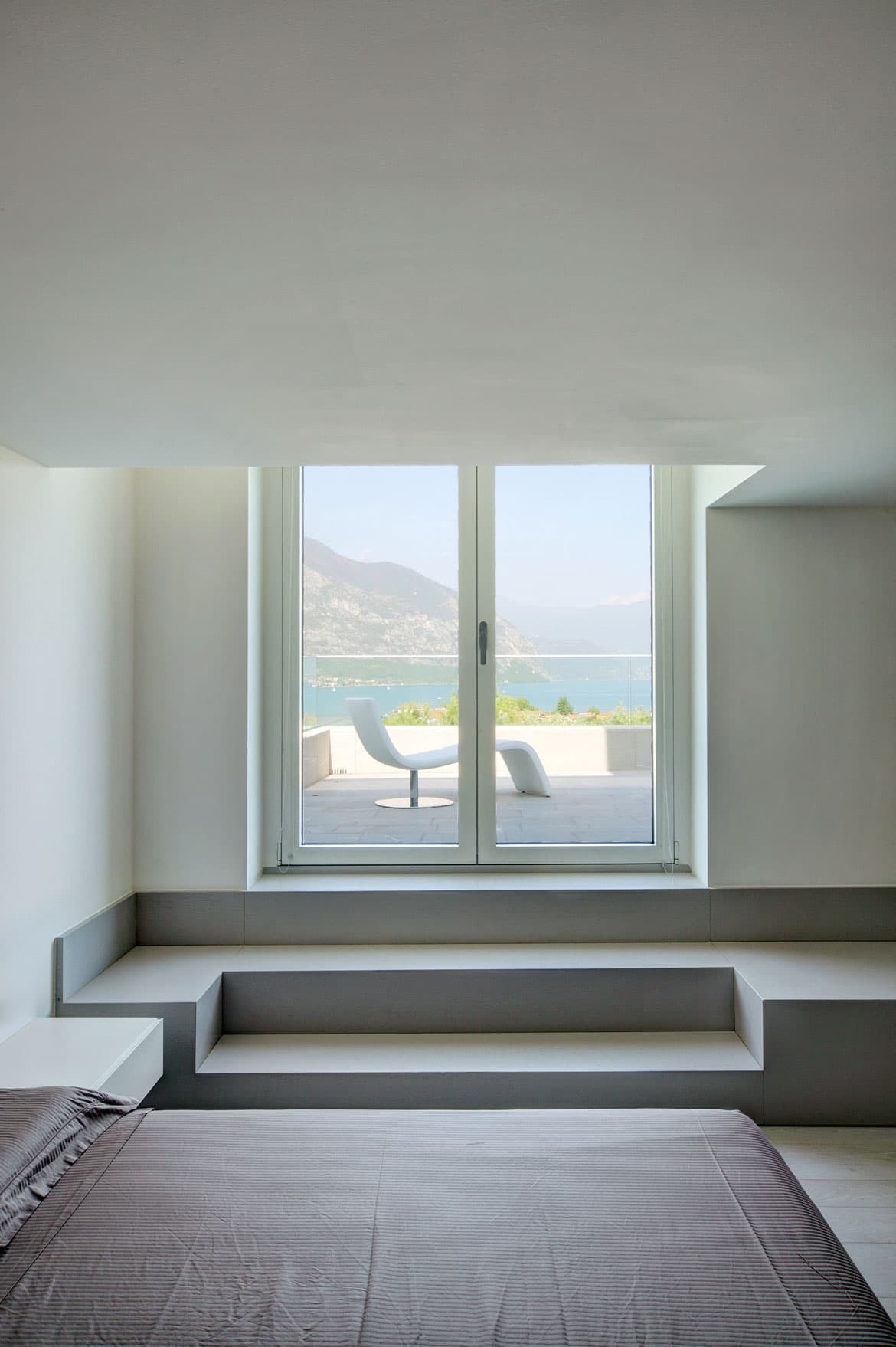
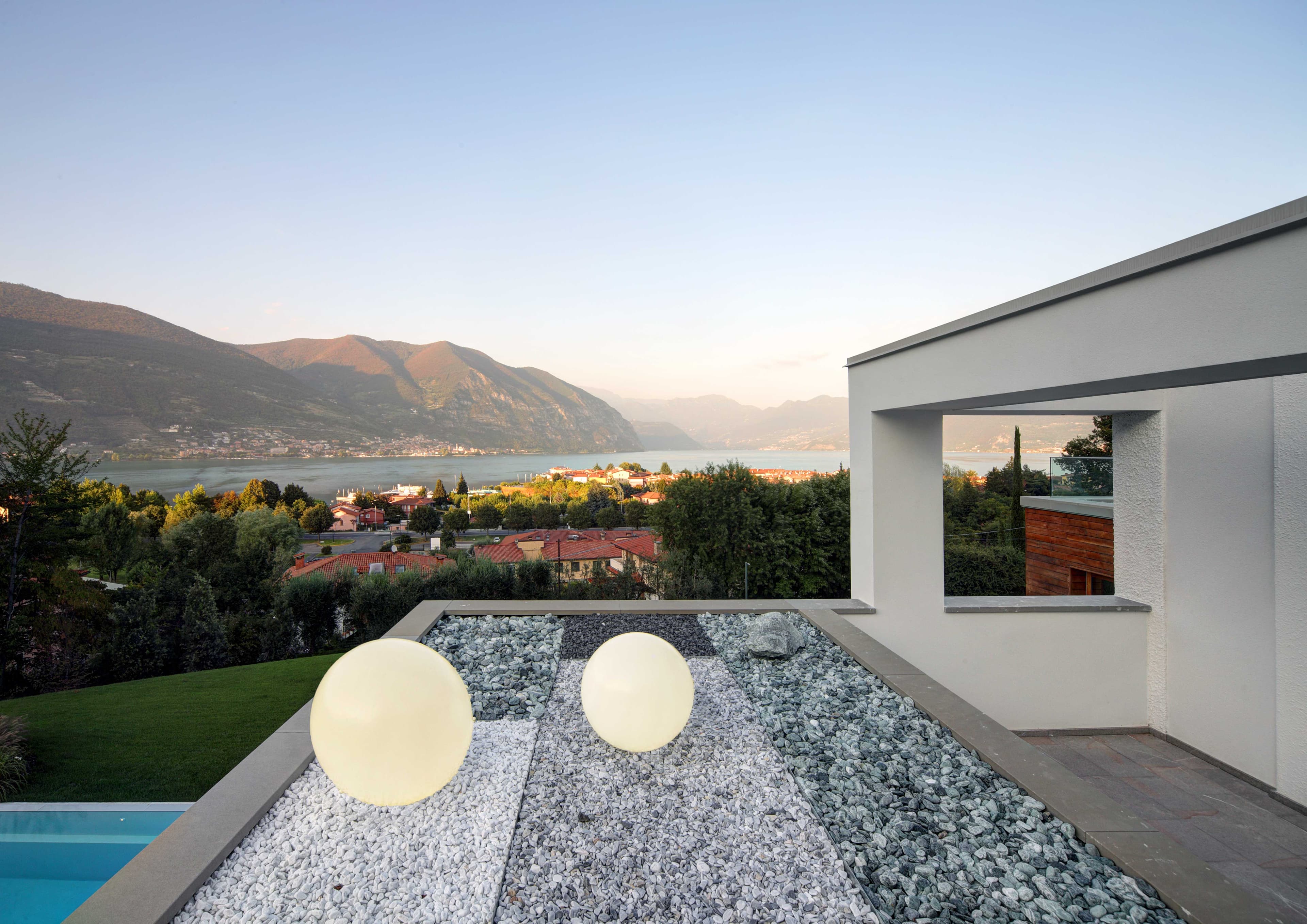
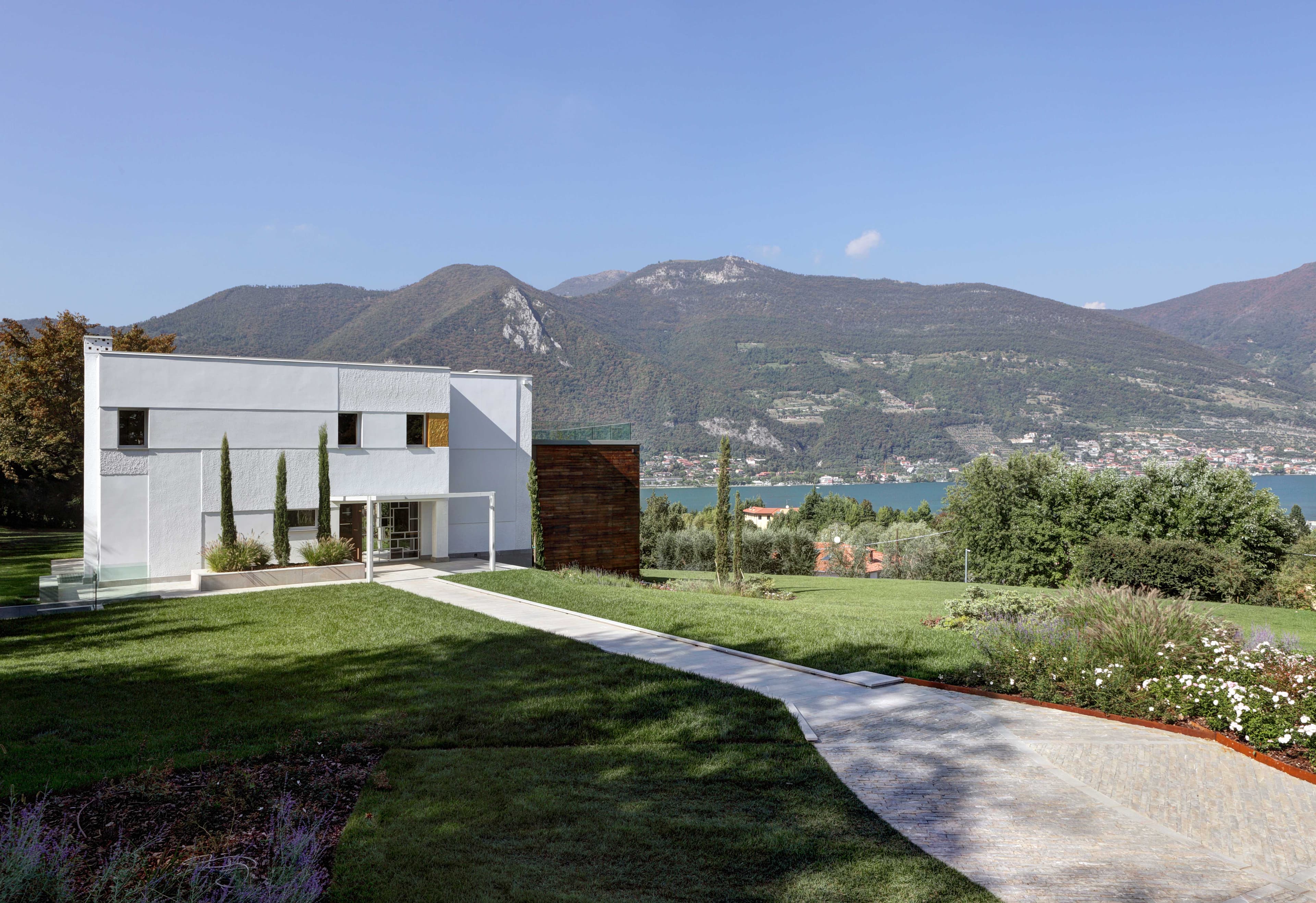
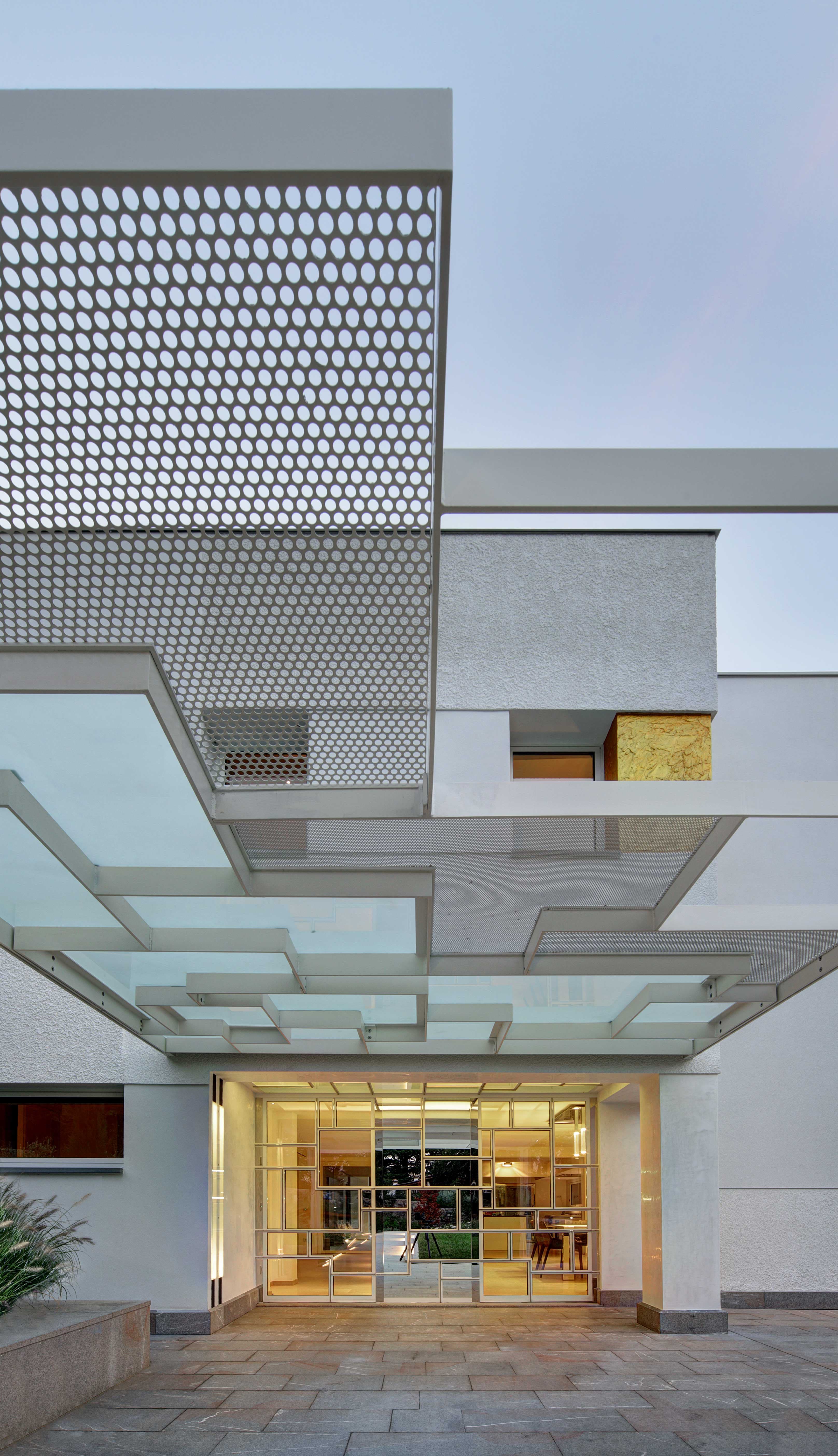
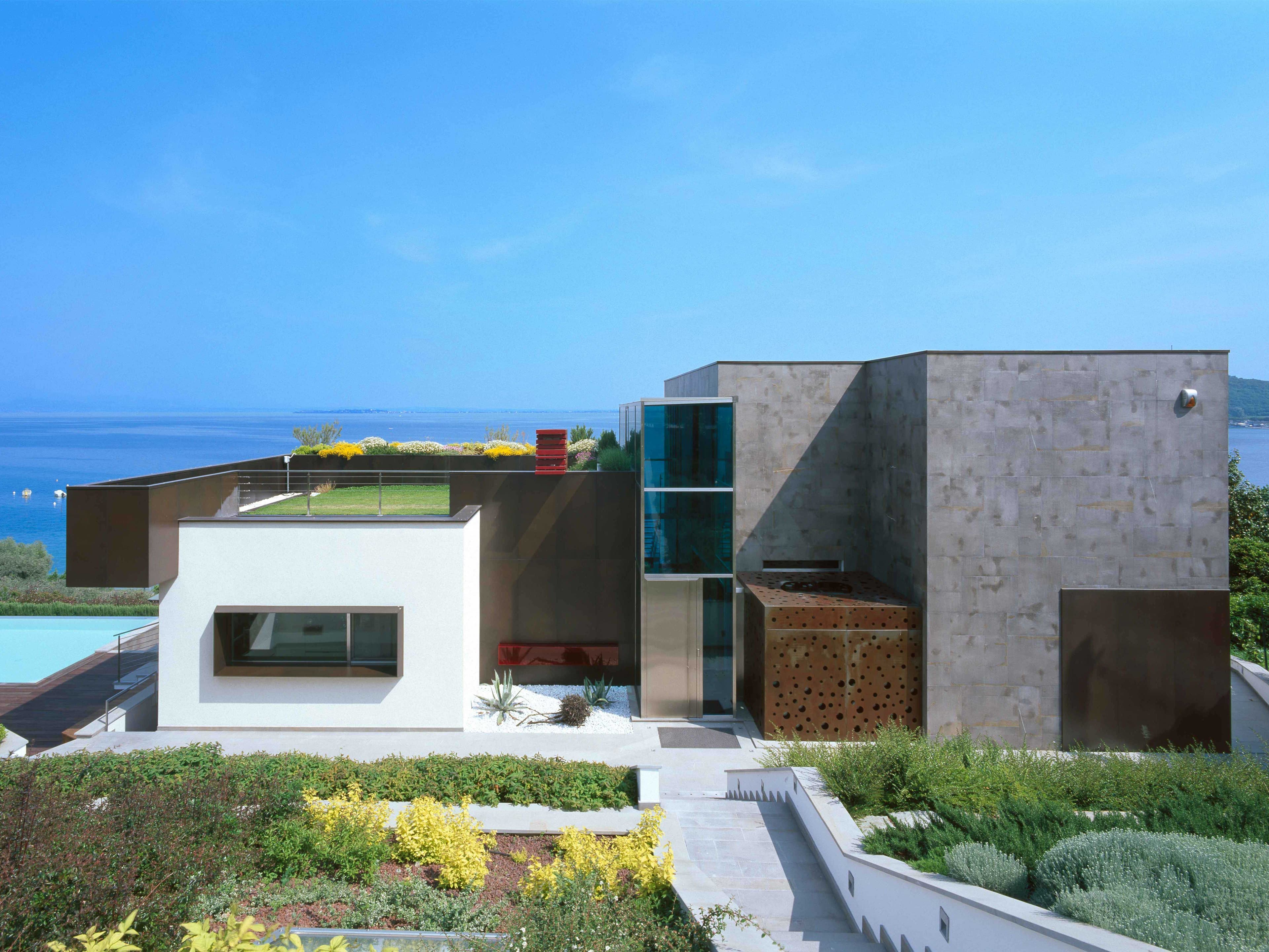
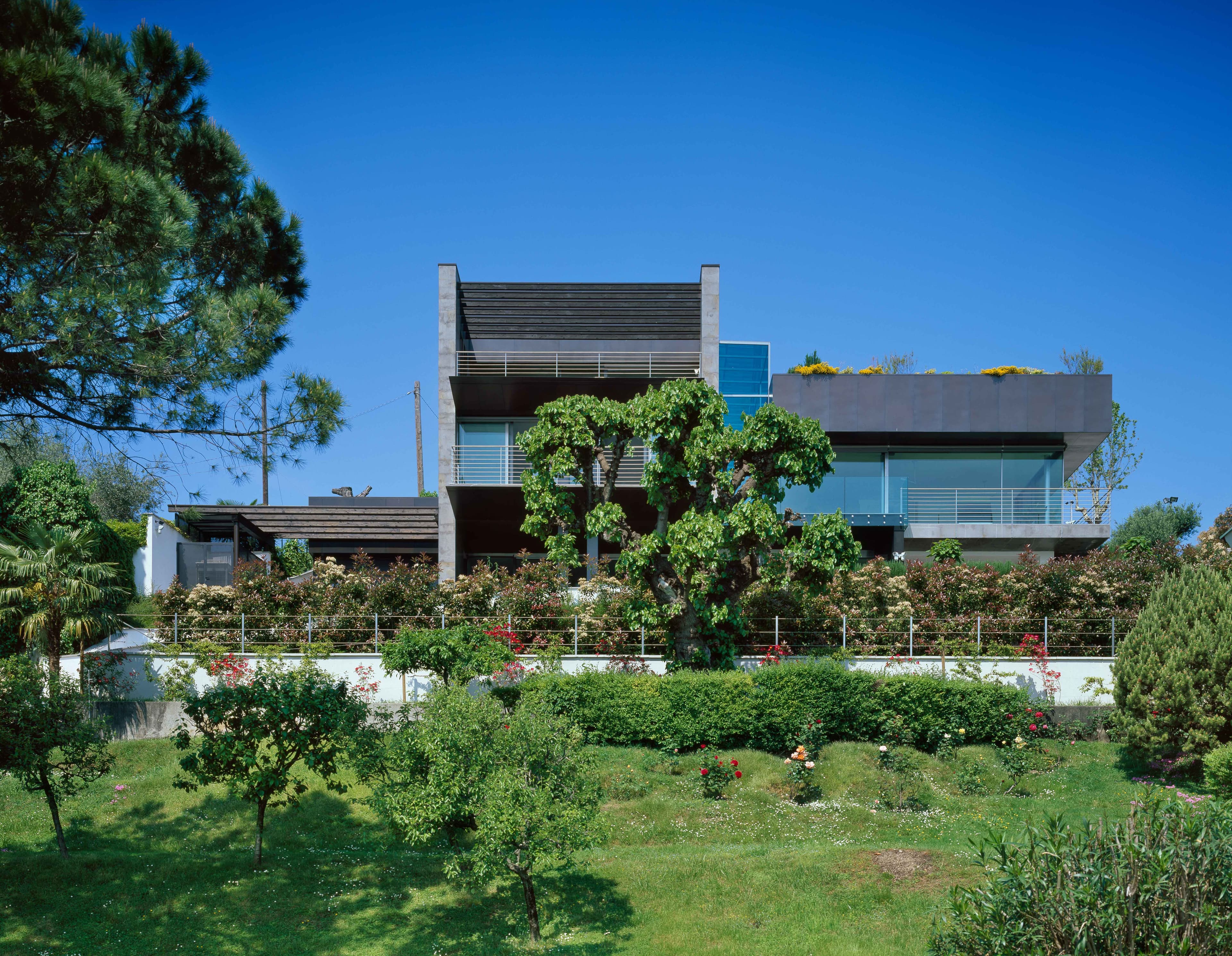
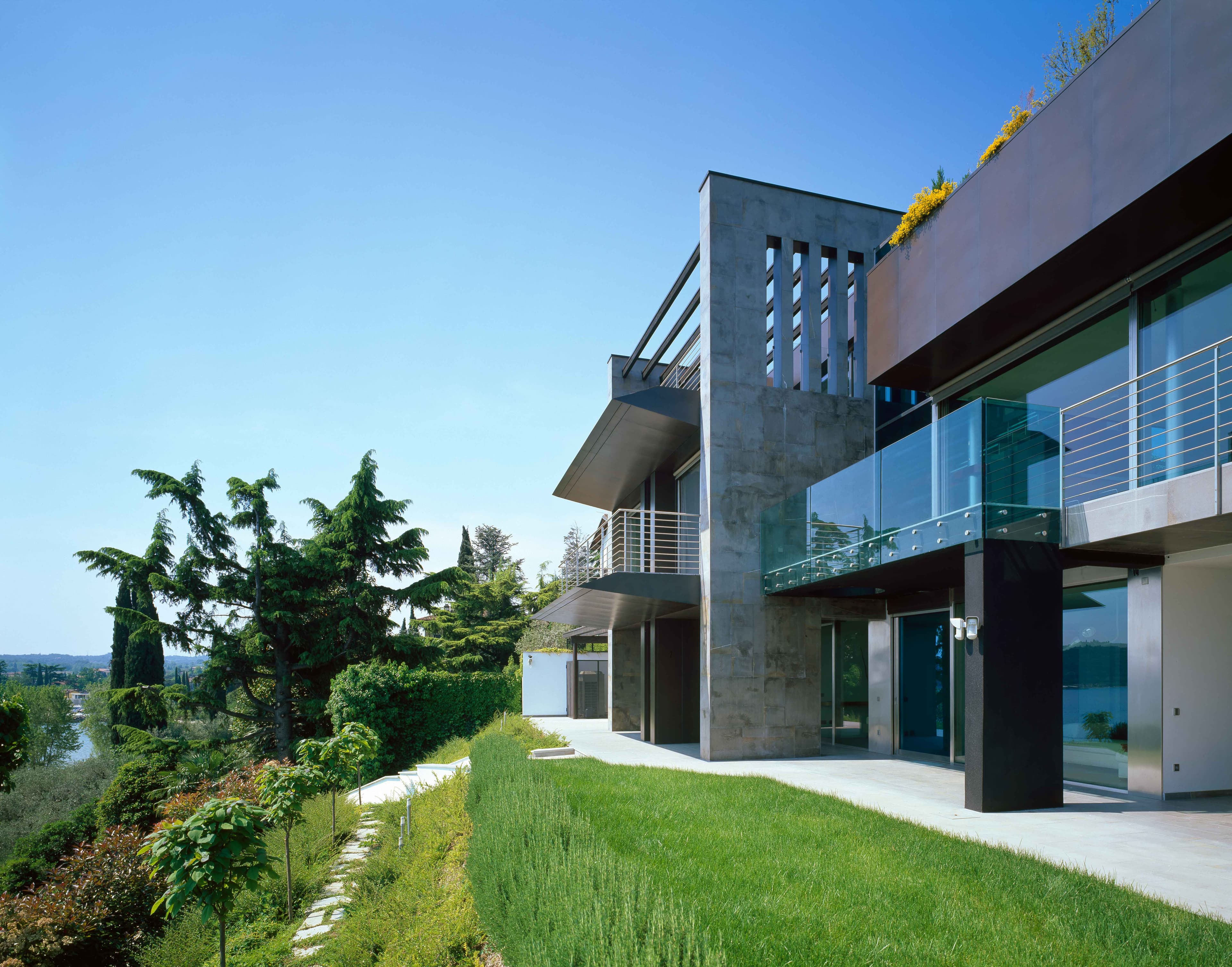
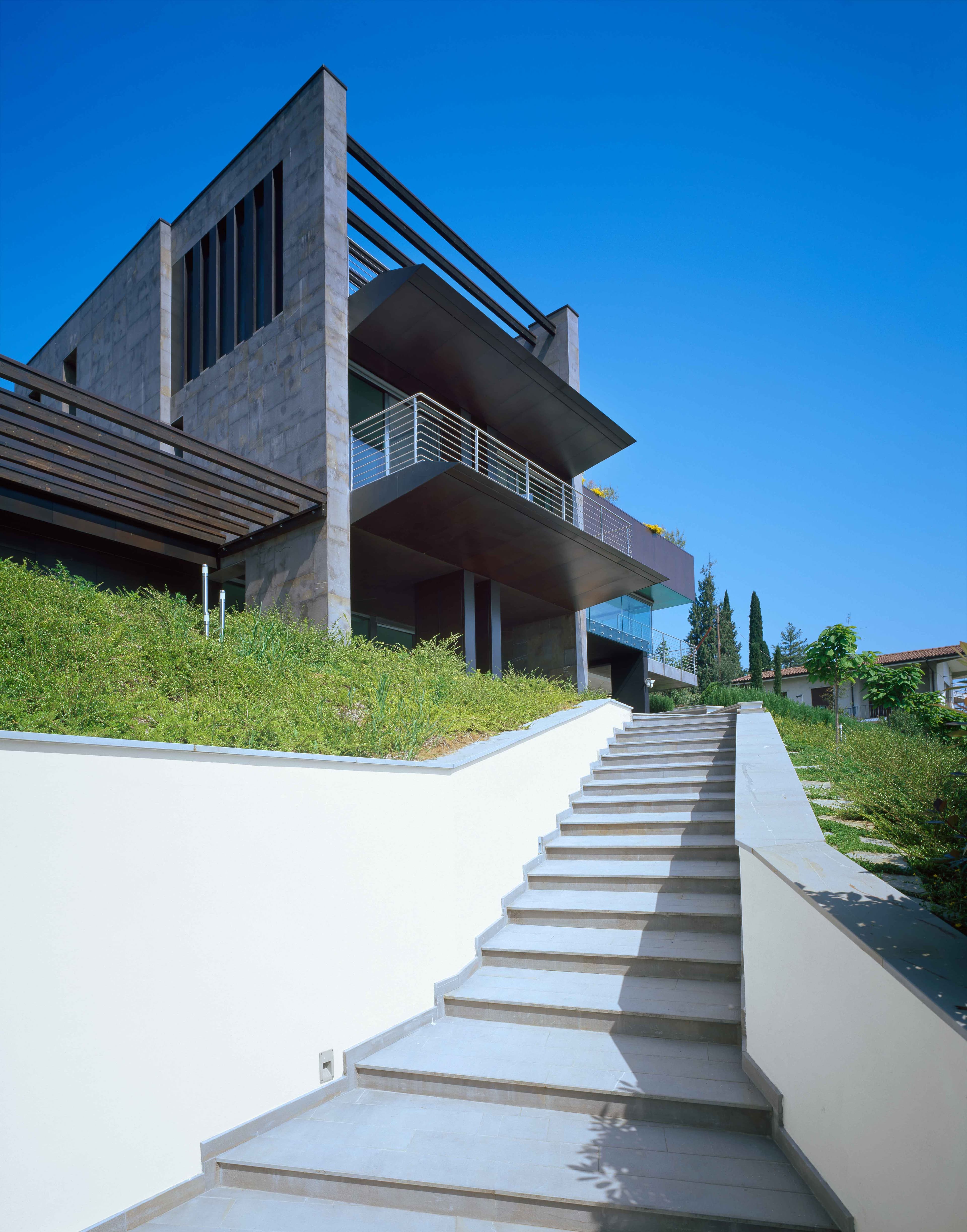
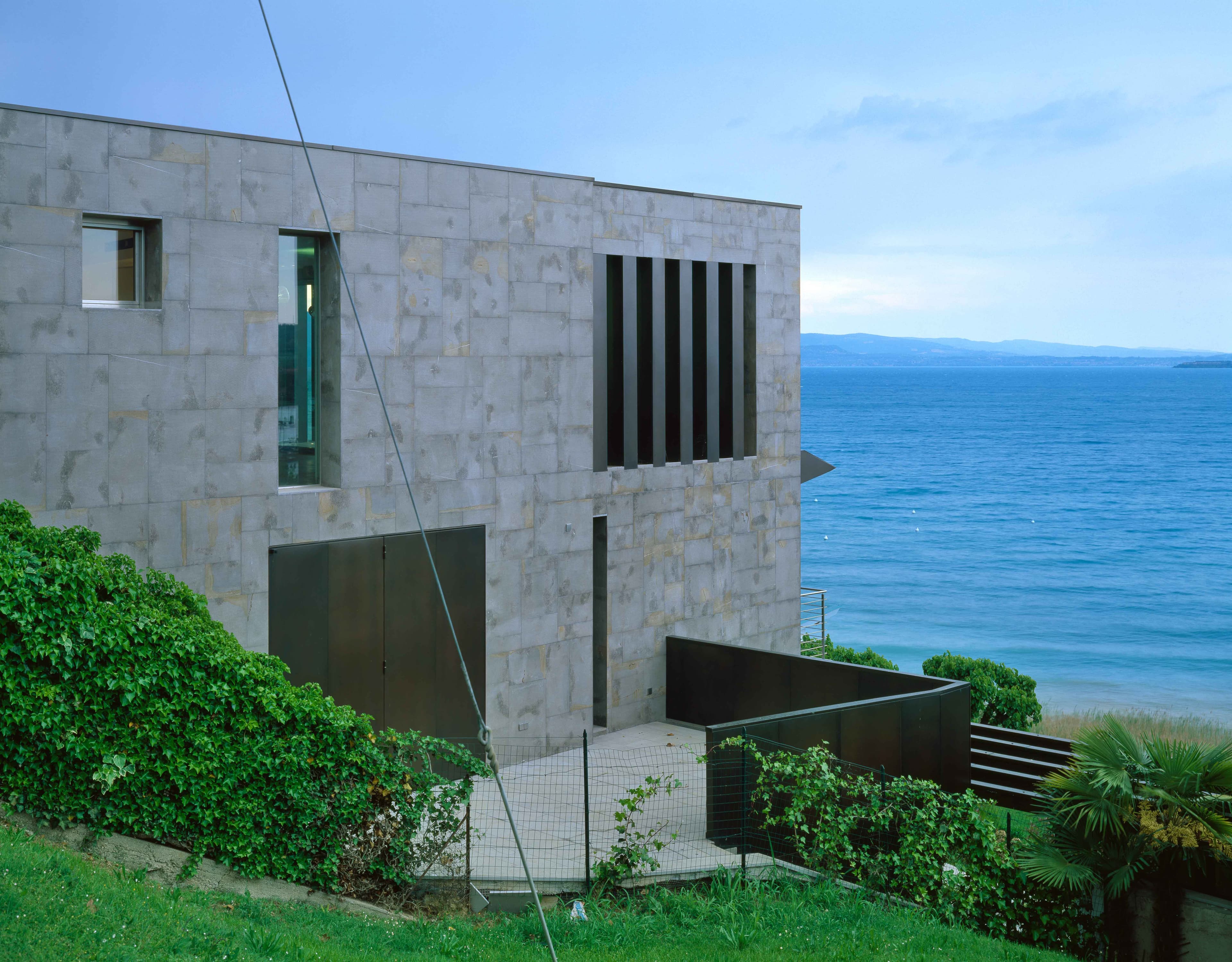
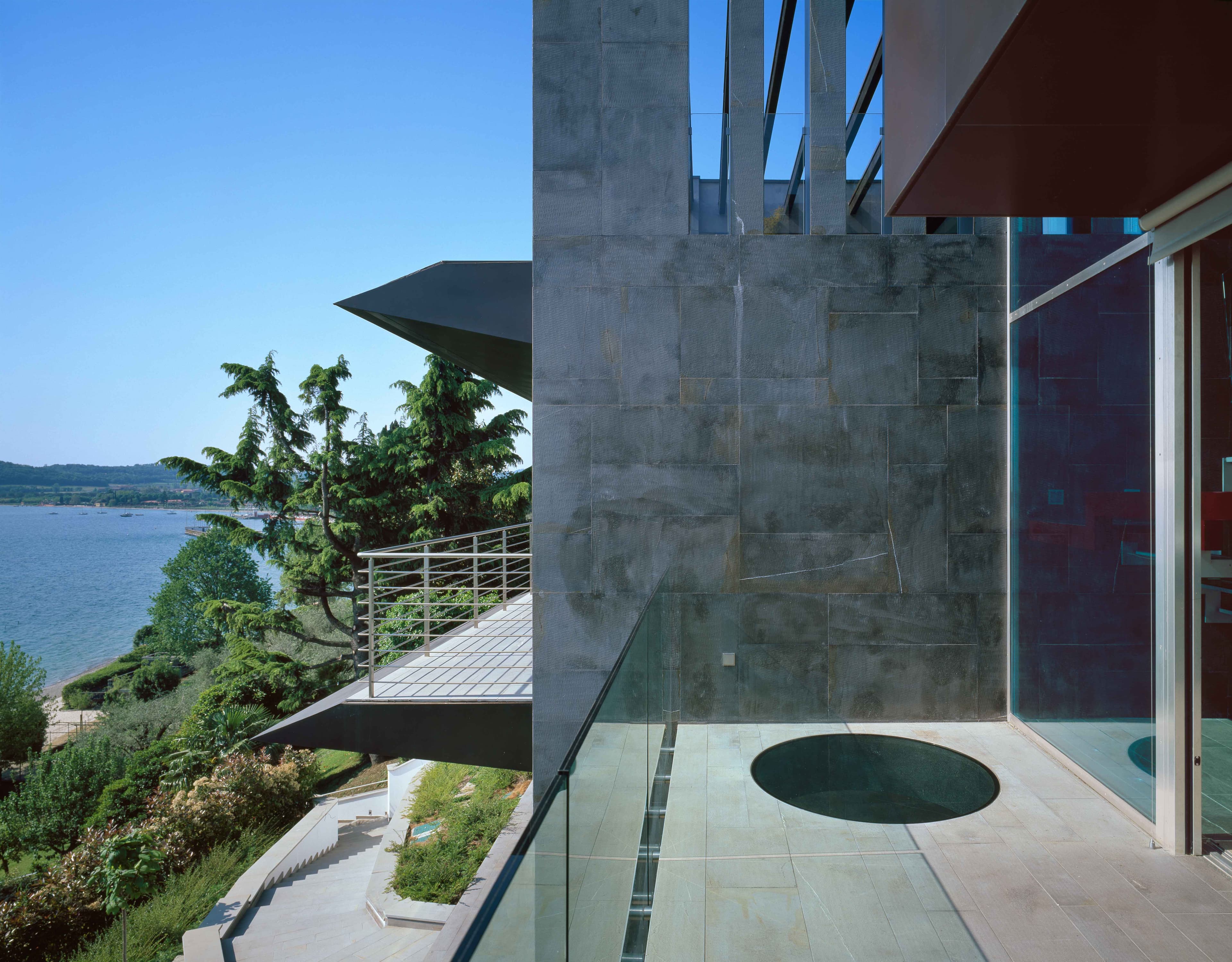
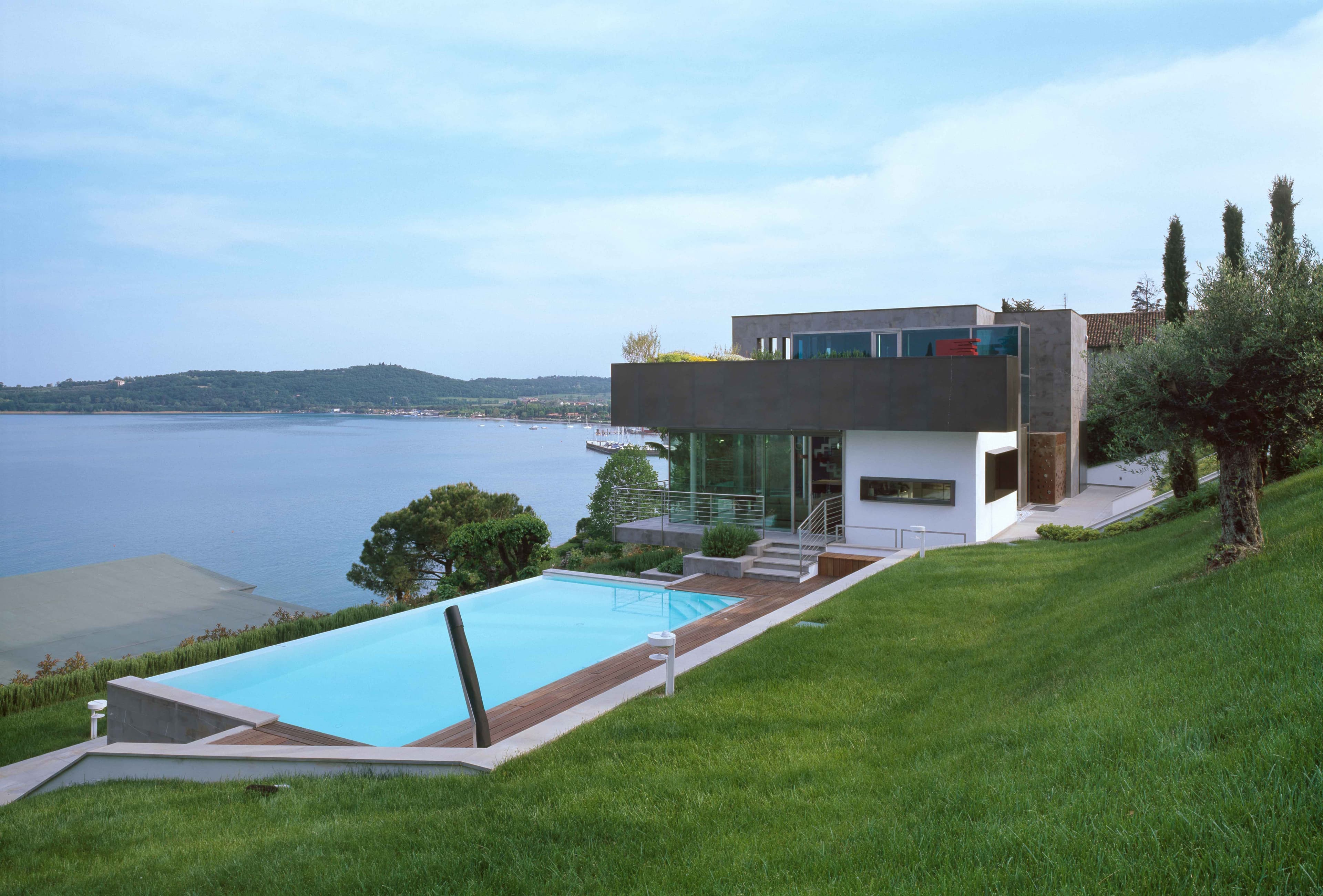
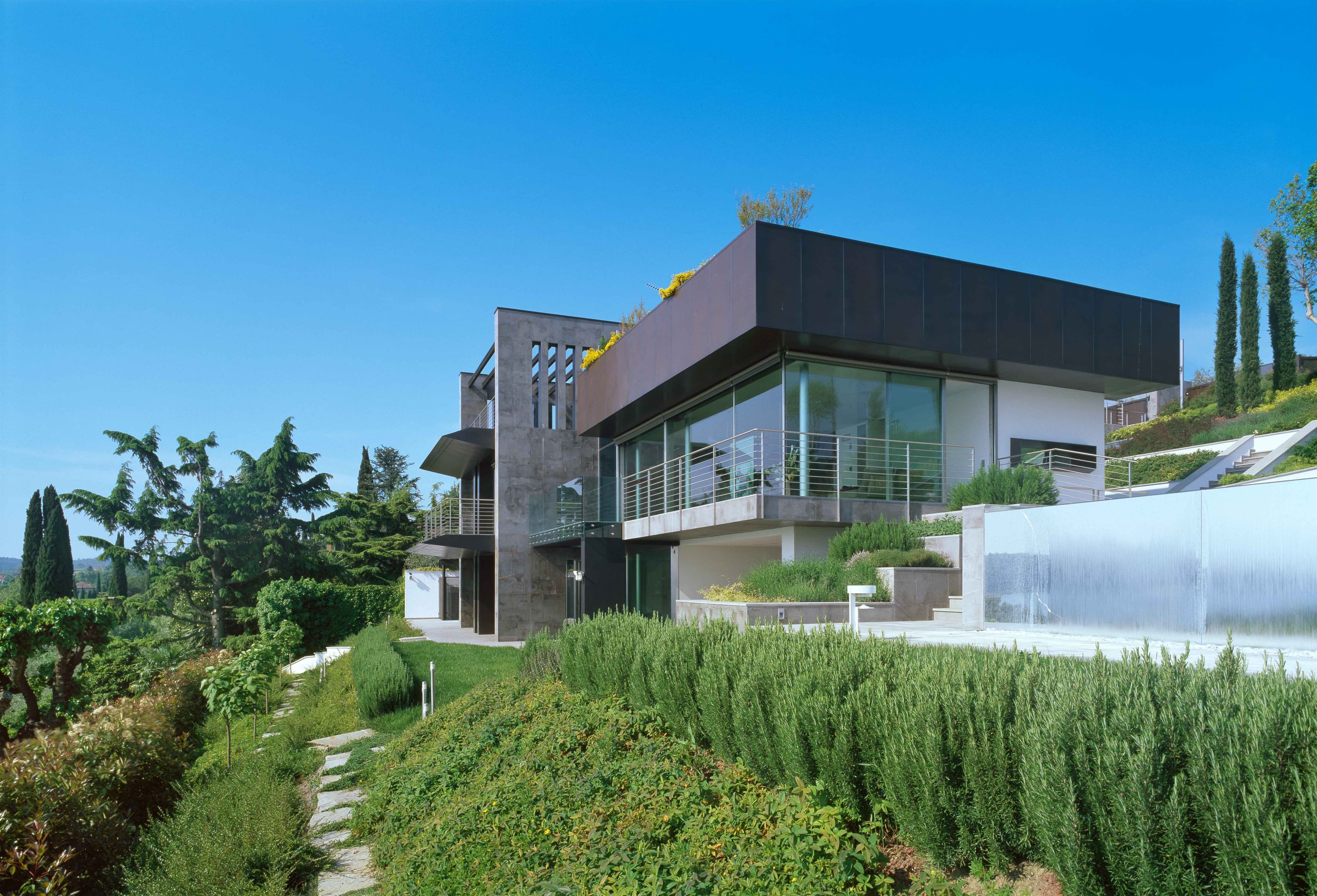
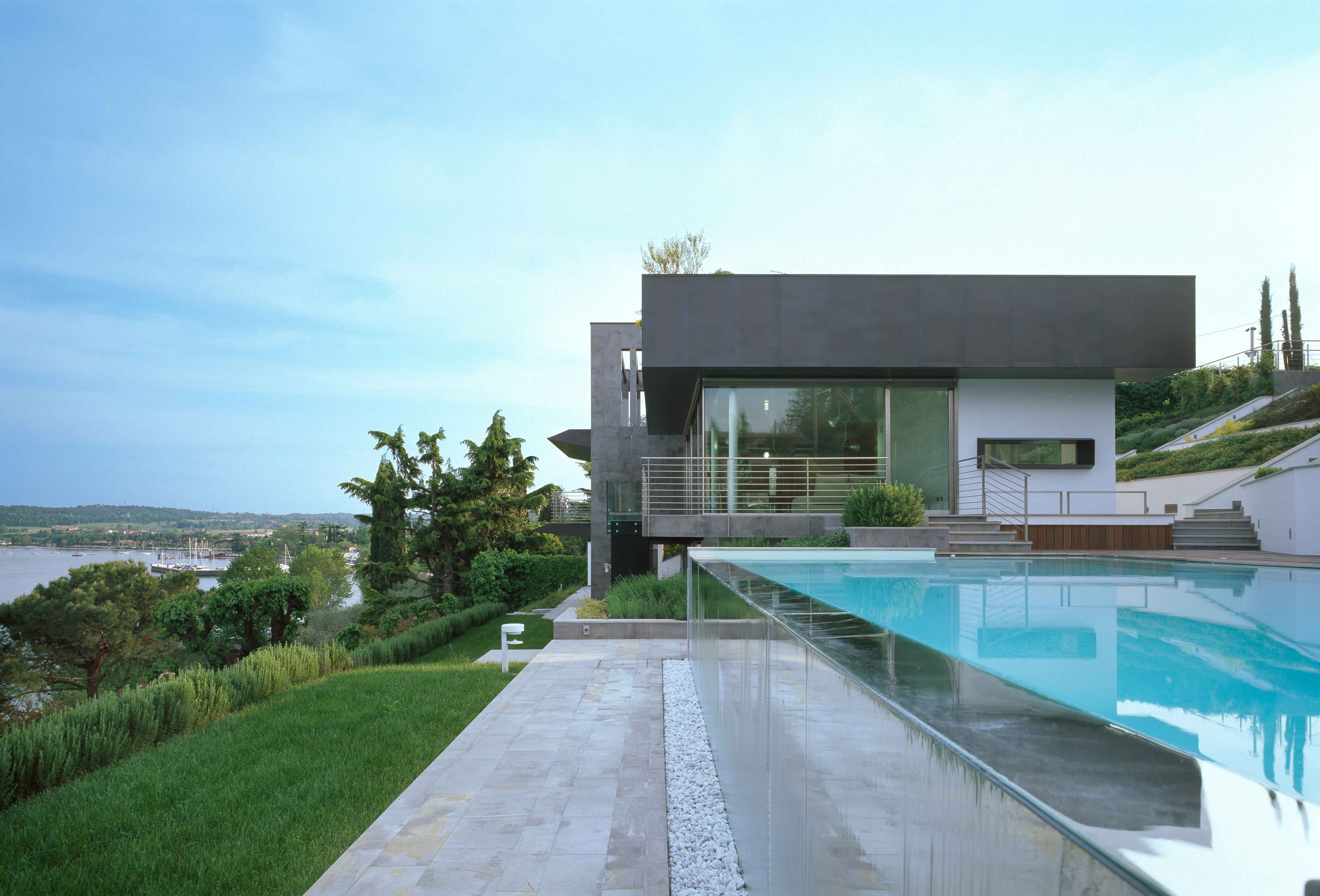
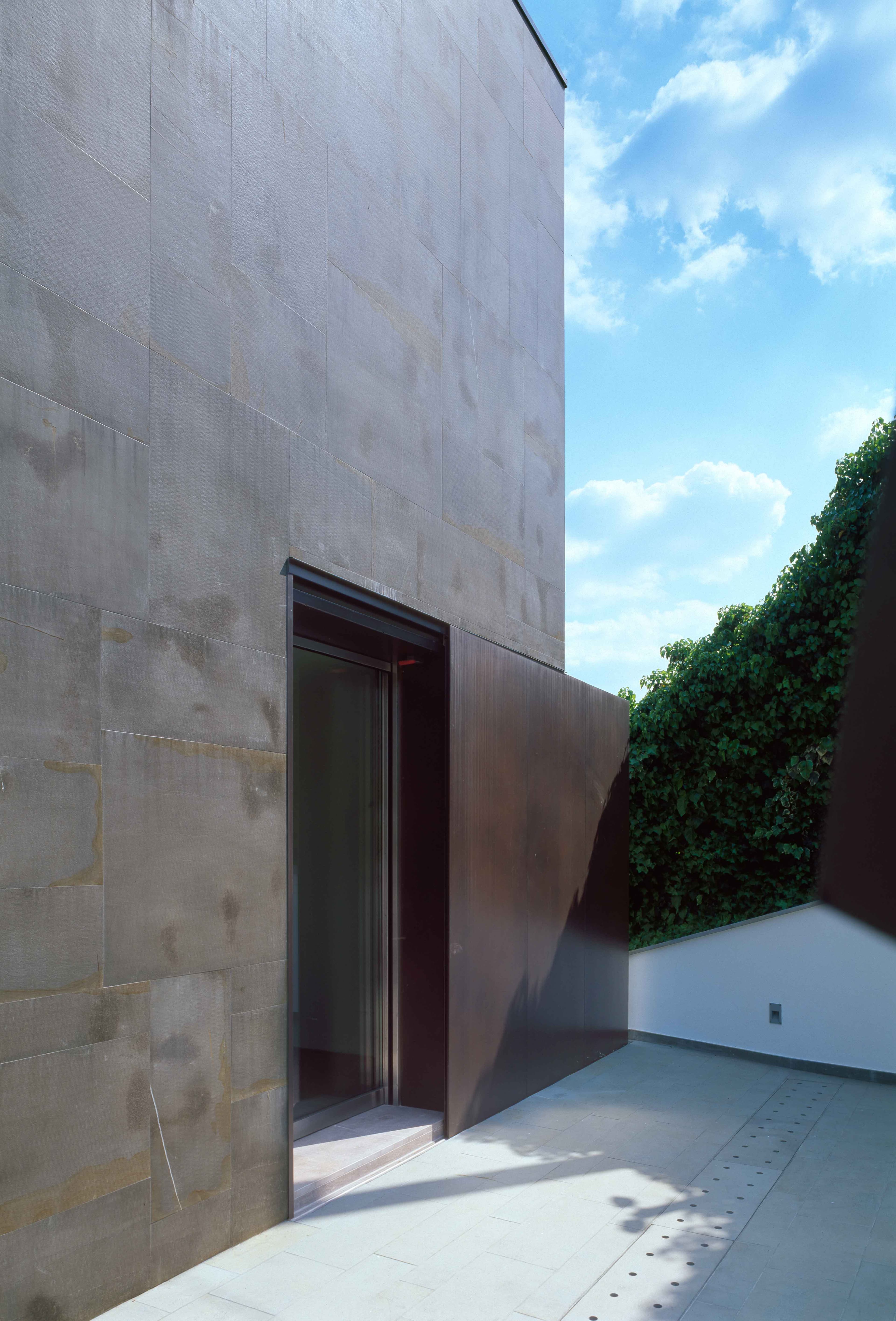
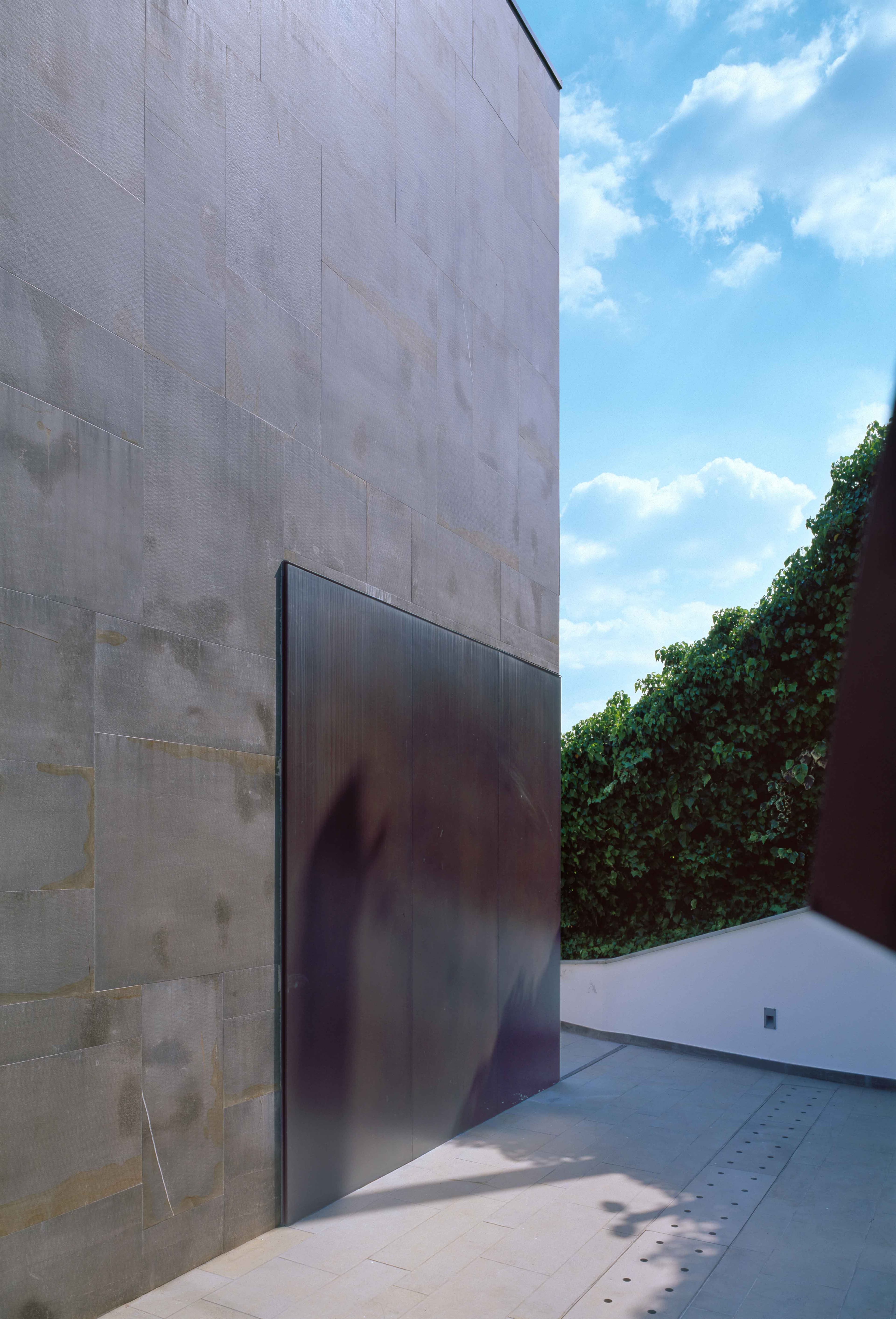
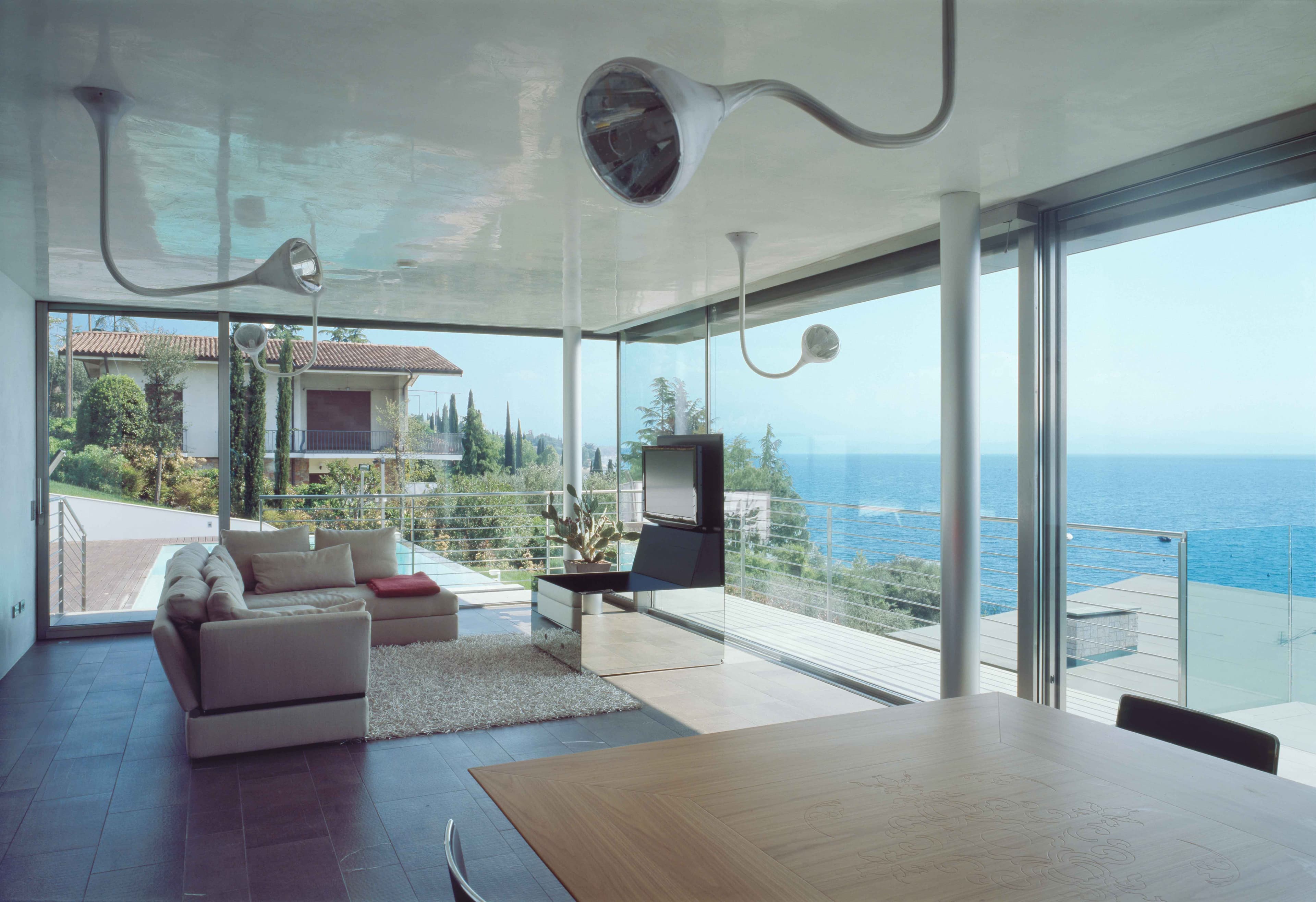
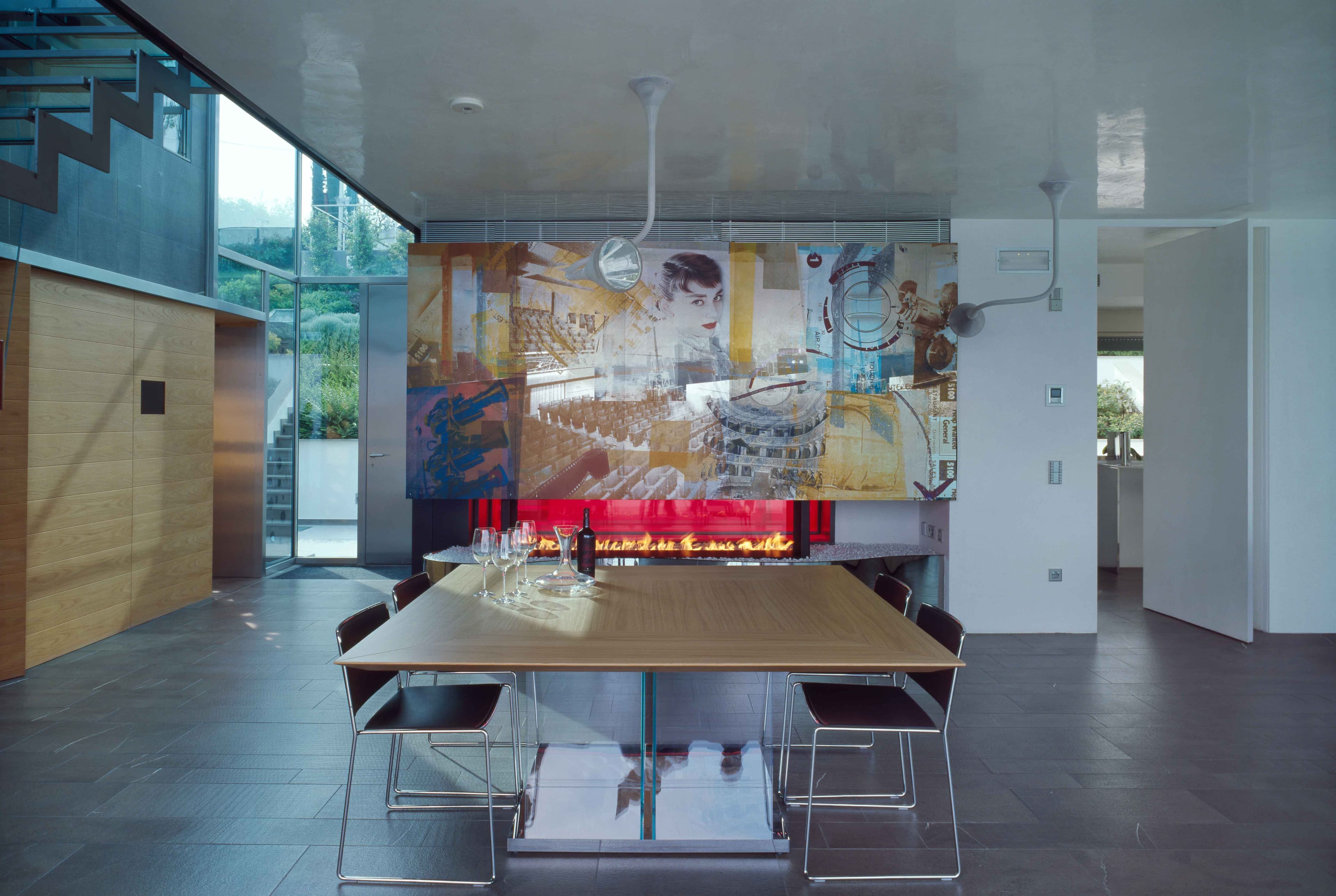
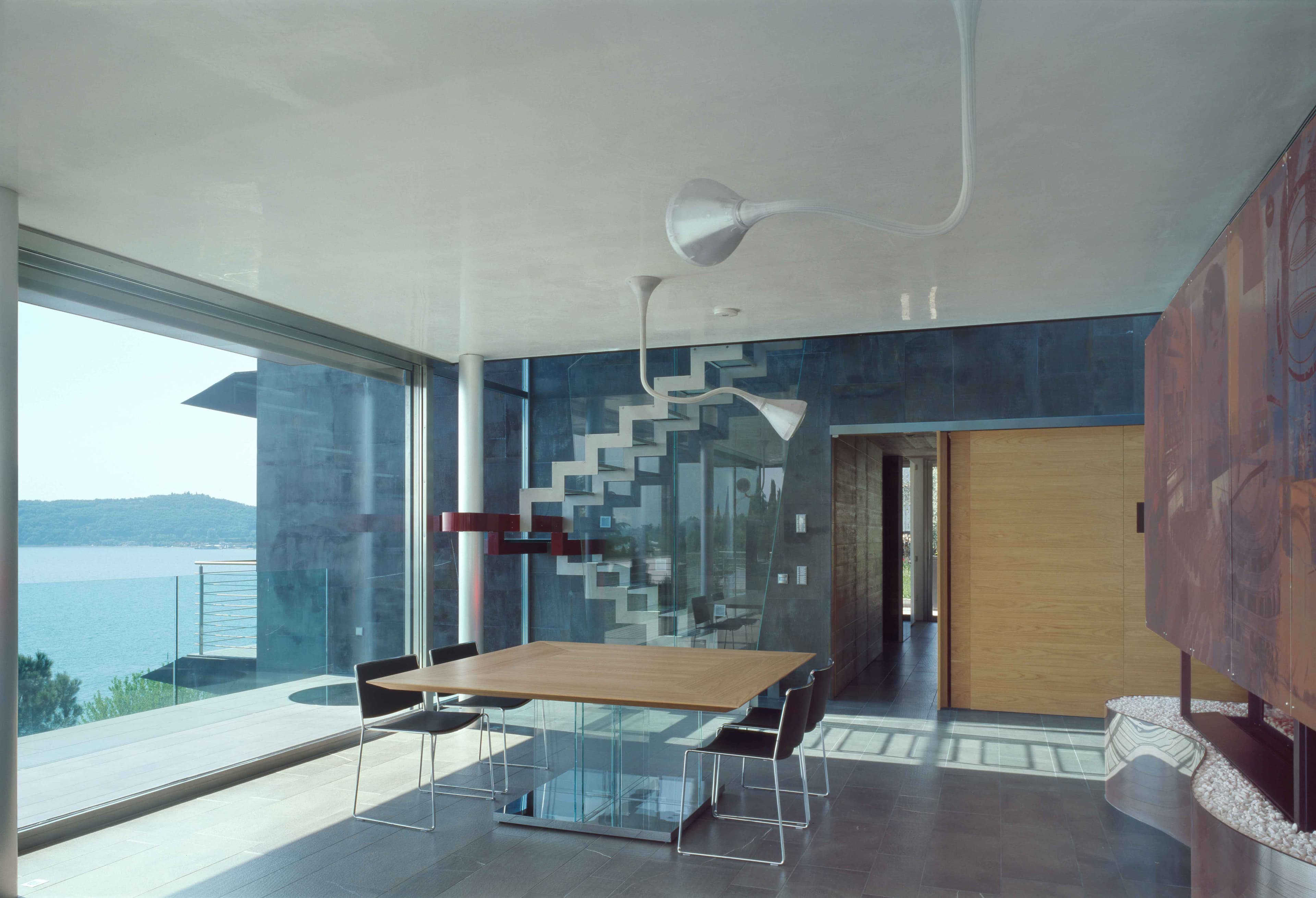
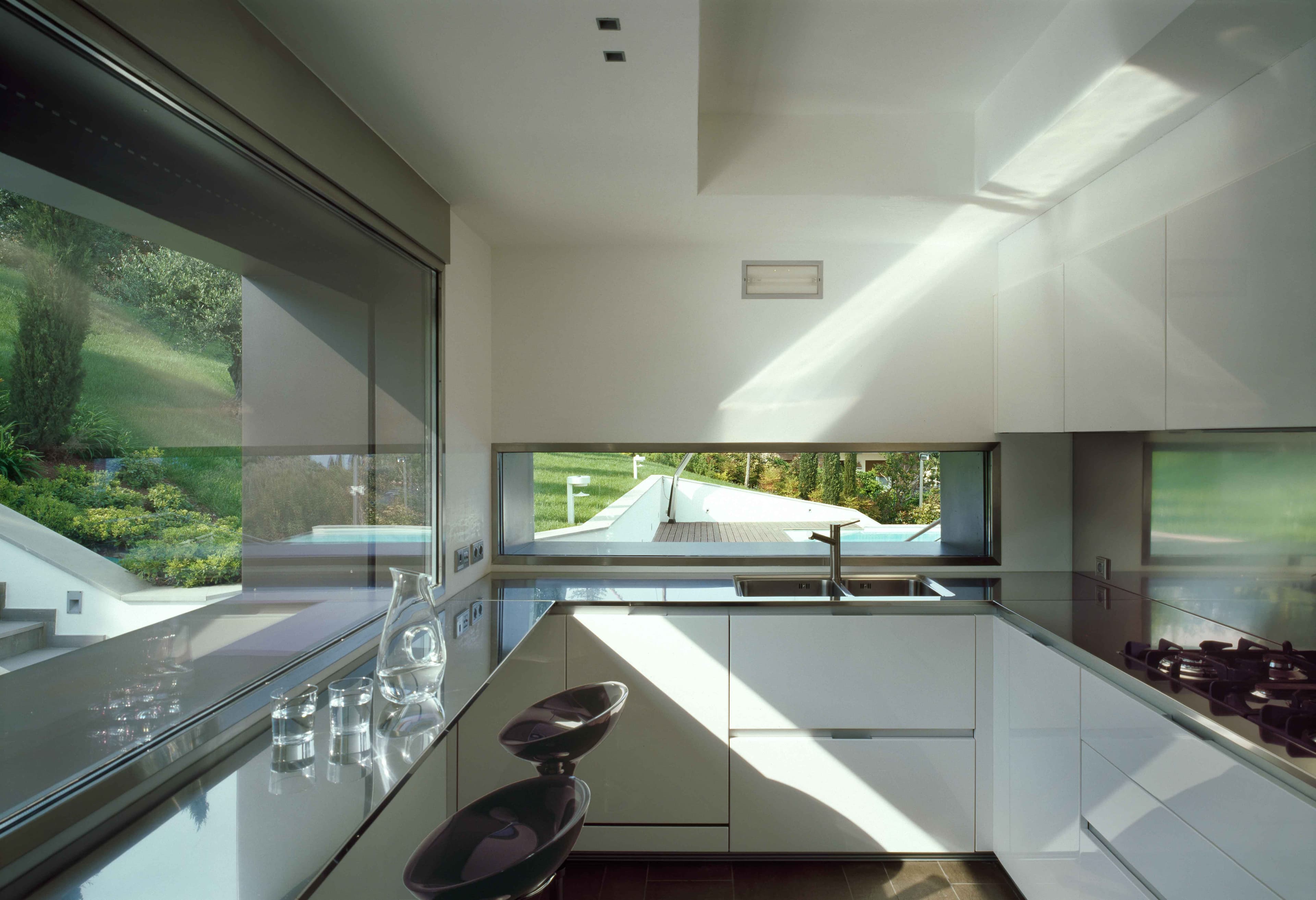
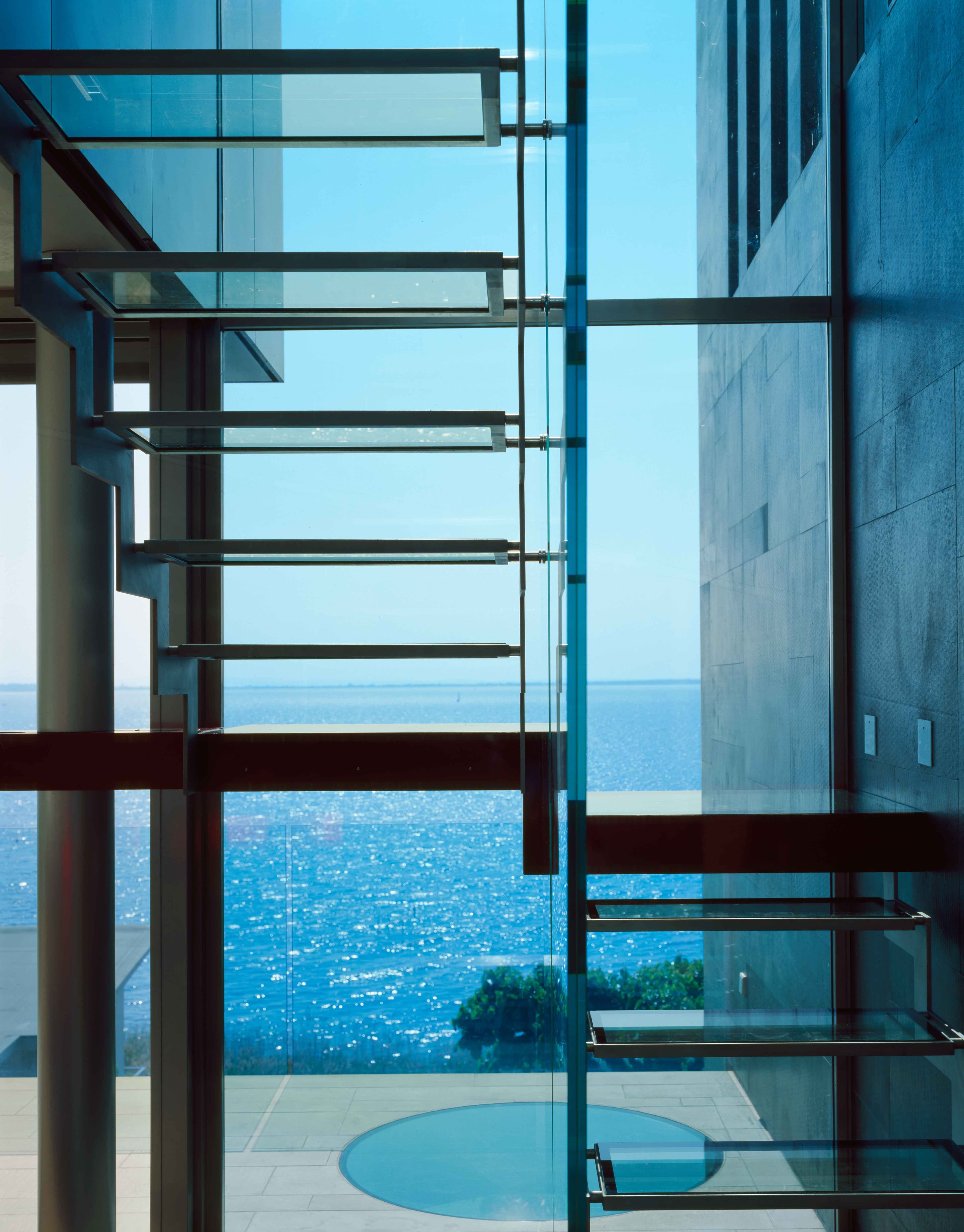
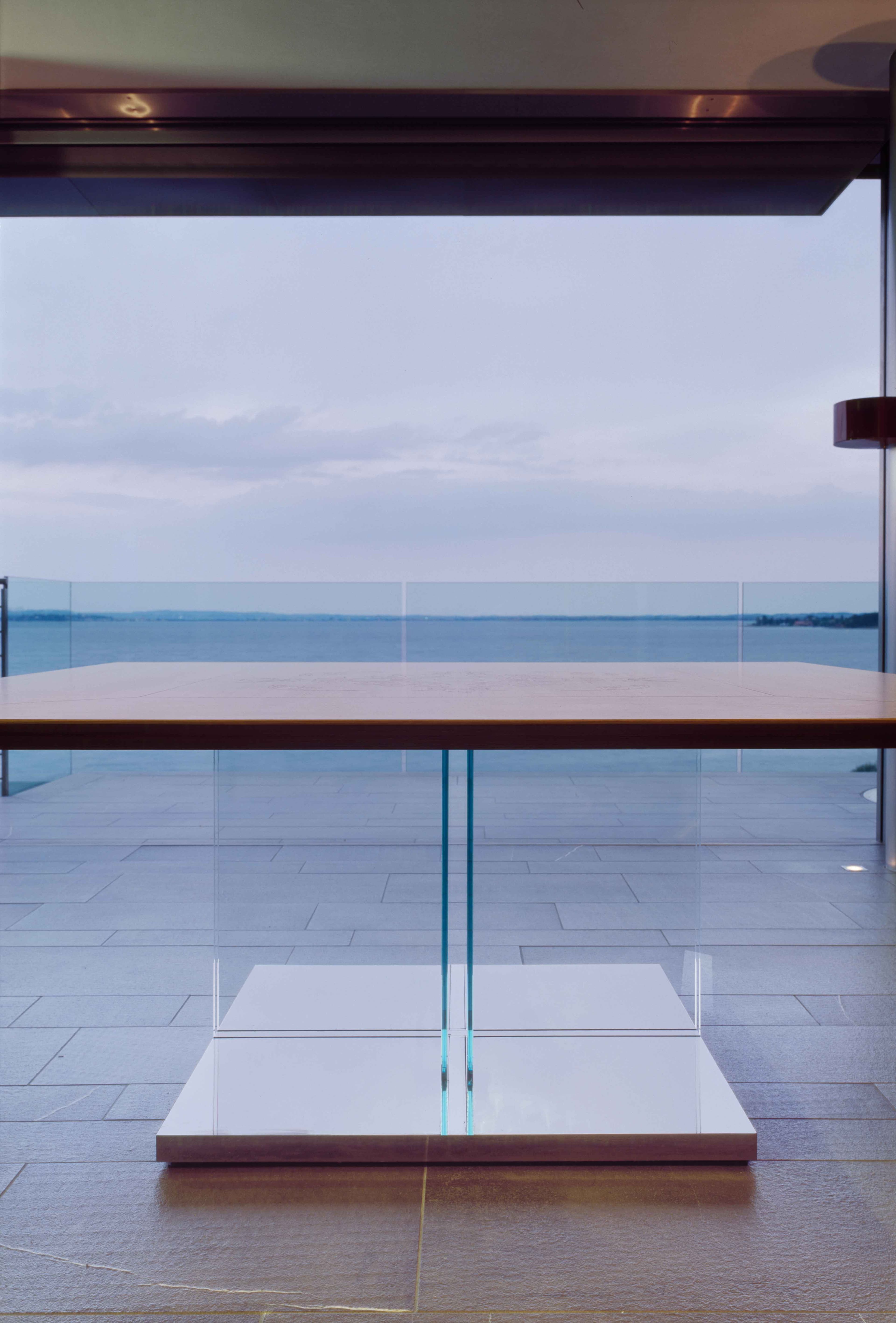
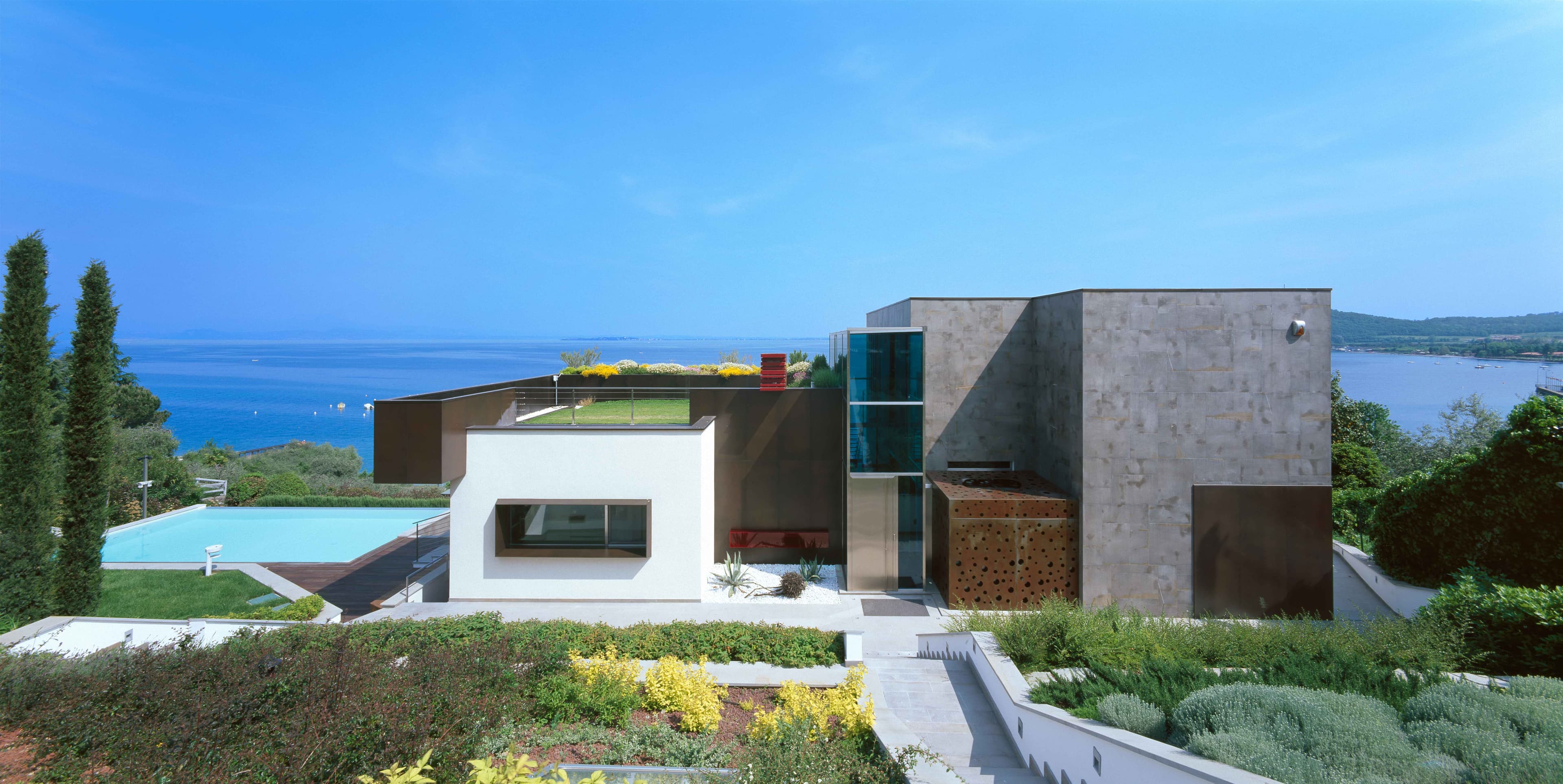
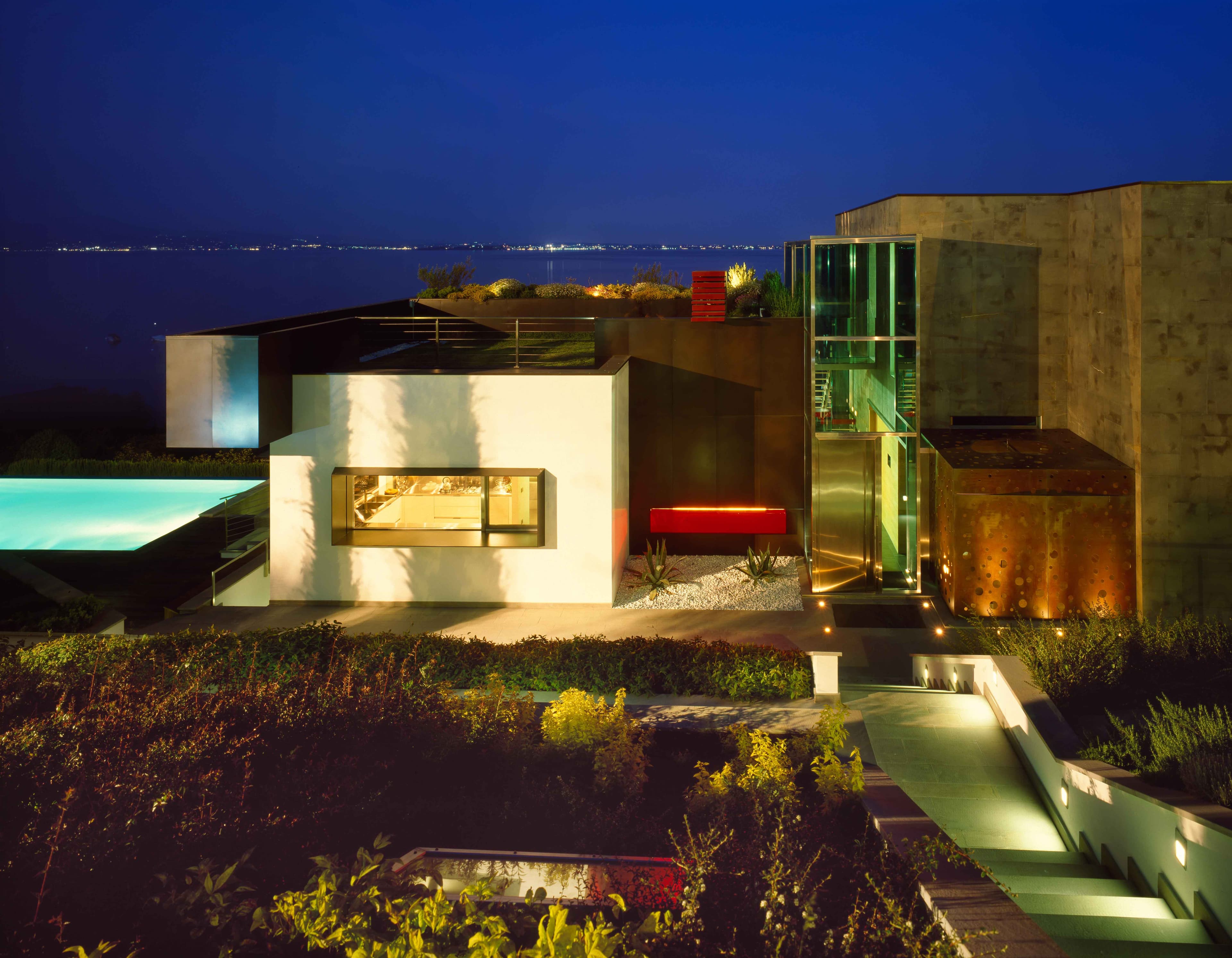
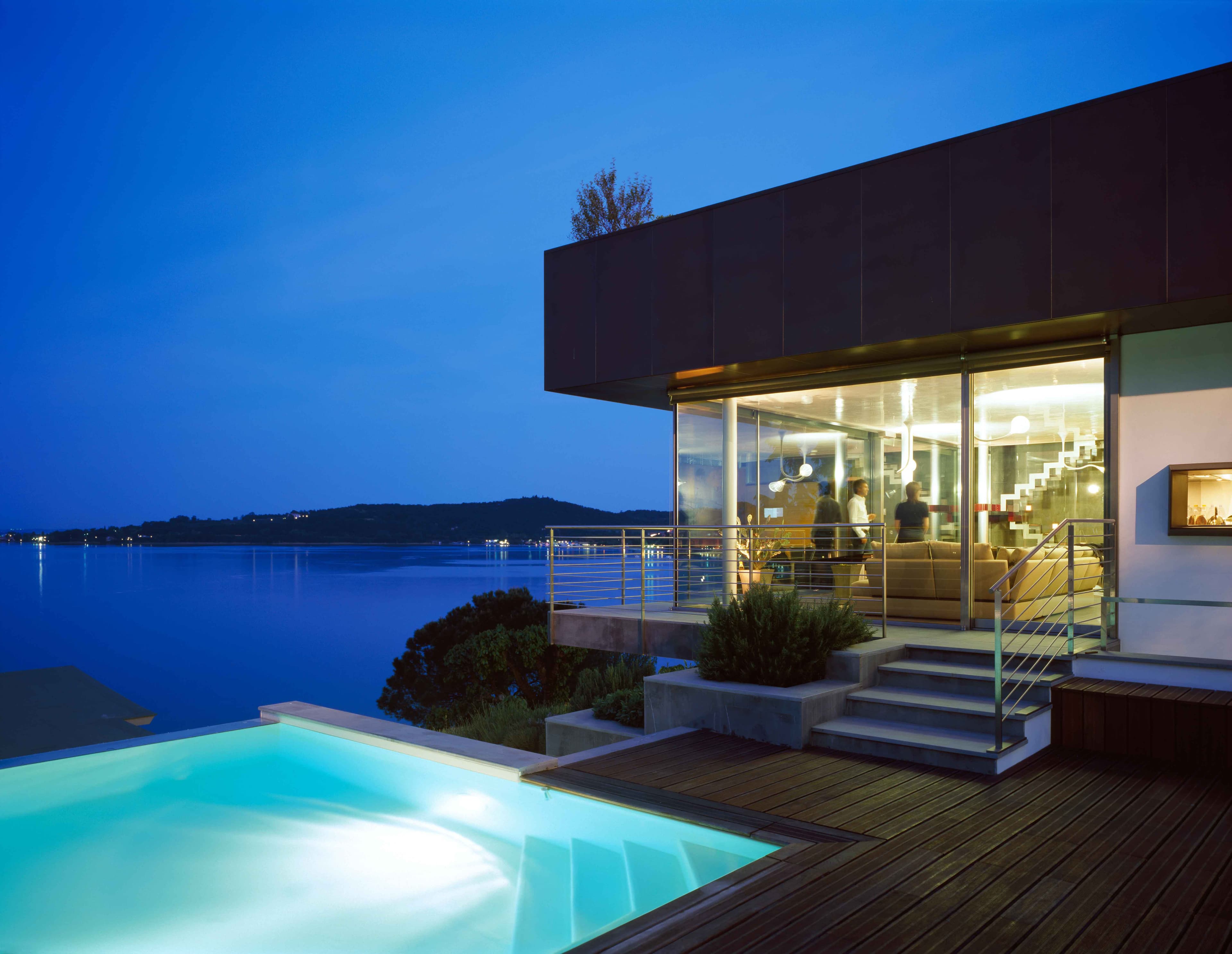
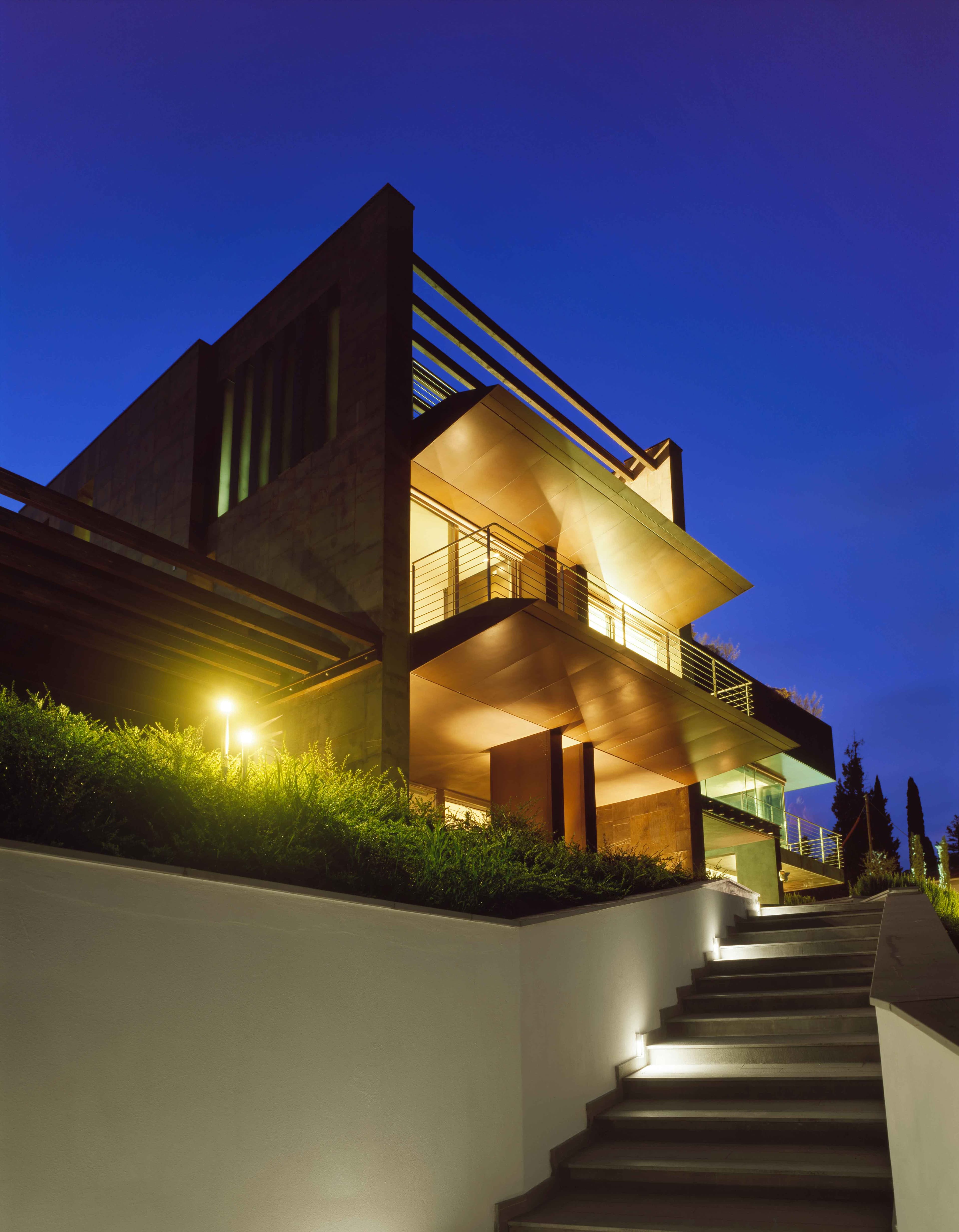
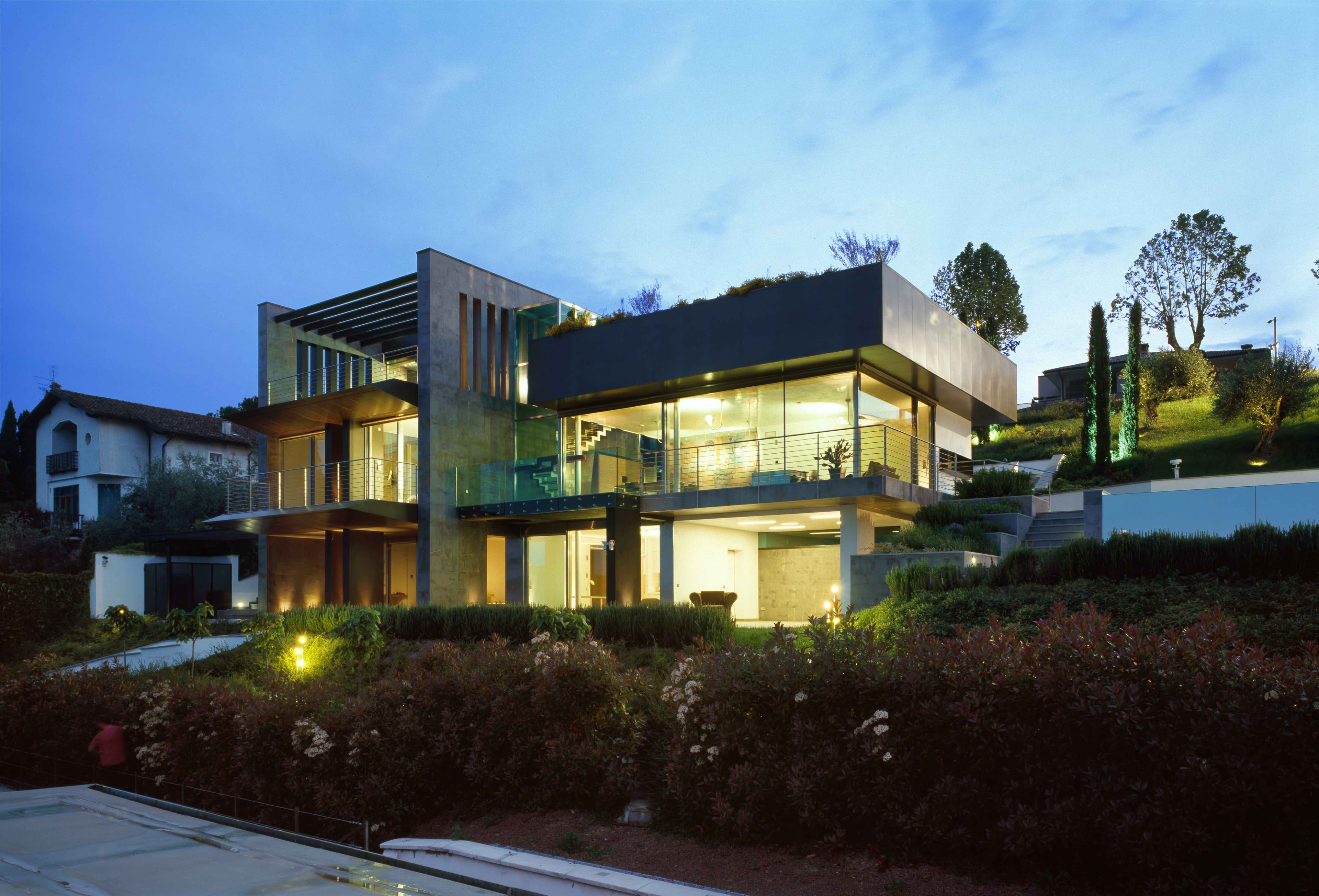
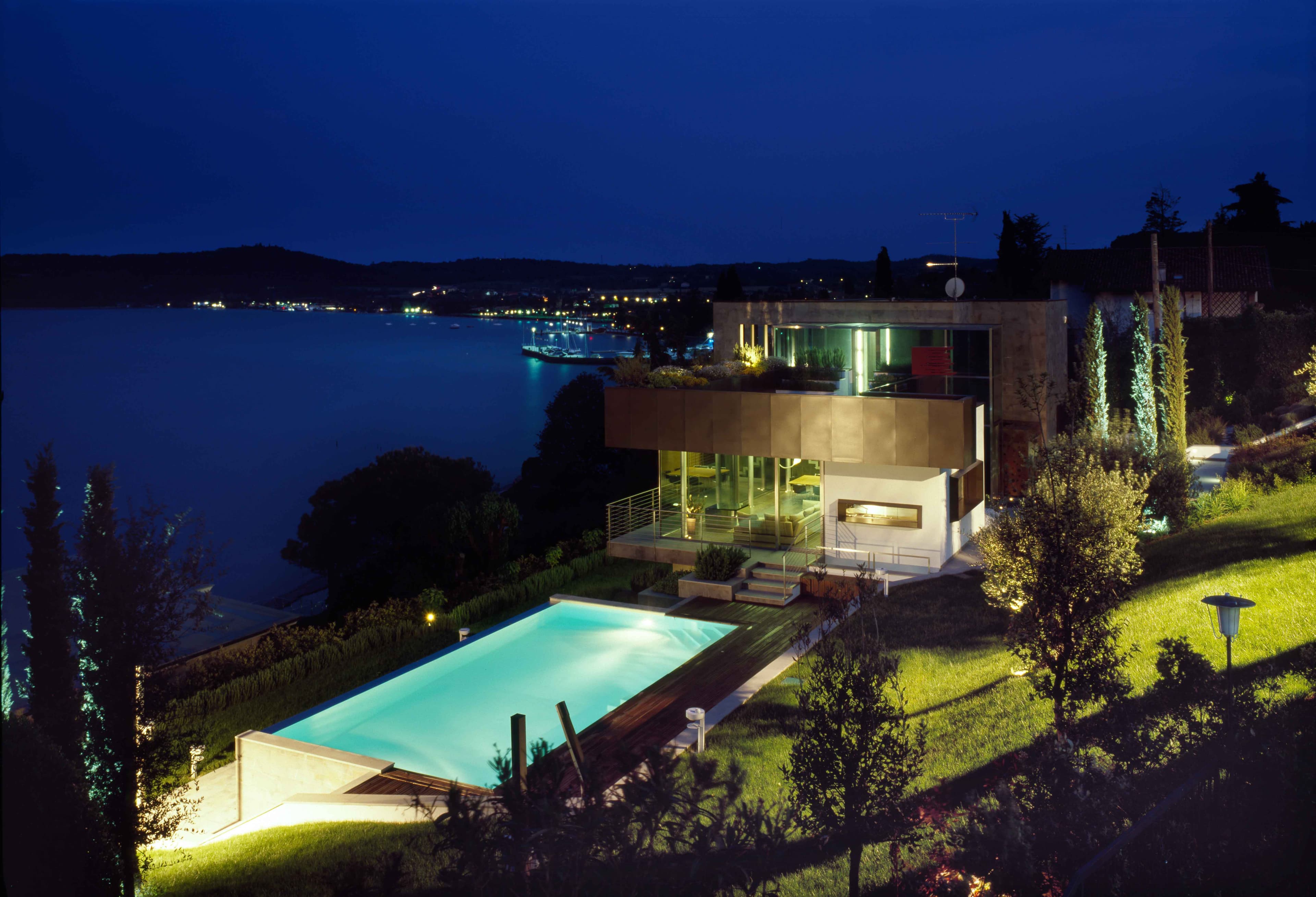
The project involving the villa situated on the banks of the lake in the Padenghe sul Garda province is a result of the restoration of an existing 1960’s villa. The intervention carried out by the architects Giorgio Palù and Michele Bianchi maintained the existing volume and boundaries of the previous villa, whilst reinterpreting the space in line with a more contemporary style as well as the specific requirements of the clients for two apartments.
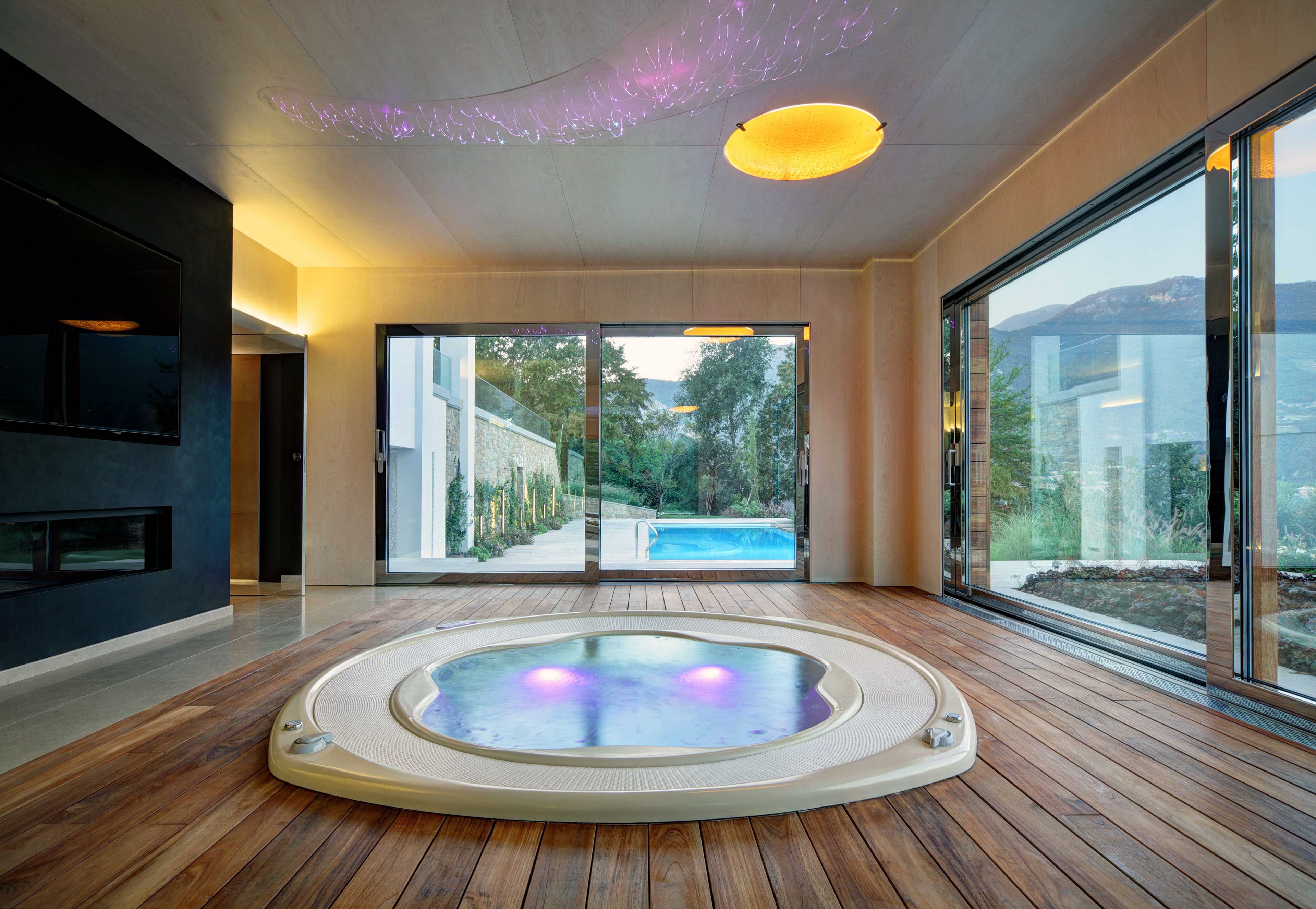
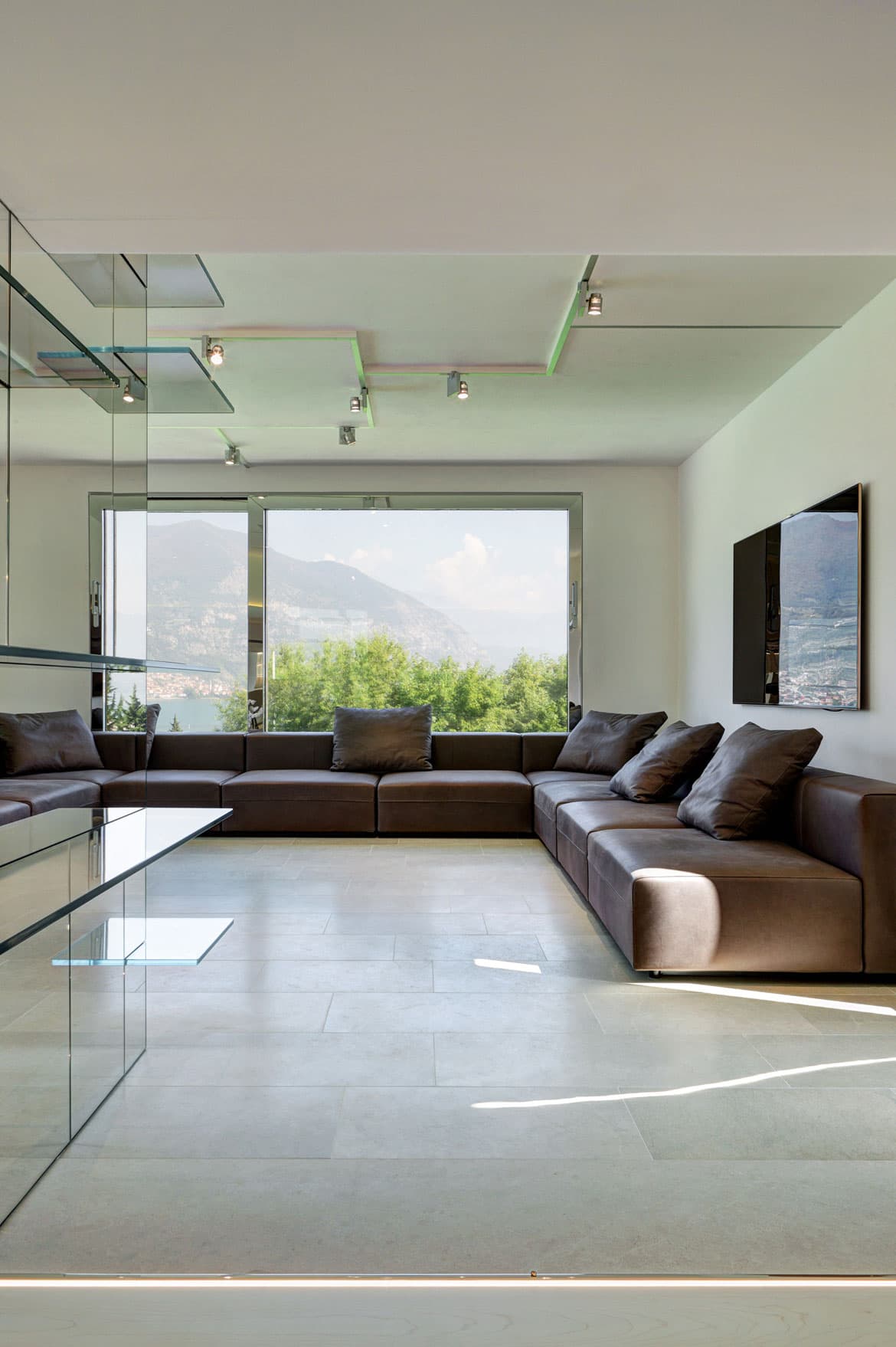
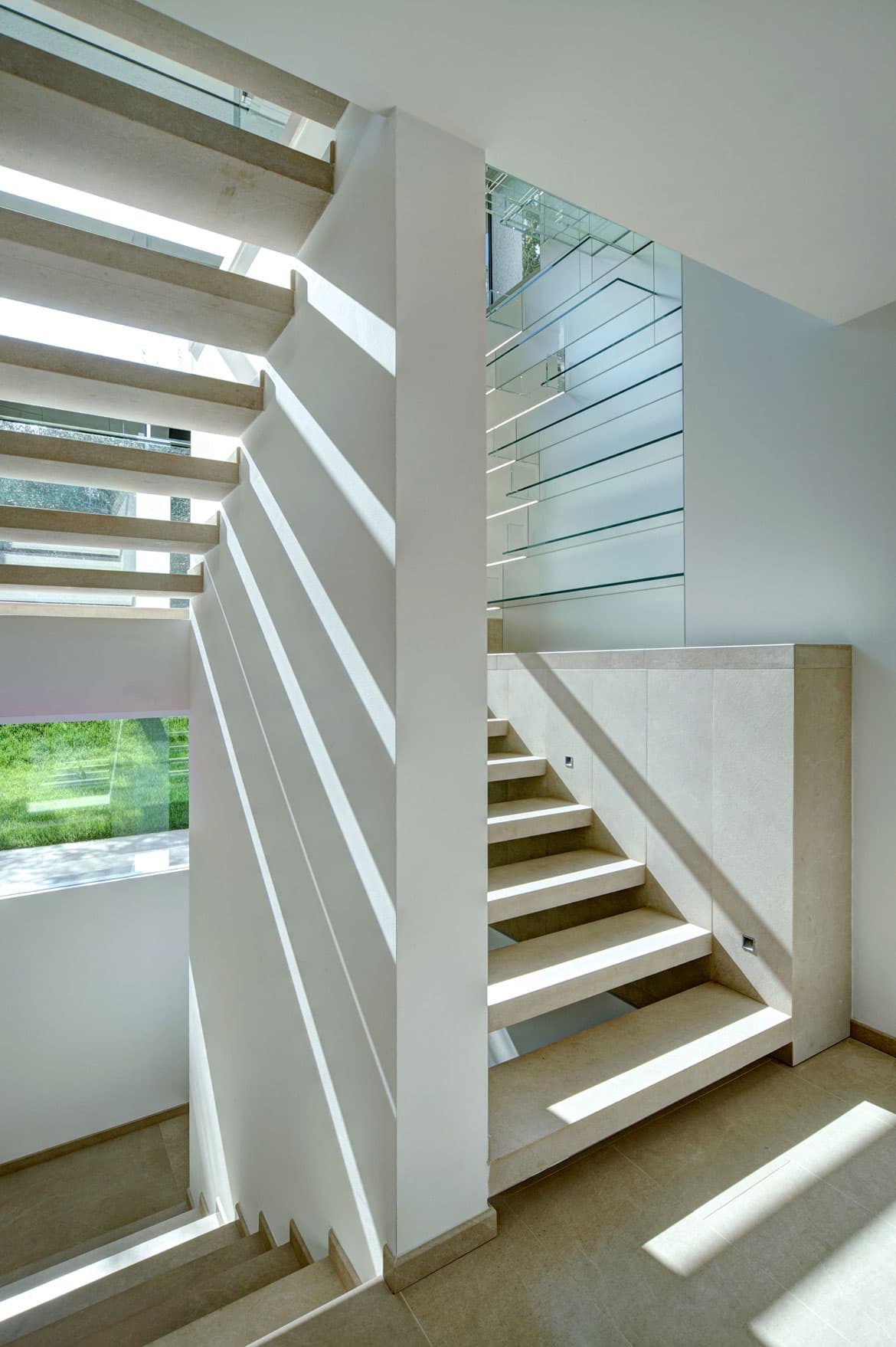
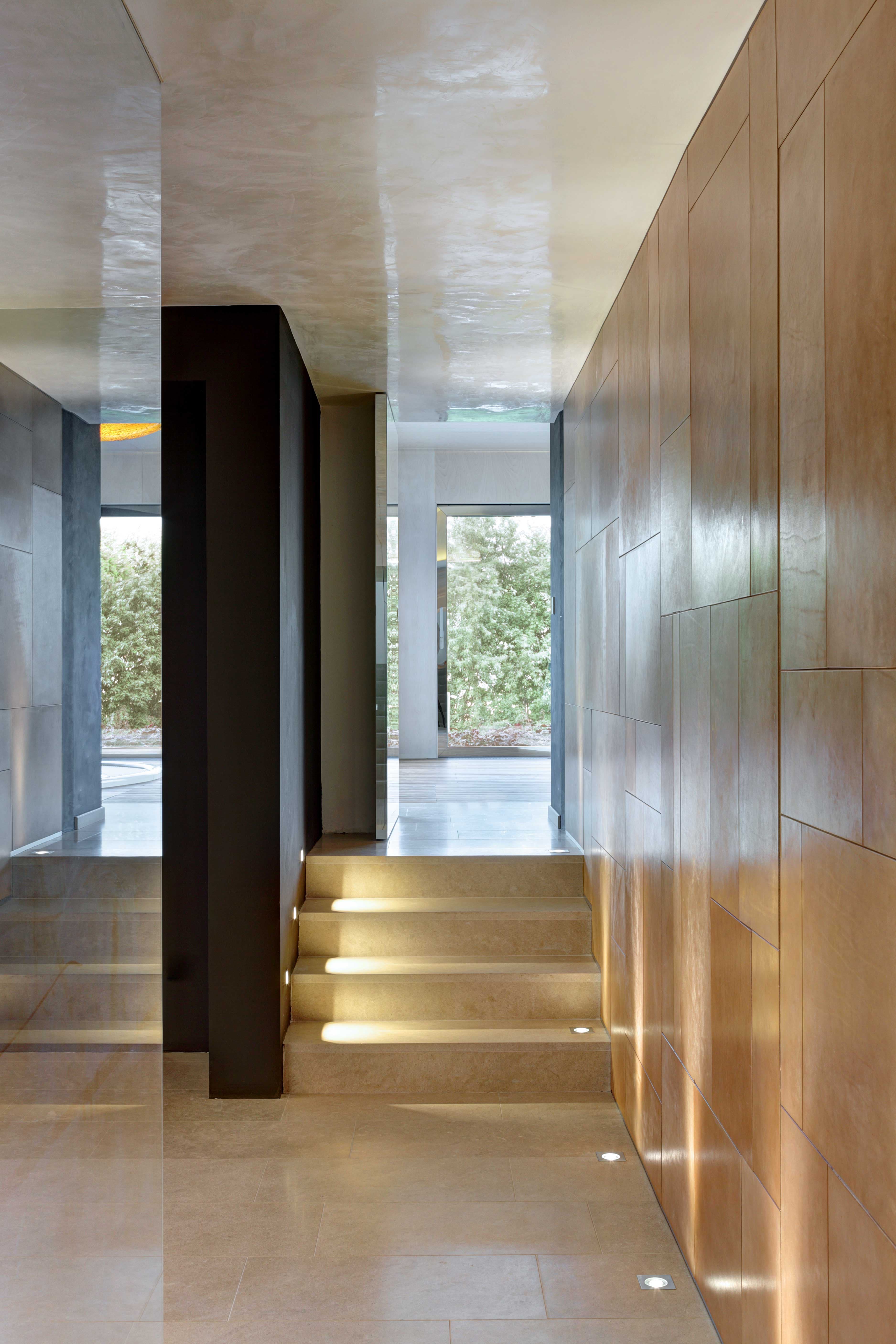
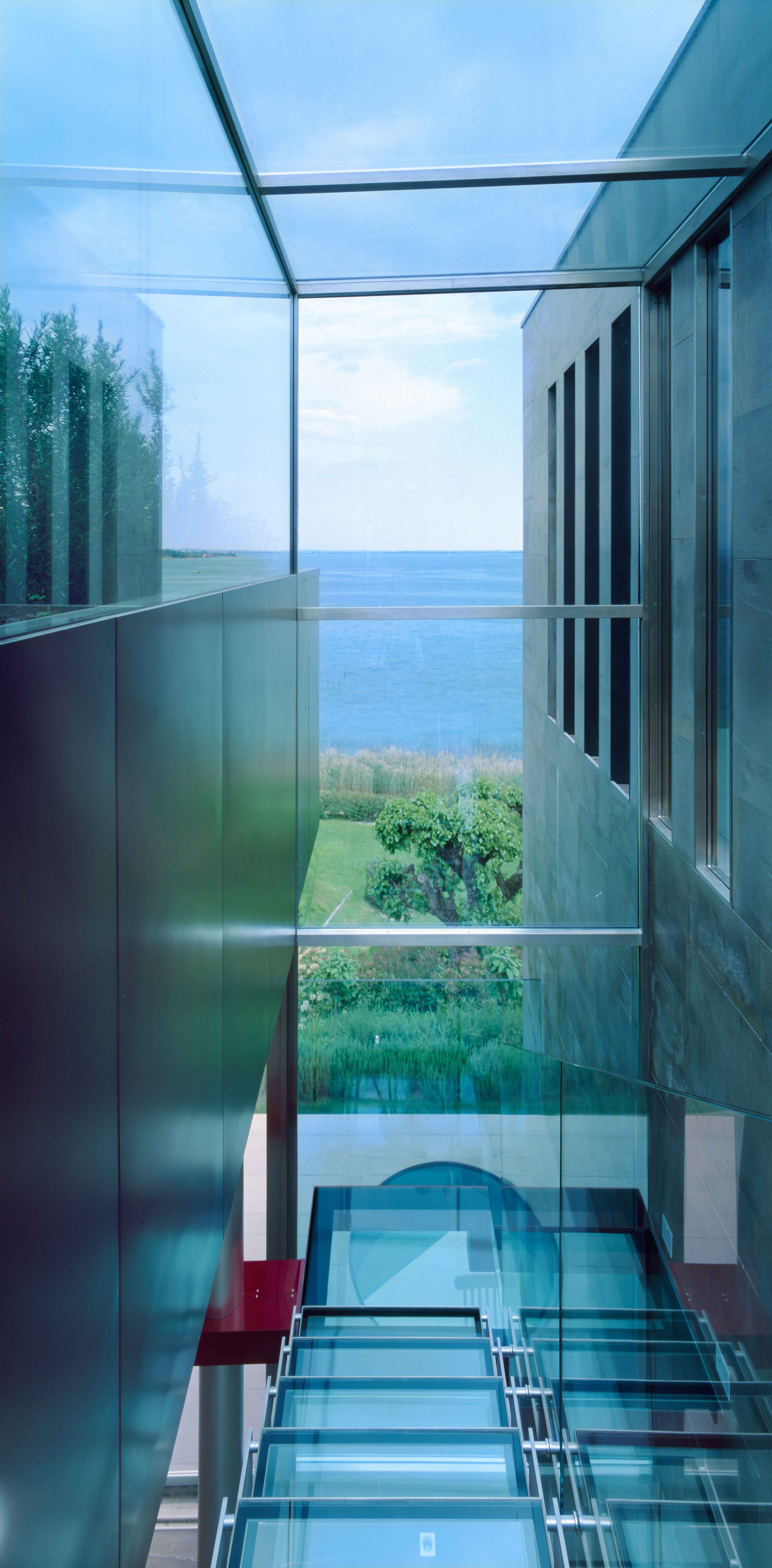
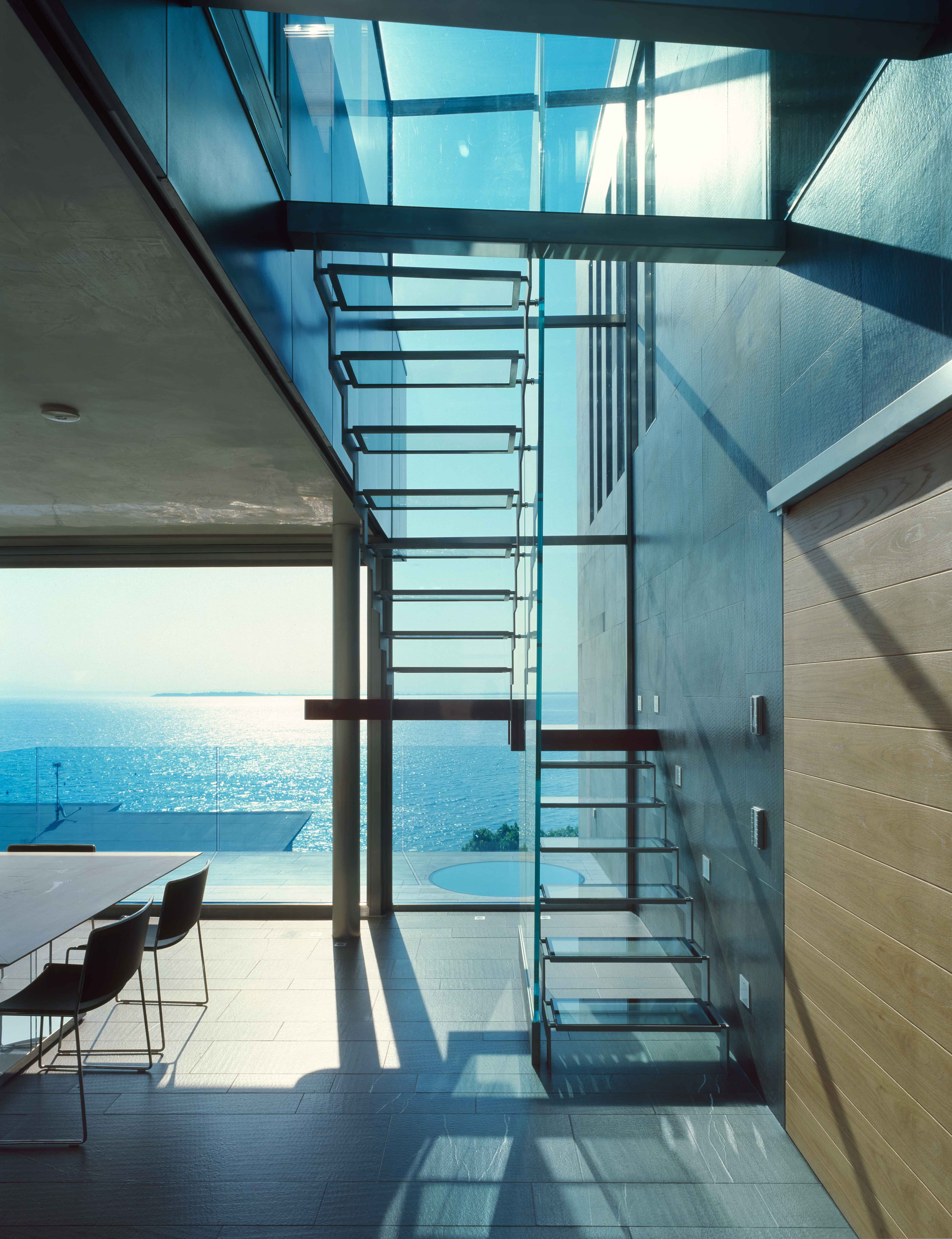
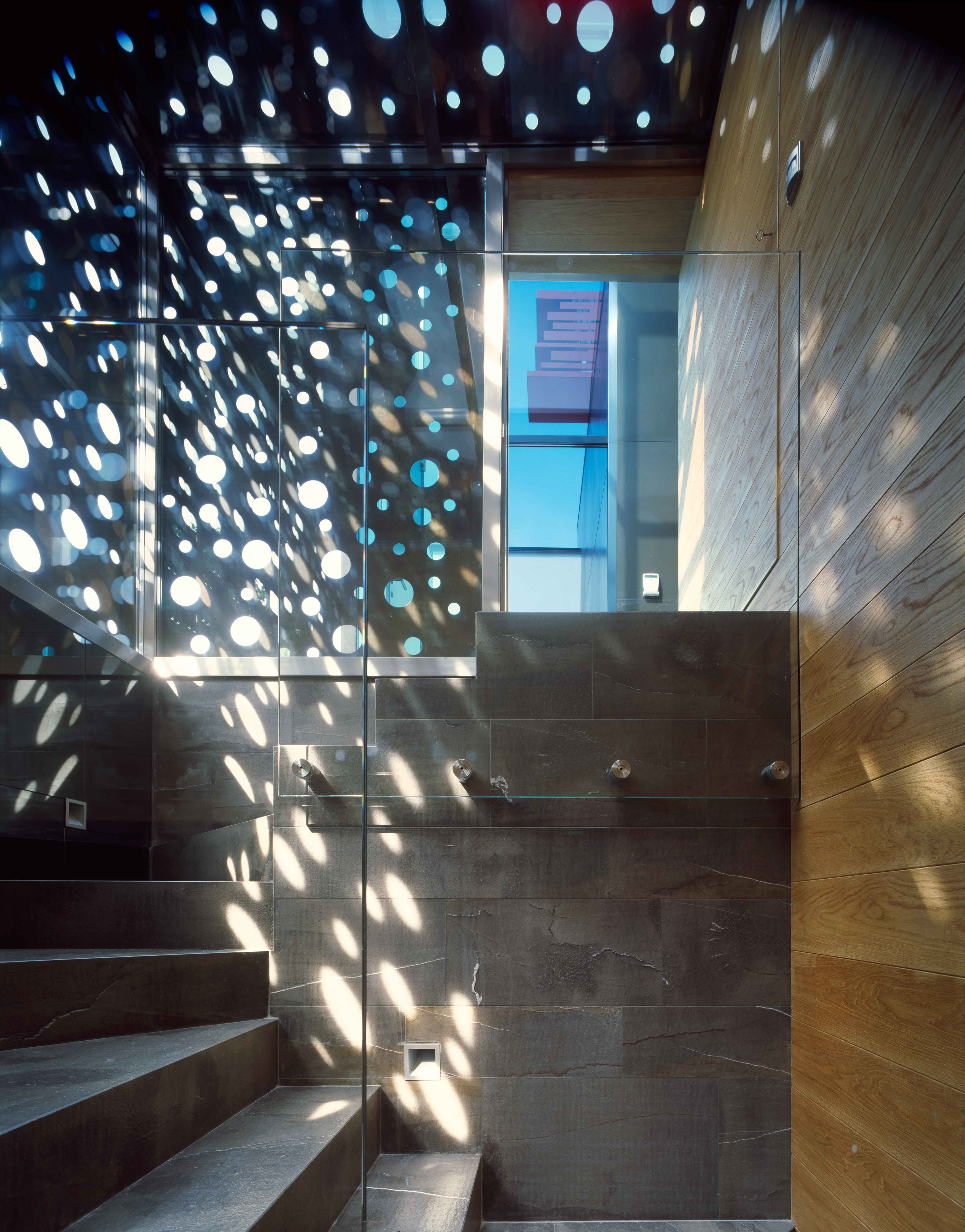
The main apartment covers the ground and first floor with frontal access and the second takes up the lower floor with access and views solely from and towards the lake. The privileged position half way between the main coastal road and the private beach allow for the perfect insertion into the surrounding landscape, the flow within which is maintained via the numerous lake side outlooks and the large floor to ceiling windows found in the living area which contrasts well with the more secluded and screened areas of rest. Natural materials were chosen for the final decorative finishes. “Medea” stone used on the face of the main structure of the house, is carried through for use internally on the floors and the dividing walls of the double height stairwell that leads to the other floors.
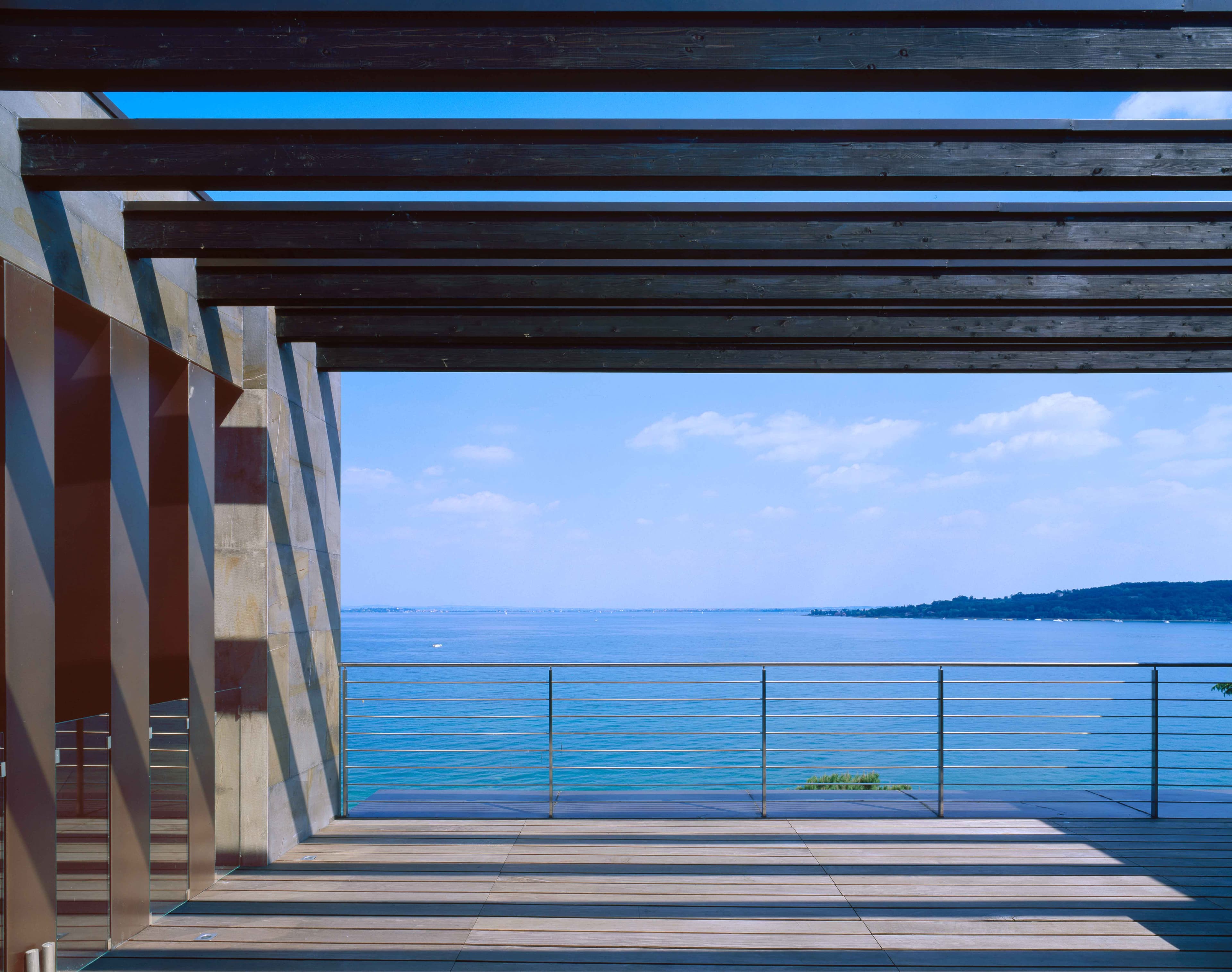
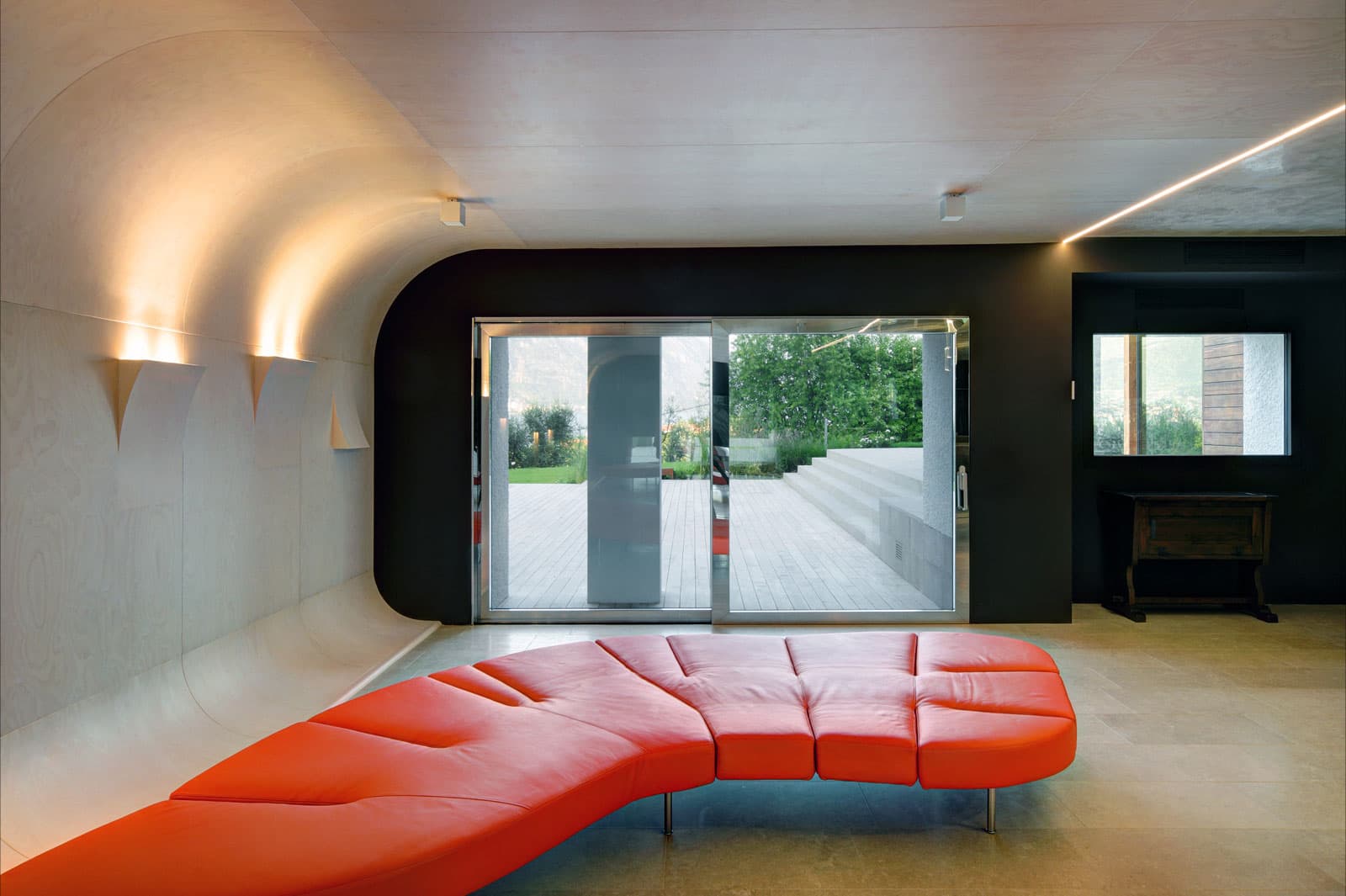
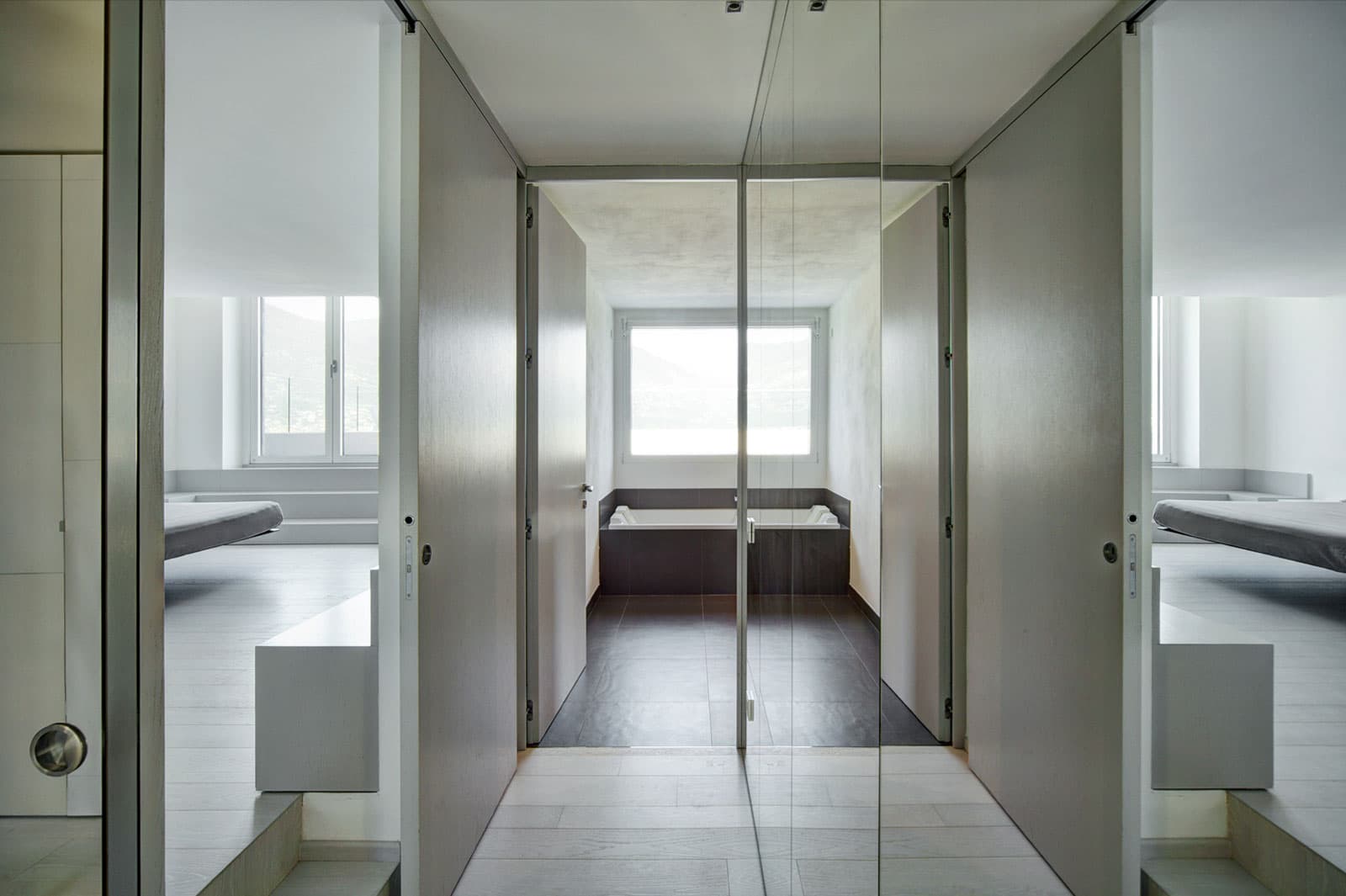
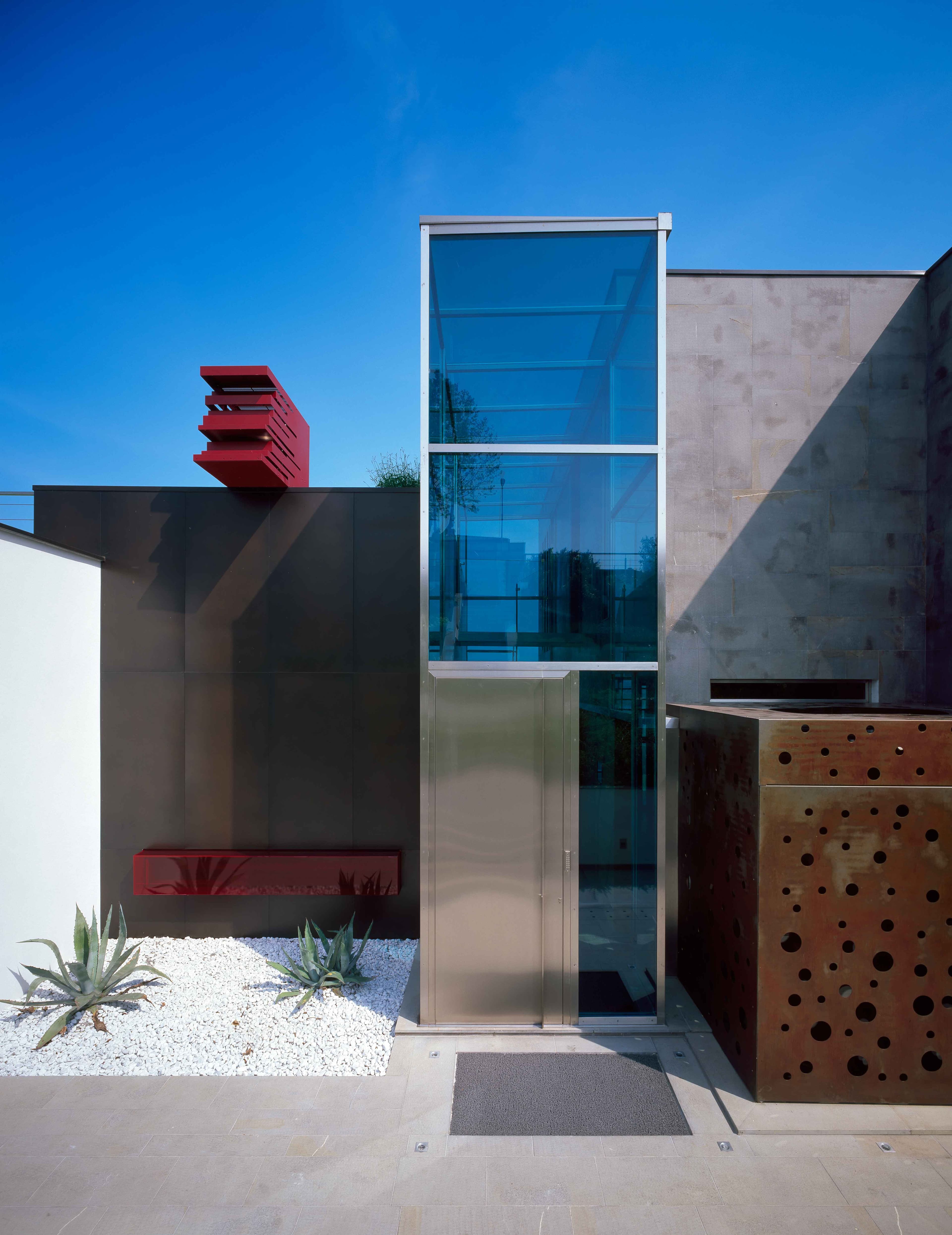
The stairwell is also characterised by additional walls in dark blue glass that encase the space so as to avoid obstructing any views of the lake as one approaches the home. The areas of rest are characterised by the presence of walls, doors and ceilings lined in natural brushed and waxed oak in order to create a warm and inviting atmosphere. In contrast the ceilings of the living areas are finished in a white shiny plaster which reflects and bounces light and the blue of the lake and pool around the rooms. An interesting peculiarity of the property is the presence of a car lift which allows one to descend directly 9m down into the underground parking area with a 6 car capacity. This choice eliminated the need for a long ramp for access thus not altering the beauty of the gardens or impacting unnecessarily on the surrounding landscape. (ph. Roland Halbe)
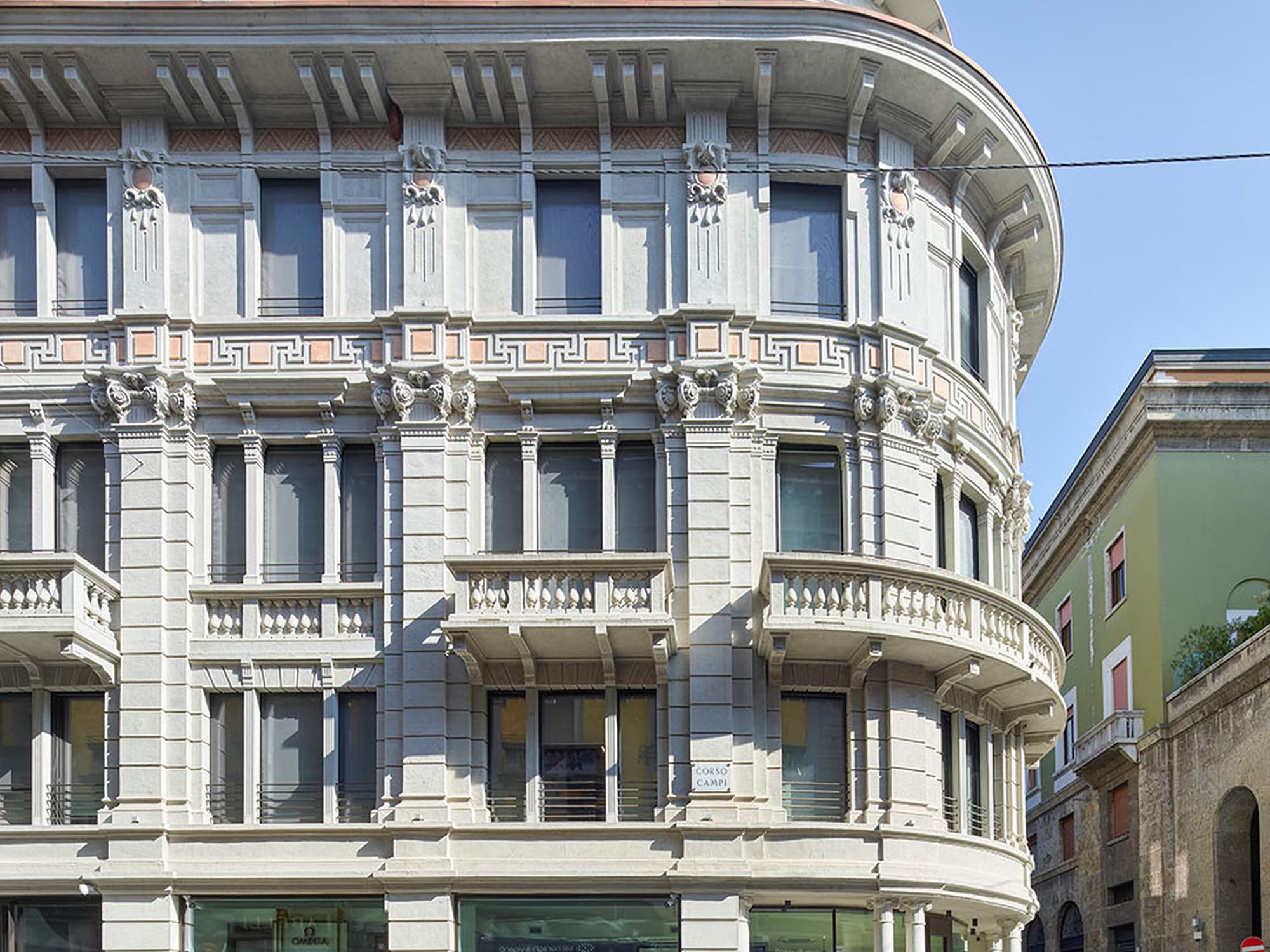
I Giardini del Corso
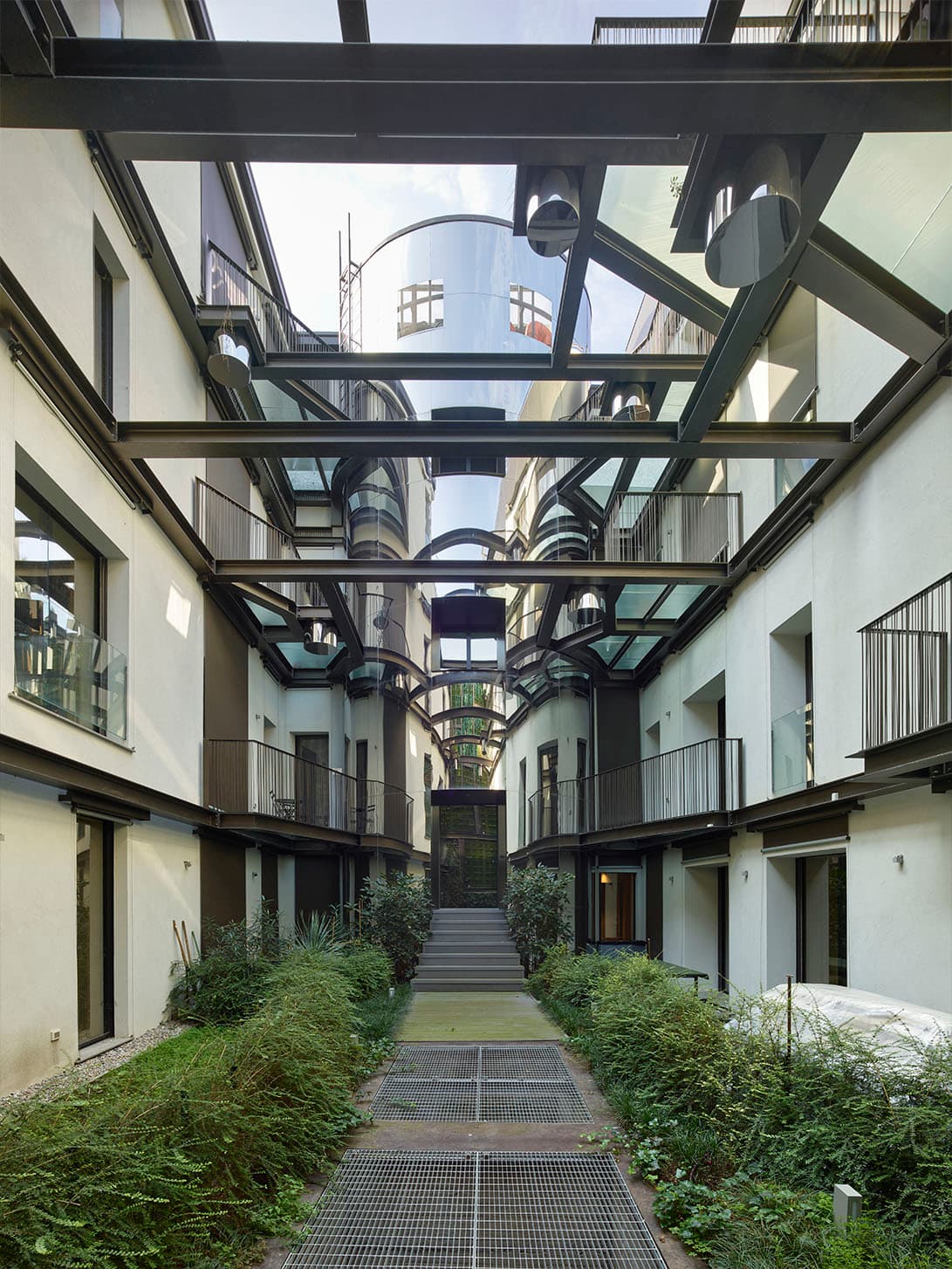
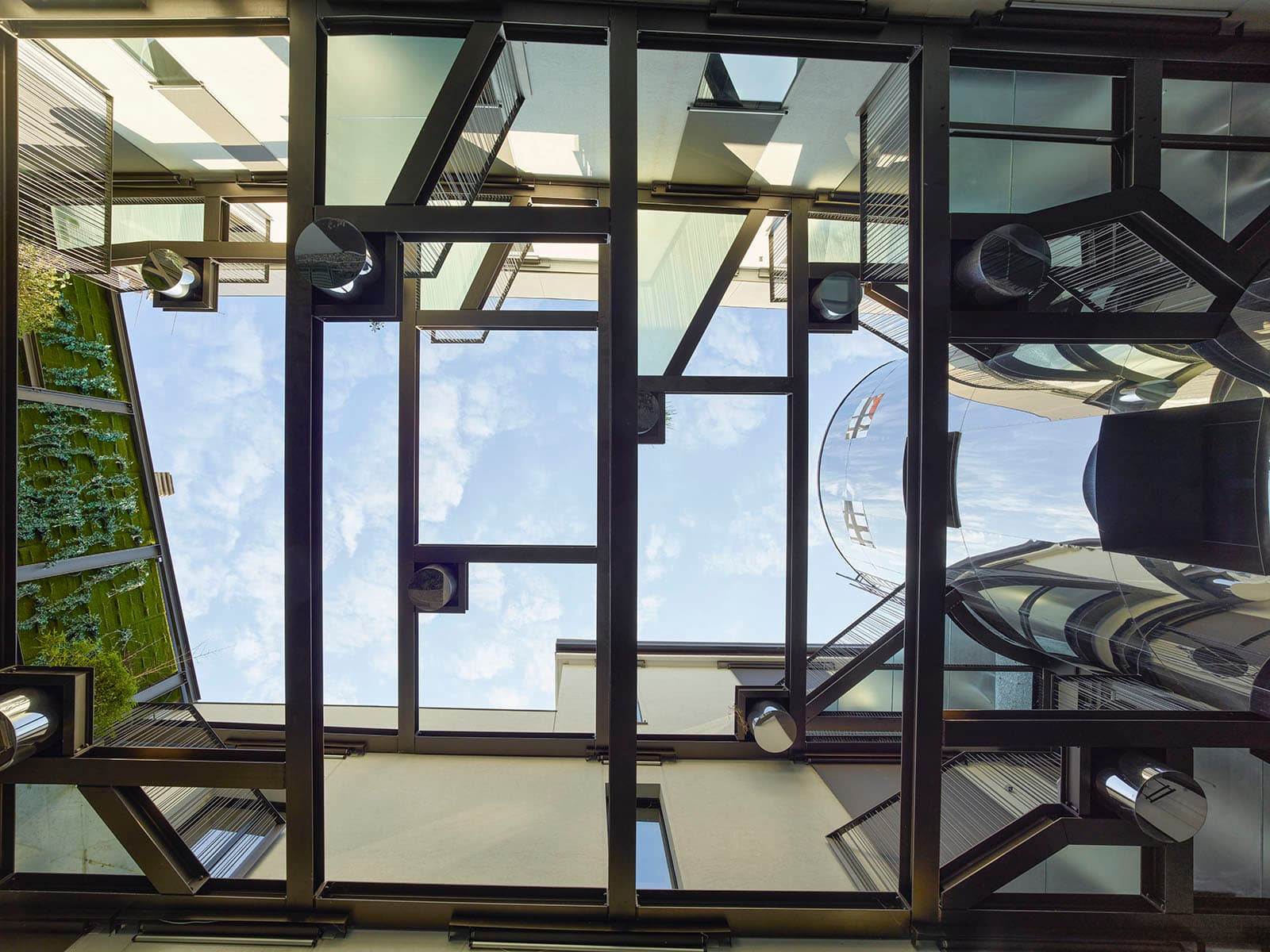
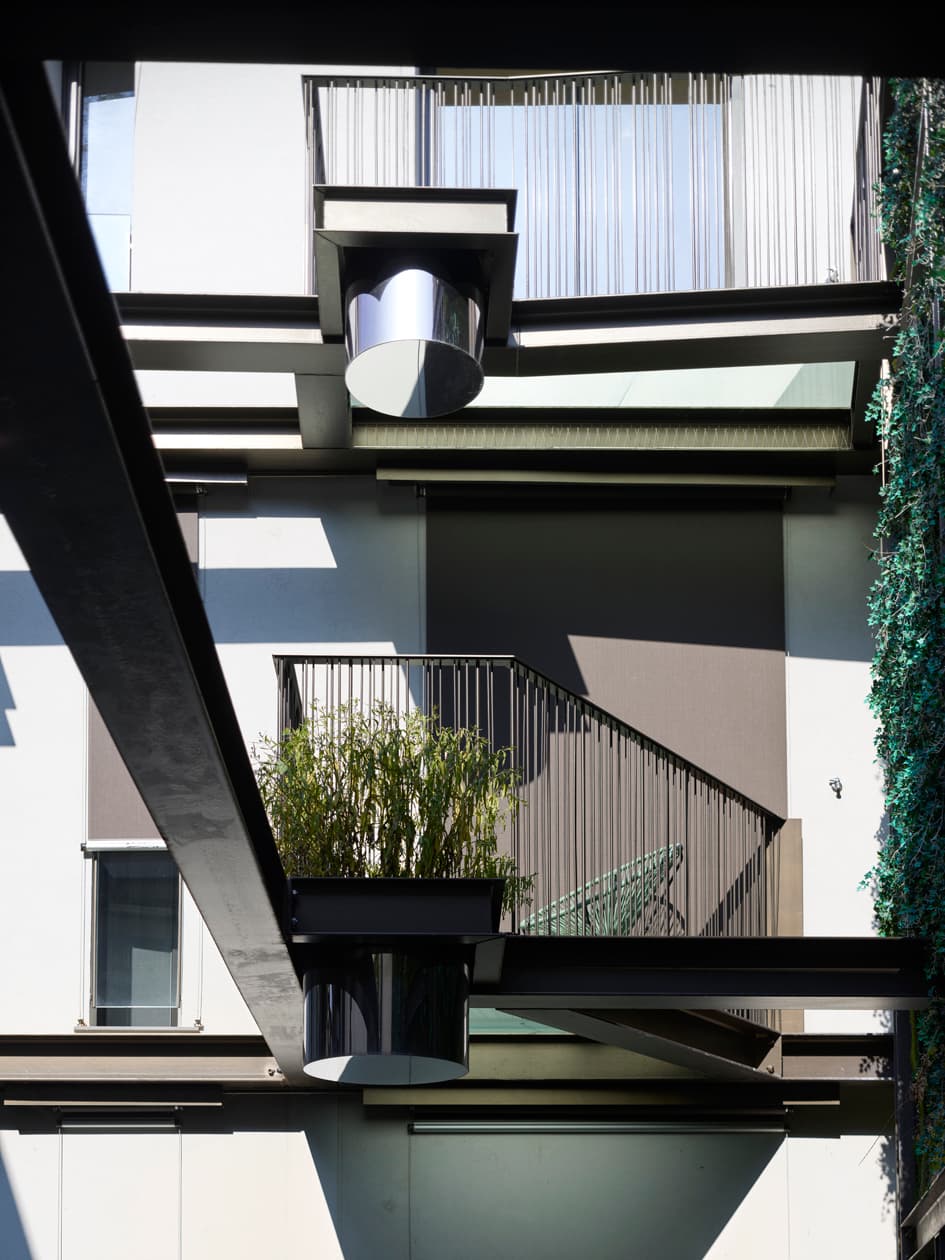
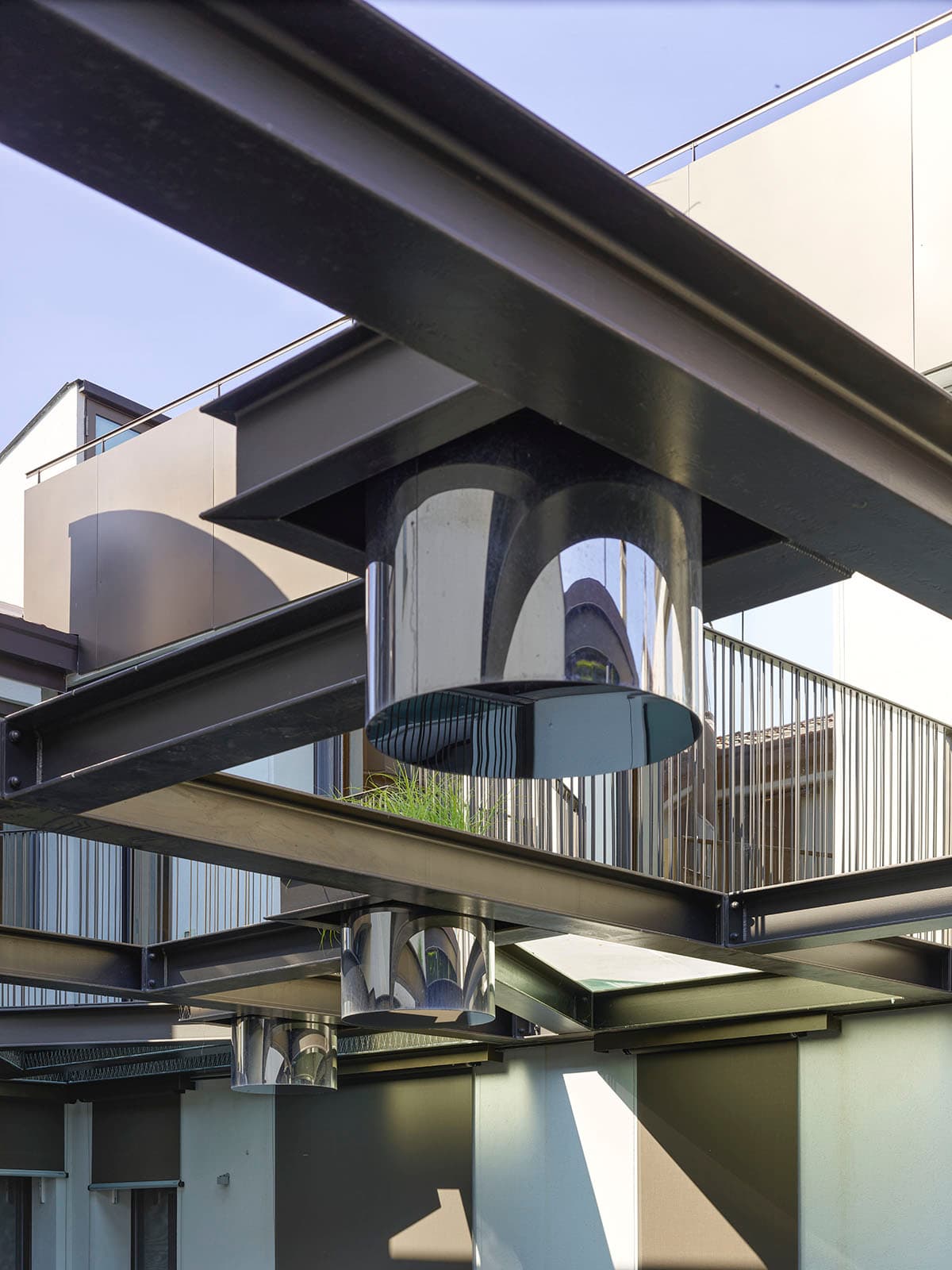
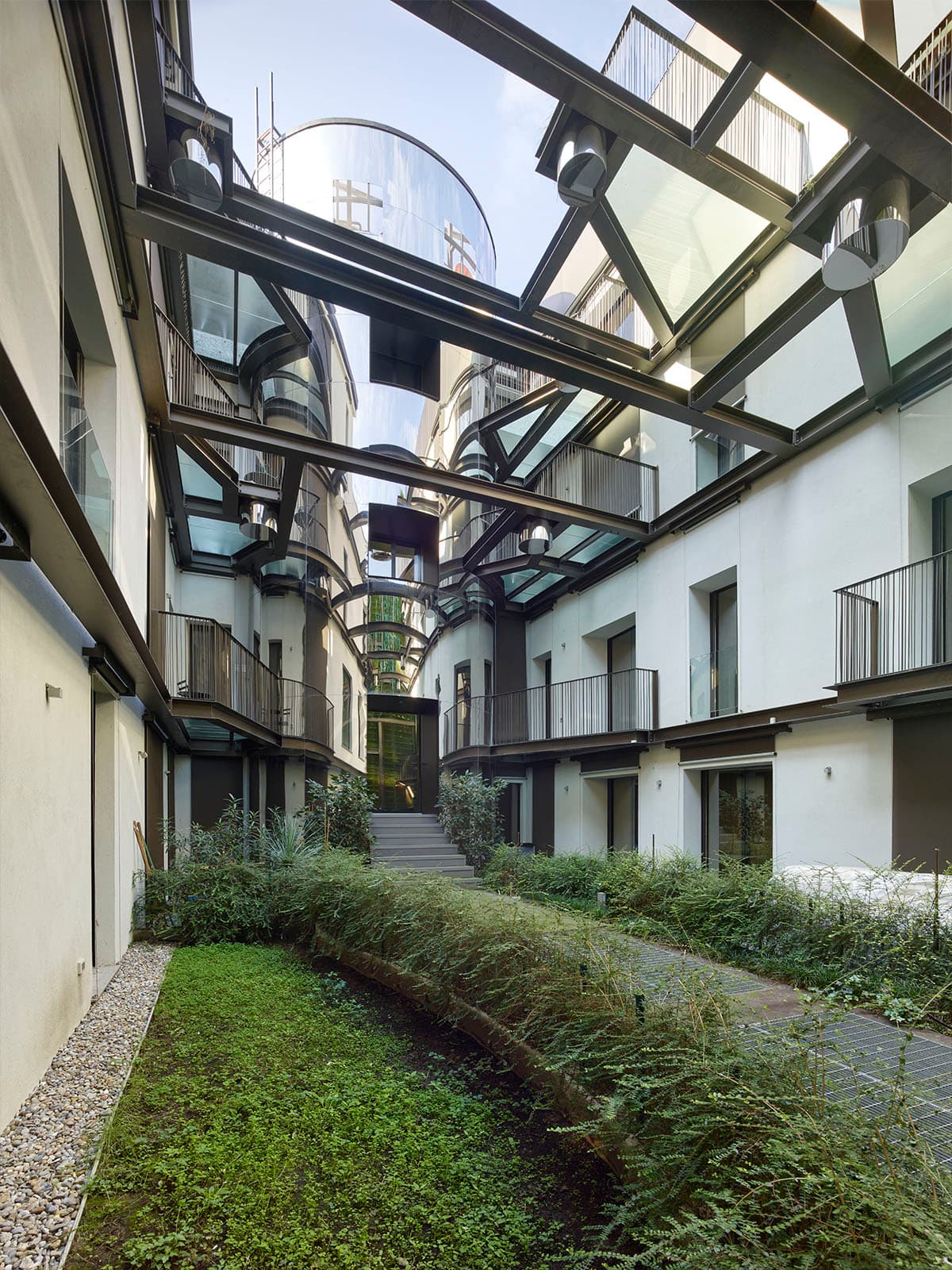
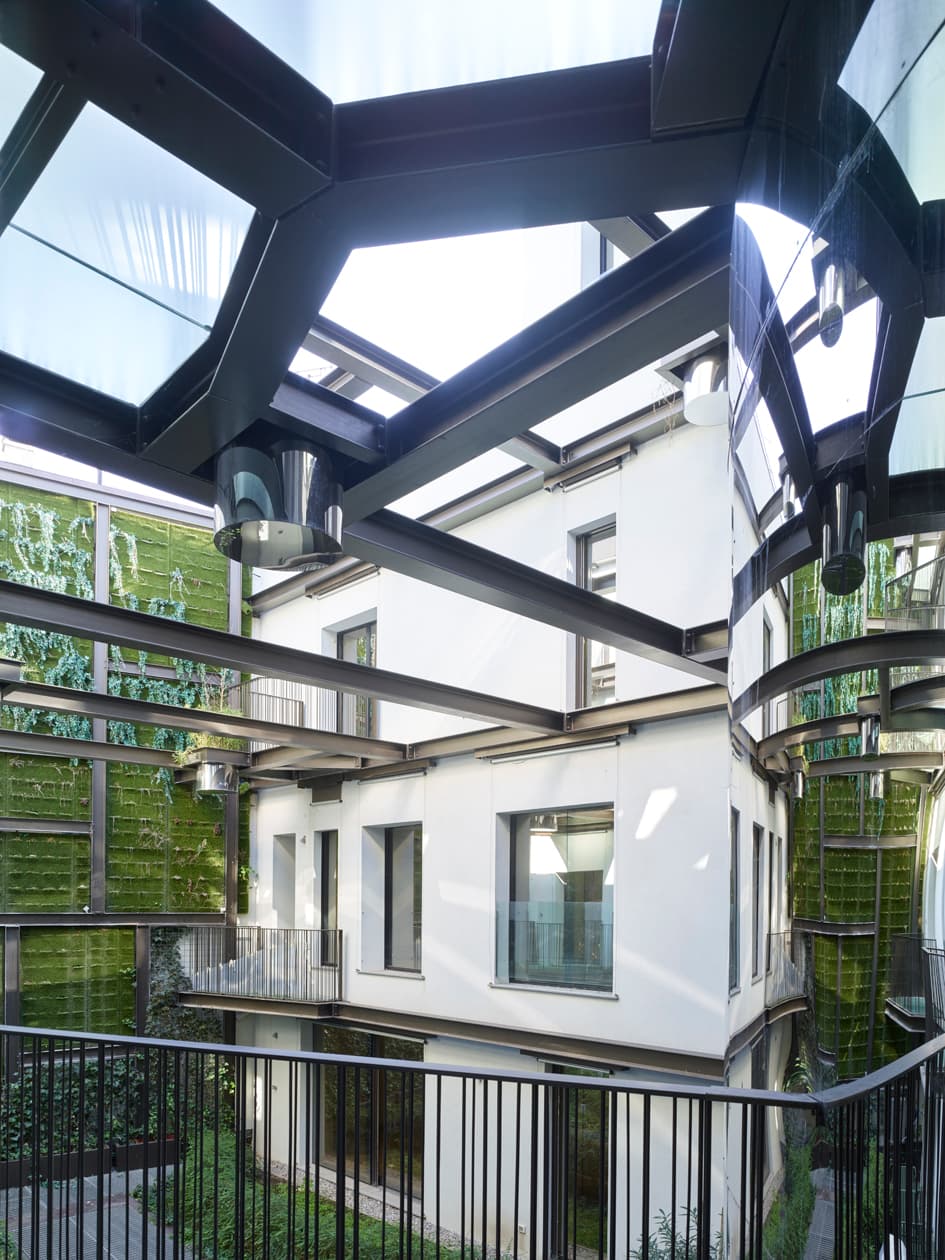
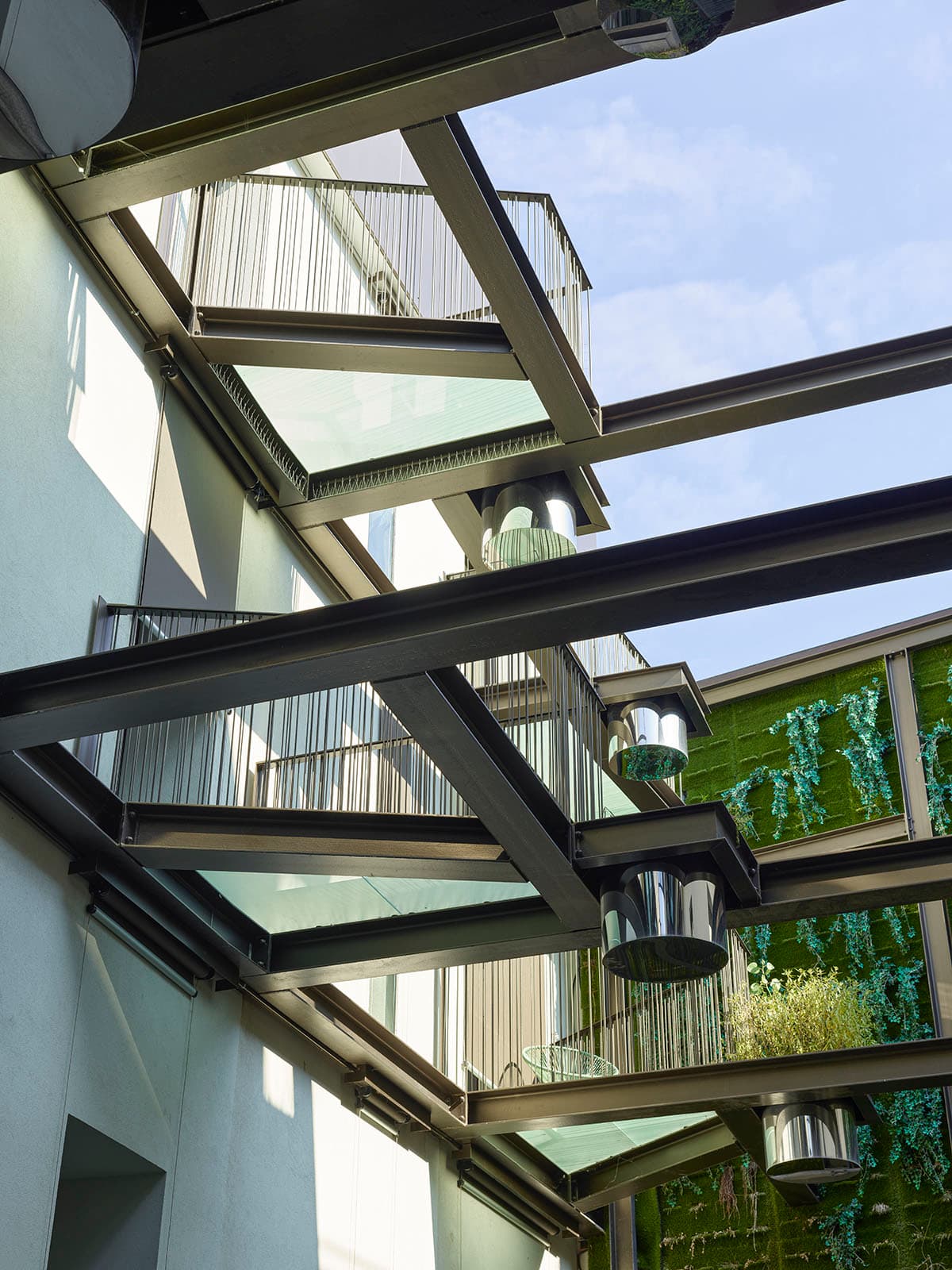
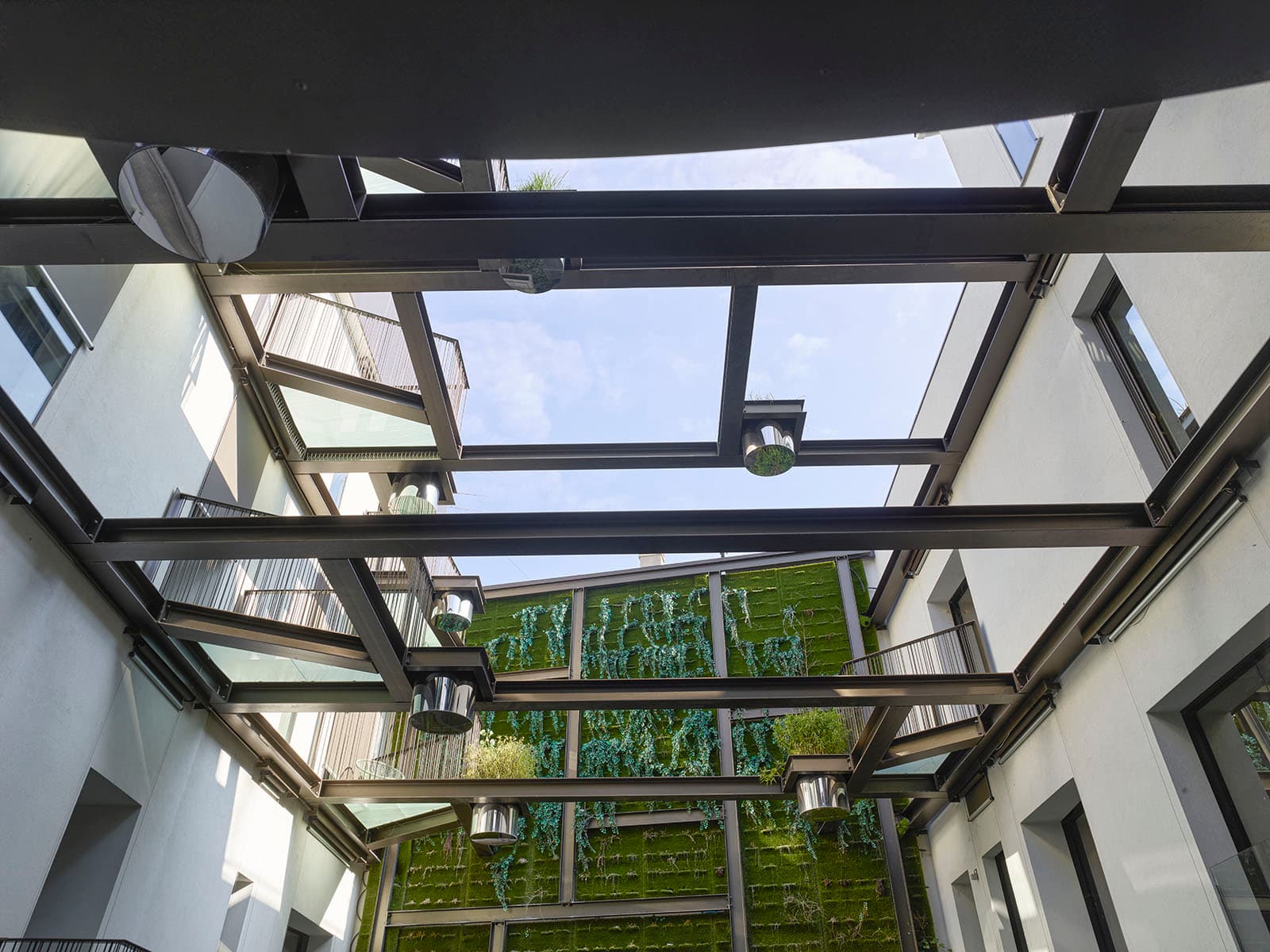
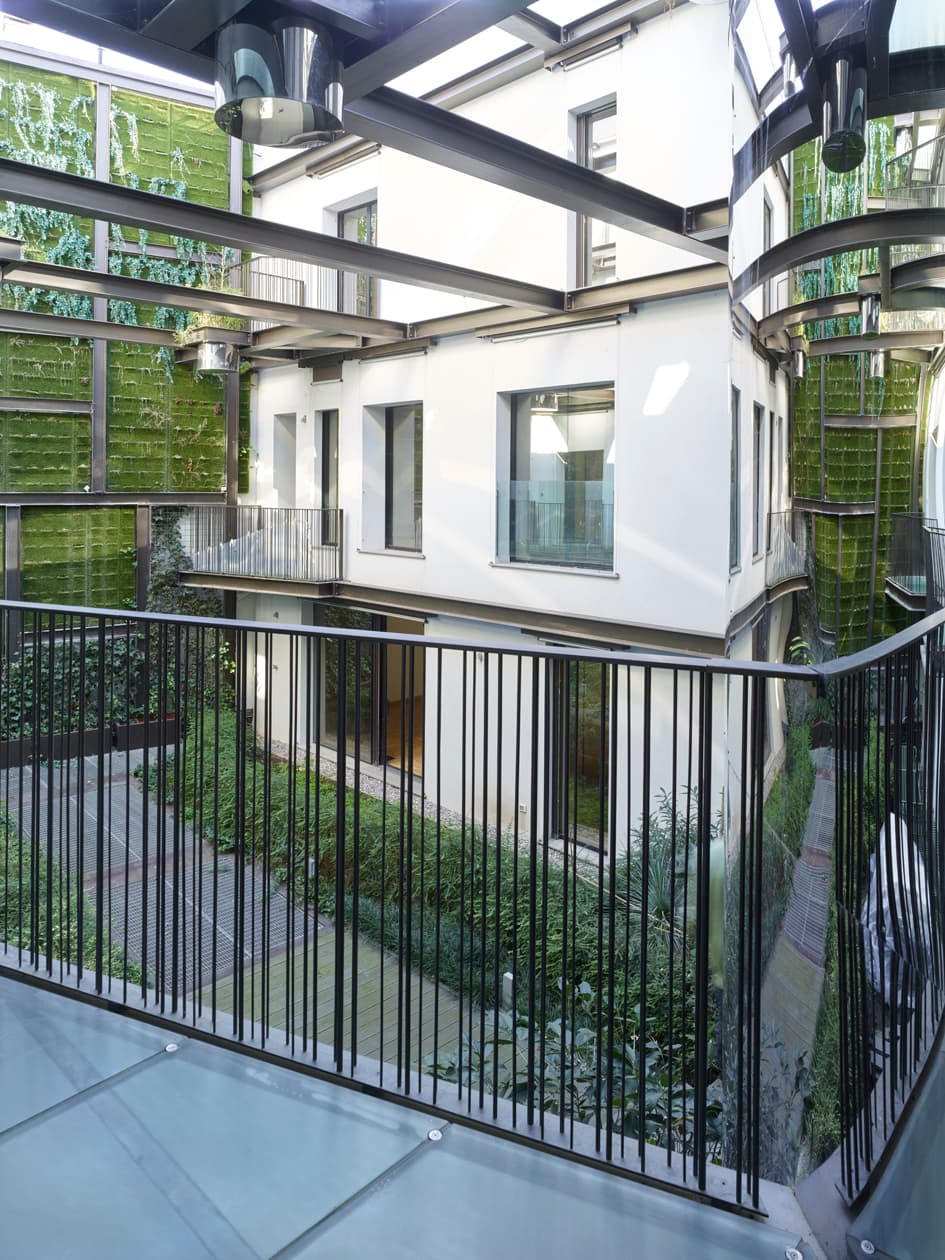
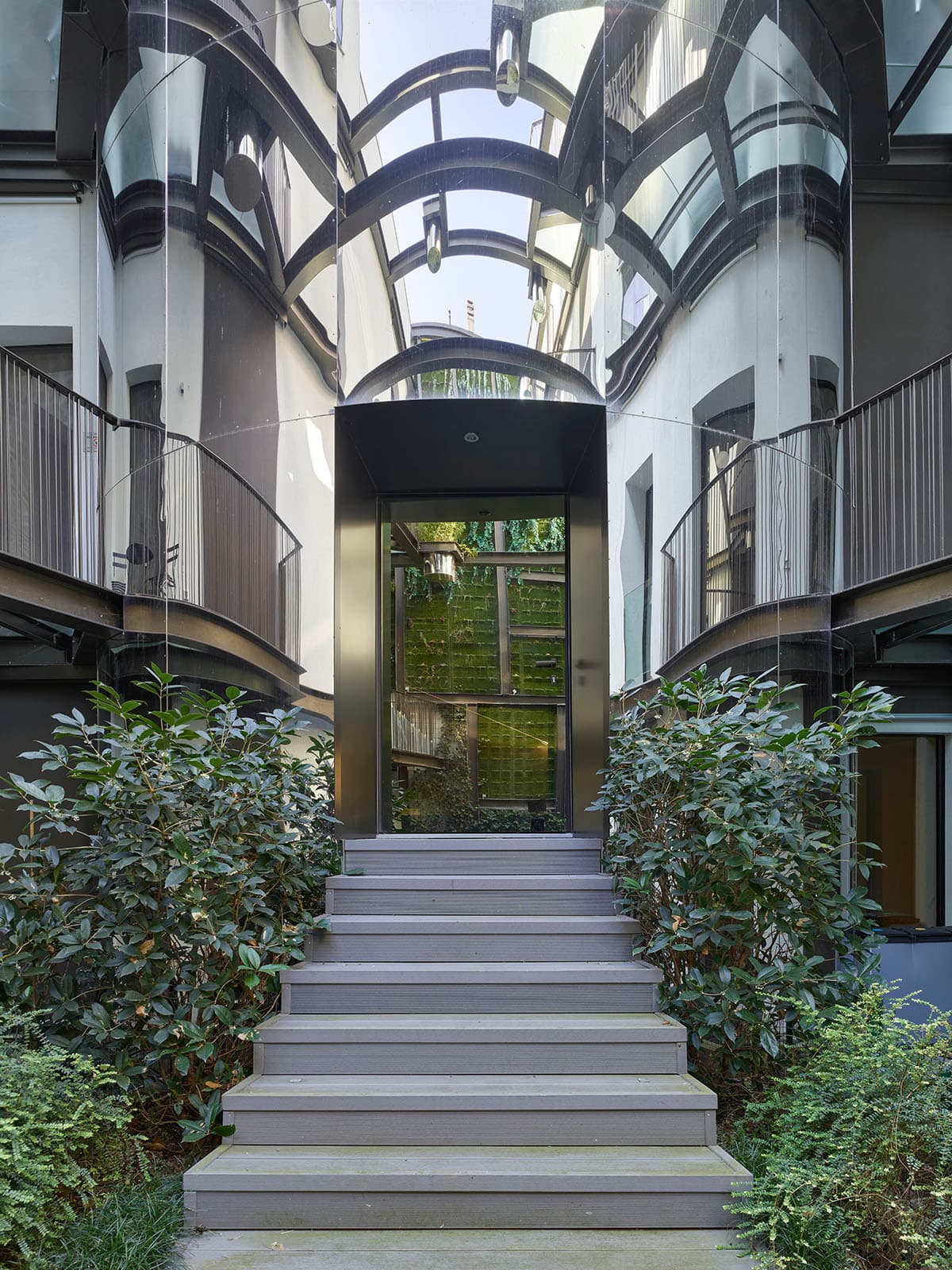
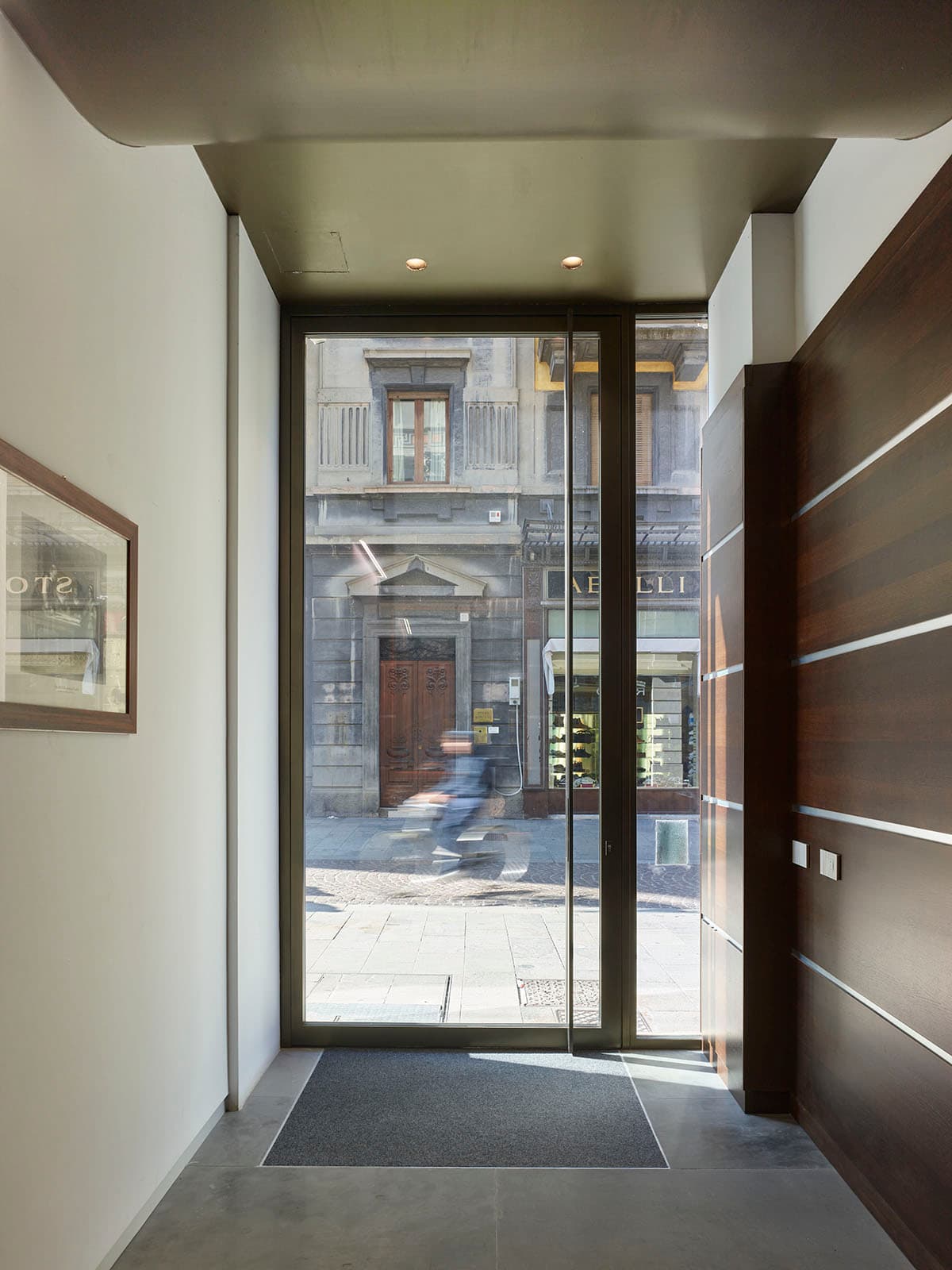
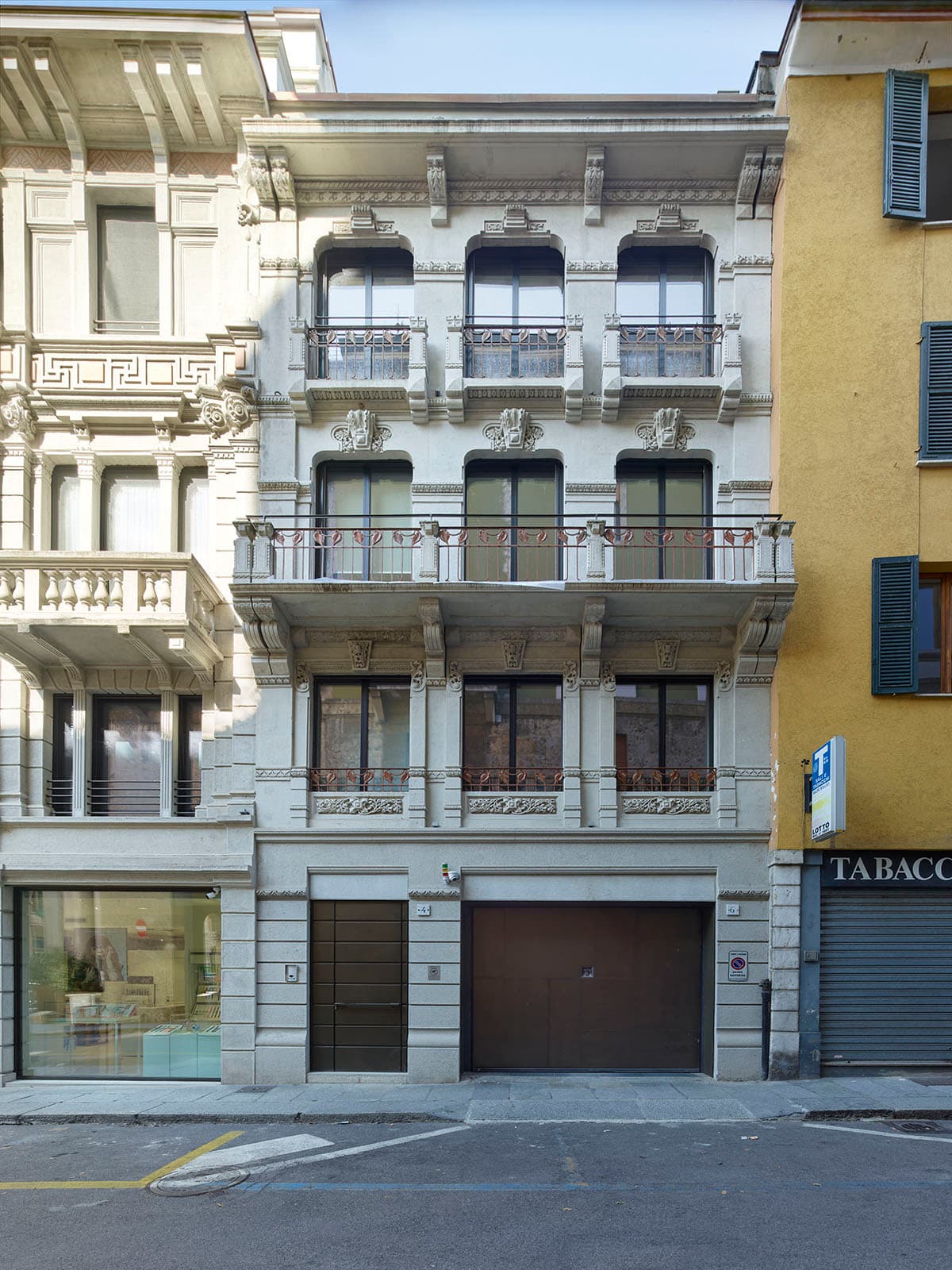
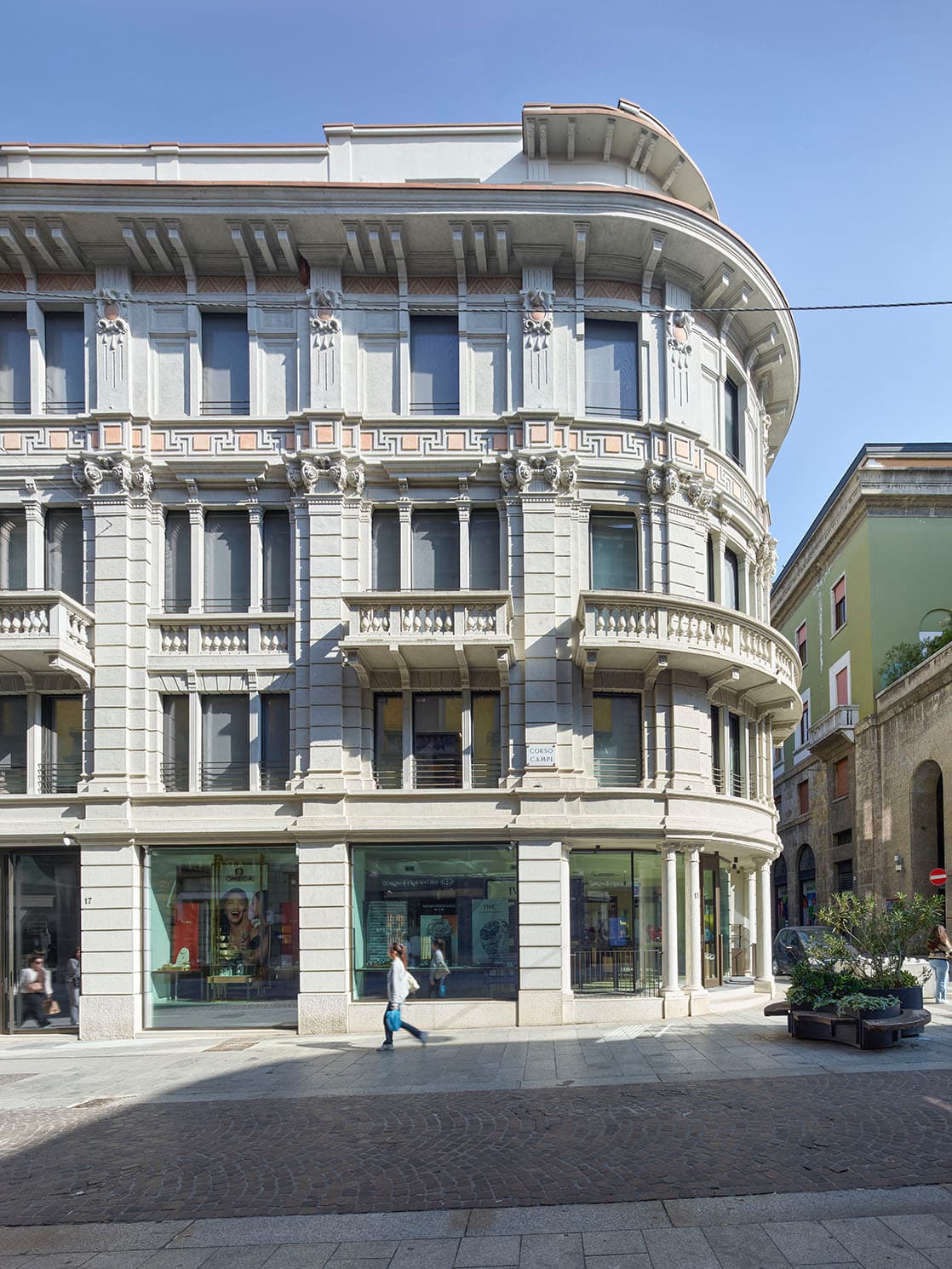
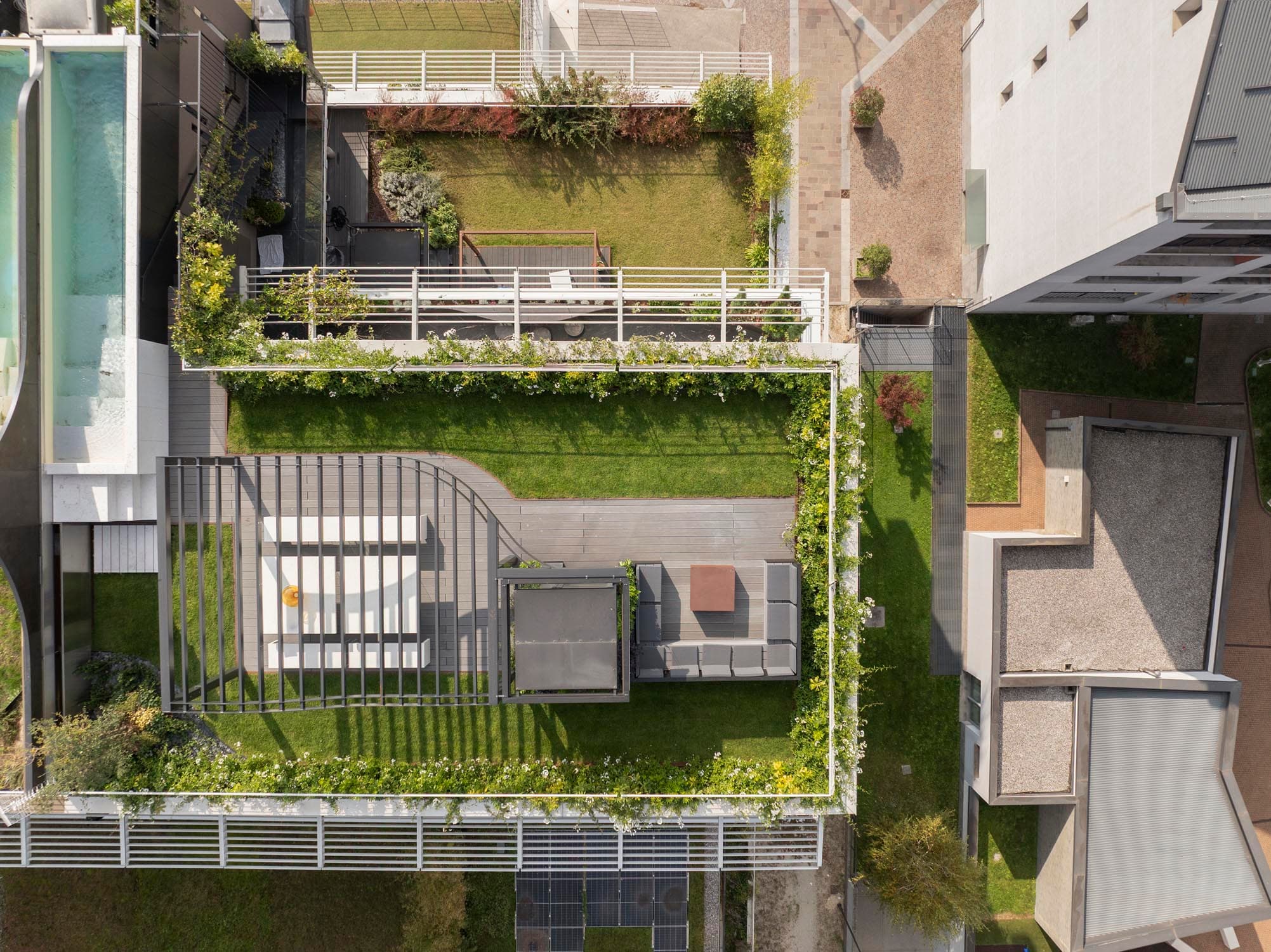
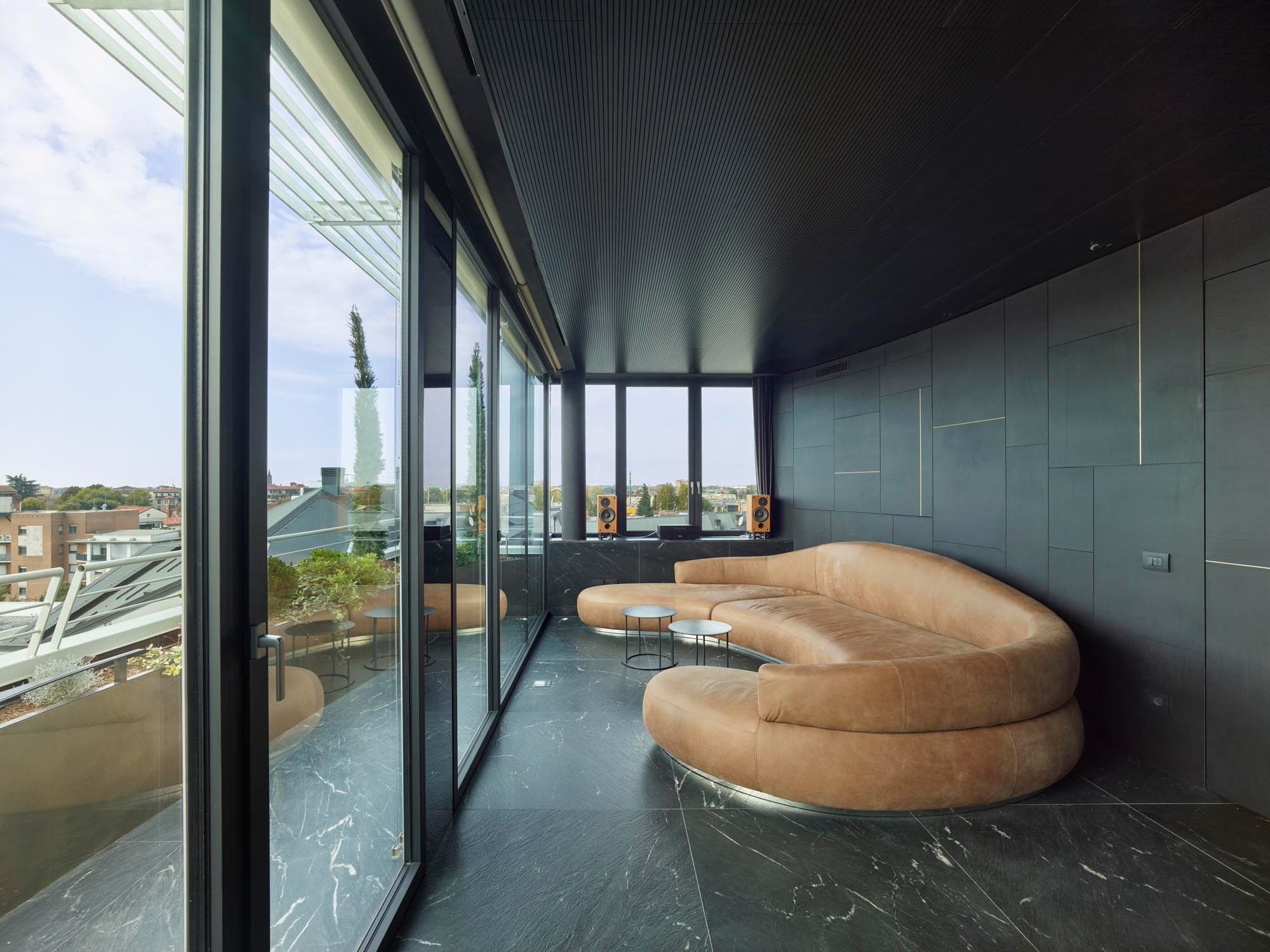
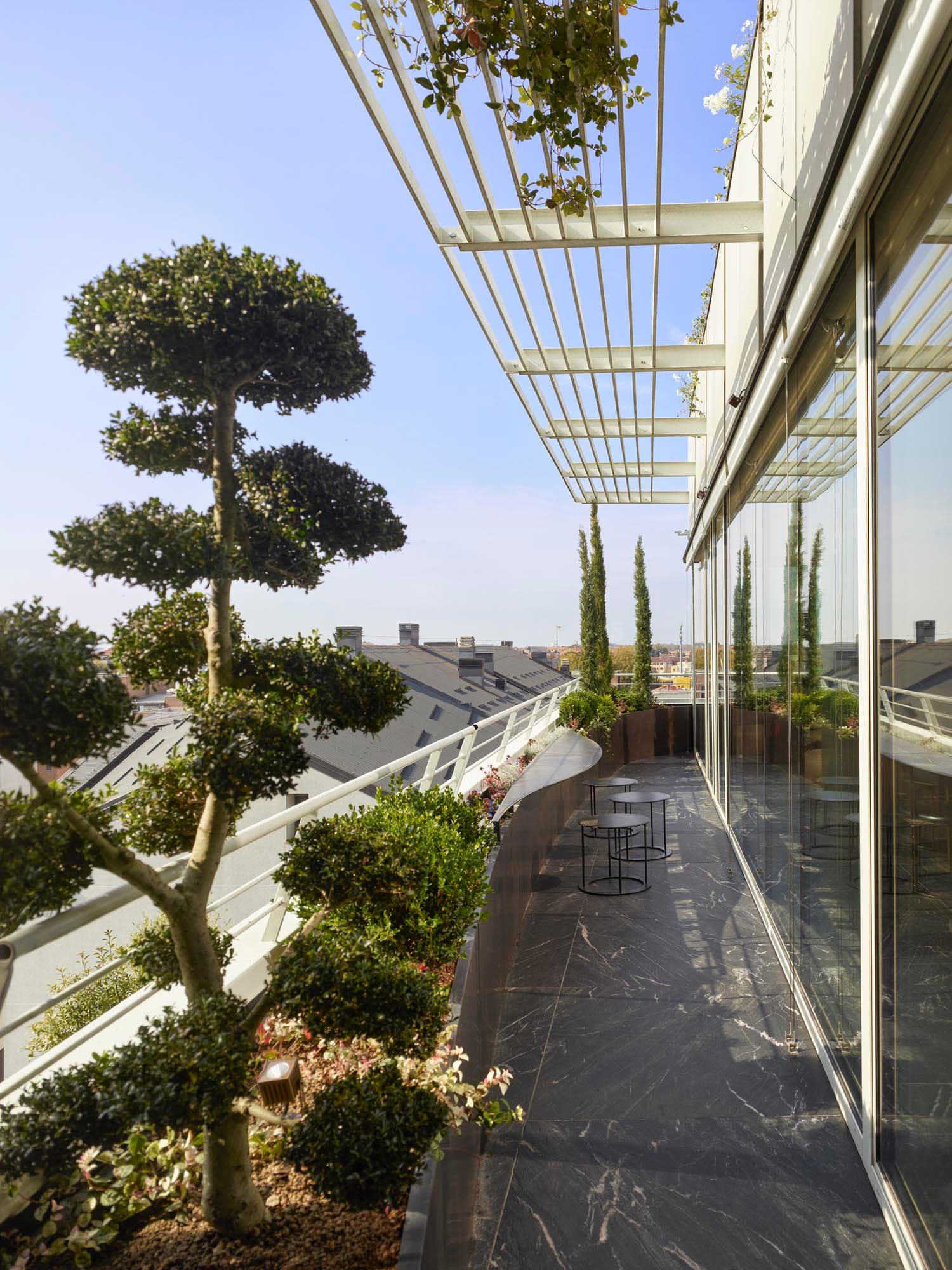
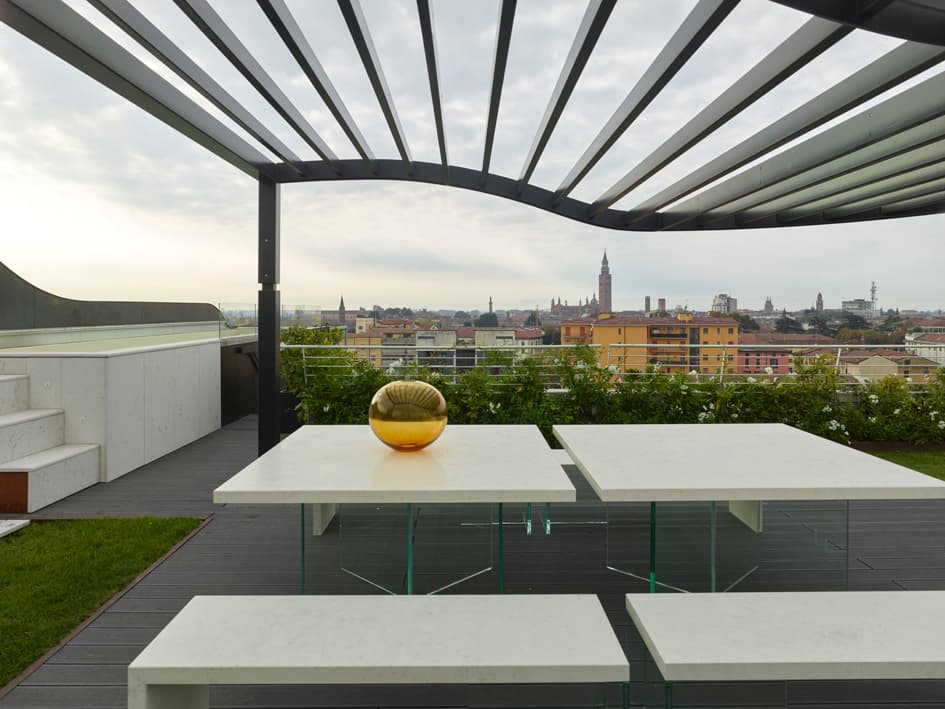
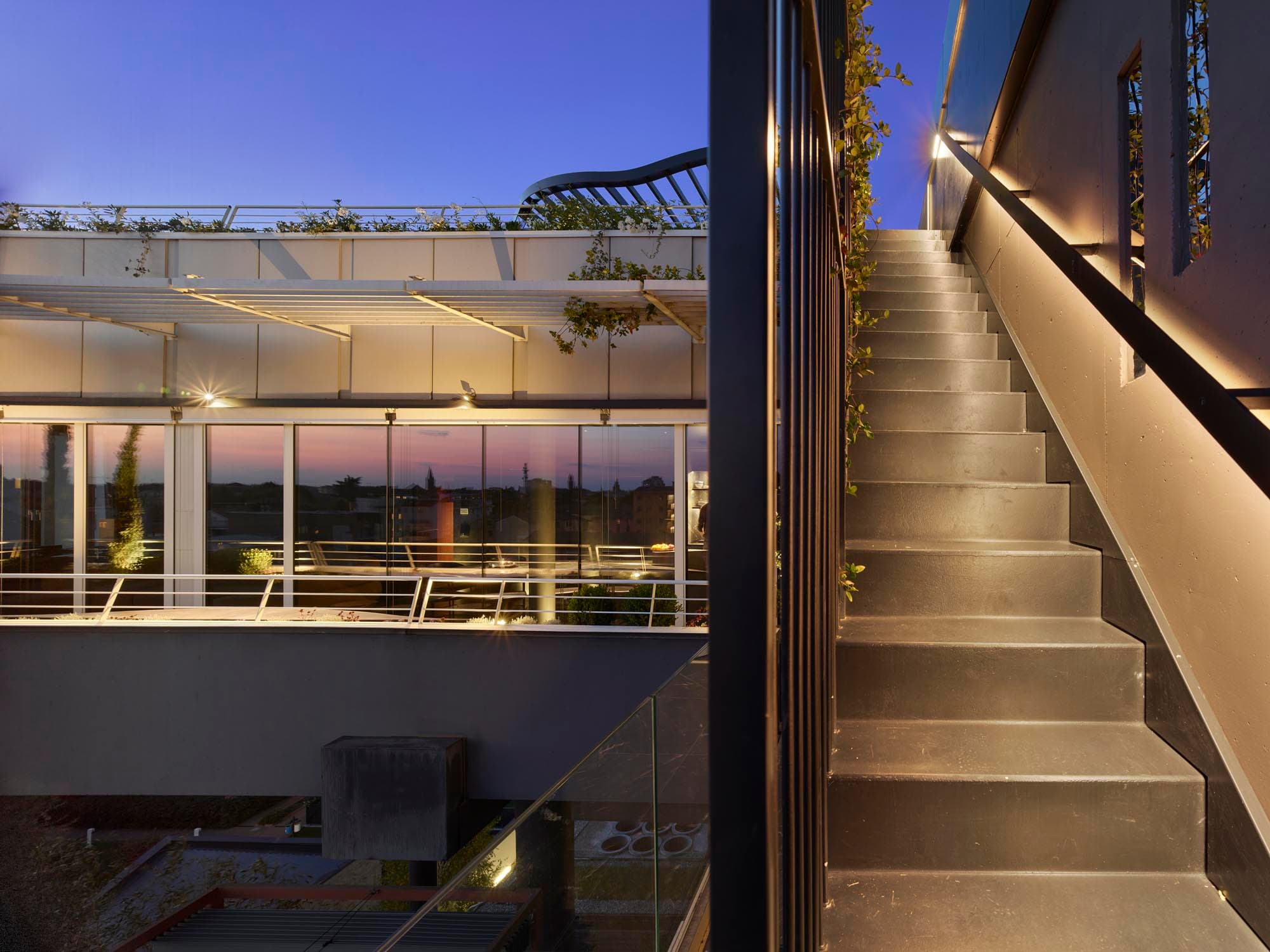
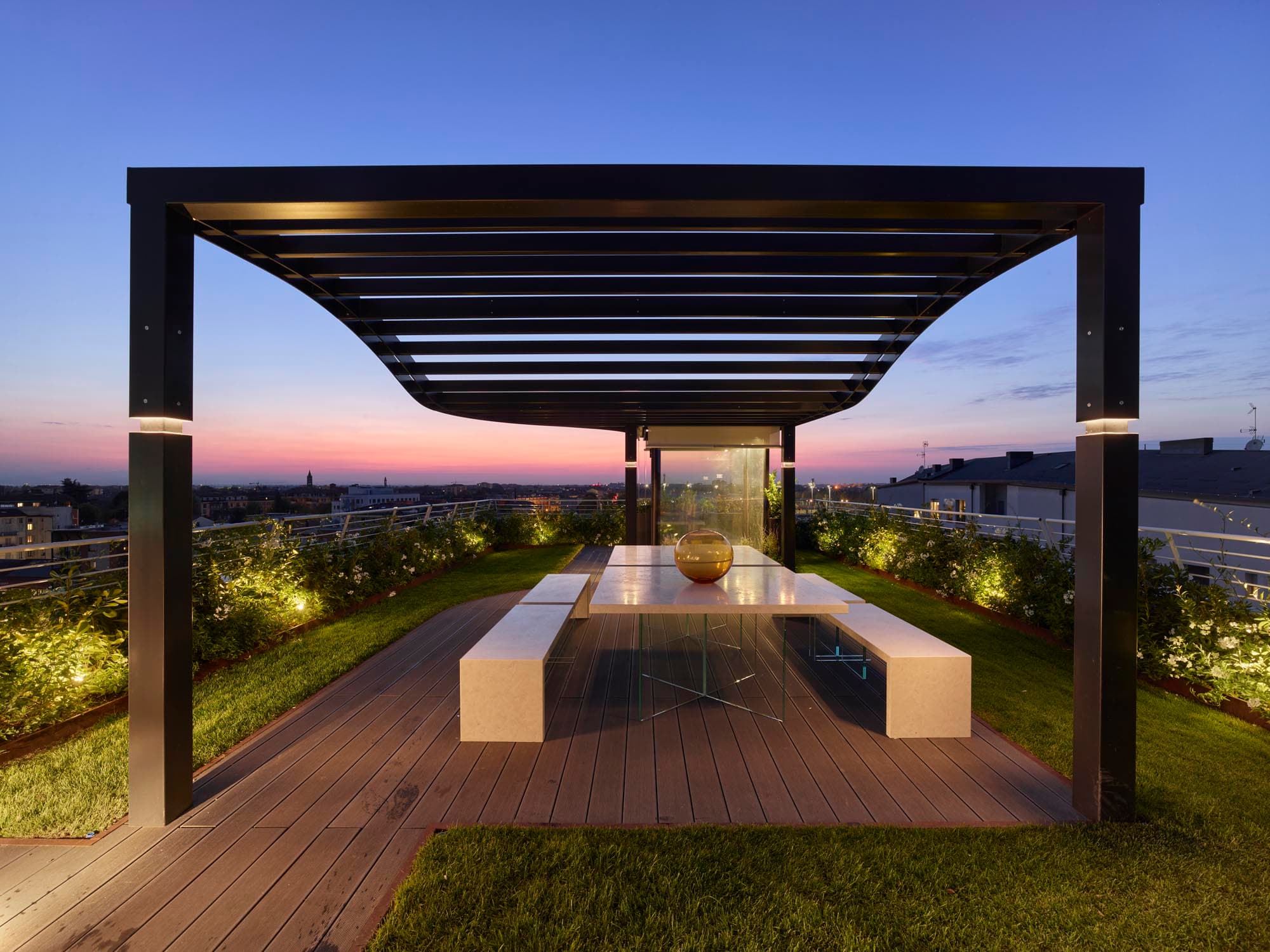
Penthouse Garden
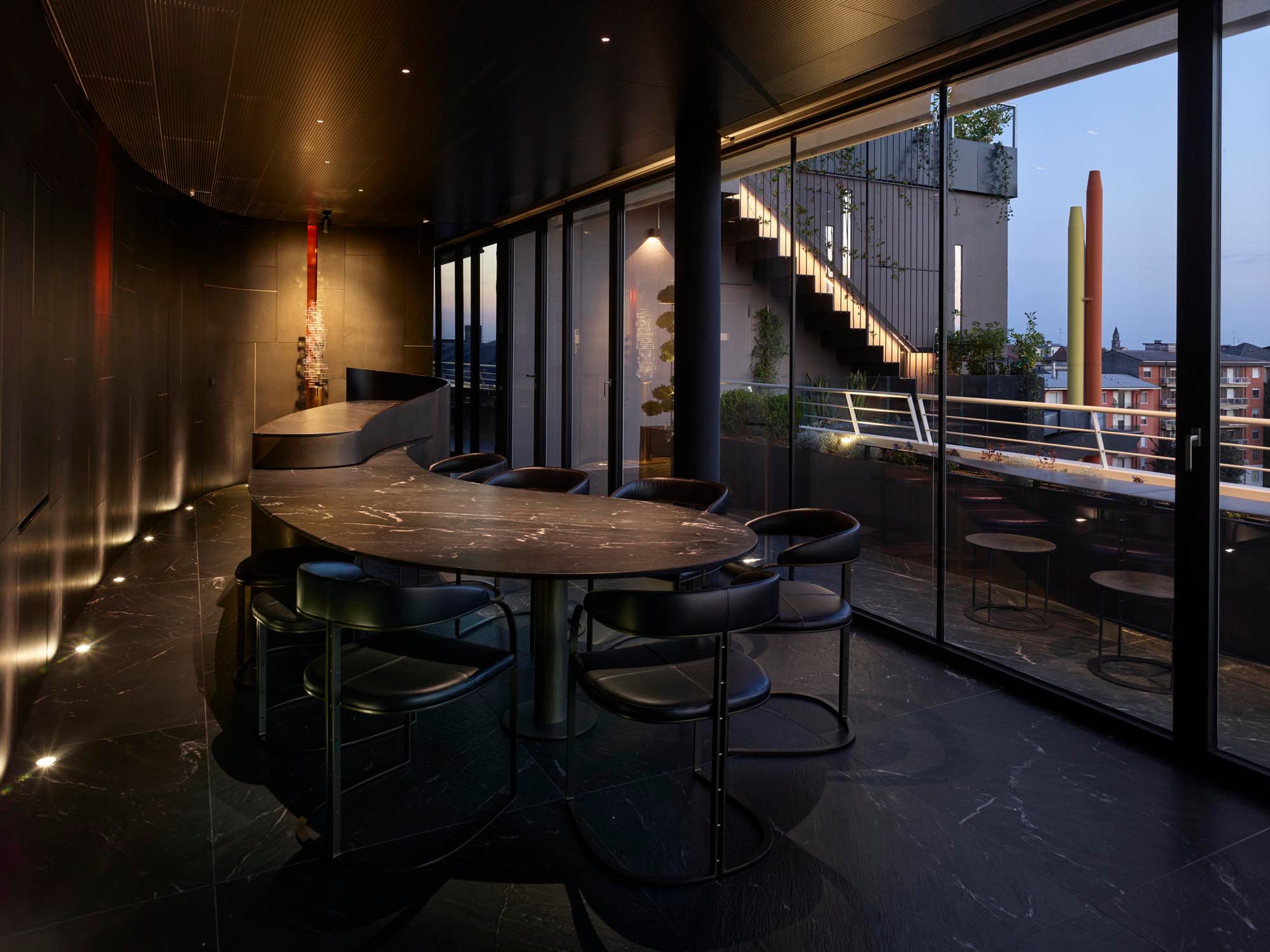
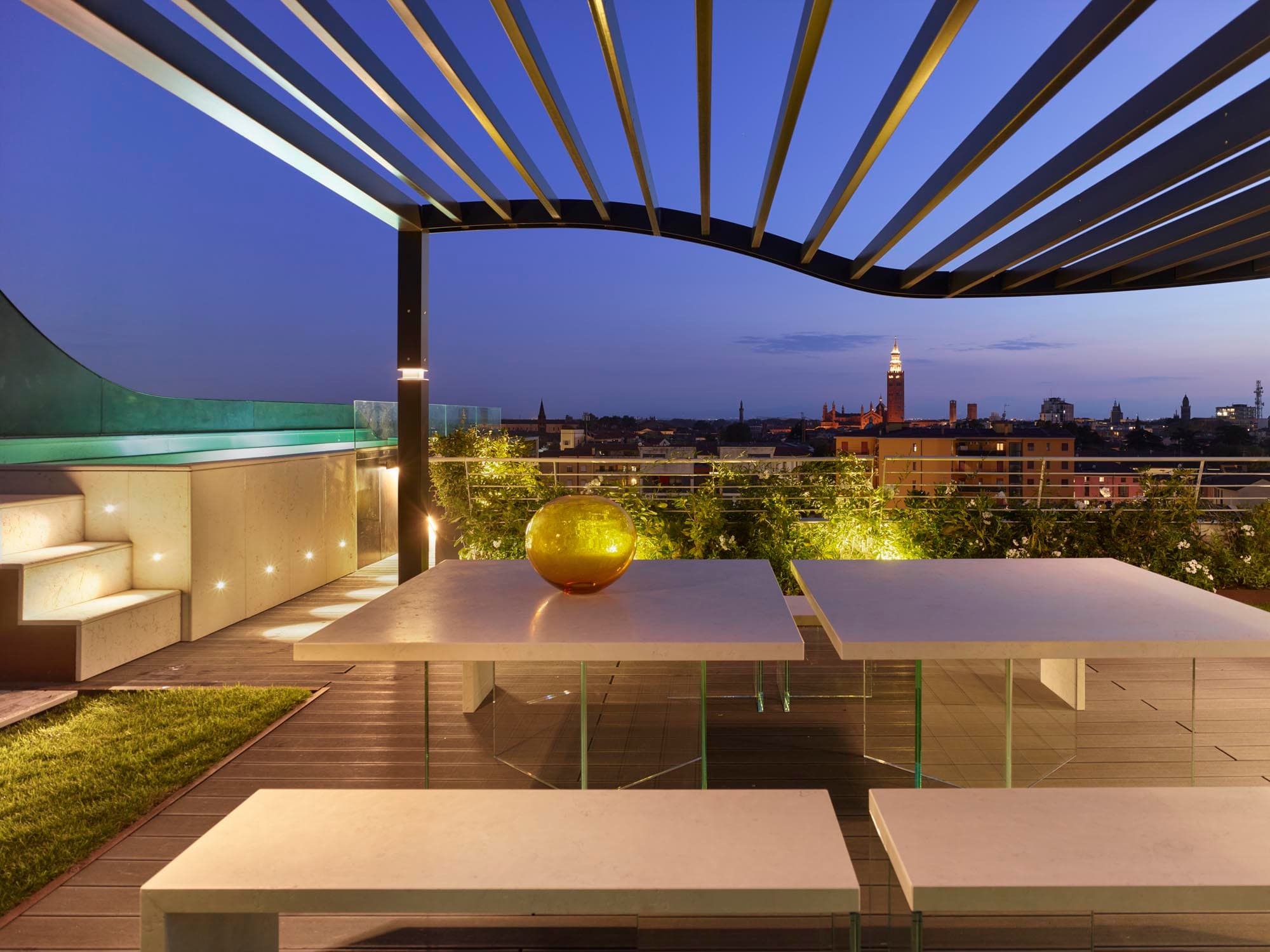
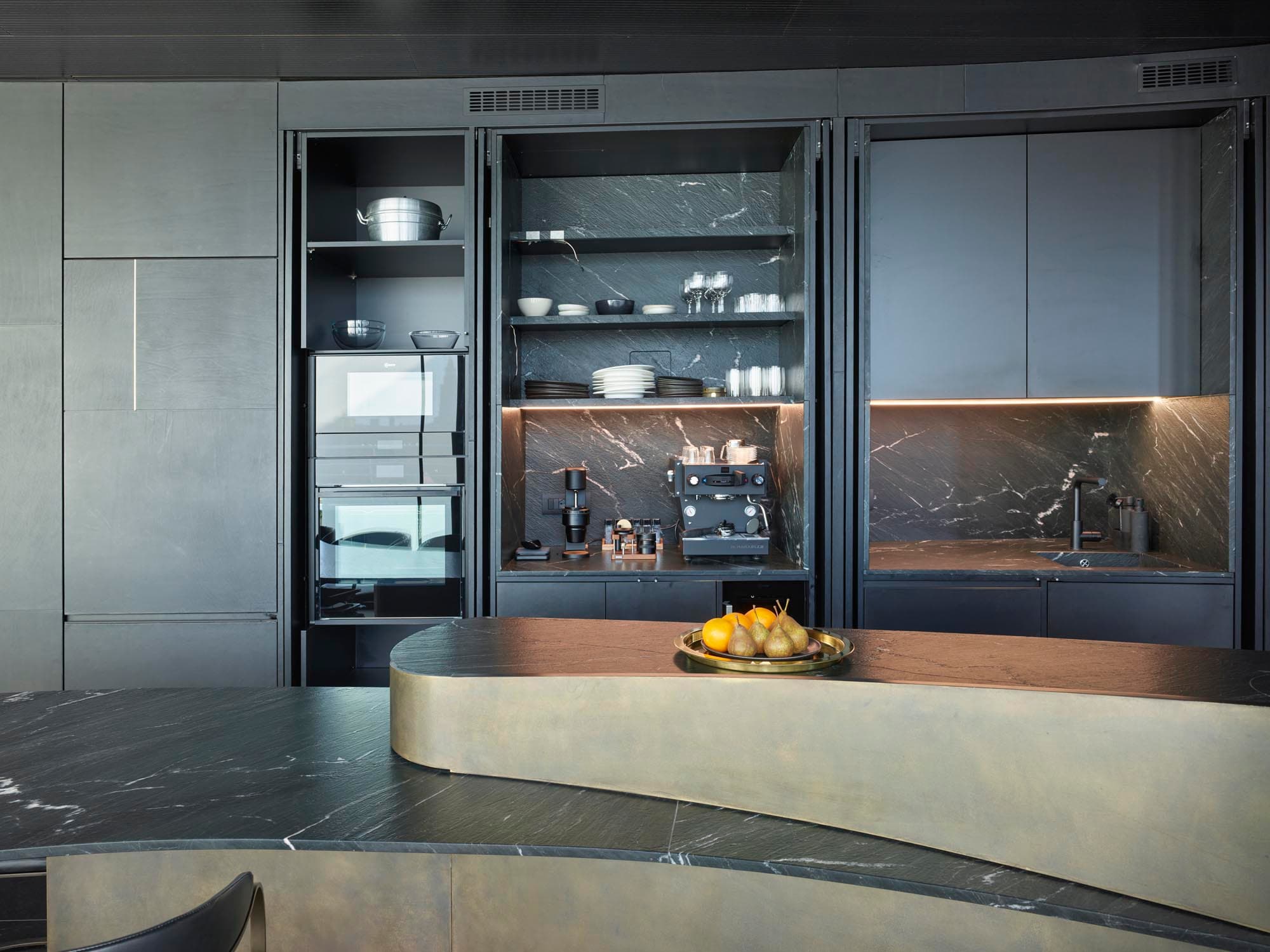
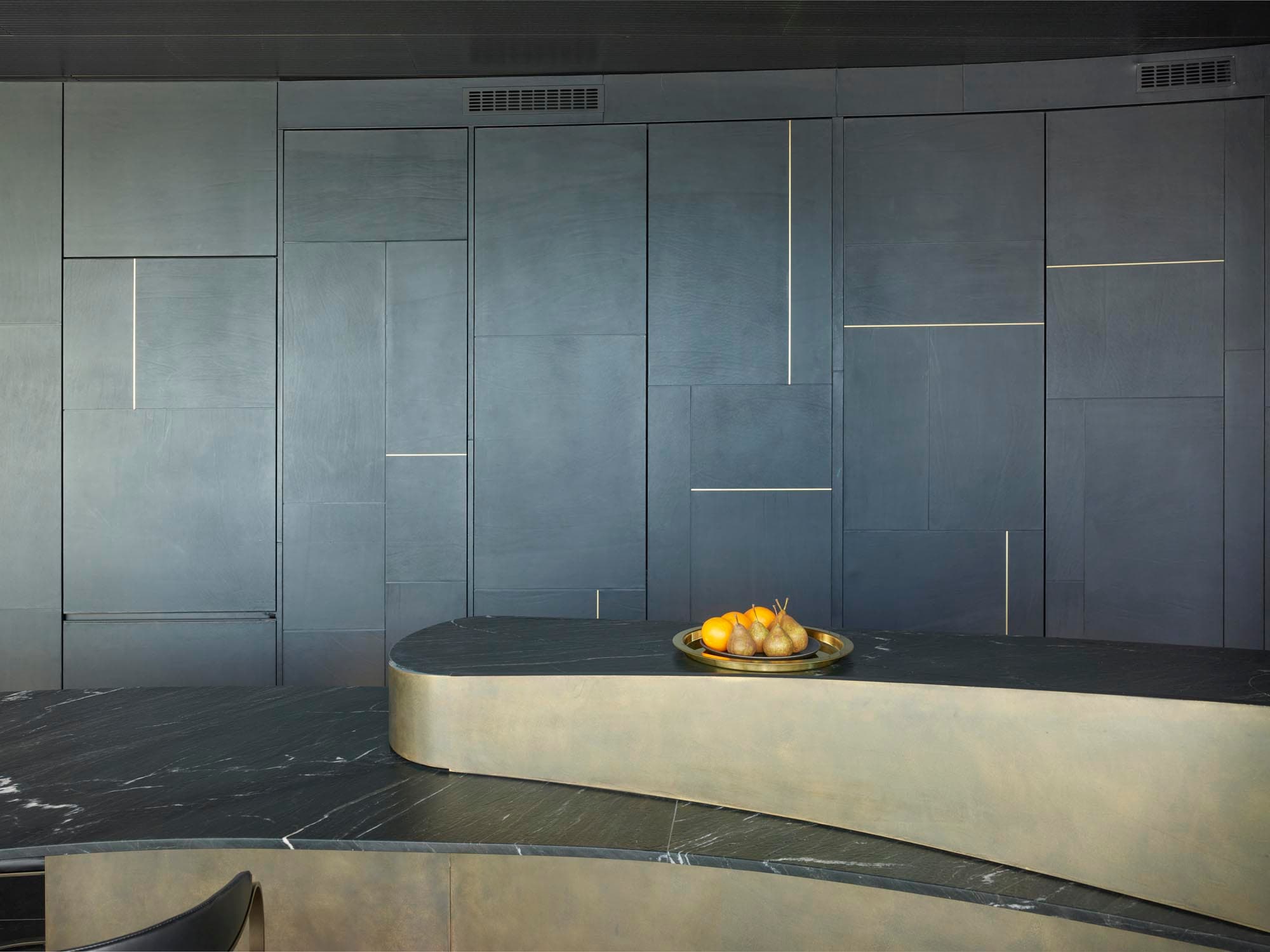
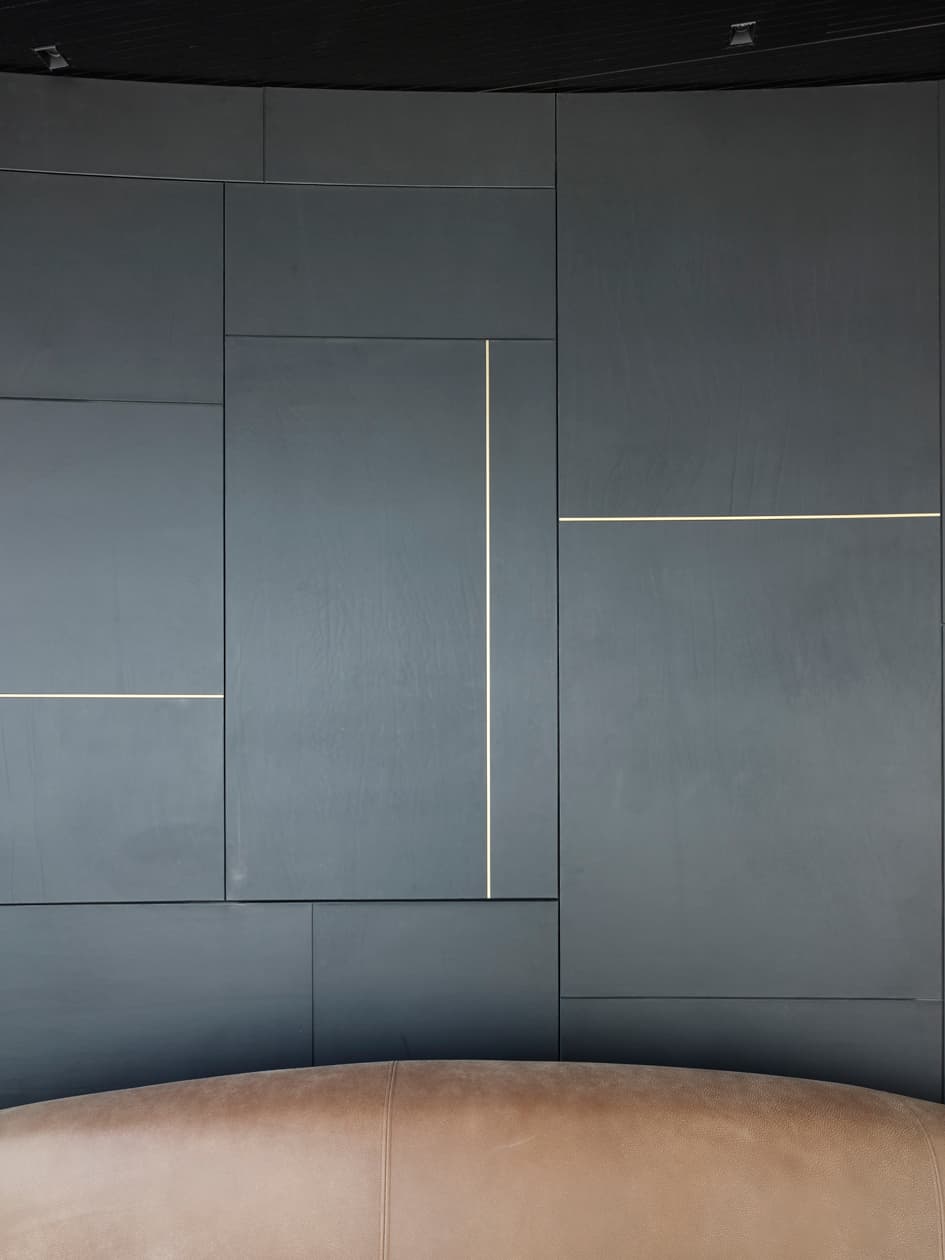
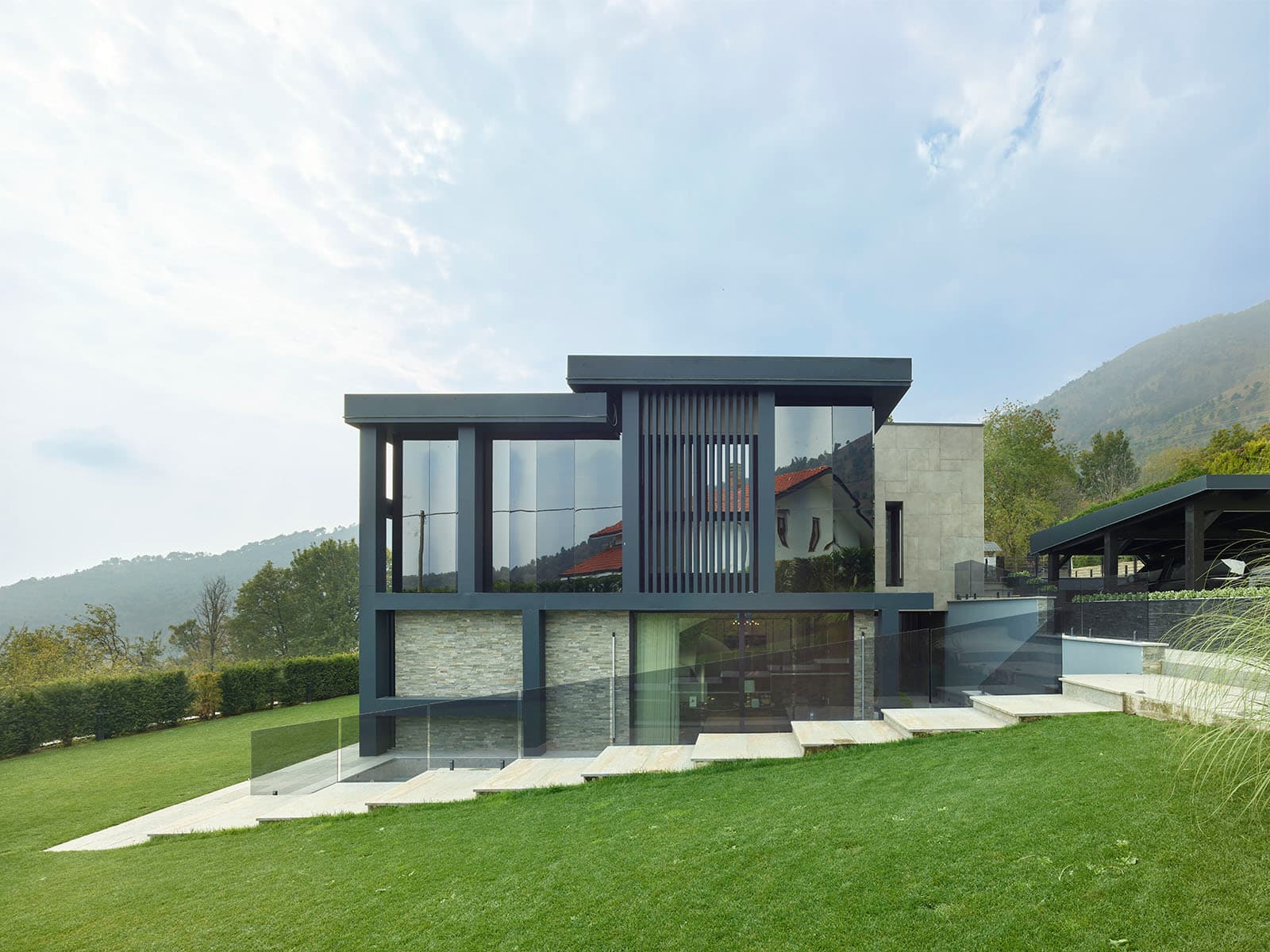
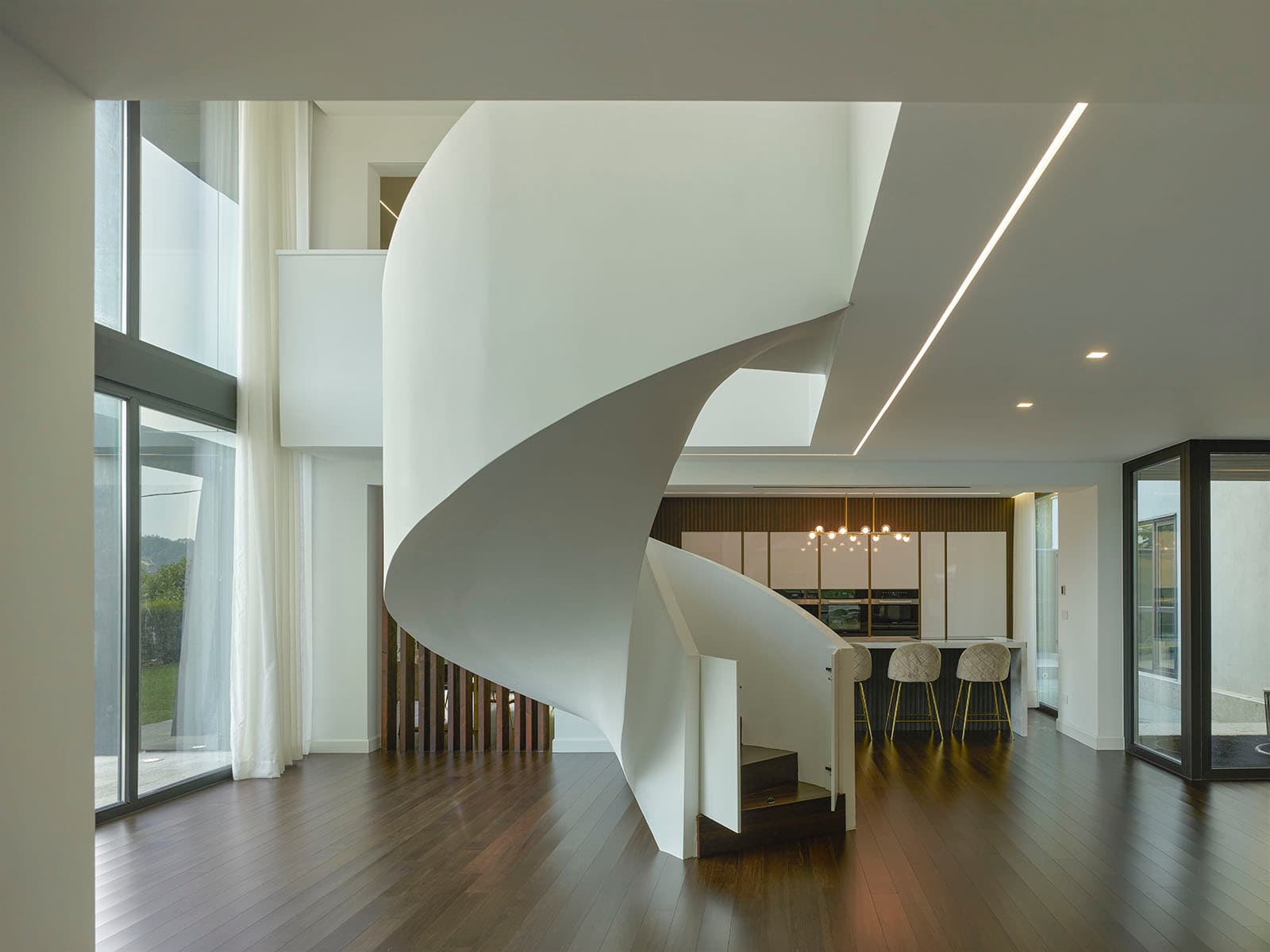
Villa Givoletto
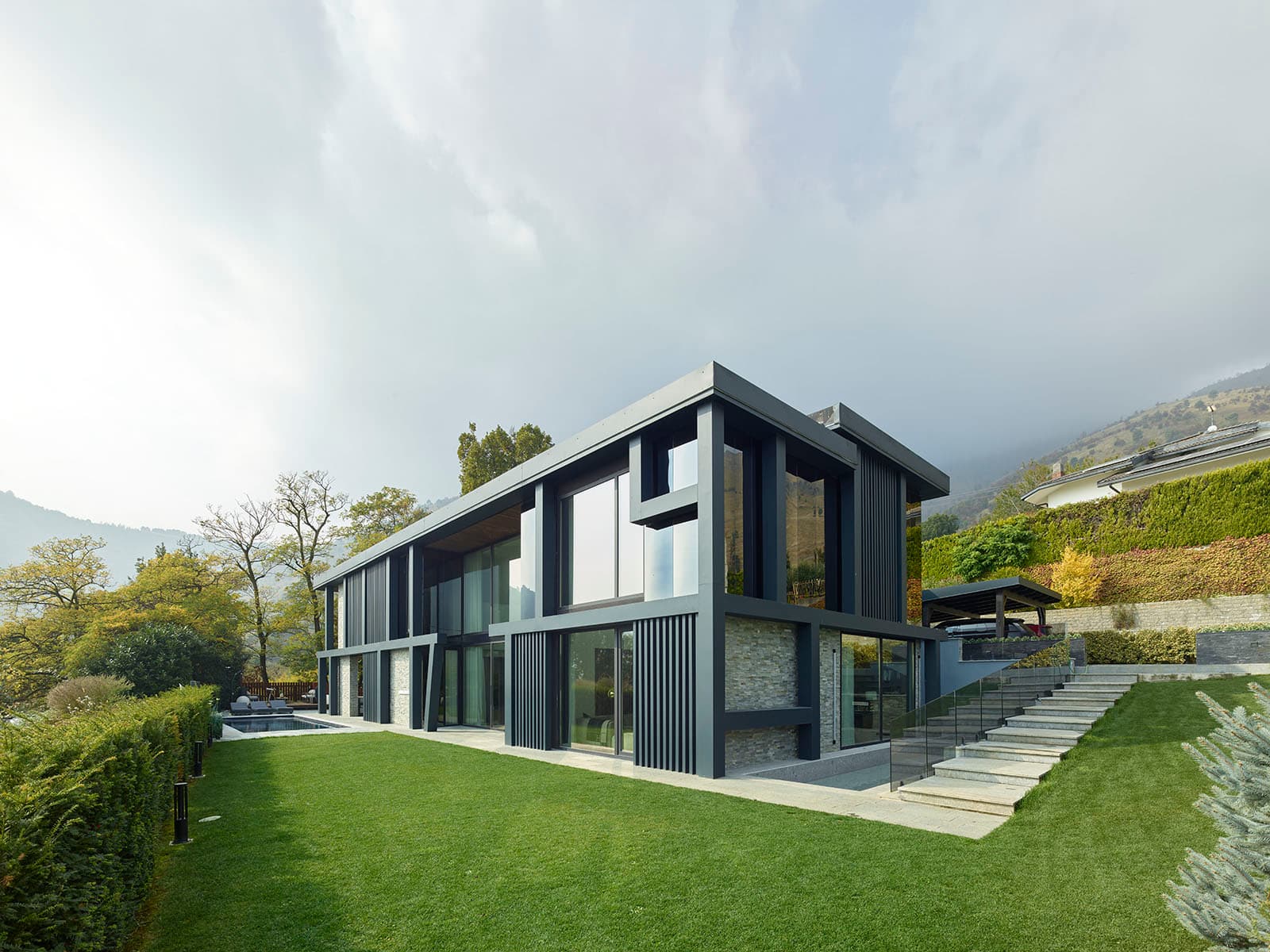
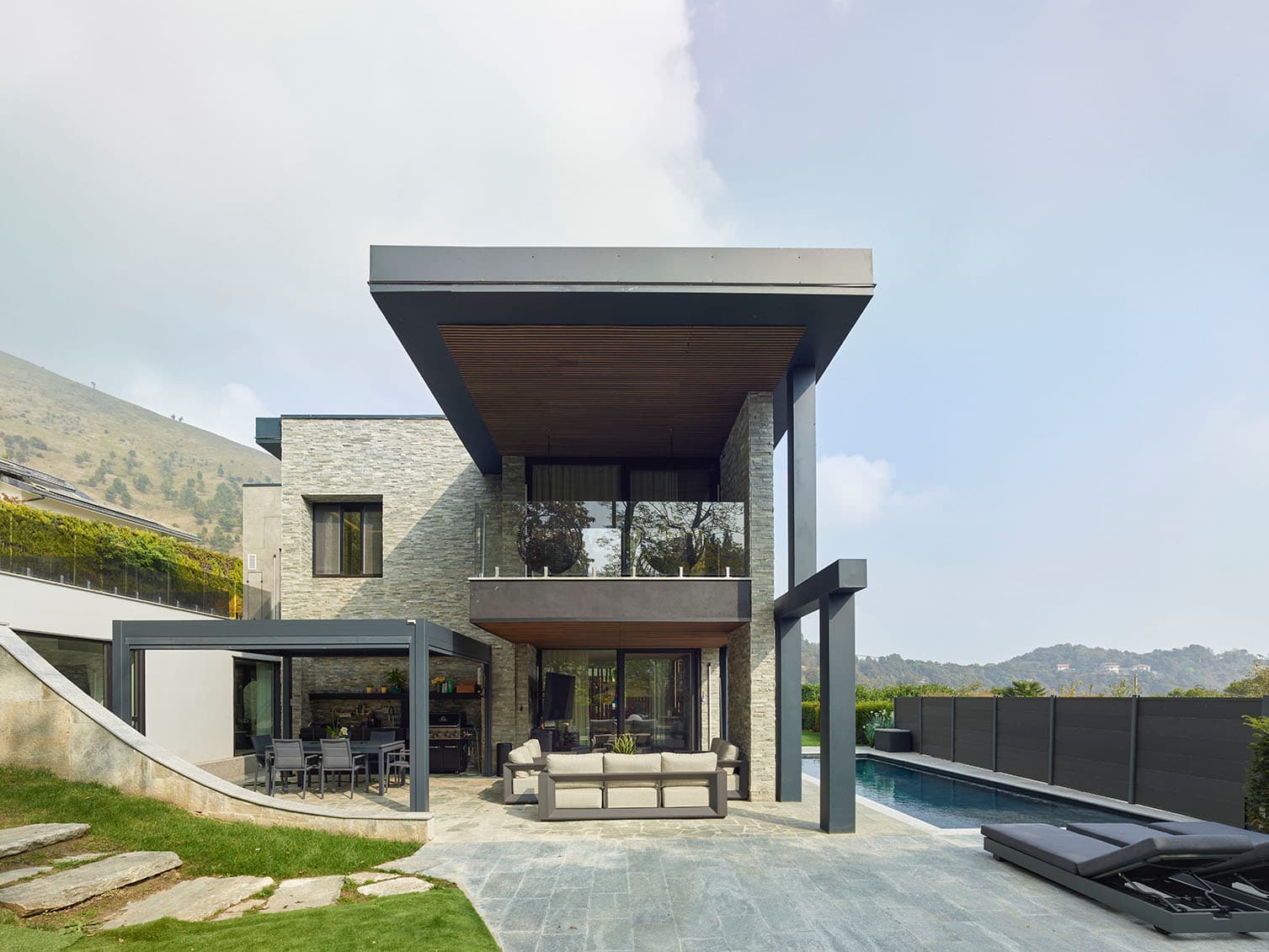
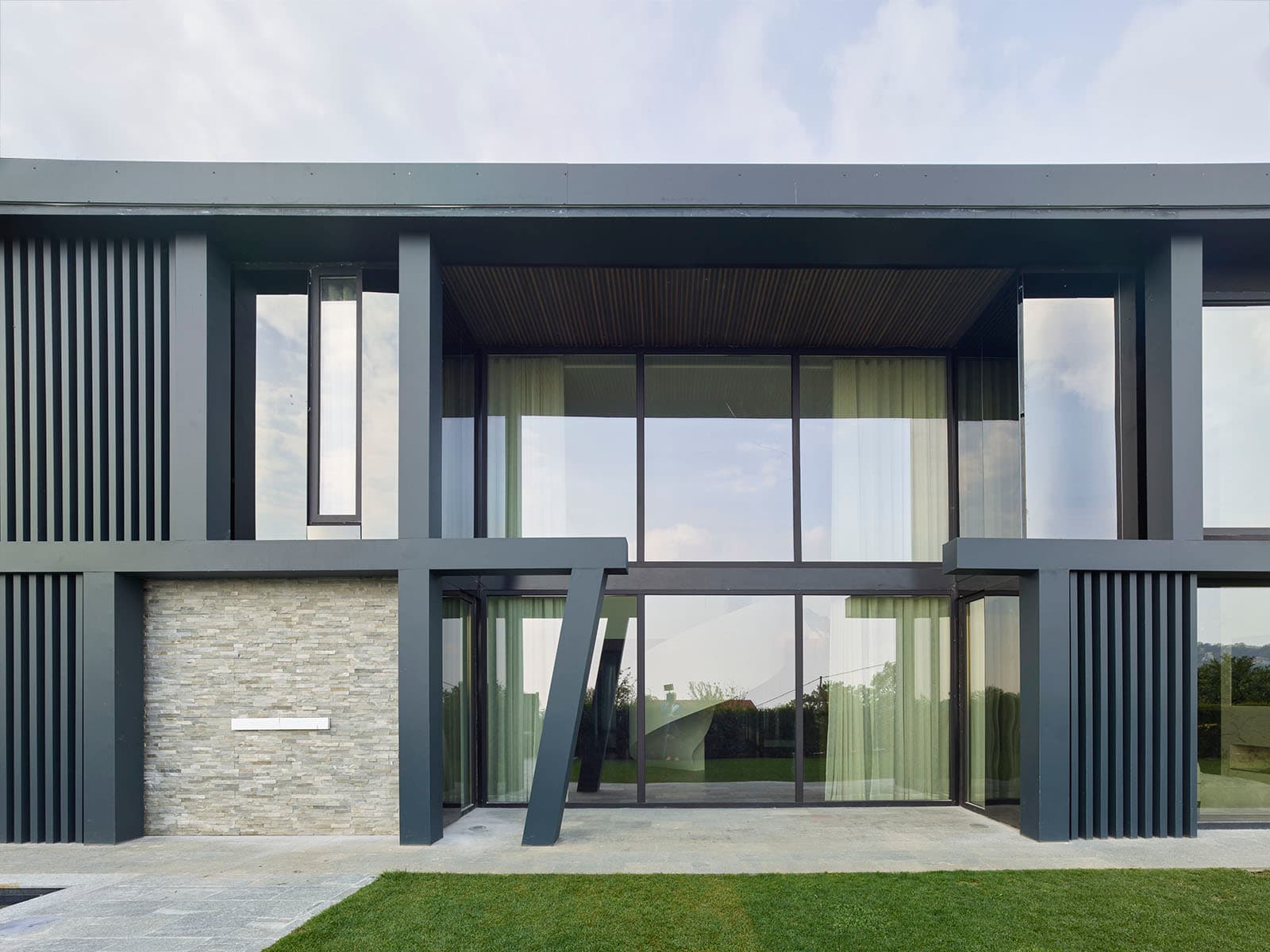
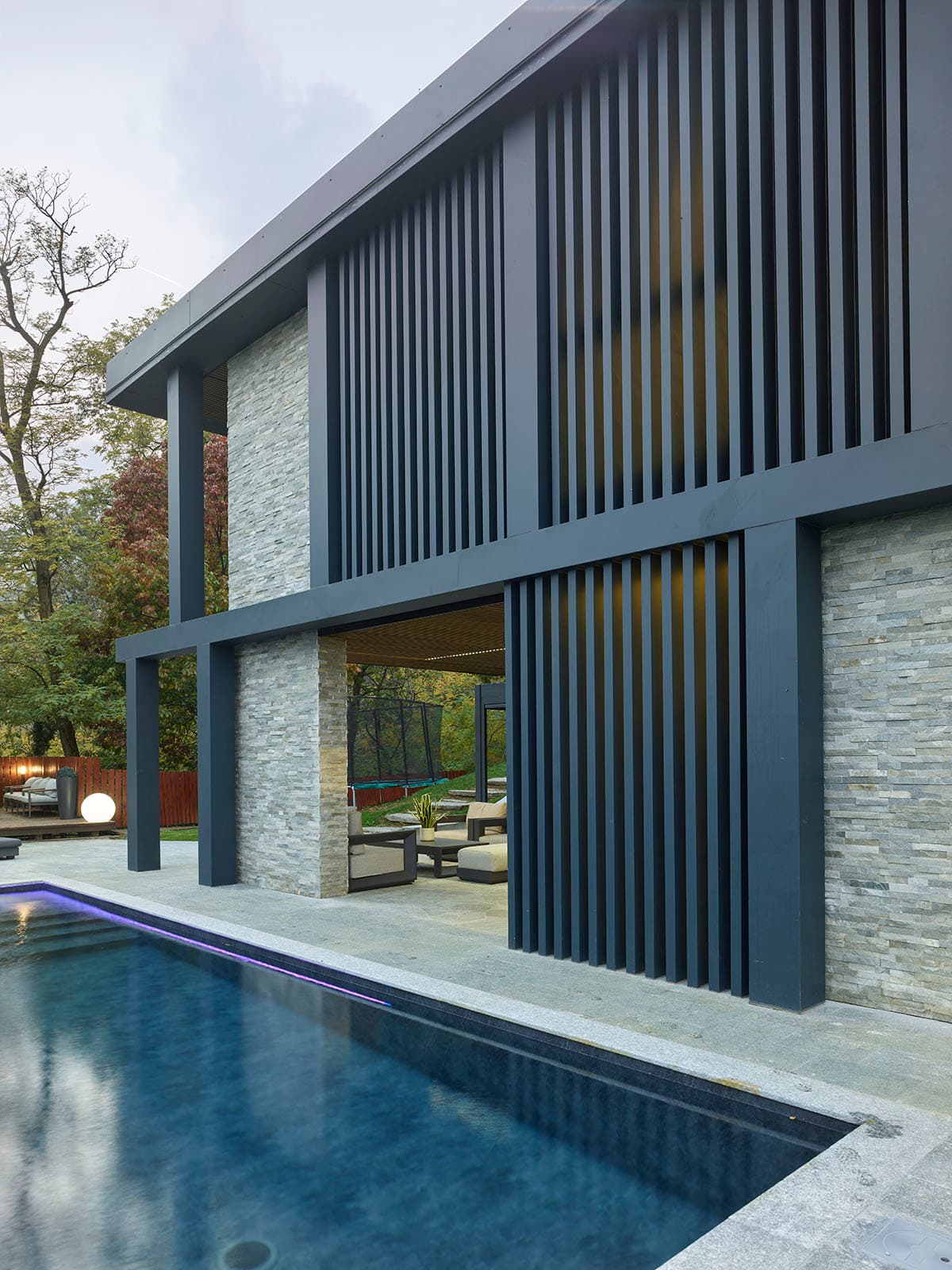
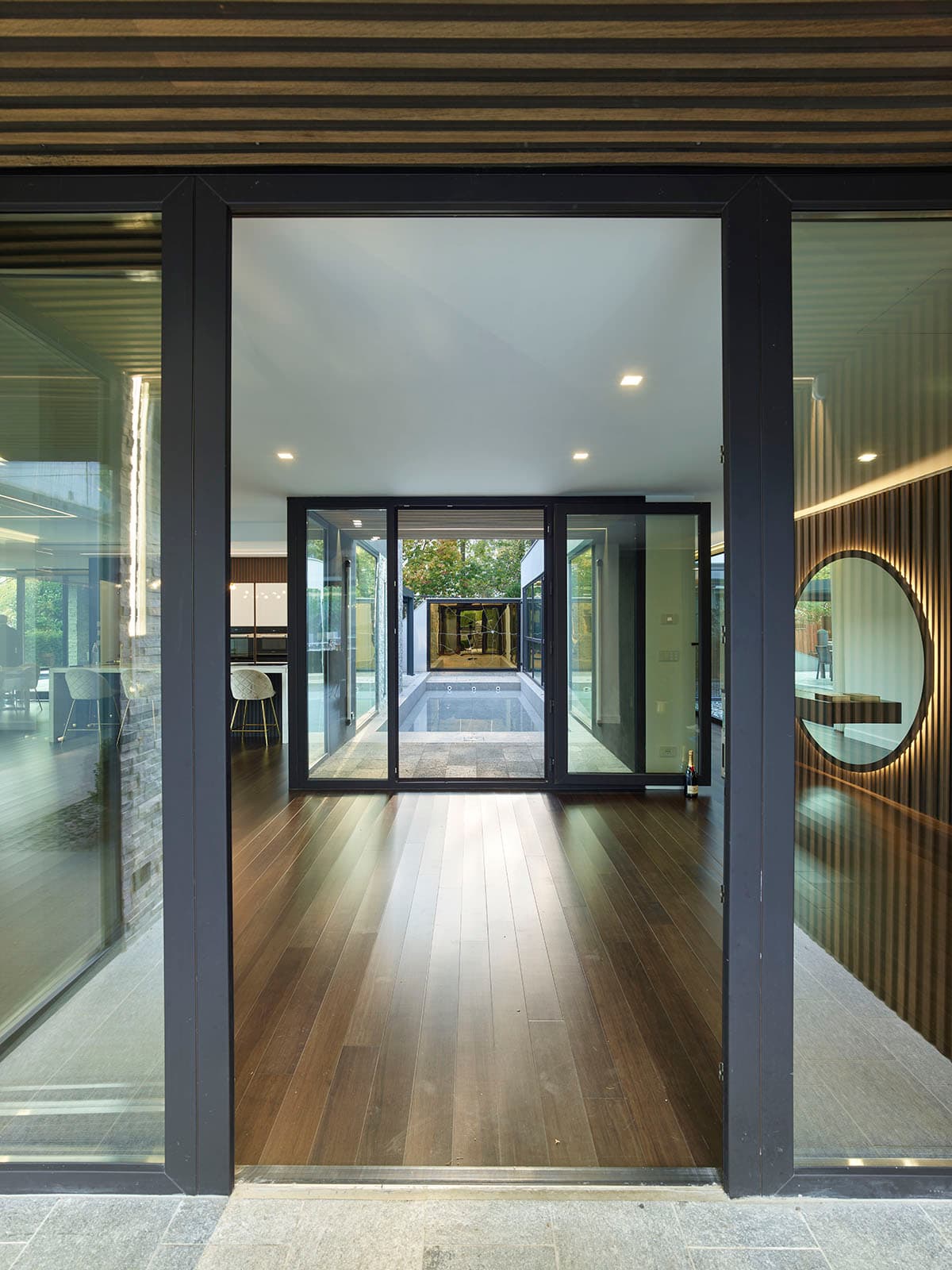
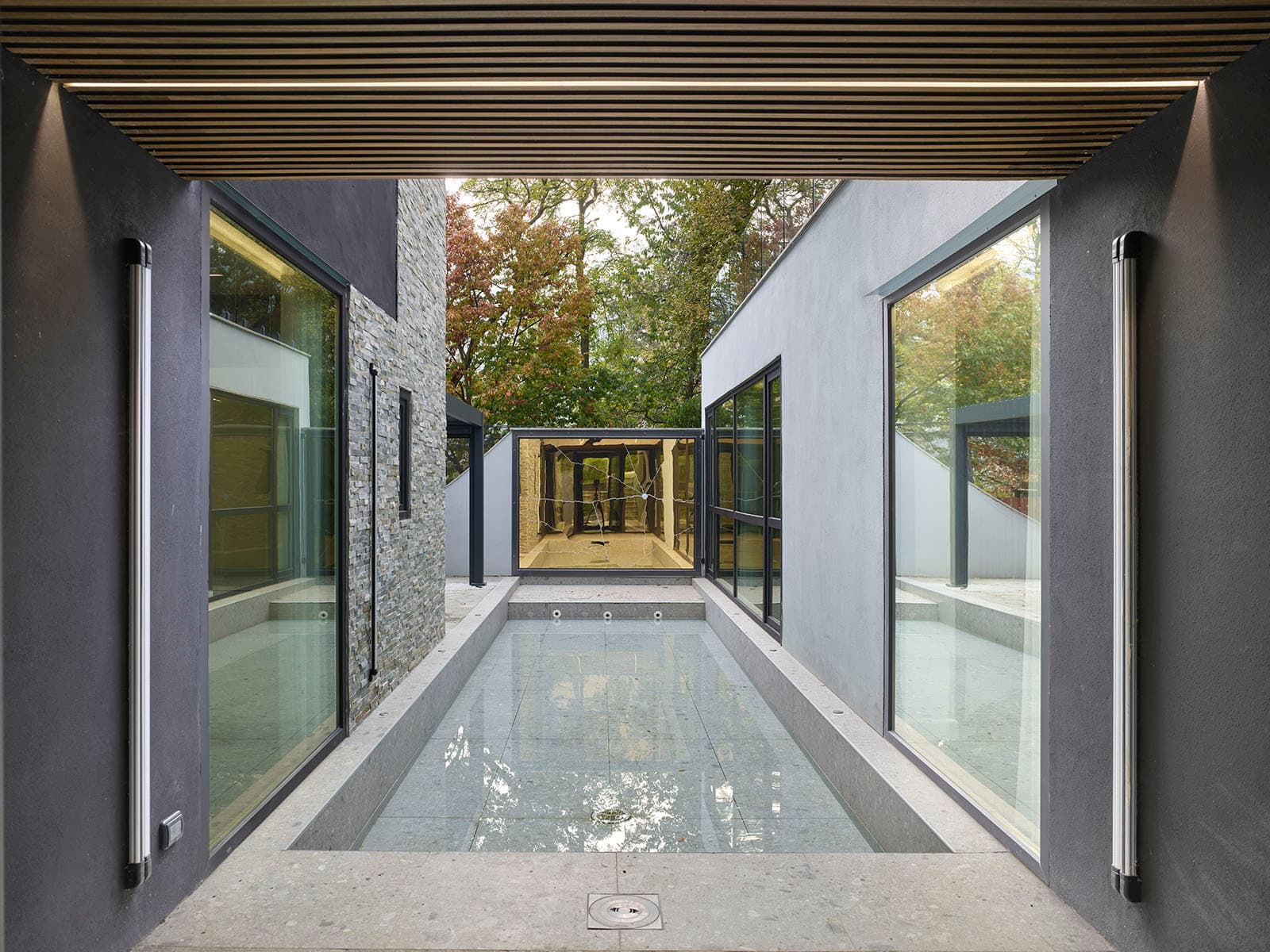
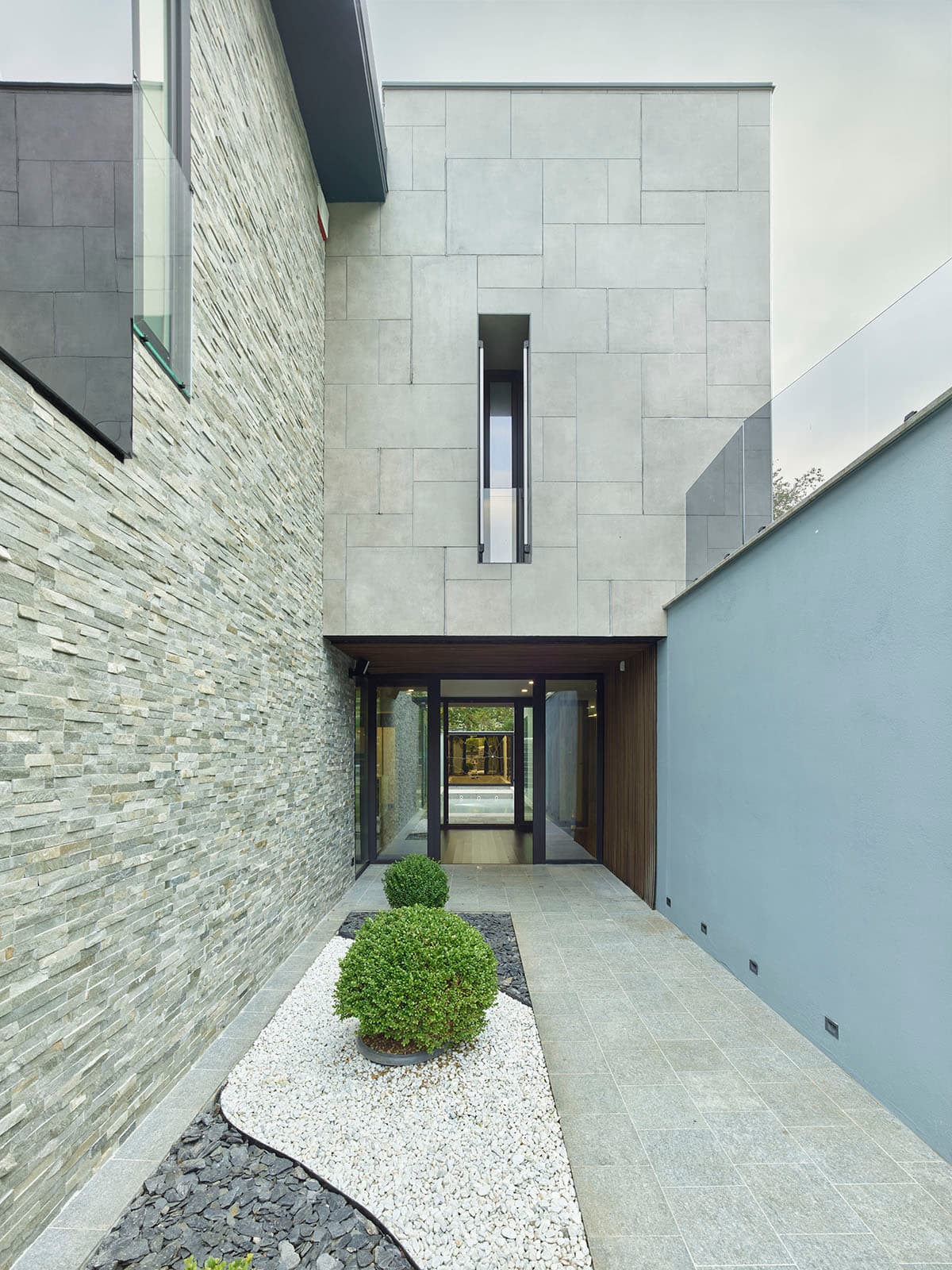
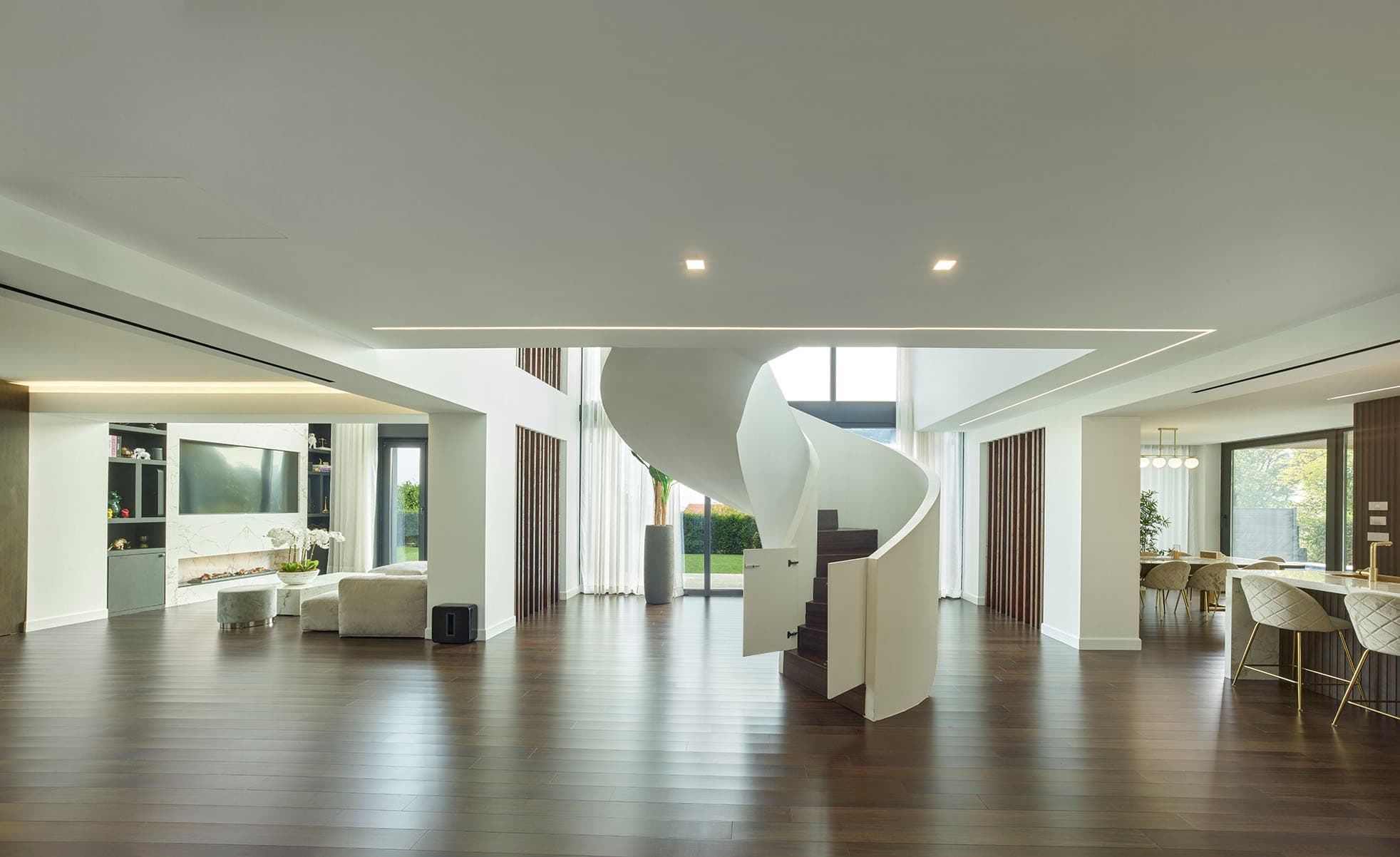
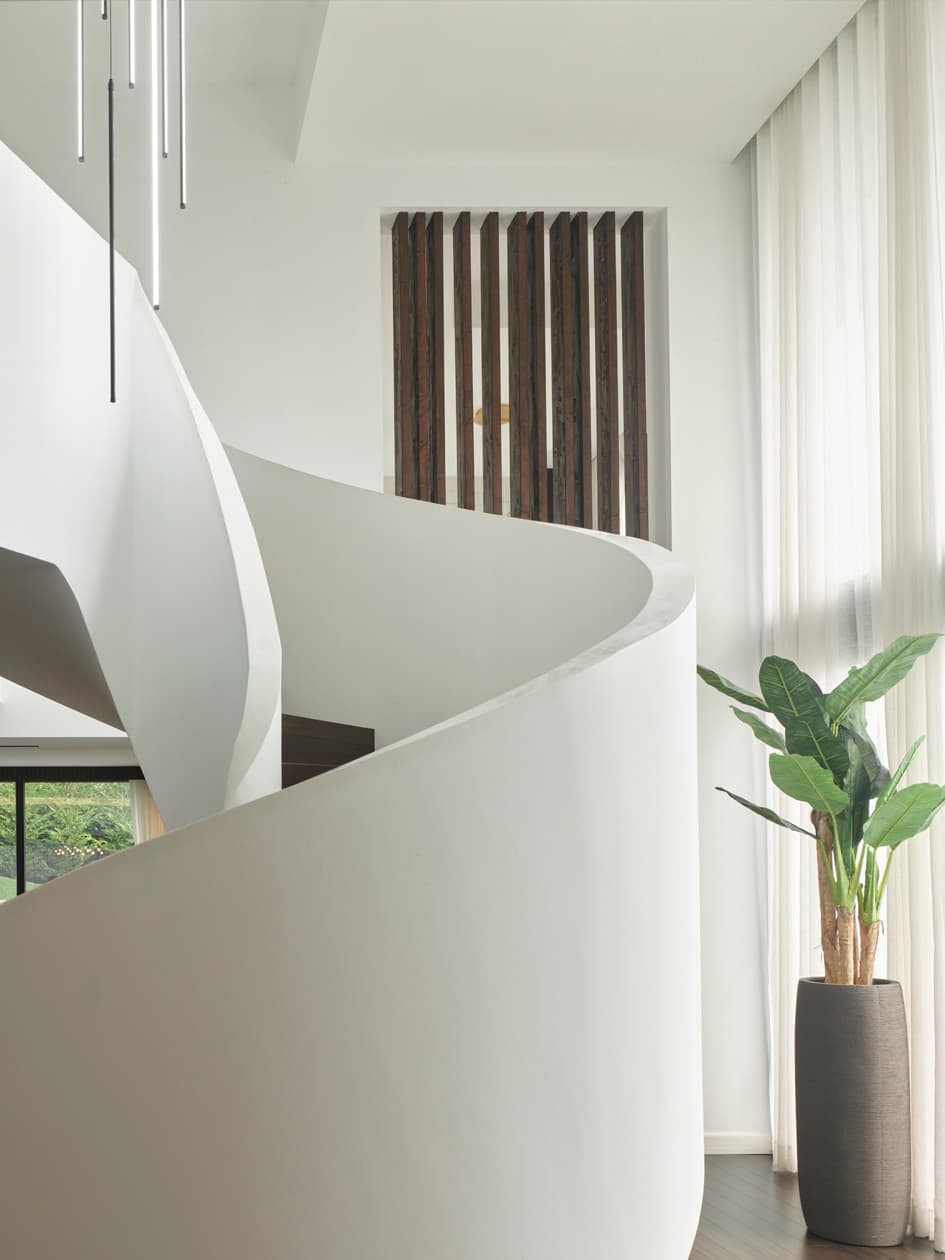
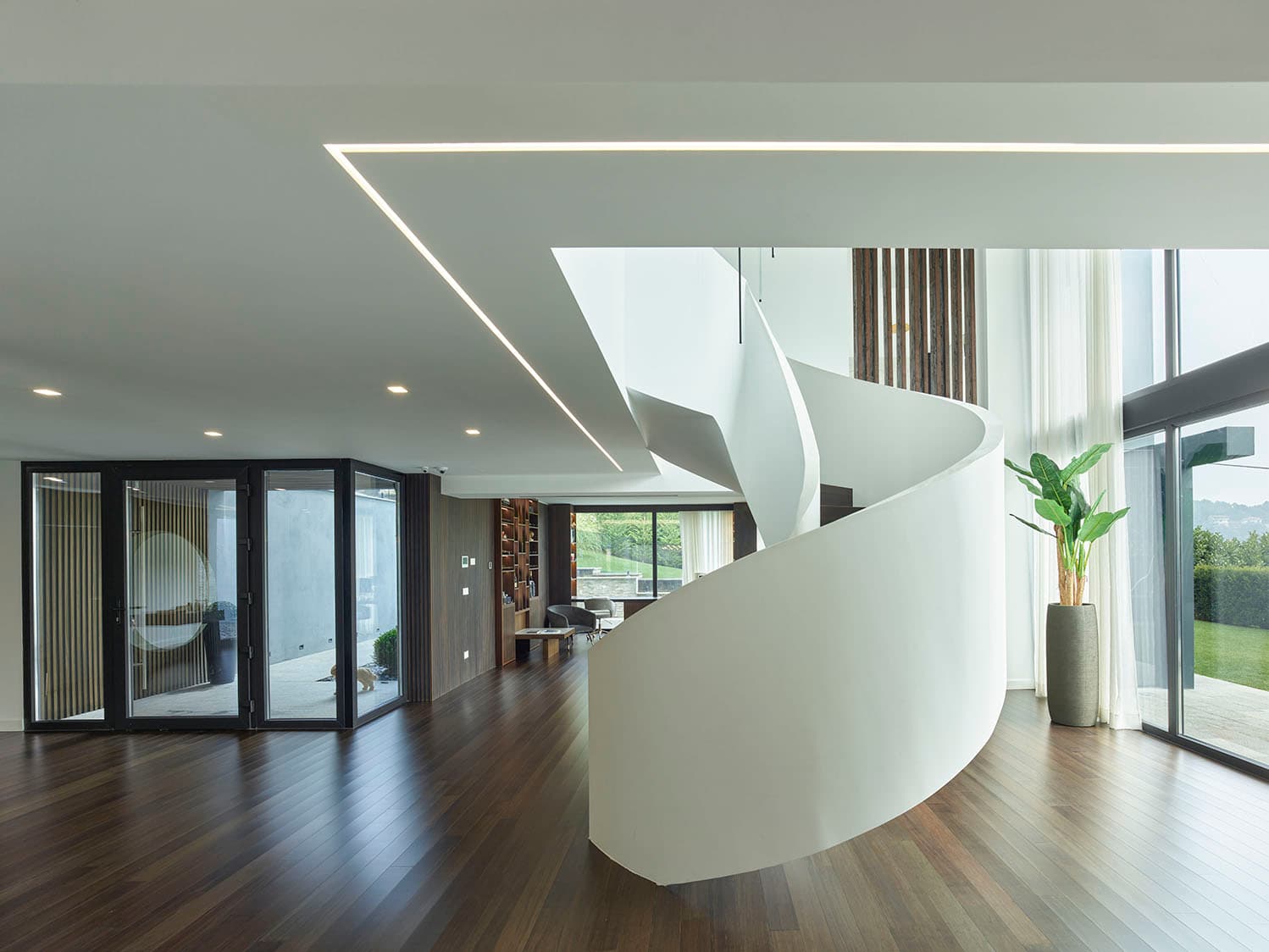
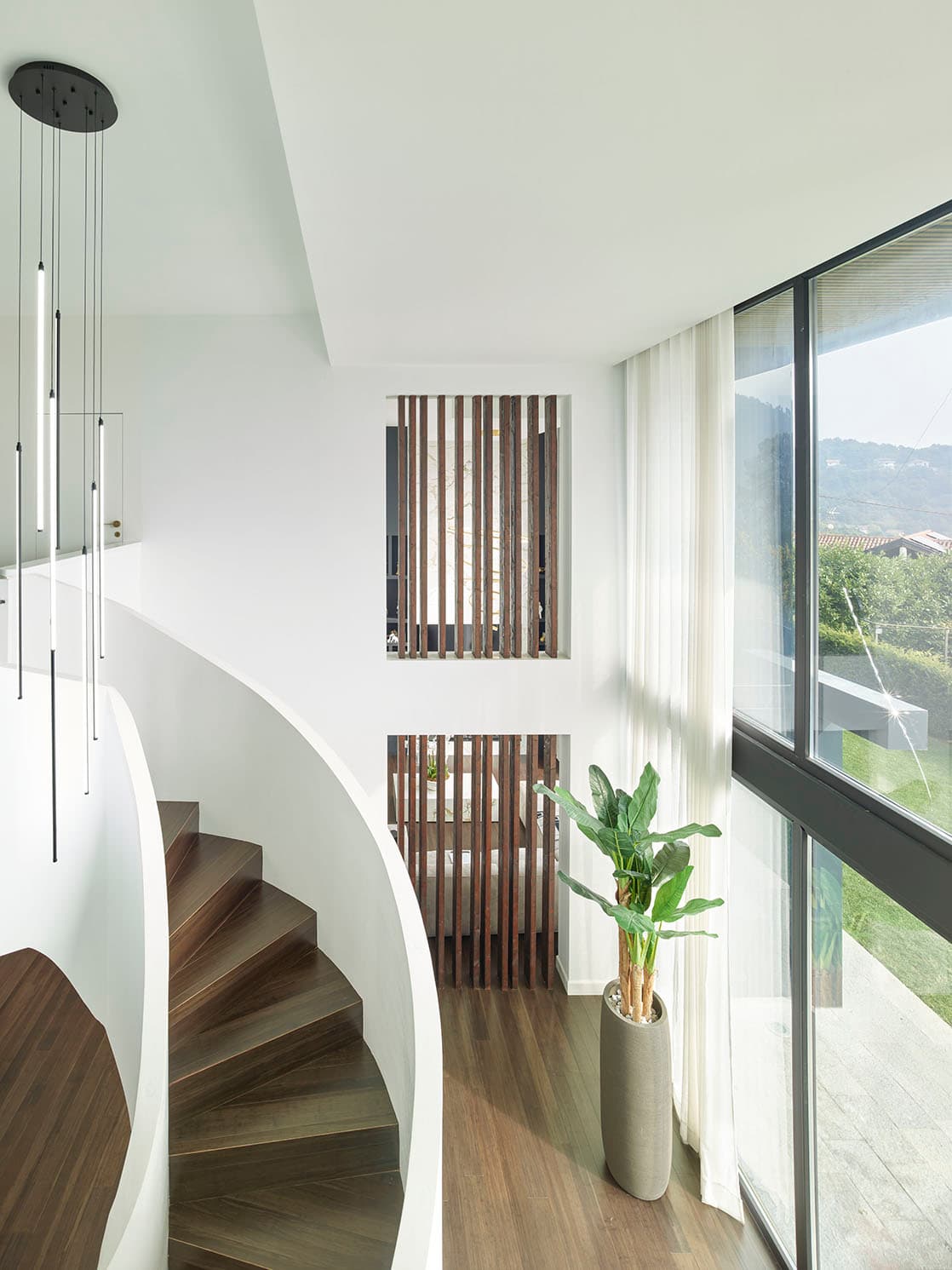
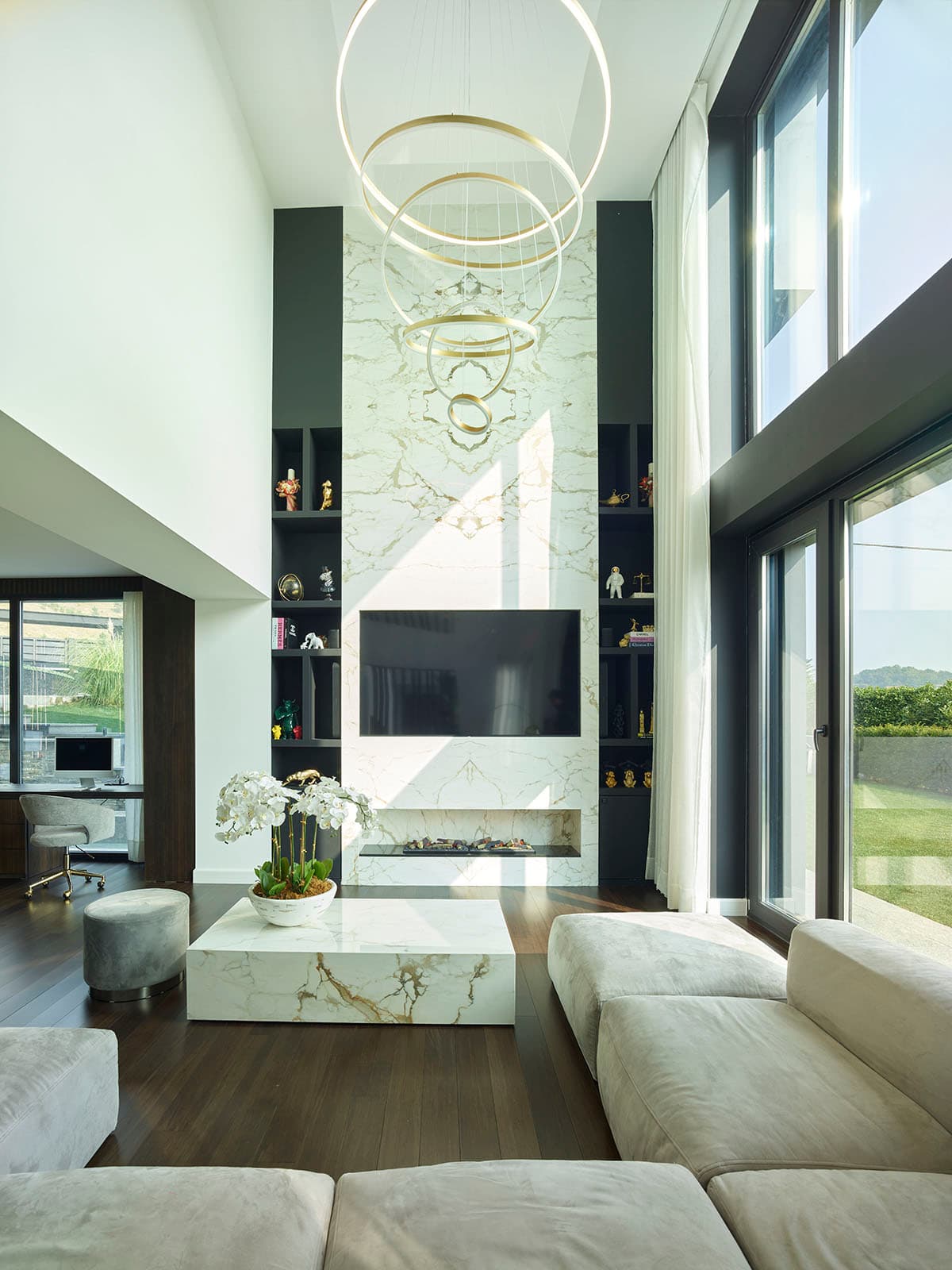
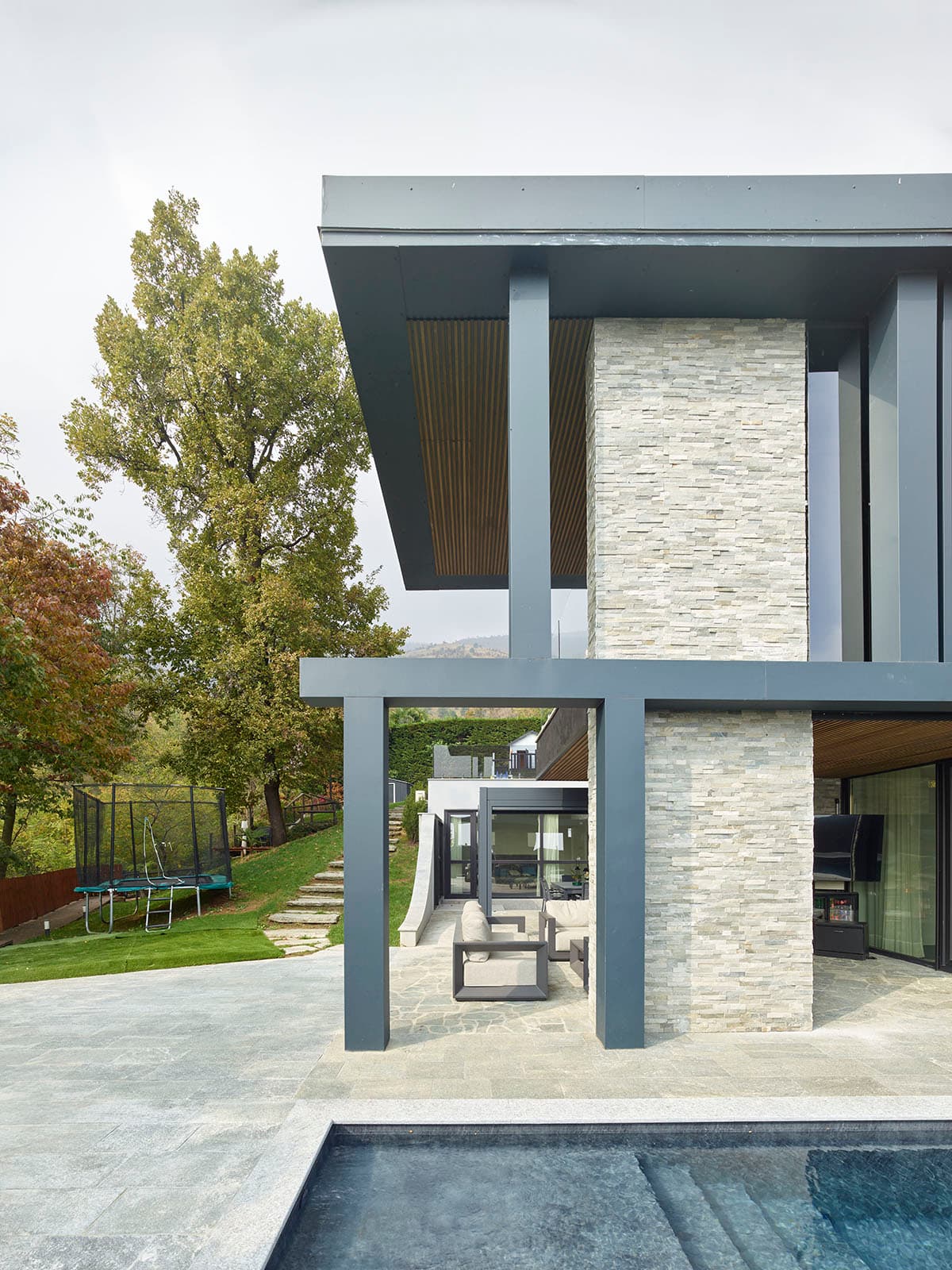
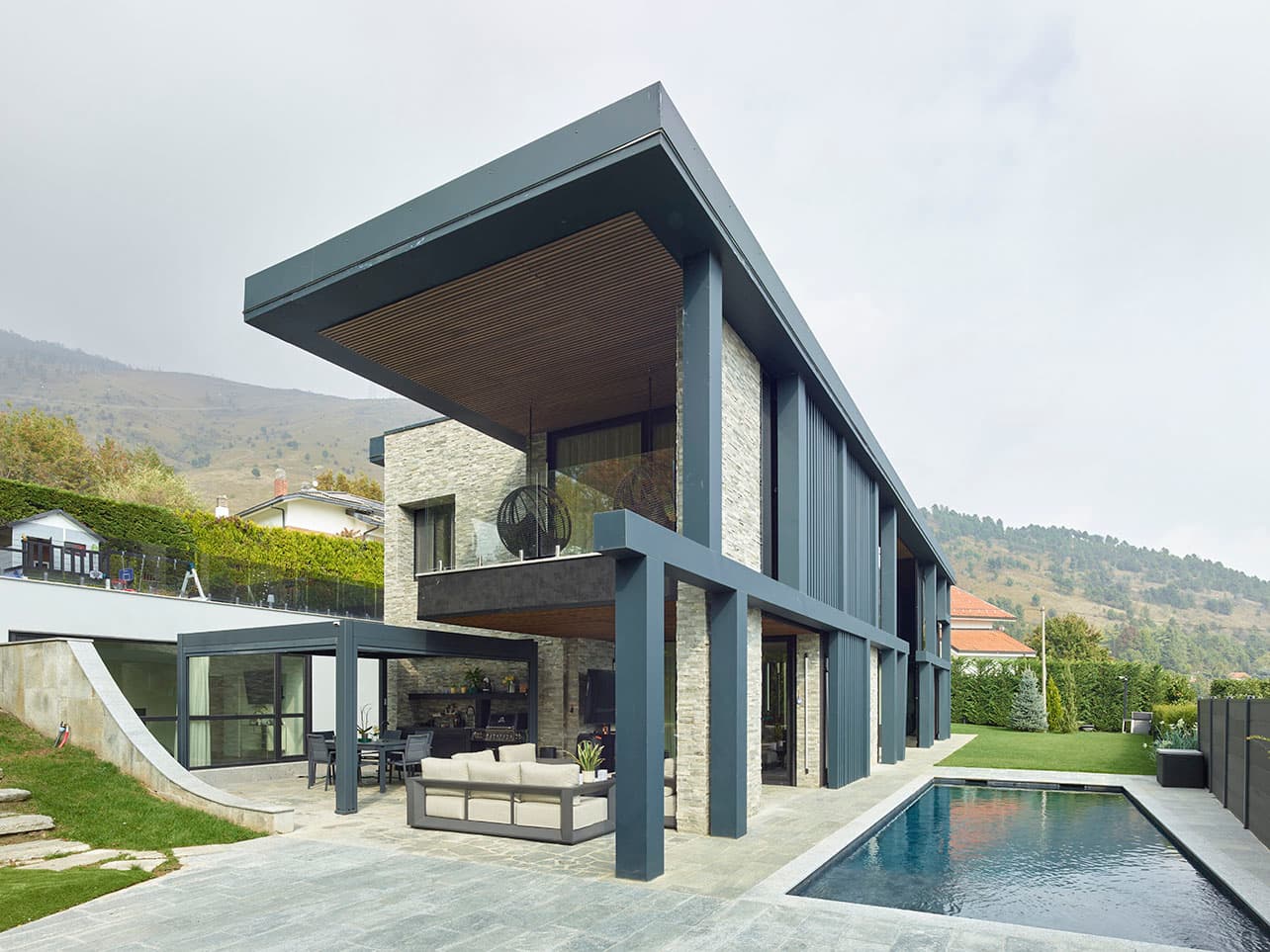
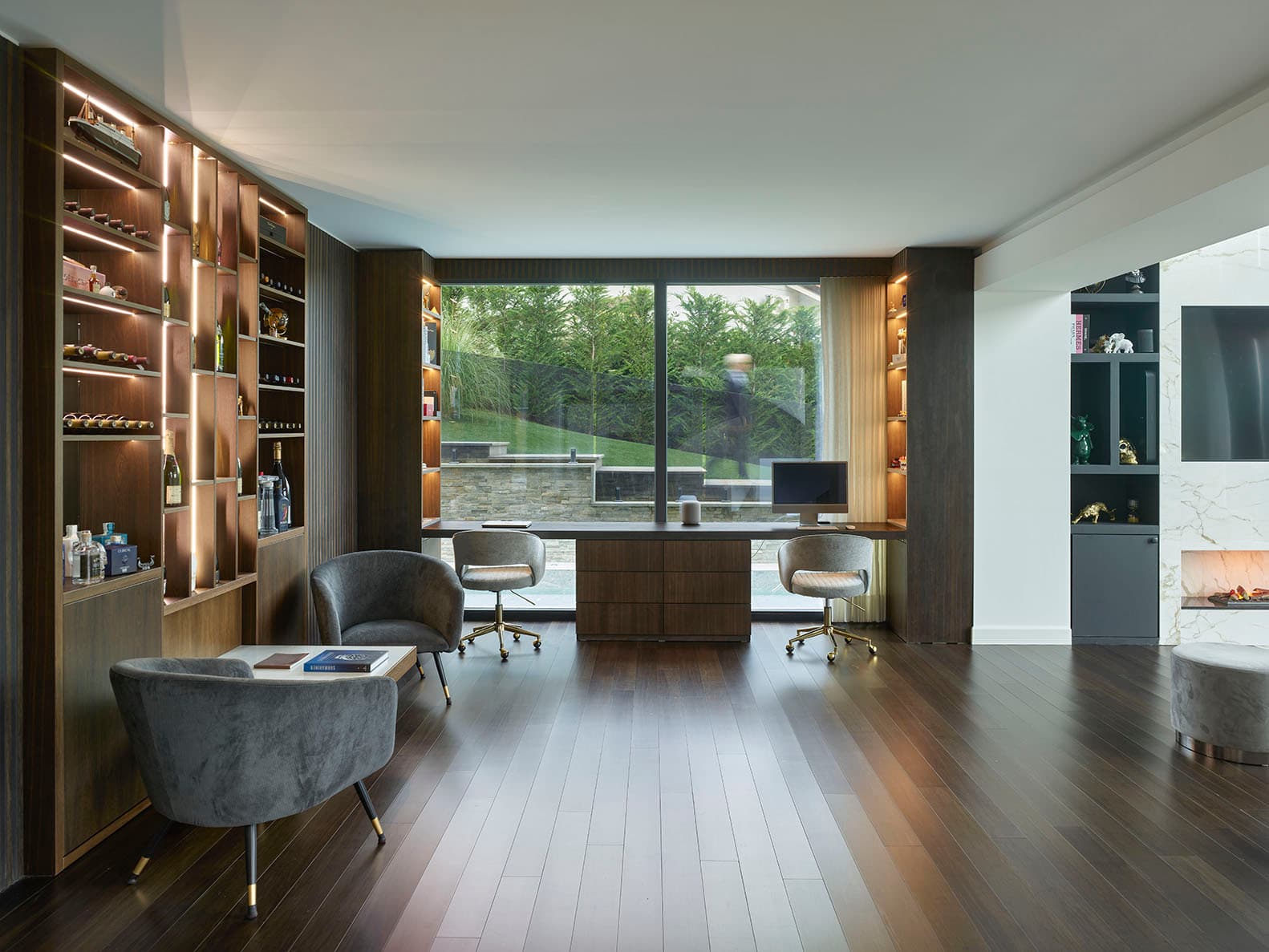
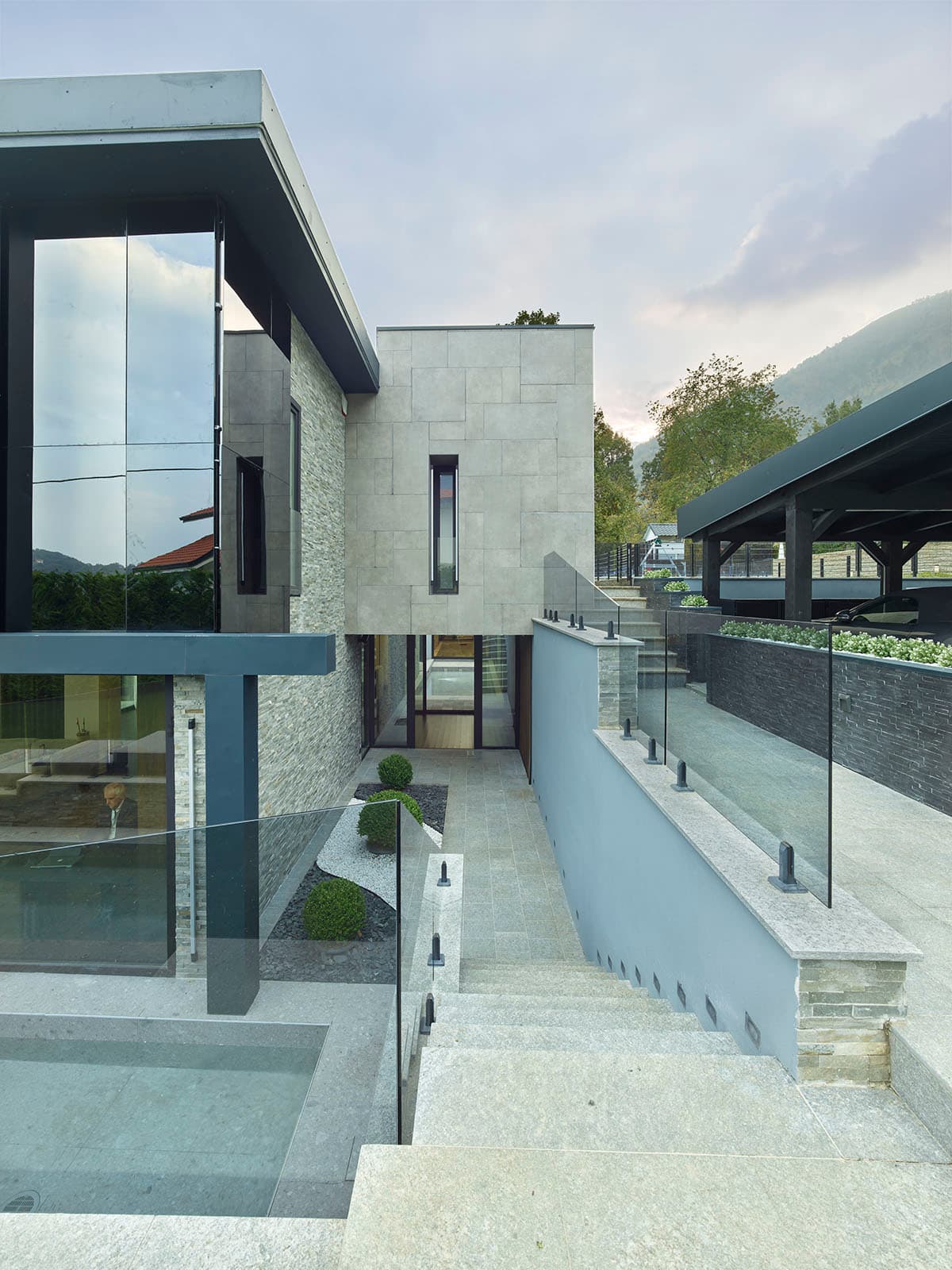
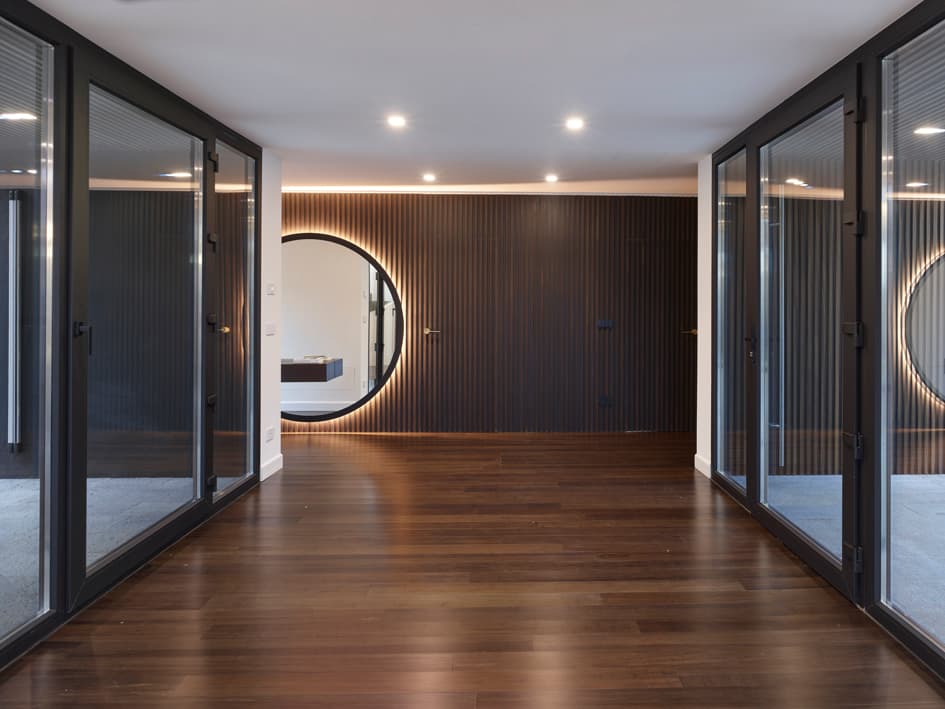
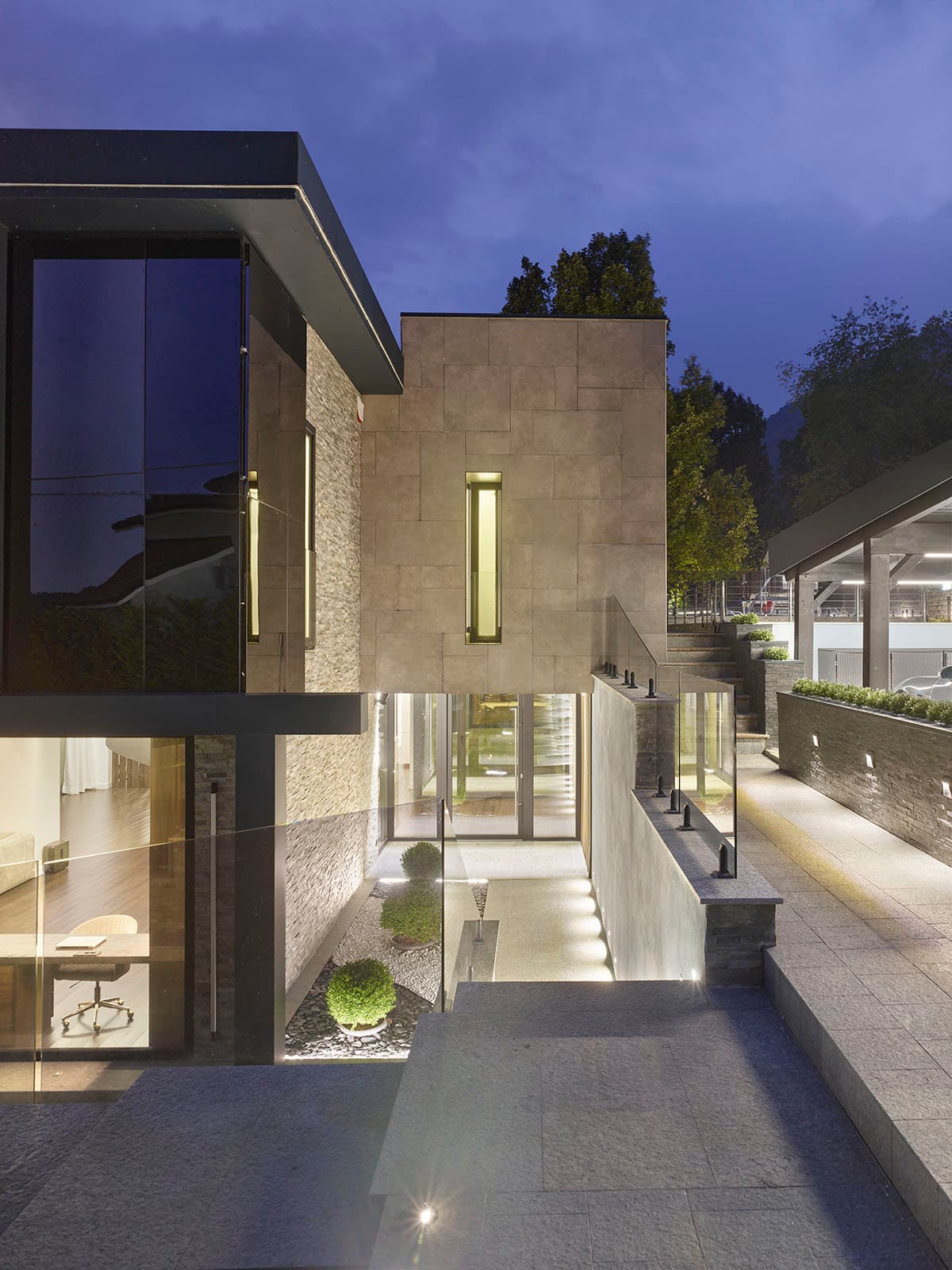
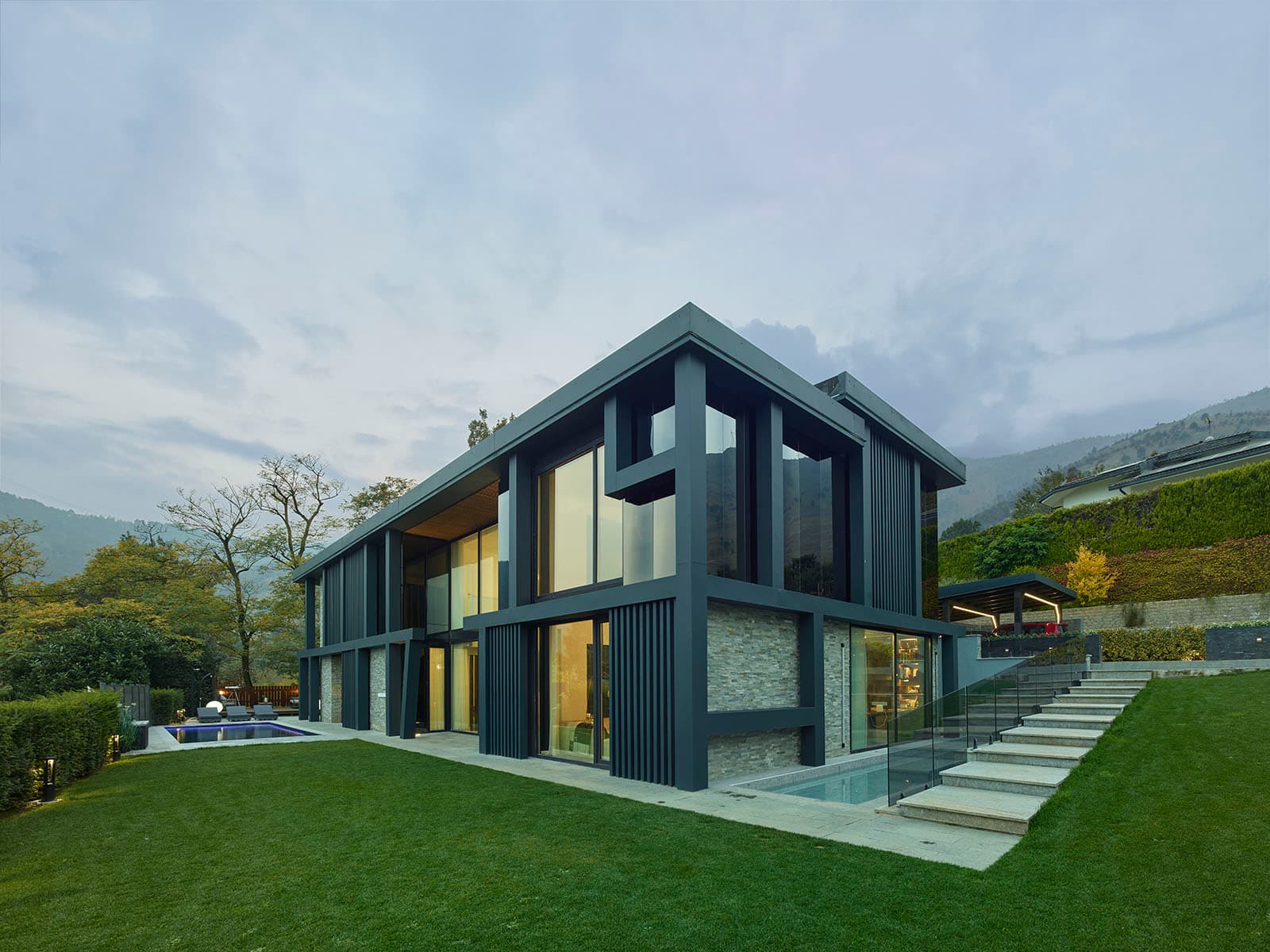
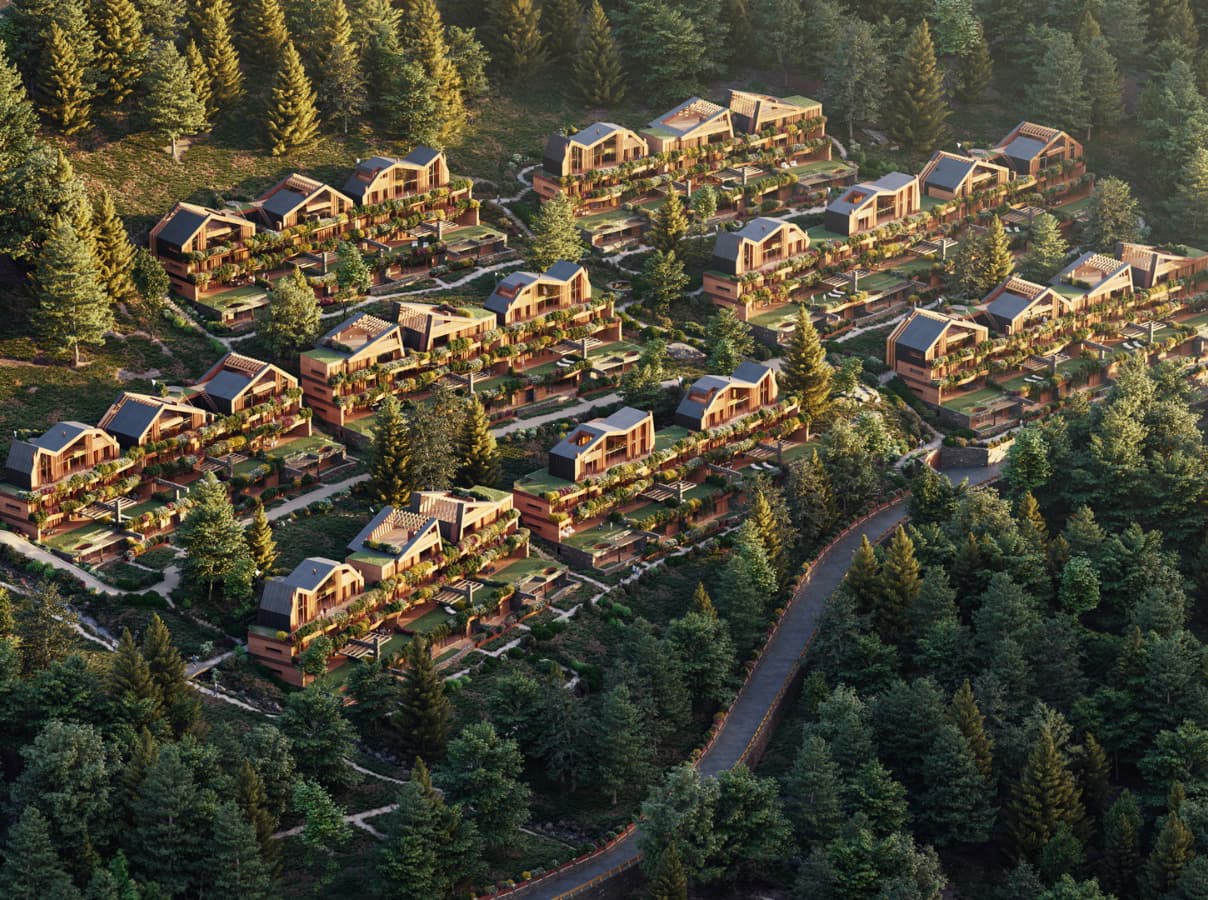
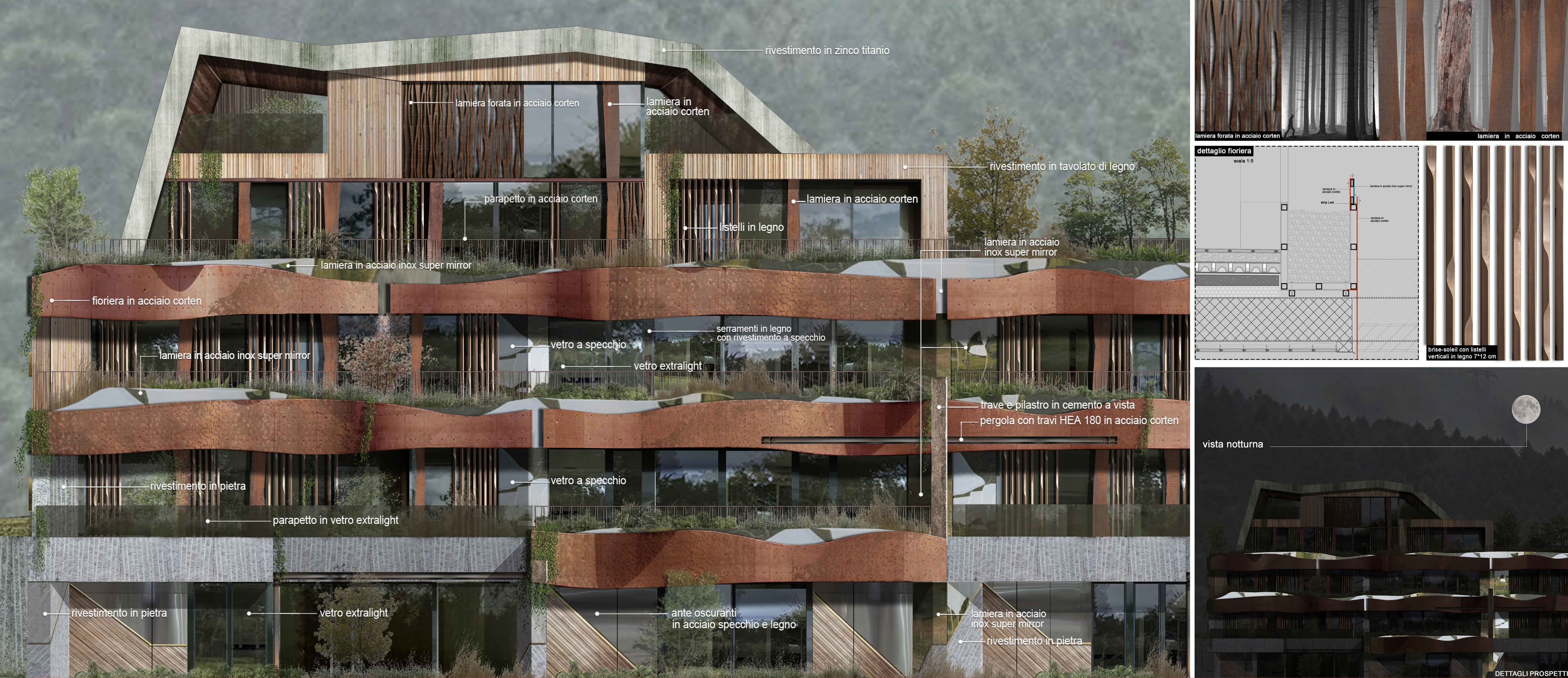
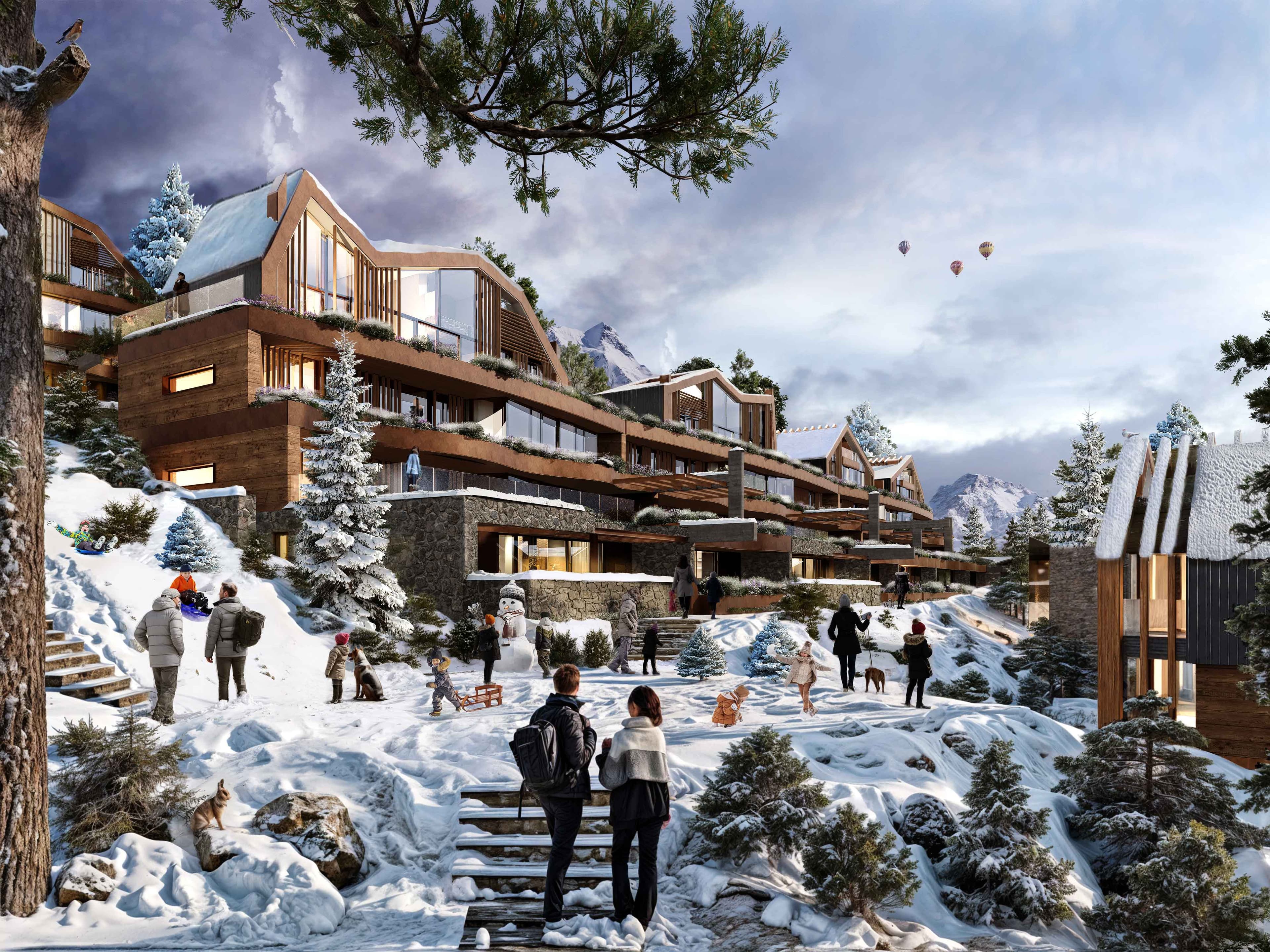
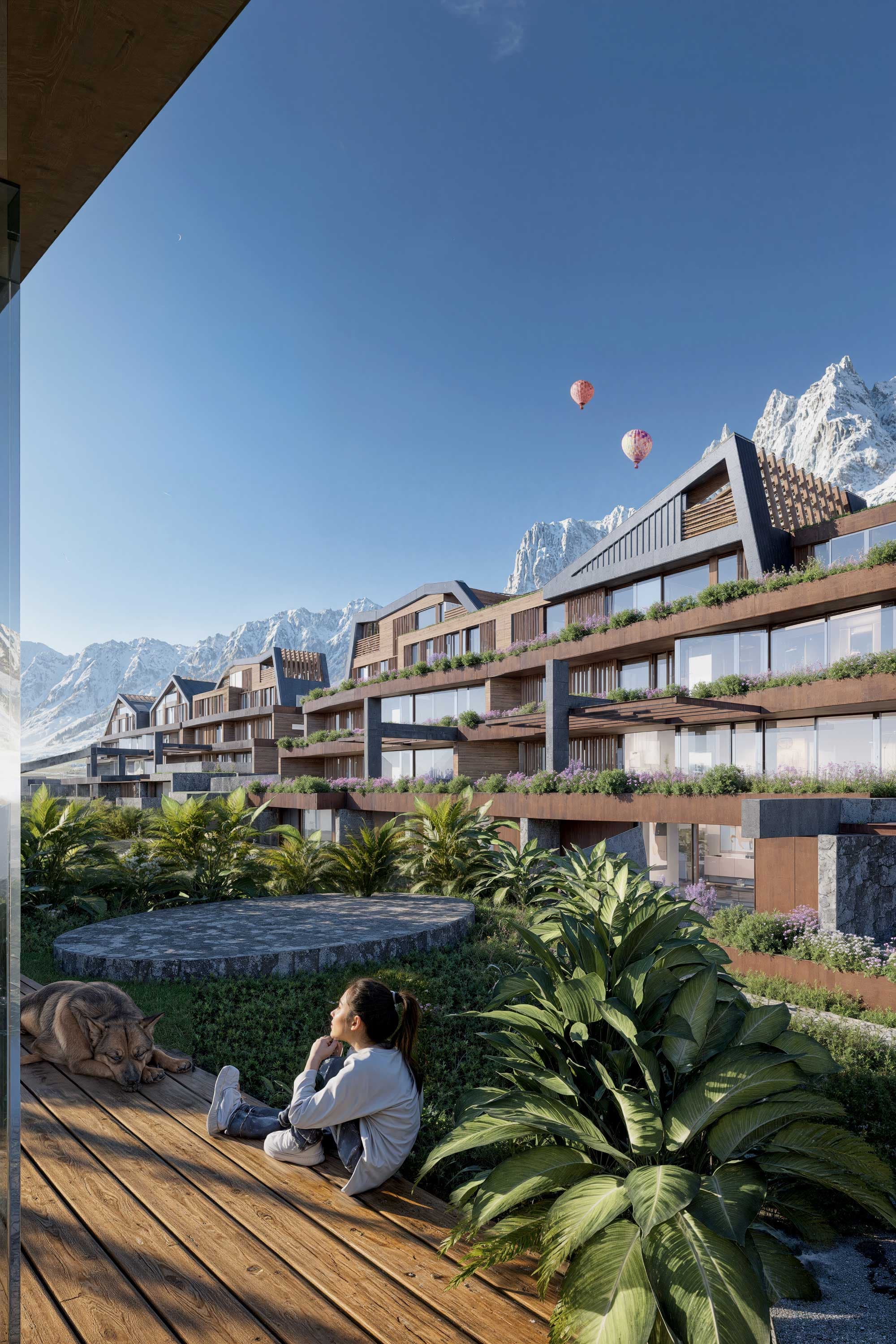
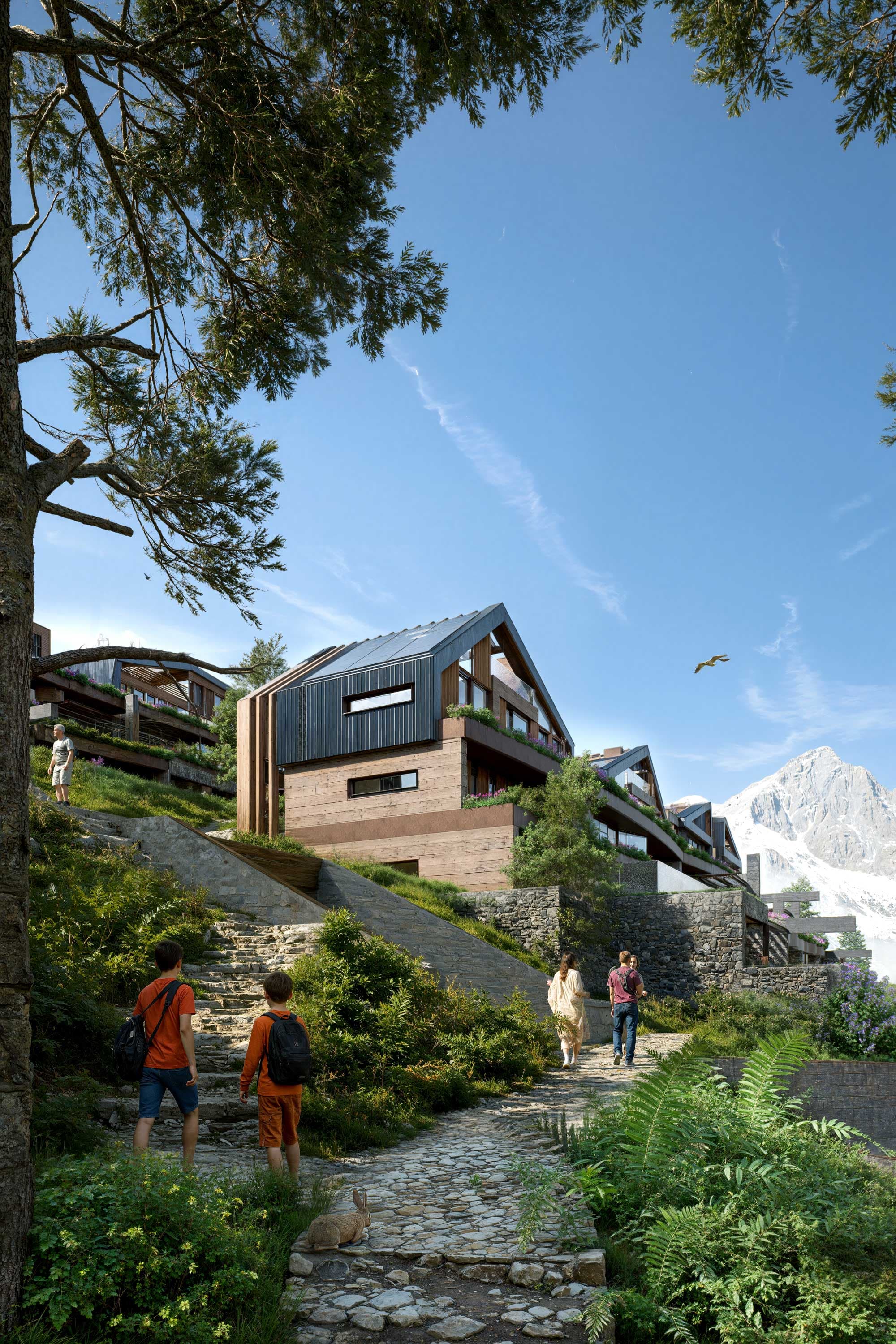
A Thousand Trees Eco Resort
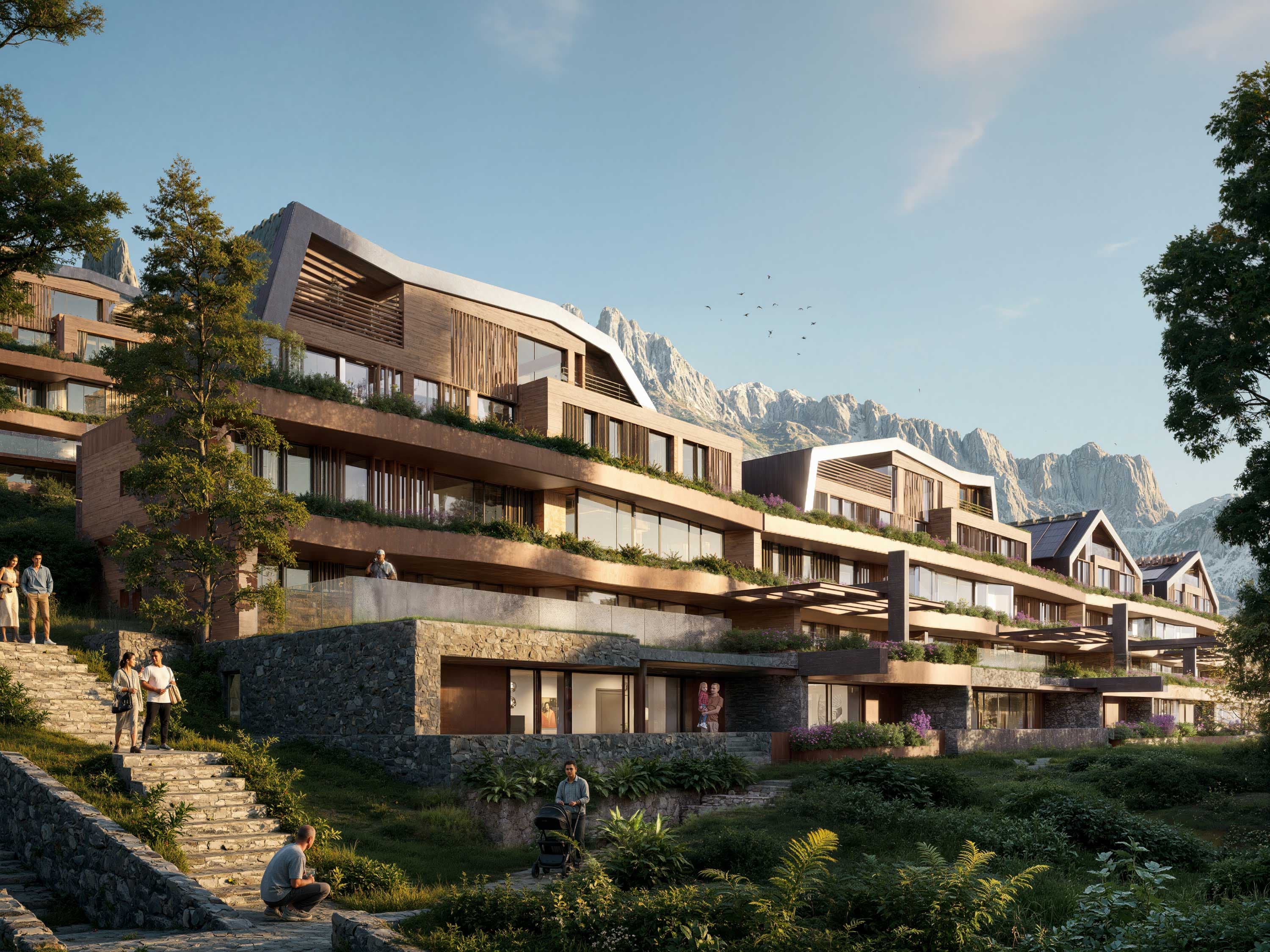
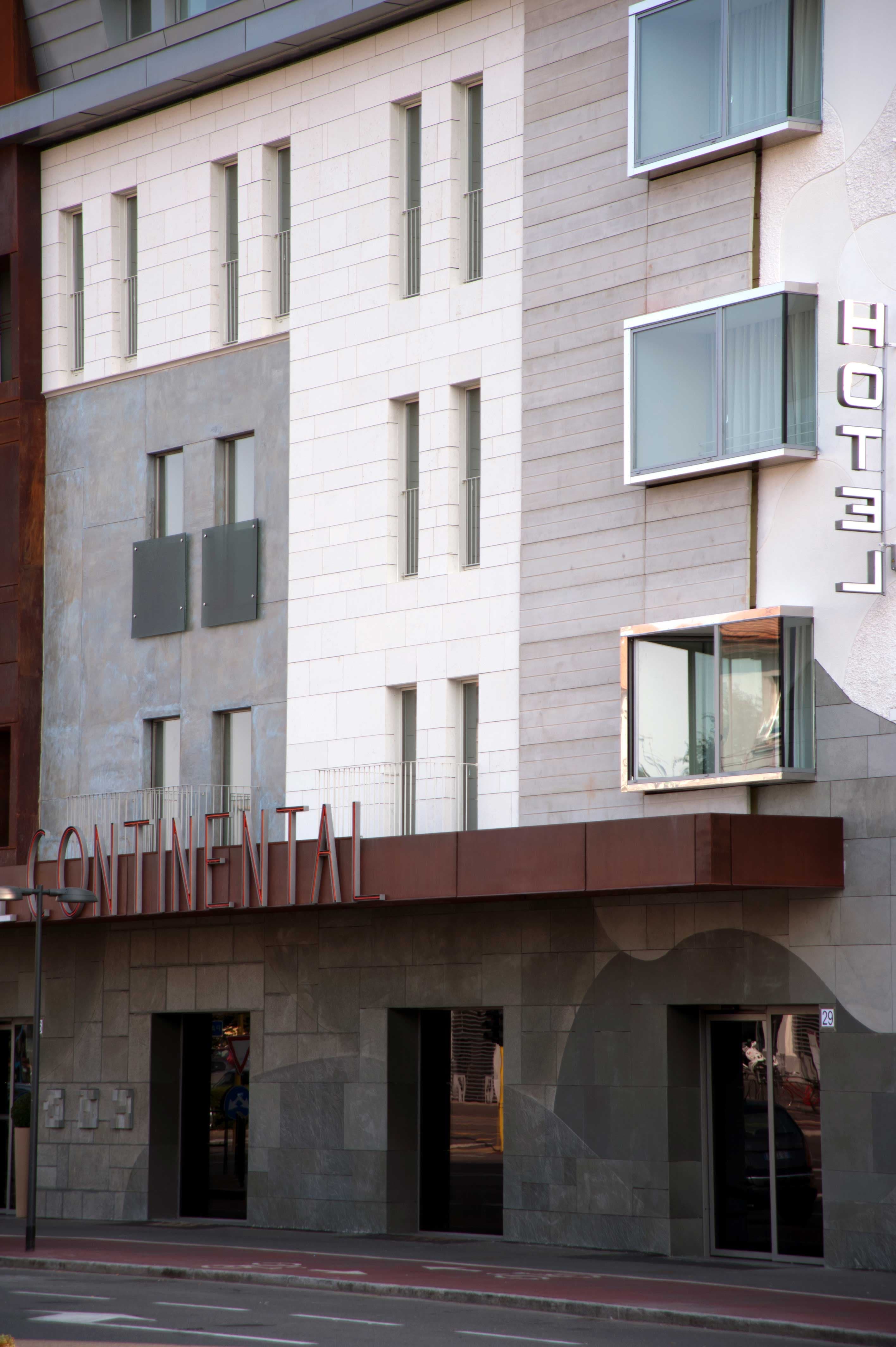
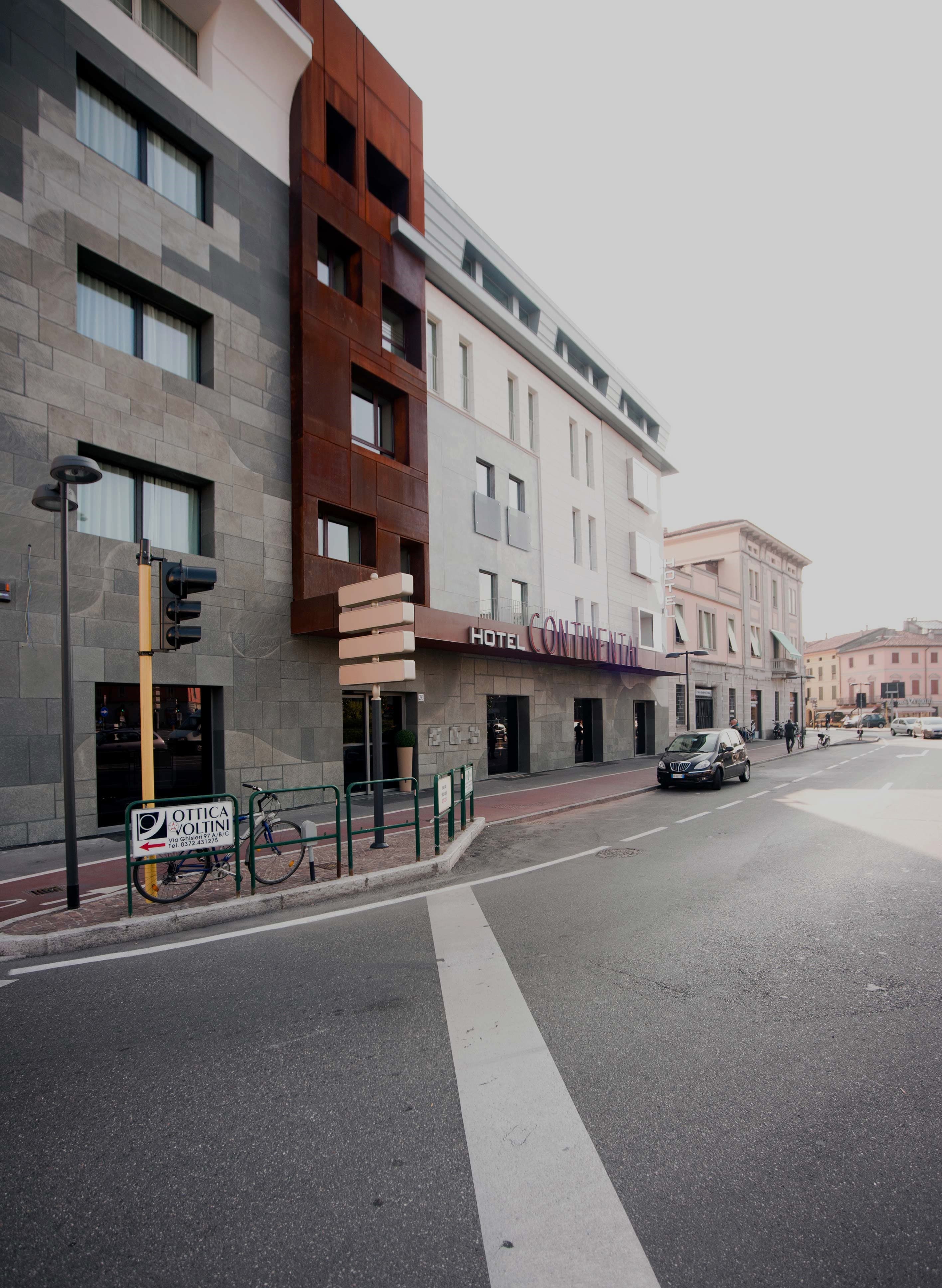
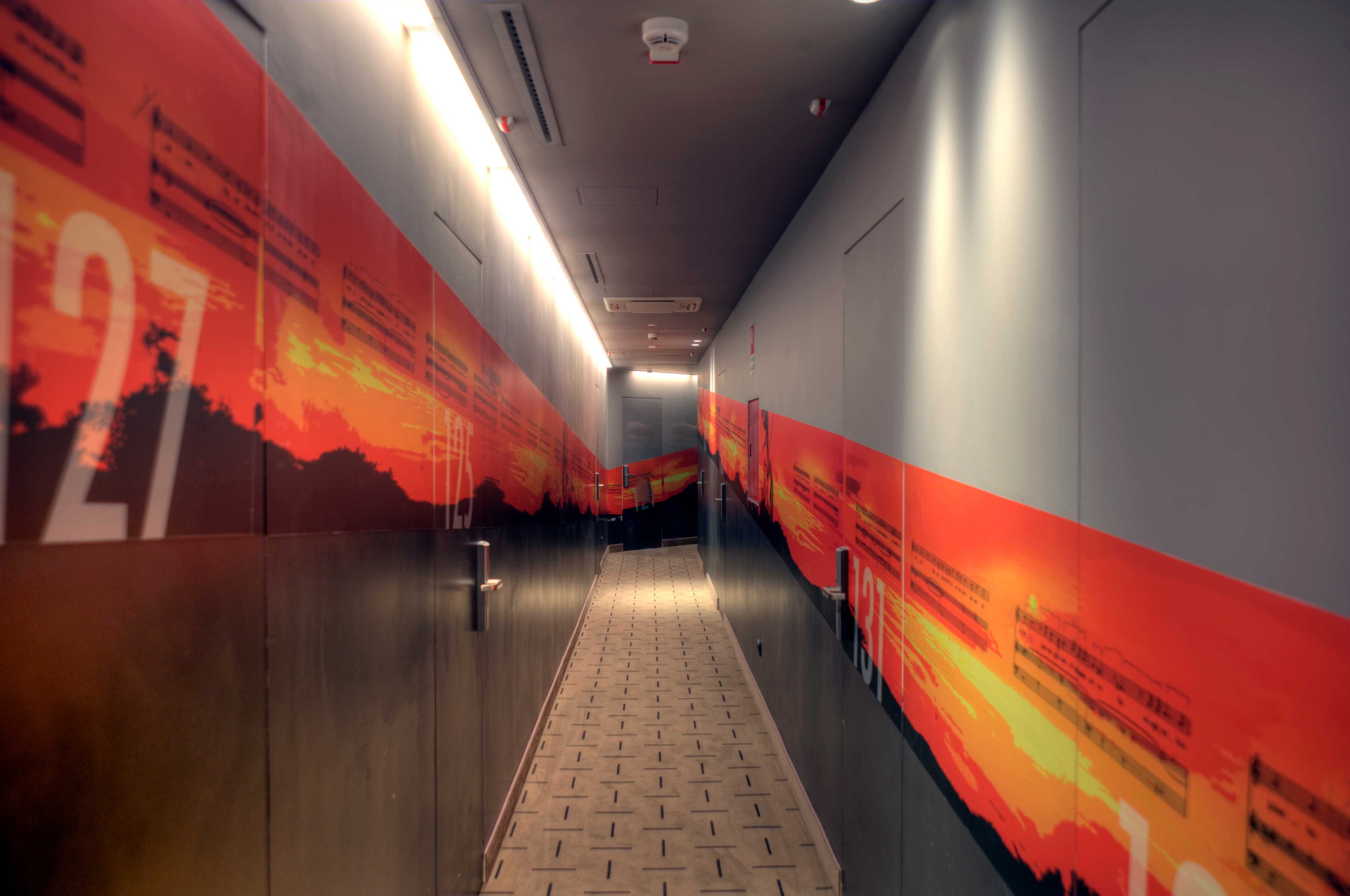
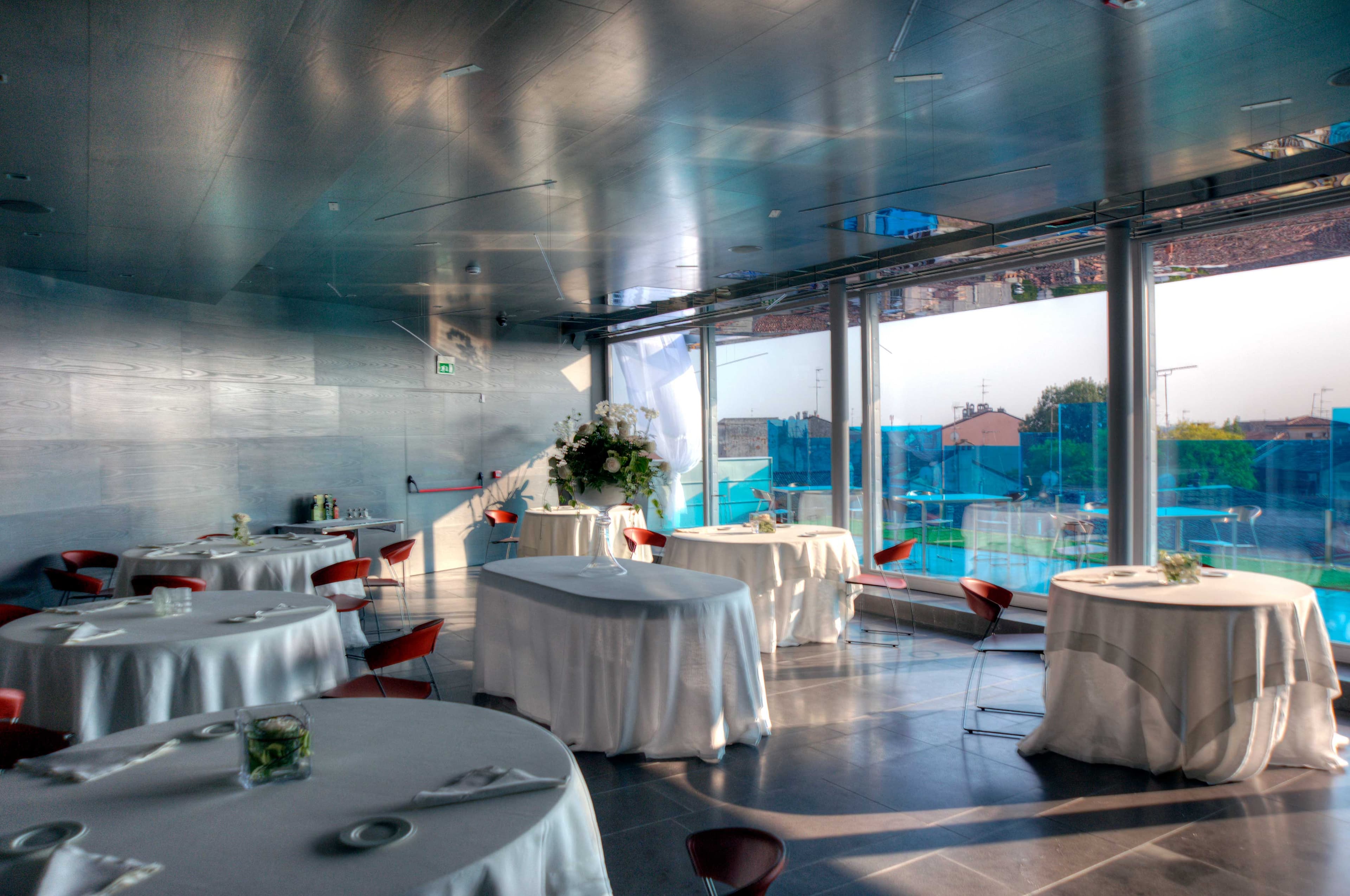
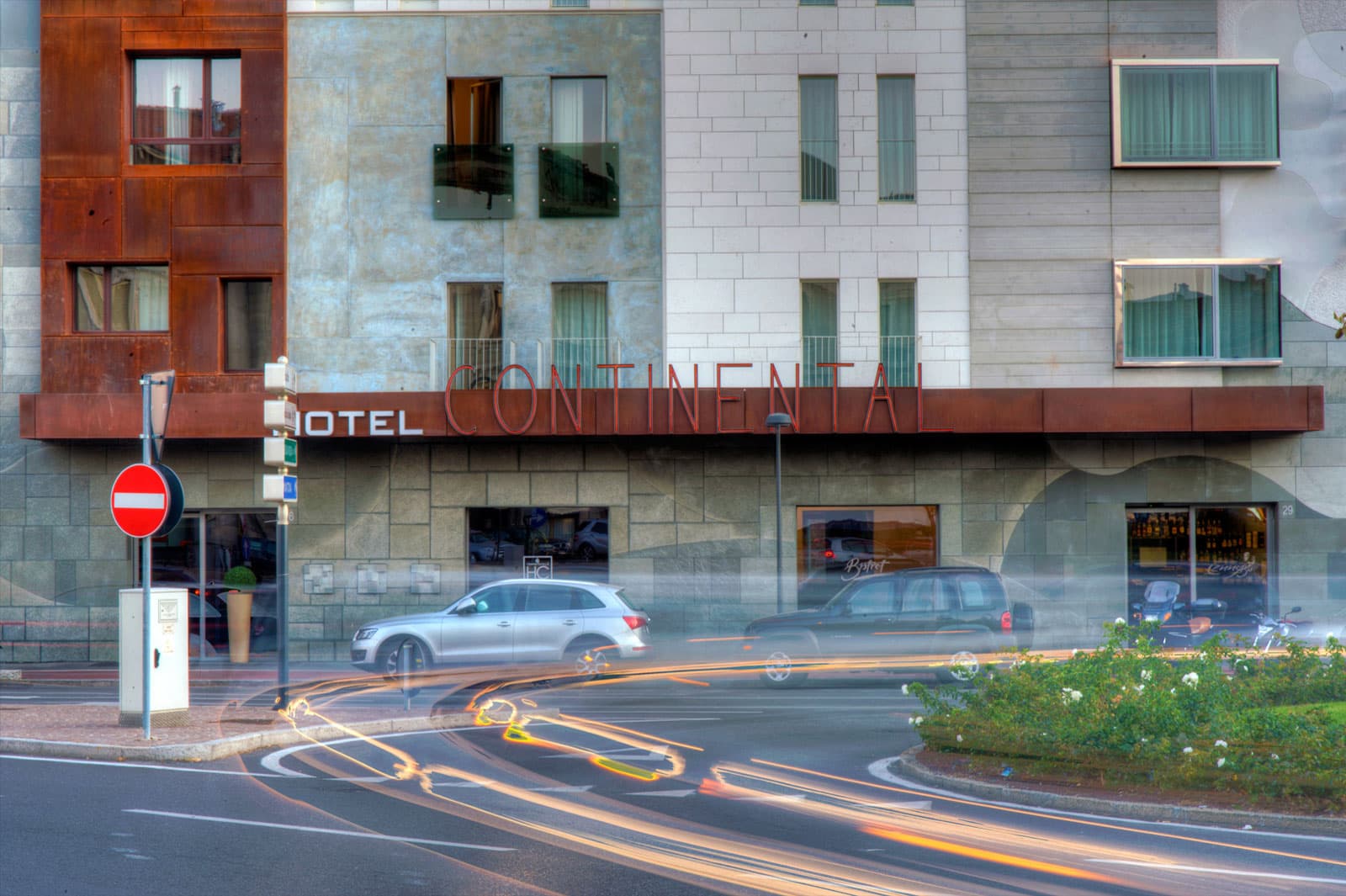
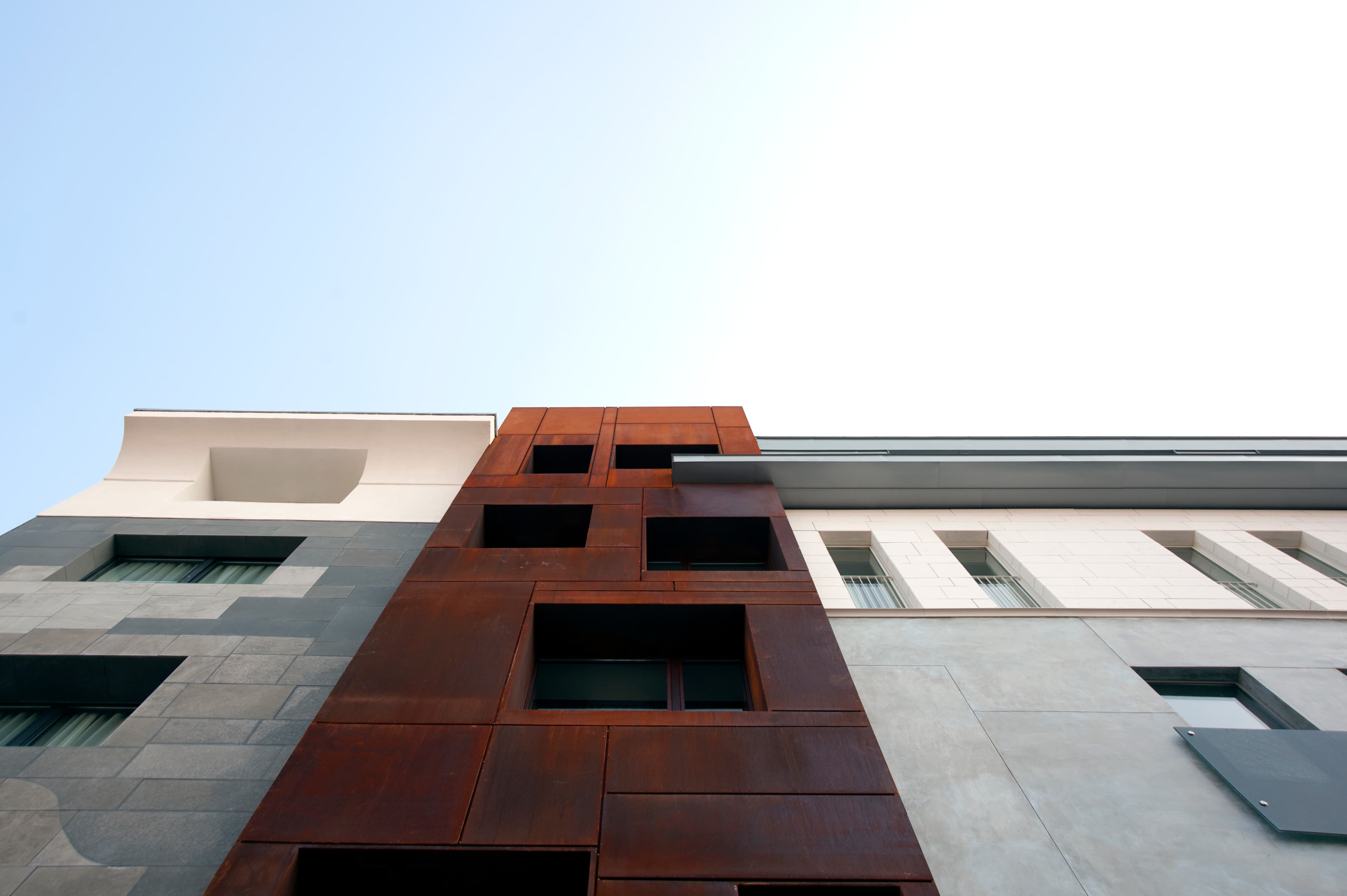
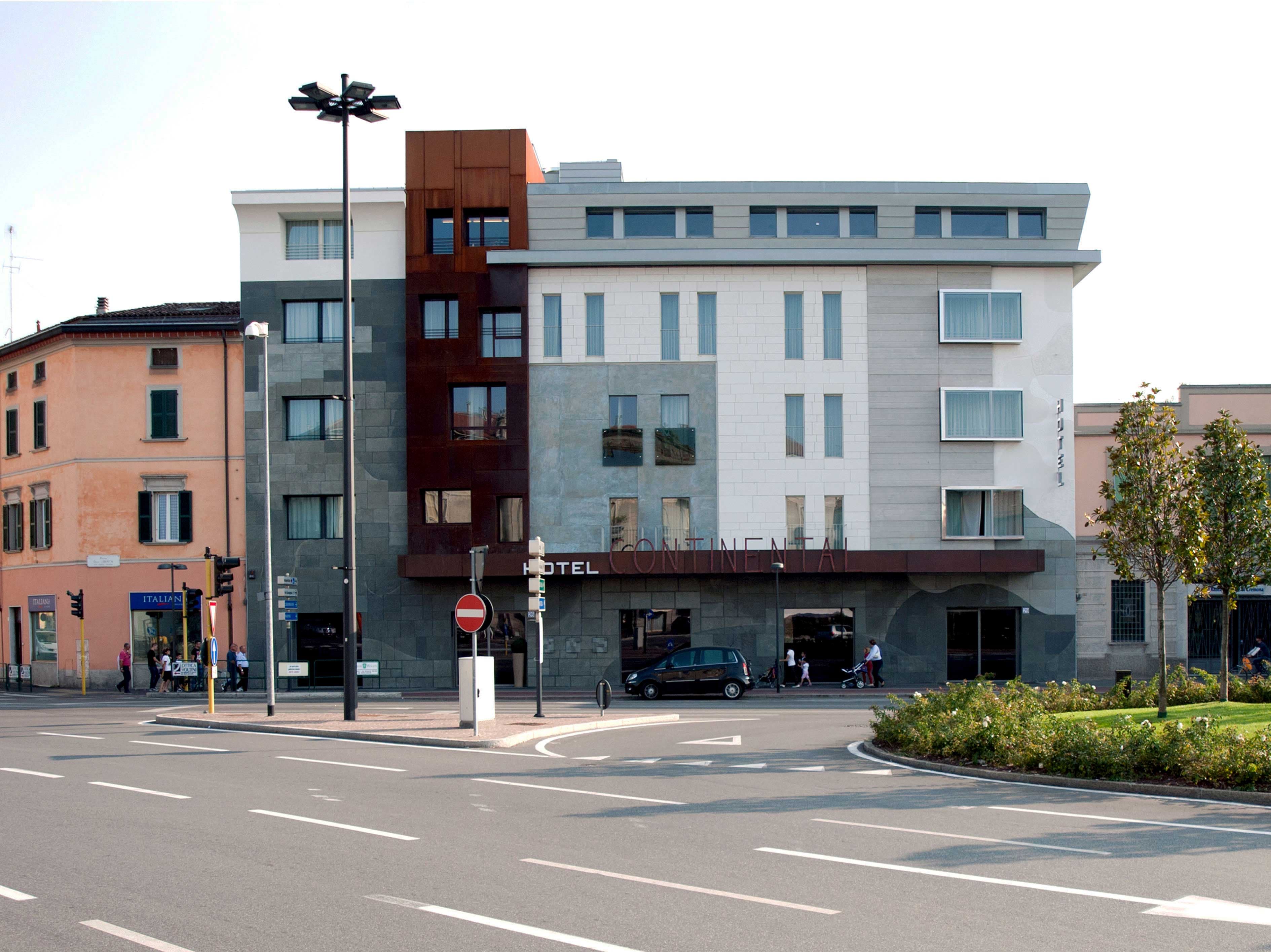
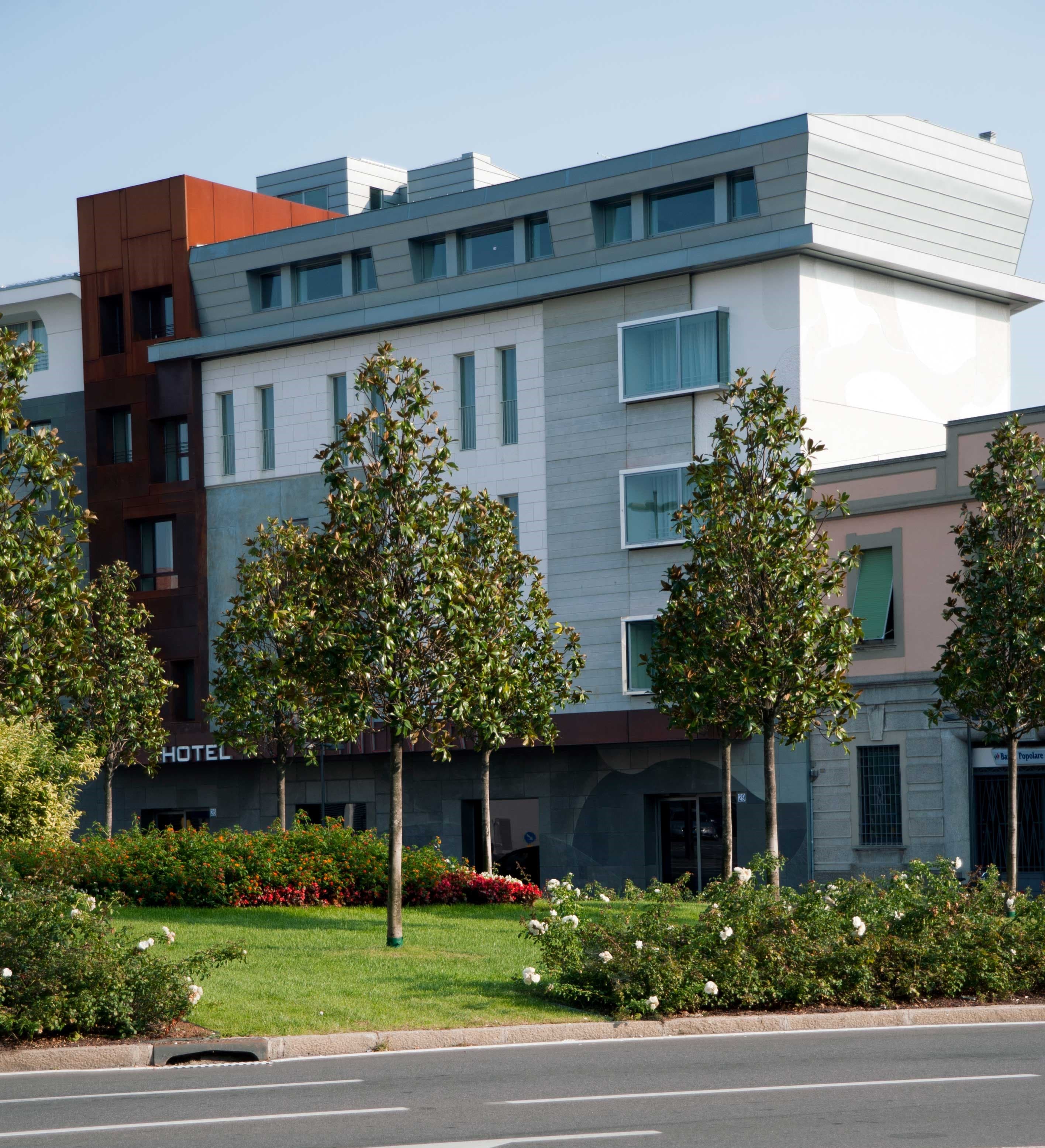
Hotel Continental
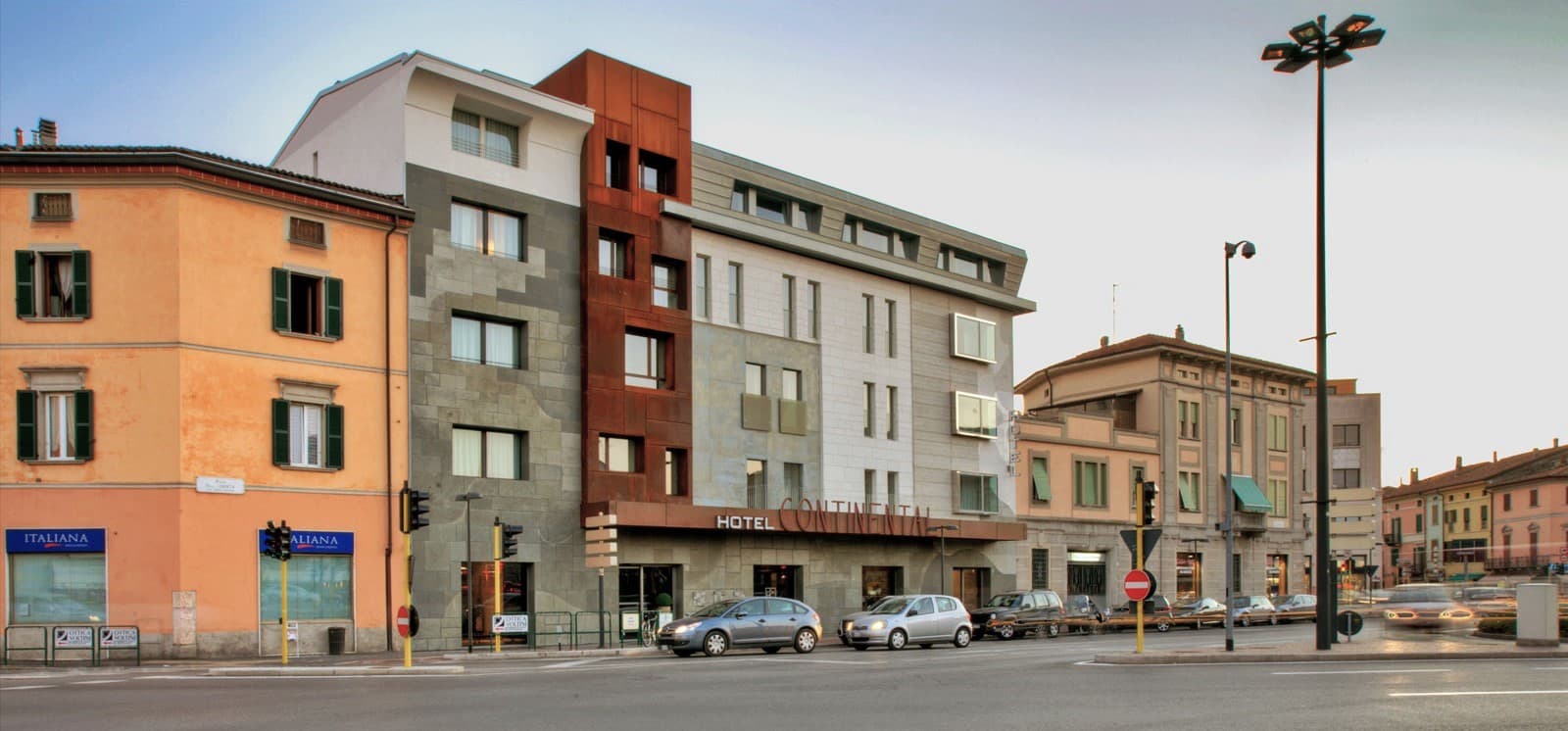
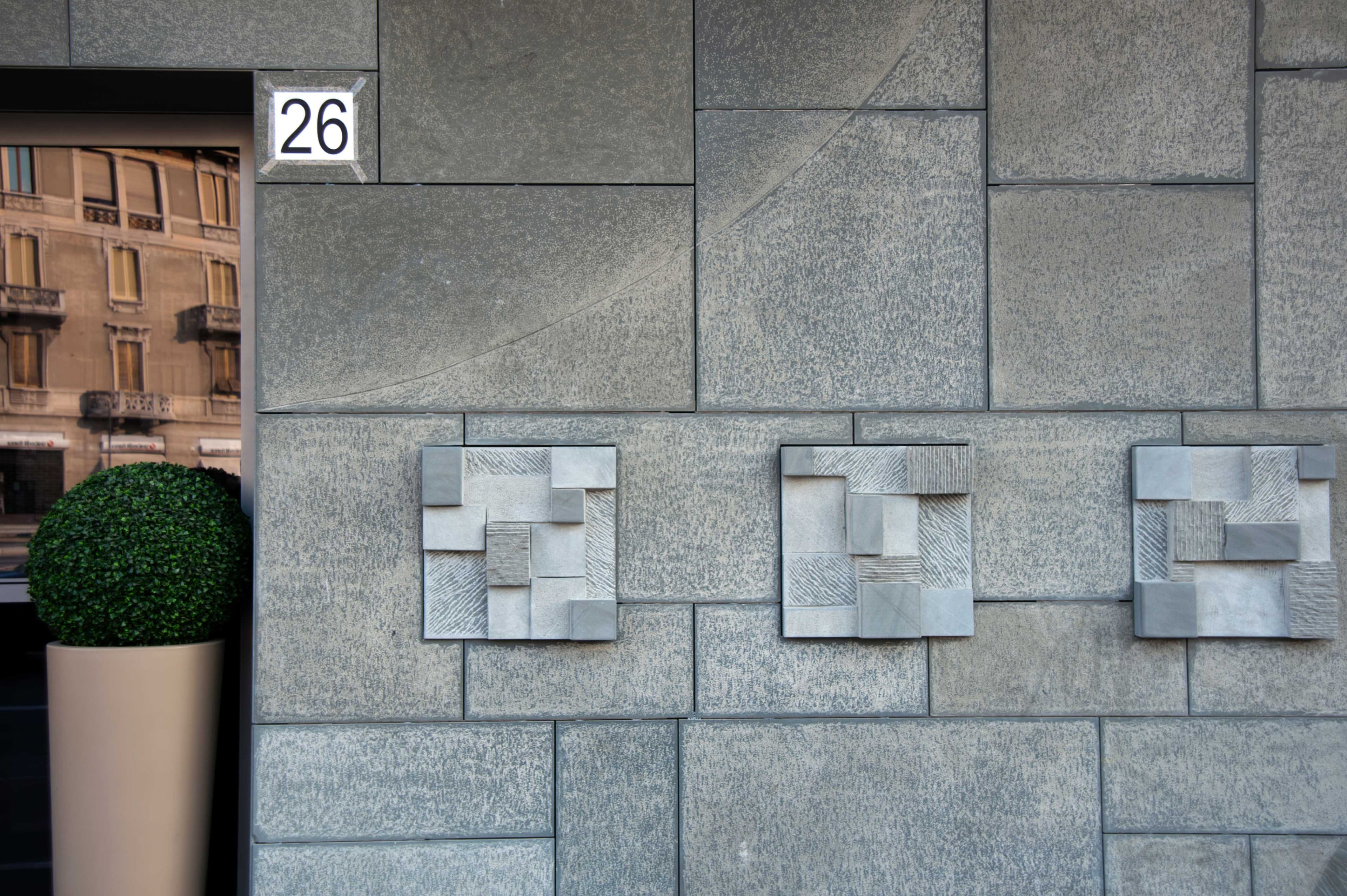
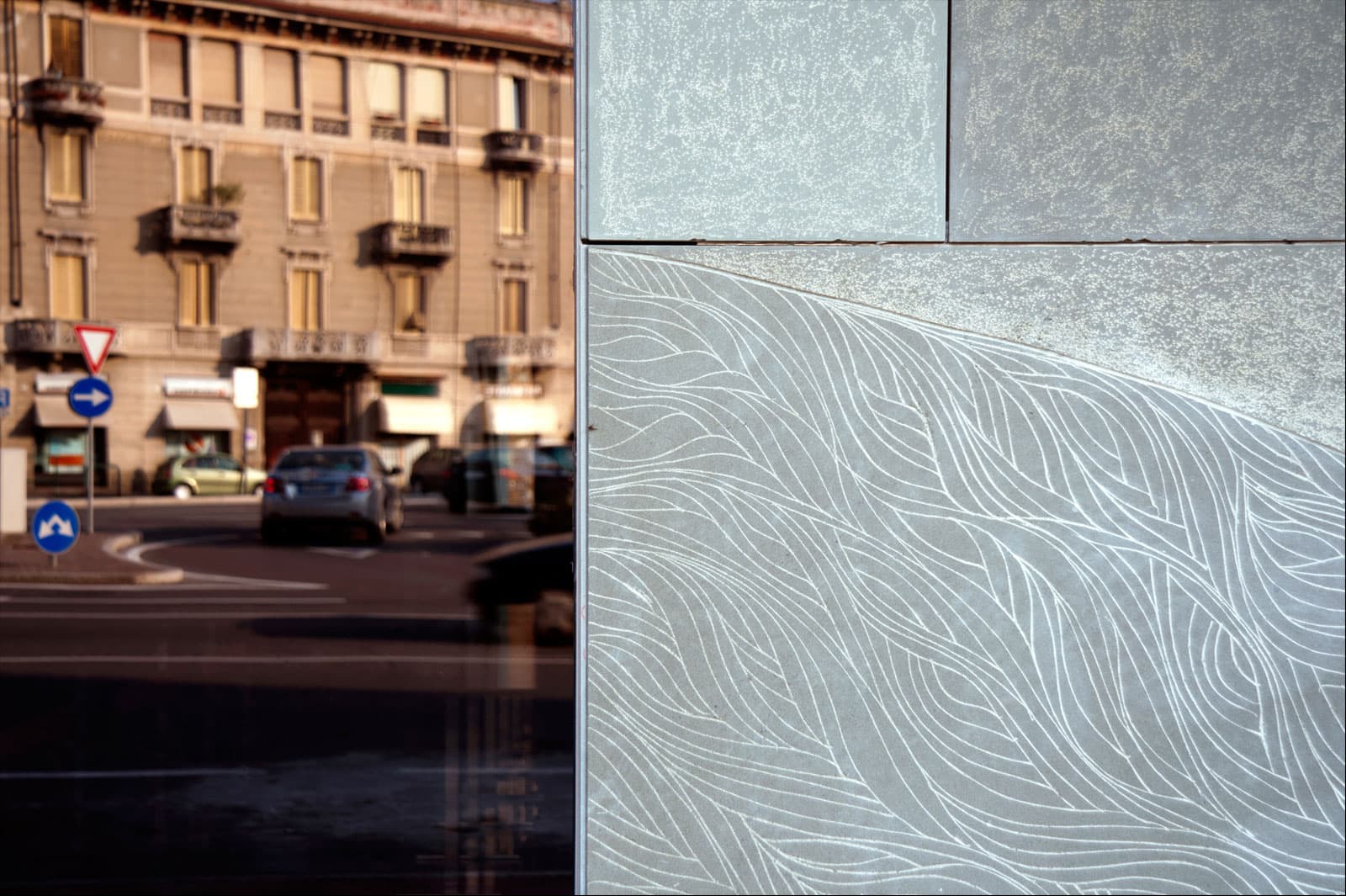
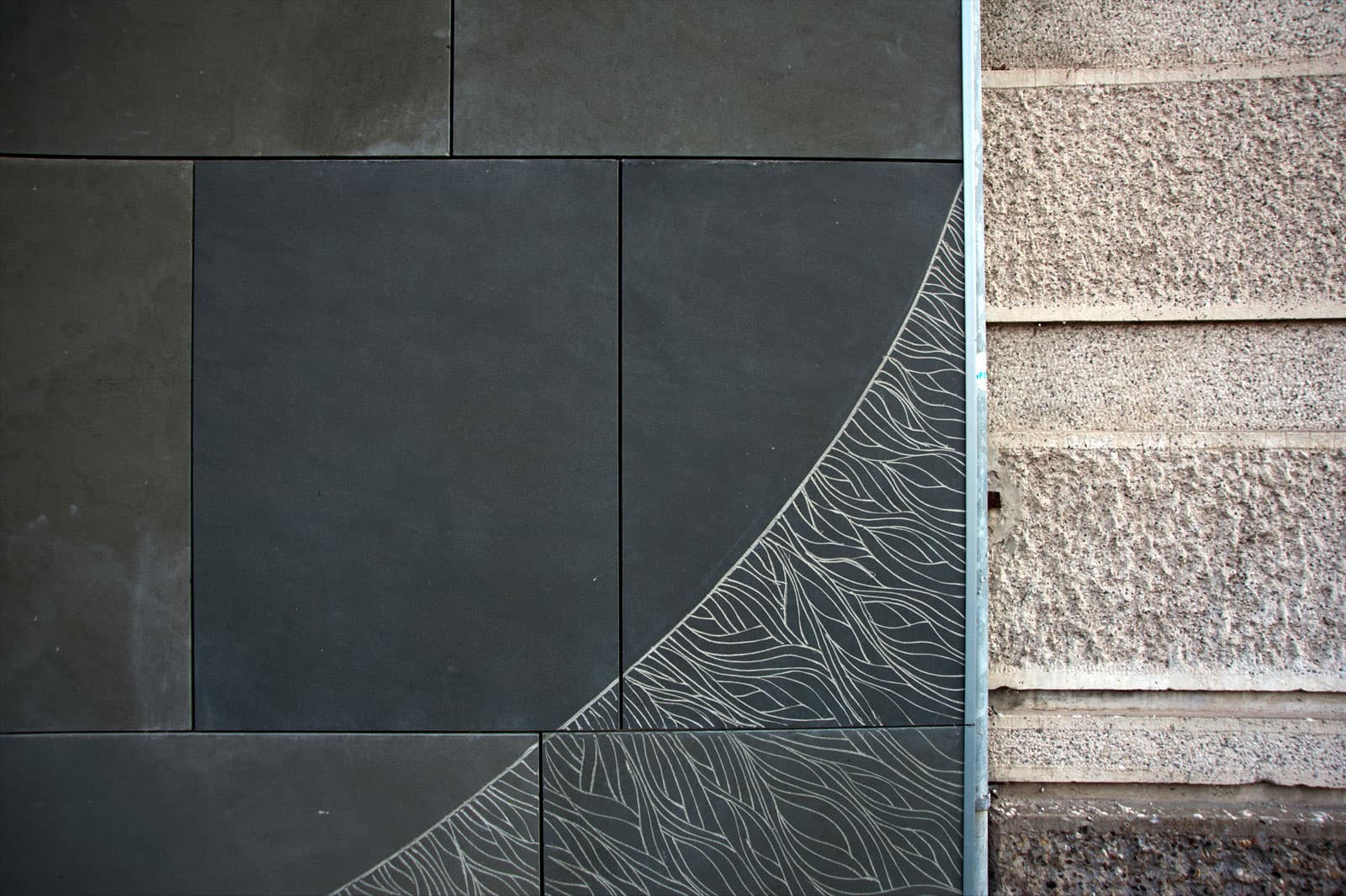
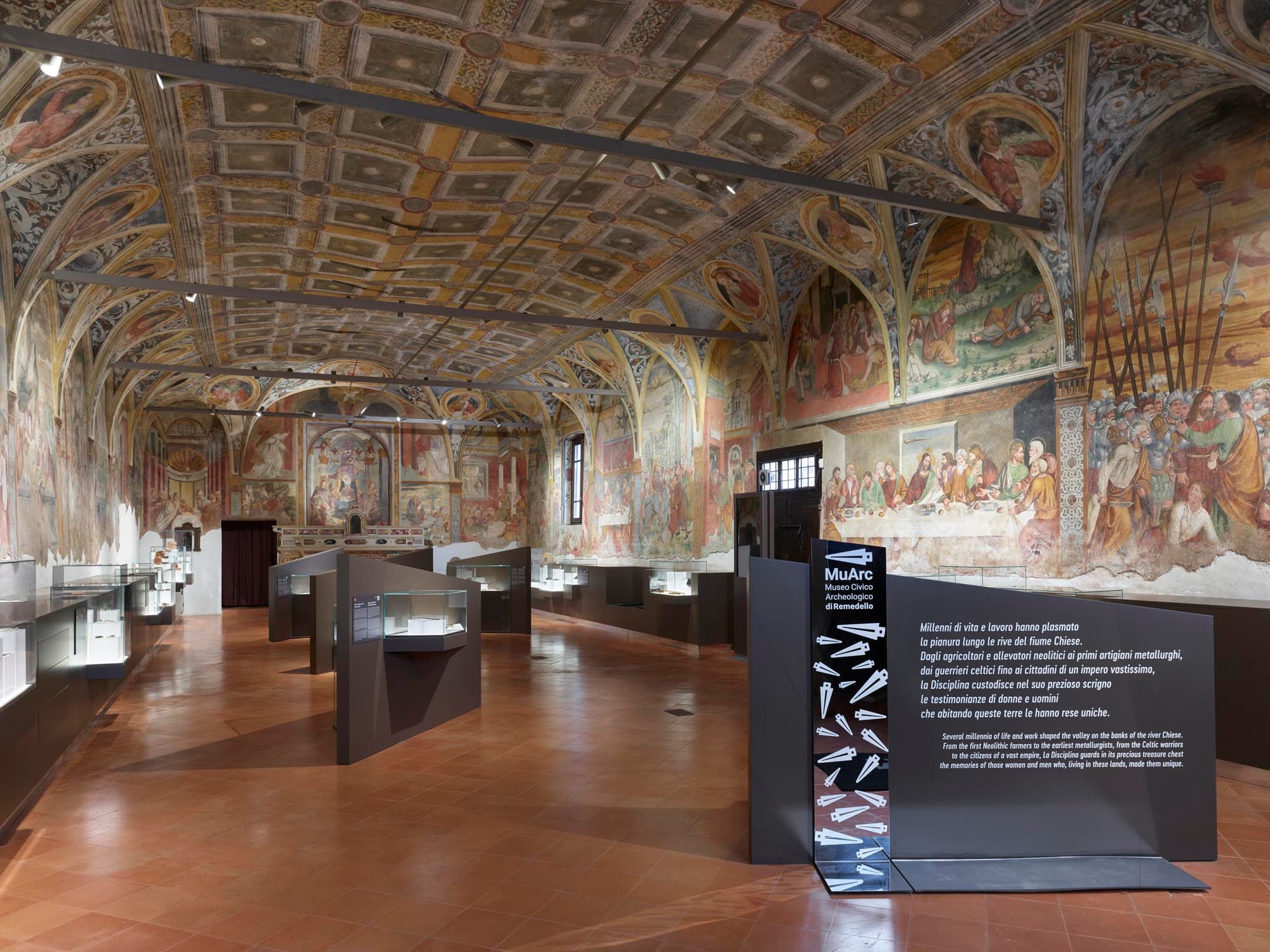
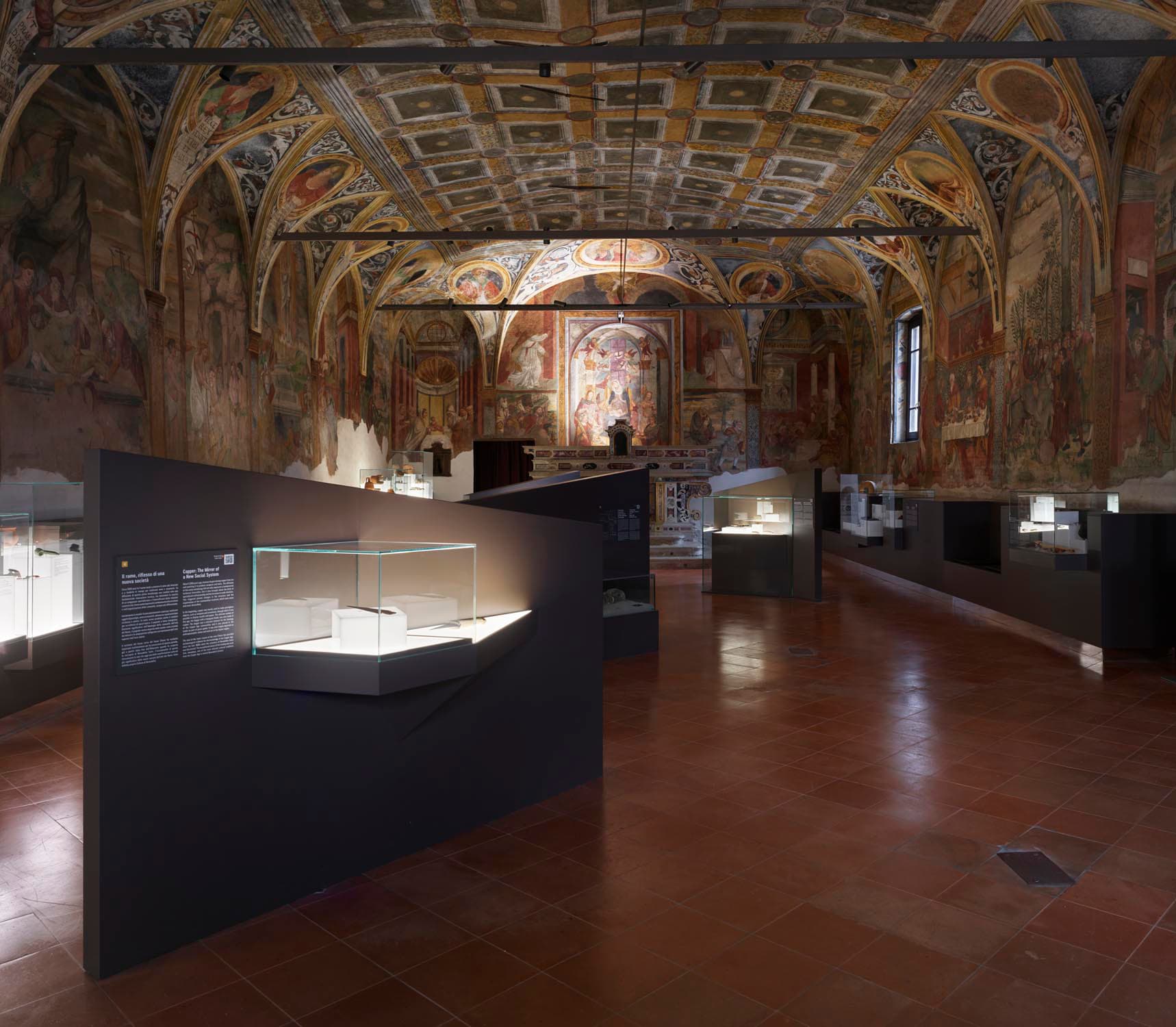
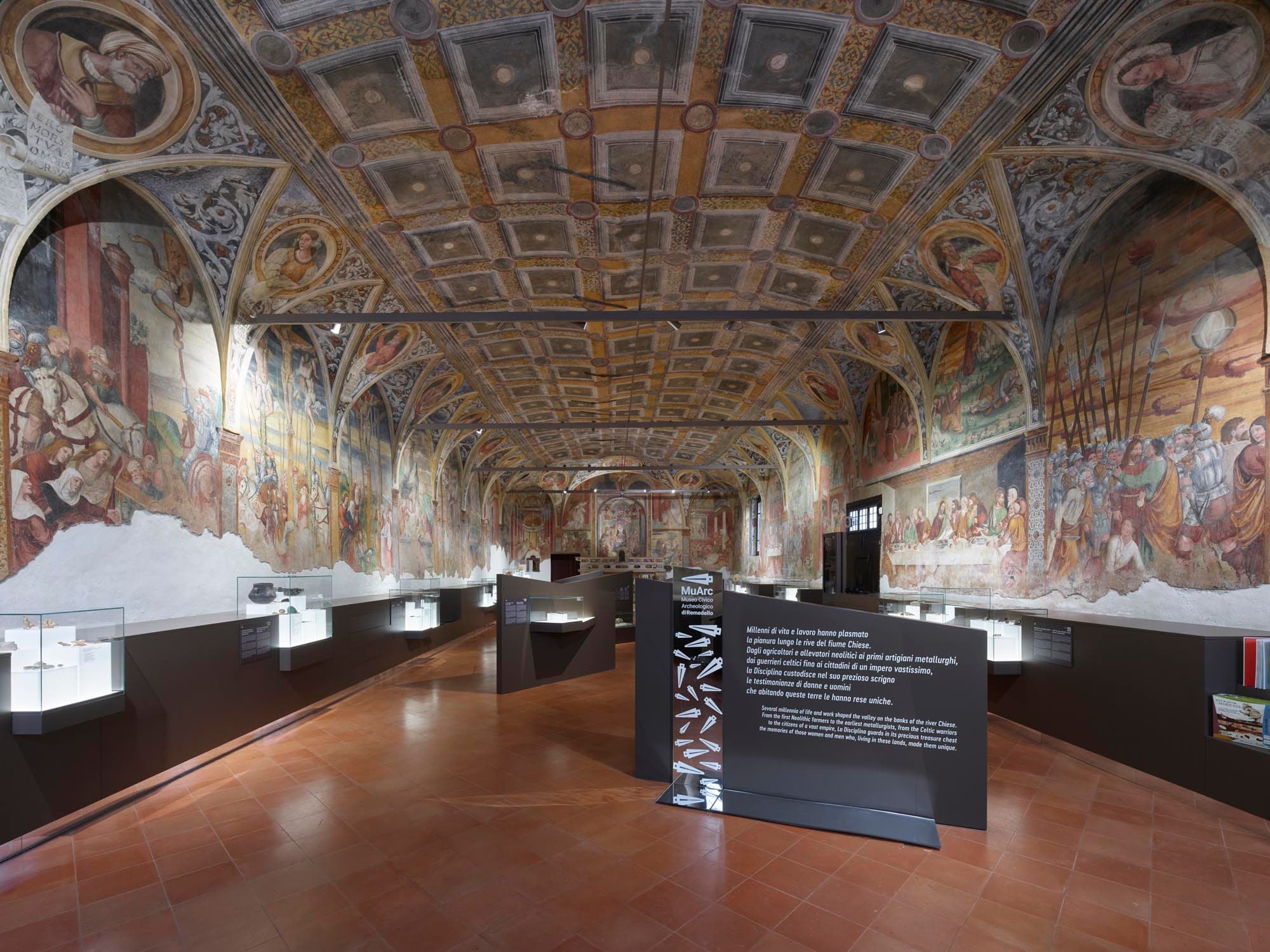
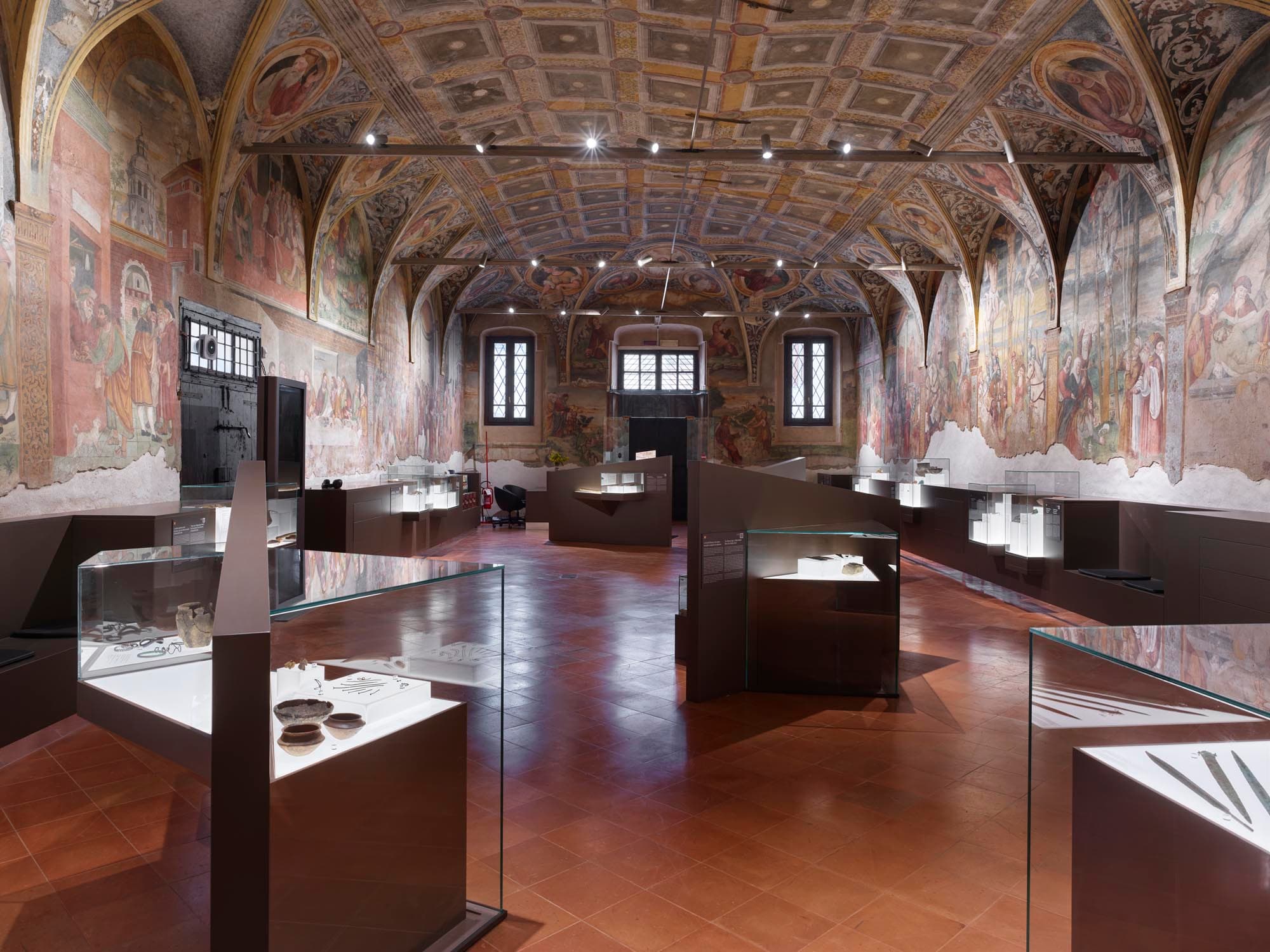
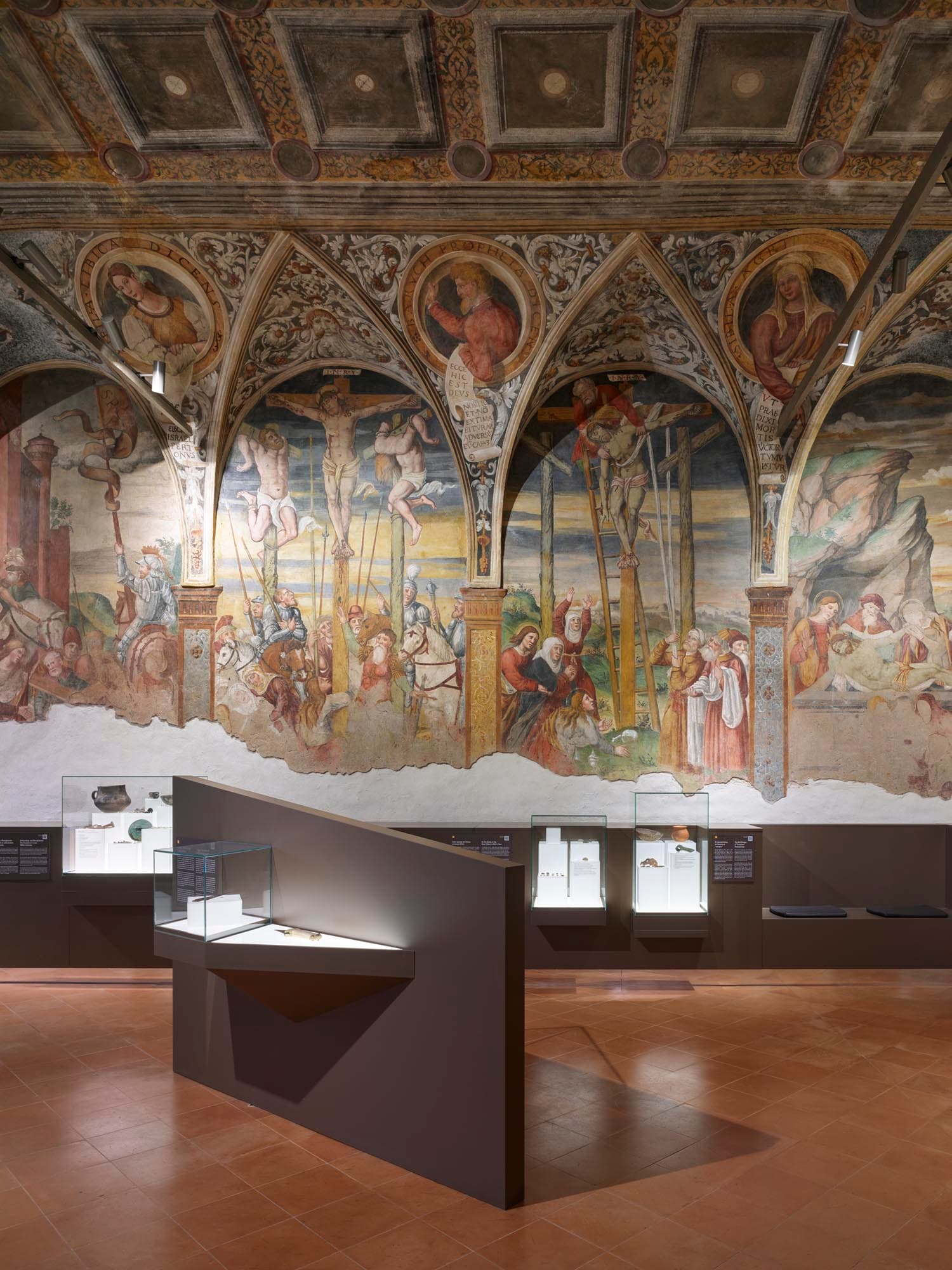
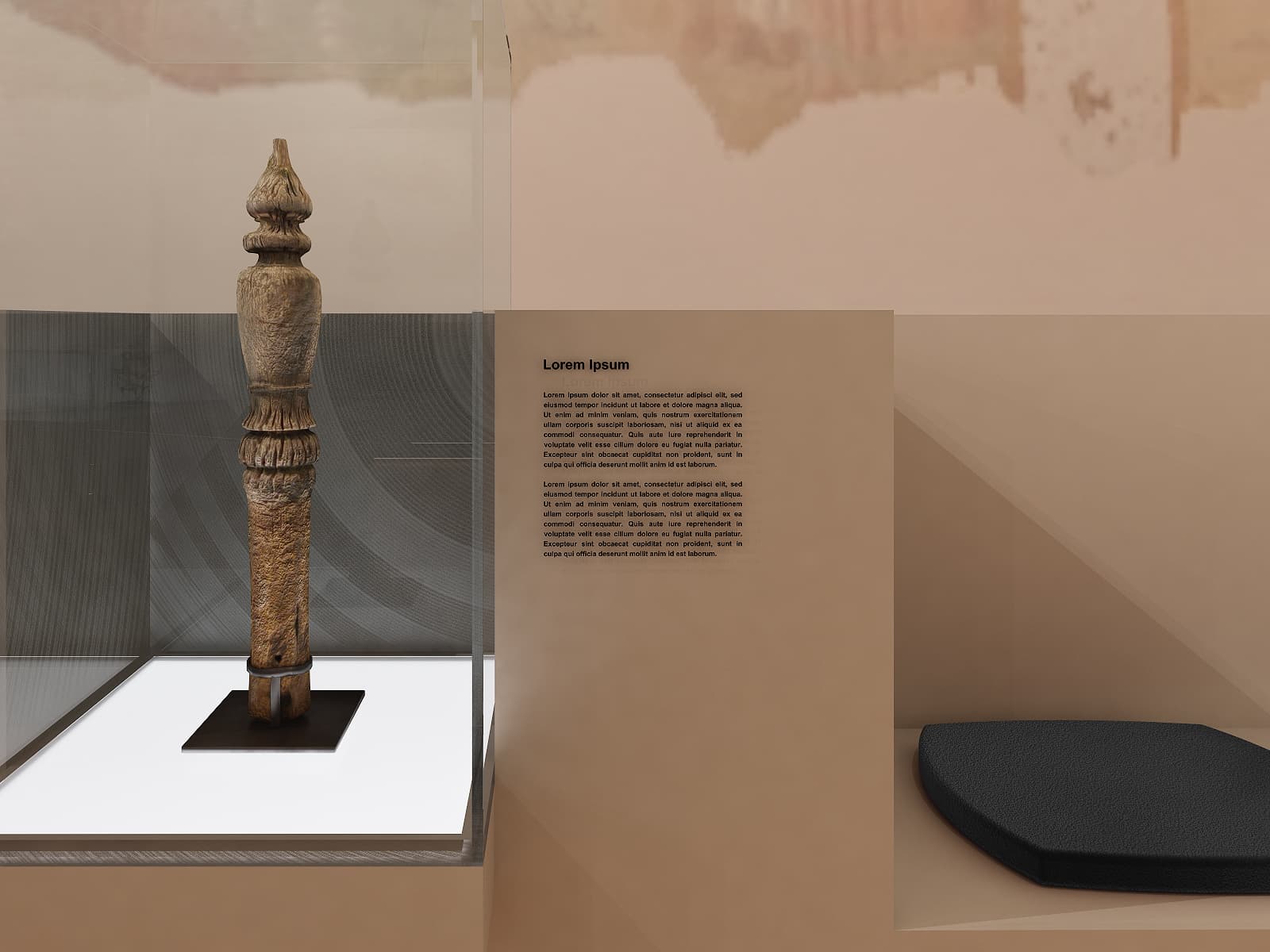
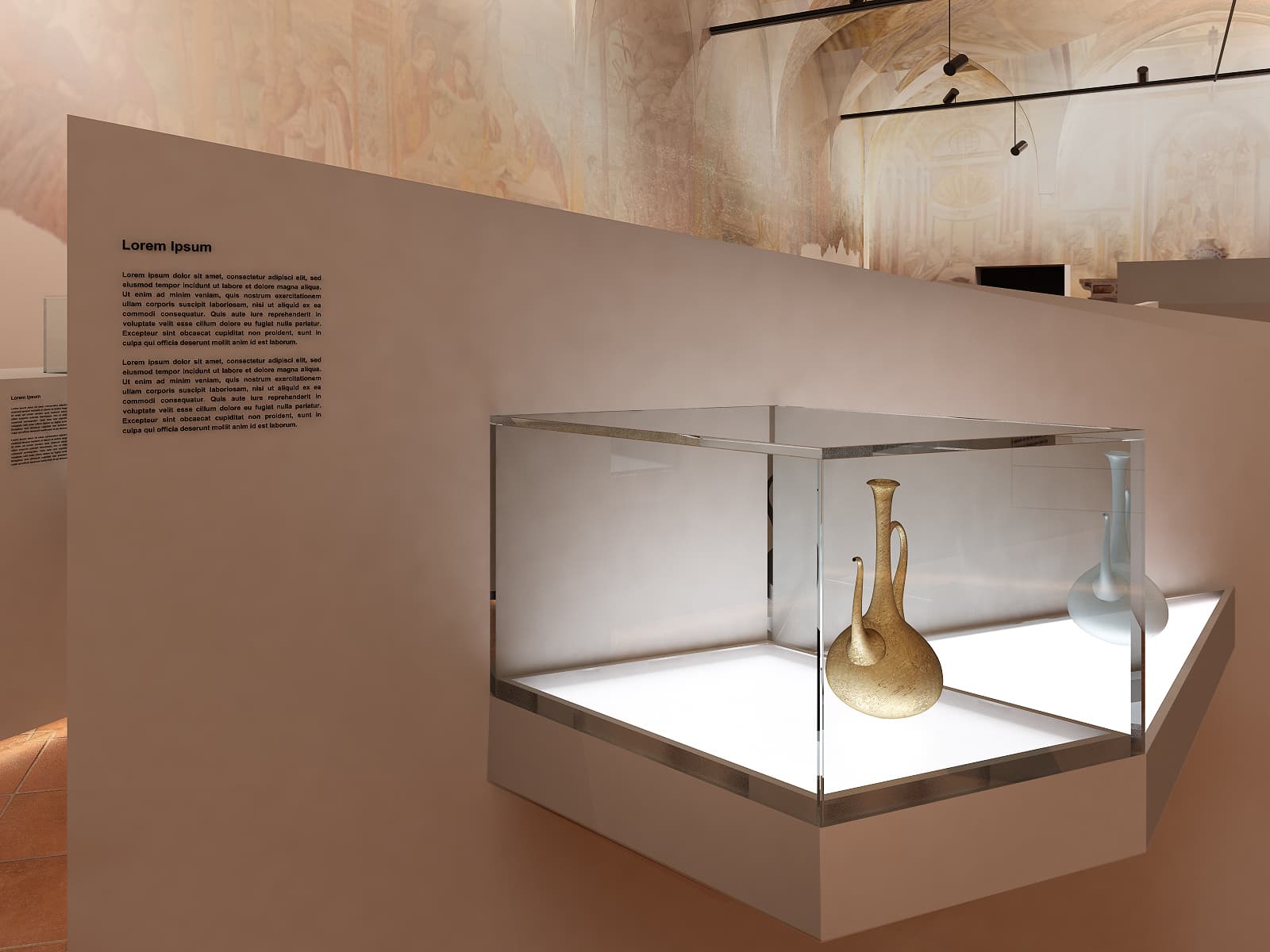
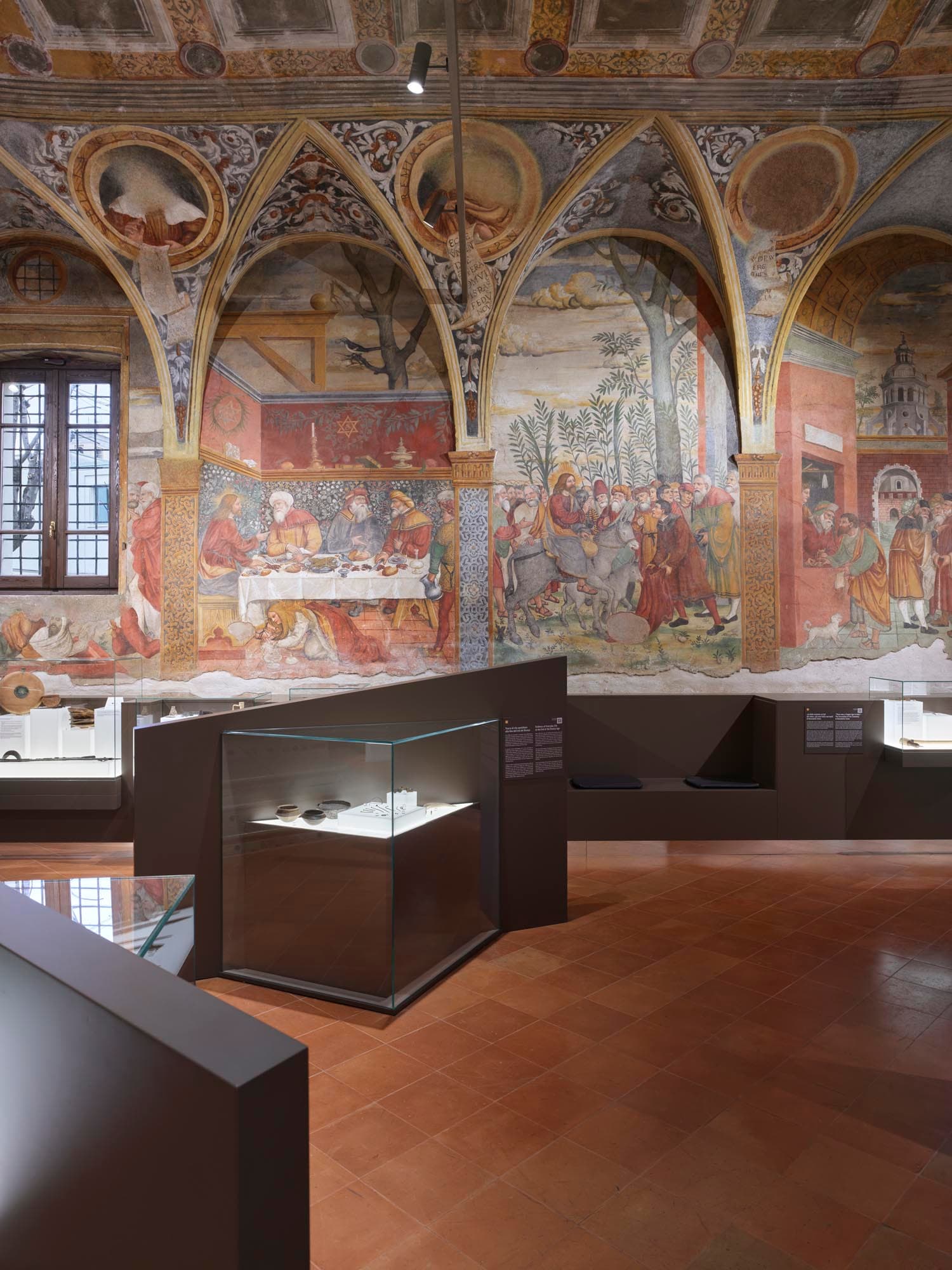
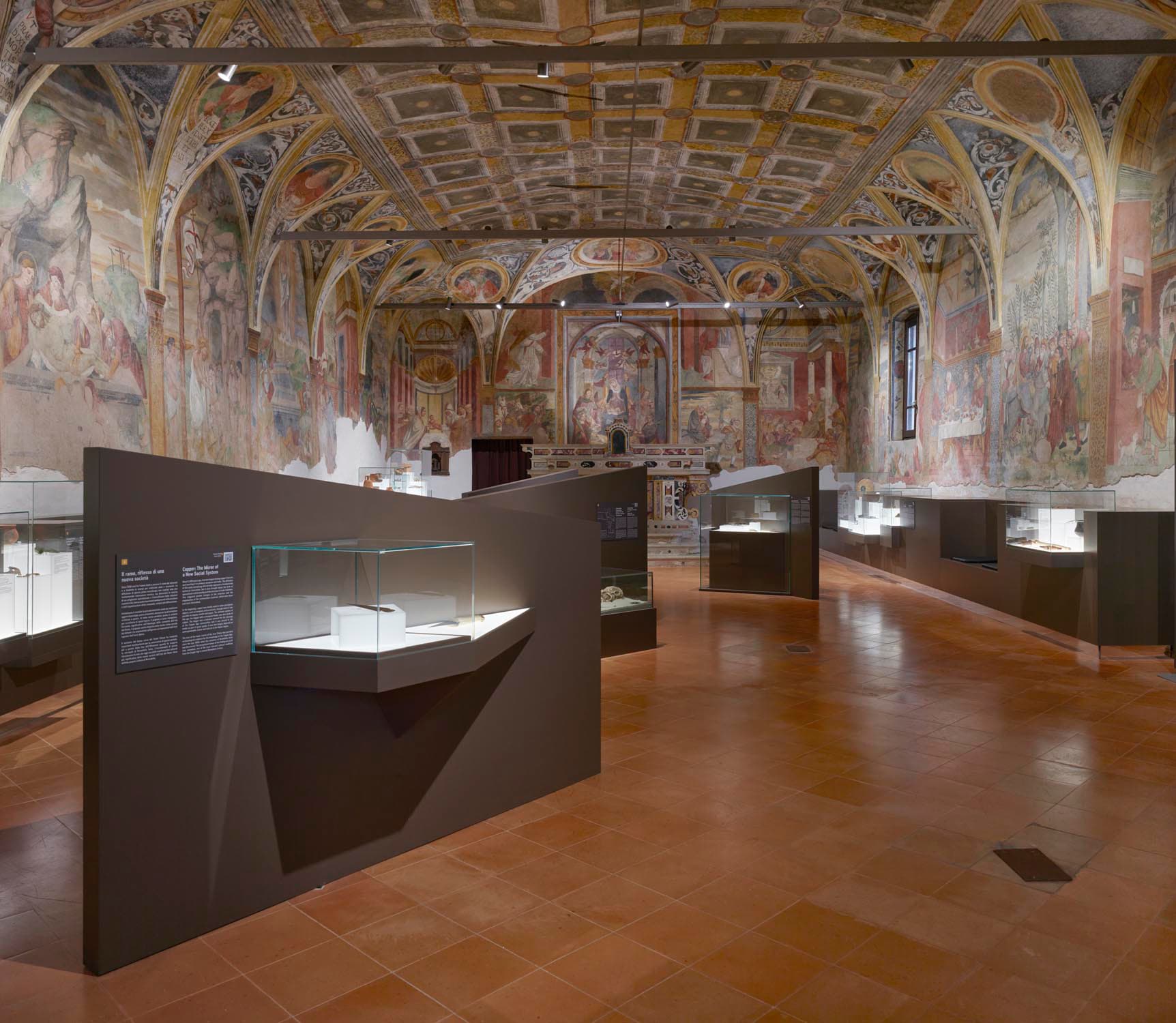
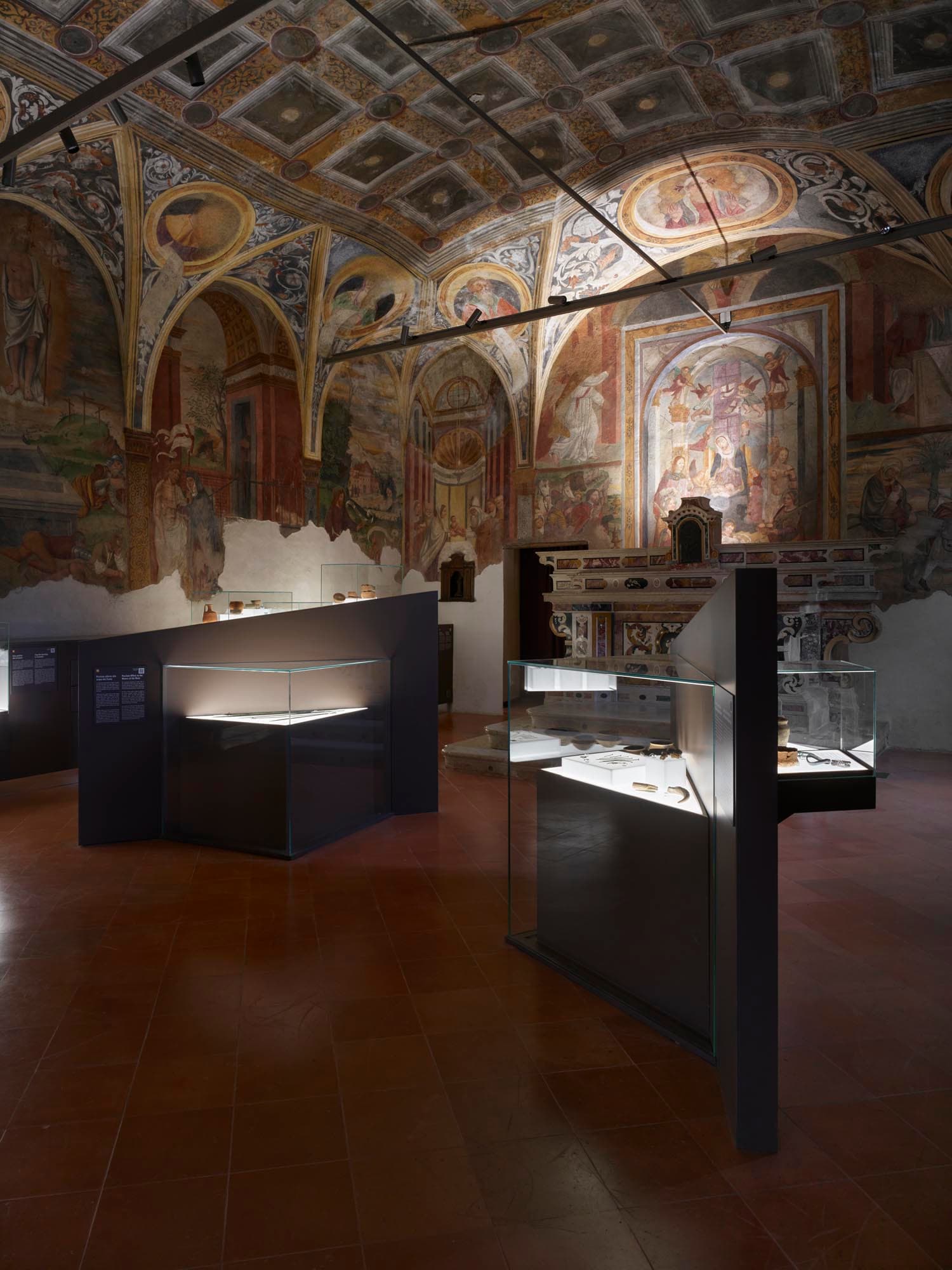
Civic and Archaeological Museum of Remedello
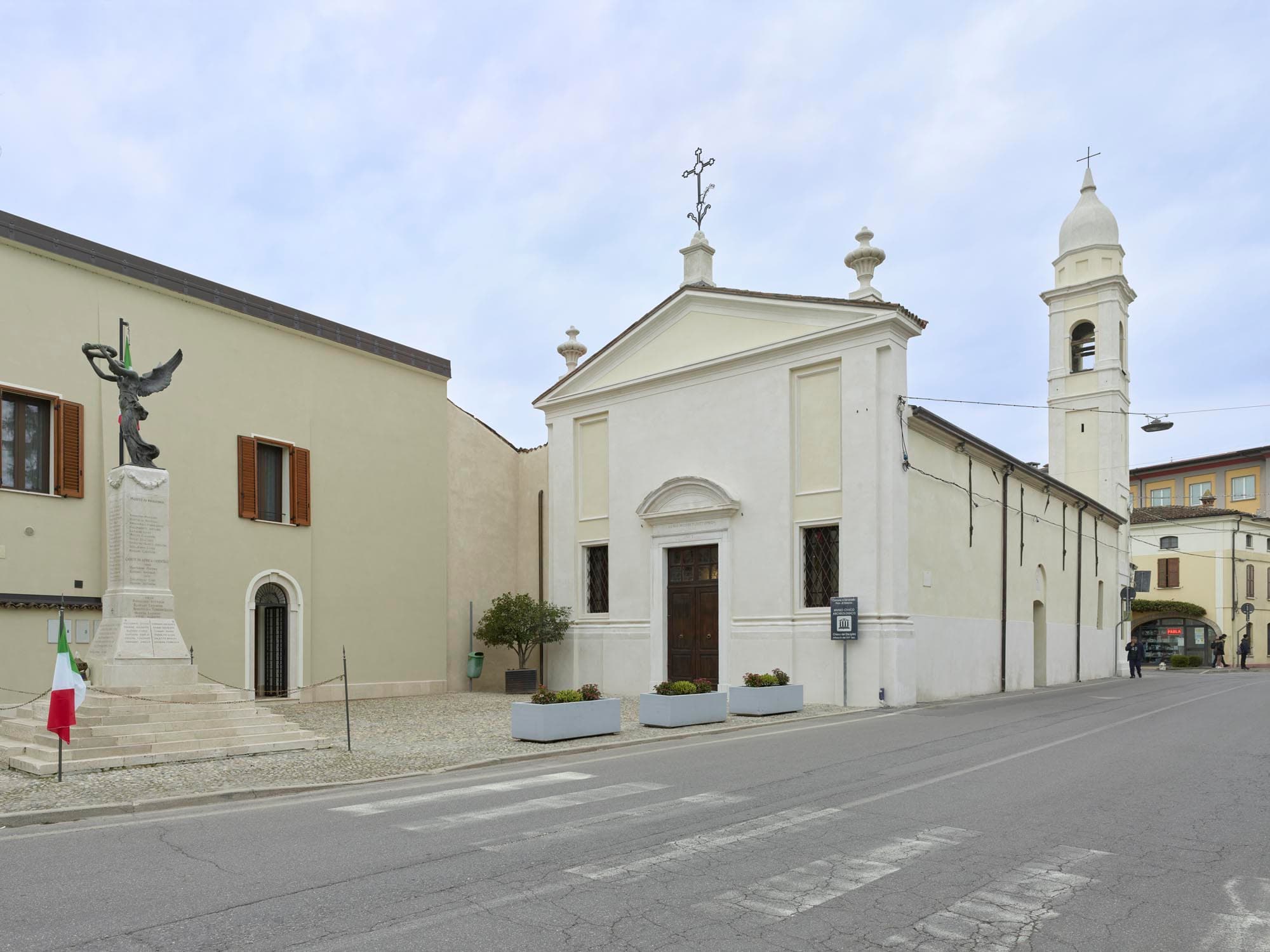
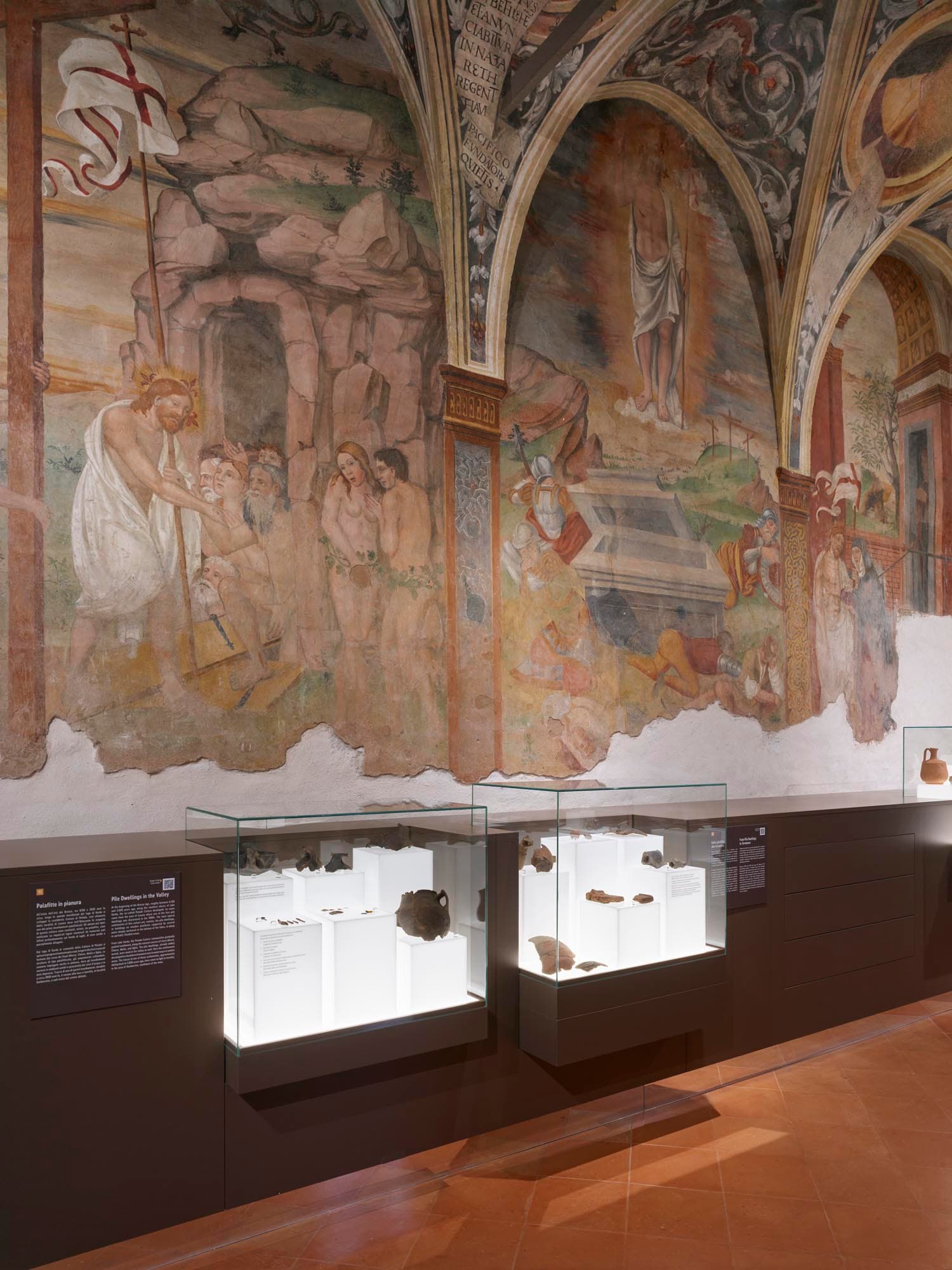
Housed in the evocative former church of the Disciplini, the Civic Archaeological Museum of Remedello (BS) preserves and exhibits numerous important finds from the lower Chiese area, with a focus on the Copper Age. In addition, ample space is dedicated to the nineteenth-century collection,ì, created by Leone Carlotti during his research in the pile-dwelling sites of the Benaco area, now privately owned.
In 2021 the Municipality of Remedello wanted to redesign the museographic organization of this space, which houses more than 2,000 artifacts.
In the logic of a museum that is less and less object-oriented and more narrative, the design idea started from an optimal treatment of the museum heritage in an aesthetic, perceptual and communicative sense to reach dissemination, including multimedia, of cultural and scientific contents.
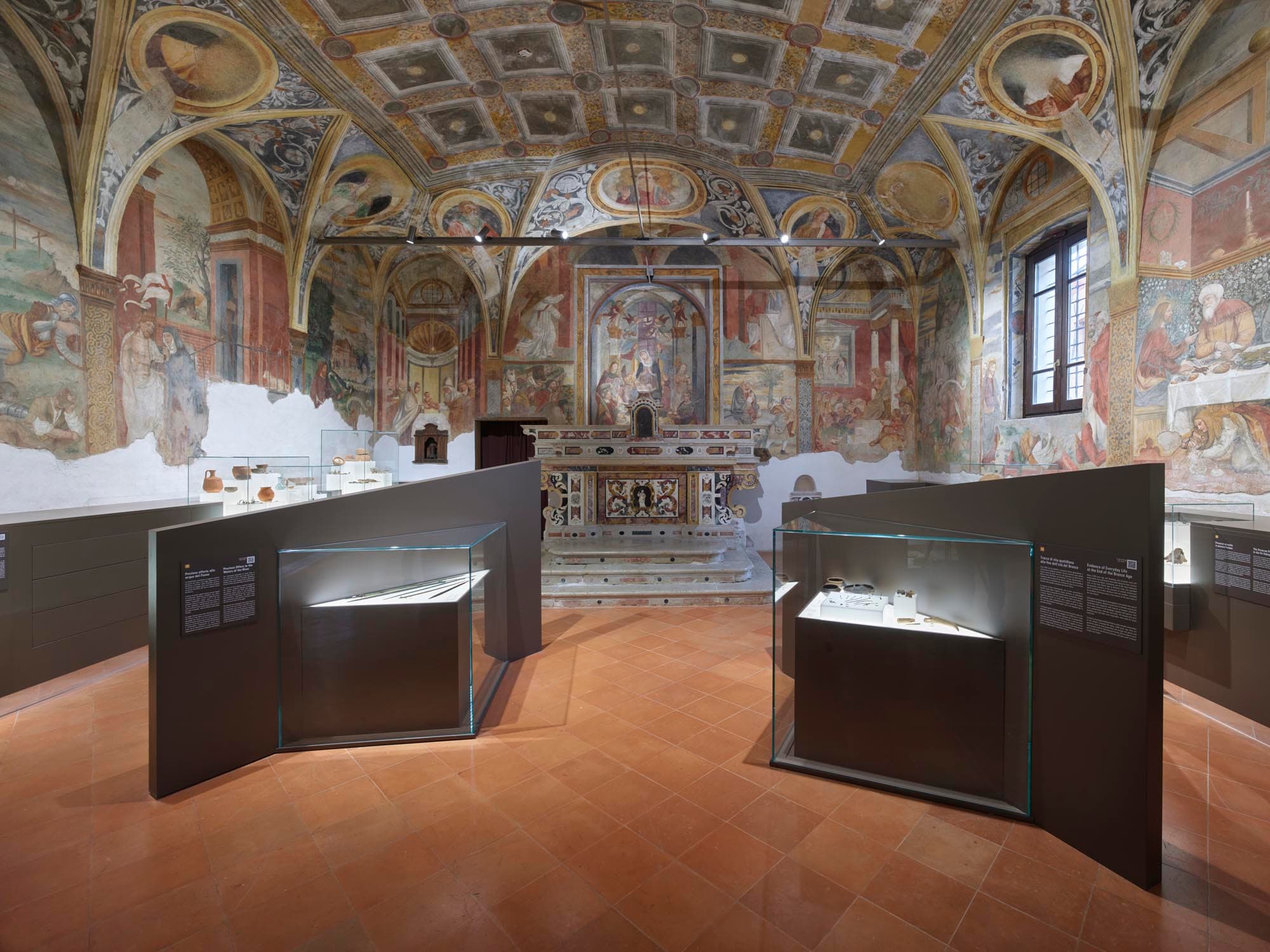
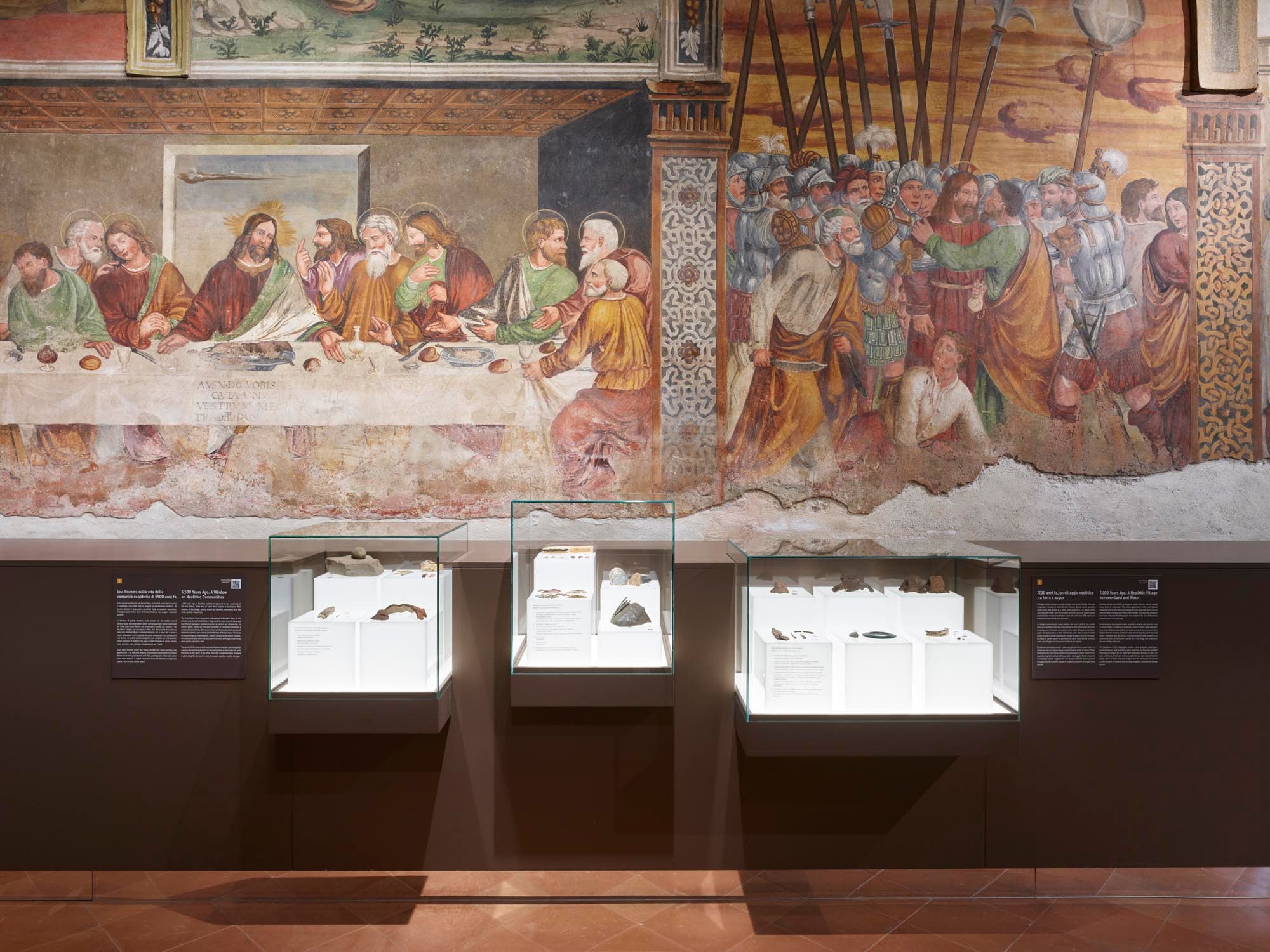
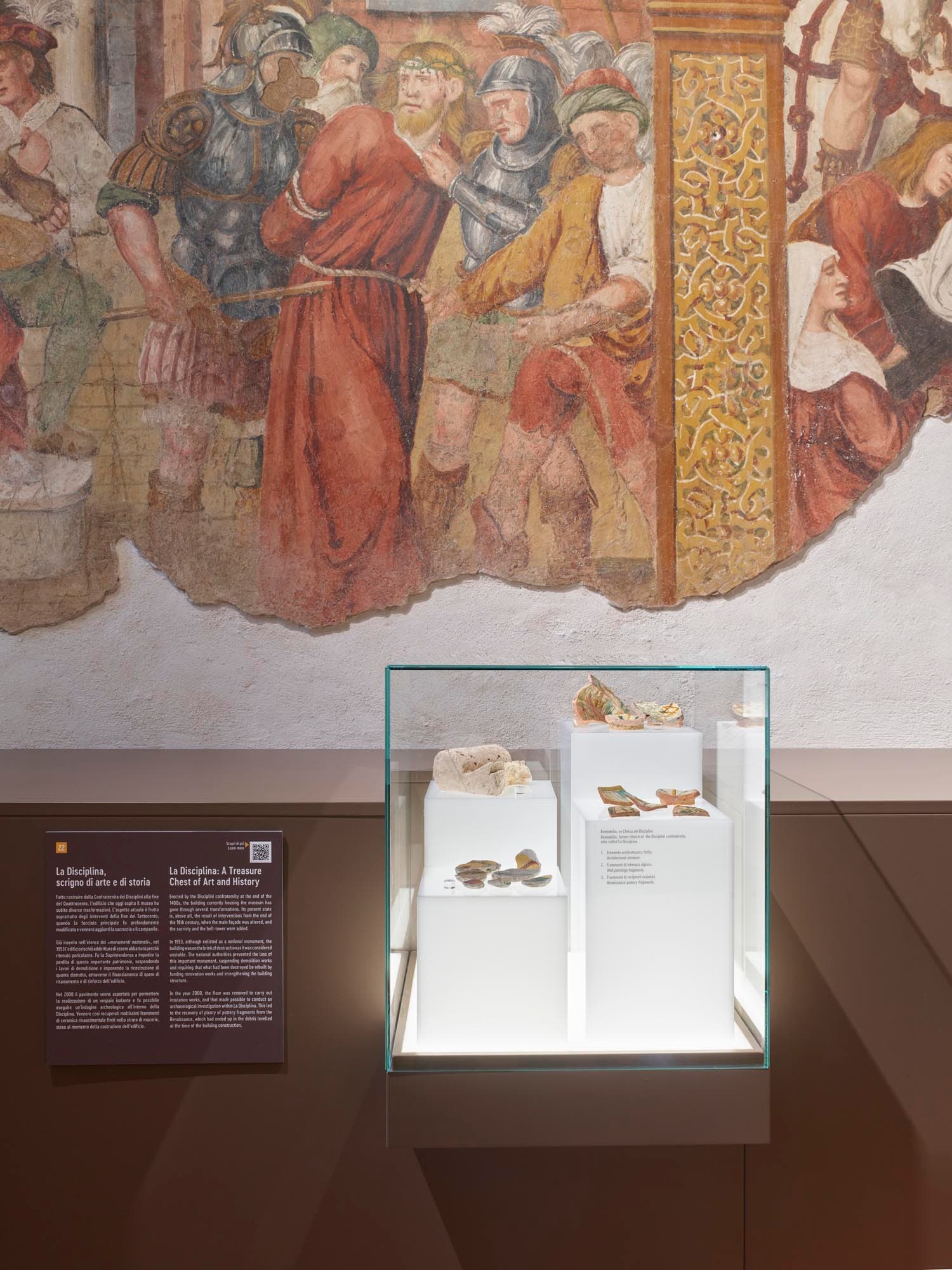
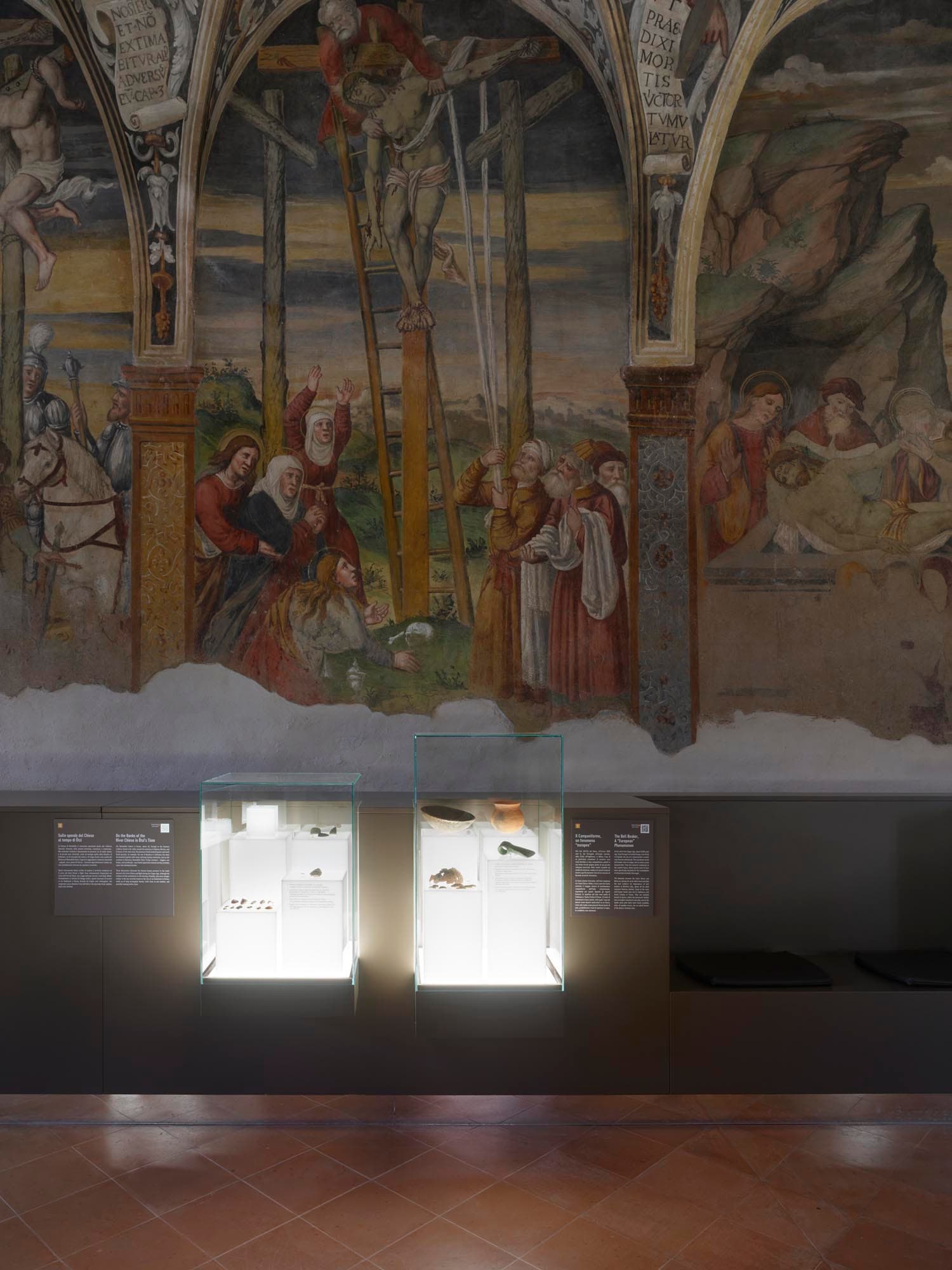
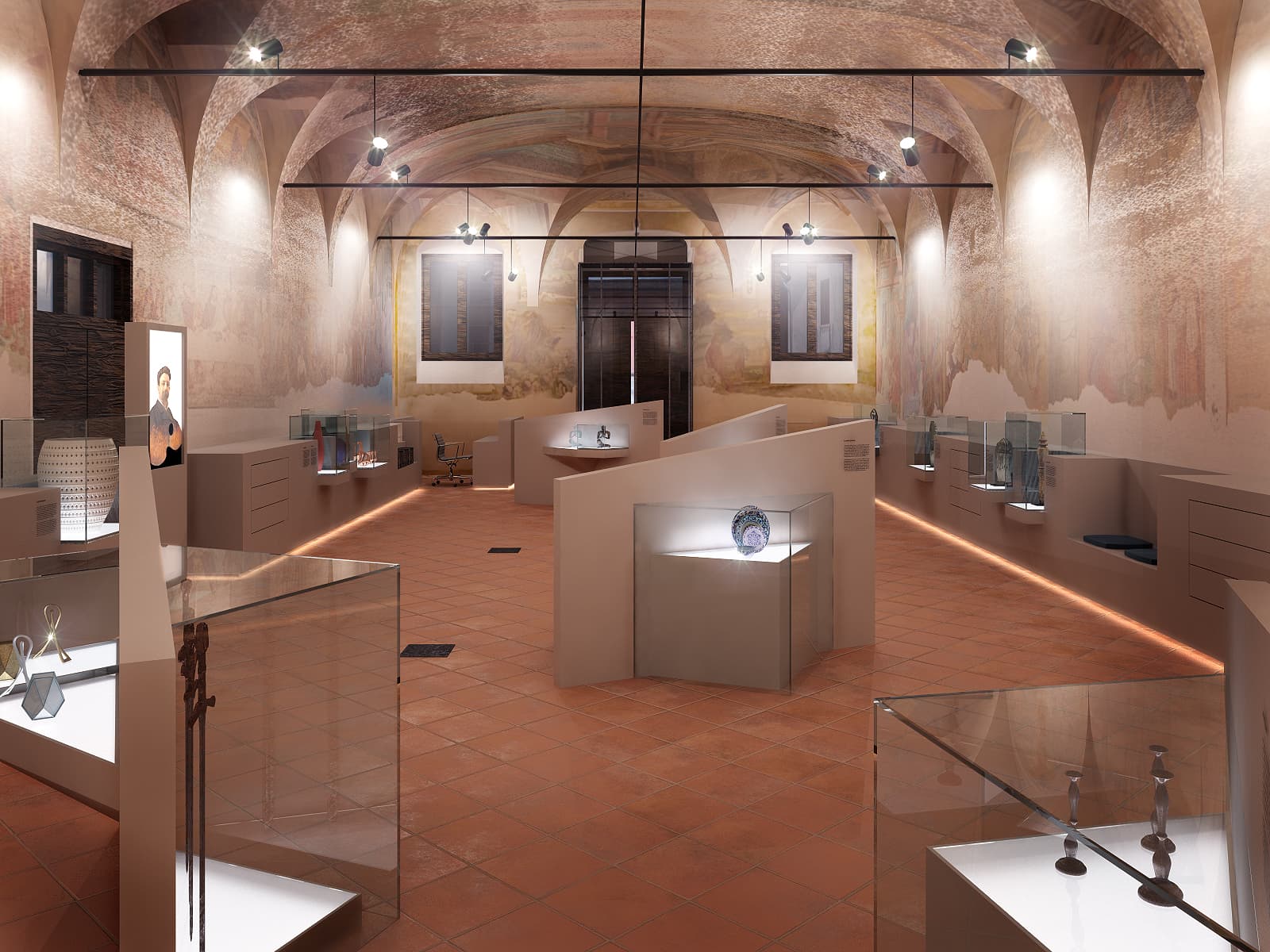
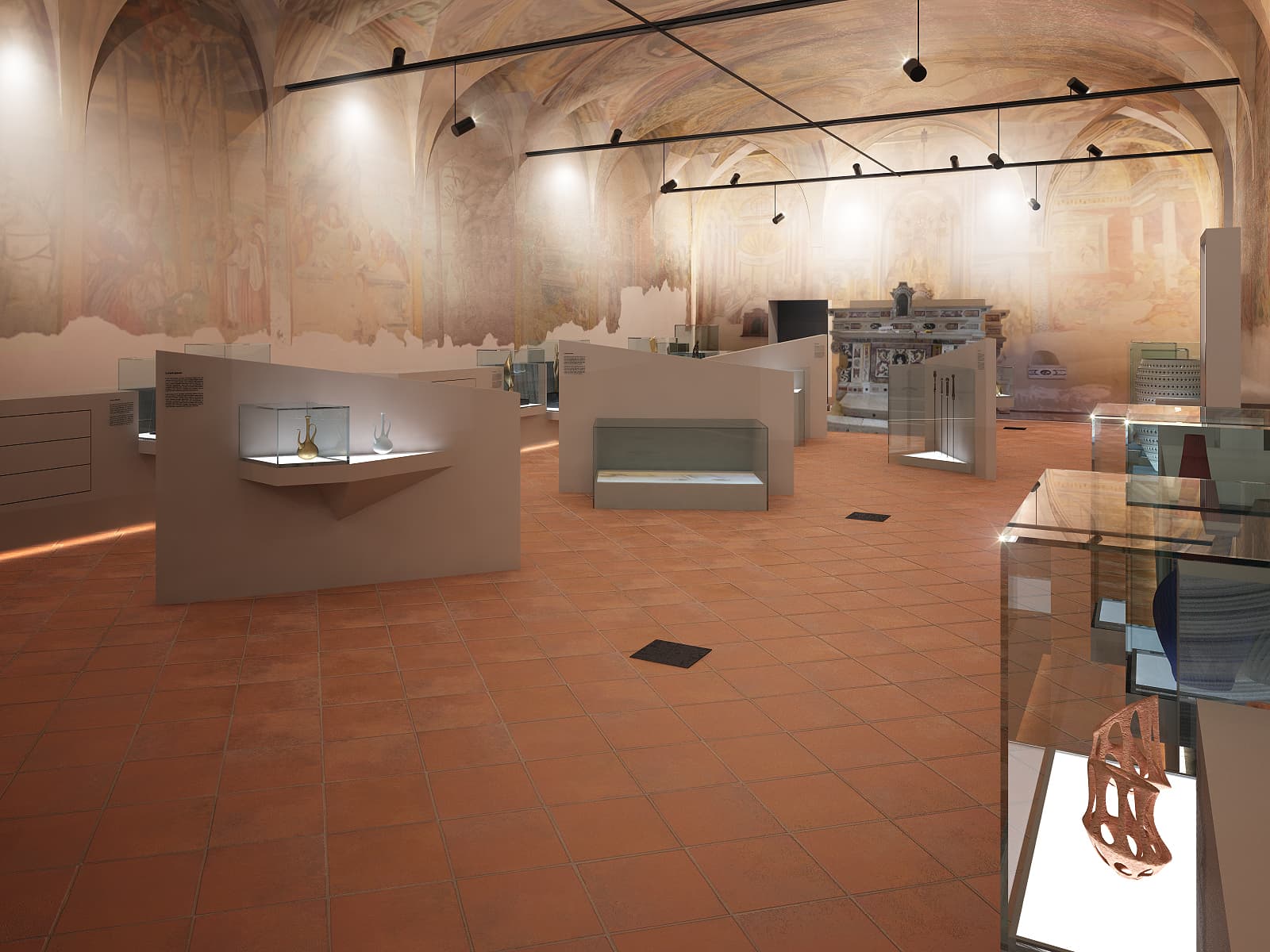
The large exhibition hall, decorated with precious 16th-century frescoes, has been completely reorganized with a layout that facilitates the integration of images and exhibits, makes the museum multimedia and improve its accessibility. The choice of furniture and structures with essential lines, in deep gray coloring, of varying heights, allows the reading of the frescoes not to be obscured and a better integration of the exhibition in the precious context.
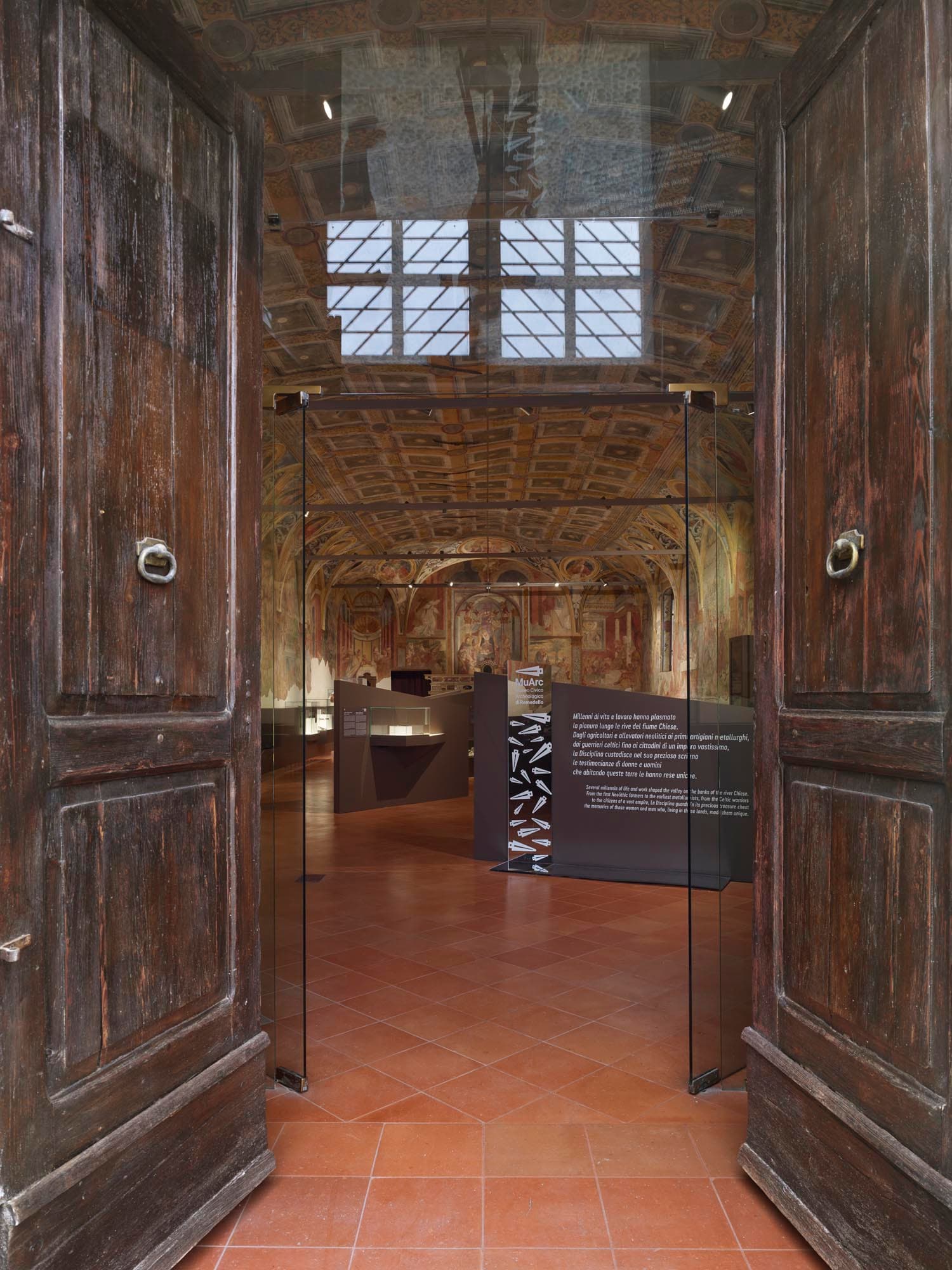
These custom-made, multifunctional furnishings were placed along the longitudinal walls of the room and follow the outline of the frescoes, thus enhancing the dialogue between the archaeological collection and the decorative cycle of the Discipline.
Five structures with elusive, irregular and asymmetrical shapes have been placed in the center of the large hall. They consist of a vertical panel with one side made of gray-colored mdf, a material side (the material is different depending on the historical era, so as to make them easily recognizable) and a prism-triangular-shaped glass case, which in turn contains a bottom-lit material base on which the most evocative object of the relevant historical era is displayed. A radical renovation also involved the visit supports made by adapting to ministerial guidelines and current museum standards including height appropriate even for children. The contents have been hierarchized and characterized by an informative mold, with extensive use of techniques proper to storytelling, in order to involve the broadest categories of the public. (ph. Roland Halbe)
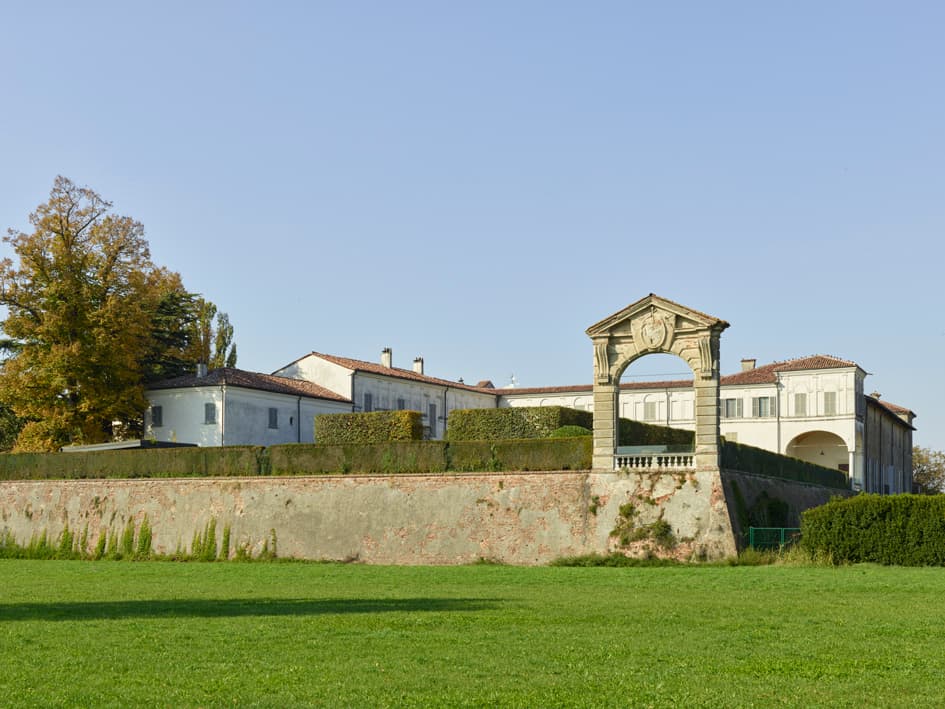
Castello Grumello _ "Vialli"
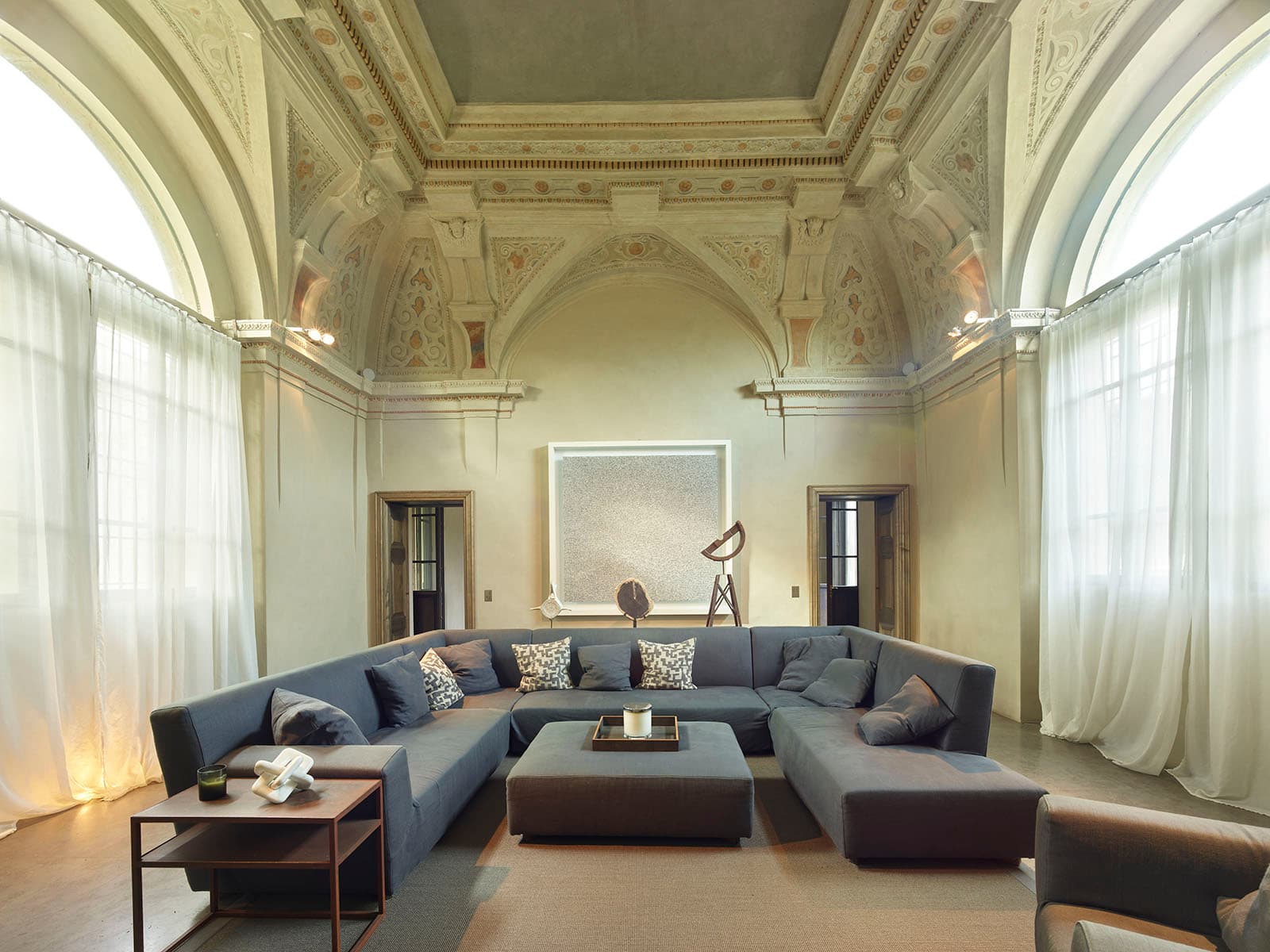
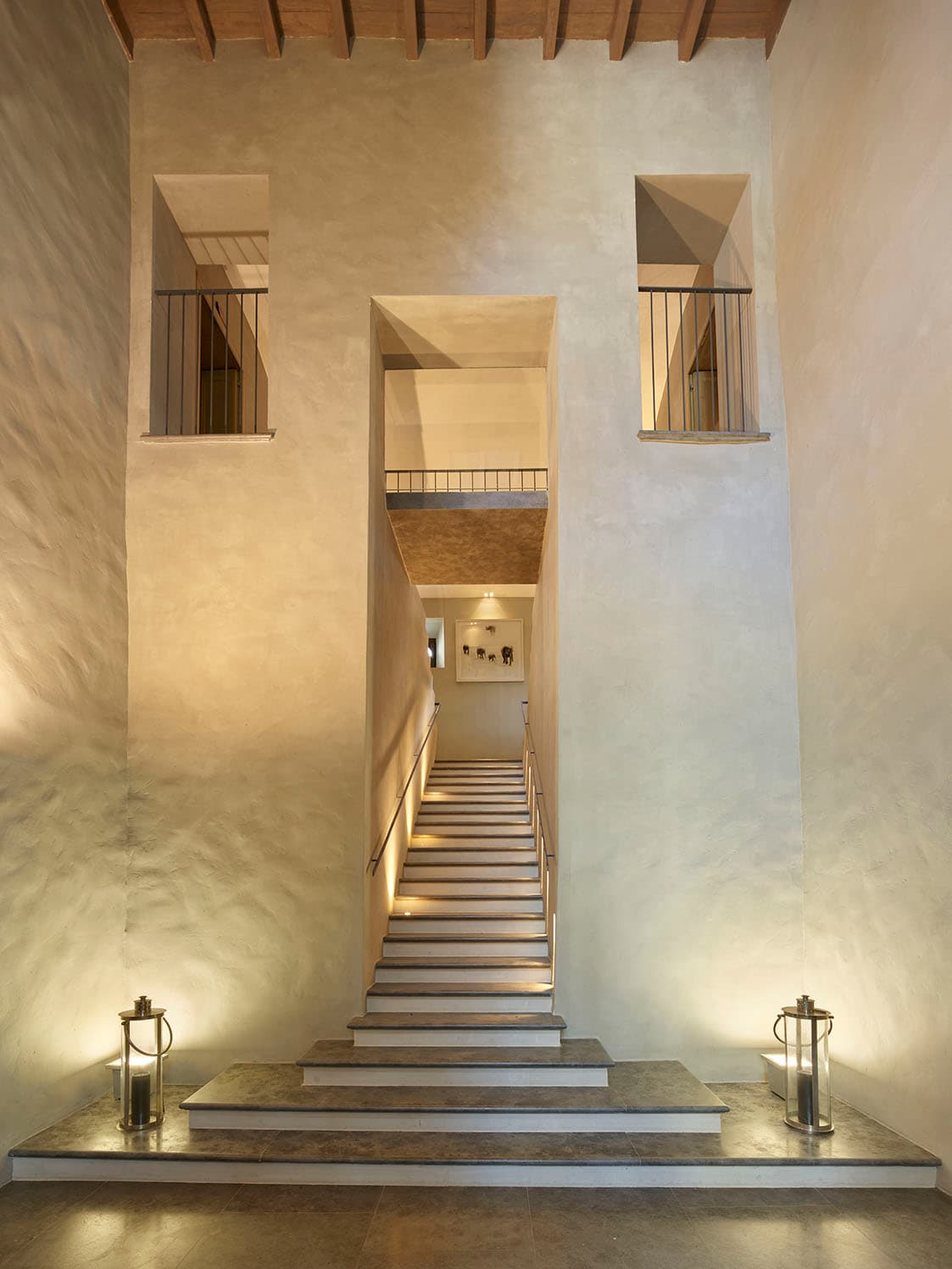
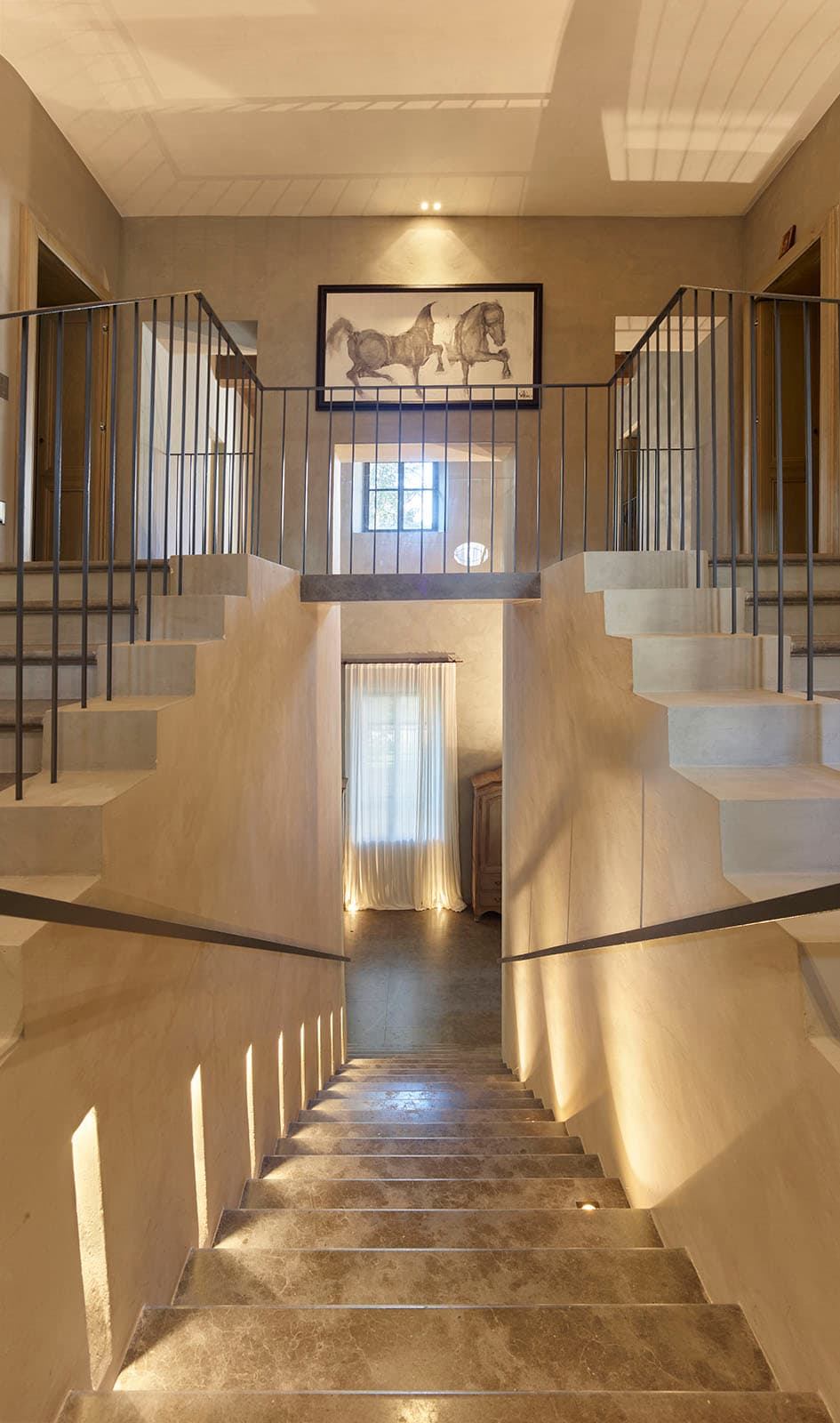
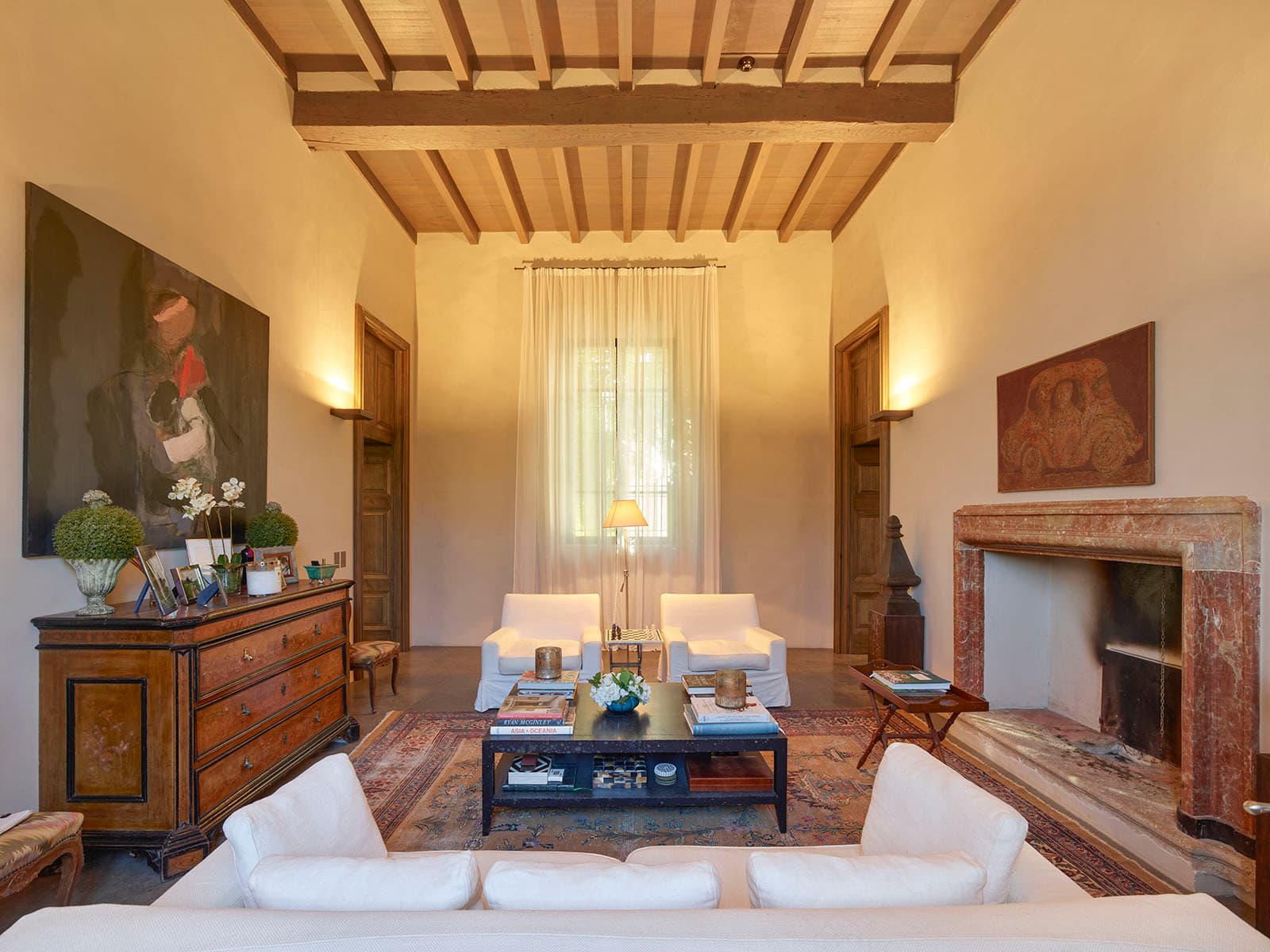
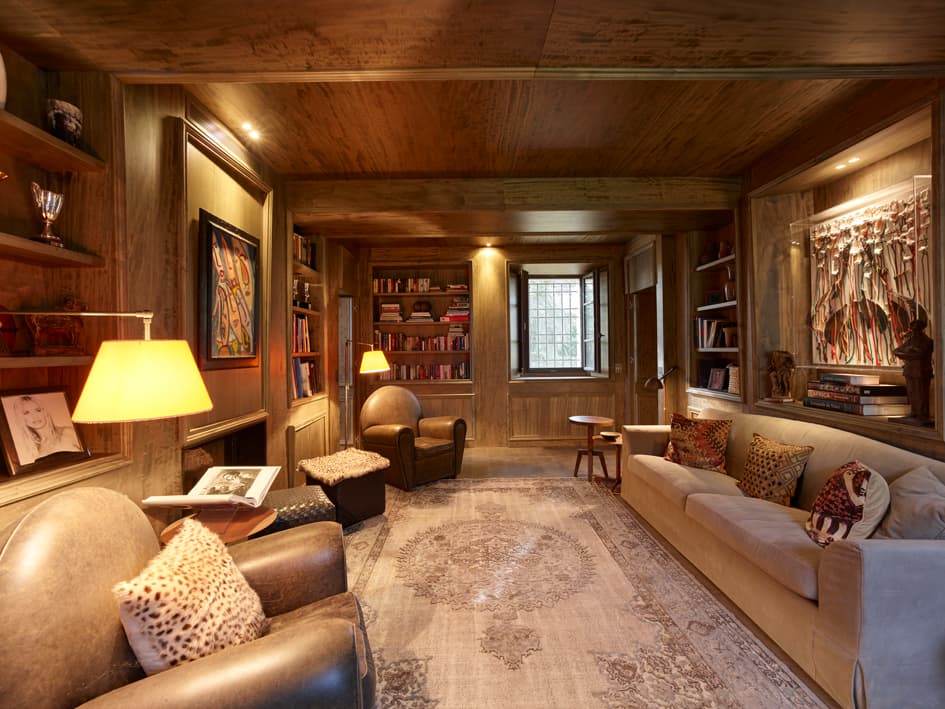
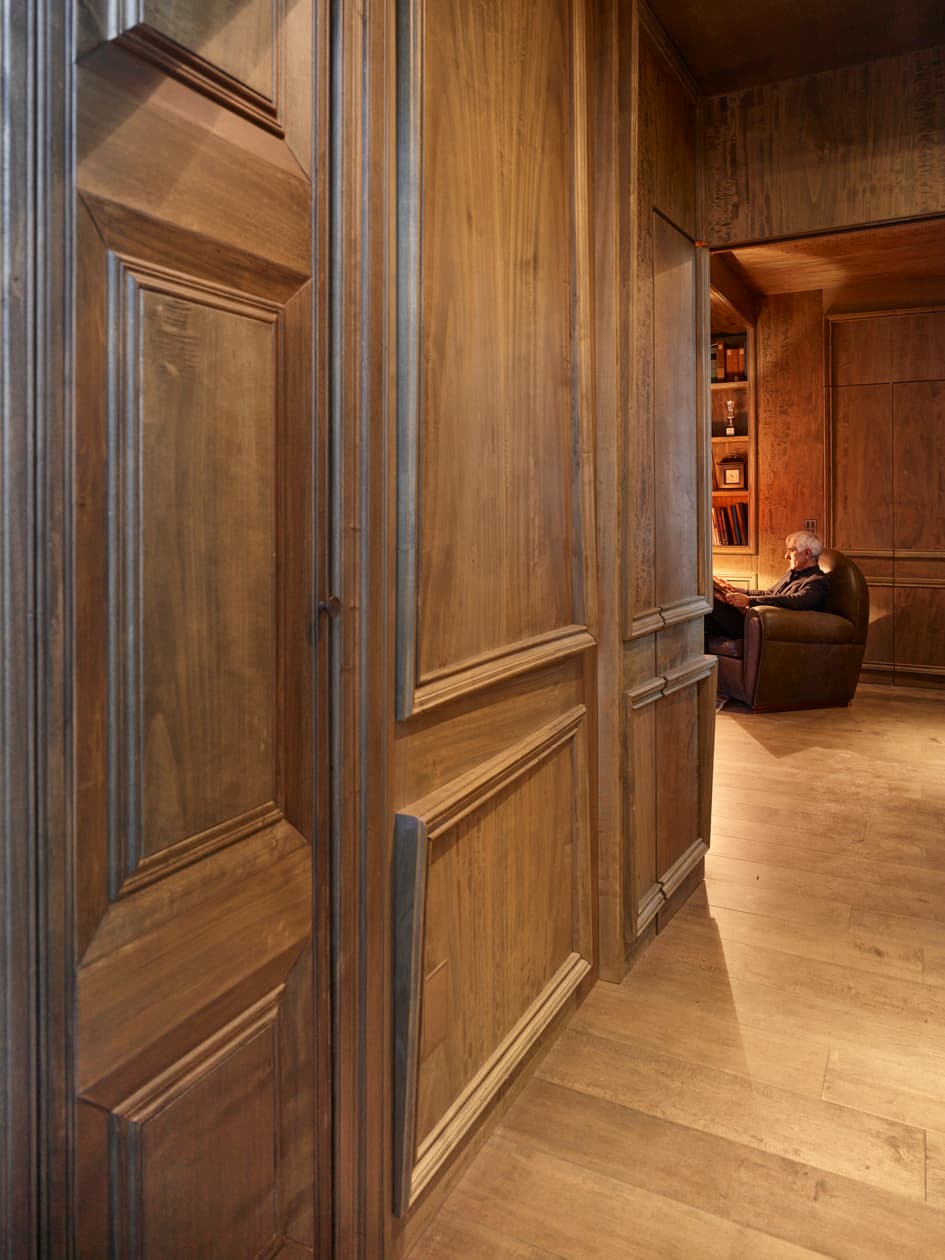
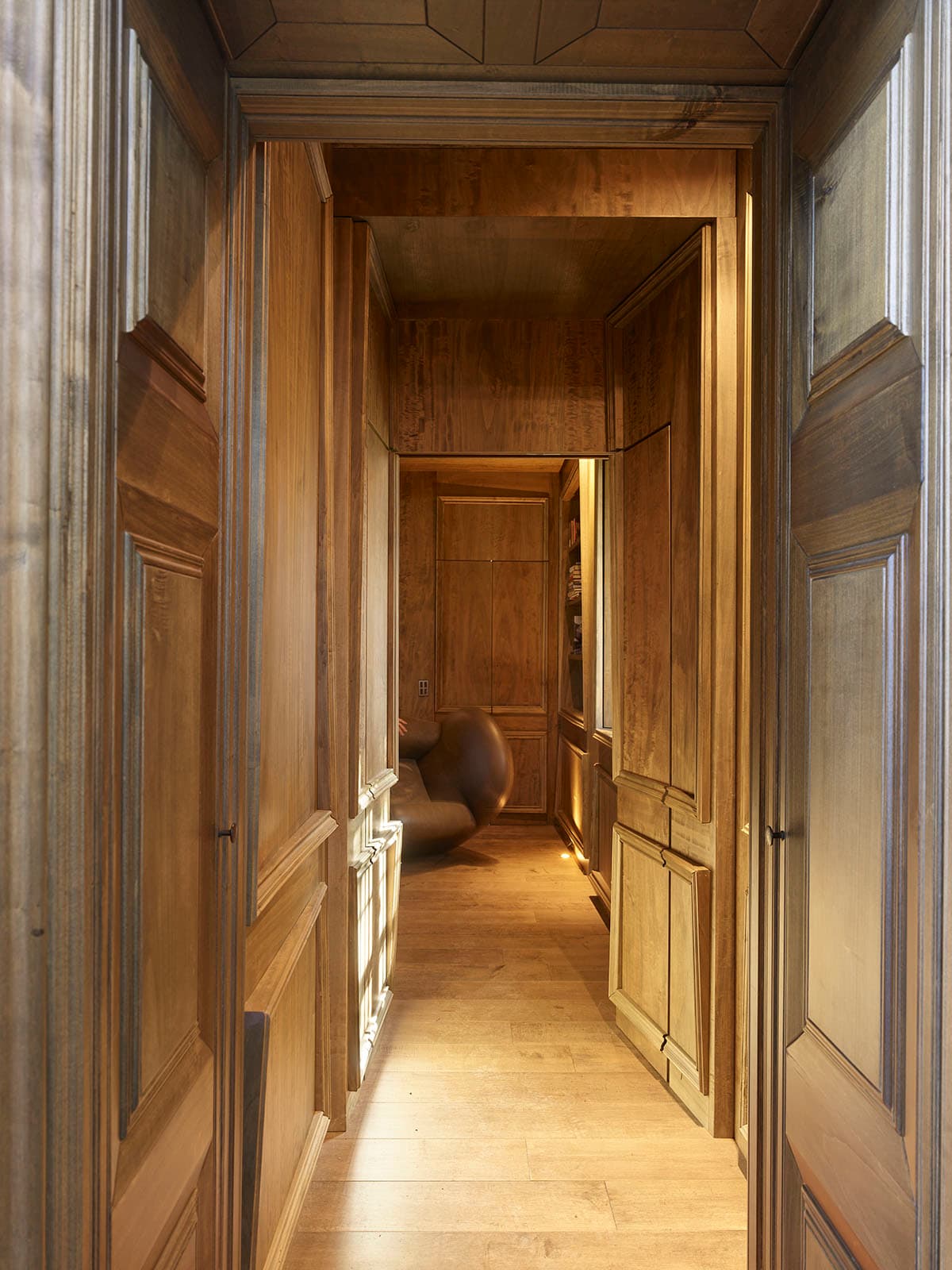
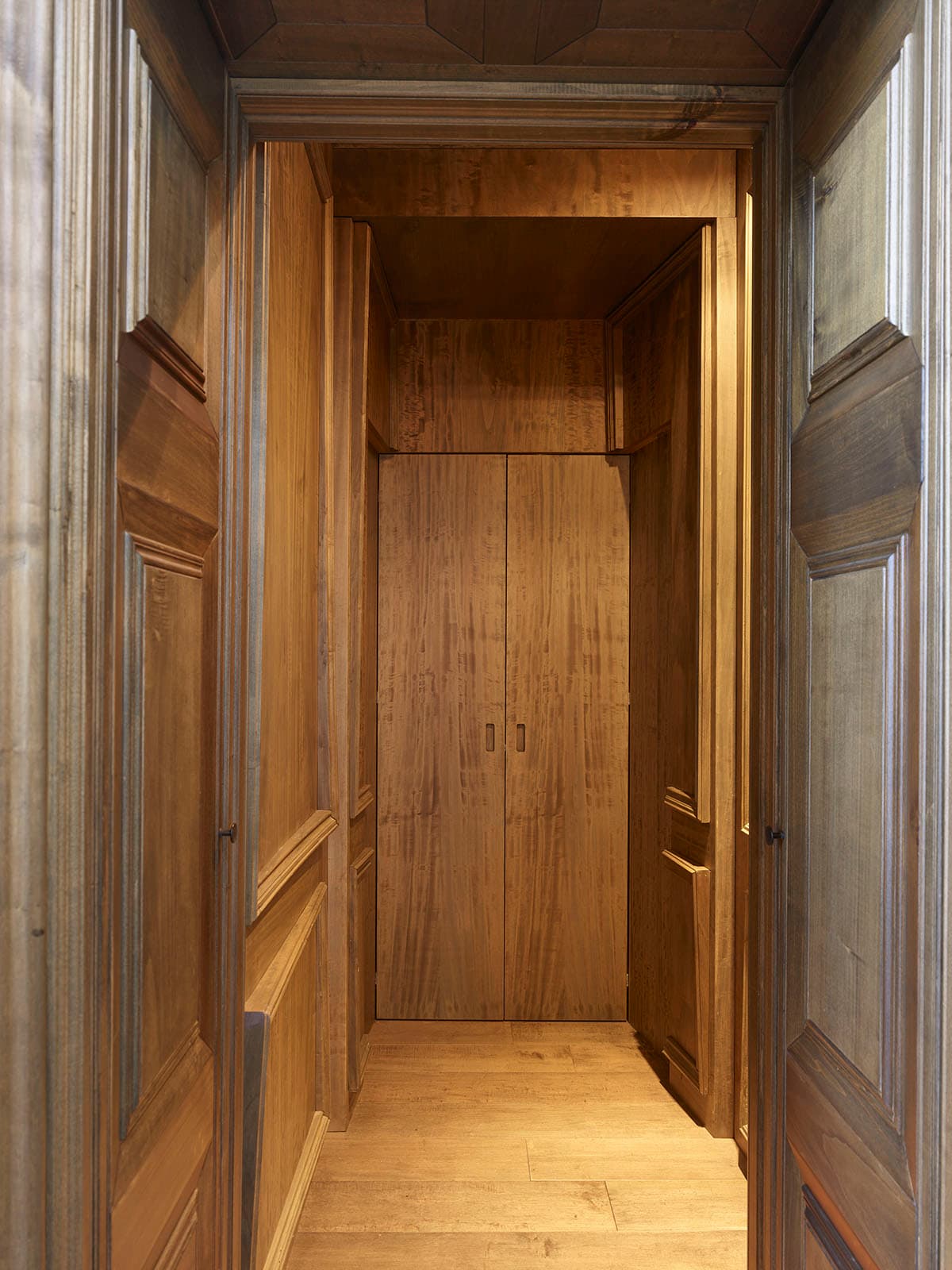
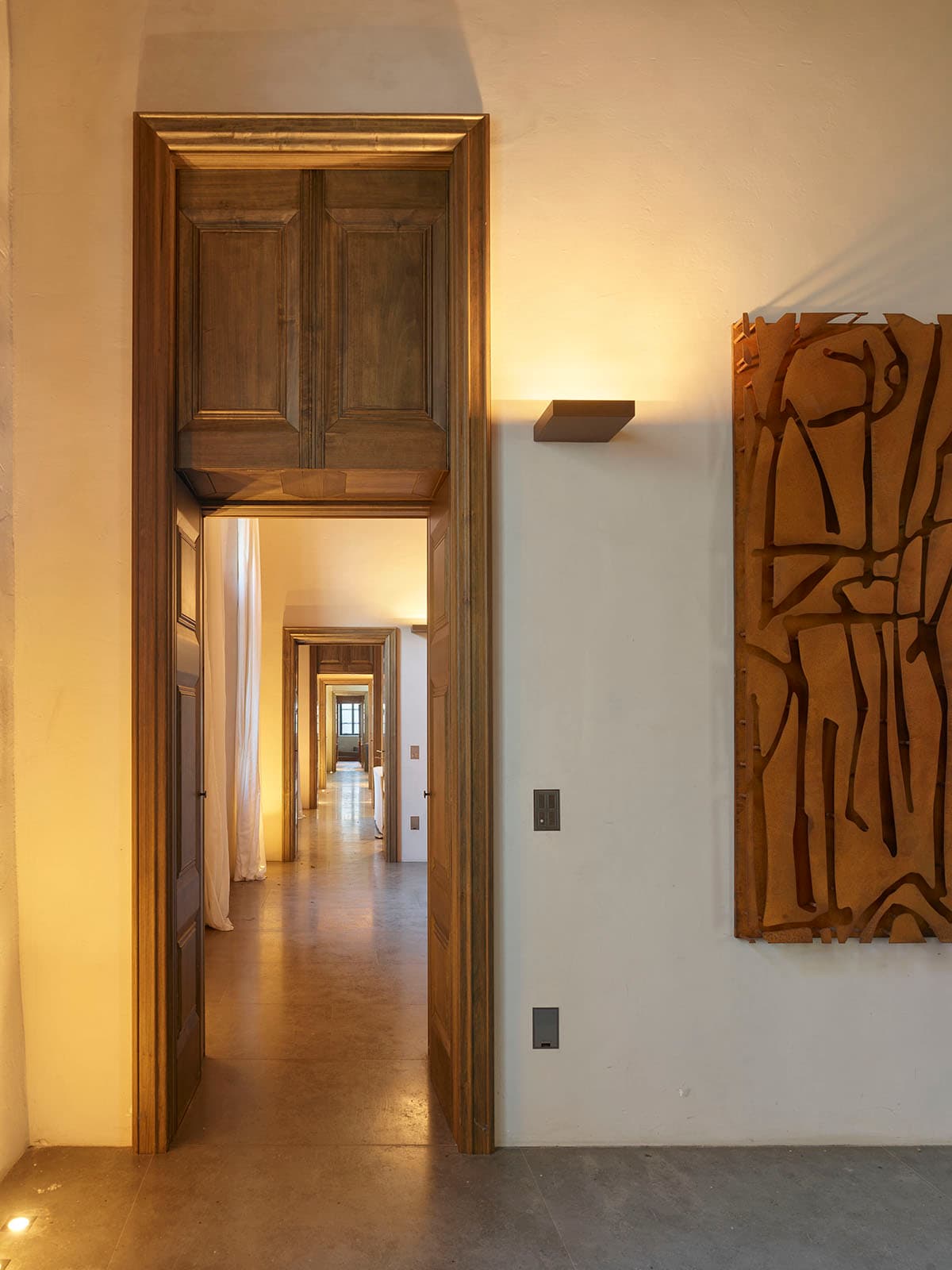
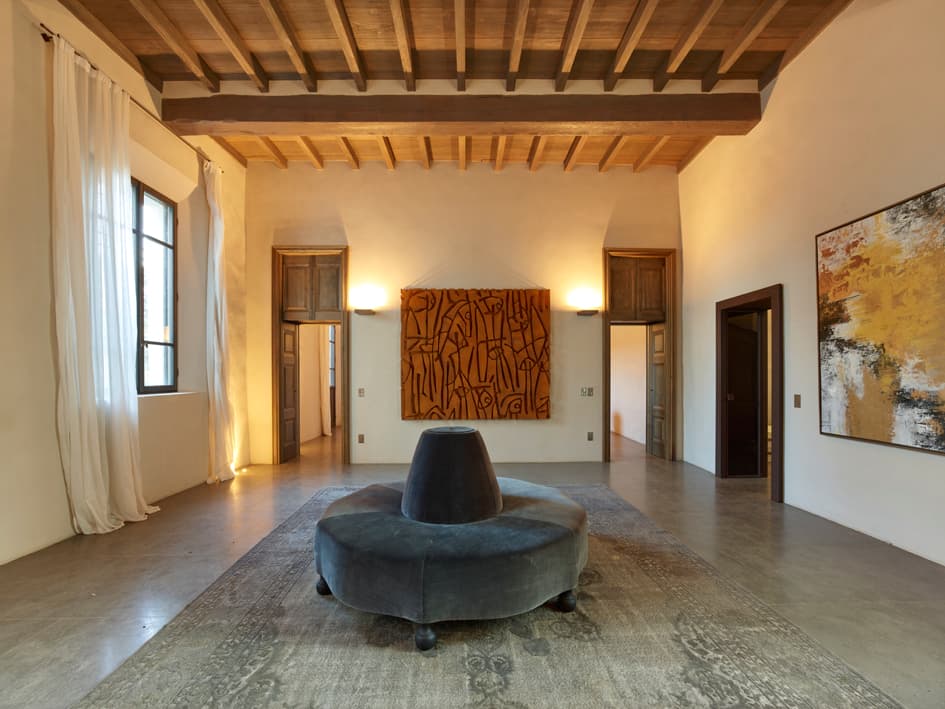
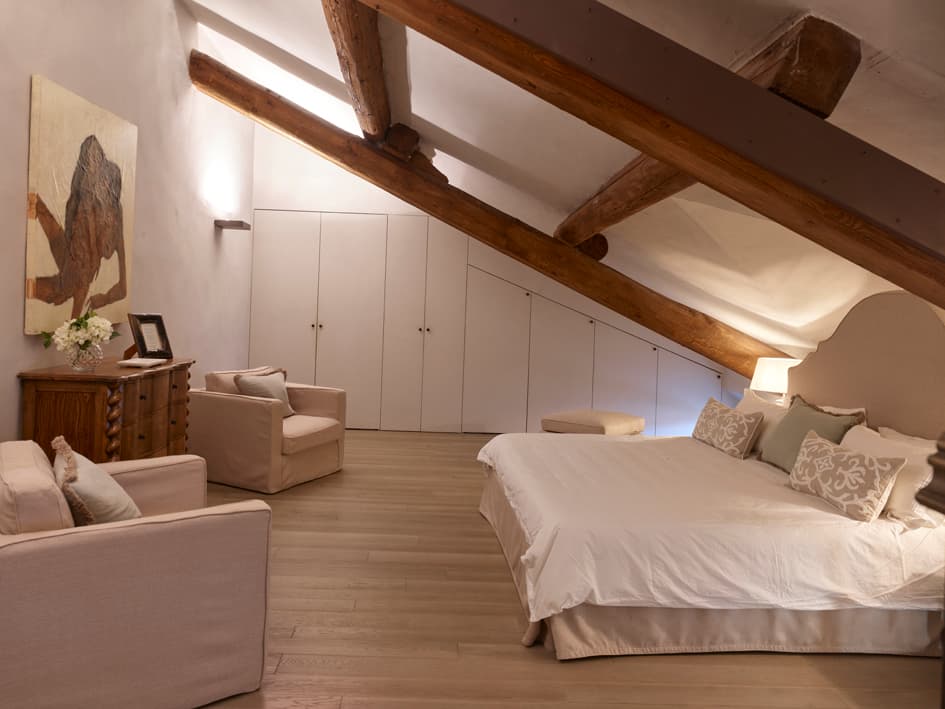
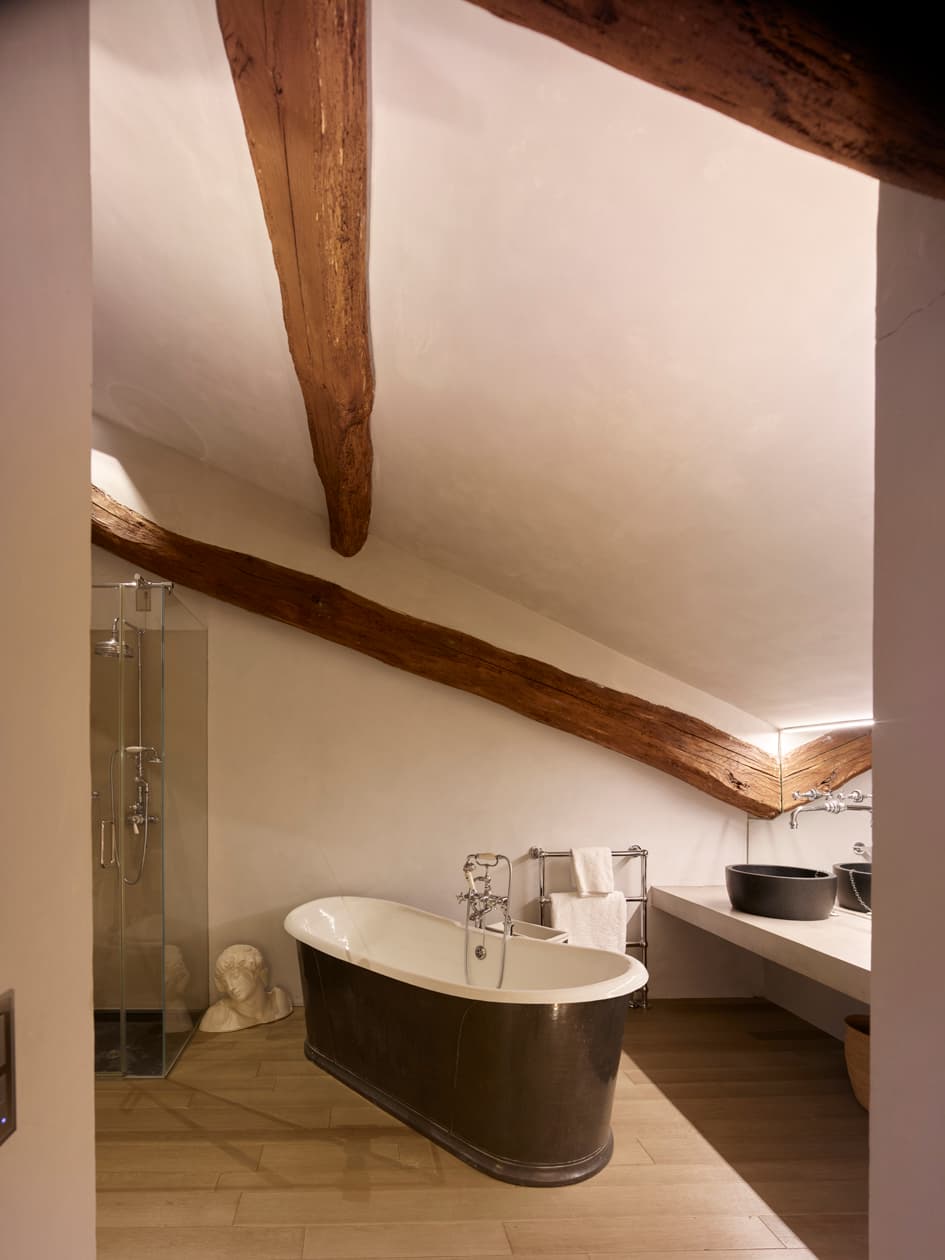
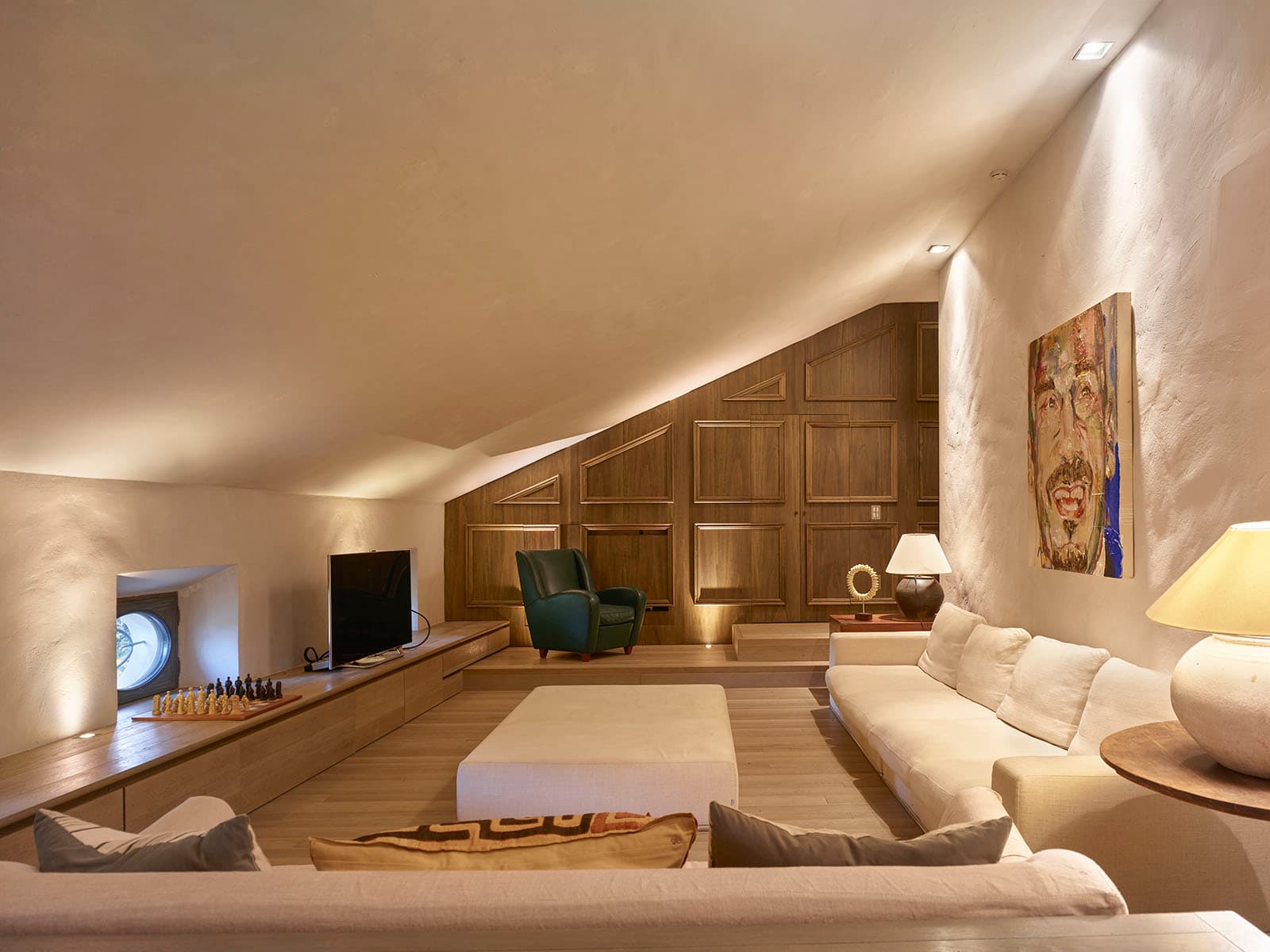
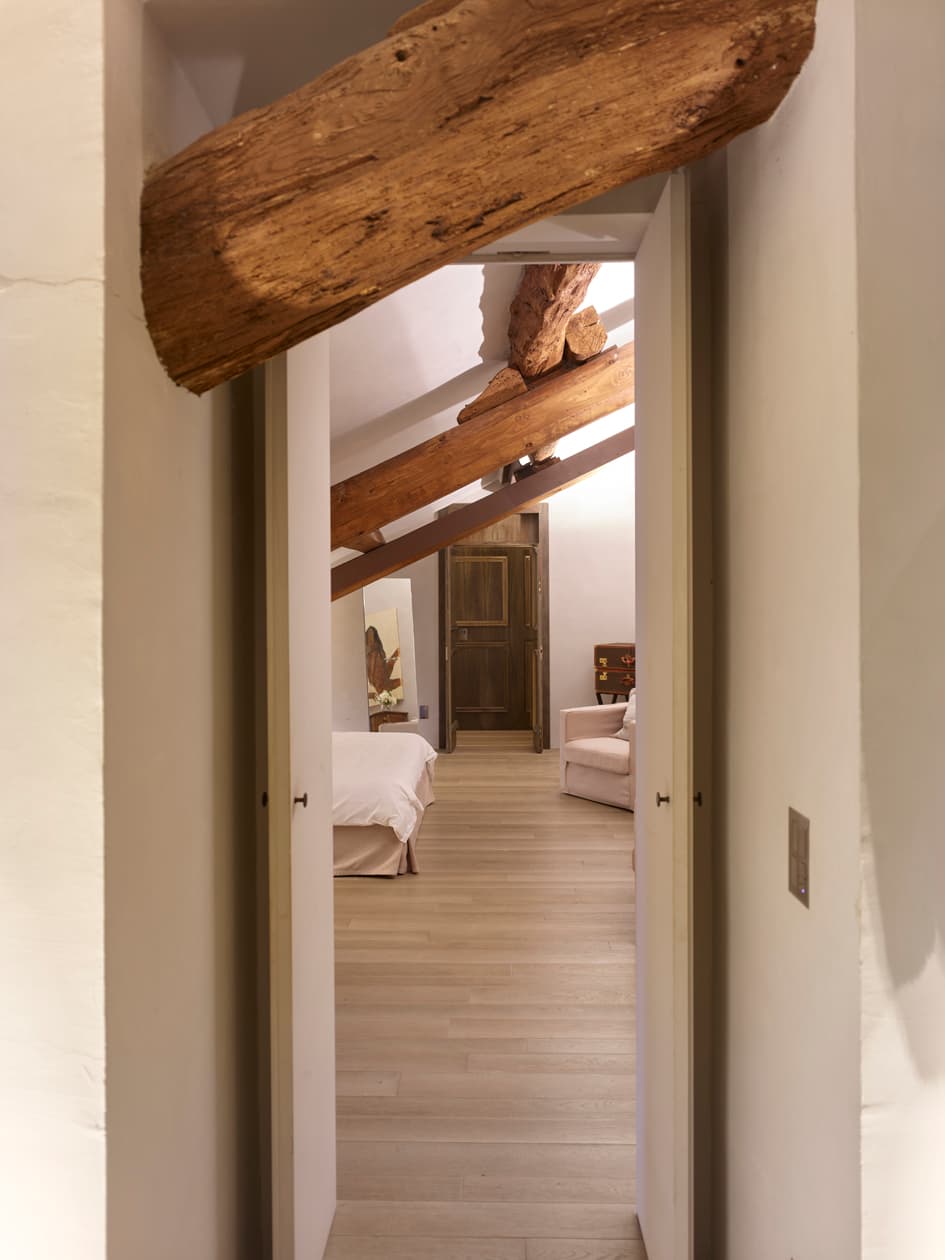
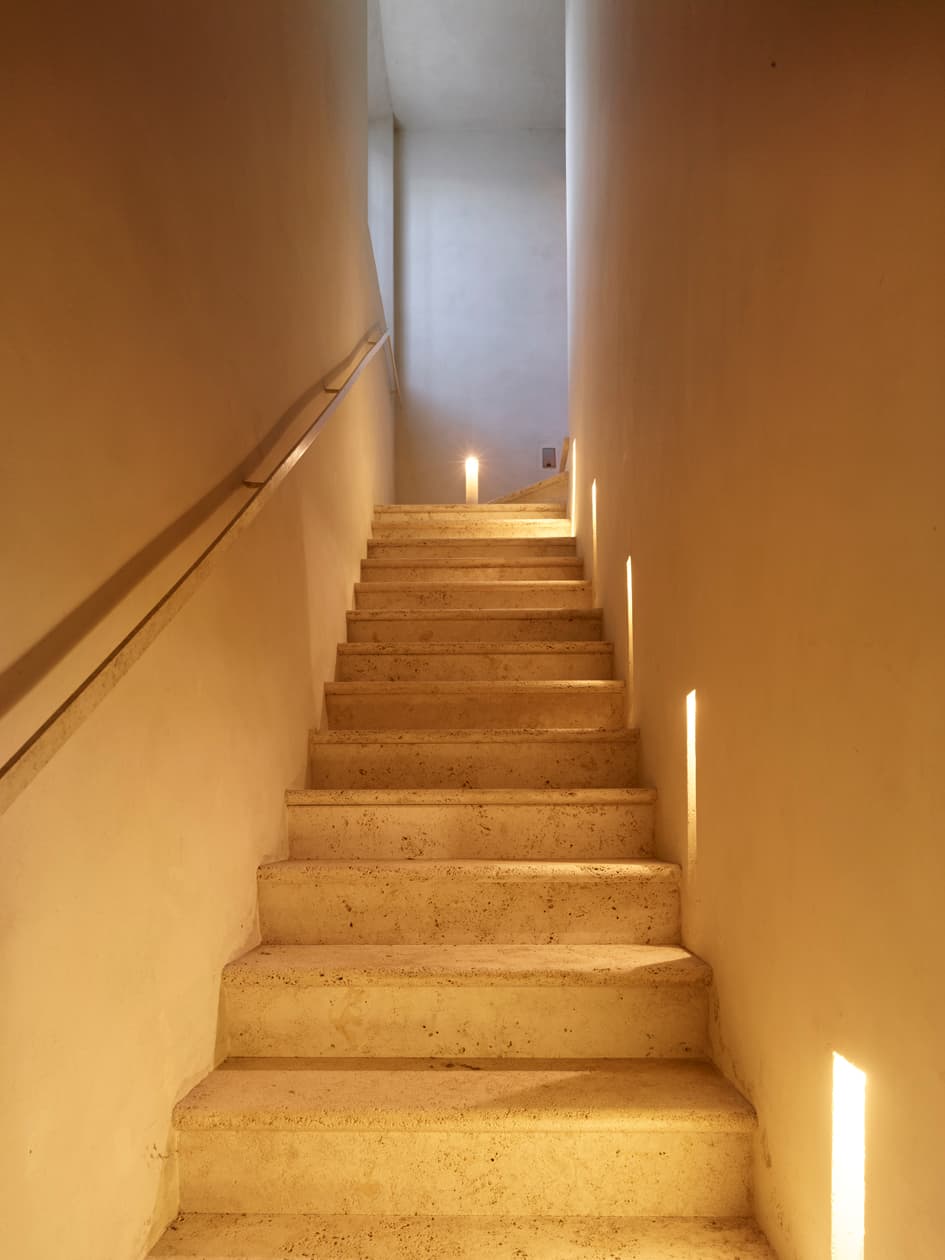
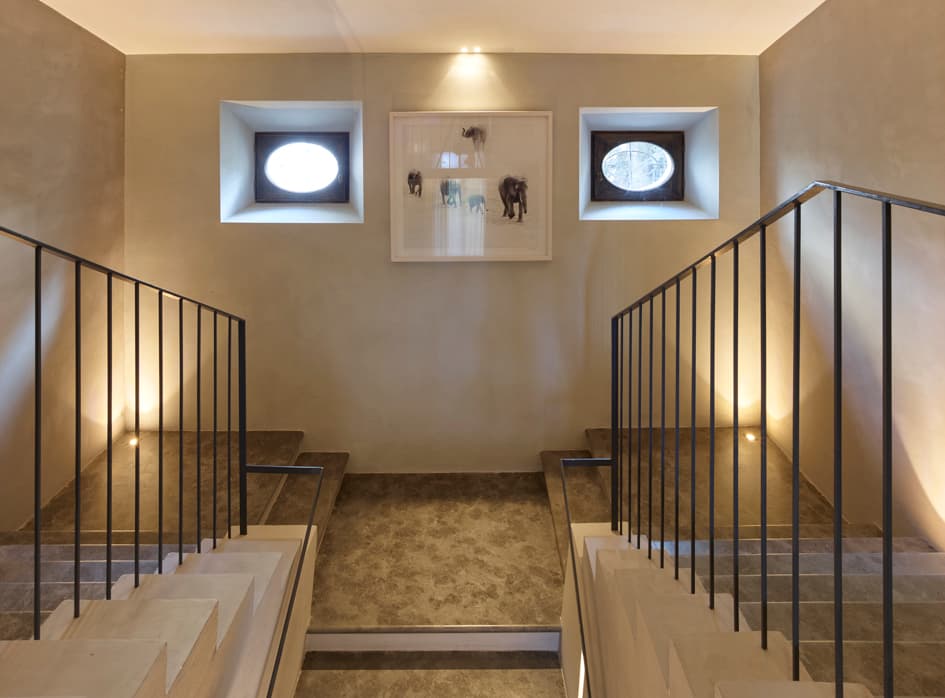
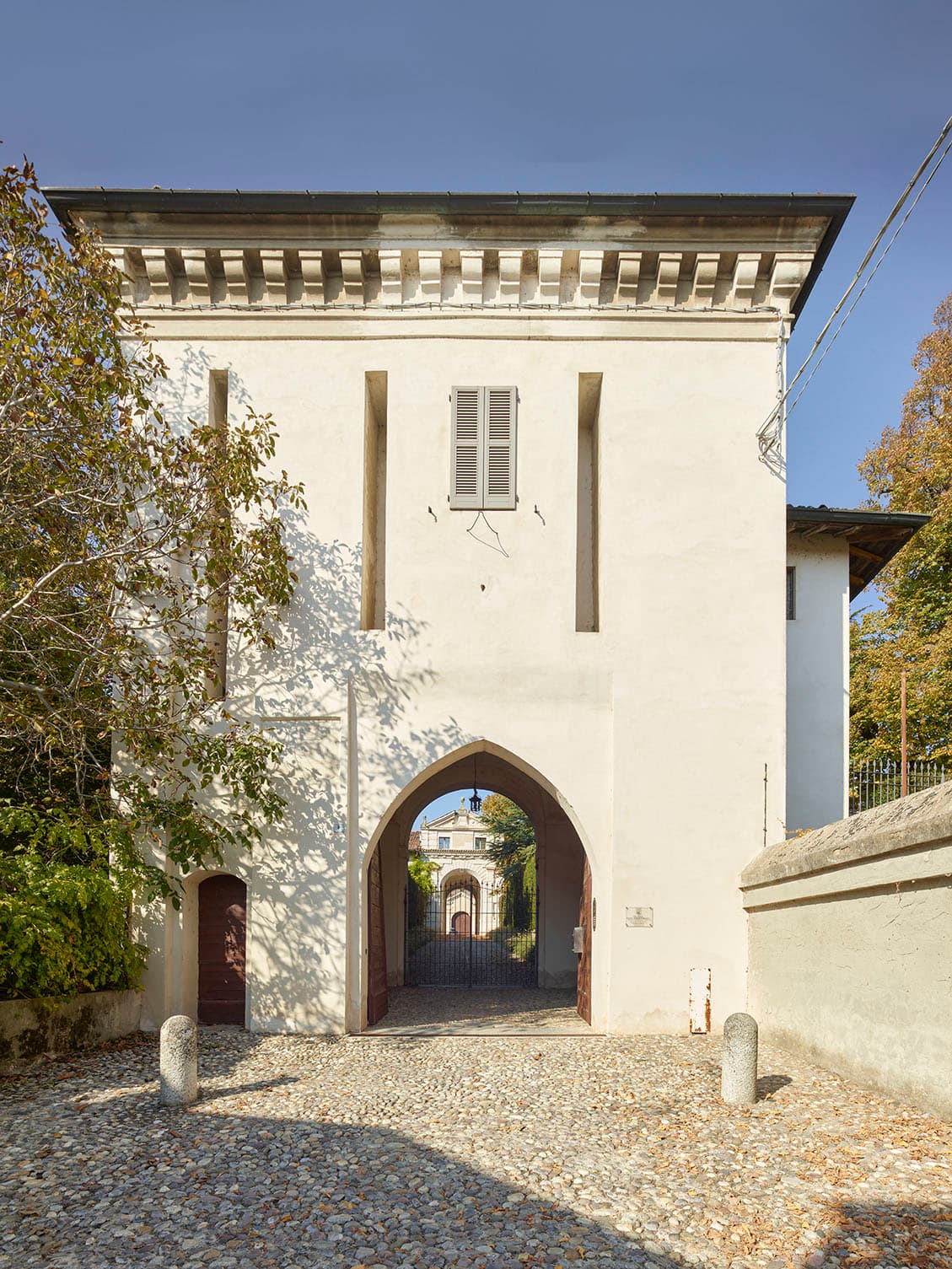
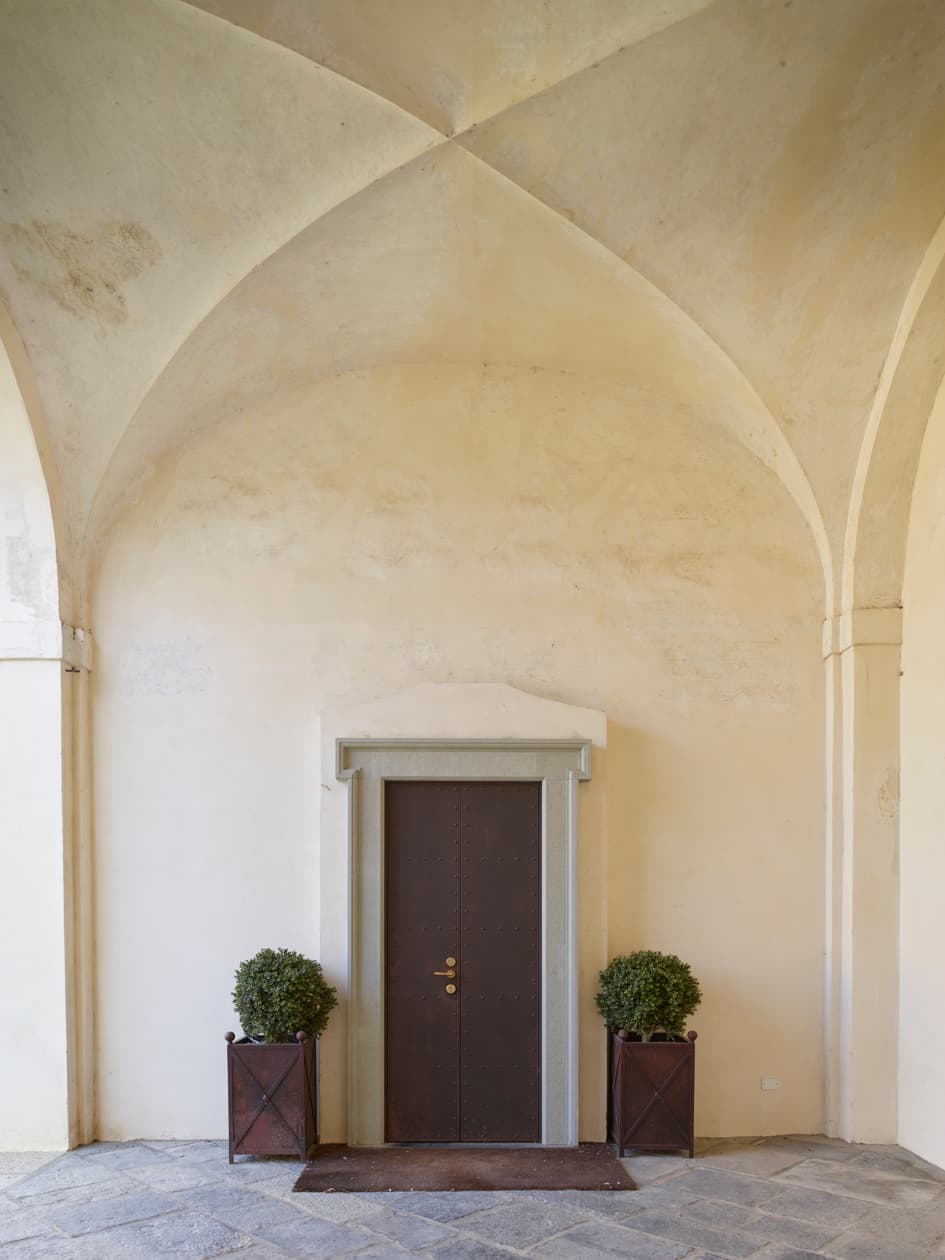
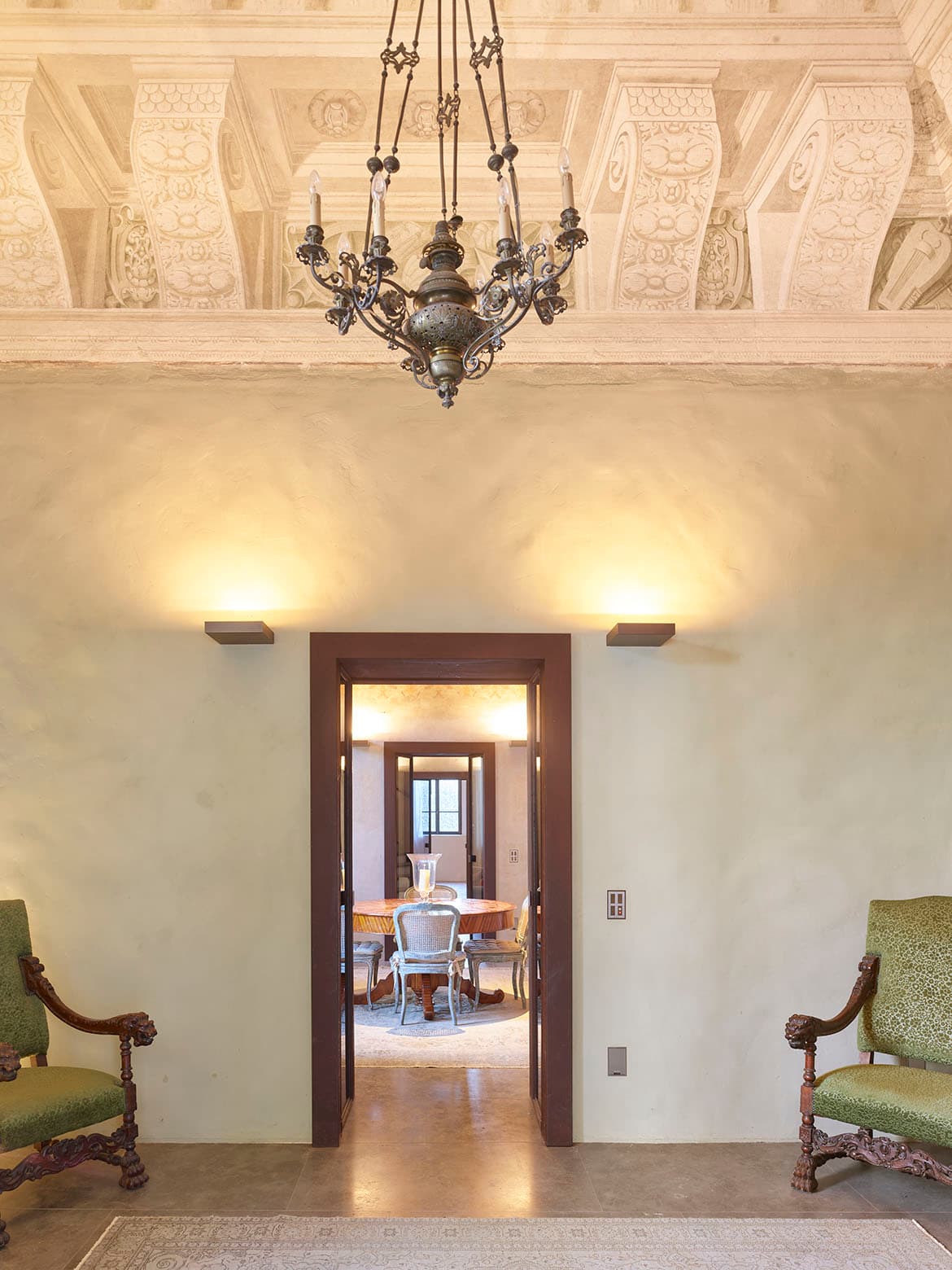
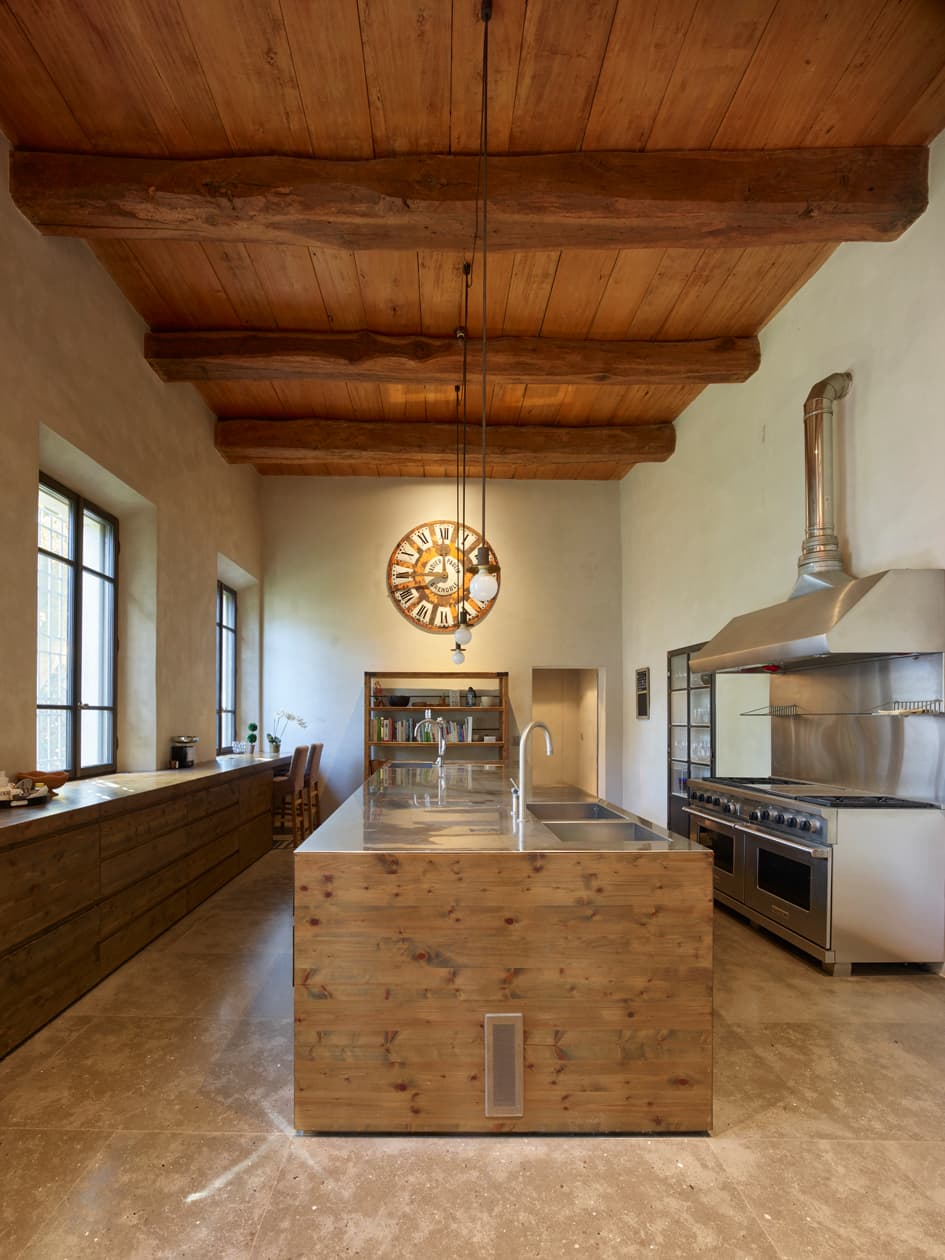
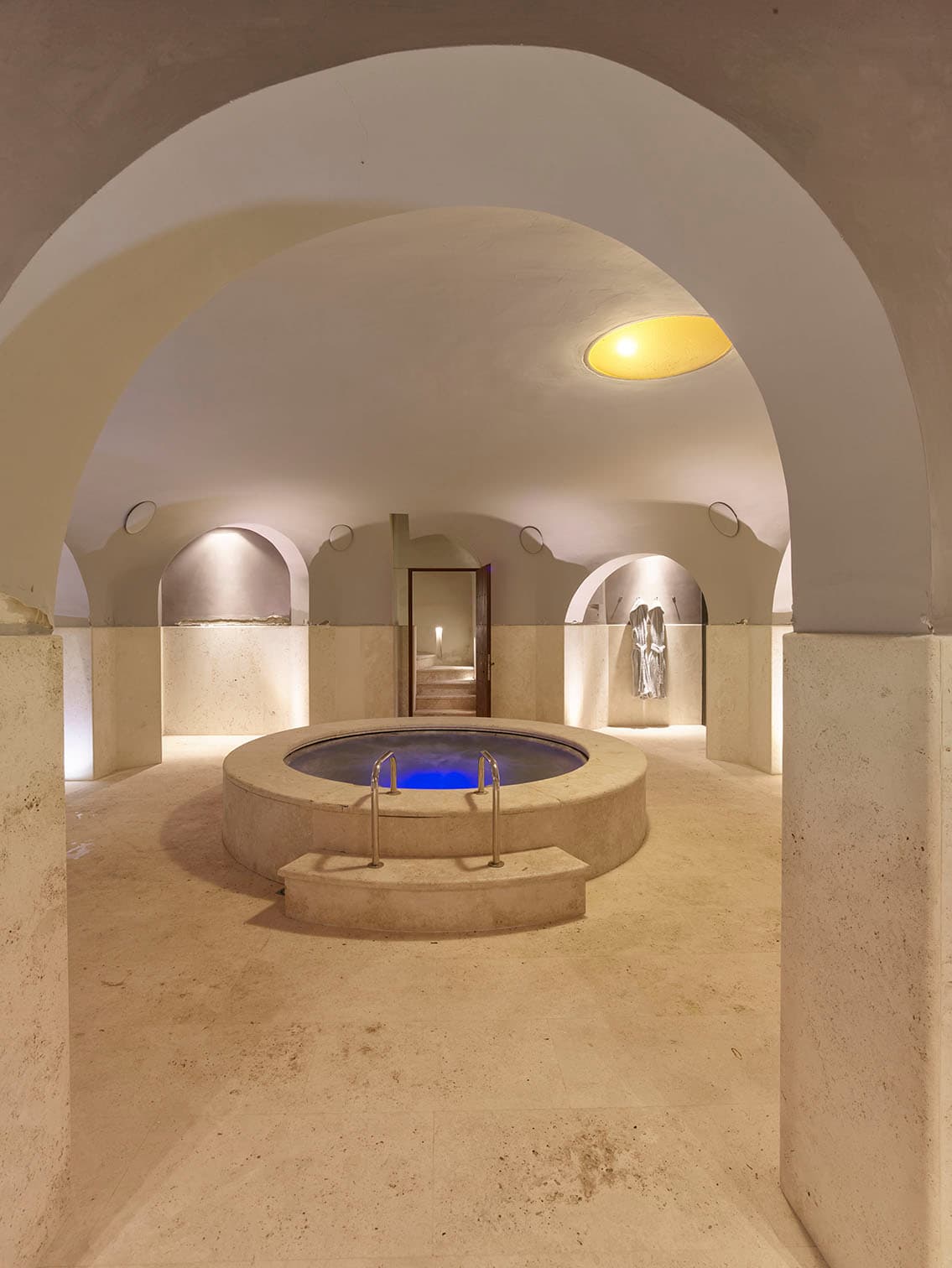
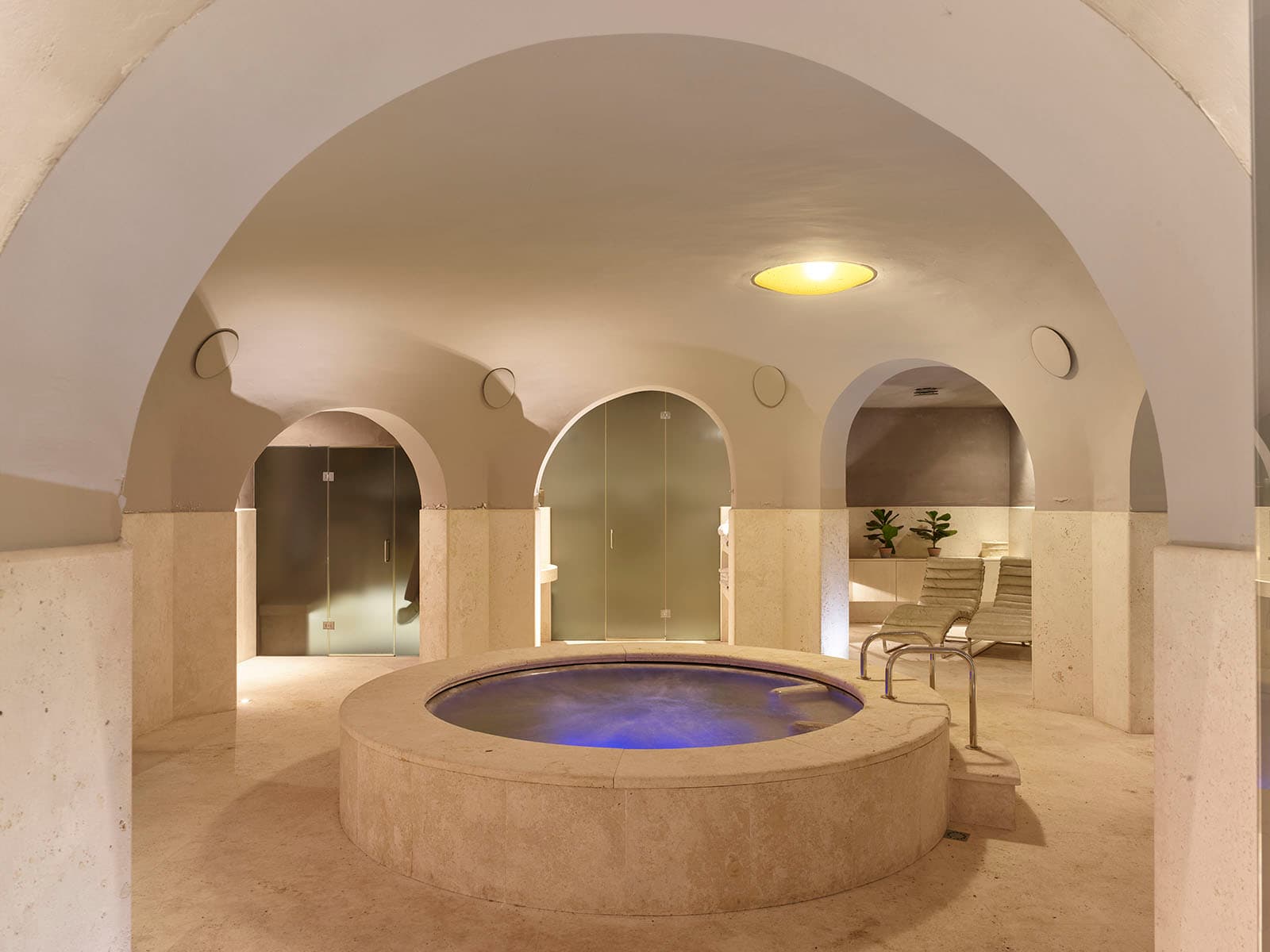
Dellearti Design Hotel
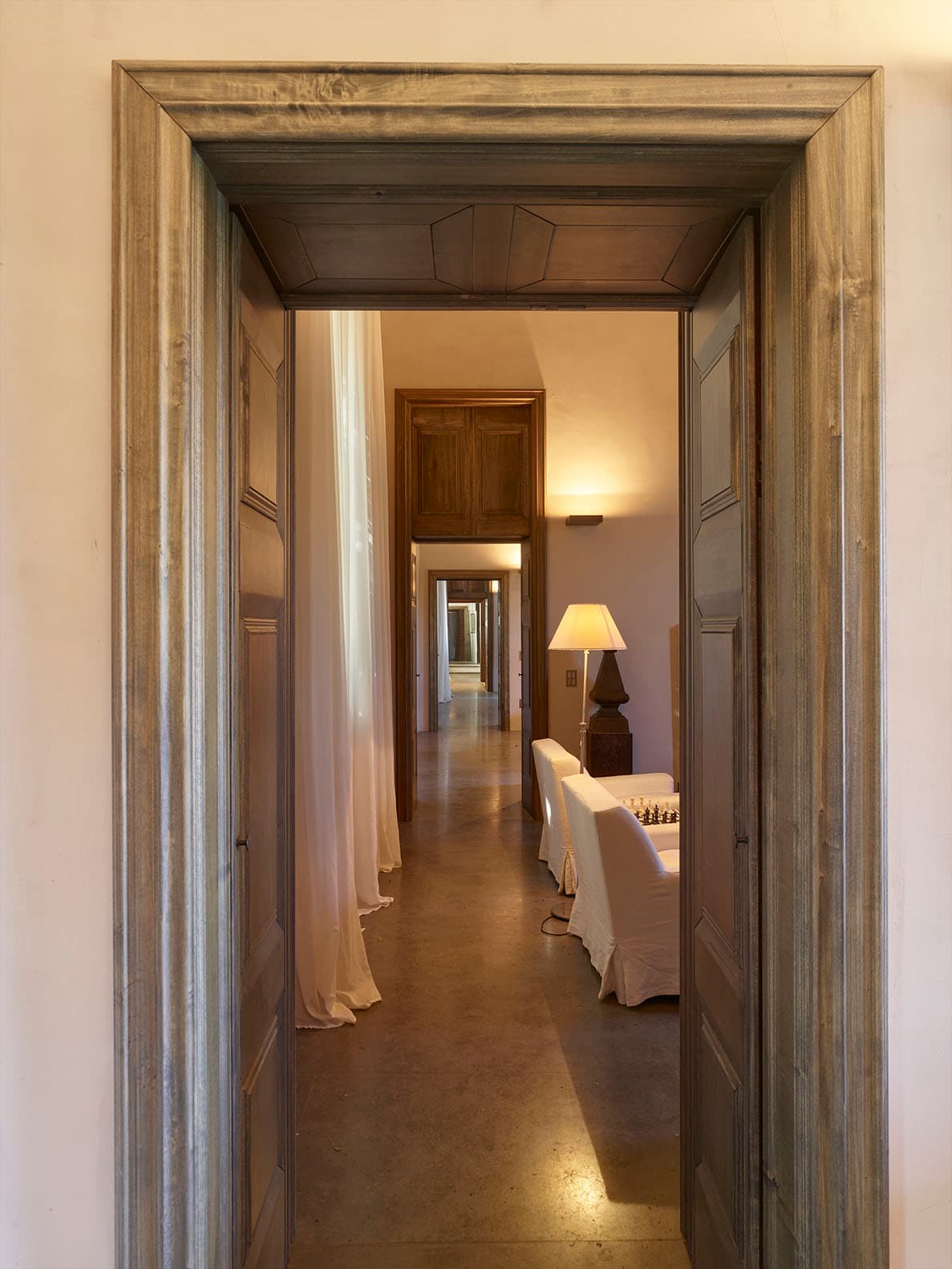
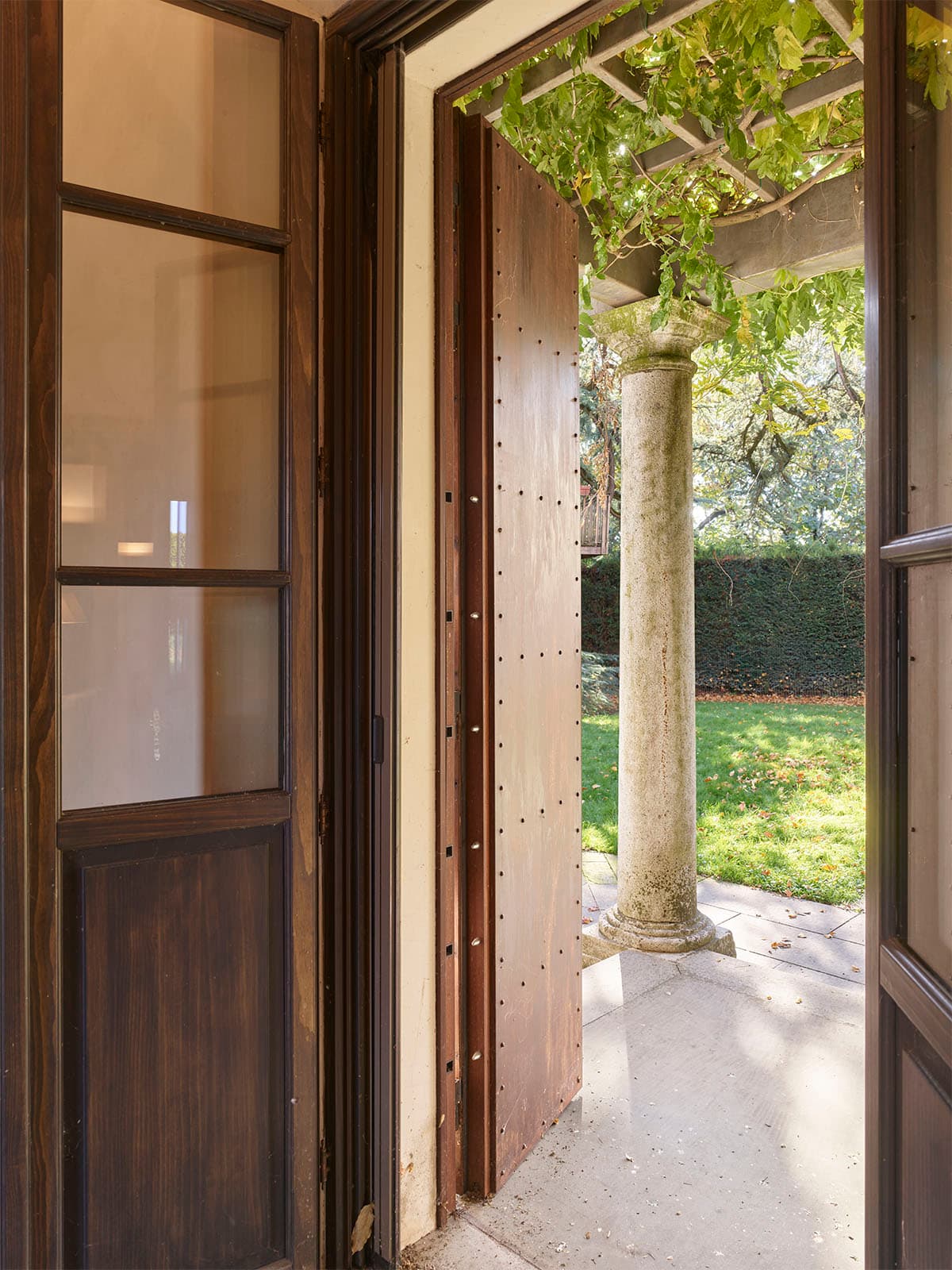
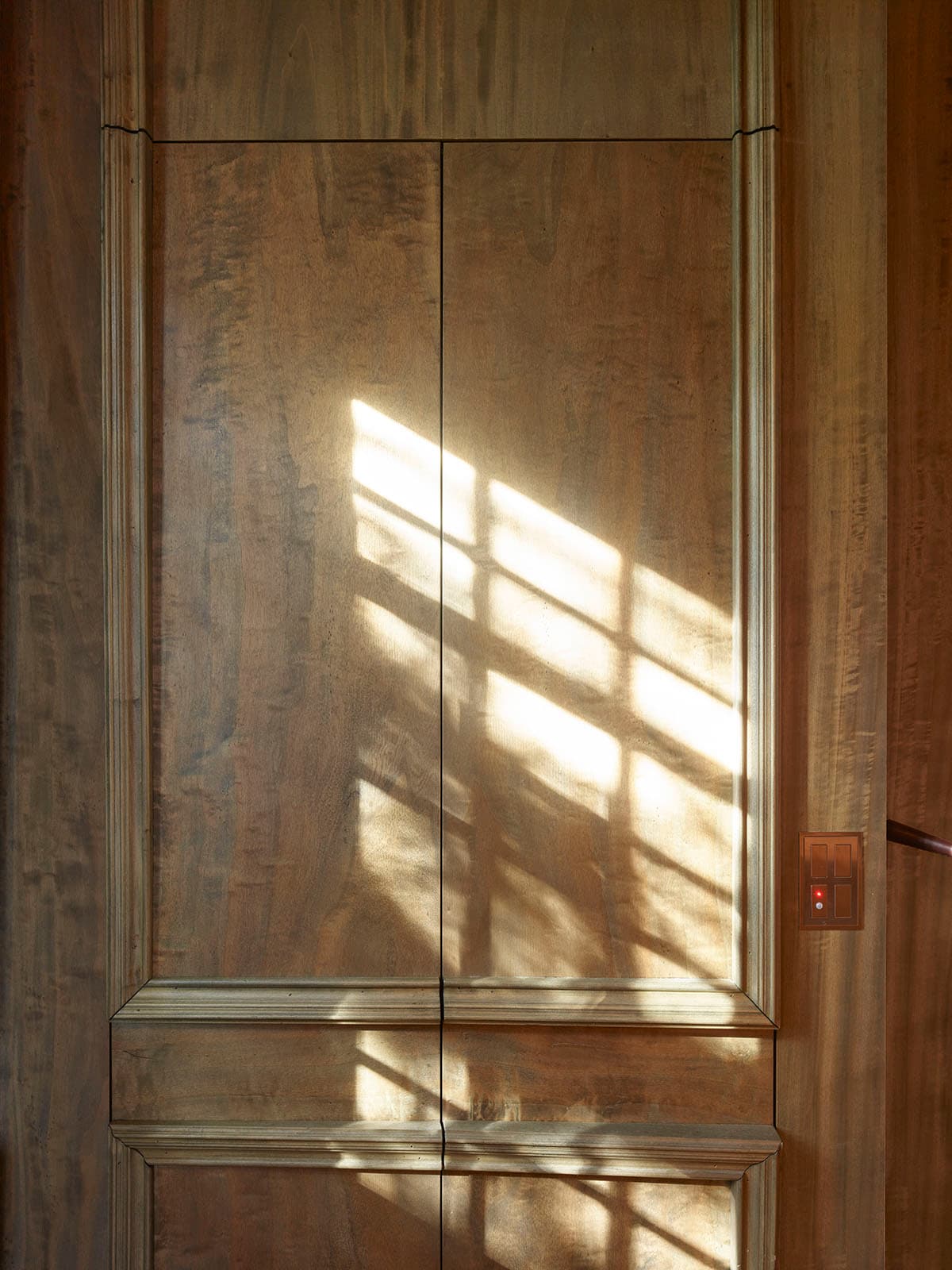
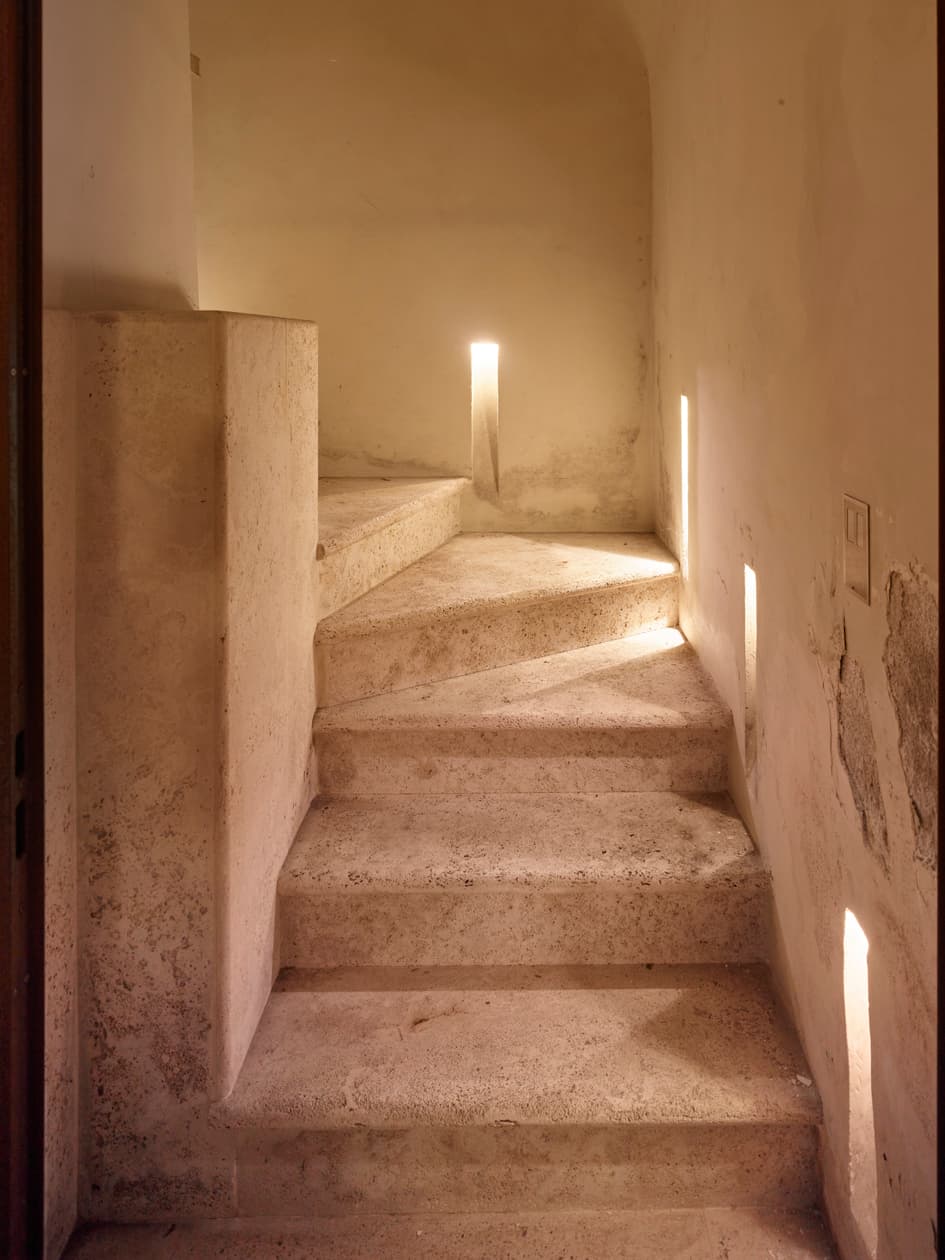
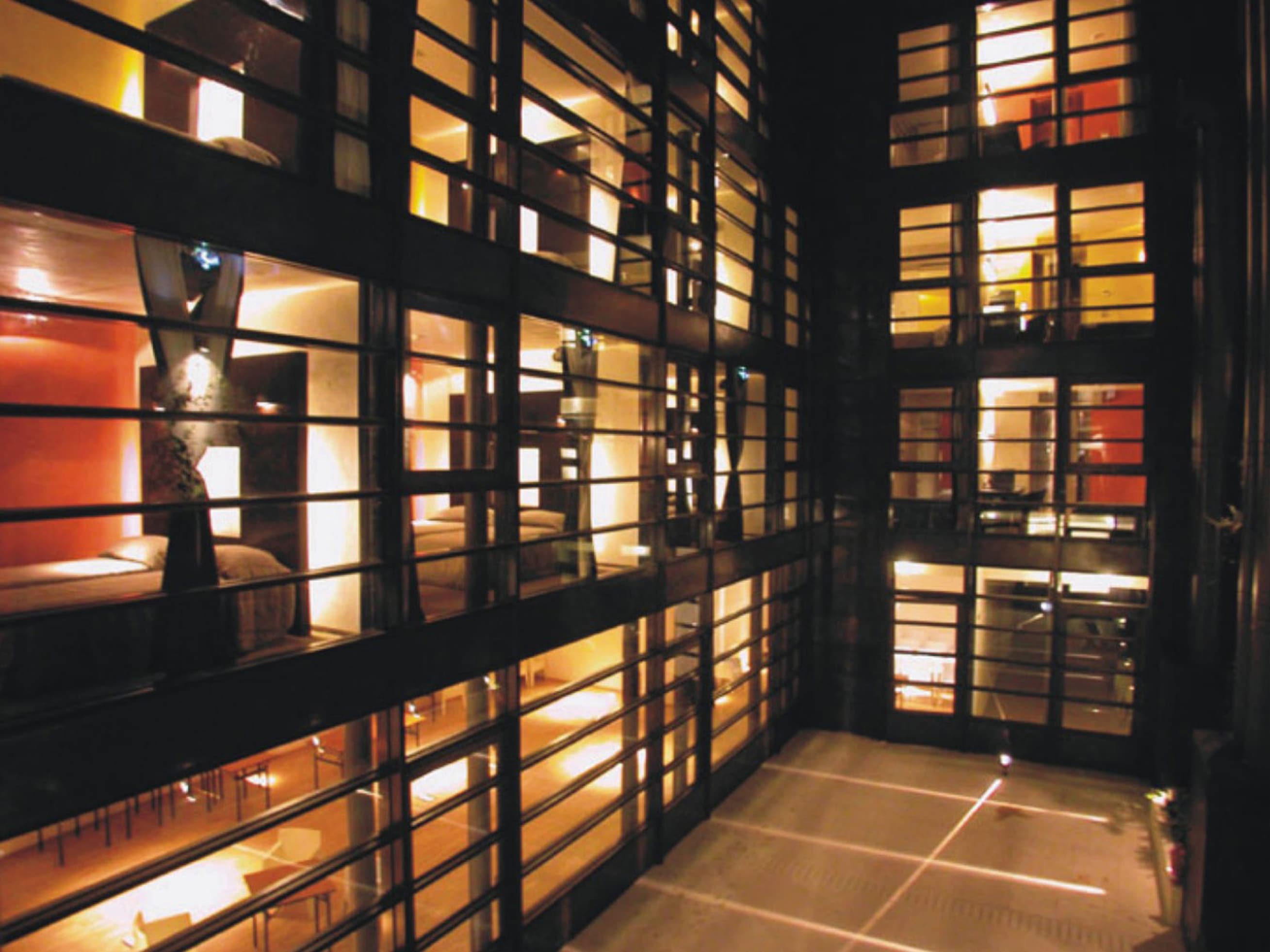
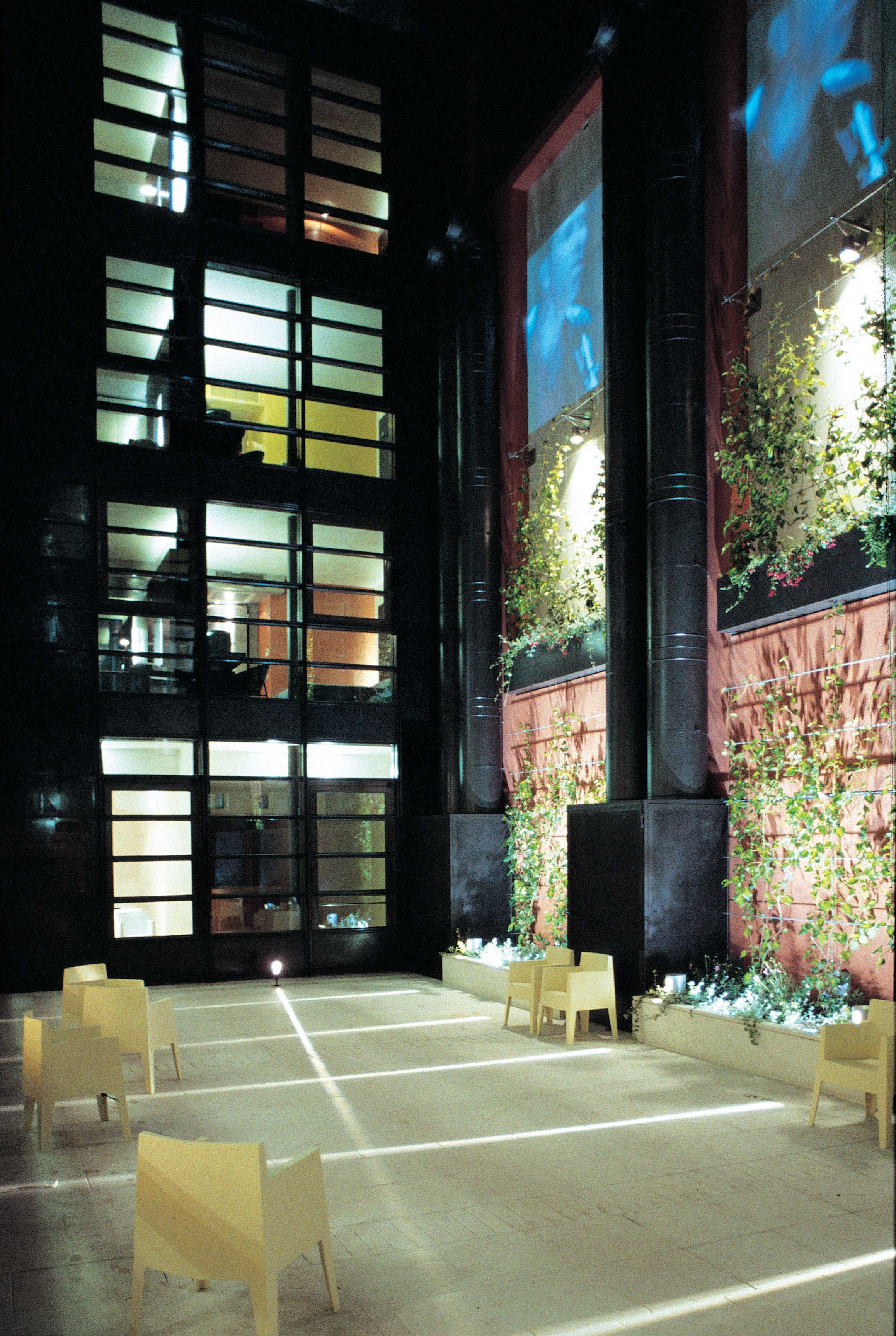
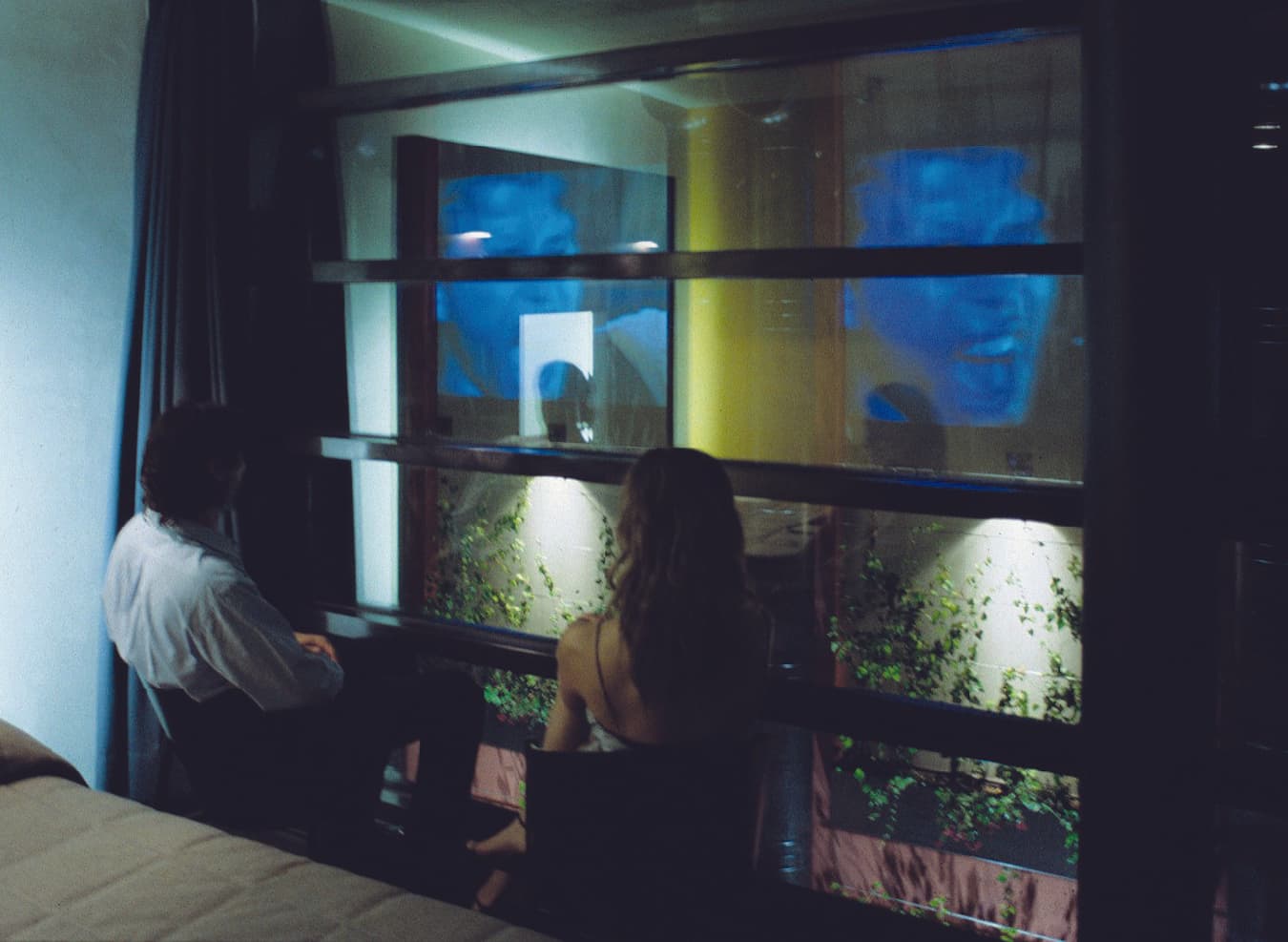
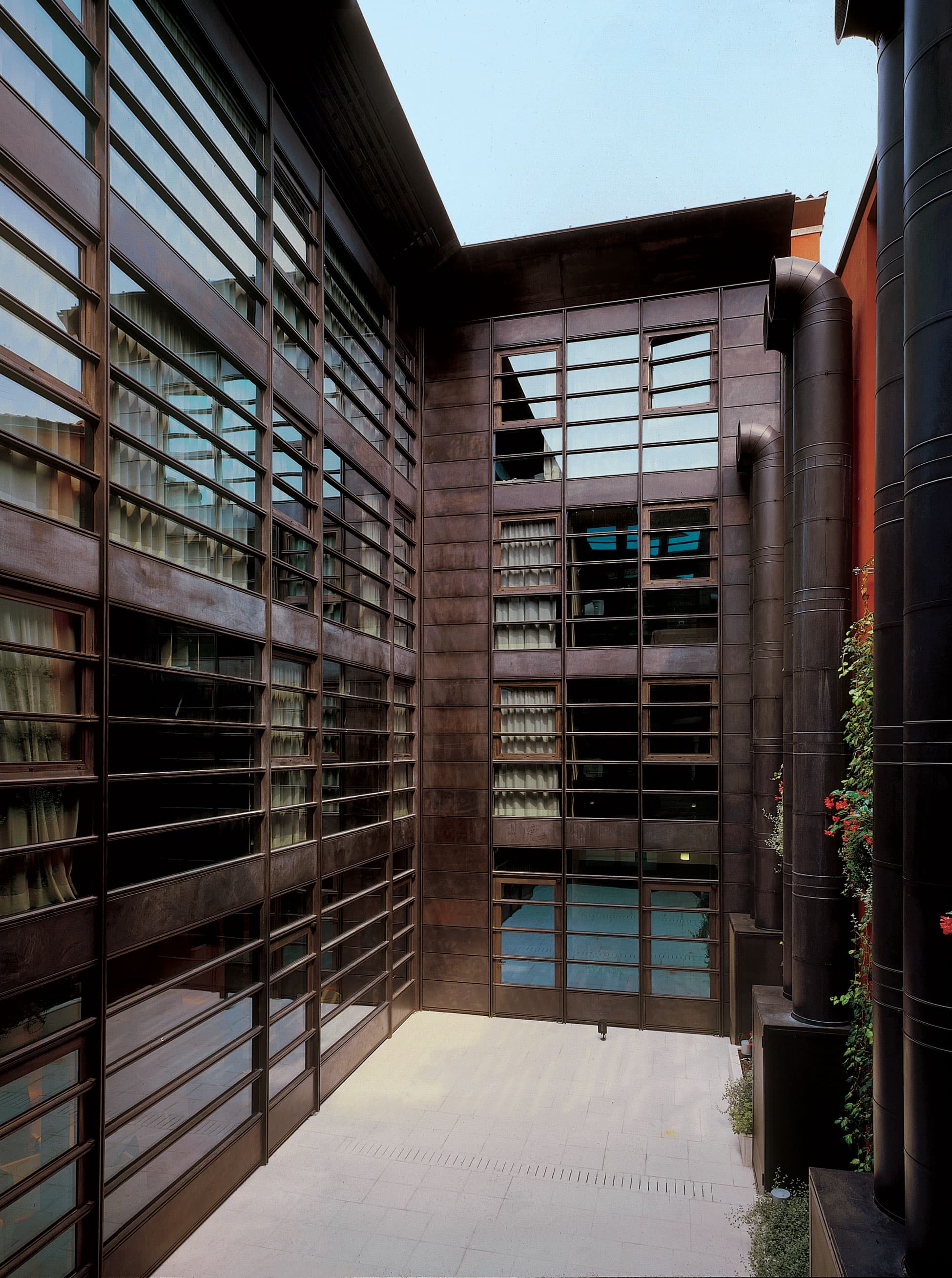
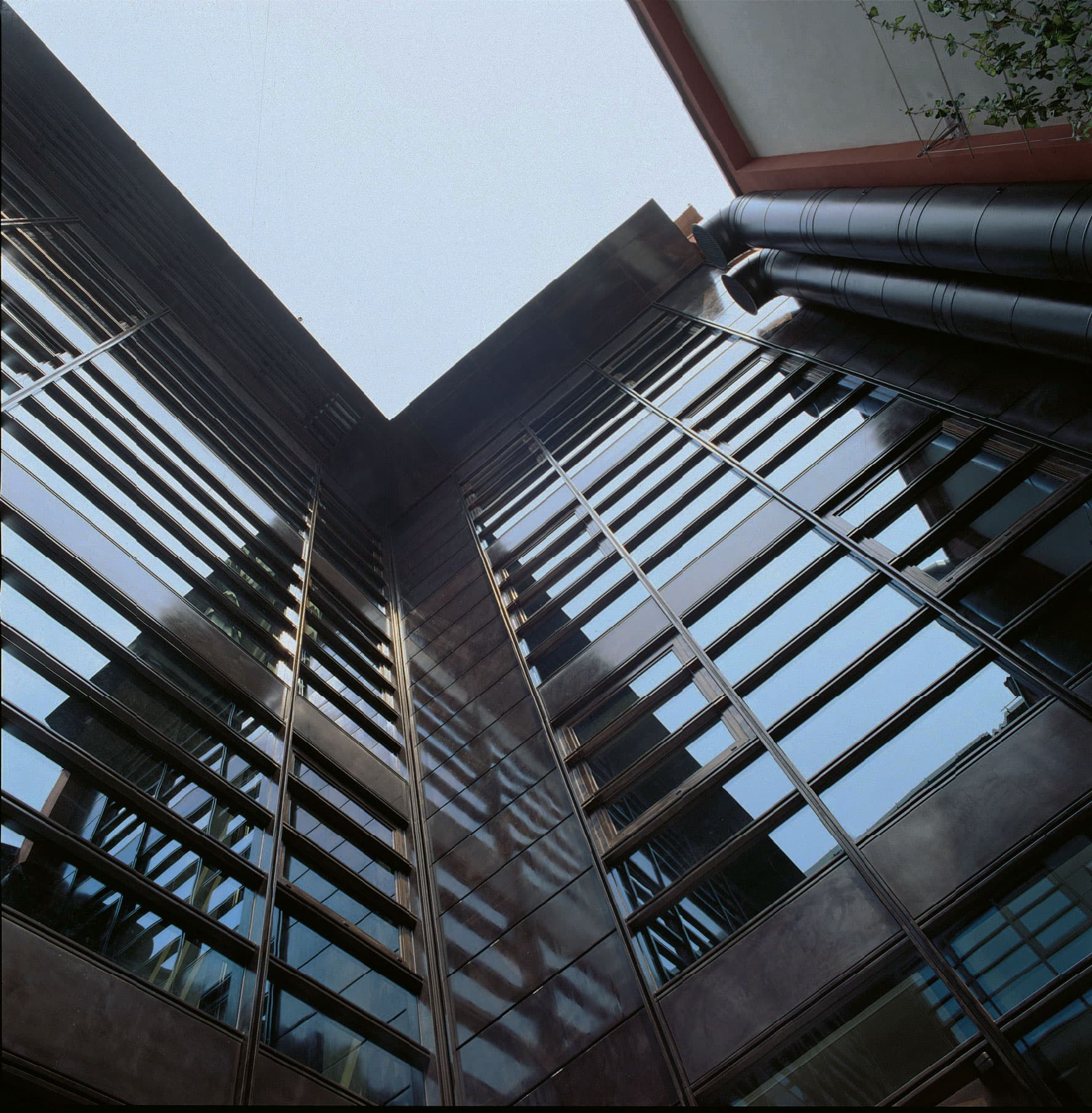
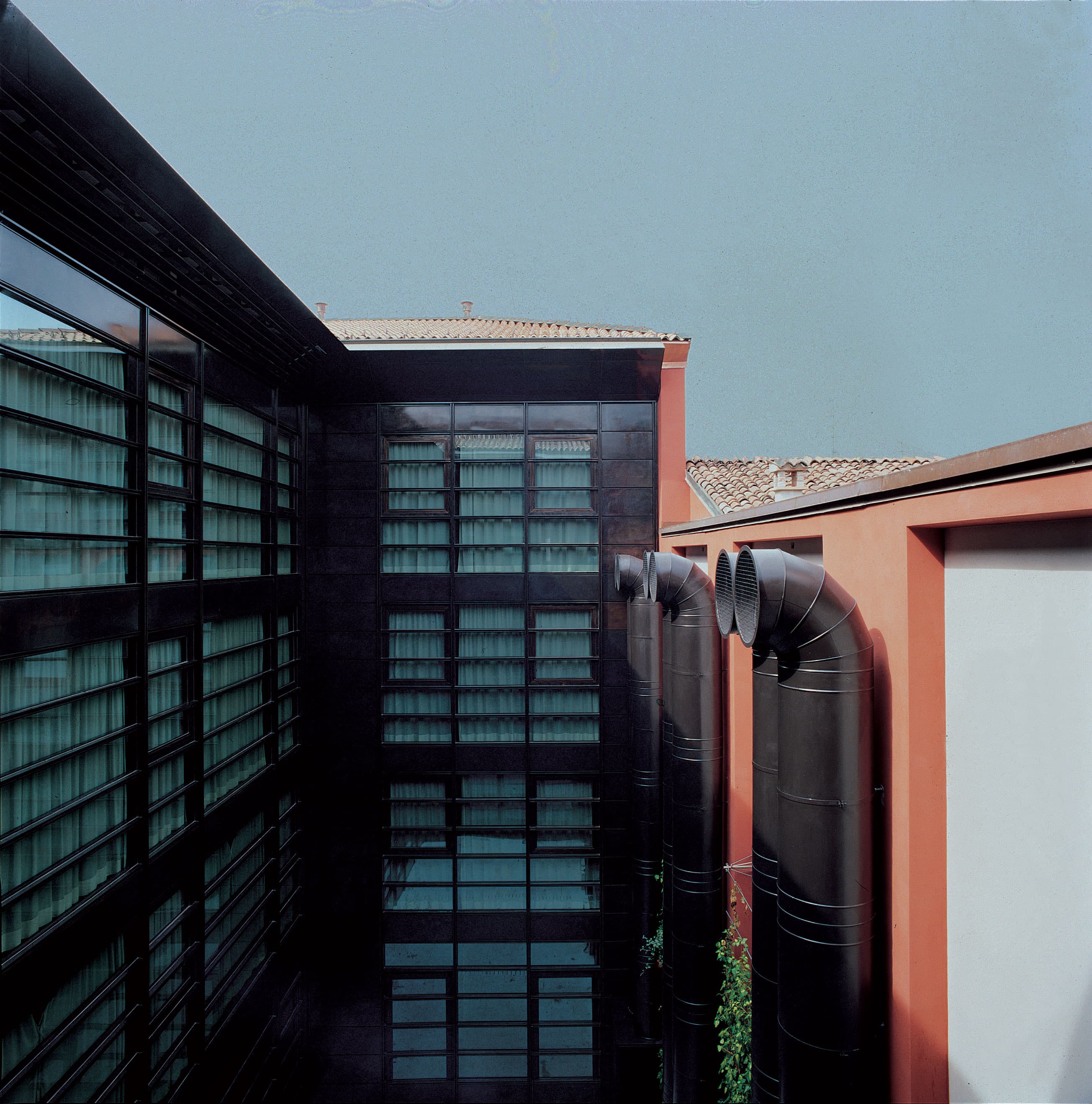
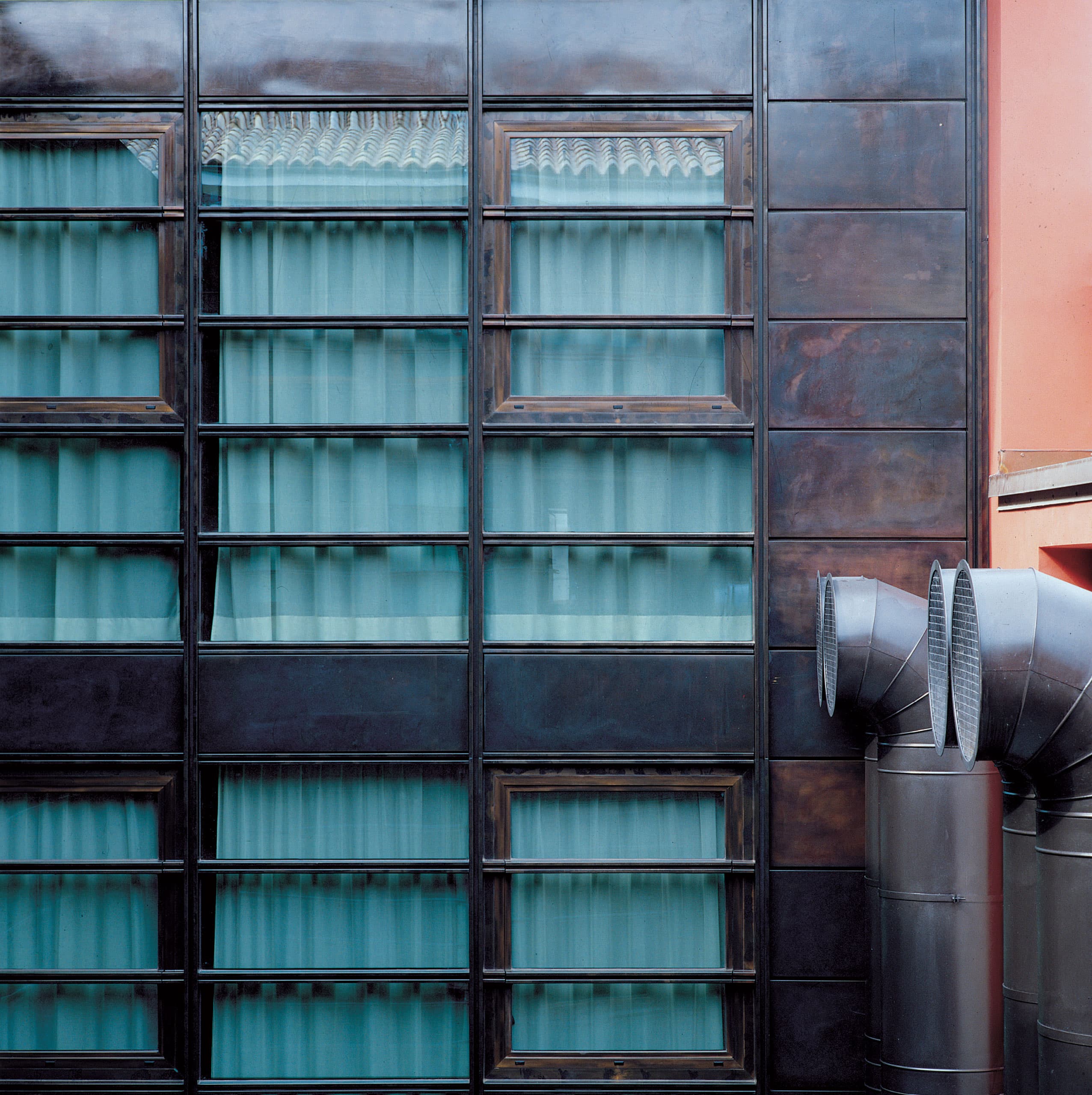
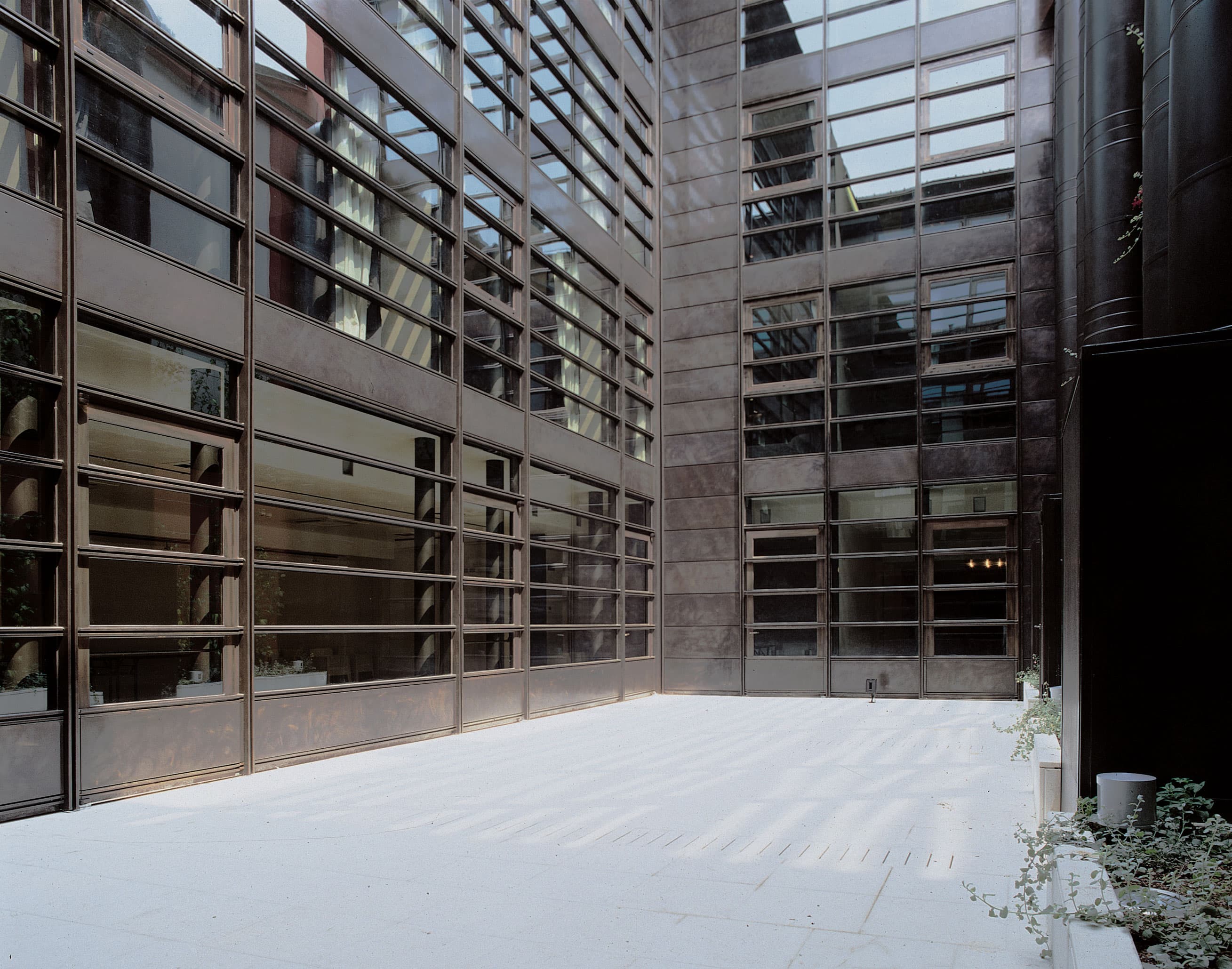
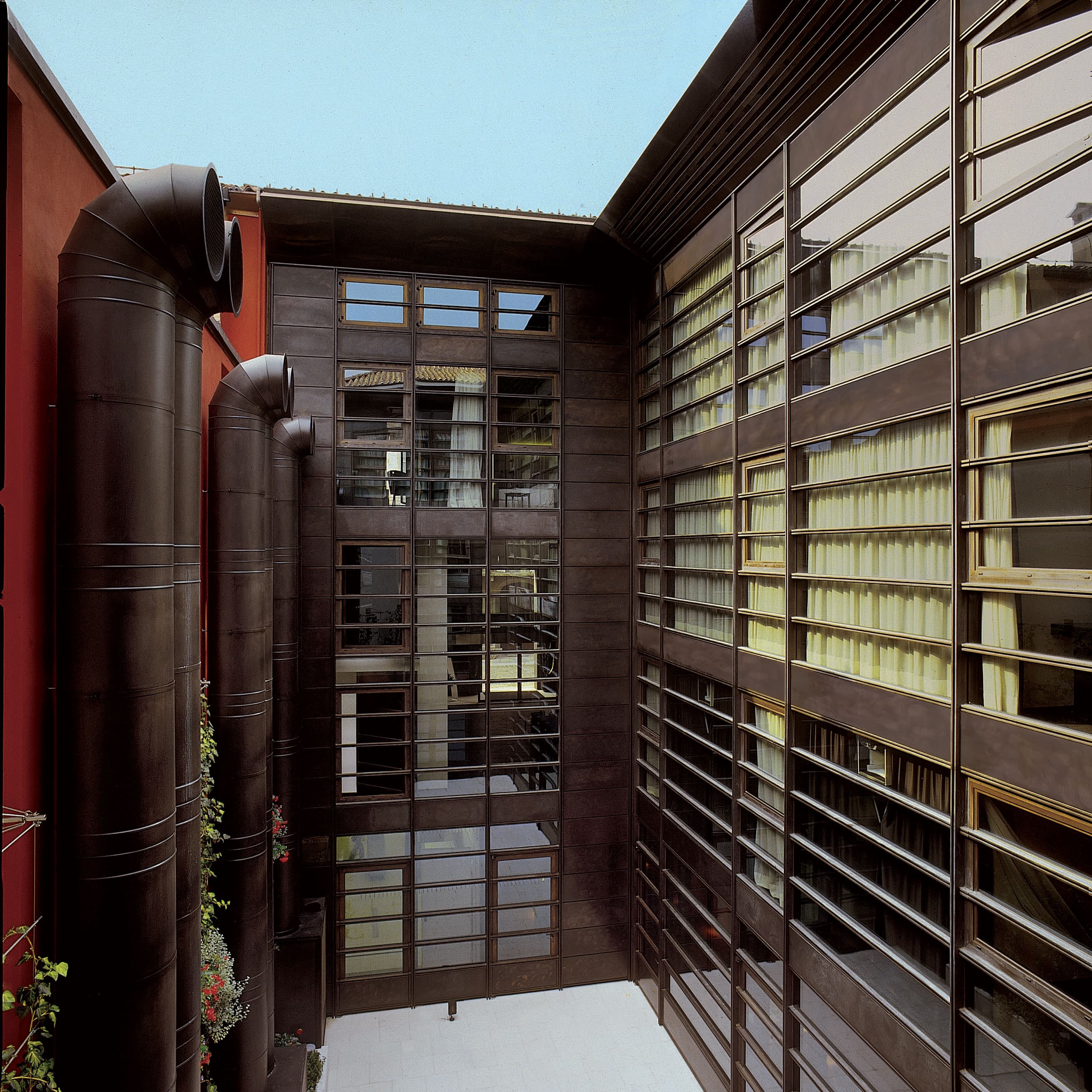
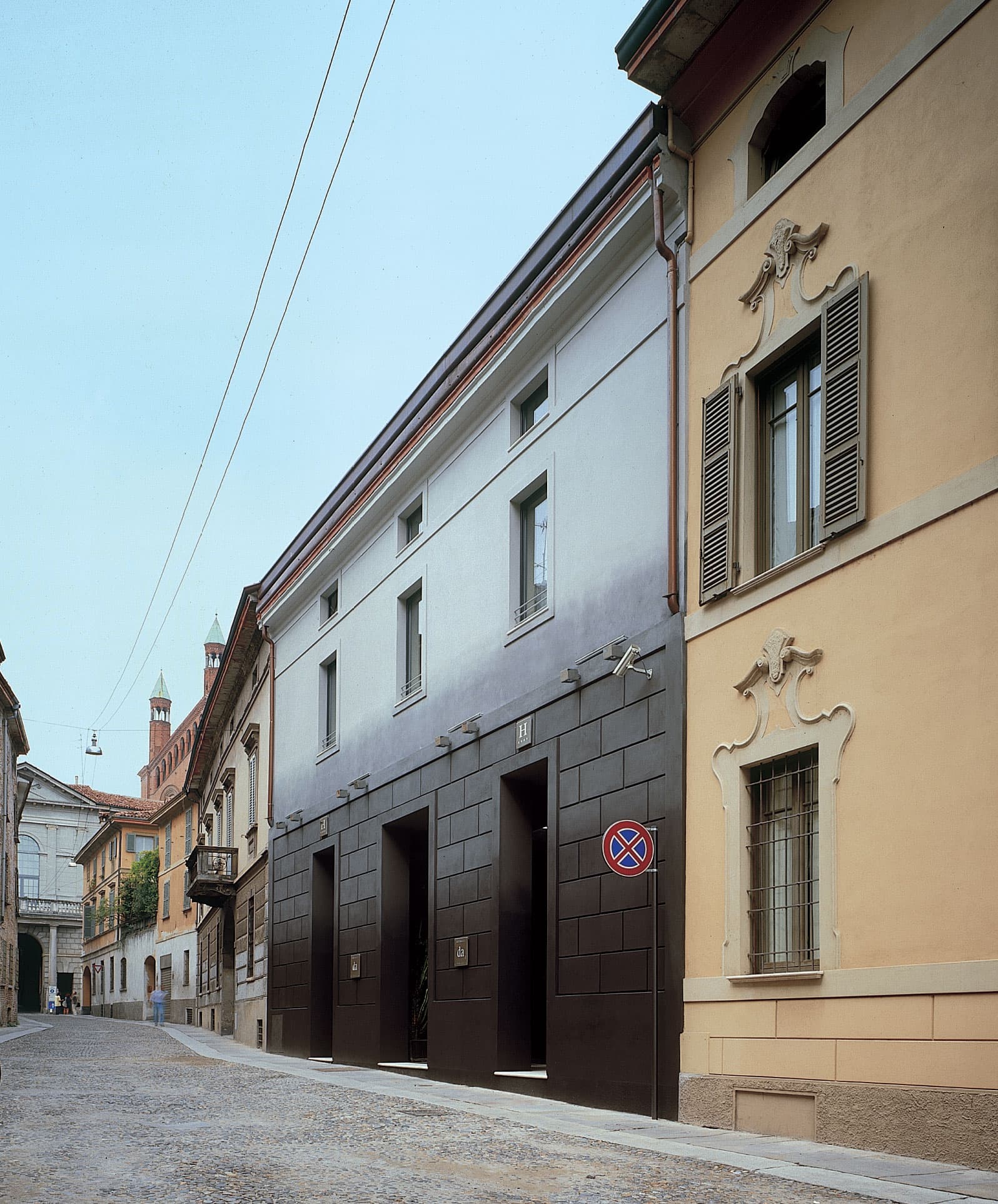
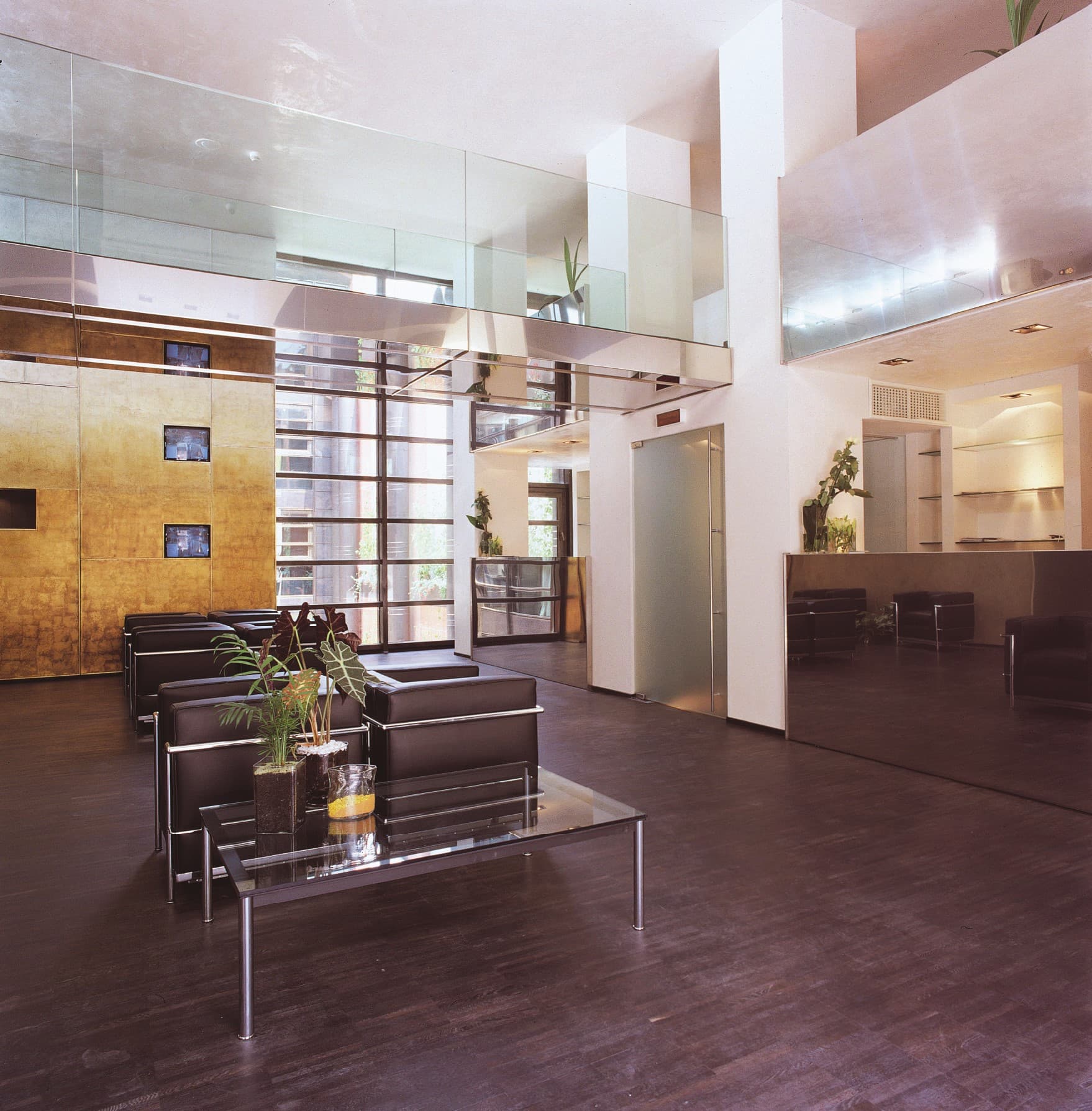
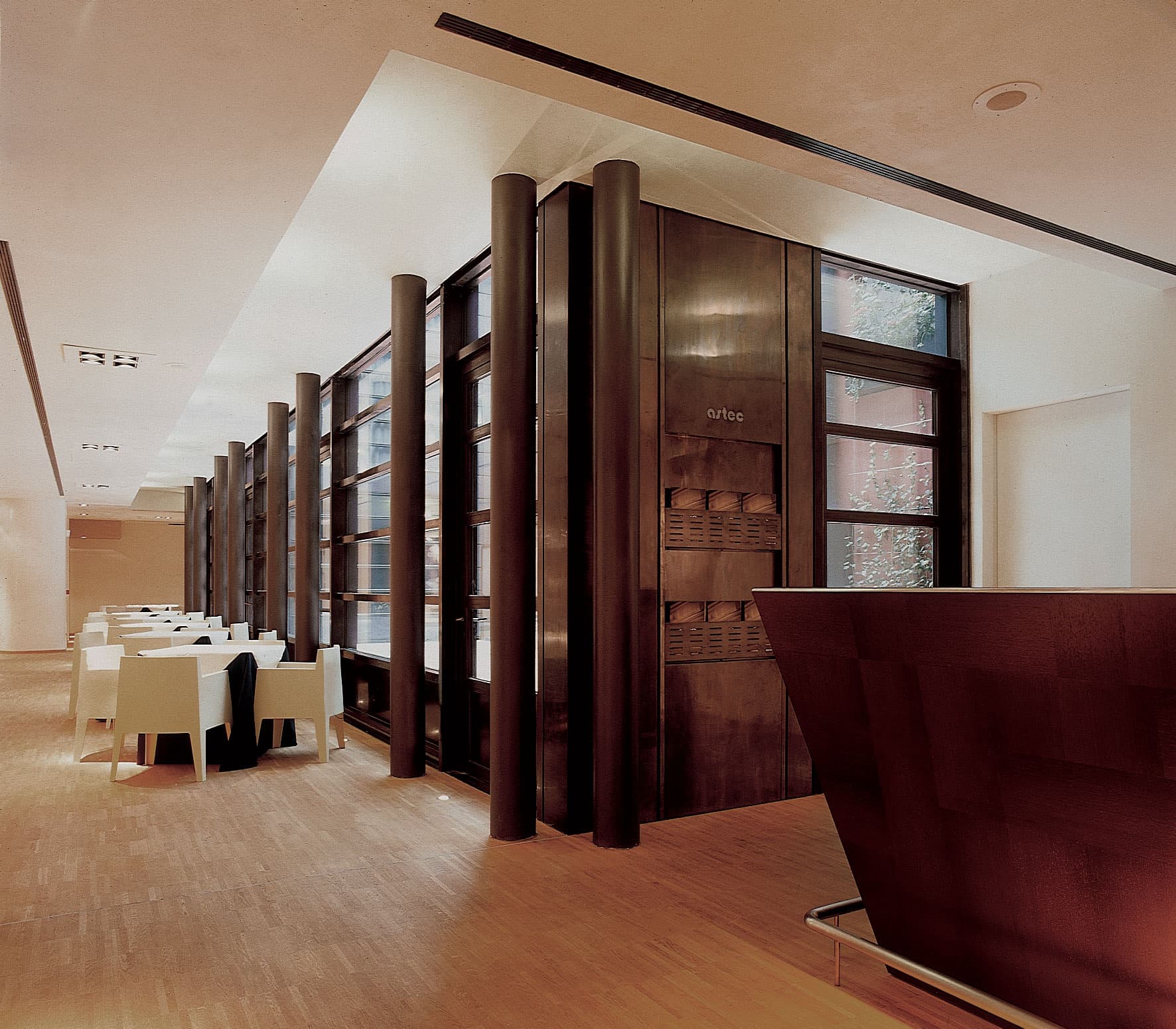
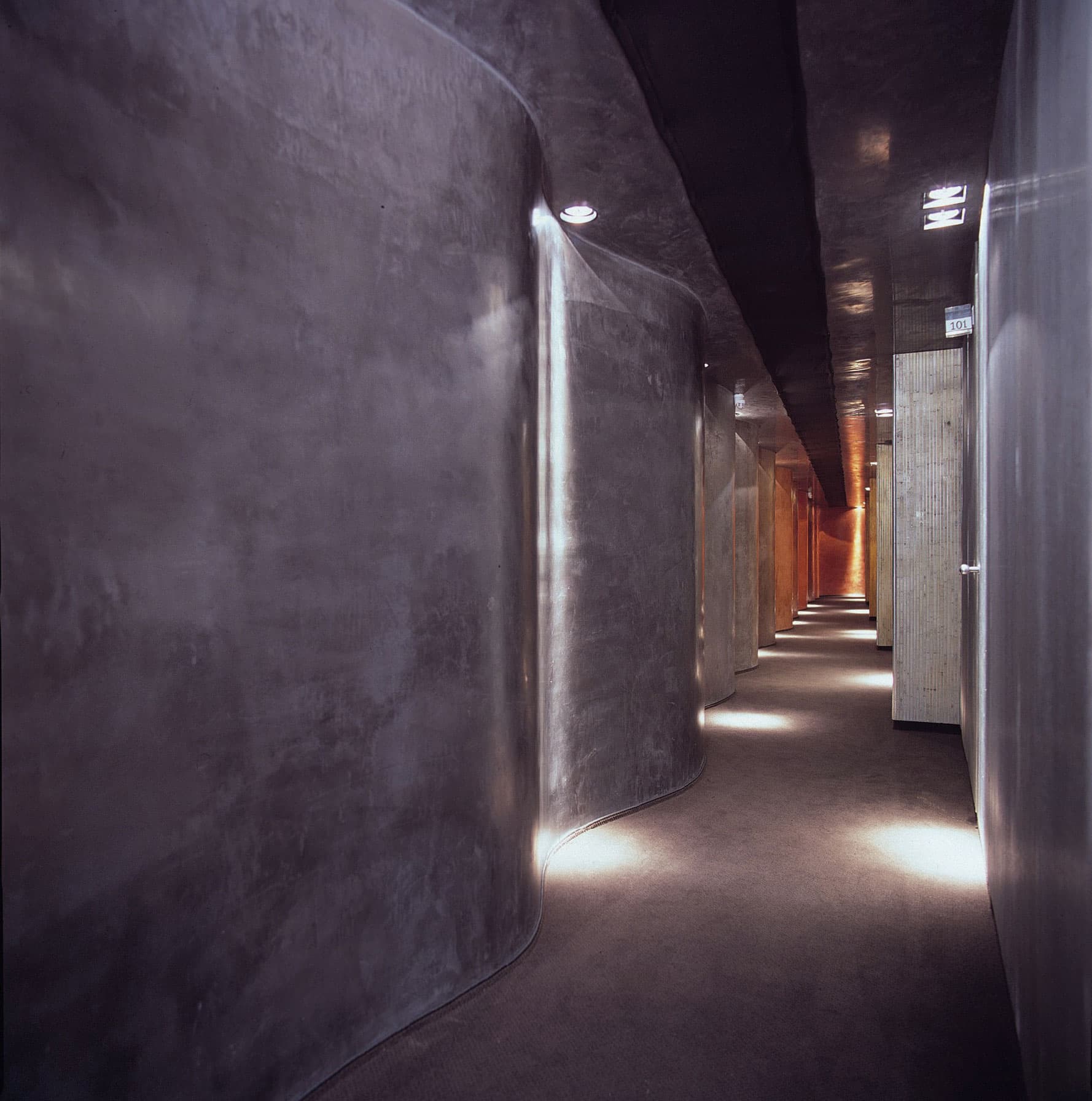
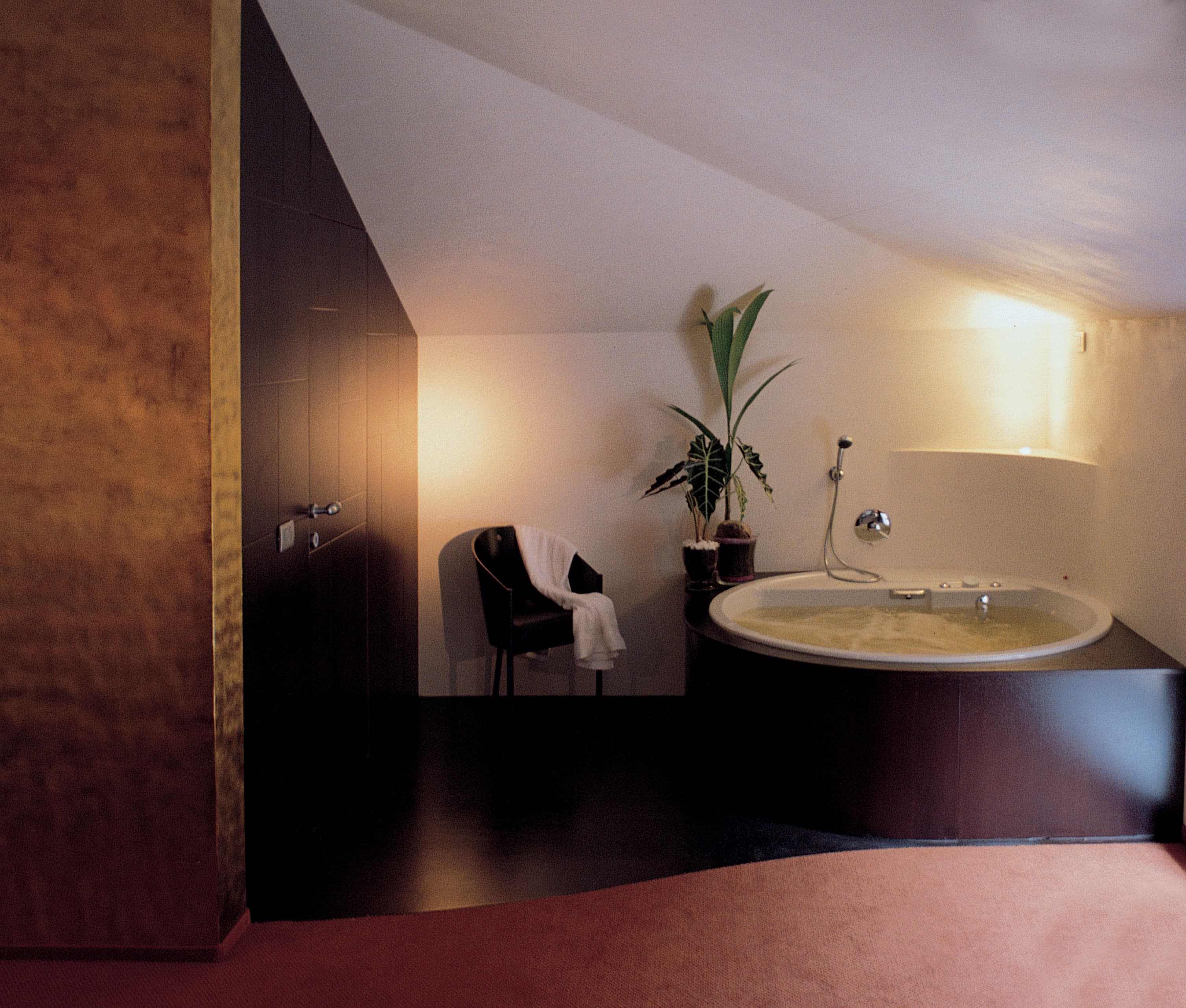
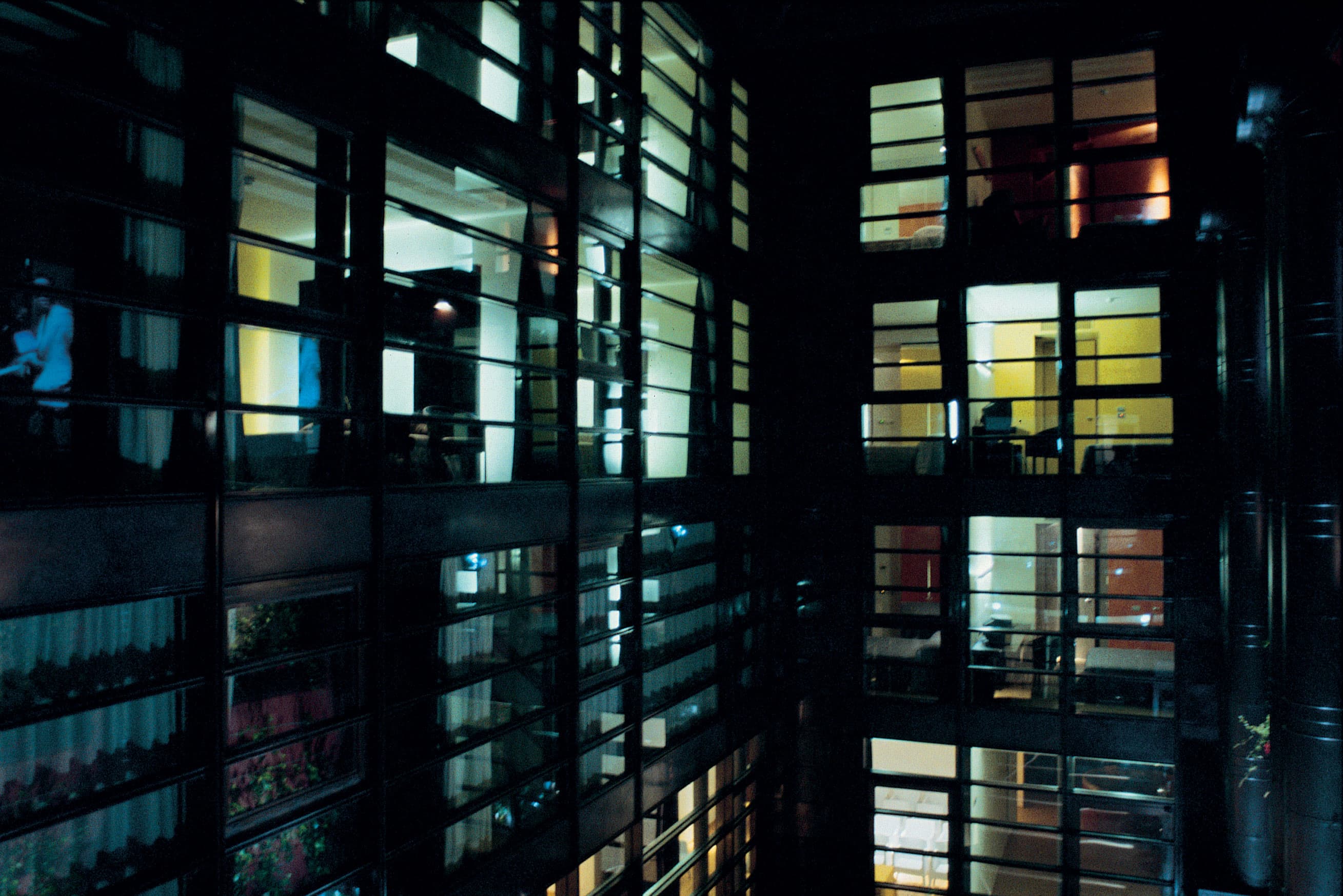
Winner in 2002 of the European Hotel Design Award, DelleArti Design Hotel is a project capable of combining technology with a new idea of comfort, fitting perfectly into the historical reality of the city of Cremona.
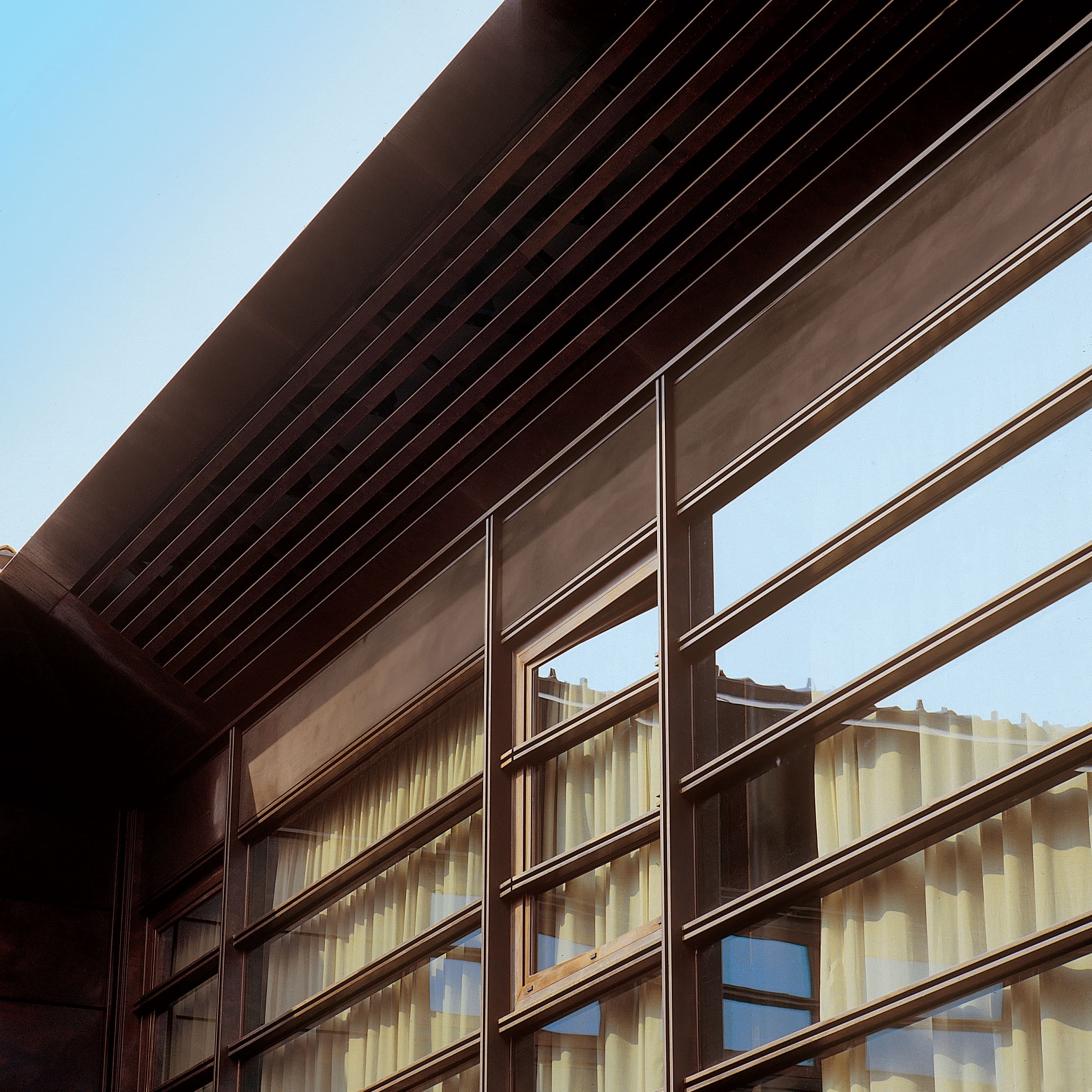
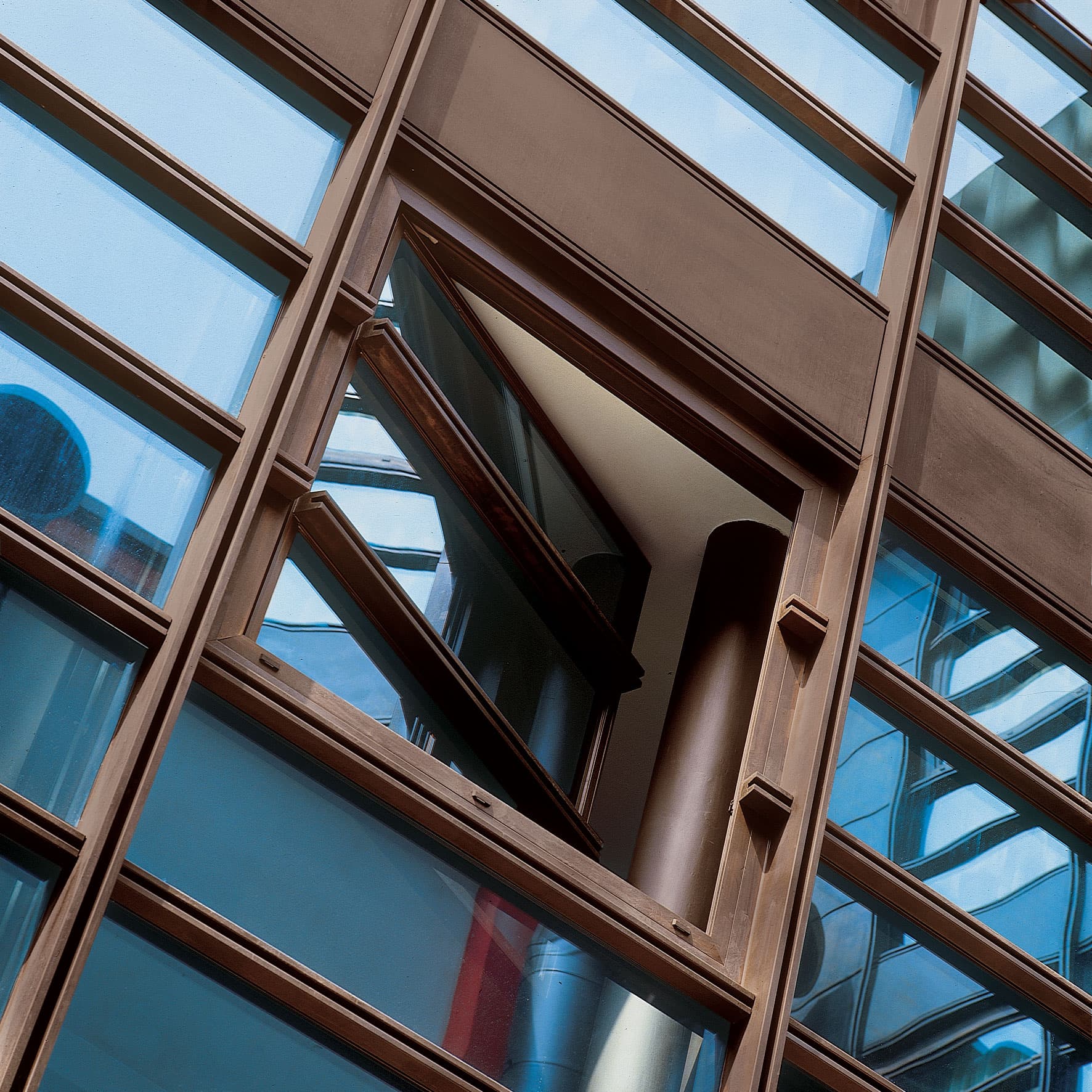
The fulcrum of the building is the C-shaped internal courtyard. In this project the glass windows of the rooms facing a well of natural light are made of burnished brass alloy and selective glass. The only dark side of the courtyard, corresponding to the wall of the neighboring building, has been transformed into an open window to the world of culture and information thanks to three large maxi screens broadcasting different images referring to art installations or cultural and sporting events related to the life and activities of the city and the surrounding area. The Hotel houses rooms with their own intimacy, but virtually open to the world and its events.
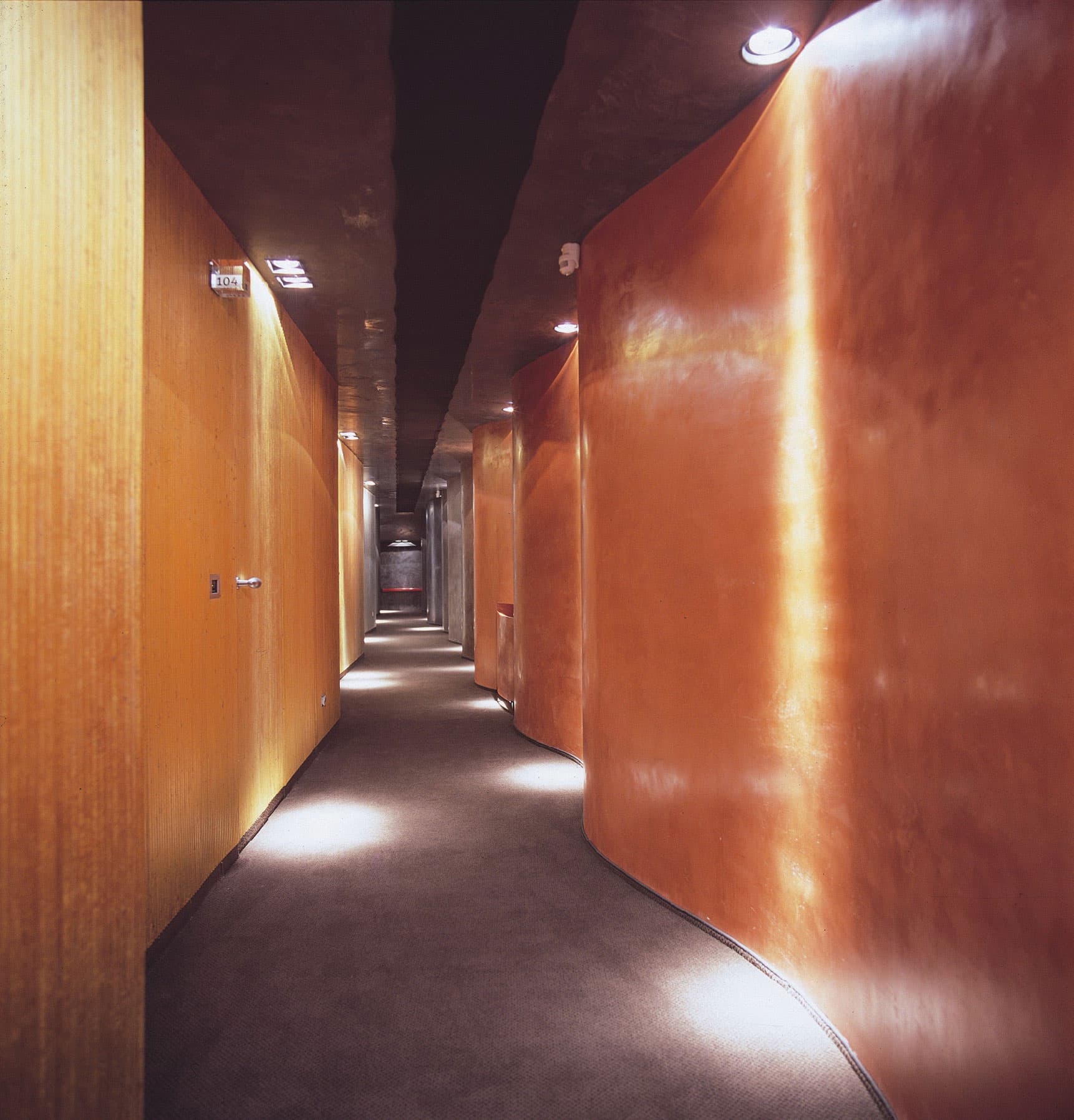
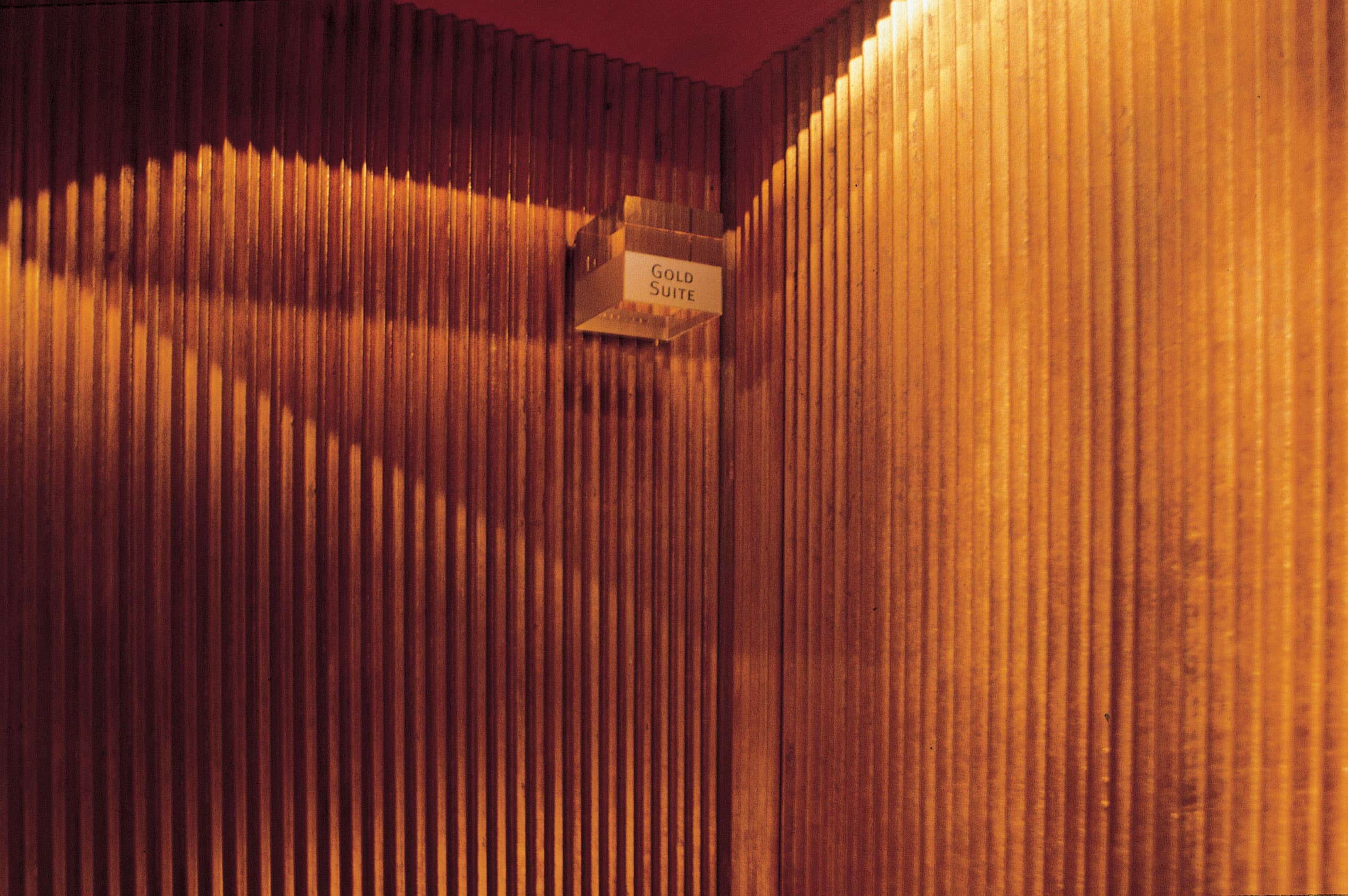
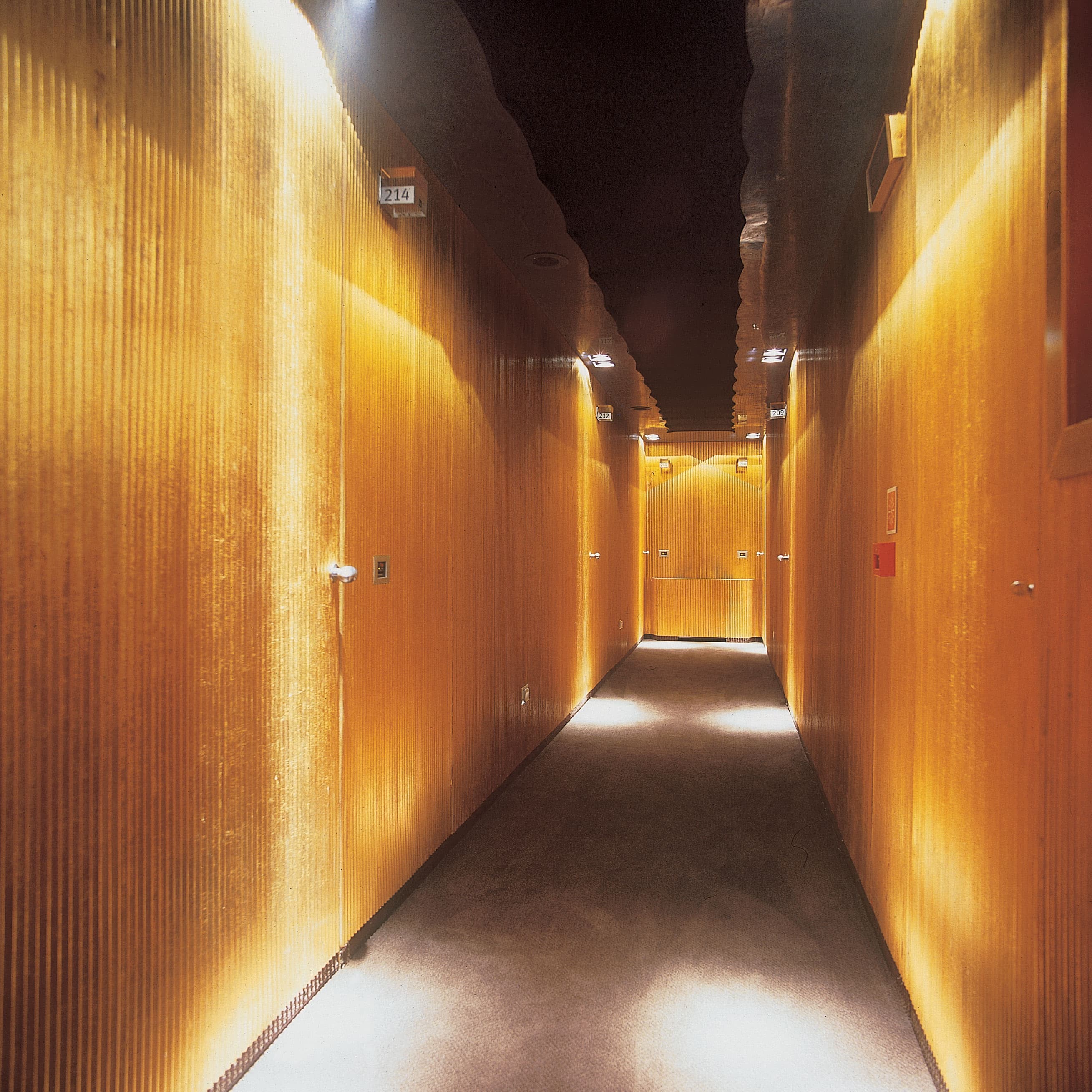
In the corridors distributing the rooms, the corrugated wall, which conceals the installations, on the second floor is modulated in shades of red/gold and black/silver; on the second floor, the walls have gold leaf tanning, while the ground floor is modulated in silver leaf and waxed black bold. (ph. Matteo Piazza)
Villa a Cicognolo
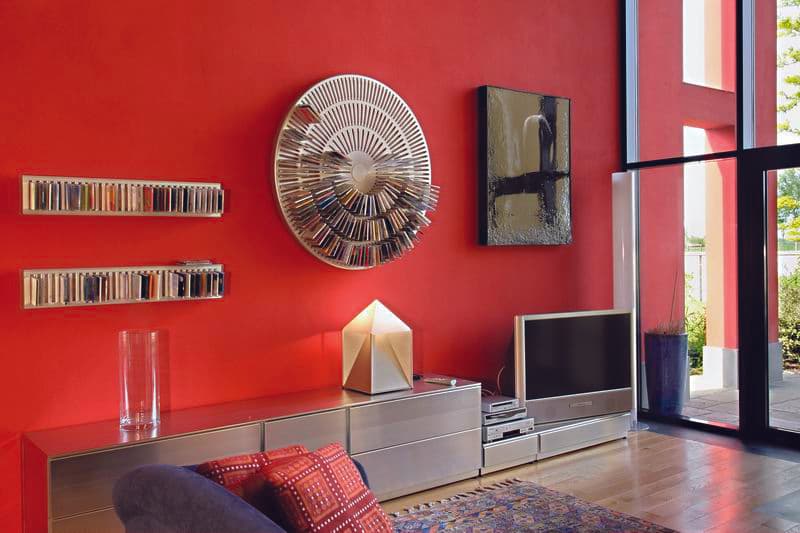
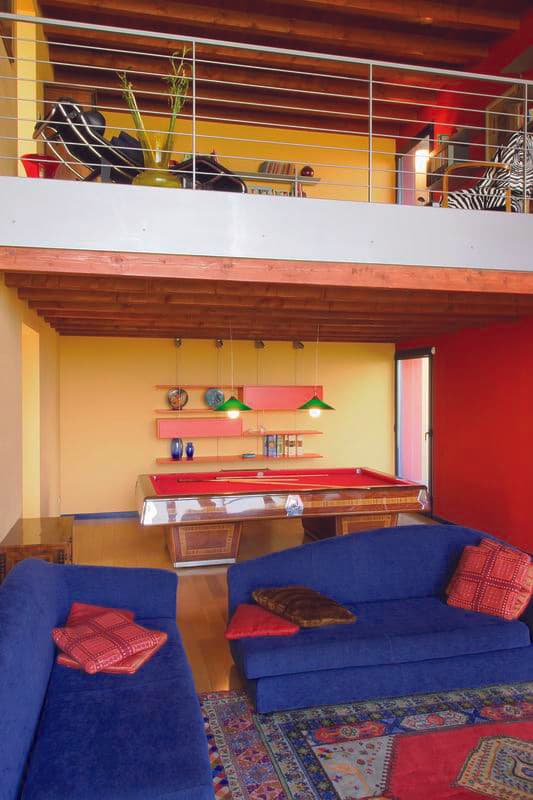
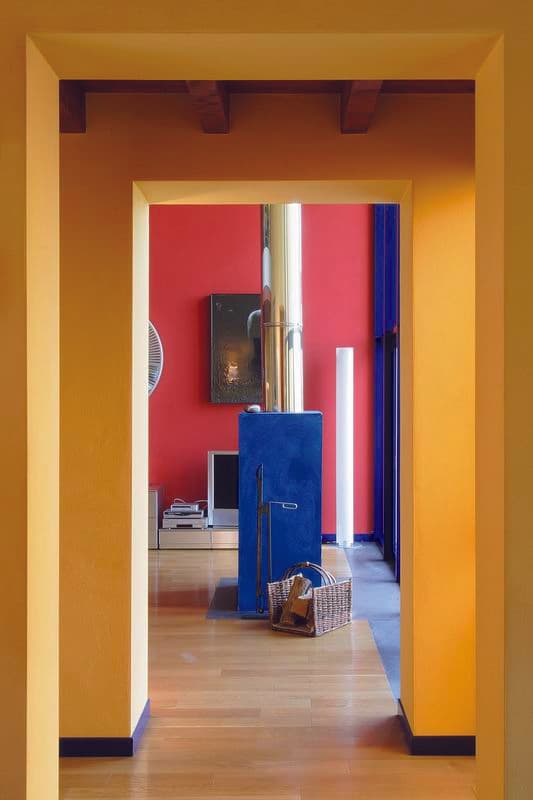
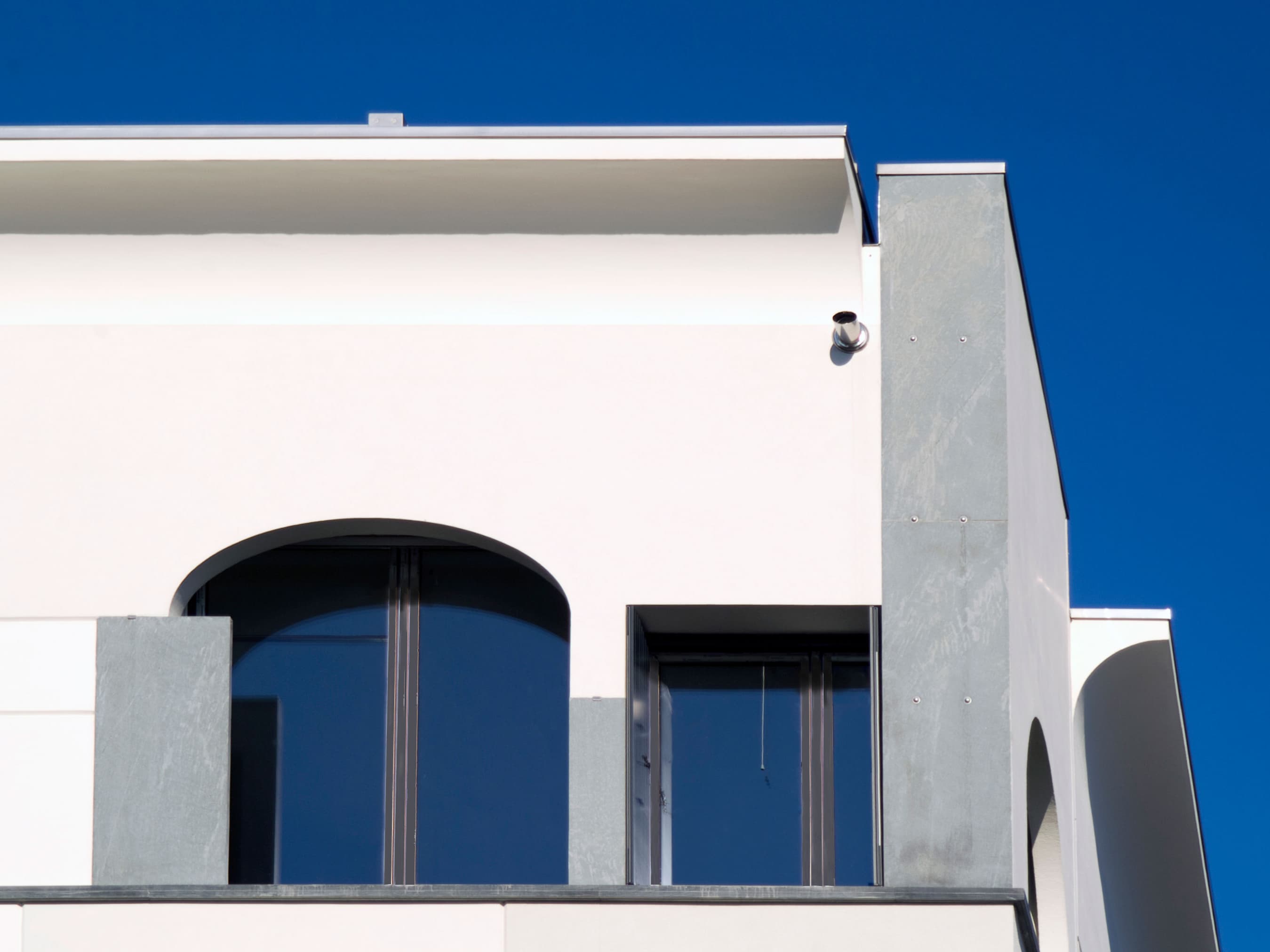
Residenze di Via Genala
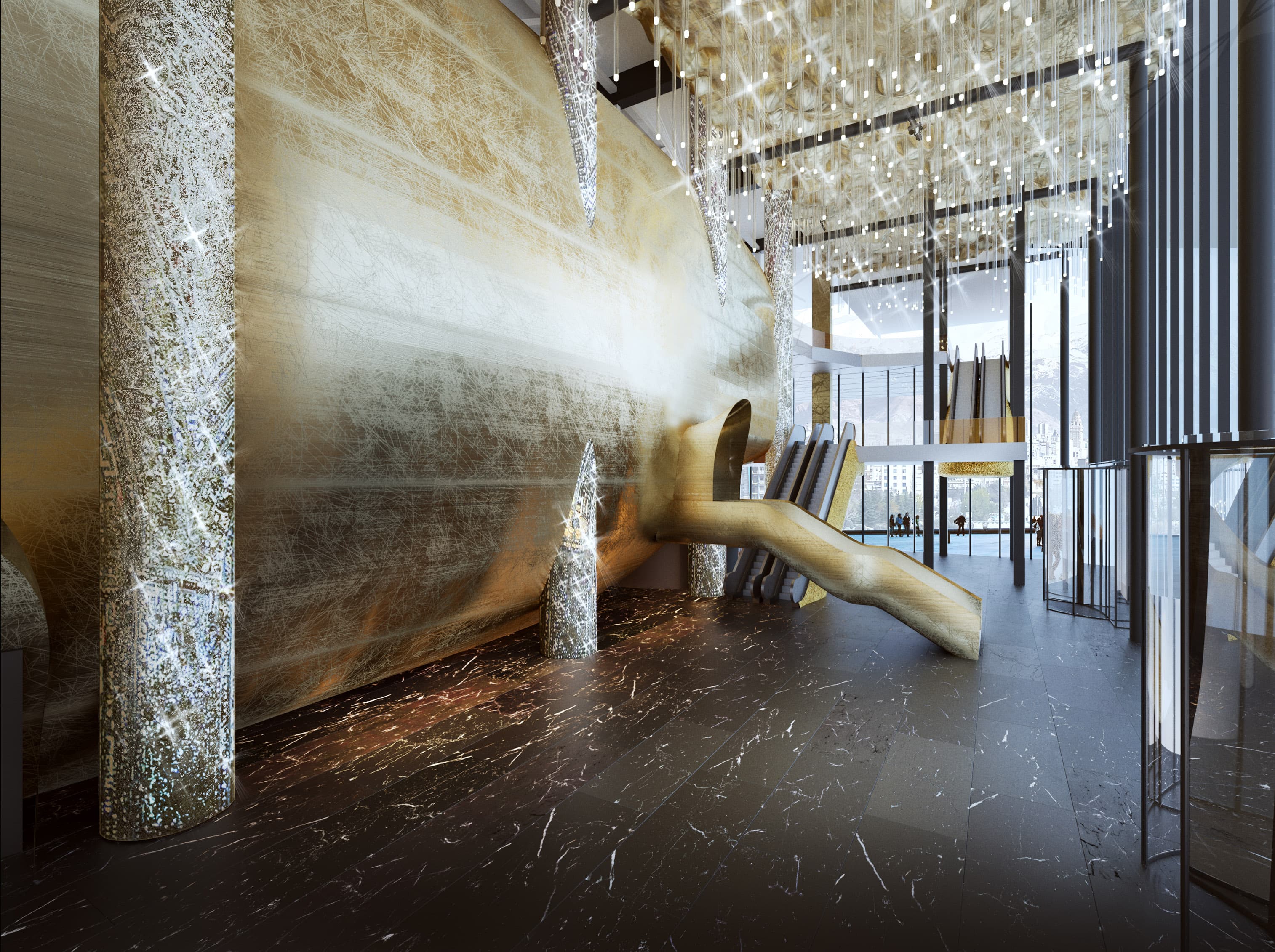
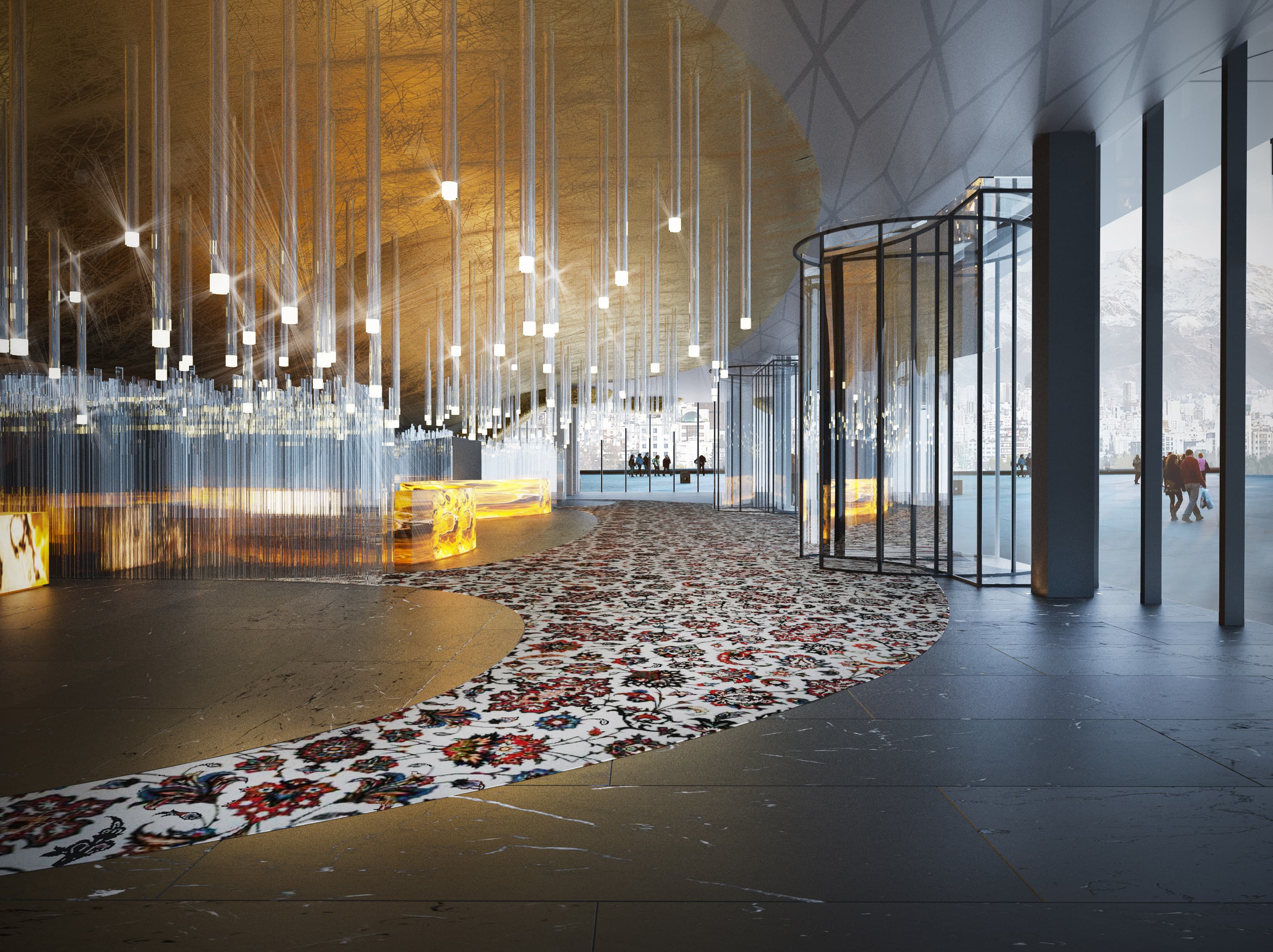
Iran Mall - Teheran
Parco Colonie Padane
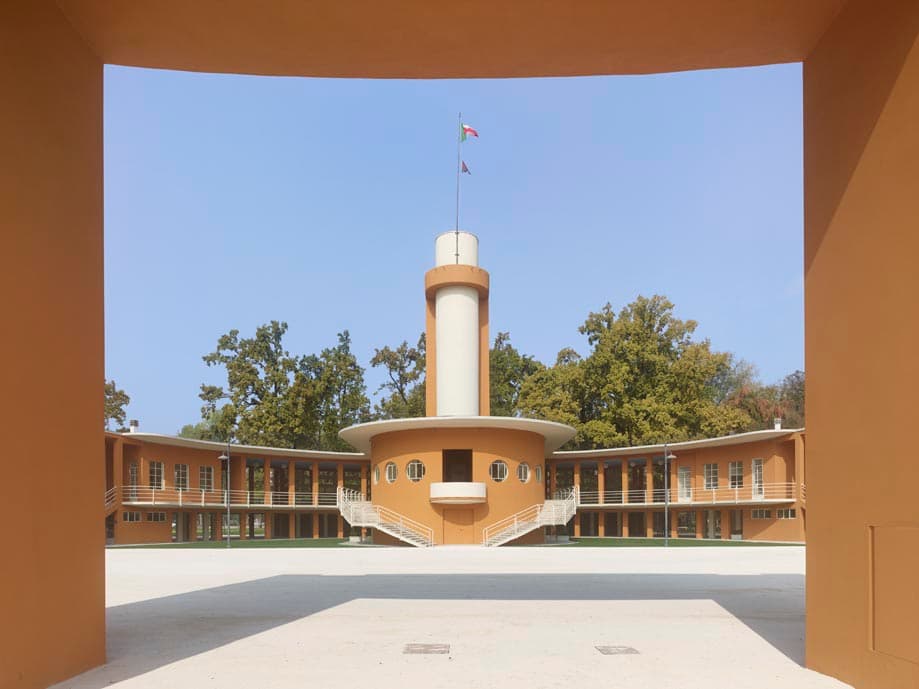
Queen Silvia Concert Hall
Concert Hall - ArchitectureAuditorium Giovanni Arvedi
Concert Hall - ArchitectureDiocesan Museum
Museum - ArchitectureViolin Museum and Marconi Square
Museum - ArchitectureGardens Beyond The Clouds
Residential - ArchitectureApartment Building
Residential - ArchitectureVilla in Soncino
Residential - ArchitectureA Theatre of Shapes
Residential - ArchitectureVilla a Clusane
Residential - ArchitectureTT2 - I Volumi Houses
Residential - ArchitectureCurved Concrete
Residential - ArchitectureLiquid Trasparencies
Residential - ArchitectureI Giardini del Corso
Residential - ArchitecturePenthouse Garden
Residential - ArchitectureVilla Givoletto
Residential - ArchitectureA Thousand Trees Eco Resort
Residential - ArchitectureHotel Continental
Hotel - ArchitectureCivic and Archaeological Museum of Remedello
Museum - ArchitectureCastello Grumello _ "Vialli"
Residential - ArchitectureDellearti Design Hotel
Hotel - ArchitectureVilla a Cicognolo
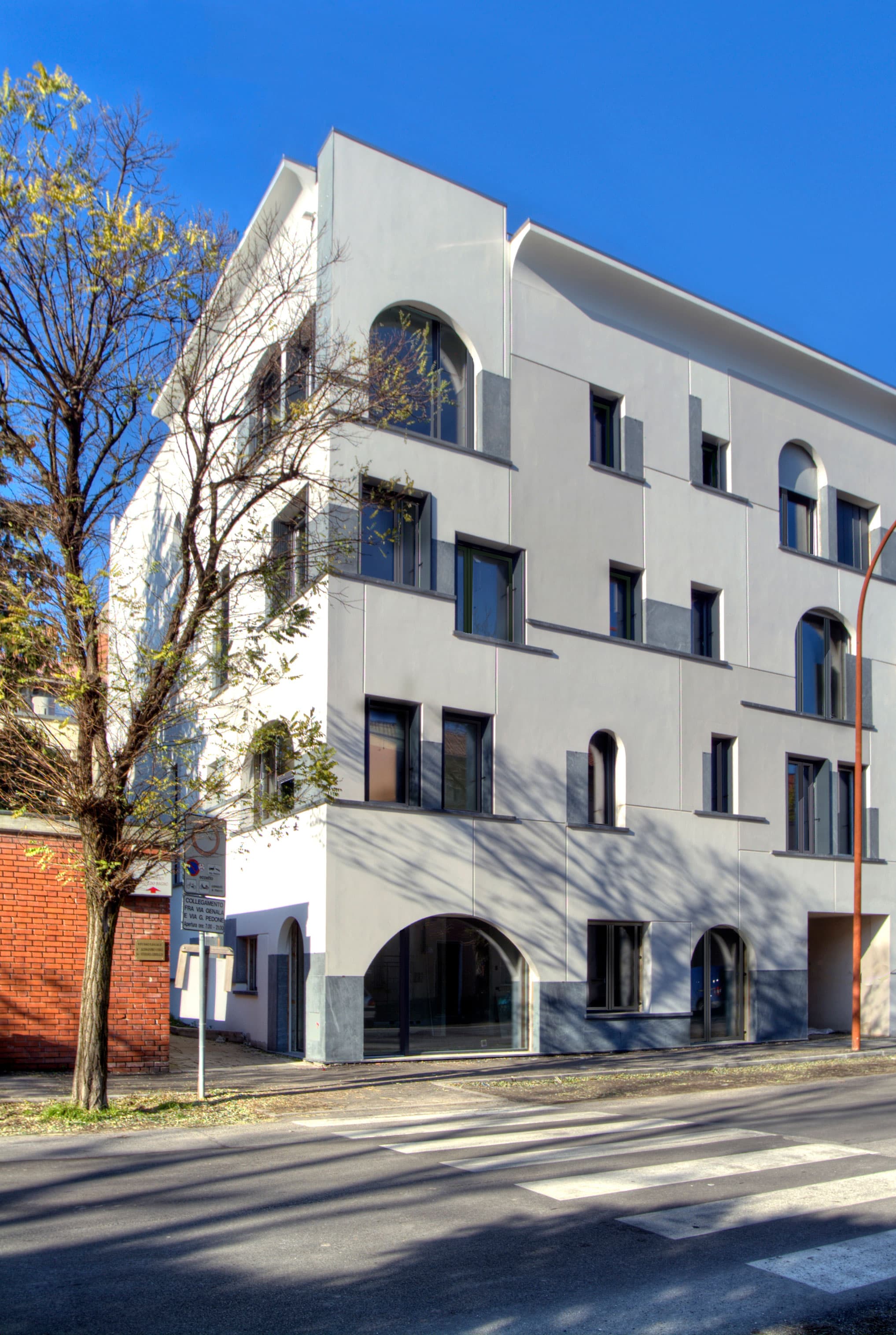
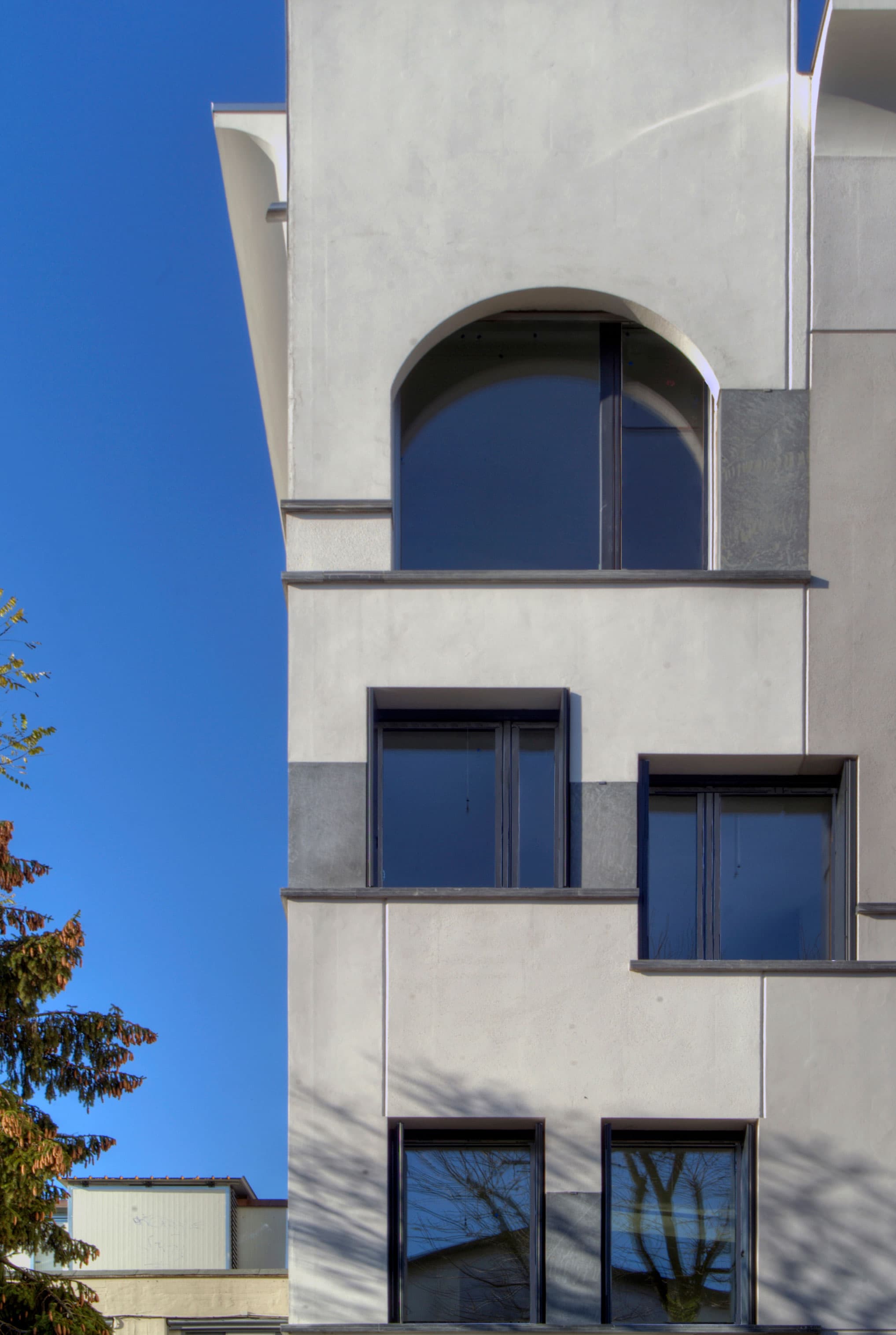
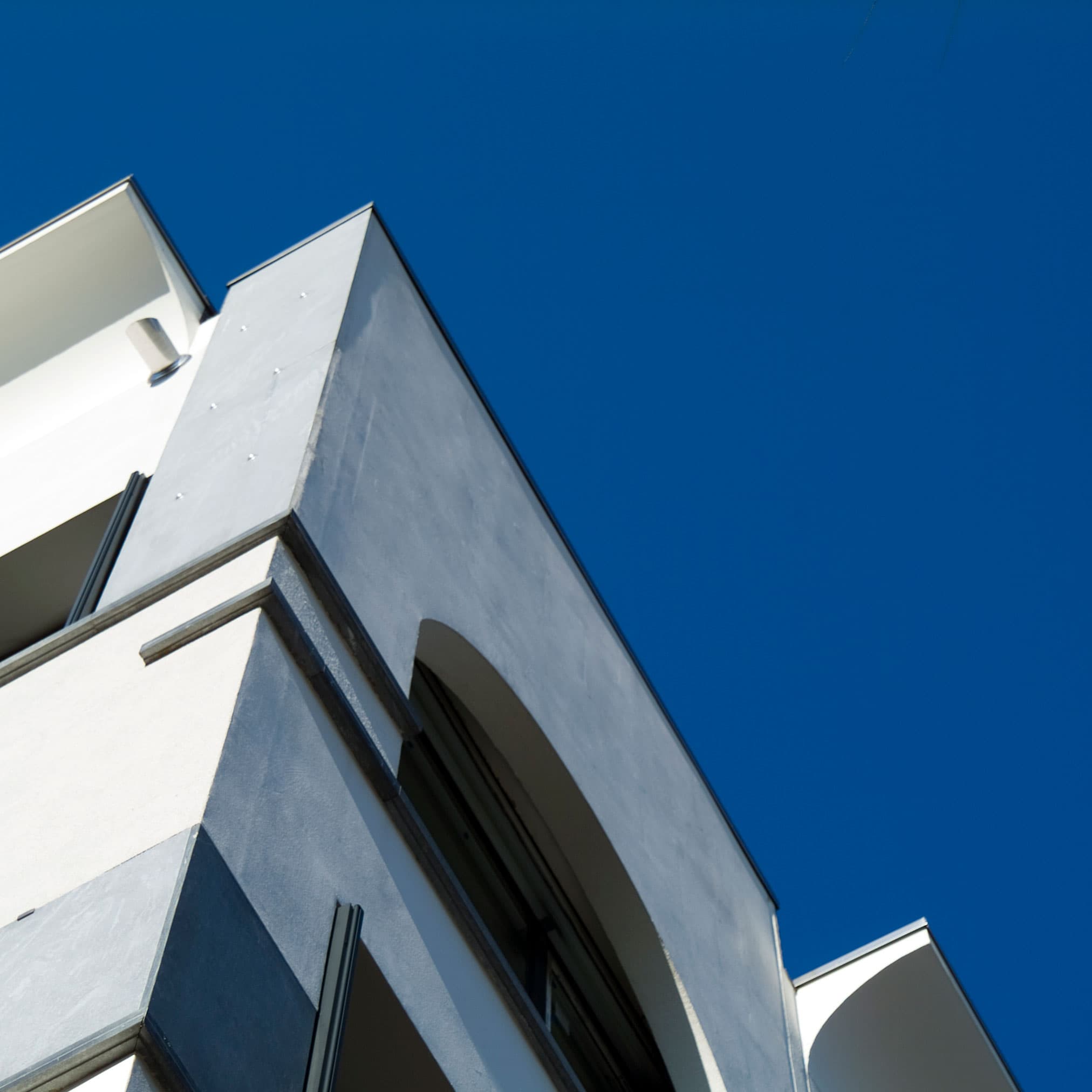
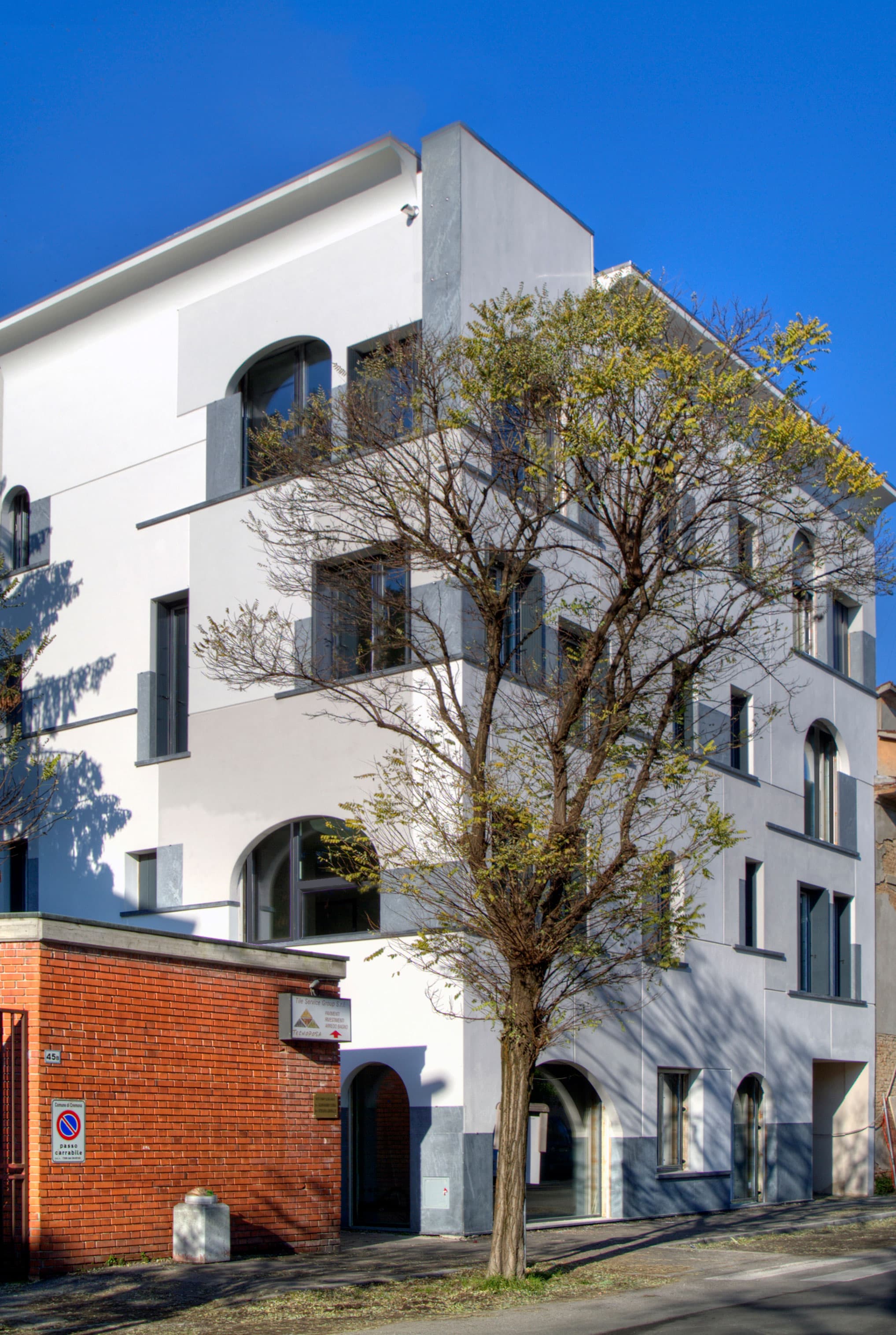
Residential - ArchitectureResidenze di Via Genala
Residential - ArchitectureIran Mall - Teheran
Concert Hall - ArchitectureParco Colonie Padane
Cultural Center - Architecture
.jpg&w=3840&q=75)
News
Queen Silvia Concert Hall - The Light Award Sweden
06/09/2023In Sweden on Thursday, September 7, architect Giorgio Palù won the The Light AWARD - Interior 2022 - for his design of the Queen Silvia Concert Hall. Motivation of the Jury Young musical talents study under this light. In the lighting design,...
News
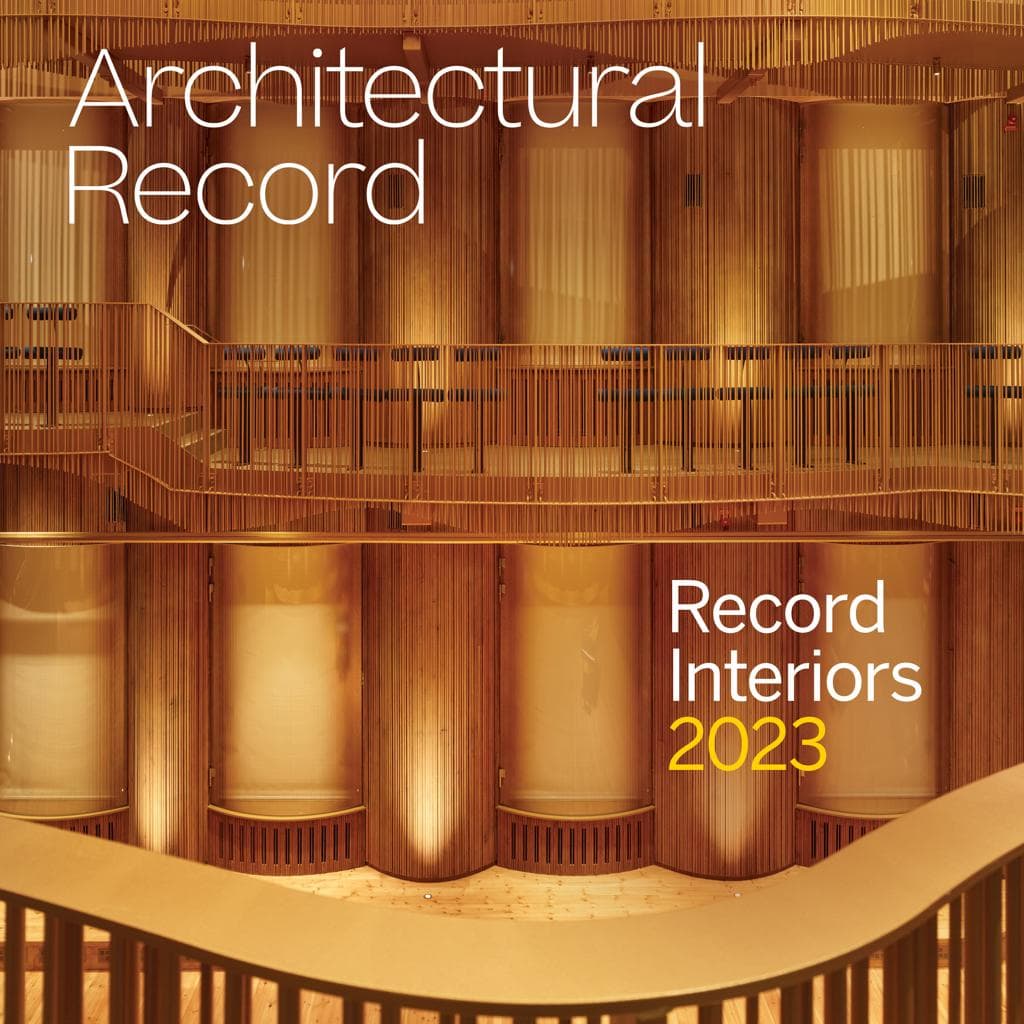
Queen Silvia Concert Hall - Architectural Record, Pubblication
05/09/2023America's leading architecture magazine Architectural Record devoted a lengthy article and September cover story to the Queen Silvia Concert Hall in Stockholm, named after Queen Silvia of Sweden, designed by architect Giorgio Palù and opened
News
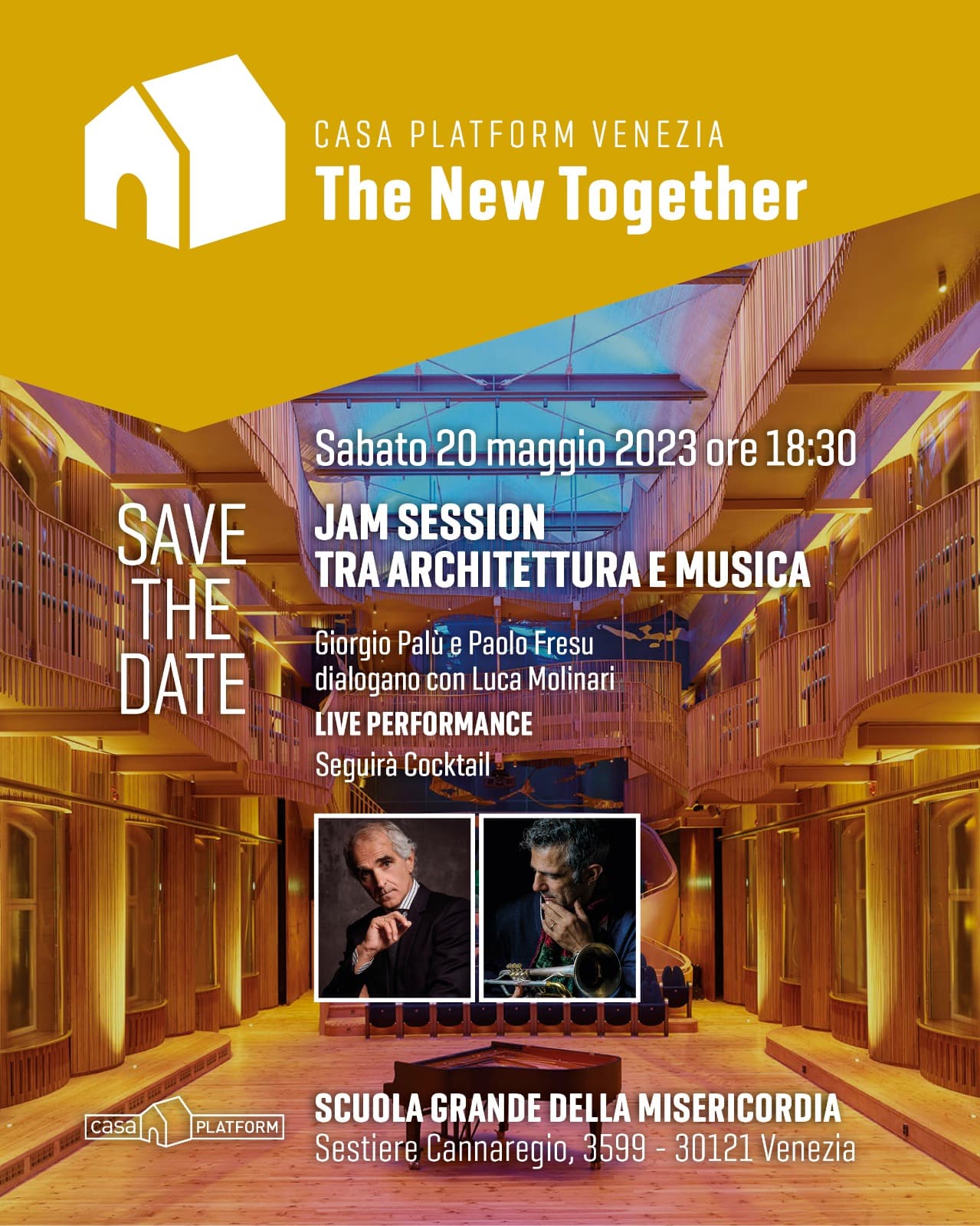
The New Together - Exhibition
20/05/2023As part of the exhibition The New Together, organized by Casa Platform Venezia Scuola Grande della Misericordia, Sestriere Cannaregio 3599 Saturday, May 20 at 6:30 p.m. Jam Session between Architecture and Music
News
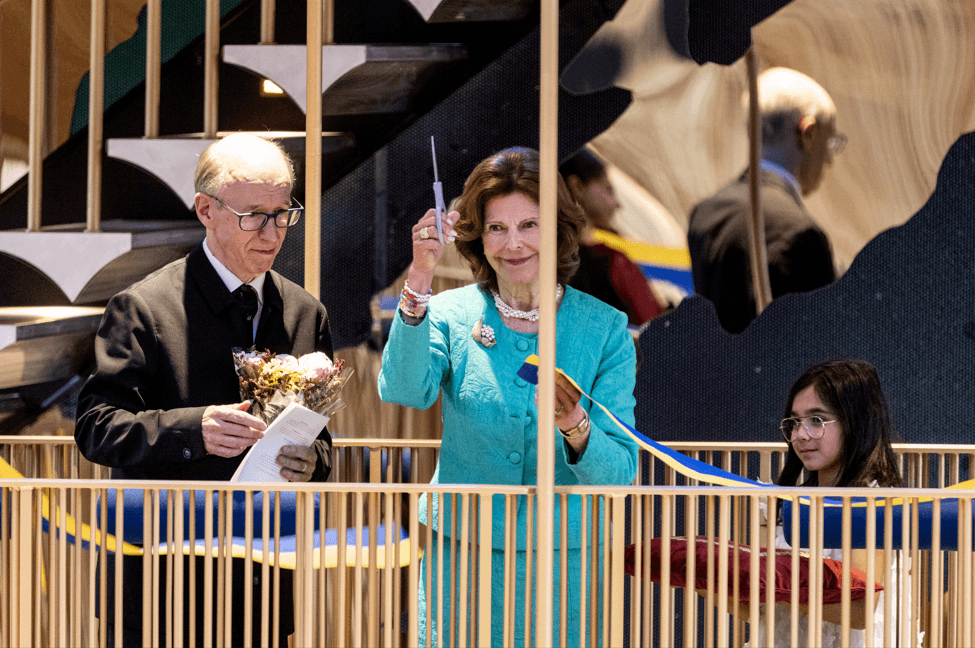
Queen Silvia Concert Hall - Opening
07/06/2022On September 2018 the project for the new “Concert Hall of Lilla Akademien” in Stockholm finally got the building permit, and construction was completed in 2022 with the inauguration.
